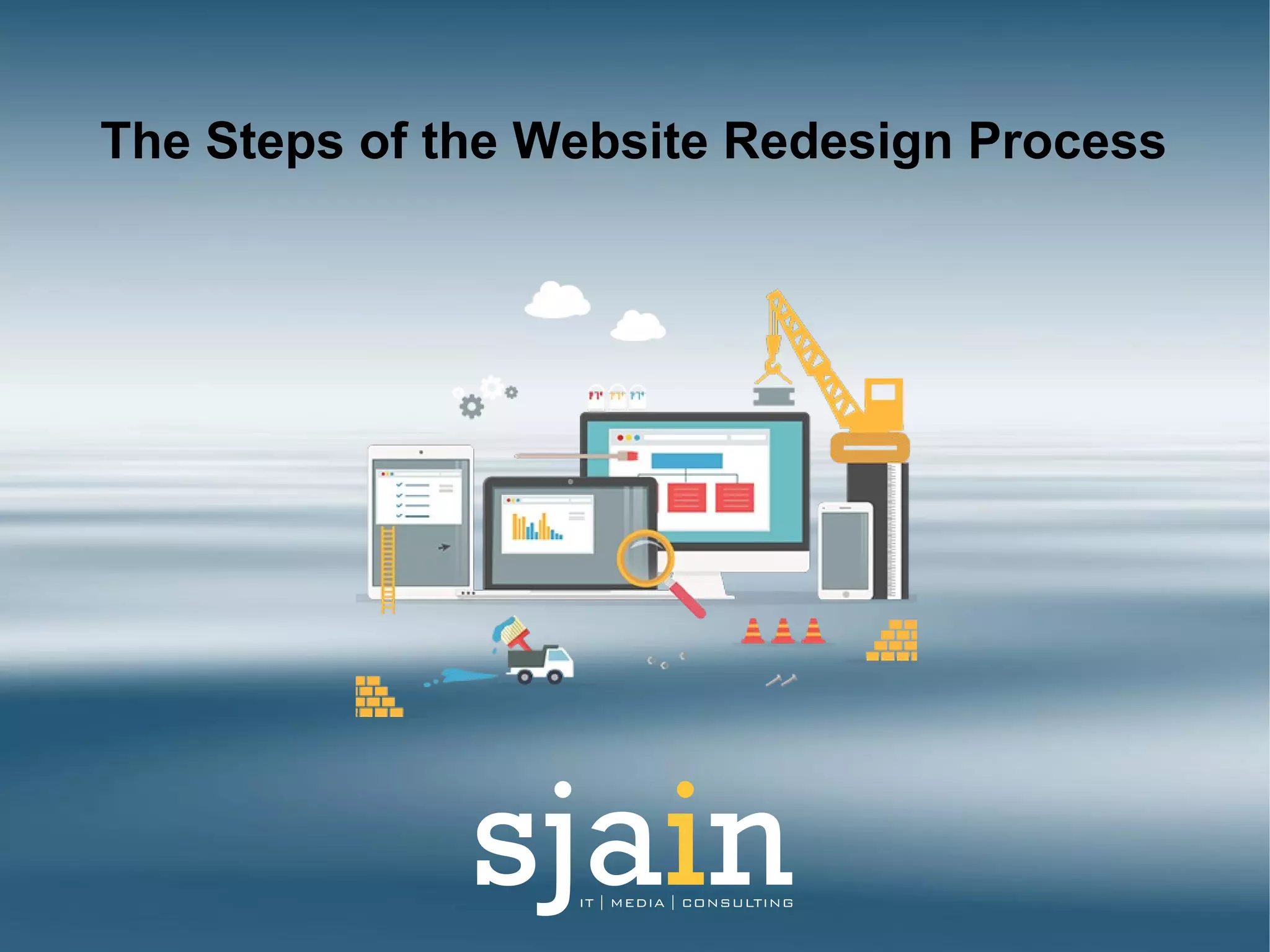
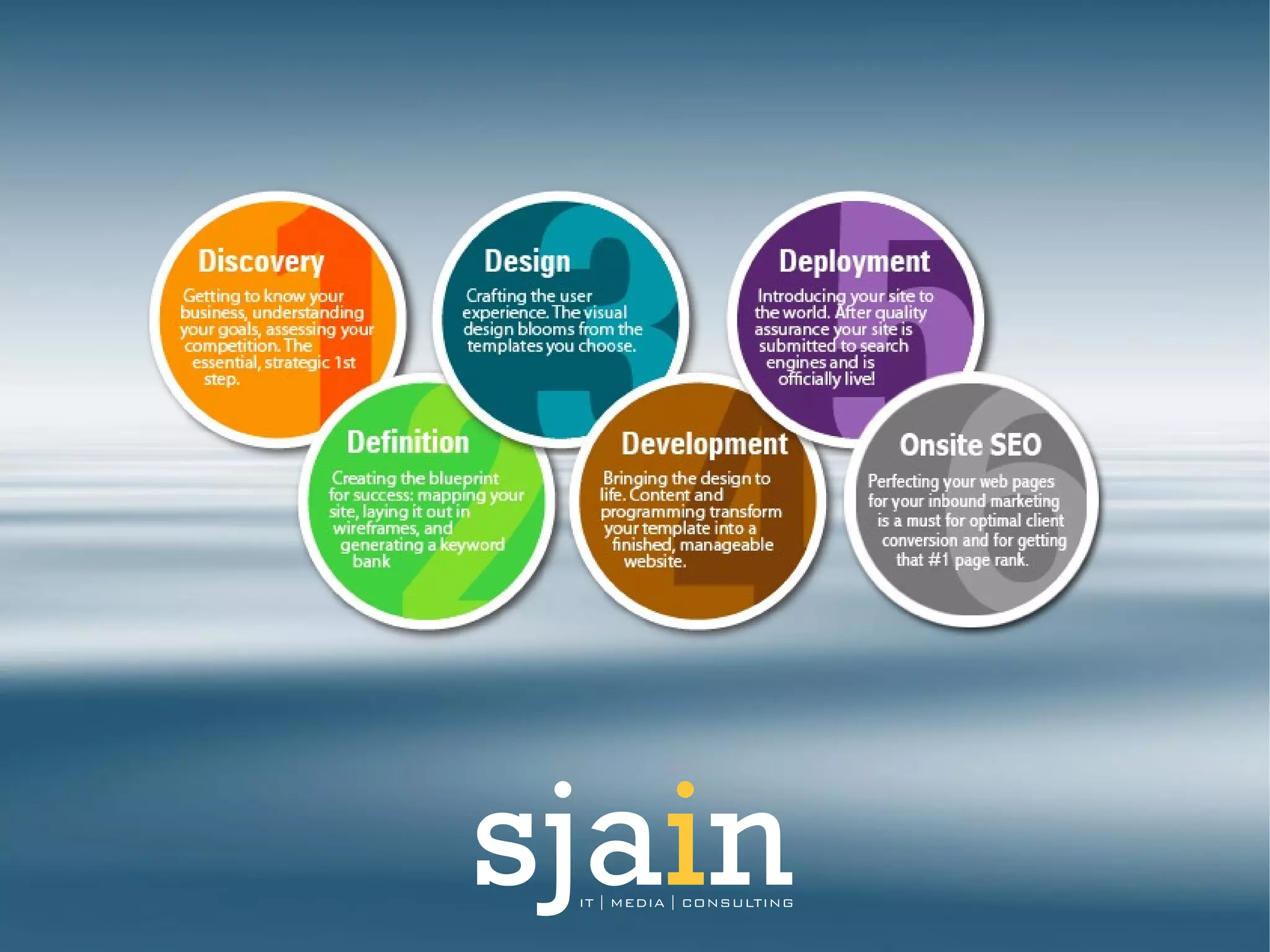
The Steps of the Website Redesign Process
When an organization takes on a website redesign, it
generates hype and excitement, creating a sense of
empowerment for the project owners. However, only
by empowering the end-users of the site can the
project owners achieve and sustain their long-term
goals. While this is no small task, it is one that can be
managed, systematically executed, and driven by
reliable data.
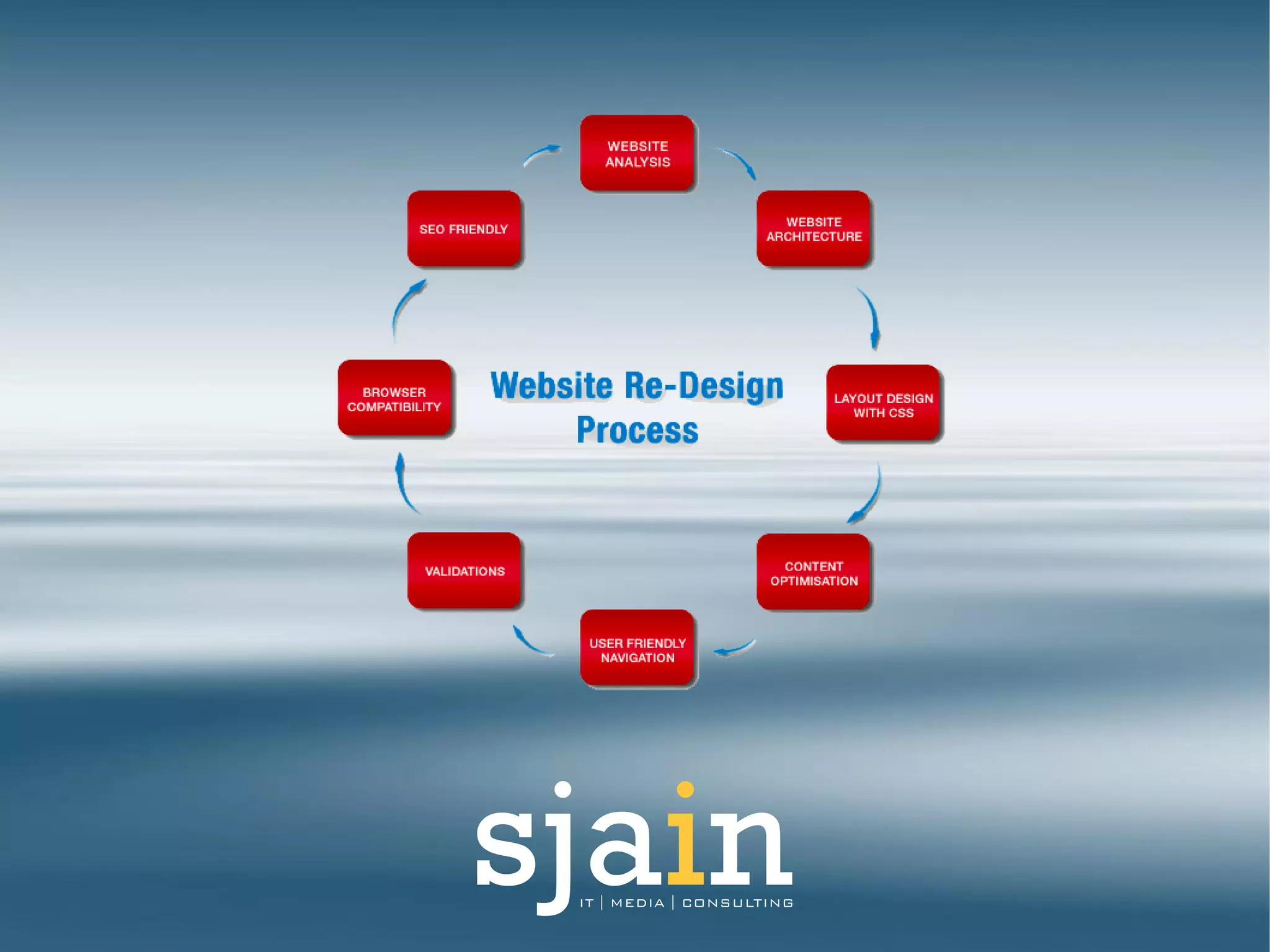
The Typical Website Redesign Process:
1: Hire a vendor that excels in technical prowess and
skill, that is, the team of .NET mavericks.
2: Conduct internal stakeholder meetings.
3: Define an information architecture based on the
organization’s internal structure.
4: Develop high-fidelity wireframes.
5: Create pixel-perfect design comps that represent
each page.
6: Implement the website according to the
recommendations of the vendor.
7: Enter (or dynamically migrate) existing content; create
some new content.
8: Go through a level of QA.
9: Launch the website.
10: Bask in the glory of the completed project.
11: Field requests for changes because the “website no
longer meets our needs.”
12: Get the leadership team together to ask, “Is it time to
redesign the website?”
Source:
http://www.sjainventures.com/

Website re design

  • 1.
    The Steps ofthe Website Redesign Process
  • 2.
    When an organizationtakes on a website redesign, it generates hype and excitement, creating a sense of empowerment for the project owners. However, only by empowering the end-users of the site can the project owners achieve and sustain their long-term goals. While this is no small task, it is one that can be managed, systematically executed, and driven by reliable data.
  • 4.
    The Typical WebsiteRedesign Process: 1: Hire a vendor that excels in technical prowess and skill, that is, the team of .NET mavericks. 2: Conduct internal stakeholder meetings. 3: Define an information architecture based on the organization’s internal structure. 4: Develop high-fidelity wireframes.
  • 6.
    5: Create pixel-perfectdesign comps that represent each page. 6: Implement the website according to the recommendations of the vendor. 7: Enter (or dynamically migrate) existing content; create some new content.
  • 7.
    8: Go througha level of QA. 9: Launch the website. 10: Bask in the glory of the completed project.
  • 8.
    11: Field requestsfor changes because the “website no longer meets our needs.” 12: Get the leadership team together to ask, “Is it time to redesign the website?”
  • 10.