WEB DESIGN
PRINCIPLES
Design Process
Objectives
 Understand the design process through
 Discovery
 Exploration
 Implementation
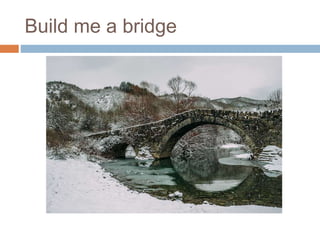
Build me a bridge
Discovery
 Meet the clients, learn what they do
 Prior to the meeting – prepare research
 No website, so research their industry
 The first meeting should be face-to-face
 Listen
 Bring pad and paper – a laptop can be
distracting and the screen builds barrier
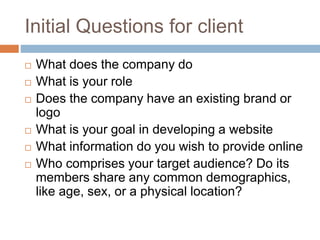
Initial Questions for client
 What does the company do
 What is your role
 Does the company have an existing brand or
logo
 What is your goal in developing a website
 What information do you wish to provide online
 Who comprises your target audience? Do its
members share any common demographics,
like age, sex, or a physical location?
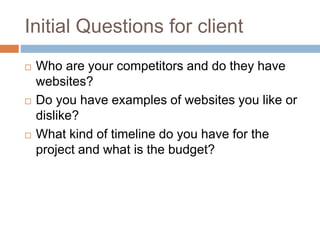
Initial Questions for client
 Who are your competitors and do they have
websites?
 Do you have examples of websites you like or
dislike?
 What kind of timeline do you have for the
project and what is the budget?
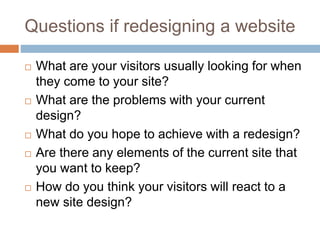
Questions if redesigning a website
 What are your visitors usually looking for when
they come to your site?
 What are the problems with your current
design?
 What do you hope to achieve with a redesign?
 Are there any elements of the current site that
you want to keep?
 How do you think your visitors will react to a
new site design?
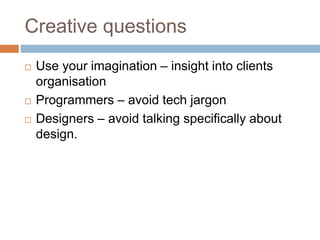
Creative questions
 Use your imagination – insight into clients
organisation
 Programmers – avoid tech jargon
 Designers – avoid talking specifically about
design.
Exploration
 The next stage is to take all the information
gained and analyse and experiment
 Put yourself in the shoes of the website user
 What do they want from the site
 If you are buying a product or a service, what do
you need to know before you buy
 What is the clearest title possible for page x,
and how many steps does it take to reach
page y?
Exploration (continued)
 Organising the content and flow of the website
into a structure we can design around is
Information Architecture (IA)
 Useful items are sticky post it notes and a
whiteboard or large scrap paper
 Make the information as obvious and easy to
reach as possible
Implementation
 Create a layout
 Design the interface
 Use a large blank sheet of paper, this will focus
on the technical limitations of browsers and CSS
and focus on the final look of the product
 Sketch a few possible layouts – and then
select one
 Once you have the layout, experiment with
colours (foreground/background)
Summary
 The Design Process has the following stages
 Discovery (understanding what the client wants)
 Exploration (analysing the information gained and
place it into a usable structure and flow (IA))
 Implementation (design the interface)

Design principles

  • 1.
  • 2.
    Objectives  Understand thedesign process through  Discovery  Exploration  Implementation
  • 3.
    Build me abridge
  • 4.
    Discovery  Meet theclients, learn what they do  Prior to the meeting – prepare research  No website, so research their industry  The first meeting should be face-to-face  Listen  Bring pad and paper – a laptop can be distracting and the screen builds barrier
  • 5.
    Initial Questions forclient  What does the company do  What is your role  Does the company have an existing brand or logo  What is your goal in developing a website  What information do you wish to provide online  Who comprises your target audience? Do its members share any common demographics, like age, sex, or a physical location?
  • 6.
    Initial Questions forclient  Who are your competitors and do they have websites?  Do you have examples of websites you like or dislike?  What kind of timeline do you have for the project and what is the budget?
  • 7.
    Questions if redesigninga website  What are your visitors usually looking for when they come to your site?  What are the problems with your current design?  What do you hope to achieve with a redesign?  Are there any elements of the current site that you want to keep?  How do you think your visitors will react to a new site design?
  • 8.
    Creative questions  Useyour imagination – insight into clients organisation  Programmers – avoid tech jargon  Designers – avoid talking specifically about design.
  • 9.
    Exploration  The nextstage is to take all the information gained and analyse and experiment  Put yourself in the shoes of the website user  What do they want from the site  If you are buying a product or a service, what do you need to know before you buy  What is the clearest title possible for page x, and how many steps does it take to reach page y?
  • 10.
    Exploration (continued)  Organisingthe content and flow of the website into a structure we can design around is Information Architecture (IA)  Useful items are sticky post it notes and a whiteboard or large scrap paper  Make the information as obvious and easy to reach as possible
  • 11.
    Implementation  Create alayout  Design the interface  Use a large blank sheet of paper, this will focus on the technical limitations of browsers and CSS and focus on the final look of the product  Sketch a few possible layouts – and then select one  Once you have the layout, experiment with colours (foreground/background)
  • 12.
    Summary  The DesignProcess has the following stages  Discovery (understanding what the client wants)  Exploration (analysing the information gained and place it into a usable structure and flow (IA))  Implementation (design the interface)

Editor's Notes

  • #4 This statement is too open. The requirements need to define the scope of the project and objectives.
  • #13 If you have been supplied a Requirements document. Then you need to confirm the details with the client.