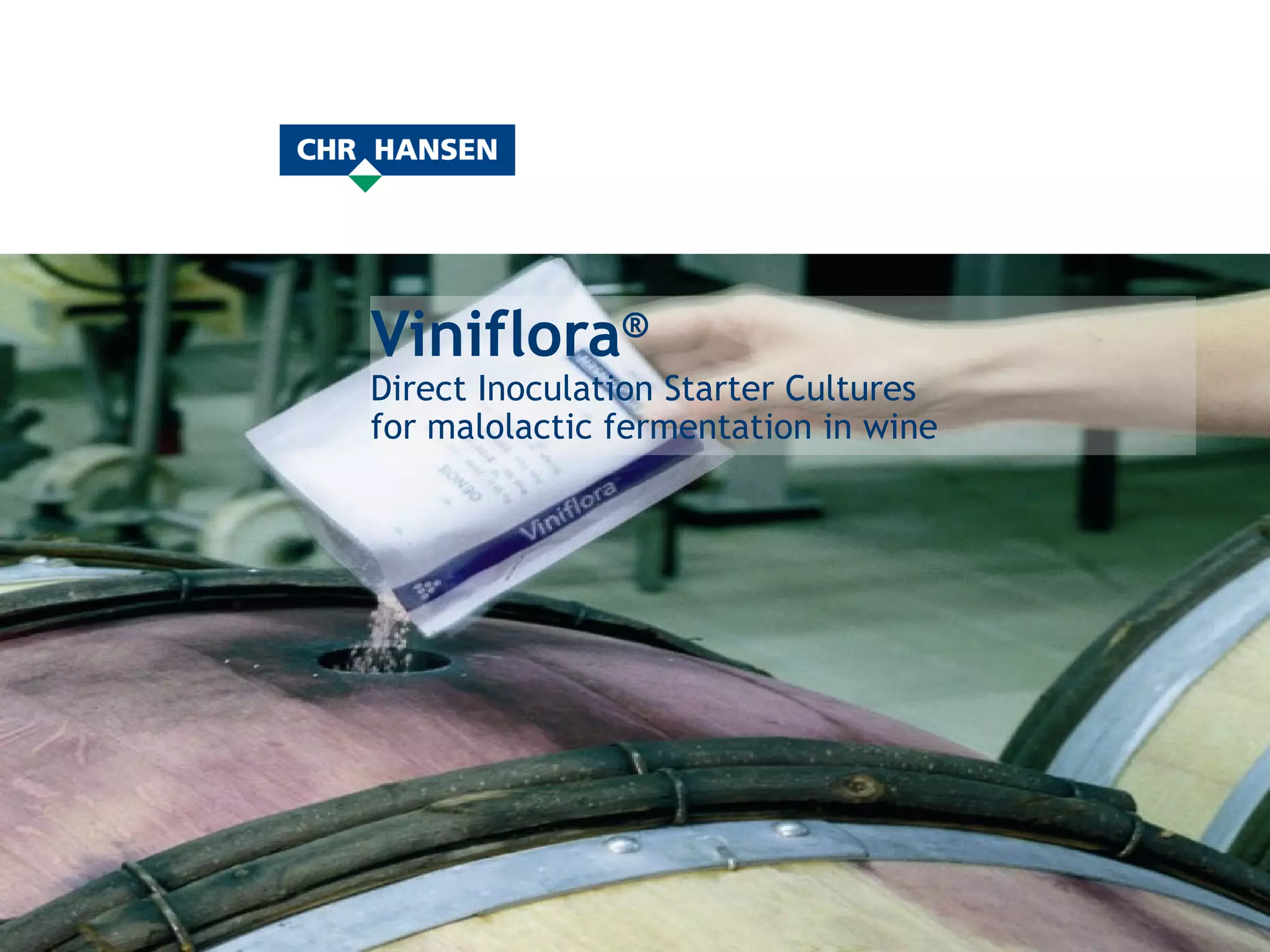
Viniflora ® Direct Inoculation Starter Cultures  for malolactic fermentation in wine
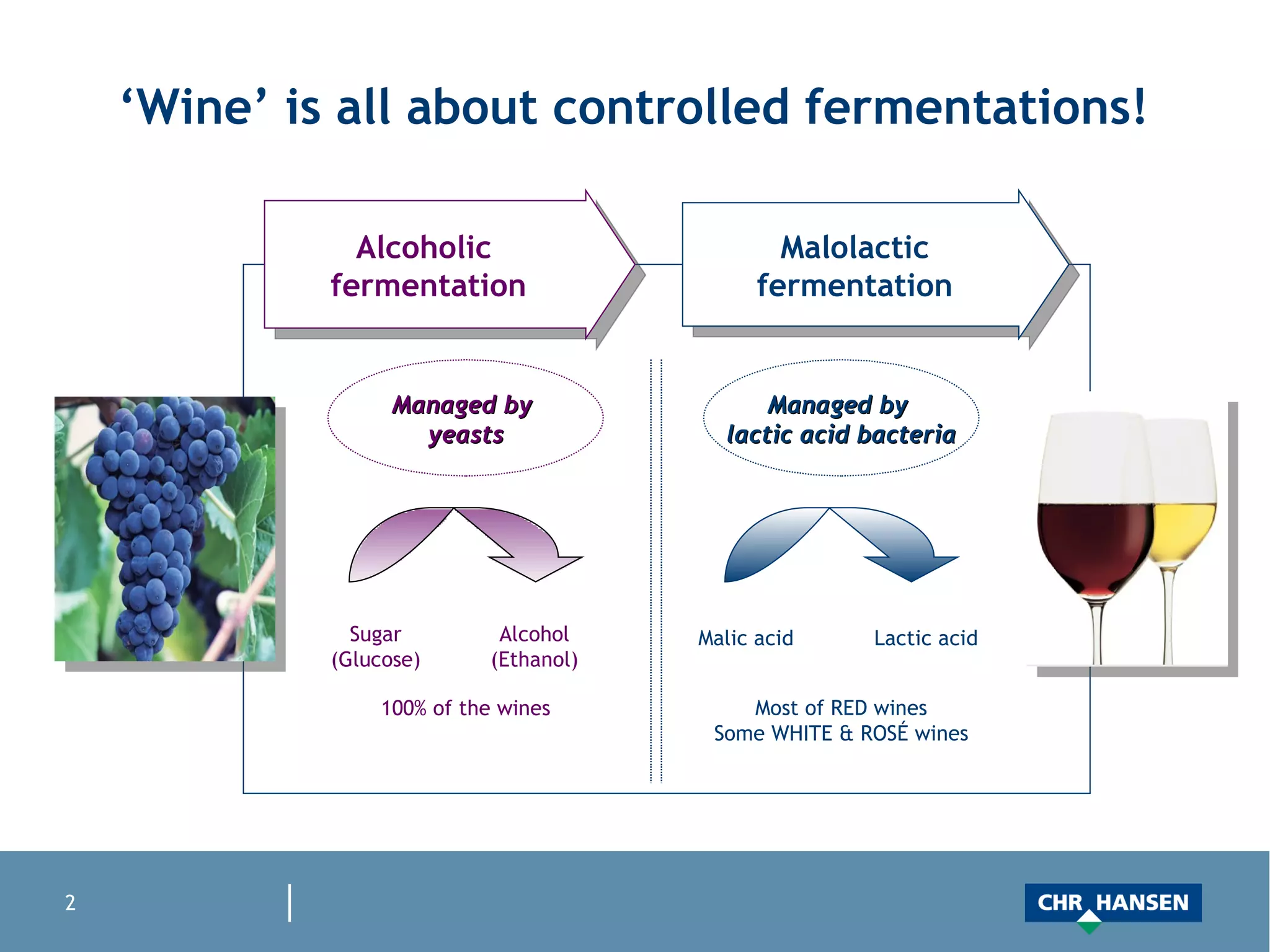
‘Wine’ is all about controlled fermentations! Alcoholic  fermentation Malolactic fermentation Managed by  yeasts Managed by  lactic acid bacteria Sugar (Glucose) Alcohol (Ethanol) Malic acid Lactic acid 100% of the wines Most of RED wines Some WHITE & ROSÉ wines
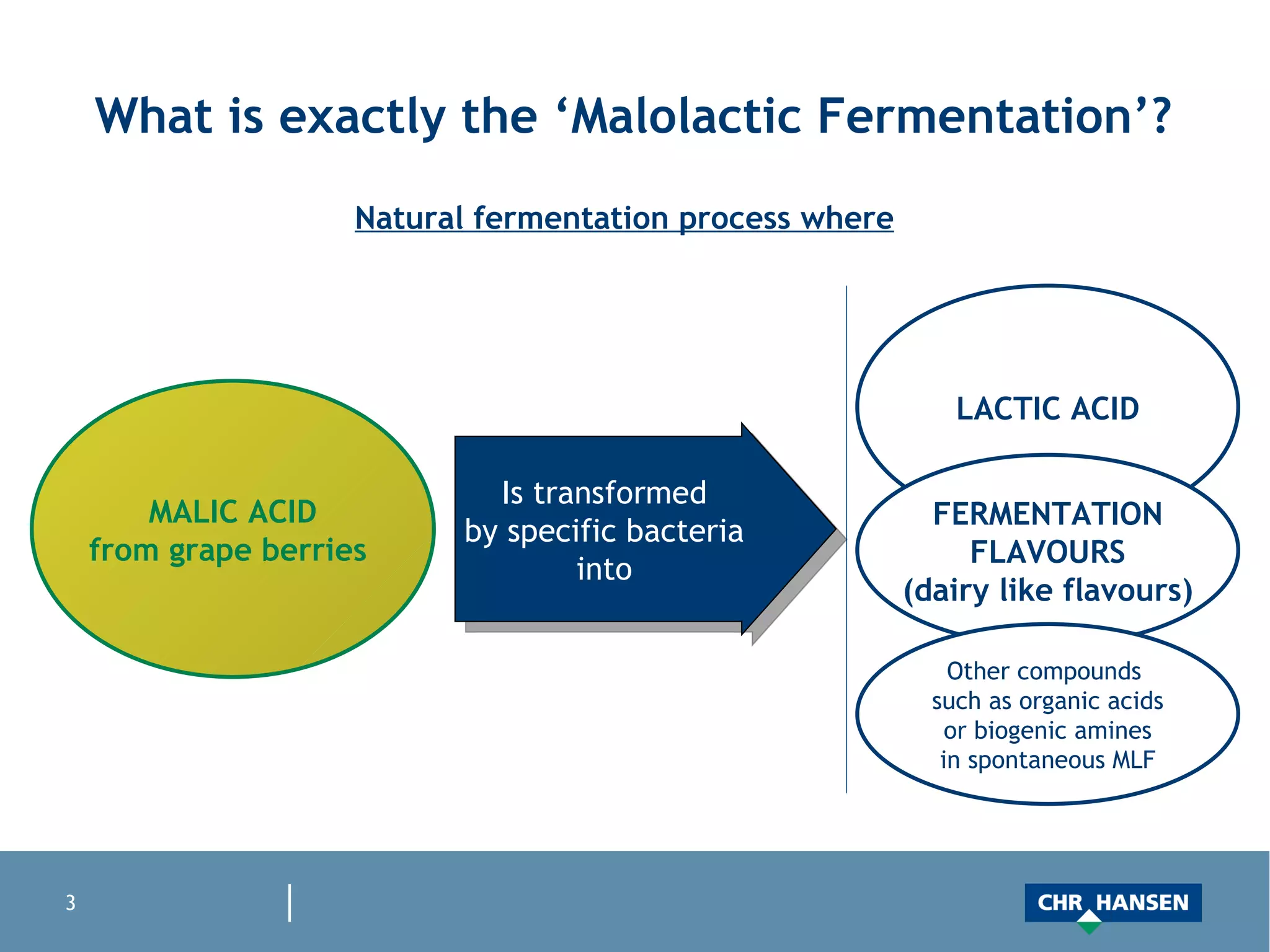
What is exactly the ‘Malolactic Fermentation’? MALIC ACID from grape berries  Is transformed by specific bacteria into Natural fermentation process where LACTIC ACID FERMENTATION FLAVOURS (dairy like flavours) Other compounds  such as organic acids or biogenic amines in spontaneous MLF
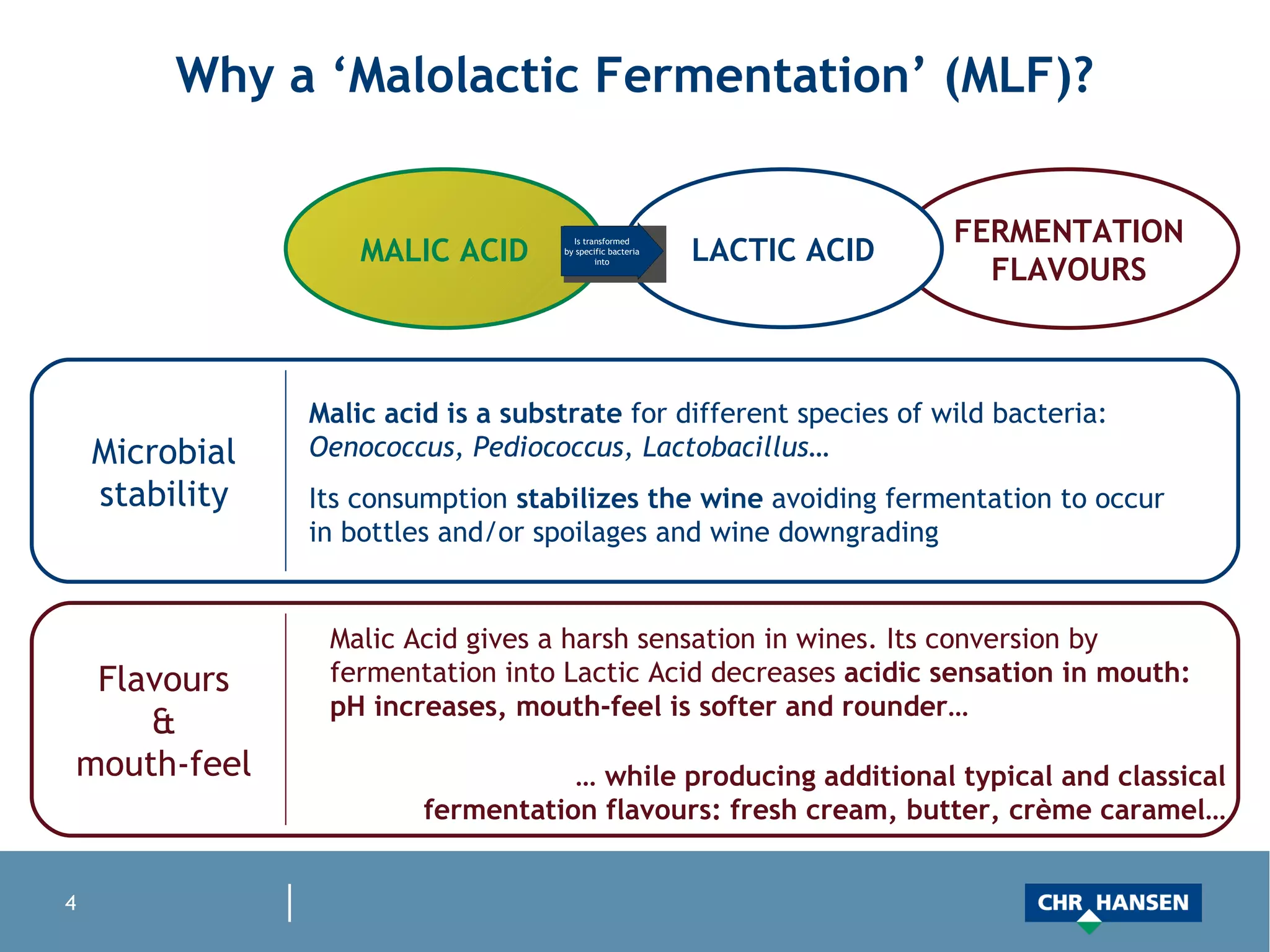
Why a ‘Malolactic Fermentation’ (MLF)? Malic acid is a substrate  for different species of wild bacteria:  Oenococcus, Pediococcus, Lactobacillus … Its consumption  stabilizes the wine  avoiding fermentation to occur in bottles and/or spoilages and wine downgrading Malic Acid gives a harsh sensation in wines. Its conversion by fermentation into Lactic Acid decreases  acidic sensation in mouth:   pH increases,   mouth-feel is softer and rounder… …  while producing additional typical and classical fermentation flavours: fresh cream, butter, crème caramel… MALIC ACID FERMENTATION FLAVOURS LACTIC ACID Microbial stability Flavours & mouth-feel
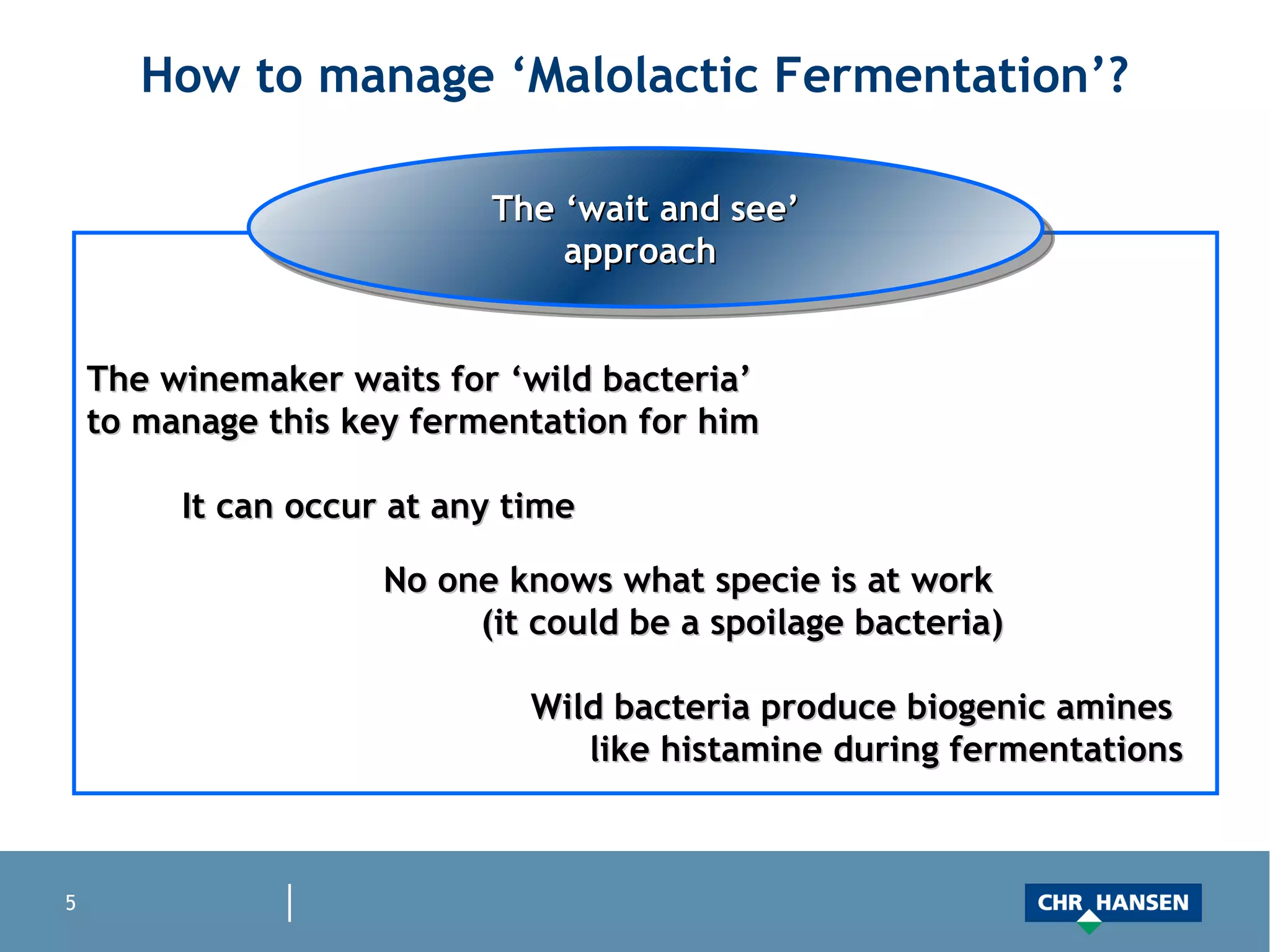
How to manage ‘Malolactic Fermentation’? The ‘wait and see’ approach  The winemaker waits for ‘wild bacteria’  to manage this key fermentation for him It can occur at any time No one knows what specie is at work  (it could be a spoilage bacteria) Wild bacteria produce biogenic amines  like histamine during fermentations
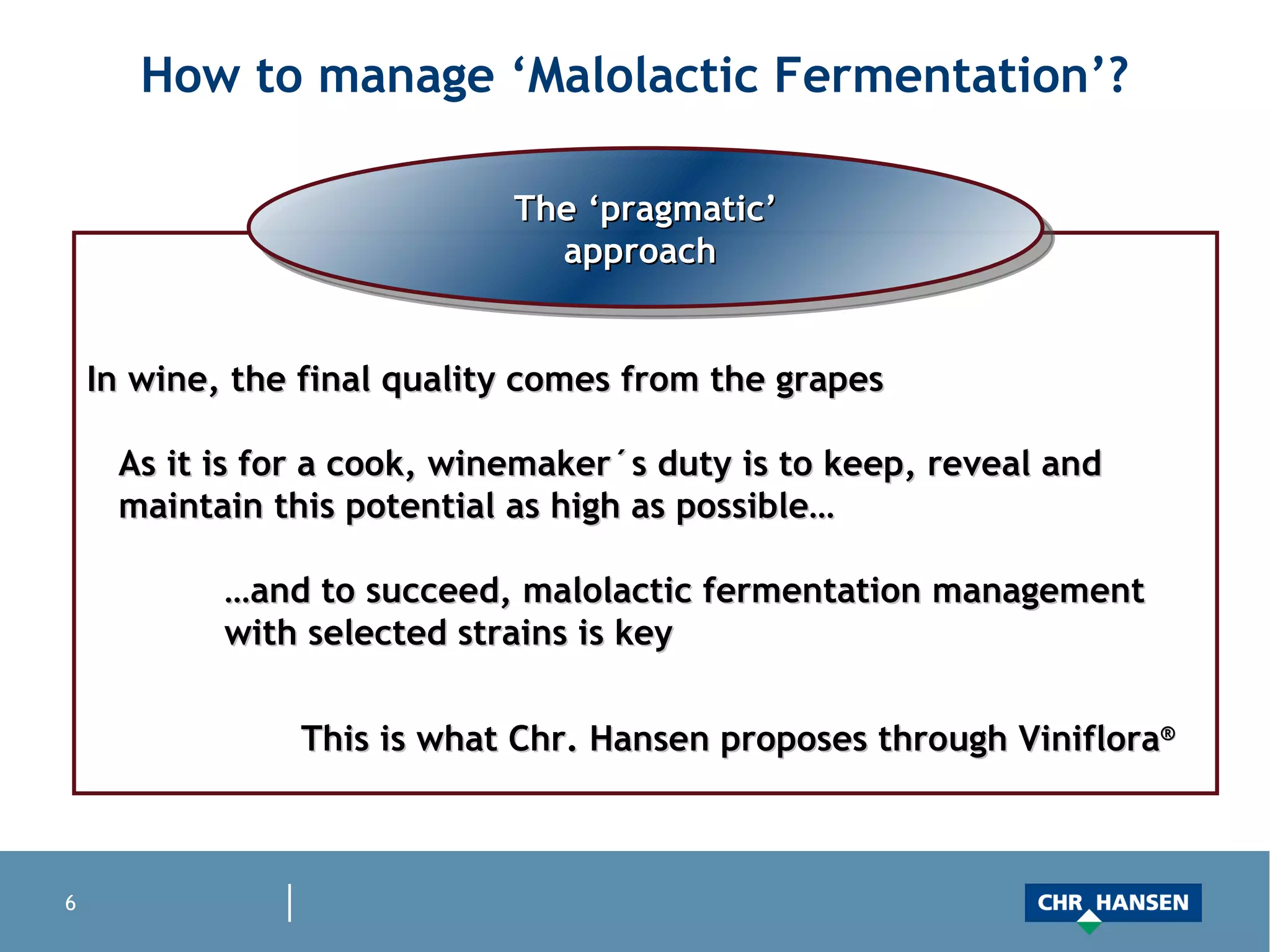
How to manage ‘Malolactic Fermentation’? The ‘pragmatic’ approach  In wine, the final quality comes from the grapes … and to succeed, malolactic fermentation management  with selected strains is key This is what Chr. Hansen proposes through Viniflora ®  As it is for a cook, winemaker´s duty is to keep, reveal and maintain this potential as high as possible…
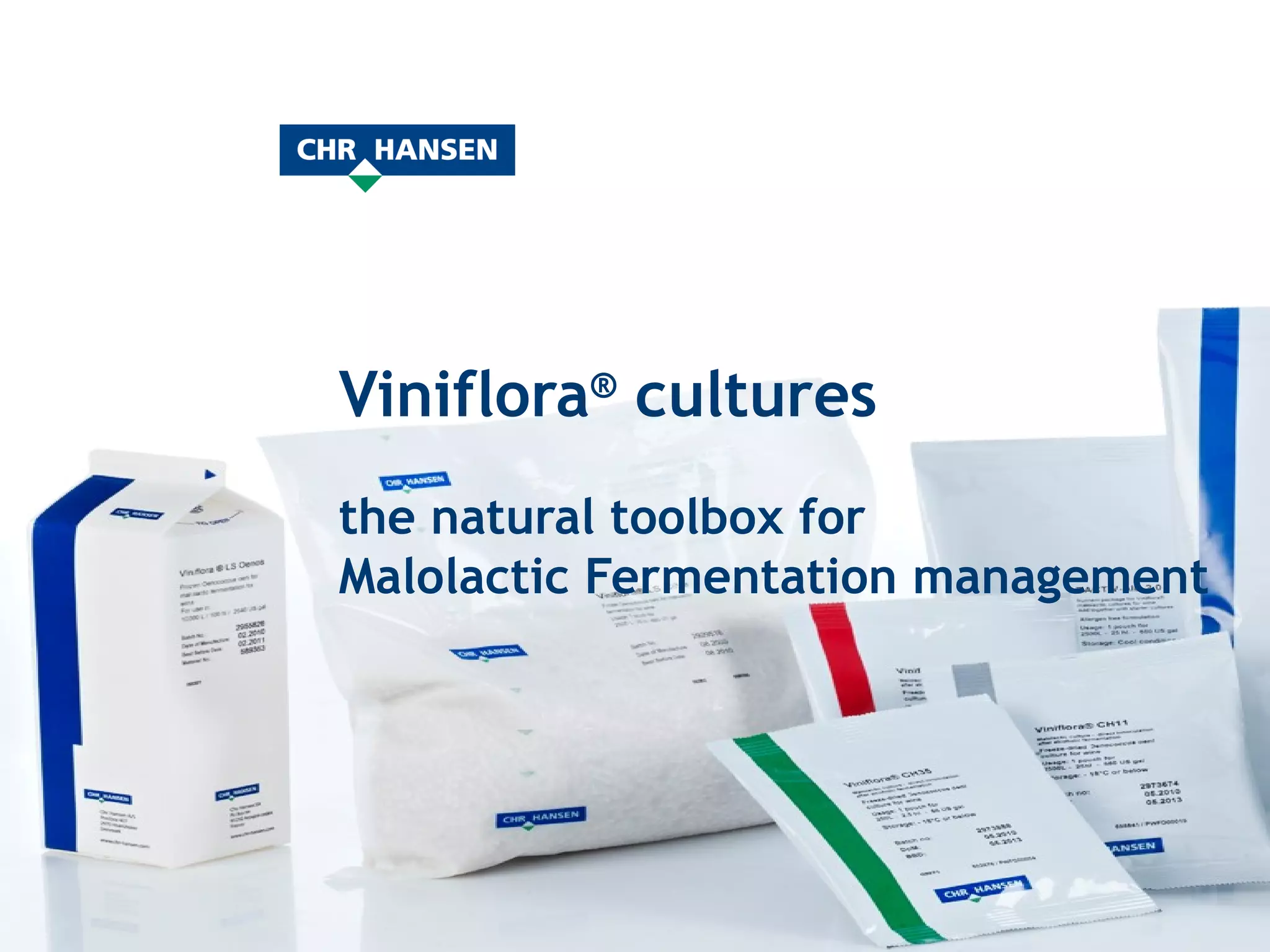
Vintage 2009 / 2010 Viniflora ®  cultures  the natural toolbox for  Malolactic Fermentation management
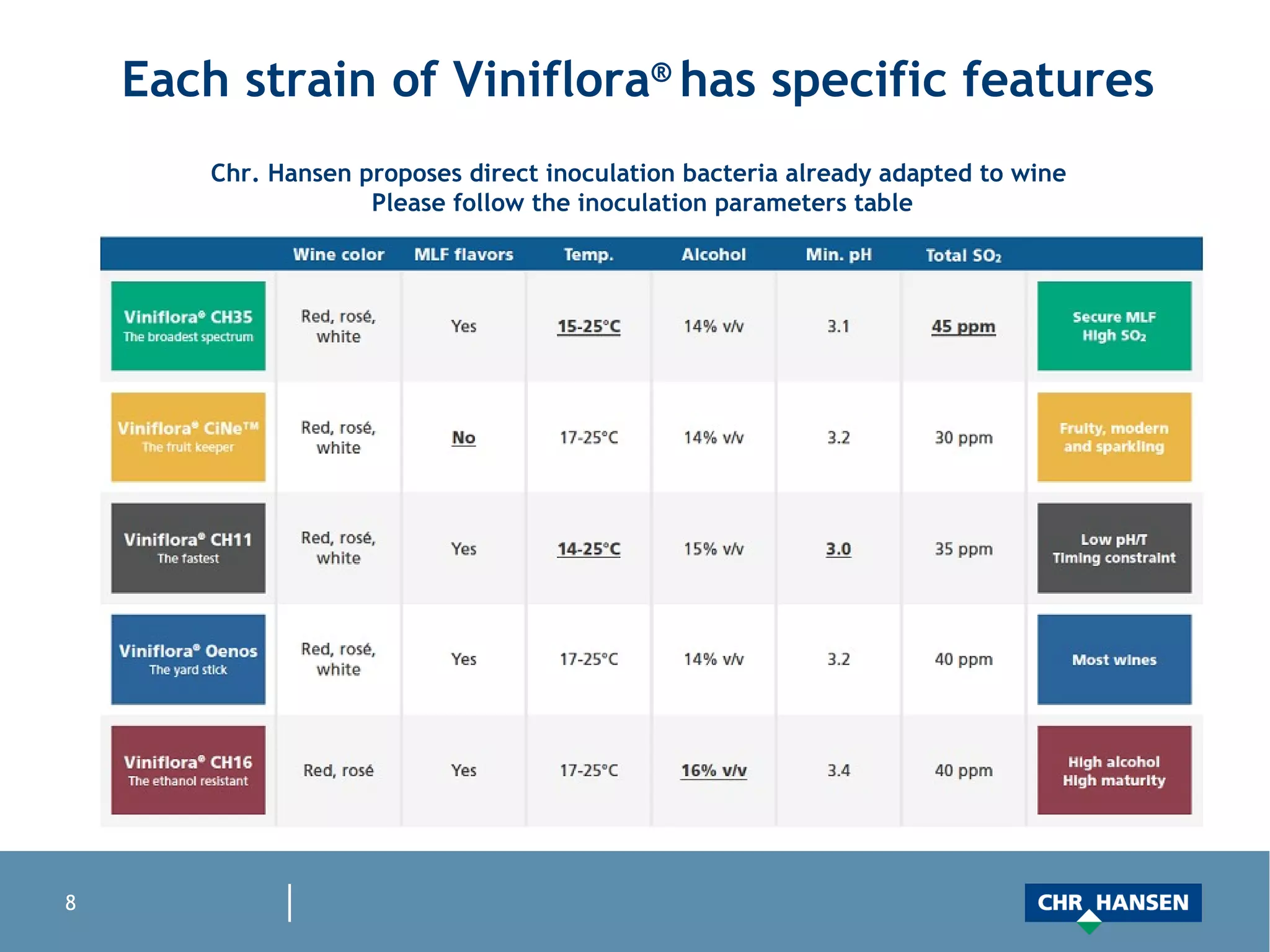
Each strain of Viniflora ®   has specific features   Chr. Hansen proposes direct inoculation bacteria already adapted to wine  Please follow the inoculation parameters table
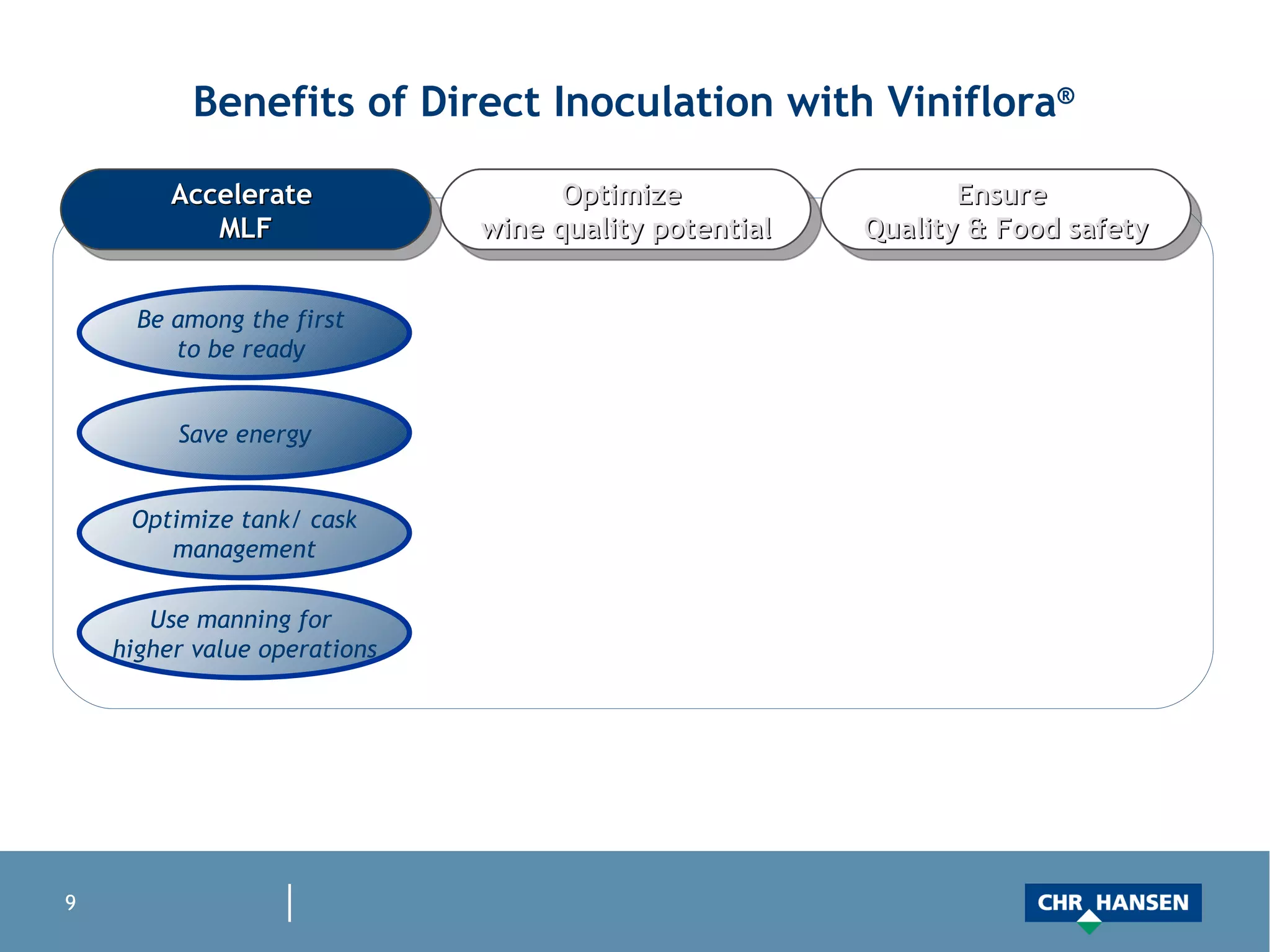
Benefits of Direct Inoculation with Viniflora ® Be among the first  to be ready  Save energy Optimize tank/ cask management Use manning for  higher value operations Accelerate  MLF Ensure  Quality & Food safety Optimize  wine quality potential
Benefits of Direct Inoculation with Viniflora ® Be among the first  to be ready  Save energy Optimize tank/ cask management Use manning for  higher value operations Accelerate  MLF Ensure  Quality & Food safety Optimize  wine quality potential Reduce  costs
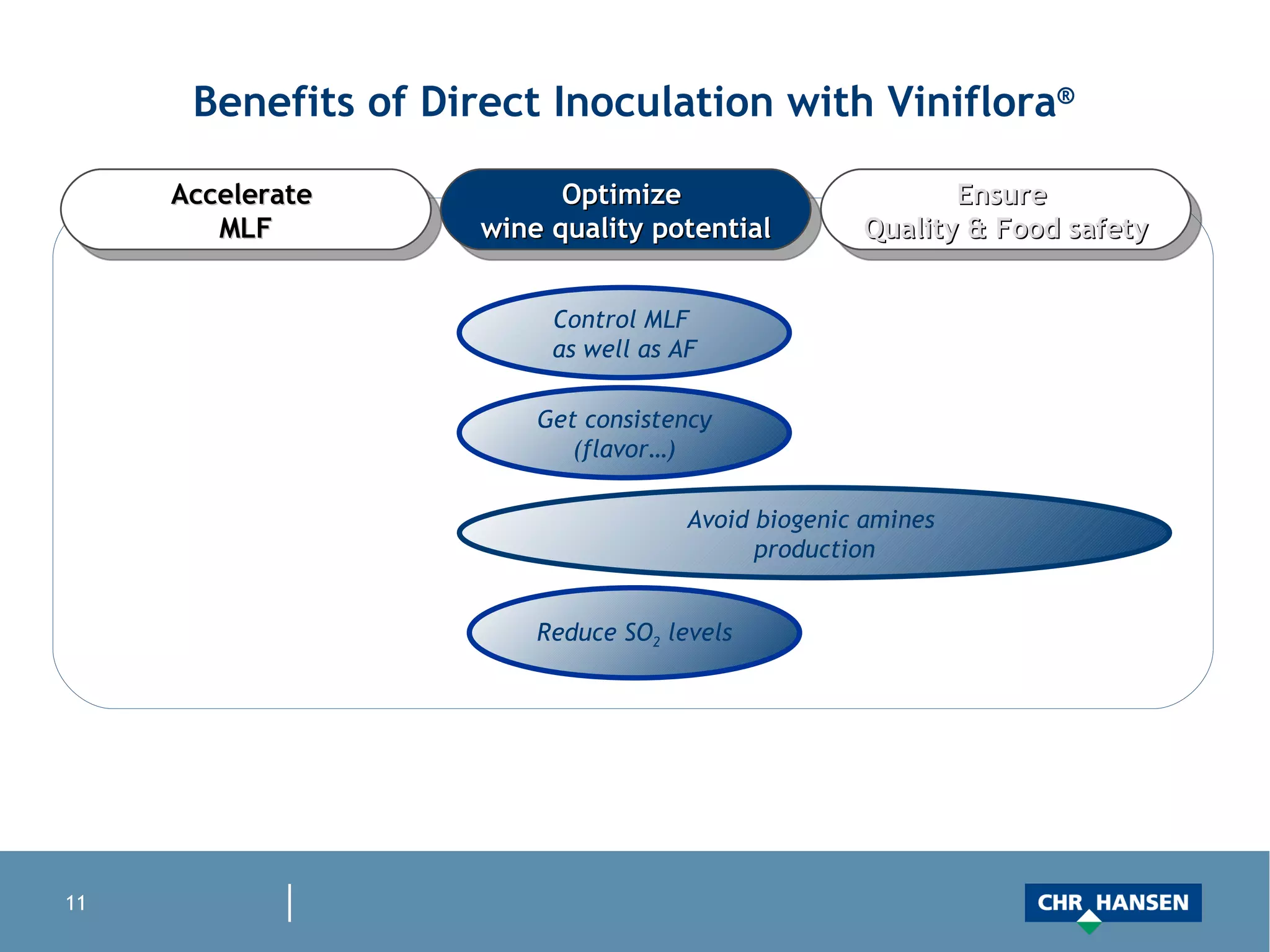
Benefits of Direct Inoculation with Viniflora ® Control MLF  as well as AF Get consistency (flavor…) Avoid biogenic amines  production Reduce SO 2  levels Accelerate  MLF Ensure  Quality & Food safety Optimize  wine quality potential
Benefits of Direct Inoculation with Viniflora ® Control MLF  as well as AF Get consistency (flavor…) Reduce SO 2  levels Accelerate  MLF Ensure  Quality & Food safety Optimize  wine quality potential Reduce  downgrading
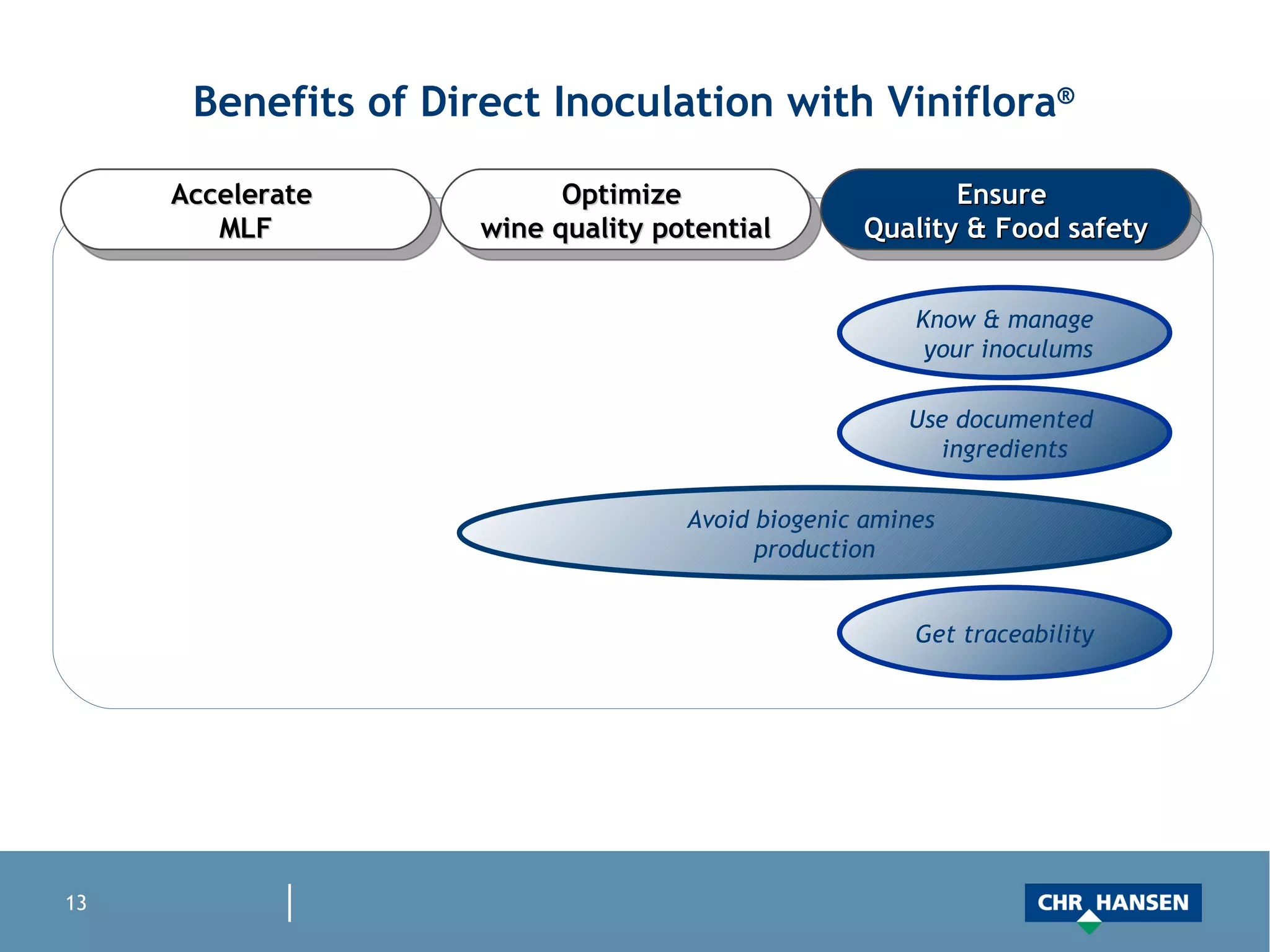
Benefits of Direct Inoculation with Viniflora ® Know & manage  your inoculums Use documented  ingredients Avoid biogenic amines  production Get traceability Accelerate  MLF Ensure  Quality & Food safety Optimize  wine quality potential
Benefits of Direct Inoculation with Viniflora ® Accelerate  MLF Ensure  Quality & Food safety Optimize  wine quality potential Improve  negotiating  position
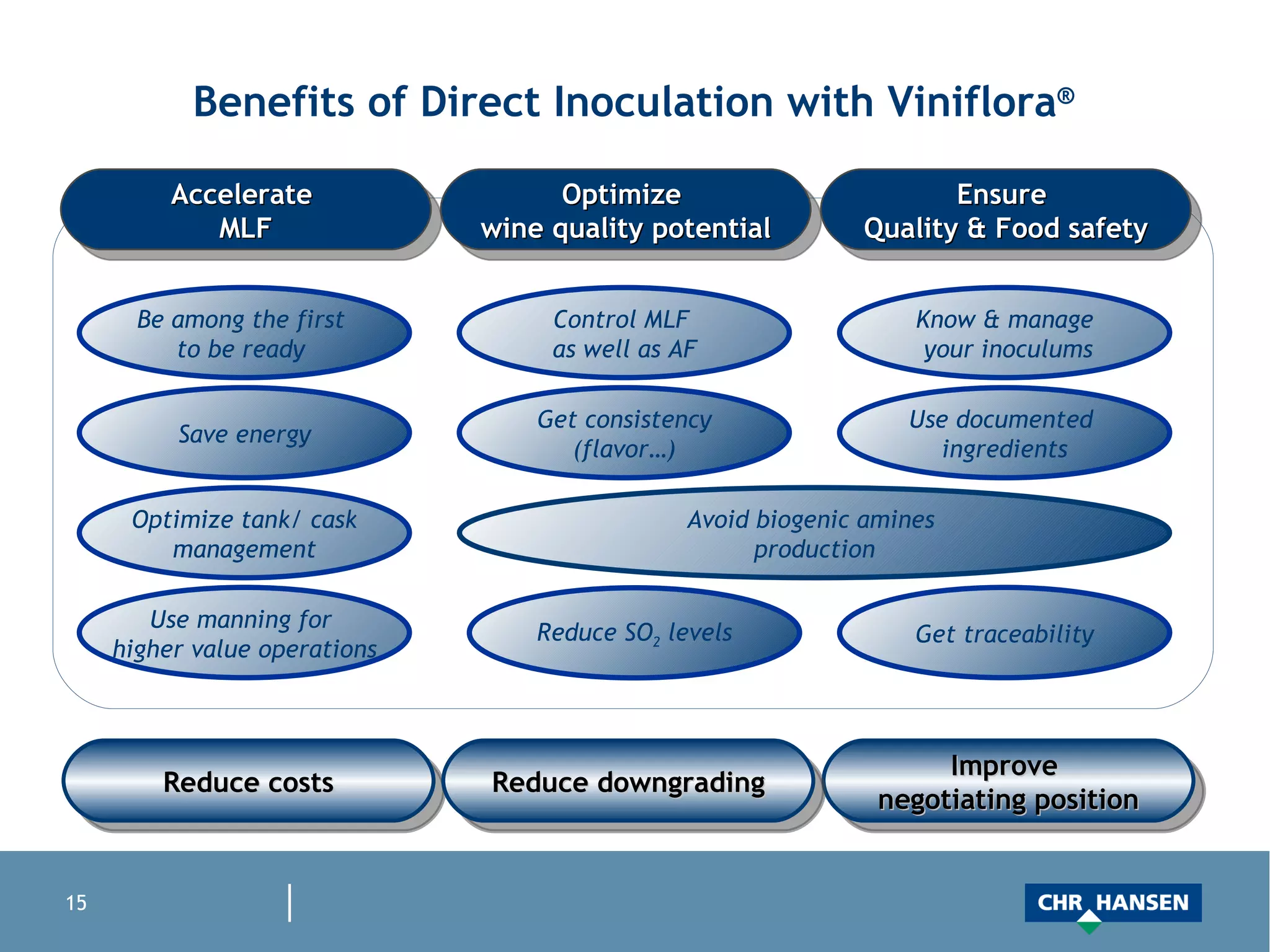
Benefits of Direct Inoculation with Viniflora ® Be among the first  to be ready  Save energy Optimize tank/ cask management Control MLF  as well as AF Use manning for  higher value operations Know & manage  your inoculums Get consistency (flavor…) Use documented  ingredients Avoid biogenic amines  production Get traceability Reduce SO 2  levels Accelerate  MLF Ensure  Quality & Food safety Optimize  wine quality potential Reduce costs Improve  negotiating position Reduce downgrading
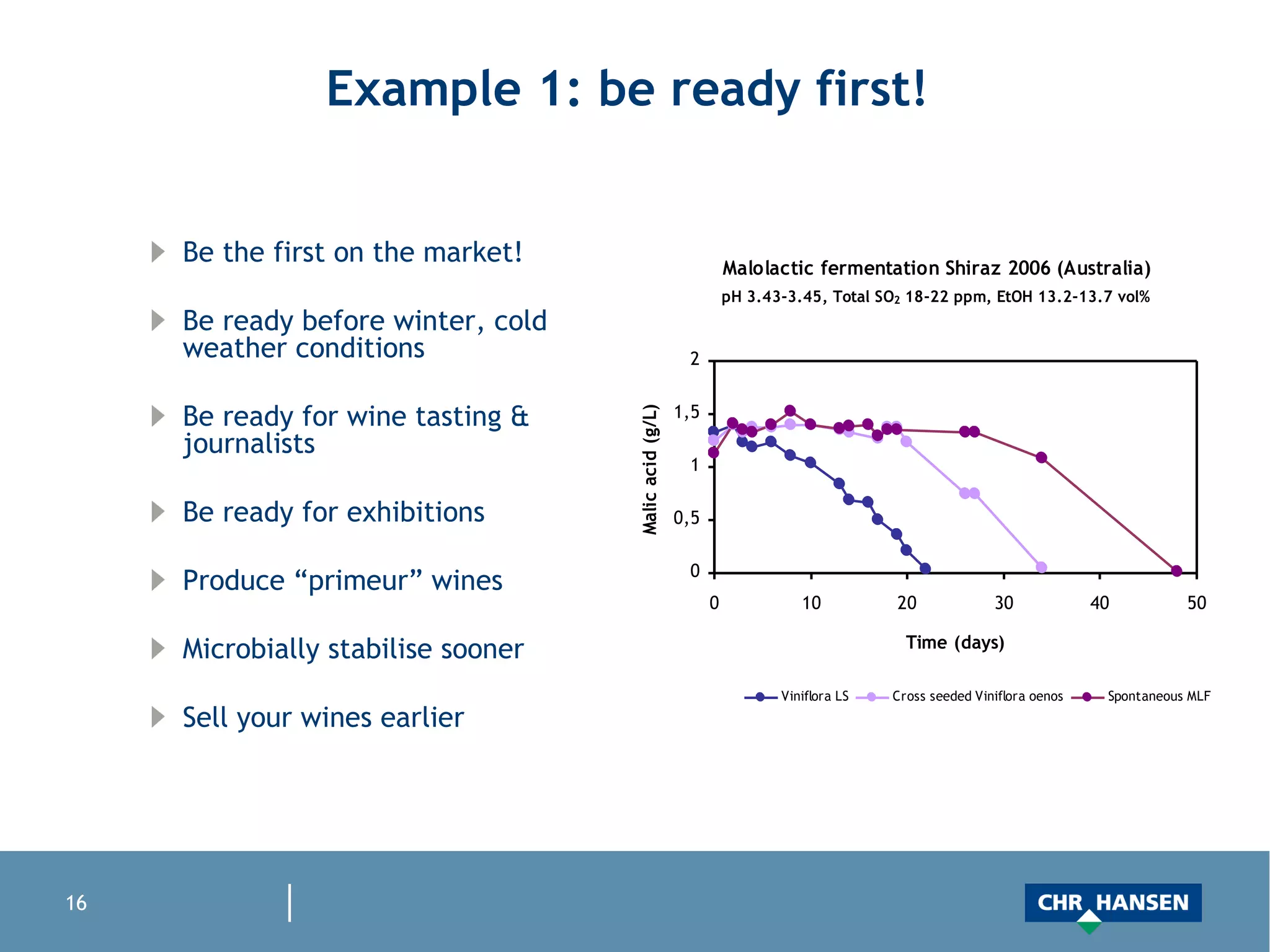
Example 1: be ready first!  Be the first on the market! Be ready before winter, cold weather conditions  Be ready for wine tasting & journalists  Be ready for exhibitions Produce “primeur” wines Microbially stabilise sooner Sell your wines earlier
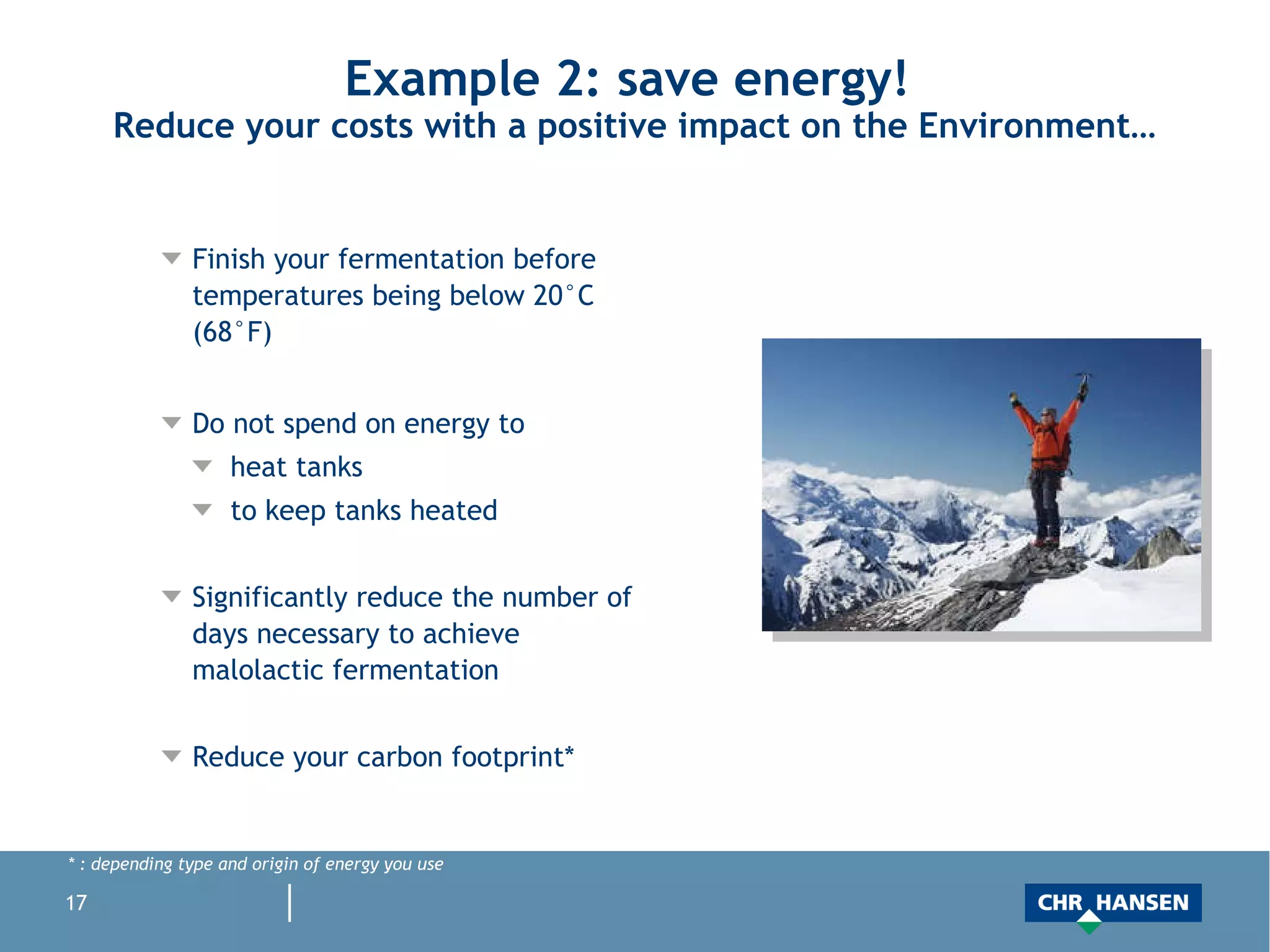
Example 2: save energy!  Reduce your costs with a positive impact on the Environment… Finish your fermentation before temperatures being below 20°C (68°F)  Do not spend on energy to heat tanks to keep tanks heated Significantly reduce the number of days necessary to achieve malolactic fermentation Reduce your carbon footprint* * : depending type and origin of energy you use
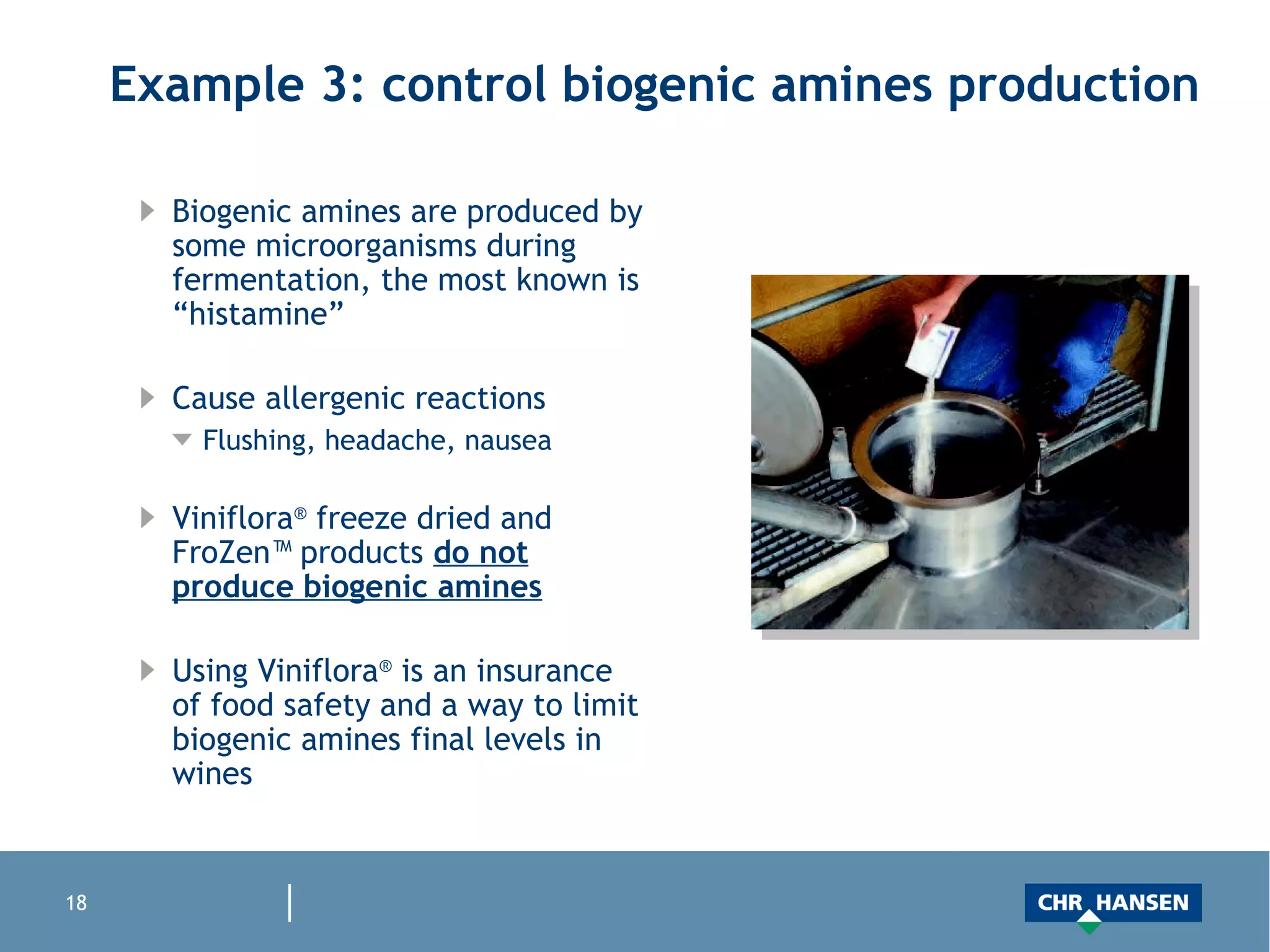
Example 3: control biogenic amines production Biogenic amines are produced by some microorganisms during fermentation, the most known is “histamine” Cause allergenic reactions Flushing, headache, nausea Viniflora ®  freeze dried and FroZen™ products  do not produce biogenic amines Using Viniflora ®  is an insurance of food safety and a way to limit biogenic amines final levels in wines
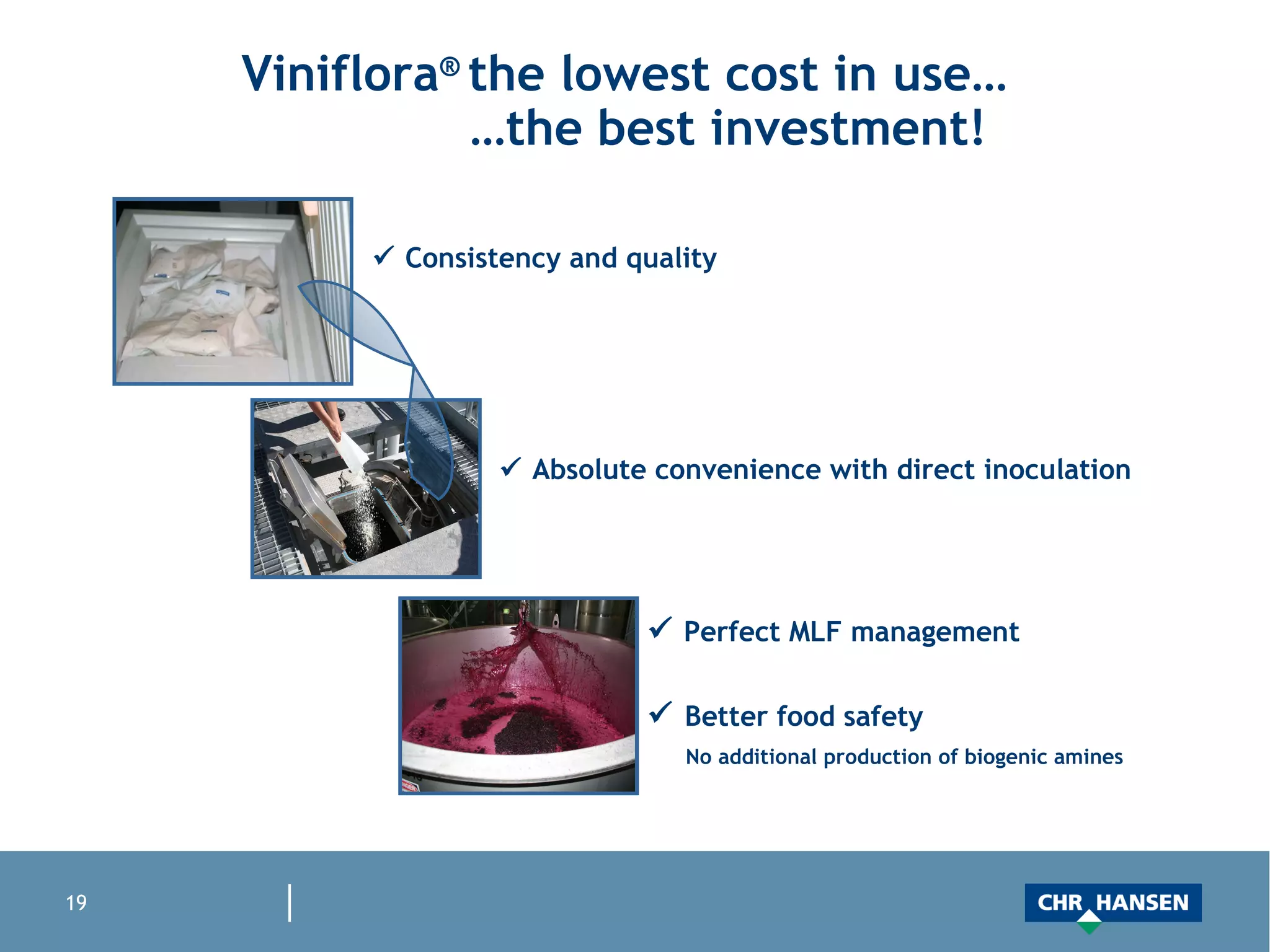
Viniflora ®  the lowest cost in use…   …the best investment!    Absolute convenience with direct inoculation    Consistency and quality    Perfect MLF management    Better food safety   No additional production of biogenic amines
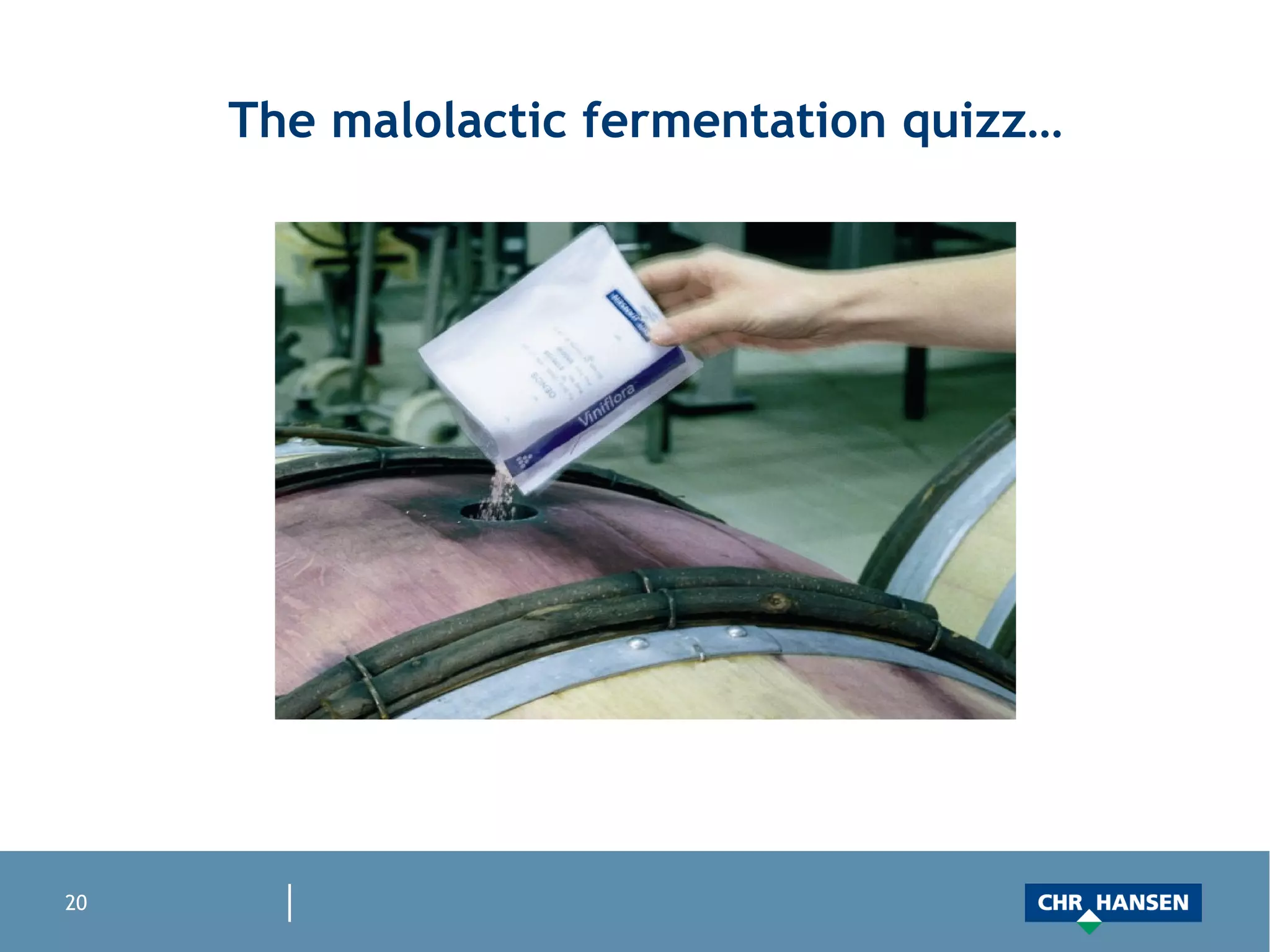
The malolactic fermentation quizz…
If you are unsure about one of the following  words then find what is exactly behind through our website!
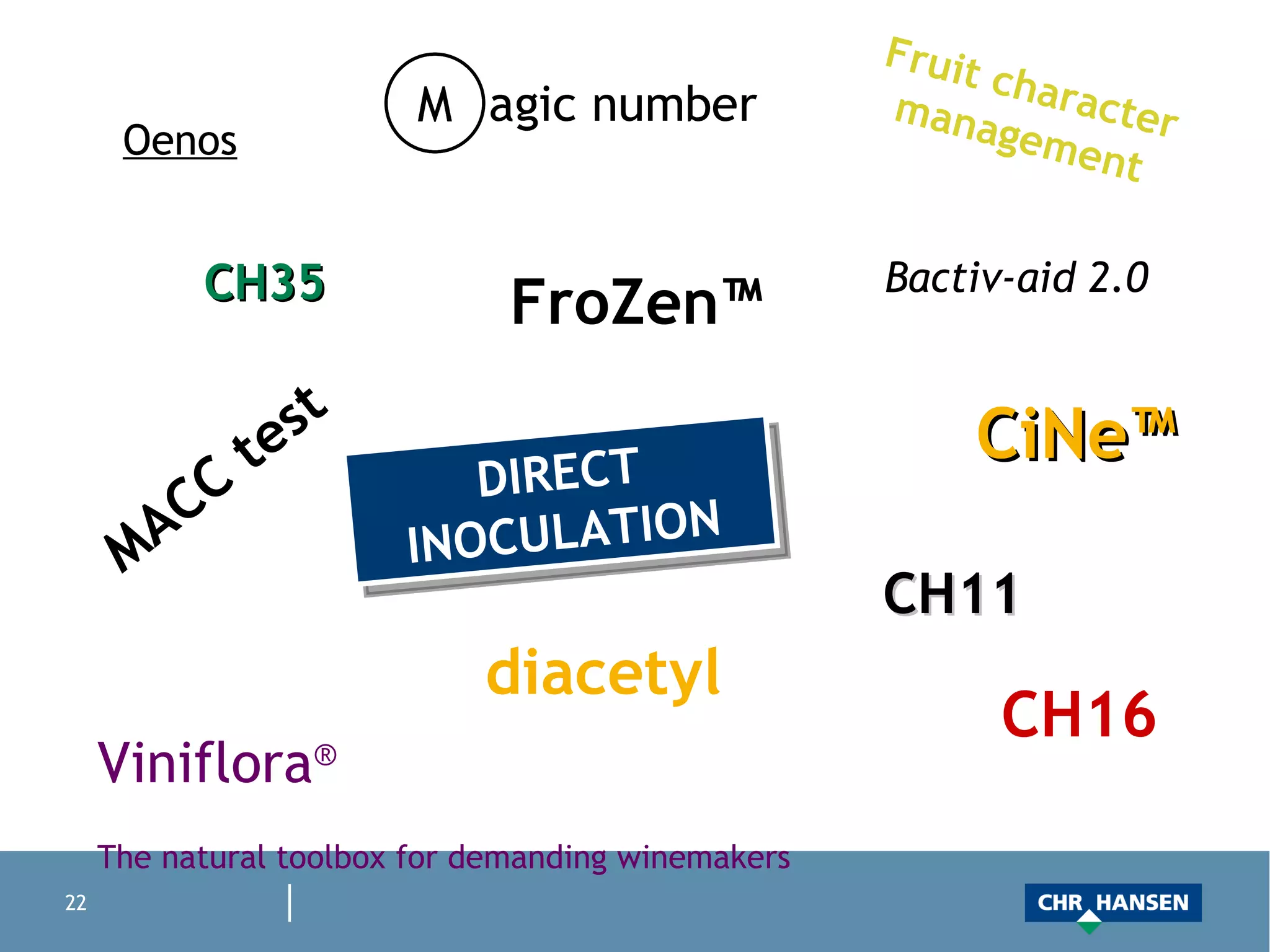
Viniflora ® The natural toolbox for demanding winemakers MACC test CiNe™ CH16 CH11 CH35 Bactiv-aid 2.0 FroZen™ Oenos DIRECT INOCULATION diacetyl Fruit character management
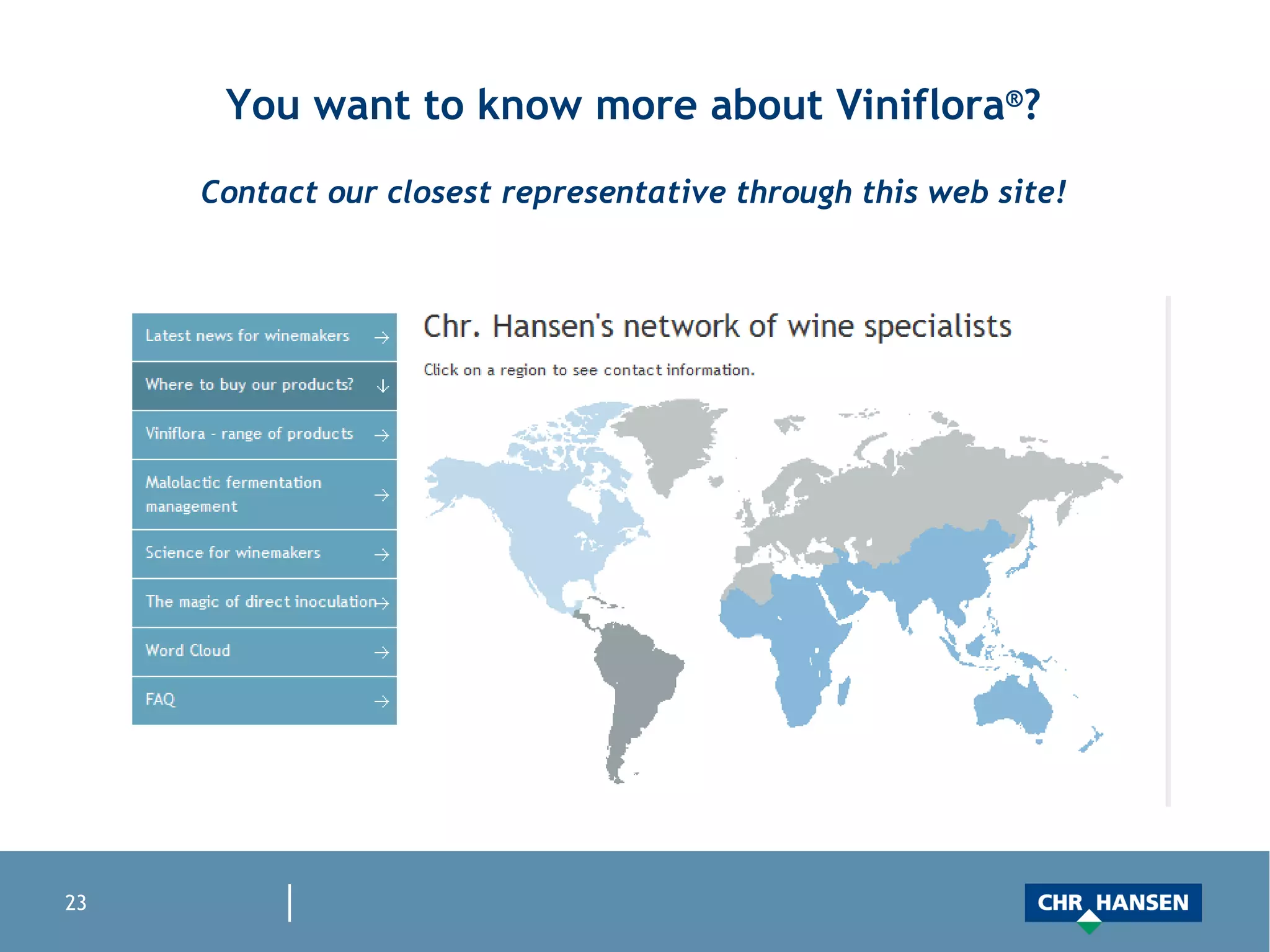
You want to know more about Viniflora ® ? Contact our closest representative through this web site!

Web malolactic fermentation management with viniflora

  • 1.
    Viniflora ® DirectInoculation Starter Cultures for malolactic fermentation in wine
  • 2.
    ‘Wine’ is allabout controlled fermentations! Alcoholic fermentation Malolactic fermentation Managed by yeasts Managed by lactic acid bacteria Sugar (Glucose) Alcohol (Ethanol) Malic acid Lactic acid 100% of the wines Most of RED wines Some WHITE & ROSÉ wines
  • 3.
    What is exactlythe ‘Malolactic Fermentation’? MALIC ACID from grape berries Is transformed by specific bacteria into Natural fermentation process where LACTIC ACID FERMENTATION FLAVOURS (dairy like flavours) Other compounds such as organic acids or biogenic amines in spontaneous MLF
  • 4.
    Why a ‘MalolacticFermentation’ (MLF)? Malic acid is a substrate for different species of wild bacteria: Oenococcus, Pediococcus, Lactobacillus … Its consumption stabilizes the wine avoiding fermentation to occur in bottles and/or spoilages and wine downgrading Malic Acid gives a harsh sensation in wines. Its conversion by fermentation into Lactic Acid decreases acidic sensation in mouth: pH increases, mouth-feel is softer and rounder… … while producing additional typical and classical fermentation flavours: fresh cream, butter, crème caramel… MALIC ACID FERMENTATION FLAVOURS LACTIC ACID Microbial stability Flavours & mouth-feel
  • 5.
    How to manage‘Malolactic Fermentation’? The ‘wait and see’ approach The winemaker waits for ‘wild bacteria’ to manage this key fermentation for him It can occur at any time No one knows what specie is at work (it could be a spoilage bacteria) Wild bacteria produce biogenic amines like histamine during fermentations
  • 6.
    How to manage‘Malolactic Fermentation’? The ‘pragmatic’ approach In wine, the final quality comes from the grapes … and to succeed, malolactic fermentation management with selected strains is key This is what Chr. Hansen proposes through Viniflora ® As it is for a cook, winemaker´s duty is to keep, reveal and maintain this potential as high as possible…
  • 7.
    Vintage 2009 /2010 Viniflora ® cultures the natural toolbox for Malolactic Fermentation management
  • 8.
    Each strain ofViniflora ® has specific features Chr. Hansen proposes direct inoculation bacteria already adapted to wine Please follow the inoculation parameters table
  • 9.
    Benefits of DirectInoculation with Viniflora ® Be among the first to be ready Save energy Optimize tank/ cask management Use manning for higher value operations Accelerate MLF Ensure Quality & Food safety Optimize wine quality potential
  • 10.
    Benefits of DirectInoculation with Viniflora ® Be among the first to be ready Save energy Optimize tank/ cask management Use manning for higher value operations Accelerate MLF Ensure Quality & Food safety Optimize wine quality potential Reduce costs
  • 11.
    Benefits of DirectInoculation with Viniflora ® Control MLF as well as AF Get consistency (flavor…) Avoid biogenic amines production Reduce SO 2 levels Accelerate MLF Ensure Quality & Food safety Optimize wine quality potential
  • 12.
    Benefits of DirectInoculation with Viniflora ® Control MLF as well as AF Get consistency (flavor…) Reduce SO 2 levels Accelerate MLF Ensure Quality & Food safety Optimize wine quality potential Reduce downgrading
  • 13.
    Benefits of DirectInoculation with Viniflora ® Know & manage your inoculums Use documented ingredients Avoid biogenic amines production Get traceability Accelerate MLF Ensure Quality & Food safety Optimize wine quality potential
  • 14.
    Benefits of DirectInoculation with Viniflora ® Accelerate MLF Ensure Quality & Food safety Optimize wine quality potential Improve negotiating position
  • 15.
    Benefits of DirectInoculation with Viniflora ® Be among the first to be ready Save energy Optimize tank/ cask management Control MLF as well as AF Use manning for higher value operations Know & manage your inoculums Get consistency (flavor…) Use documented ingredients Avoid biogenic amines production Get traceability Reduce SO 2 levels Accelerate MLF Ensure Quality & Food safety Optimize wine quality potential Reduce costs Improve negotiating position Reduce downgrading
  • 16.
    Example 1: beready first! Be the first on the market! Be ready before winter, cold weather conditions Be ready for wine tasting & journalists Be ready for exhibitions Produce “primeur” wines Microbially stabilise sooner Sell your wines earlier
  • 17.
    Example 2: saveenergy! Reduce your costs with a positive impact on the Environment… Finish your fermentation before temperatures being below 20°C (68°F) Do not spend on energy to heat tanks to keep tanks heated Significantly reduce the number of days necessary to achieve malolactic fermentation Reduce your carbon footprint* * : depending type and origin of energy you use
  • 18.
    Example 3: controlbiogenic amines production Biogenic amines are produced by some microorganisms during fermentation, the most known is “histamine” Cause allergenic reactions Flushing, headache, nausea Viniflora ® freeze dried and FroZen™ products do not produce biogenic amines Using Viniflora ® is an insurance of food safety and a way to limit biogenic amines final levels in wines
  • 19.
    Viniflora ® the lowest cost in use… …the best investment!  Absolute convenience with direct inoculation  Consistency and quality  Perfect MLF management  Better food safety No additional production of biogenic amines
  • 20.
  • 21.
    If you areunsure about one of the following words then find what is exactly behind through our website!
  • 22.
    Viniflora ® Thenatural toolbox for demanding winemakers MACC test CiNe™ CH16 CH11 CH35 Bactiv-aid 2.0 FroZen™ Oenos DIRECT INOCULATION diacetyl Fruit character management
  • 23.
    You want toknow more about Viniflora ® ? Contact our closest representative through this web site!