

A computer software application that is
hosted in a browser controlled
environment.



Any application that uses web browser
as a client.



Google document and spreadsheet is a
fine example of web application


Web application development process
are procedures and standards of
developing a web application



Web application development process
has defined stages or phases



Development process follows a certain
sequence
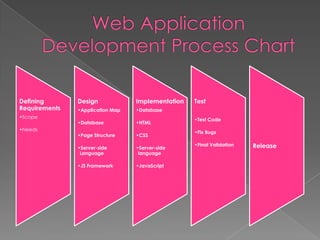
Defining
Requirements
•Scope

•Needs

Design

Implementation

•Application Map

•Database

•Database

•HTML

•Page Structure

•CSS

•Server-side
Language

•Server-side
language

•JS Framework

•JavaScript

Test
•Test Code

•Fix Bugs
•Final Validation

Release


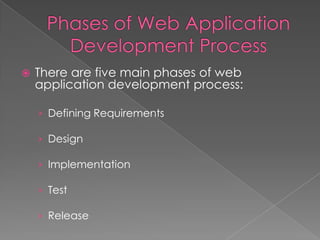
There are five main phases of web
application development process:
› Defining Requirements
› Design
› Implementation
› Test
› Release


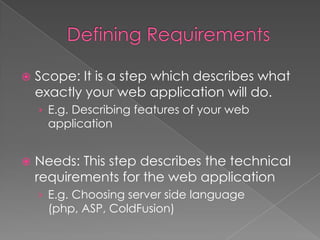
Scope: It is a step which describes what
exactly your web application will do.
› E.g. Describing features of your web

application



Needs: This step describes the technical
requirements for the web application
› E.g. Choosing server side language

(php, ASP, ColdFusion)


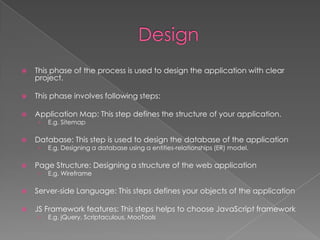
This phase of the process is used to design the application with clear
project.



This phase involves following steps:



Application Map: This step defines the structure of your application.
›



Database: This step is used to design the database of the application
›



E.g. Sitemap

E.g. Designing a database using a entities-relationships (ER) model.

Page Structure: Designing a structure of the web application
›

E.g. Wireframe



Server-side Language: This steps defines your objects of the application



JS Framework features: This steps helps to choose JavaScript framework
›

E.g. jQuery, Scriptaculous, MooTools


This phase is the most important phase of
web application development process
where application idea comes in to
realization.


This steps involves following steps:



Database: This step is all about writing SQL code and creating
tables, attributes and relationships.



HTML: This step helps to create html code for the web application



CSS: CSS helps to put some style in to your web application



Server-side Language: This step defines application class, Database
interactions and anything which needs server side interaction



JavaScript: Implementing features like drag and drop and animation
through the framework of choice (For details see Design)


This phase is all about testing your application
in different conditions.

 E.g. running application in different browsers
(Firefox, Chrome, IE)



Test Code: This step is used to test code and
find any errors in the application



Fix Bugs: This step helps to eradicate any errors
in the web application



Final Validation: It is the optimum level of
testing


This phase is all about releasing your web
application to the internet.
› E.g. Launching a web based game through

a particular website.
› Farmville a web based game launched on
Facebook.


Michal Blumenstyk. (2013). “Web
Application Development - Bridging the
Gap between QA and Development.”
http://www.stickyminds.com/sitewide.asp?F
unction=edetail&ObjectType=ART&ObjectI
d=3658



Caesar Fernandes. (2013). “Web
Application Development: A Guide to
Success.”
http://www.sitepoint.com/developmentguide-success/
Presentation Created By
Cygnis Media

Web Application Development Process presented by @Cygnismedia

  • 2.
     A computer softwareapplication that is hosted in a browser controlled environment.  Any application that uses web browser as a client.  Google document and spreadsheet is a fine example of web application
  • 3.
     Web application developmentprocess are procedures and standards of developing a web application  Web application development process has defined stages or phases  Development process follows a certain sequence
  • 4.
  • 5.
     There are fivemain phases of web application development process: › Defining Requirements › Design › Implementation › Test › Release
  • 6.
     Scope: It isa step which describes what exactly your web application will do. › E.g. Describing features of your web application  Needs: This step describes the technical requirements for the web application › E.g. Choosing server side language (php, ASP, ColdFusion)
  • 8.
     This phase ofthe process is used to design the application with clear project.  This phase involves following steps:  Application Map: This step defines the structure of your application. ›  Database: This step is used to design the database of the application ›  E.g. Sitemap E.g. Designing a database using a entities-relationships (ER) model. Page Structure: Designing a structure of the web application › E.g. Wireframe  Server-side Language: This steps defines your objects of the application  JS Framework features: This steps helps to choose JavaScript framework › E.g. jQuery, Scriptaculous, MooTools
  • 9.
     This phase isthe most important phase of web application development process where application idea comes in to realization.
  • 10.
     This steps involvesfollowing steps:  Database: This step is all about writing SQL code and creating tables, attributes and relationships.  HTML: This step helps to create html code for the web application  CSS: CSS helps to put some style in to your web application  Server-side Language: This step defines application class, Database interactions and anything which needs server side interaction  JavaScript: Implementing features like drag and drop and animation through the framework of choice (For details see Design)
  • 11.
     This phase isall about testing your application in different conditions.  E.g. running application in different browsers (Firefox, Chrome, IE)  Test Code: This step is used to test code and find any errors in the application  Fix Bugs: This step helps to eradicate any errors in the web application  Final Validation: It is the optimum level of testing
  • 12.
     This phase isall about releasing your web application to the internet. › E.g. Launching a web based game through a particular website. › Farmville a web based game launched on Facebook.
  • 13.
     Michal Blumenstyk. (2013).“Web Application Development - Bridging the Gap between QA and Development.” http://www.stickyminds.com/sitewide.asp?F unction=edetail&ObjectType=ART&ObjectI d=3658  Caesar Fernandes. (2013). “Web Application Development: A Guide to Success.” http://www.sitepoint.com/developmentguide-success/
  • 14.