Web Accessibility Remediation Process S implified
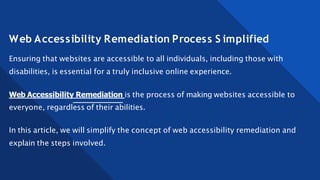
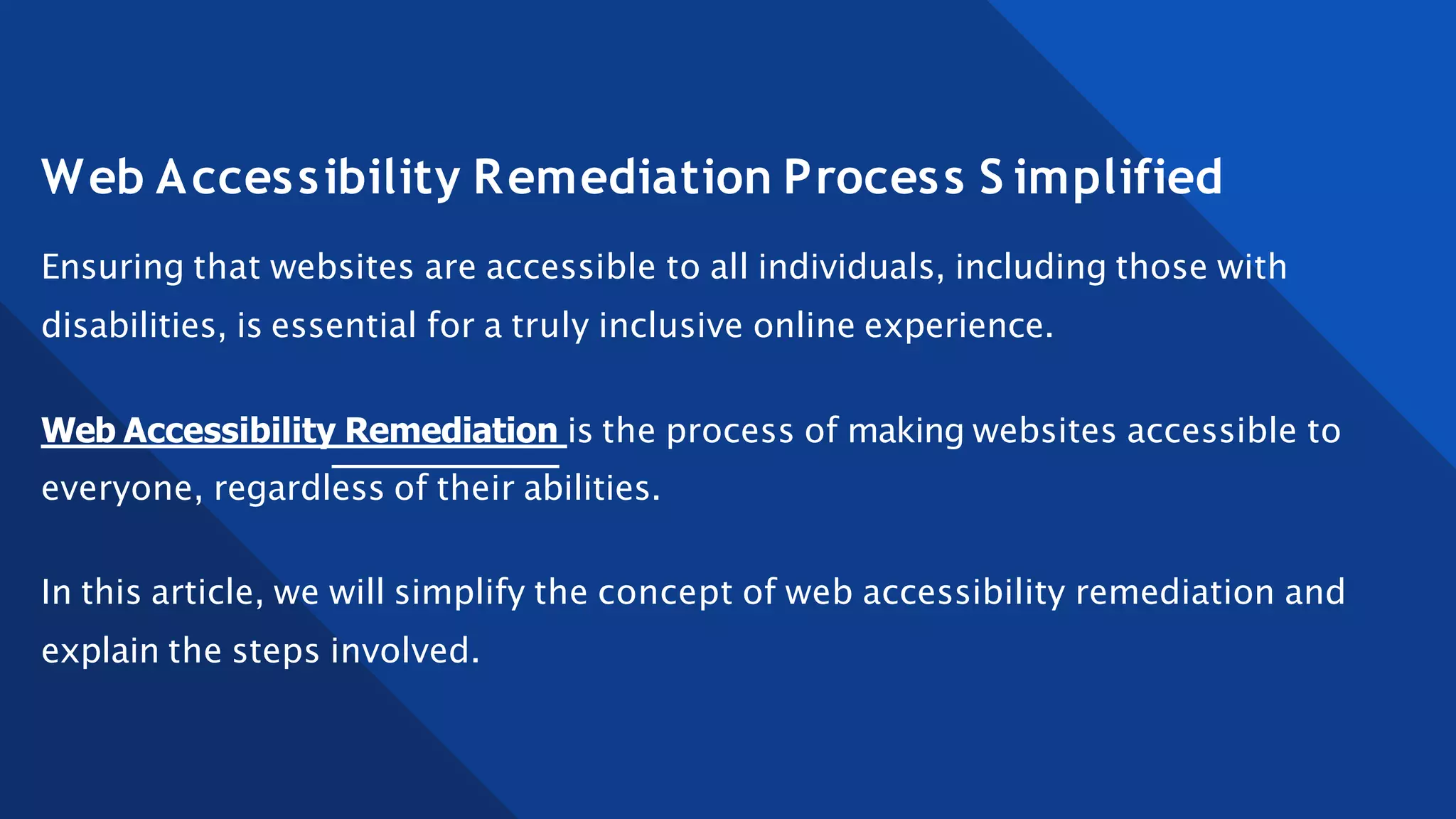
Ensuring that websites are accessible to all individuals, including those with
disabilities, is essential for a truly inclusive online experience.
Web Accessibility Remediation is the process of making websites accessible to
everyone, regardless of their abilities.
In this article, we will simplify the concept of web accessibility remediation and
explain the steps involved.
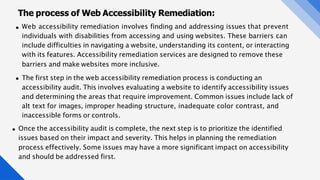
The process of Web Accessibility Remediation:
Web accessibility remediation involves finding and addressing issues that prevent
individuals with disabilities from accessing and using websites. These barriers can
include difficulties in navigating a website, understanding its content, or interacting
with its features. Accessibility remediation services are designed to remove these
barriers and make websites more inclusive.
The first step in the web accessibility remediation process is conducting an
accessibility audit. This involves evaluating a website to identify accessibility issues
and determining the areas that require improvement. Common issues include lack of
alt text for images, improper heading structure, inadequate color contrast, and
inaccessible forms or controls.
Once the accessibility audit is complete, the next step is to prioritize the identified
issues based on their impact and severity. This helps in planning the remediation
process effectively. Some issues may have a more significant impact on accessibility
and should be addressed first.
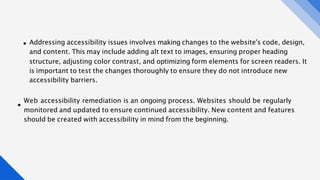
Addressing accessibility issues involves making changes to the website's code, design,
and content. This may include adding alt text to images, ensuring proper heading
structure, adjusting color contrast, and optimizing form elements for screen readers. It
is important to test the changes thoroughly to ensure they do not introduce new
accessibility barriers.
Web accessibility remediation is an ongoing process. Websites should be regularly
monitored and updated to ensure continued accessibility. New content and features
should be created with accessibility in mind from the beginning.
Web accessibility remediation is the process of making websites accessible to all
individuals, regardless of their abilities.
By conducting accessibility audits, prioritizing issues, and implementing necessary
changes, websites can become more inclusive.
Regular monitoring and updates are crucial to maintain accessibility. Accessible
websites create equal opportunities for all users to access information and services
online.
Summing Up

Web Accessibility Remediation Process Simplified.pptx

  • 1.
    Web Accessibility RemediationProcess S implified Ensuring that websites are accessible to all individuals, including those with disabilities, is essential for a truly inclusive online experience. Web Accessibility Remediation is the process of making websites accessible to everyone, regardless of their abilities. In this article, we will simplify the concept of web accessibility remediation and explain the steps involved.
  • 2.
    The process ofWeb Accessibility Remediation: Web accessibility remediation involves finding and addressing issues that prevent individuals with disabilities from accessing and using websites. These barriers can include difficulties in navigating a website, understanding its content, or interacting with its features. Accessibility remediation services are designed to remove these barriers and make websites more inclusive. The first step in the web accessibility remediation process is conducting an accessibility audit. This involves evaluating a website to identify accessibility issues and determining the areas that require improvement. Common issues include lack of alt text for images, improper heading structure, inadequate color contrast, and inaccessible forms or controls. Once the accessibility audit is complete, the next step is to prioritize the identified issues based on their impact and severity. This helps in planning the remediation process effectively. Some issues may have a more significant impact on accessibility and should be addressed first.
  • 3.
    Addressing accessibility issuesinvolves making changes to the website's code, design, and content. This may include adding alt text to images, ensuring proper heading structure, adjusting color contrast, and optimizing form elements for screen readers. It is important to test the changes thoroughly to ensure they do not introduce new accessibility barriers. Web accessibility remediation is an ongoing process. Websites should be regularly monitored and updated to ensure continued accessibility. New content and features should be created with accessibility in mind from the beginning.
  • 4.
    Web accessibility remediationis the process of making websites accessible to all individuals, regardless of their abilities. By conducting accessibility audits, prioritizing issues, and implementing necessary changes, websites can become more inclusive. Regular monitoring and updates are crucial to maintain accessibility. Accessible websites create equal opportunities for all users to access information and services online. Summing Up