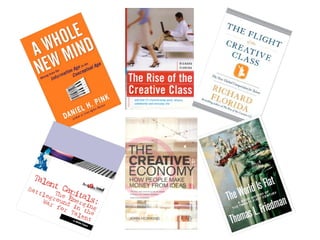
The Creative Economy:
   Great opportunities
     for Waunakee


    BEST Conference | May 15, 2012
Trends in Economic Development
•   Attraction
•   Retention
•   Expansion
•   Quality of life
•   Community

    …it’s all about investing in human talent,
    community and creativity. People are
    the main driver of economic
    development.
A new focus on creativity
“Creativity is not new and neither is economics, but
what is new is the nature and extent of the relationship
Between them, and how they combine to create
extraordinary value and wealth.”


                                      John Howkins
                            The Creative Economy:
             How people make money from ideas, 2001
What is the Creative Economy?

• Creative industries
• Creative workforce
• Creative communities, regions,
  states, countries
•


    …the intersection of the three is
    the Creative Economy.
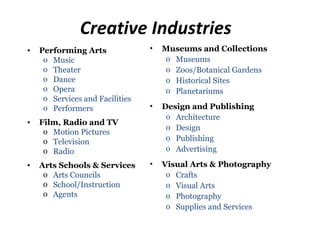
Creative Industries
•   Performing Arts              •   Museums and Collections
     o Music                         o Museums
     o Theater                       o Zoos/Botanical Gardens
     o Dance                         o Historical Sites
     o Opera                         o Planetariums
     o Services and Facilities
     o Performers                •   Design and Publishing
                                      o Architecture
•   Film, Radio and TV
                                      o Design
     o Motion Pictures
     o Television                     o Publishing
     o Radio                          o Advertising

•   Arts Schools & Services      •   Visual Arts & Photography
     o Arts Councils                  o Crafts
     o School/Instruction             o Visual Arts
     o Agents                         o Photography
                                      o Supplies and Services
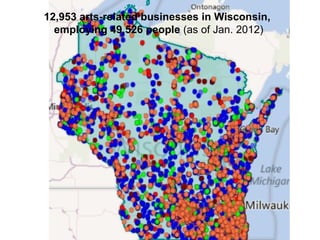
12,953 arts-related businesses in Wisconsin,
  employing 49,526 people (as of Jan. 2012)
Wisconsin’s creative economy…
• A community-based industry
• All about asset-based community development
• Attracts visitors/engages residents/strengthens
  community ties
• Vibrant, healthy, “livable” communities
• Integral to business/community development
• Local jobs that can’t be outsourced
• Leverages public and private revenue
Why should we care?
• Great societies are known and remembered for their arts
  and creativity.
• Creativity is the currency of the 21st century economy.
• Wisconsin’s historical industries and traditional
  economic development strategies don’t’ work in the 21st
  century economy.
• Traditional model (20th century), attracting business
  through tax incentives  creative model (21st century),
  attracting residents/visitors through quality of place.
• People want to live/work/learn/play in vibrant, healthy
  communities.
• Many places are ahead of Wisconsin in creative economy
  planning, investment and development.
Creative economy examples
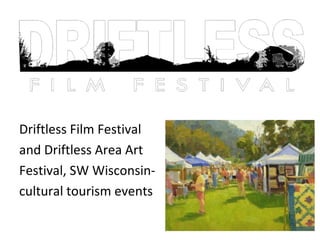
Driftless Film Festival
and Driftless Area Art
Festival, SW Wisconsin-
cultural tourism events
regional economic arts and cultural
development program for SW Wisconsin,
        based at UW-Platteville
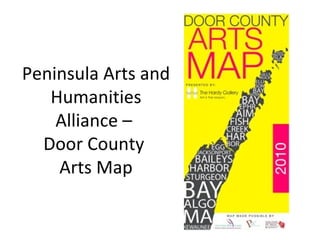
Peninsula Arts and
   Humanities
    Alliance –
  Door County
    Arts Map
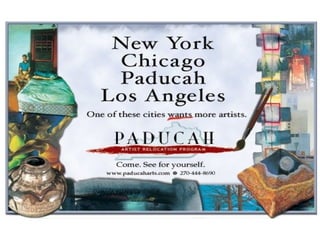
What does Paducah offer?
• Financial Incentives
  – Loan-to-Value Ratios of up to 100%
  – Lower than market interest rates
  – Generous discounts on all closing costs
• Business Incentives
  – Health Insurance
  – Web sites at no charge
  – Local and national marketing and advertising
    support
• Cultural Incentives
  – “An inordinate number of arts and cultural
    organizations and venues for a town its size.”
Creative development strategies
• Diversifying economy and expanding job base
• Arts, cultural and heritage tourism  growth
• Creative people and industries included in
  community development planning on all levels
• View quality of life as development asset
• Strong artistic and cultural infrastructure helps
  attract creative talent
• Centerpiece of downtown/community renewal
• Focus on small business/entrepreneurship
• Creativity should be part of civic agenda
Creative development resources
Waunakee6212012
Waunakee6212012
Waunakee6212012
Waunakee6212012
Waunakee6212012

Waunakee6212012

  • 1.
    The Creative Economy: Great opportunities for Waunakee BEST Conference | May 15, 2012
  • 2.
    Trends in EconomicDevelopment • Attraction • Retention • Expansion • Quality of life • Community …it’s all about investing in human talent, community and creativity. People are the main driver of economic development.
  • 3.
    A new focuson creativity “Creativity is not new and neither is economics, but what is new is the nature and extent of the relationship Between them, and how they combine to create extraordinary value and wealth.” John Howkins The Creative Economy: How people make money from ideas, 2001
  • 4.
    What is theCreative Economy? • Creative industries • Creative workforce • Creative communities, regions, states, countries • …the intersection of the three is the Creative Economy.
  • 5.
    Creative Industries • Performing Arts • Museums and Collections o Music o Museums o Theater o Zoos/Botanical Gardens o Dance o Historical Sites o Opera o Planetariums o Services and Facilities o Performers • Design and Publishing o Architecture • Film, Radio and TV o Design o Motion Pictures o Television o Publishing o Radio o Advertising • Arts Schools & Services • Visual Arts & Photography o Arts Councils o Crafts o School/Instruction o Visual Arts o Agents o Photography o Supplies and Services
  • 6.
    12,953 arts-related businessesin Wisconsin, employing 49,526 people (as of Jan. 2012)
  • 7.
    Wisconsin’s creative economy… •A community-based industry • All about asset-based community development • Attracts visitors/engages residents/strengthens community ties • Vibrant, healthy, “livable” communities • Integral to business/community development • Local jobs that can’t be outsourced • Leverages public and private revenue
  • 8.
    Why should wecare? • Great societies are known and remembered for their arts and creativity. • Creativity is the currency of the 21st century economy. • Wisconsin’s historical industries and traditional economic development strategies don’t’ work in the 21st century economy. • Traditional model (20th century), attracting business through tax incentives  creative model (21st century), attracting residents/visitors through quality of place. • People want to live/work/learn/play in vibrant, healthy communities. • Many places are ahead of Wisconsin in creative economy planning, investment and development.
  • 9.
  • 10.
    Driftless Film Festival andDriftless Area Art Festival, SW Wisconsin- cultural tourism events
  • 11.
    regional economic artsand cultural development program for SW Wisconsin, based at UW-Platteville
  • 12.
    Peninsula Arts and Humanities Alliance – Door County Arts Map
  • 14.
    What does Paducahoffer? • Financial Incentives – Loan-to-Value Ratios of up to 100% – Lower than market interest rates – Generous discounts on all closing costs • Business Incentives – Health Insurance – Web sites at no charge – Local and national marketing and advertising support • Cultural Incentives – “An inordinate number of arts and cultural organizations and venues for a town its size.”
  • 15.
    Creative development strategies •Diversifying economy and expanding job base • Arts, cultural and heritage tourism  growth • Creative people and industries included in community development planning on all levels • View quality of life as development asset • Strong artistic and cultural infrastructure helps attract creative talent • Centerpiece of downtown/community renewal • Focus on small business/entrepreneurship • Creativity should be part of civic agenda
  • 16.

Editor's Notes

  • #3 Attraction-attracting talented, creative people Retention-creating an environment that keeps those people happy and productive Expansion-building on your business’s and community’s assets, growing your own
  • #4 The term “creative economy” was coined by Howkins in 2001. The creative economy involves the arts and creativity, from arts organizations to design firms, as well as creativity throughout all economic sectors.
  • #5 So, what do we mean when we talk about the Creative Economy? New research done by UW Extension says it's the intersection of these three things:
  • #6 This is how Americans for the Arts defines the creative industries. These are the kinds of organizations and businesses we want to encourage in Wisconsin.
  • #19 Wisconsin’s statewide arts service, advocacy and development organization
  • #20 The Partnership Movement, from Americans for the Arts – business and arts working together
  • #21 This is a great handbook on community cultural development. Tom Borrup will be the keynote speaker at the Wisconsin Downtown Development Conference, October 8-9, 2012, in Appleton.
  • #22 Other worthwhile publications about the creative economy