Definition of the Waterfall Model
The Waterfall Model is a sequential software development methodology
where the process flows steadily downwards through phases like
requirements analysis, design, implementation, testing, deployment, and
maintenance. Each phase must be completed before the next one begins,
and it emphasizes rigorous documentation and planning upfront.
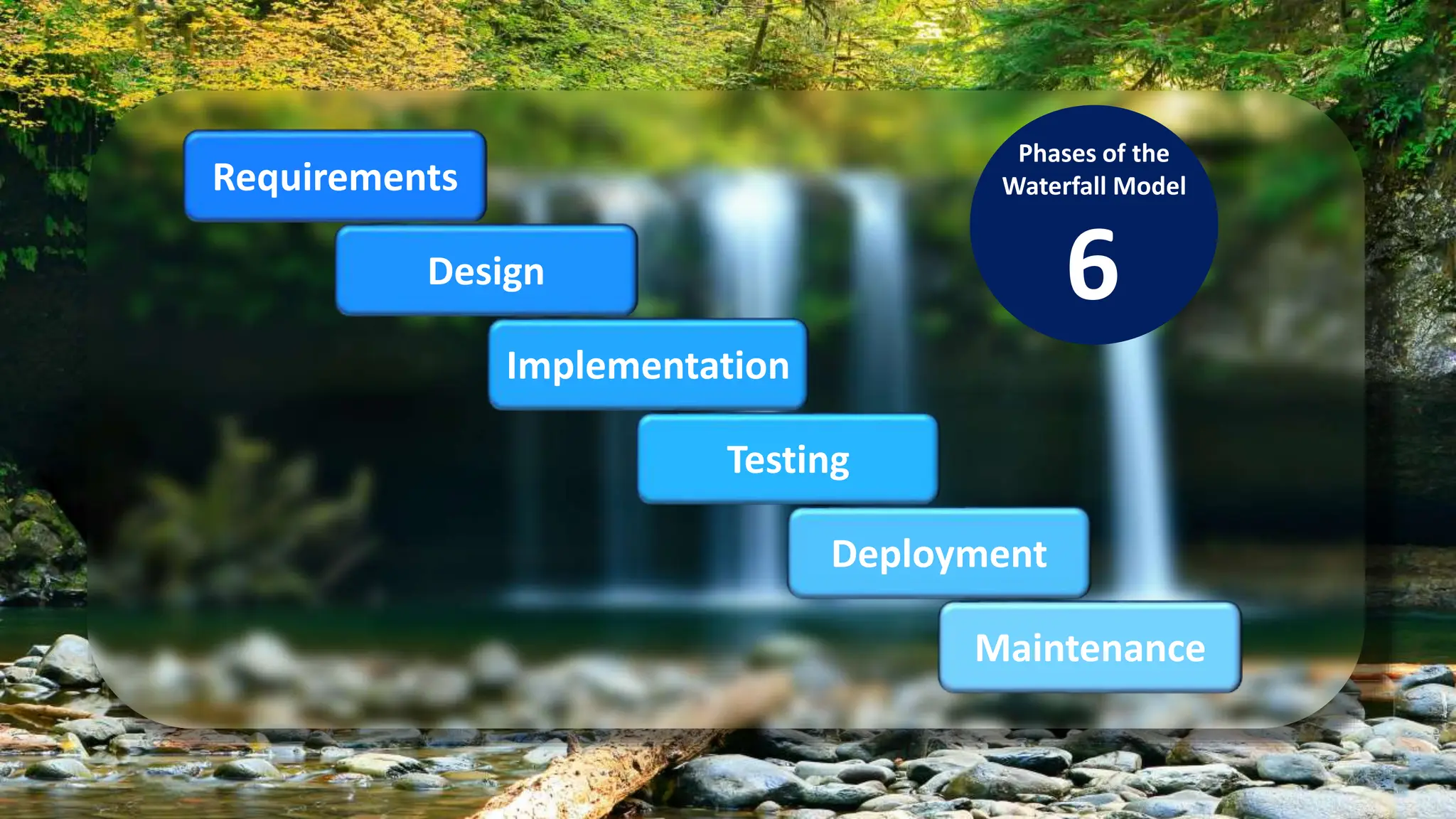
Requirements
Design
Implementation
Testing
Deployment
Maintenance
Phases of the
Waterfall Model
6
Requirements Gathering & Analysis
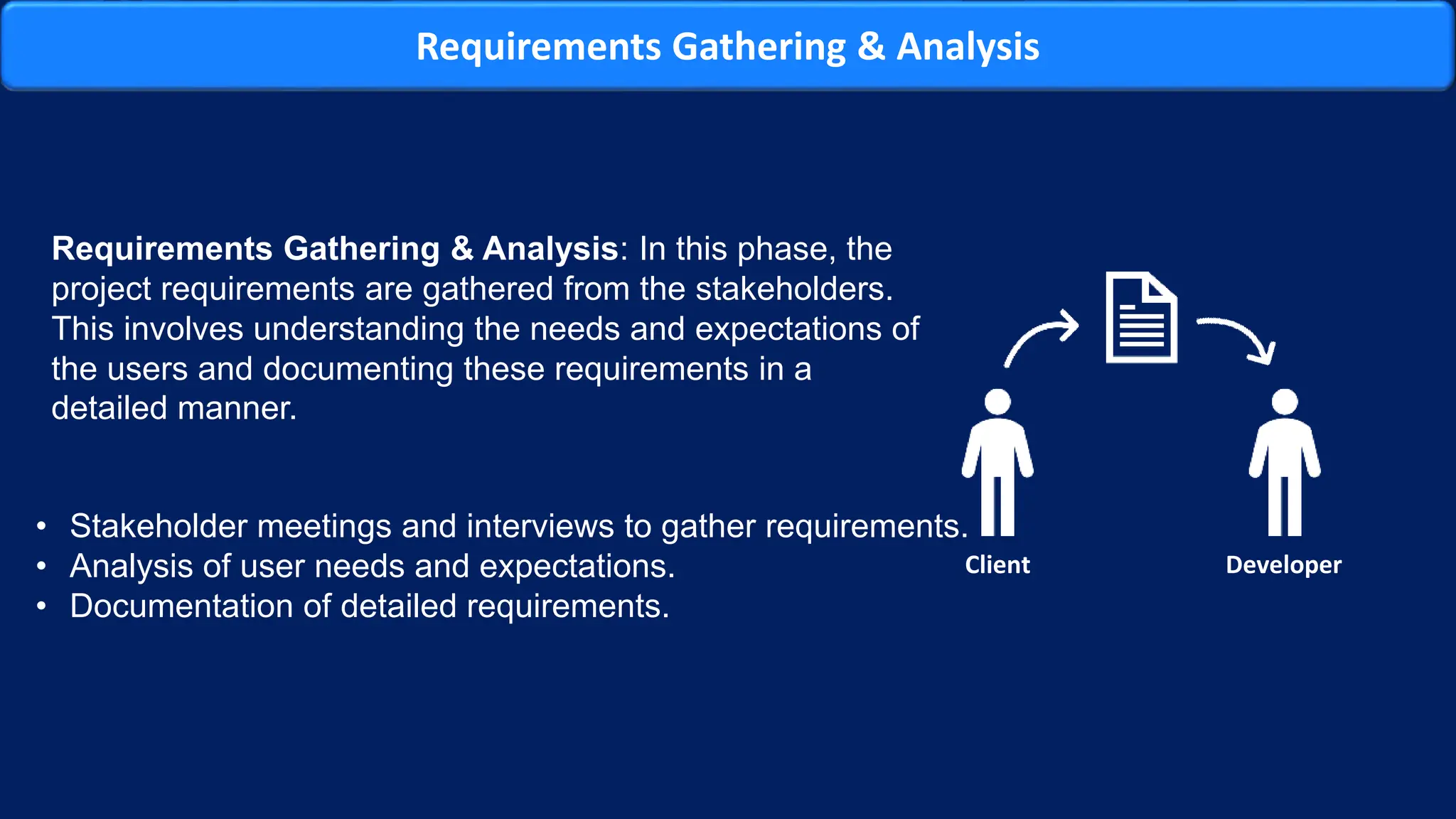
Client Developer
Requirements Gathering & Analysis: In this phase, the
project requirements are gathered from the stakeholders.
This involves understanding the needs and expectations of
the users and documenting these requirements in a
detailed manner.
• Stakeholder meetings and interviews to gather requirements.
• Analysis of user needs and expectations.
• Documentation of detailed requirements.
System Design
System Design: Once the requirements are gathered, the
system architecture and design are planned in this phase.
It involves defining the overall system architecture,
subsystems, interfaces, and data structures. The design is
typically documented using diagrams like UML diagrams.
• Planning of system architecture.
• Creation of detailed system design documents.
• Designing subsystems, interfaces, and data structures.
Implementation
Implementation/Coding: In this phase, the actual coding of
the software system takes place based on the design
specifications from the previous phase. Developers write code
according to the design and implement the functionality
outlined in the requirements.
• Writing code based on the design specifications.
• Implementation of software functionality.
• Coding standards and guidelines adherence.
Testing
Testing: After the code is implemented, the system undergoes
testing to identify defects or bugs. Different types of testing such as
unit testing, integration testing, system testing, and acceptance
testing are conducted to ensure that the software meets the
specified requirements.
• Unit testing to test individual components.
• Integration testing to test interactions between components.
• System testing to test the entire system.
Deployment
Deployment/Installation: Once the software is tested and
approved, it is deployed to the production environment or
delivered to the customer. Installation procedures may also be
included in this phase to ensure the software is properly
installed and configured.
• Deployment of the software to the production environment.
• Delivery of the software to the customer.
• Installation procedures and configuration setup.
Maintenance
Maintenance: After deployment, the software enters the
maintenance phase where it is regularly updated and maintained
to address any issues that arise, accommodate changes in
requirements, or add new features. Maintenance may involve
bug fixes, performance improvements, and enhancements based
on user feedback.
• Frequent updates and maintenance activities.
• Bug fixes and performance improvements.
• Addition of new features based on user feedback.
Thank you for observing!!
Made By Ansh kashyap

Waterfall Model made by Ansh Kashyap.pptx

  • 2.
    Definition of theWaterfall Model The Waterfall Model is a sequential software development methodology where the process flows steadily downwards through phases like requirements analysis, design, implementation, testing, deployment, and maintenance. Each phase must be completed before the next one begins, and it emphasizes rigorous documentation and planning upfront.
  • 3.
  • 4.
    Requirements Gathering &Analysis Client Developer Requirements Gathering & Analysis: In this phase, the project requirements are gathered from the stakeholders. This involves understanding the needs and expectations of the users and documenting these requirements in a detailed manner. • Stakeholder meetings and interviews to gather requirements. • Analysis of user needs and expectations. • Documentation of detailed requirements.
  • 5.
    System Design System Design:Once the requirements are gathered, the system architecture and design are planned in this phase. It involves defining the overall system architecture, subsystems, interfaces, and data structures. The design is typically documented using diagrams like UML diagrams. • Planning of system architecture. • Creation of detailed system design documents. • Designing subsystems, interfaces, and data structures.
  • 6.
    Implementation Implementation/Coding: In thisphase, the actual coding of the software system takes place based on the design specifications from the previous phase. Developers write code according to the design and implement the functionality outlined in the requirements. • Writing code based on the design specifications. • Implementation of software functionality. • Coding standards and guidelines adherence.
  • 7.
    Testing Testing: After thecode is implemented, the system undergoes testing to identify defects or bugs. Different types of testing such as unit testing, integration testing, system testing, and acceptance testing are conducted to ensure that the software meets the specified requirements. • Unit testing to test individual components. • Integration testing to test interactions between components. • System testing to test the entire system.
  • 8.
    Deployment Deployment/Installation: Once thesoftware is tested and approved, it is deployed to the production environment or delivered to the customer. Installation procedures may also be included in this phase to ensure the software is properly installed and configured. • Deployment of the software to the production environment. • Delivery of the software to the customer. • Installation procedures and configuration setup.
  • 9.
    Maintenance Maintenance: After deployment,the software enters the maintenance phase where it is regularly updated and maintained to address any issues that arise, accommodate changes in requirements, or add new features. Maintenance may involve bug fixes, performance improvements, and enhancements based on user feedback. • Frequent updates and maintenance activities. • Bug fixes and performance improvements. • Addition of new features based on user feedback.
  • 10.
    Thank you forobserving!! Made By Ansh kashyap