1
ISLAMIC UNIVERSITY OF SCIENCE AND TECHNOLOGY
SUBJECT – MEASUREMENT AND INSTRUMENTATION
PROJECT NAME - WATER FLOW SENSOR
TEACHER INCHARGE – DR MAJID SIR
GROUP NO. 07
GROUP MEMBER’S
1. SHAYIQ MAQBOOL (ME-21-30)
2. DANISH (ME-21-11)
3. FALAKUSA (ME-21-26)
4. SUHAIB (ME-21-25)
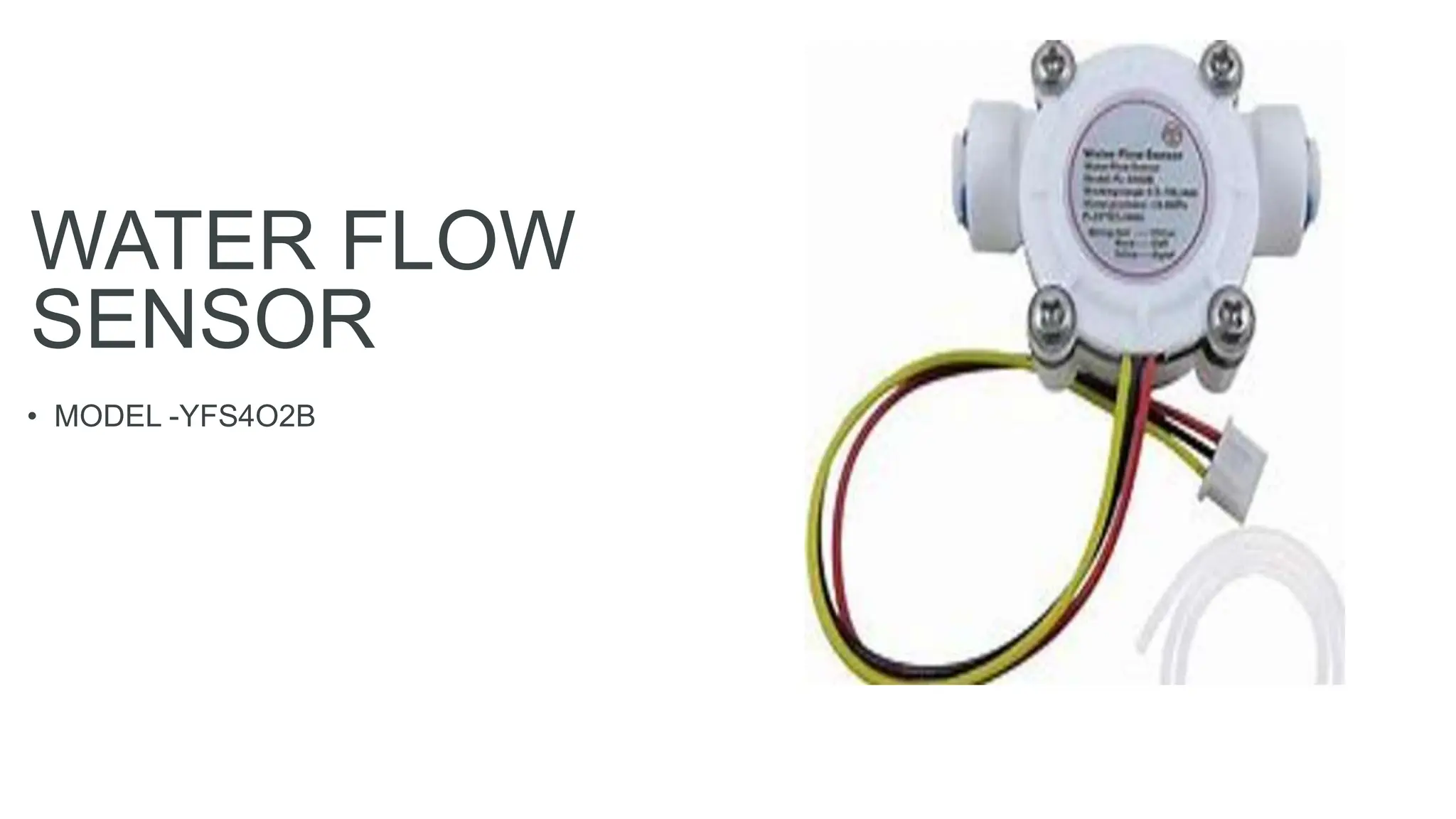
WATER FLOW
SENSOR
• MODEL -YFS4O2B
INTRODUCTION
3
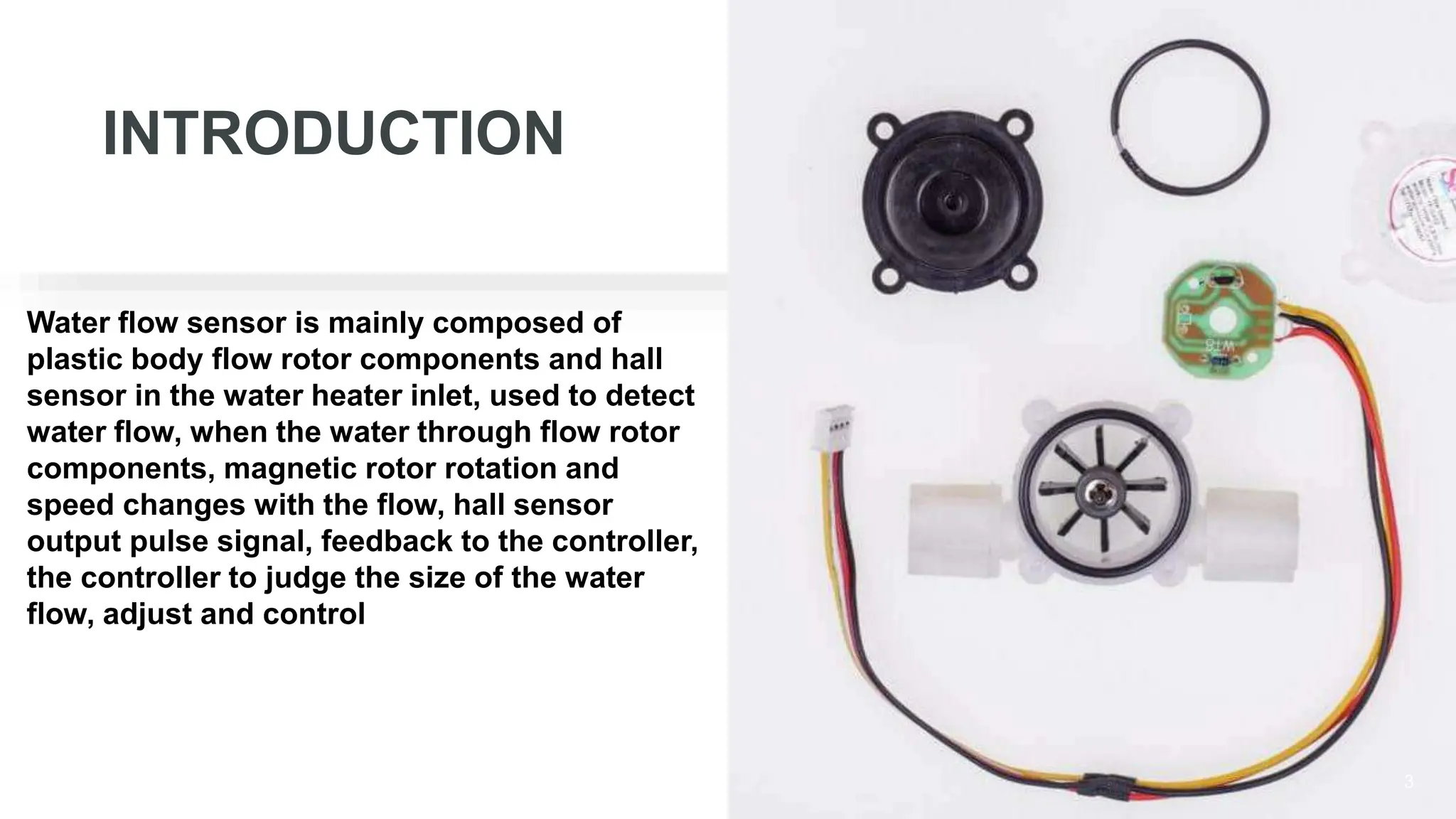
Water flow sensor is mainly composed of
plastic body flow rotor components and hall
sensor in the water heater inlet, used to detect
water flow, when the water through flow rotor
components, magnetic rotor rotation and
speed changes with the flow, hall sensor
output pulse signal, feedback to the controller,
the controller to judge the size of the water
flow, adjust and control
4
1. Water Monitoring Systems: Used in household water
meters, industrial water control systems, and smart
irrigation systems to measure and manage water
consumption.
2. Heating Systems: Employed in water heaters to monitor
the flow of water, ensuring proper heating and preventing
overheating or damage
3. Industrial Machinery: Integrated into various industrial
processes where monitoring water flow is critical for
operations, such as cooling systems, chemical
processing, and MANUFACTURING
4. Lab Equipment: Utilized in laboratory setups to measure
precise water flow for experiments and research
purposes.
APPLICATION
5
REAL WORLD
EXAMPLE
Smart irrigation systems used in agriculture.
Farmers use water flow sensors to monitor the
amount of water delivered to crops. By installing
these sensors within irrigation systems, they can
precisely measure and regulate the water flow to
ensure crops receive the right amount of water. This
helps in preventing over-watering or under-watering,
optimizing water usage, and improving crop yields
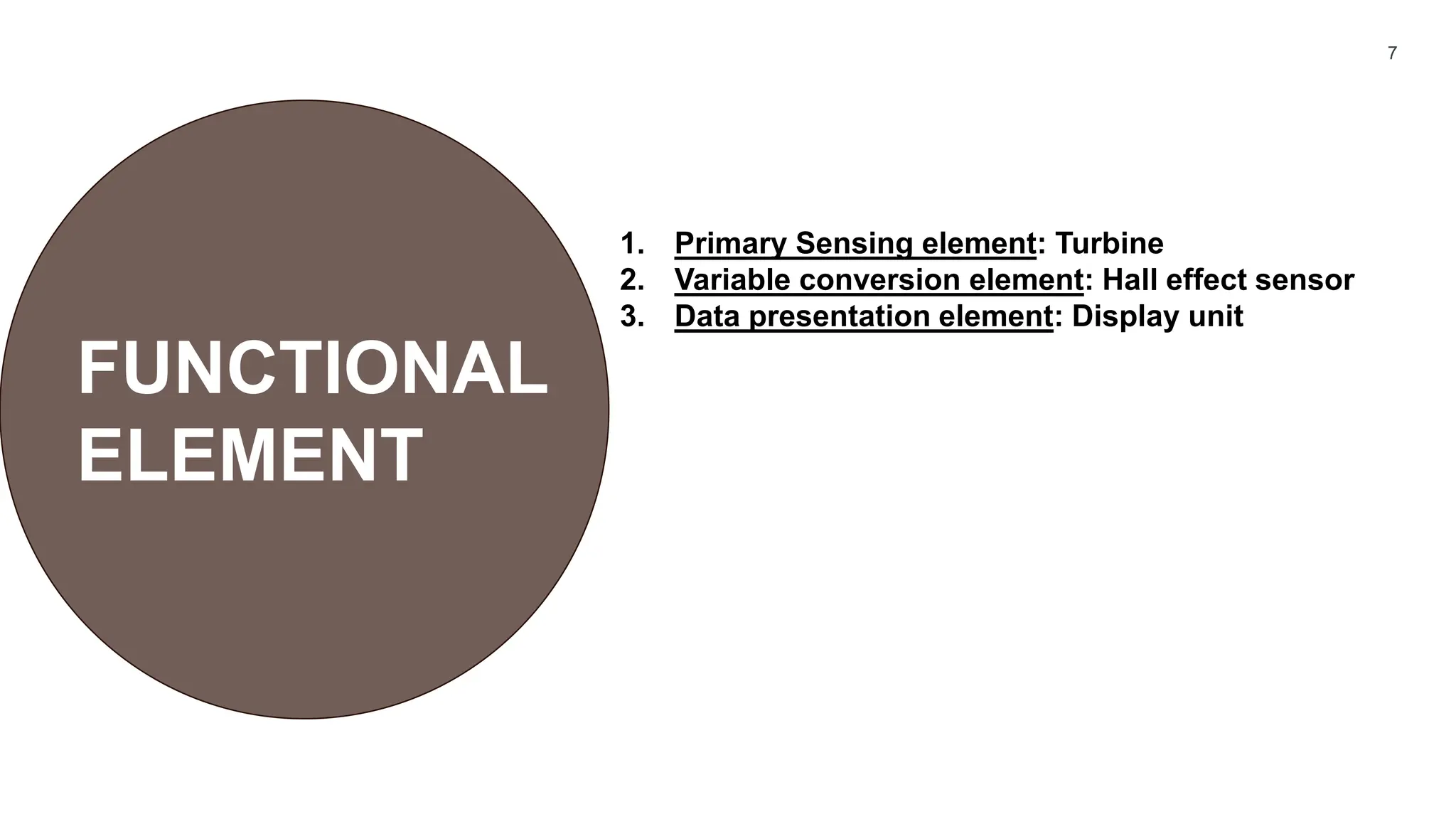
WORKING
PRINCIPLE
7
FUNCTIONAL
ELEMENT
1. Primary Sensing element: Turbine
2. Variable conversion element: Hall effect sensor
3. Data presentation element: Display unit
FEATURES
1. Flow rate measurement: capable of
measuring the flow rate of water passing
through it.
2. High accuracy: provides precise and
accurate measurement.
3. Compact design: small in size and easy to
install.
4. Low pressure loses
5. Durable construction: made with materials
resistant to corrosion.
SENSOR
TYPE
1. Active sensor
2. Deflection type sensor
3. Dumb sensor
4. Digital sensor
5. Contact sensor
Presentation title 10
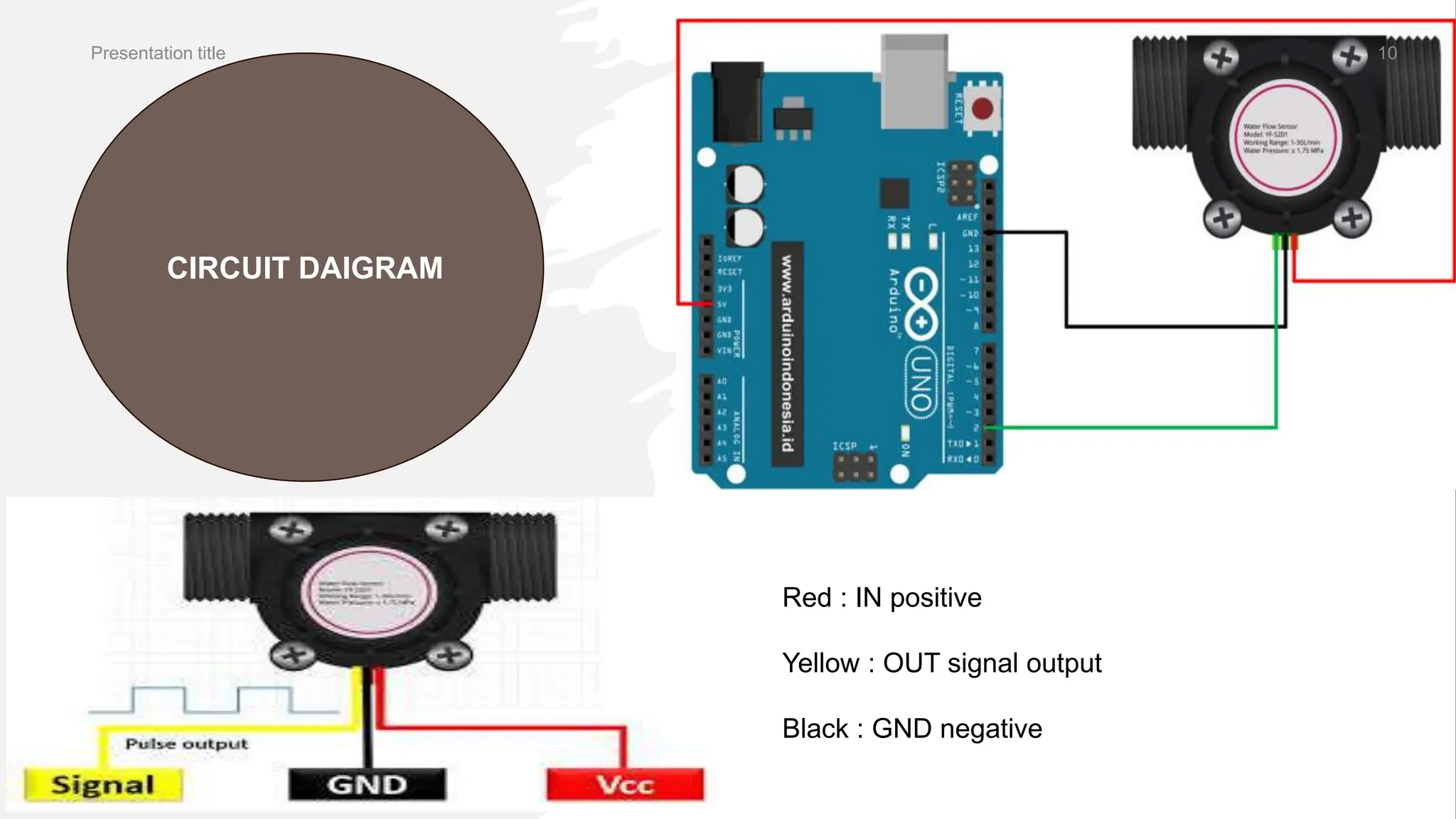
CIRCUIT DAIGRAM
Red : IN positive
Yellow : OUT signal output
Black : GND negative
11
SENSOR
DATA SHEET
1. Mini. Working Voltage: DC 4.5V
2. Max. Working Current: 15mA
(DC 5V)
3. Working Voltage: DC 5V~24V
4. Load Capacity: ≤10mA (DC 5V)
5. Flow Range:0.3 to 6L
6. Water Pressure: 0.35 Mpa
7. Input/Output Diameter: 6.5mm
THANK YOU

Water flow sensor yfs402b ppt for btech students

  • 1.
    1 ISLAMIC UNIVERSITY OFSCIENCE AND TECHNOLOGY SUBJECT – MEASUREMENT AND INSTRUMENTATION PROJECT NAME - WATER FLOW SENSOR TEACHER INCHARGE – DR MAJID SIR GROUP NO. 07 GROUP MEMBER’S 1. SHAYIQ MAQBOOL (ME-21-30) 2. DANISH (ME-21-11) 3. FALAKUSA (ME-21-26) 4. SUHAIB (ME-21-25)
  • 2.
  • 3.
    INTRODUCTION 3 Water flow sensoris mainly composed of plastic body flow rotor components and hall sensor in the water heater inlet, used to detect water flow, when the water through flow rotor components, magnetic rotor rotation and speed changes with the flow, hall sensor output pulse signal, feedback to the controller, the controller to judge the size of the water flow, adjust and control
  • 4.
    4 1. Water MonitoringSystems: Used in household water meters, industrial water control systems, and smart irrigation systems to measure and manage water consumption. 2. Heating Systems: Employed in water heaters to monitor the flow of water, ensuring proper heating and preventing overheating or damage 3. Industrial Machinery: Integrated into various industrial processes where monitoring water flow is critical for operations, such as cooling systems, chemical processing, and MANUFACTURING 4. Lab Equipment: Utilized in laboratory setups to measure precise water flow for experiments and research purposes. APPLICATION
  • 5.
    5 REAL WORLD EXAMPLE Smart irrigationsystems used in agriculture. Farmers use water flow sensors to monitor the amount of water delivered to crops. By installing these sensors within irrigation systems, they can precisely measure and regulate the water flow to ensure crops receive the right amount of water. This helps in preventing over-watering or under-watering, optimizing water usage, and improving crop yields
  • 6.
  • 7.
    7 FUNCTIONAL ELEMENT 1. Primary Sensingelement: Turbine 2. Variable conversion element: Hall effect sensor 3. Data presentation element: Display unit
  • 8.
    FEATURES 1. Flow ratemeasurement: capable of measuring the flow rate of water passing through it. 2. High accuracy: provides precise and accurate measurement. 3. Compact design: small in size and easy to install. 4. Low pressure loses 5. Durable construction: made with materials resistant to corrosion.
  • 9.
    SENSOR TYPE 1. Active sensor 2.Deflection type sensor 3. Dumb sensor 4. Digital sensor 5. Contact sensor
  • 10.
    Presentation title 10 CIRCUITDAIGRAM Red : IN positive Yellow : OUT signal output Black : GND negative
  • 11.
    11 SENSOR DATA SHEET 1. Mini.Working Voltage: DC 4.5V 2. Max. Working Current: 15mA (DC 5V) 3. Working Voltage: DC 5V~24V 4. Load Capacity: ≤10mA (DC 5V) 5. Flow Range:0.3 to 6L 6. Water Pressure: 0.35 Mpa 7. Input/Output Diameter: 6.5mm
  • 12.