IMPORTANCE OF WATER
DRINKING
Dr Ahalya P G
pgahalya0594@gmail.com
INTRODUCTION
• Water is an inorganic, transparent, tasteless, odorless, and nearly colorless chemical substance,
which is the main constituent of Earth's hydrosphere and the fluids of most living organisms.
• According to WHO, safe drinking-water is water that "does not represent any significant risk to
health over a lifetime of consumption, including different sensitivities that may occur between life
stages".
• Drinking water is required to maintain good health varies, and the amount depends on physical
activity level, age, health-related issues, and environmental conditions.
WHY TO DRINK WATER?
• It is vital for all known forms of life.
• The human body contains from 55% to 78% water, depending on body size.
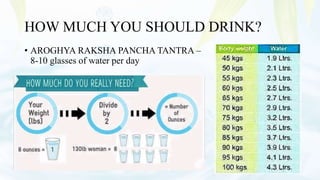
HOW MUCH YOU SHOULD DRINK?
• AROGHYA RAKSHA PANCHA TANTRA –
8-10 glasses of water per day
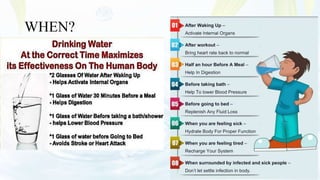
WHEN?
HOW?
• Take sips instead of chugging because
*Our saliva is alkaline in nature and water should be given time to mix with
saliva, so it stabilises acid in our stomach.
*Sipping also soothes your digestive system.
“DRINK THE FOOD ; EAT THE WATER”
ADVANTAGES OF WATER DRINKING
• Water forms the vital component of human body and its functioning.
• It cushions the brain, spinal cord, and other sensitive tissues.
• It regulates body temperature.
• It flushes body waste.
• It makes minerals and nutrients accessible (water soluble vitamins).
• It boosts skin health and beauty
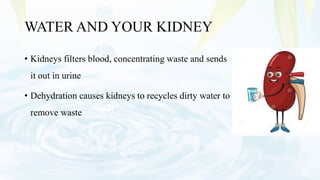
WATER AND YOUR KIDNEY
• Kidneys filters blood, concentrating waste and sends
it out in urine
• Dehydration causes kidneys to recycles dirty water to
remove waste
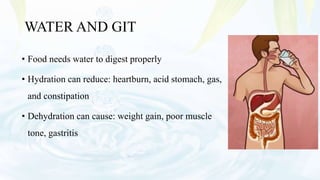
WATER AND GIT
• Food needs water to digest properly
• Hydration can reduce: heartburn, acid stomach, gas,
and constipation
• Dehydration can cause: weight gain, poor muscle
tone, gastritis
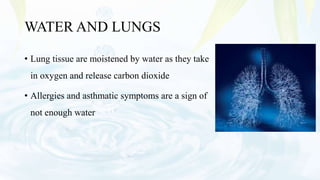
WATER AND LUNGS
• Lung tissue are moistened by water as they take
in oxygen and release carbon dioxide
• Allergies and asthmatic symptoms are a sign of
not enough water
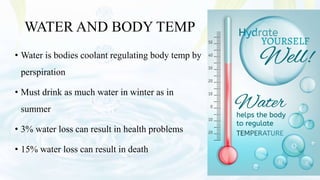
WATER AND BODY TEMP
• Water is bodies coolant regulating body temp by
perspiration
• Must drink as much water in winter as in
summer
• 3% water loss can result in health problems
• 15% water loss can result in death
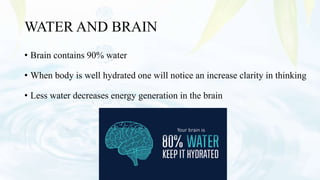
WATER AND BRAIN
• Brain contains 90% water
• When body is well hydrated one will notice an increase clarity in thinking
• Less water decreases energy generation in the brain
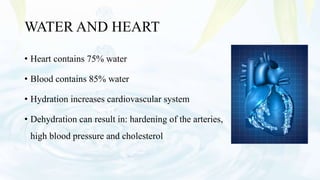
WATER AND HEART
• Heart contains 75% water
• Blood contains 85% water
• Hydration increases cardiovascular system
• Dehydration can result in: hardening of the arteries,
high blood pressure and cholesterol
WATER AND JOINTS
• Water lubricates joints and lets you move freely
• Water maintains elasticity and easy movement for connective tissue of
joints
RESEARCH EVIDENCES
TITLE AUTHOR CONCLUSION
Influence of water drinking on
resting energy expenditure in
overweight children
G Dubnov-Raz,
International journal of Obesity,
2011
Water drinking could assist
overweight children in weight loss
or maintenance and results in
increased energy expenditure.
Drinking Water Is Associated With
Weight Loss in Overweight
Dieting Women Independent of
Diet and Activity
Jodi D. Stookey,
Obesity, 2012
Absolute and relative increases in
drinking water were associated
with significant loss of body
weight and fat over time
especially in dieting womens.
USHA PANAM
• Drinking water in empty stomach after
waking up in early morning
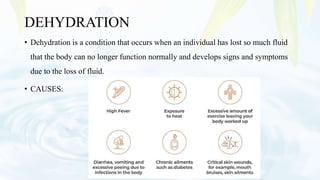
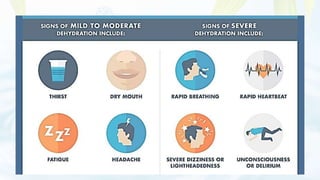
DEHYDRATION
• Dehydration is a condition that occurs when an individual has lost so much fluid
that the body can no longer function normally and develops signs and symptoms
due to the loss of fluid.
• CAUSES:
KEEP YOURSELF HYDRATED
THANK YOU

Water Drinking

  • 1.
    IMPORTANCE OF WATER DRINKING DrAhalya P G pgahalya0594@gmail.com
  • 2.
    INTRODUCTION • Water isan inorganic, transparent, tasteless, odorless, and nearly colorless chemical substance, which is the main constituent of Earth's hydrosphere and the fluids of most living organisms. • According to WHO, safe drinking-water is water that "does not represent any significant risk to health over a lifetime of consumption, including different sensitivities that may occur between life stages". • Drinking water is required to maintain good health varies, and the amount depends on physical activity level, age, health-related issues, and environmental conditions.
  • 3.
    WHY TO DRINKWATER? • It is vital for all known forms of life. • The human body contains from 55% to 78% water, depending on body size.
  • 5.
    HOW MUCH YOUSHOULD DRINK? • AROGHYA RAKSHA PANCHA TANTRA – 8-10 glasses of water per day
  • 6.
  • 7.
    HOW? • Take sipsinstead of chugging because *Our saliva is alkaline in nature and water should be given time to mix with saliva, so it stabilises acid in our stomach. *Sipping also soothes your digestive system. “DRINK THE FOOD ; EAT THE WATER”
  • 8.
    ADVANTAGES OF WATERDRINKING • Water forms the vital component of human body and its functioning. • It cushions the brain, spinal cord, and other sensitive tissues. • It regulates body temperature. • It flushes body waste. • It makes minerals and nutrients accessible (water soluble vitamins). • It boosts skin health and beauty
  • 9.
    WATER AND YOURKIDNEY • Kidneys filters blood, concentrating waste and sends it out in urine • Dehydration causes kidneys to recycles dirty water to remove waste
  • 10.
    WATER AND GIT •Food needs water to digest properly • Hydration can reduce: heartburn, acid stomach, gas, and constipation • Dehydration can cause: weight gain, poor muscle tone, gastritis
  • 11.
    WATER AND LUNGS •Lung tissue are moistened by water as they take in oxygen and release carbon dioxide • Allergies and asthmatic symptoms are a sign of not enough water
  • 12.
    WATER AND BODYTEMP • Water is bodies coolant regulating body temp by perspiration • Must drink as much water in winter as in summer • 3% water loss can result in health problems • 15% water loss can result in death
  • 13.
    WATER AND BRAIN •Brain contains 90% water • When body is well hydrated one will notice an increase clarity in thinking • Less water decreases energy generation in the brain
  • 14.
    WATER AND HEART •Heart contains 75% water • Blood contains 85% water • Hydration increases cardiovascular system • Dehydration can result in: hardening of the arteries, high blood pressure and cholesterol
  • 15.
    WATER AND JOINTS •Water lubricates joints and lets you move freely • Water maintains elasticity and easy movement for connective tissue of joints
  • 16.
    RESEARCH EVIDENCES TITLE AUTHORCONCLUSION Influence of water drinking on resting energy expenditure in overweight children G Dubnov-Raz, International journal of Obesity, 2011 Water drinking could assist overweight children in weight loss or maintenance and results in increased energy expenditure. Drinking Water Is Associated With Weight Loss in Overweight Dieting Women Independent of Diet and Activity Jodi D. Stookey, Obesity, 2012 Absolute and relative increases in drinking water were associated with significant loss of body weight and fat over time especially in dieting womens.
  • 17.
    USHA PANAM • Drinkingwater in empty stomach after waking up in early morning
  • 18.
    DEHYDRATION • Dehydration isa condition that occurs when an individual has lost so much fluid that the body can no longer function normally and develops signs and symptoms due to the loss of fluid. • CAUSES:
  • 20.
  • 21.