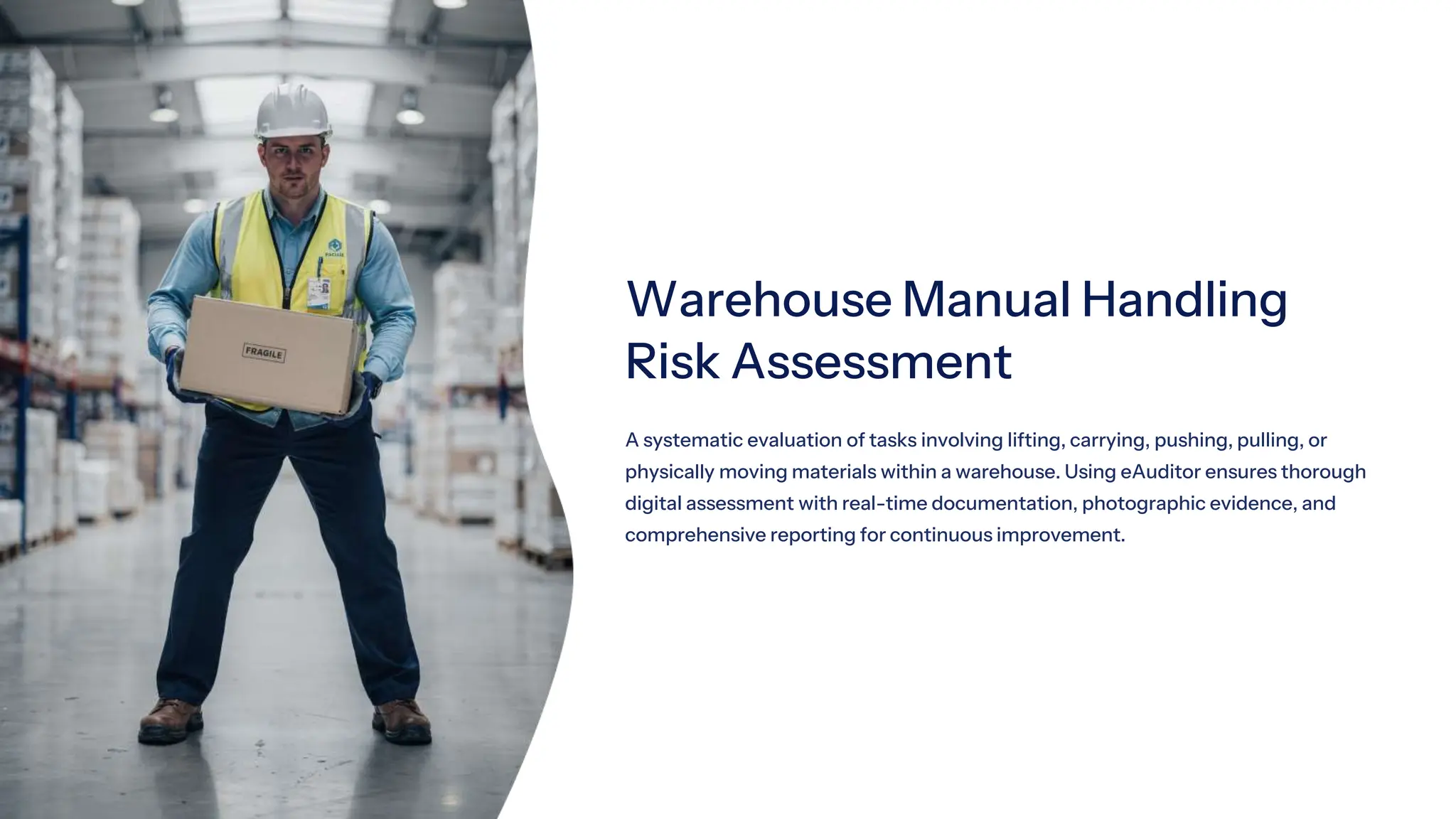
Warehouse Manual Handling
Risk Assessment
A systematic evaluation of tasks involving lifting, carrying, pushing, pulling, or
physically moving materials within a warehouse. Using eAuditor ensures thorough
digital assessment with real-time documentation, photographic evidence, and
comprehensive reporting for continuous improvement.
Purpose and Objectives
Hazard Identification
Detect tasks that pose risks due to weight, awkward posture,
repetition, or environmental constraints.
Risk Evaluation
Assess likelihood and severity of injury for each manual handling
task to prioritize interventions.
Preventive Measures
Recommend safe handling techniques, mechanical aids, training,
and workplace modifications.
Regulatory Compliance
Ensure adherence to occupational health and safety regulations
concerning manual handling.
By achieving these objectives, the assessment ensures staff safety, reduces workplace injuries, and supports operational efficiency through
continuous improvement of training programs and standard operating procedures.
Comprehensive Assessment
Scope
Physical Tasks
• Lifting and carrying goods
manually
• Pushing and pulling trolleys or
carts
• Repetitive tasks causing strain or
fatigue
• Posture analysis: bending,
twisting, stretching
Environmental & Equipment
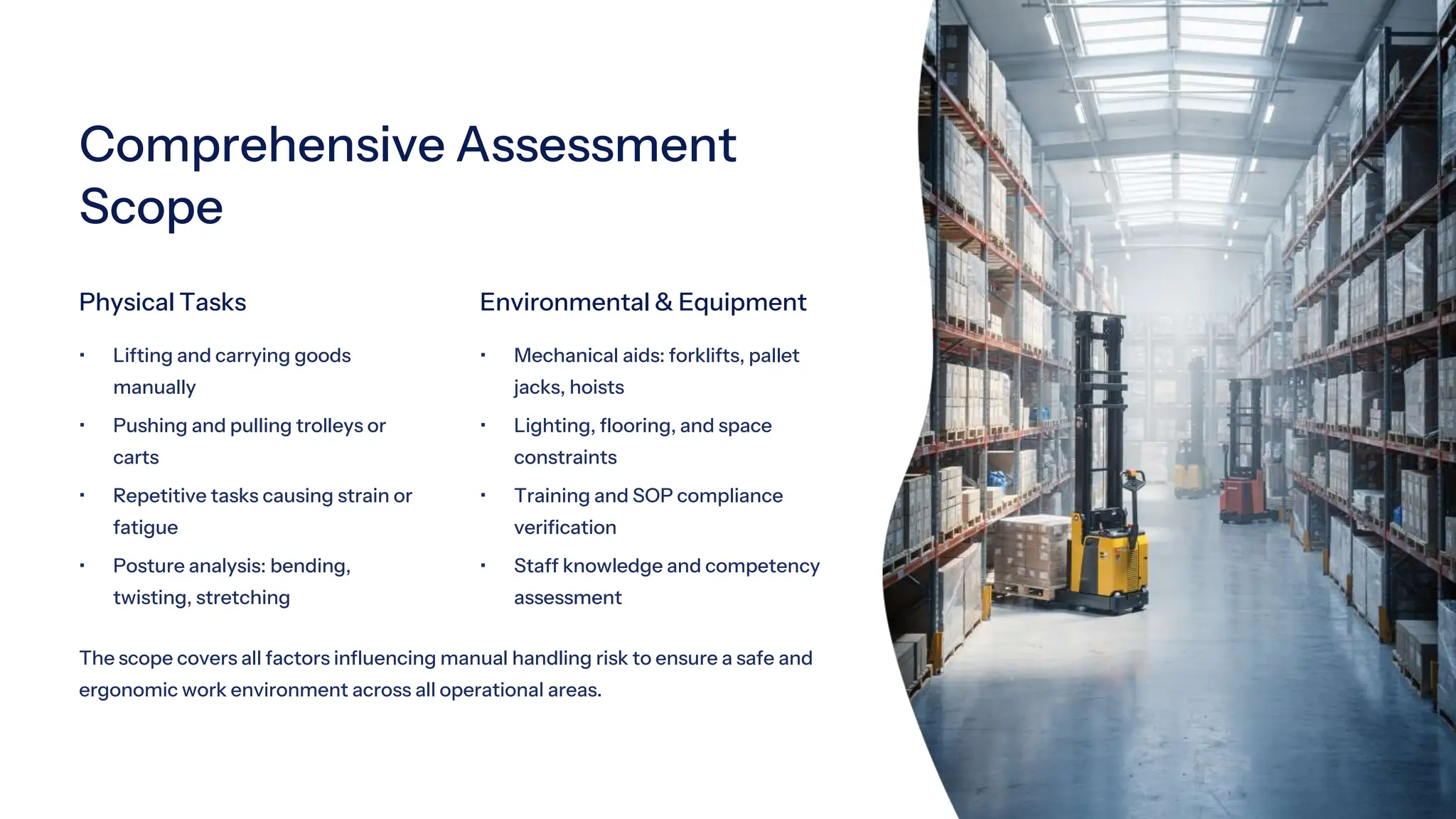
• Mechanical aids: forklifts, pallet
jacks, hoists
• Lighting, flooring, and space
constraints
• Training and SOP compliance
verification
• Staff knowledge and competency
assessment
The scope covers all factors influencing manual handling risk to ensure a safe and
ergonomic work environment across all operational areas.
Digital Workflow with eAuditor
Pre-Assessment Preparation
Review historical injury data, customize checklists, communicate with
staff, and prepare equipment for evaluation.
Conducting Assessment
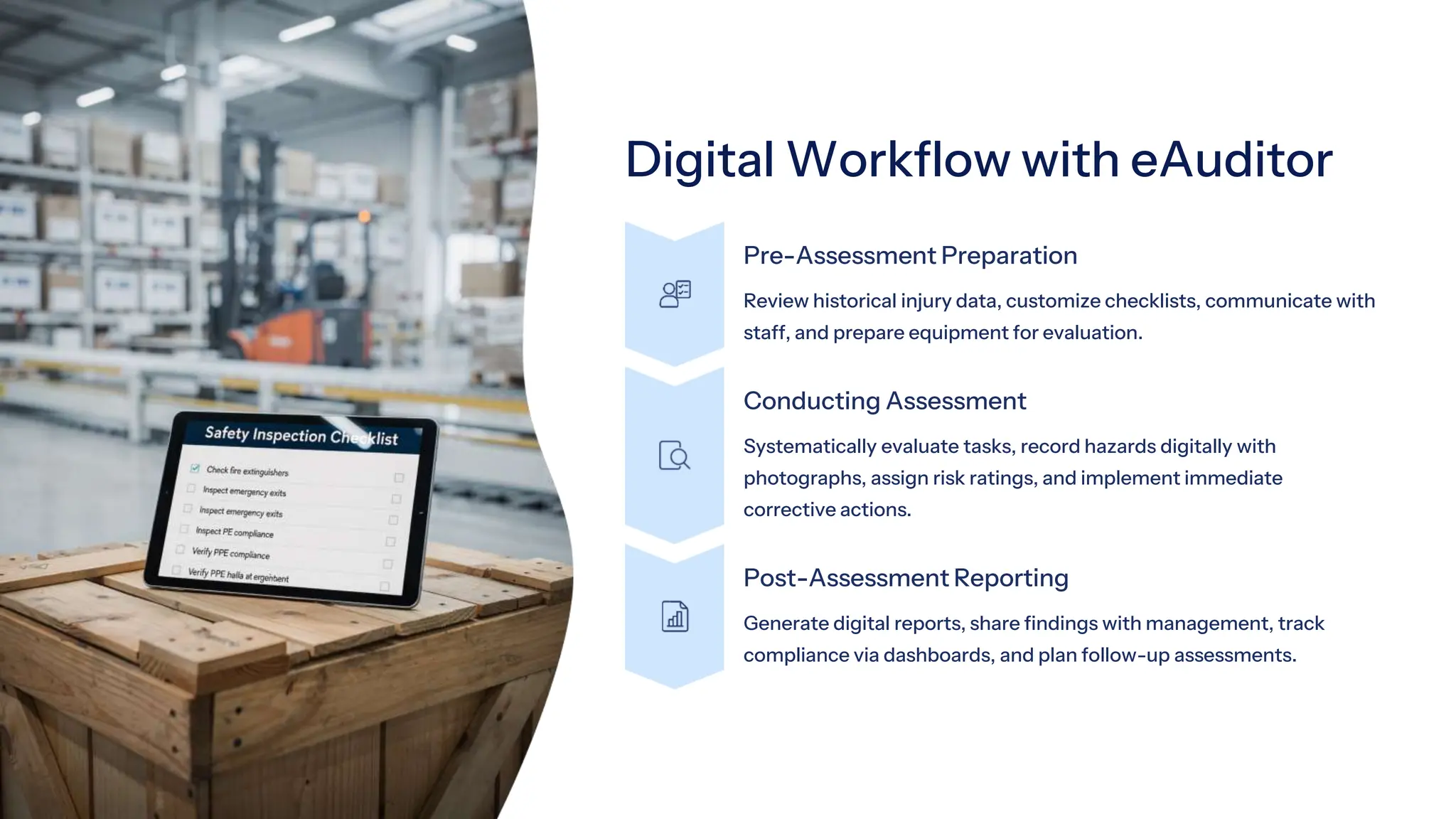
Systematically evaluate tasks, record hazards digitally with
photographs, assign risk ratings, and implement immediate
corrective actions.
Post-Assessment Reporting
Generate digital reports, share findings with management, track
compliance via dashboards, and plan follow-up assessments.
Key Inspection Areas
Lifting and Carrying
Evaluate weight, posture, and
task frequency. Identify
ergonomic risks from bending,
twisting, and repetitive lifting.
Pushing and Pulling
Assess physical effort, surface
conditions, and mechanical
assistance to reduce strain on
workers.
Posture and Ergonomics
Evaluate body positions, reach
heights, and recommend
ergonomic solutions like shelving
adjustments.
Mechanical Aids
Verify availability, proper usage,
maintenance compliance, and
staff training on equipment
operation.
Environmental Factors and Training
Lighting and Visibility
Ensure sufficient illumination throughout the warehouse for safe material
handling and hazard identification.
Space and Access
Check that aisles and work areas allow safe movement and handling of
goods without obstruction.
Flooring Conditions
Inspect for uneven, slippery, or obstructed surfaces that could contribute
to accidents or injuries.
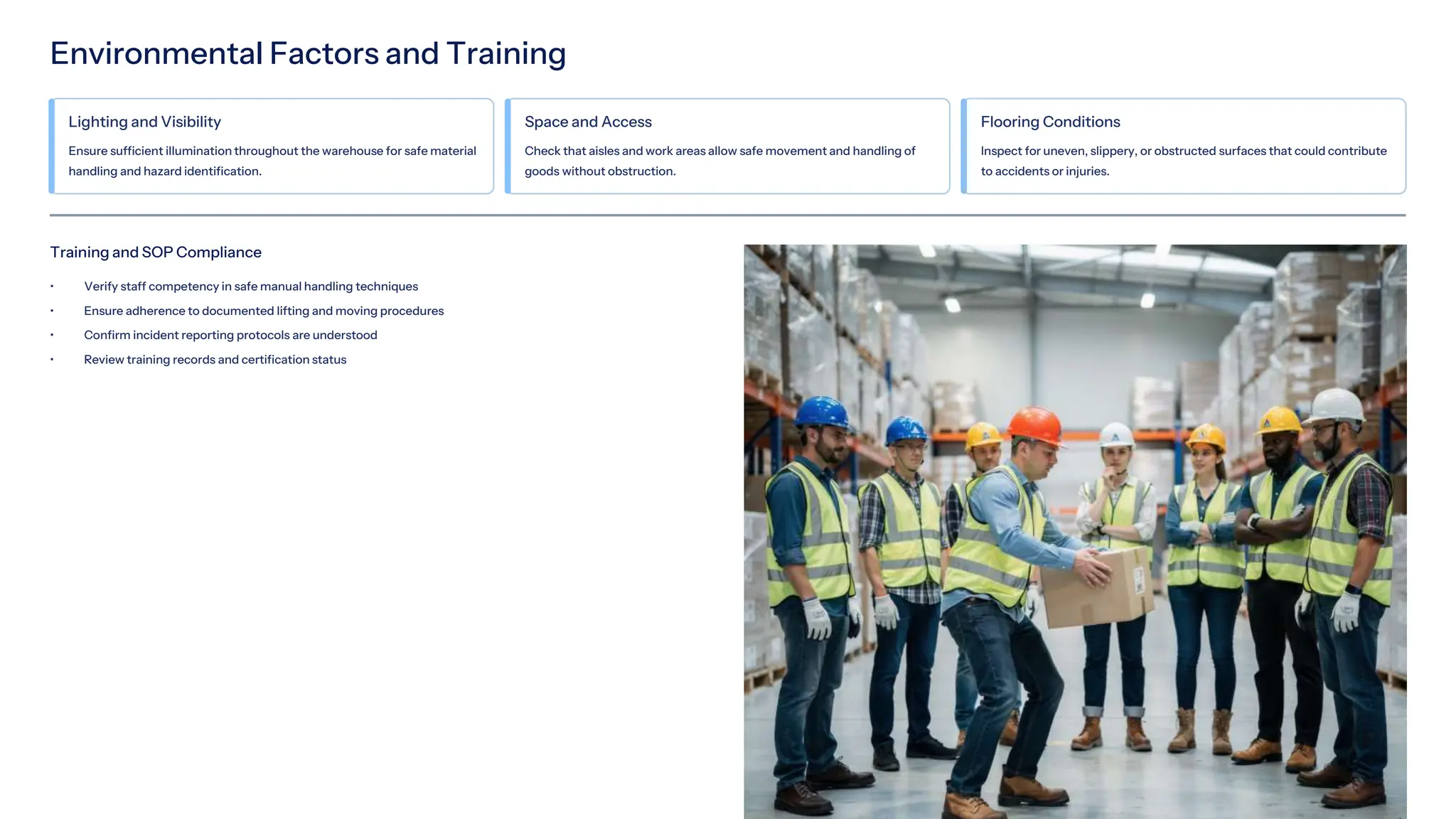
Training and SOP Compliance
• Verify staff competency in safe manual handling techniques
• Ensure adherence to documented lifting and moving procedures
• Confirm incident reporting protocols are understood
• Review training records and certification status
Corrective Actions and Continuous Improvement
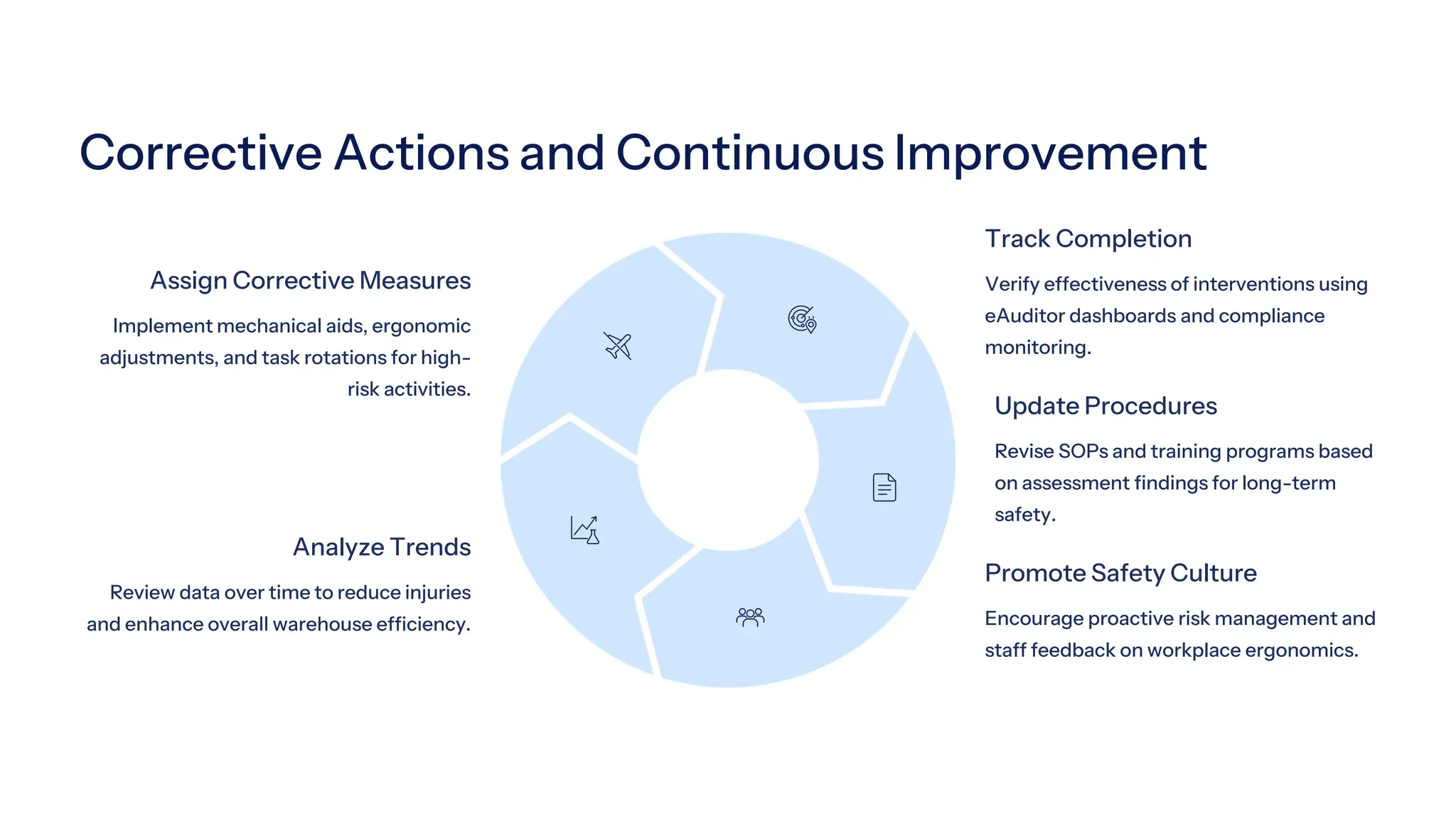
Assign Corrective Measures
Implement mechanical aids, ergonomic
adjustments, and task rotations for high-
risk activities.
Track Completion
Verify effectiveness of interventions using
eAuditor dashboards and compliance
monitoring.
Update Procedures
Revise SOPs and training programs based
on assessment findings for long-term
safety.
Promote Safety Culture
Encourage proactive risk management and
staff feedback on workplace ergonomics.
Analyze Trends
Review data over time to reduce injuries
and enhance overall warehouse efficiency.
Benefits and Outcomes
100%
Digital Documentation
Complete accountabilityand traceability through comprehensive digital records
24/7
Real-Time Monitoring
Continuous tracking of risks and corrective actions via dashboards
360°
Comprehensive Coverage
All manual handling tasks evaluated across entire warehouse operations
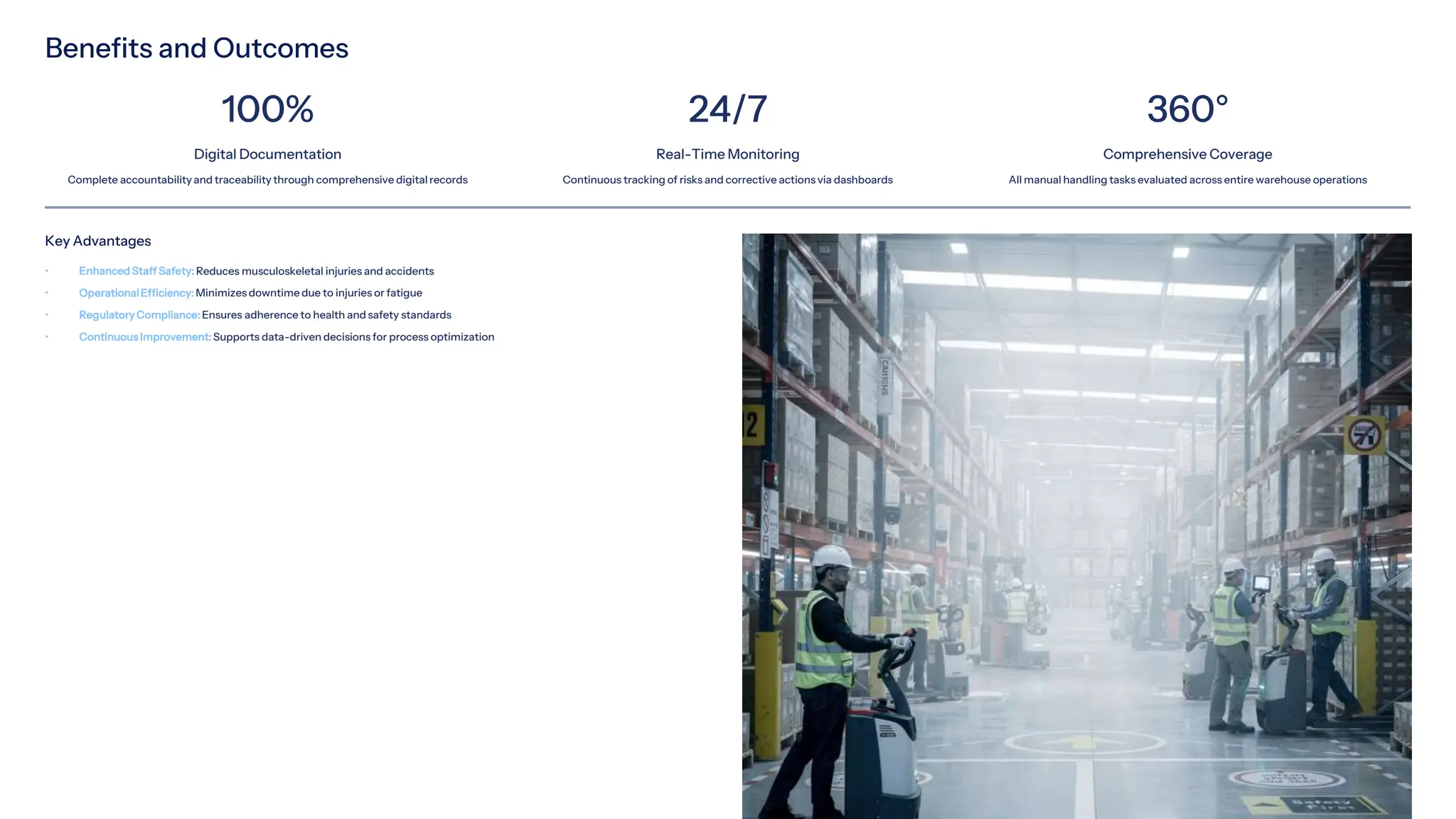
Key Advantages
• Enhanced Staff Safety: Reduces musculoskeletal injuries and accidents
• OperationalEfficiency: Minimizes downtime due to injuries or fatigue
• RegulatoryCompliance: Ensures adherence to health and safety standards
• Continuous Improvement: Supports data-driven decisions for process optimization

Warehouse Manual Handling Risk Assessment with eAuditor Audits and inspections

  • 1.
    Warehouse Manual Handling RiskAssessment A systematic evaluation of tasks involving lifting, carrying, pushing, pulling, or physically moving materials within a warehouse. Using eAuditor ensures thorough digital assessment with real-time documentation, photographic evidence, and comprehensive reporting for continuous improvement.
  • 2.
    Purpose and Objectives HazardIdentification Detect tasks that pose risks due to weight, awkward posture, repetition, or environmental constraints. Risk Evaluation Assess likelihood and severity of injury for each manual handling task to prioritize interventions. Preventive Measures Recommend safe handling techniques, mechanical aids, training, and workplace modifications. Regulatory Compliance Ensure adherence to occupational health and safety regulations concerning manual handling. By achieving these objectives, the assessment ensures staff safety, reduces workplace injuries, and supports operational efficiency through continuous improvement of training programs and standard operating procedures.
  • 3.
    Comprehensive Assessment Scope Physical Tasks •Lifting and carrying goods manually • Pushing and pulling trolleys or carts • Repetitive tasks causing strain or fatigue • Posture analysis: bending, twisting, stretching Environmental & Equipment • Mechanical aids: forklifts, pallet jacks, hoists • Lighting, flooring, and space constraints • Training and SOP compliance verification • Staff knowledge and competency assessment The scope covers all factors influencing manual handling risk to ensure a safe and ergonomic work environment across all operational areas.
  • 4.
    Digital Workflow witheAuditor Pre-Assessment Preparation Review historical injury data, customize checklists, communicate with staff, and prepare equipment for evaluation. Conducting Assessment Systematically evaluate tasks, record hazards digitally with photographs, assign risk ratings, and implement immediate corrective actions. Post-Assessment Reporting Generate digital reports, share findings with management, track compliance via dashboards, and plan follow-up assessments.
  • 5.
    Key Inspection Areas Liftingand Carrying Evaluate weight, posture, and task frequency. Identify ergonomic risks from bending, twisting, and repetitive lifting. Pushing and Pulling Assess physical effort, surface conditions, and mechanical assistance to reduce strain on workers. Posture and Ergonomics Evaluate body positions, reach heights, and recommend ergonomic solutions like shelving adjustments. Mechanical Aids Verify availability, proper usage, maintenance compliance, and staff training on equipment operation.
  • 6.
    Environmental Factors andTraining Lighting and Visibility Ensure sufficient illumination throughout the warehouse for safe material handling and hazard identification. Space and Access Check that aisles and work areas allow safe movement and handling of goods without obstruction. Flooring Conditions Inspect for uneven, slippery, or obstructed surfaces that could contribute to accidents or injuries. Training and SOP Compliance • Verify staff competency in safe manual handling techniques • Ensure adherence to documented lifting and moving procedures • Confirm incident reporting protocols are understood • Review training records and certification status
  • 7.
    Corrective Actions andContinuous Improvement Assign Corrective Measures Implement mechanical aids, ergonomic adjustments, and task rotations for high- risk activities. Track Completion Verify effectiveness of interventions using eAuditor dashboards and compliance monitoring. Update Procedures Revise SOPs and training programs based on assessment findings for long-term safety. Promote Safety Culture Encourage proactive risk management and staff feedback on workplace ergonomics. Analyze Trends Review data over time to reduce injuries and enhance overall warehouse efficiency.
  • 8.
    Benefits and Outcomes 100% DigitalDocumentation Complete accountabilityand traceability through comprehensive digital records 24/7 Real-Time Monitoring Continuous tracking of risks and corrective actions via dashboards 360° Comprehensive Coverage All manual handling tasks evaluated across entire warehouse operations Key Advantages • Enhanced Staff Safety: Reduces musculoskeletal injuries and accidents • OperationalEfficiency: Minimizes downtime due to injuries or fatigue • RegulatoryCompliance: Ensures adherence to health and safety standards • Continuous Improvement: Supports data-driven decisions for process optimization