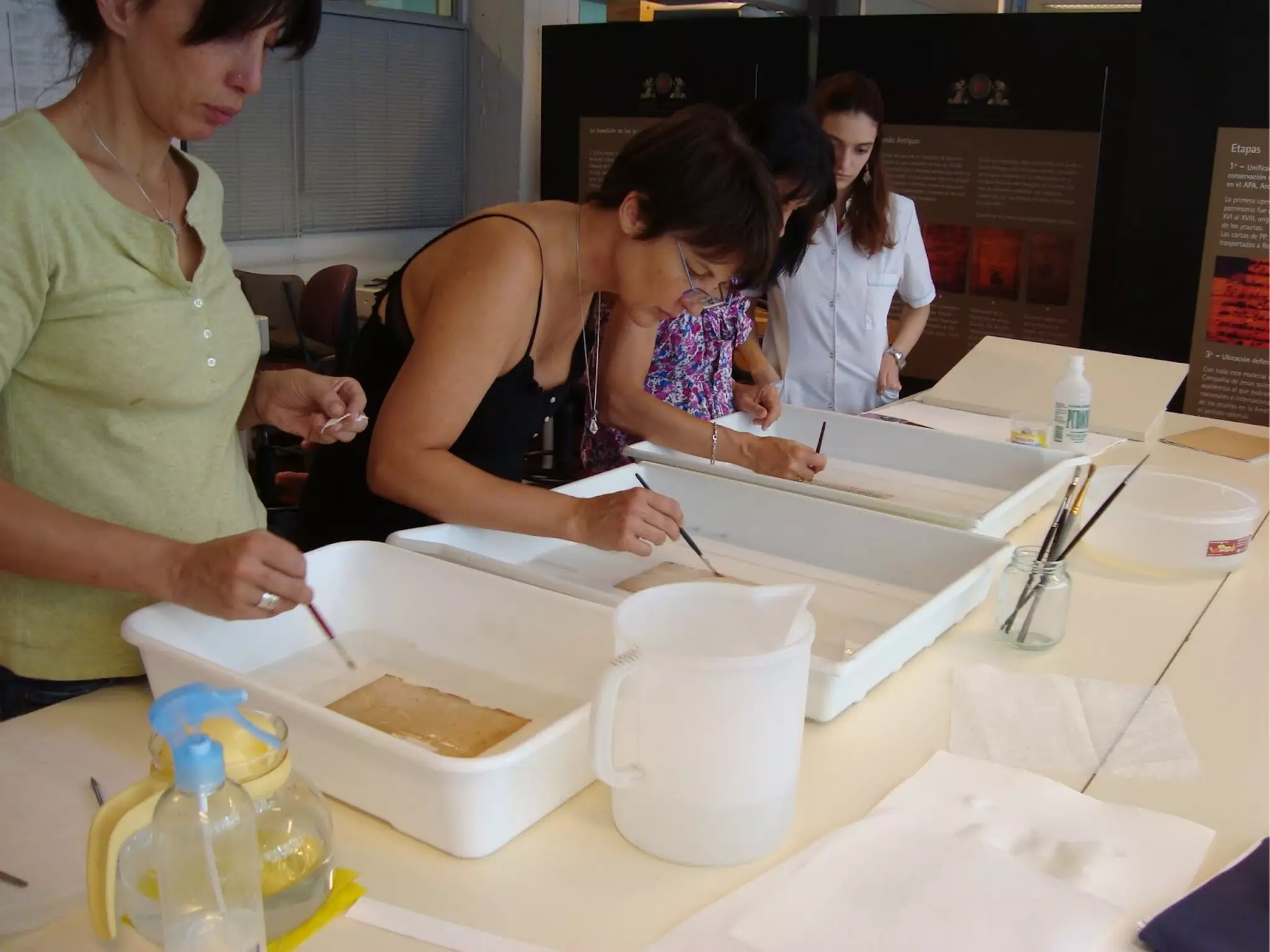
Paper restoration:
Washing

Sara Pezuela Hernández
Materials
●

Water (tap, deionized, distilled, boiling or bottled water)

●

Wetting agents/surfactants (like alcohol)

●

Enzymes

●

Alkaline solutions

●

Sinks or trays

●

Drying equipment

●

Etc.
Most common techniques
●

Washing by immersion

●

Float washing

●

Blotter washing
●

●

●

Washing by immersion: In this technique, the paper is sprayed with a
water/organic solvent mixture and placed in a tray, which will be then filled
with distilled water and prepared with chlorine. Finally the paper will be
removed carefully from the tray and will dry with blotters, felts and cotton
swabs.

Float washing: This technique follows the same steps as above, but in this
case, the paper is placed on a screen that floats on water.

Blotter washing: The first steps are the same as in the other two techniques,
but here the paper is placed on a moistened blotter, and then is introduced
in a tray.

Visual aid

  • 1.
  • 5.
    Materials ● Water (tap, deionized,distilled, boiling or bottled water) ● Wetting agents/surfactants (like alcohol) ● Enzymes ● Alkaline solutions ● Sinks or trays ● Drying equipment ● Etc.
  • 6.
    Most common techniques ● Washingby immersion ● Float washing ● Blotter washing
  • 7.
    ● ● ● Washing by immersion:In this technique, the paper is sprayed with a water/organic solvent mixture and placed in a tray, which will be then filled with distilled water and prepared with chlorine. Finally the paper will be removed carefully from the tray and will dry with blotters, felts and cotton swabs. Float washing: This technique follows the same steps as above, but in this case, the paper is placed on a screen that floats on water. Blotter washing: The first steps are the same as in the other two techniques, but here the paper is placed on a moistened blotter, and then is introduced in a tray.