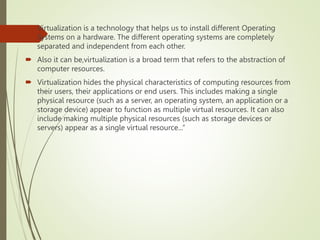
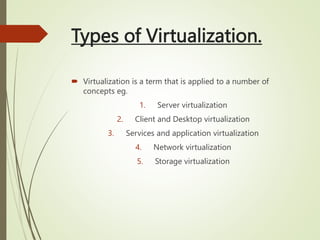
Virtualization allows multiple operating systems to run on a single hardware system by abstracting the physical hardware resources. It involves separating resources from the underlying hardware or operating system using a hypervisor. The main types of virtualization are server, desktop, application, network, and storage virtualization. Hypervisors manage the virtual machines and come in two types - native/bare-metal hypervisors that run directly on hardware and hosted hypervisors that run within a traditional operating system. Virtualization provides advantages like efficient hardware utilization, increased availability, easier disaster recovery, and energy savings. Popular virtualization software includes Microsoft Hyper-V, VMware Workstation, VirtualBox, and OpenStack.


![Getting Started with Apache Spark: Big Data Made Simple [Free Meetup]](https://cdn.slidesharecdn.com/ss_thumbnails/apachesparkgettingstarted-260203175547-8361bcc3-thumbnail.jpg?width=640&height=640&fit=bounds)


