Illustration of the use of virtual inheritance.
  //
   // Virtual inheritance
   #include <iostream.h>

   typedef int HANDS;
  enum COLOR { Red, Green, Blue, Yellow, White, Black, Brown } ;
   enum BOOL { FALSE, TRUE };

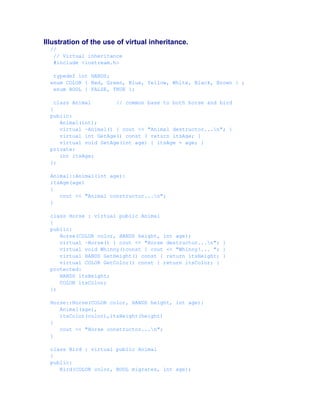
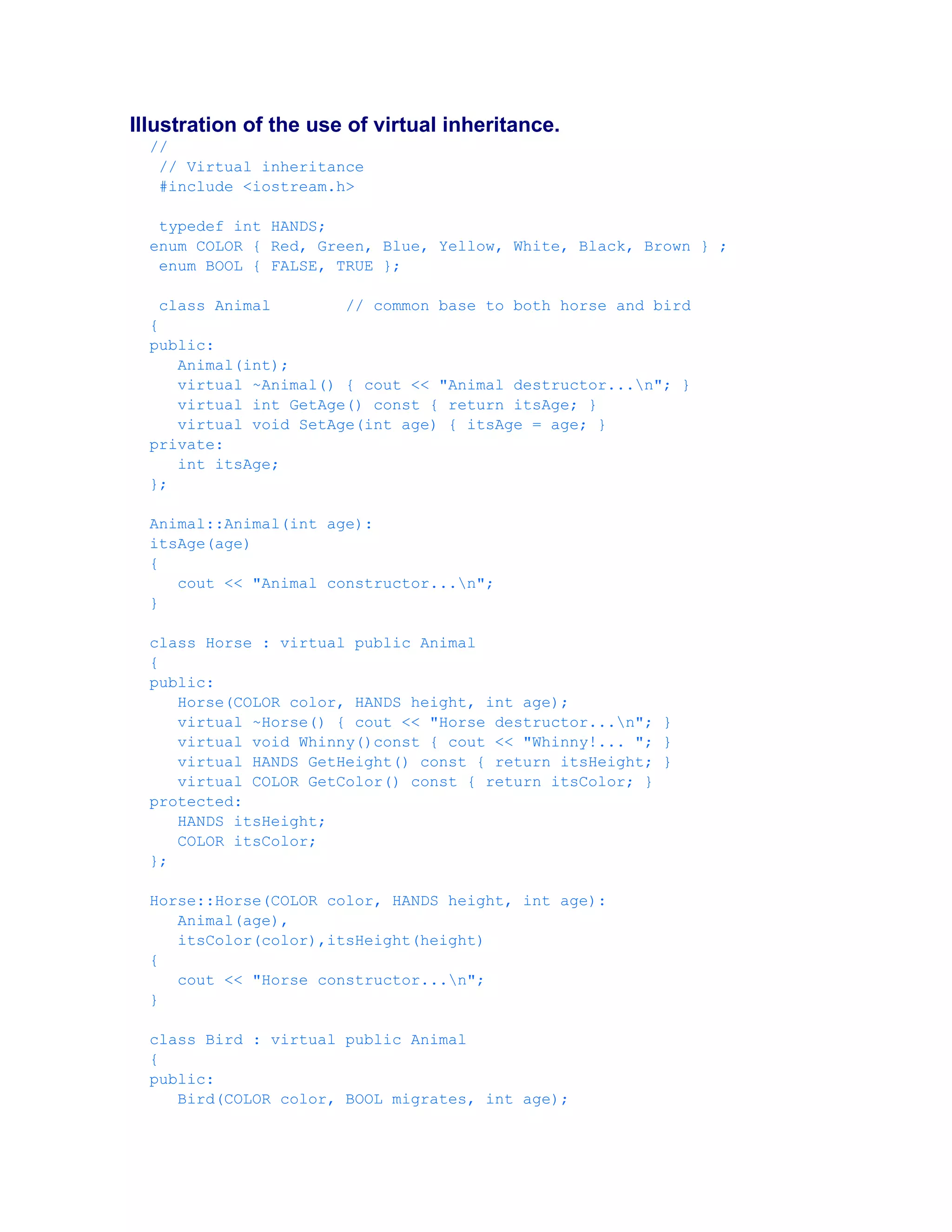
   class Animal        // common base to both horse and bird
  {
  public:
     Animal(int);
     virtual ~Animal() { cout << "Animal destructor...n"; }
     virtual int GetAge() const { return itsAge; }
     virtual void SetAge(int age) { itsAge = age; }
  private:
     int itsAge;
  };

  Animal::Animal(int age):
  itsAge(age)
  {
     cout << "Animal constructor...n";
  }

  class Horse : virtual public Animal
  {
  public:
     Horse(COLOR color, HANDS height, int age);
     virtual ~Horse() { cout << "Horse destructor...n"; }
     virtual void Whinny()const { cout << "Whinny!... "; }
     virtual HANDS GetHeight() const { return itsHeight; }
     virtual COLOR GetColor() const { return itsColor; }
  protected:
     HANDS itsHeight;
     COLOR itsColor;
  };

  Horse::Horse(COLOR color, HANDS height, int age):
     Animal(age),
     itsColor(color),itsHeight(height)
  {
     cout << "Horse constructor...n";
  }

  class Bird : virtual public Animal
  {
  public:
     Bird(COLOR color, BOOL migrates, int age);
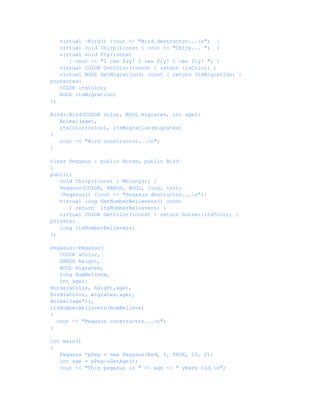
virtual ~Bird() {cout << "Bird destructor...n"; }
   virtual void Chirp()const { cout << "Chirp... "; }
   virtual void Fly()const
      { cout << "I can fly! I can fly! I can fly! "; }
   virtual COLOR GetColor()const { return itsColor; }
   virtual BOOL GetMigration() const { return itsMigration; }
protected:
   COLOR itsColor;
   BOOL itsMigration;
};

Bird::Bird(COLOR color, BOOL migrates, int age):
   Animal(age),
   itsColor(color), itsMigration(migrates)
{
   cout << "Bird constructor...n";
}

class Pegasus : public Horse, public Bird
{
public:
   void Chirp()const { Whinny(); }
   Pegasus(COLOR, HANDS, BOOL, long, int);
   ~Pegasus() {cout << "Pegasus destructor...n";}
   virtual long GetNumberBelievers() const
      { return itsNumberBelievers; }
   virtual COLOR GetColor()const { return Horse::itsColor; }
private:
   long itsNumberBelievers;
};

Pegasus::Pegasus(
   COLOR aColor,
   HANDS height,
   BOOL migrates,
   long NumBelieve,
   int age):
Horse(aColor, height,age),
Bird(aColor, migrates,age),
Animal(age*2),
itsNumberBelievers(NumBelieve)
{
  cout << "Pegasus constructor...n";
}

int main()
{
   Pegasus *pPeg = new Pegasus(Red, 5, TRUE, 10, 2);
   int age = pPeg->GetAge();
   cout << "This pegasus is " << age << " years old.n";
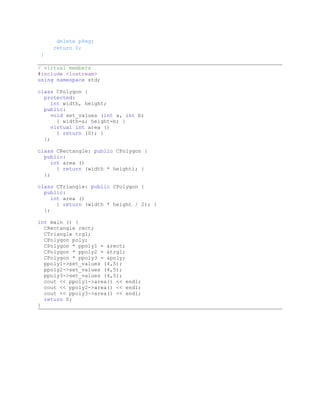
delete pPeg;
     return 0;
 }

/ virtual members
#include <iostream>
using namespace std;

class CPolygon {
  protected:
     int width, height;
  public:
     void set_values (int a, int b)
       { width=a; height=b; }
     virtual int area ()
       { return (0); }
  };

class CRectangle: public CPolygon {
  public:
     int area ()
       { return (width * height); }
  };

class CTriangle: public CPolygon {
  public:
     int area ()
       { return (width * height / 2); }
  };

int main () {
  CRectangle rect;
  CTriangle trgl;
  CPolygon poly;
  CPolygon * ppoly1 = &rect;
  CPolygon * ppoly2 = &trgl;
  CPolygon * ppoly3 = &poly;
  ppoly1->set_values (4,5);
  ppoly2->set_values (4,5);
  ppoly3->set_values (4,5);
  cout << ppoly1->area() << endl;
  cout << ppoly2->area() << endl;
  cout << ppoly3->area() << endl;
  return 0;
}
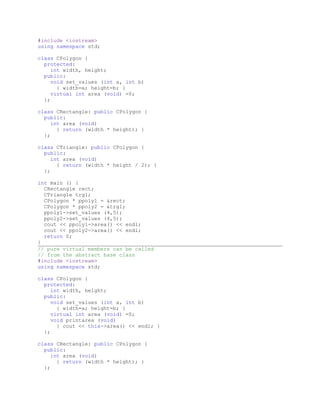
#include <iostream>
using namespace std;

class CPolygon {
  protected:
     int width, height;
  public:
     void set_values (int a, int b)
       { width=a; height=b; }
     virtual int area (void) =0;
  };

class CRectangle: public CPolygon {
  public:
     int area (void)
       { return (width * height); }
  };

class CTriangle: public CPolygon {
  public:
     int area (void)
       { return (width * height / 2); }
  };

int main () {
  CRectangle rect;
  CTriangle trgl;
  CPolygon * ppoly1 = &rect;
  CPolygon * ppoly2 = &trgl;
  ppoly1->set_values (4,5);
  ppoly2->set_values (4,5);
  cout << ppoly1->area() << endl;
  cout << ppoly2->area() << endl;
  return 0;
}
// pure virtual members can be called
// from the abstract base class
#include <iostream>
using namespace std;

class CPolygon {
  protected:
     int width, height;
  public:
     void set_values (int a, int b)
       { width=a; height=b; }
     virtual int area (void) =0;
     void printarea (void)
       { cout << this->area() << endl; }
  };

class CRectangle: public CPolygon {
  public:
     int area (void)
       { return (width * height); }
  };
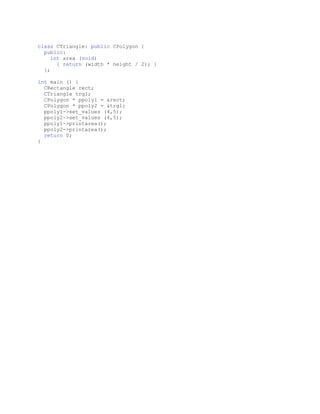
class CTriangle: public CPolygon {
  public:
     int area (void)
       { return (width * height / 2); }
  };

int main () {
  CRectangle rect;
  CTriangle trgl;
  CPolygon * ppoly1 = &rect;
  CPolygon * ppoly2 = &trgl;
  ppoly1->set_values (4,5);
  ppoly2->set_values (4,5);
  ppoly1->printarea();
  ppoly2->printarea();
  return 0;
}

Virtual inheritance

  • 1.
    Illustration of theuse of virtual inheritance. // // Virtual inheritance #include <iostream.h> typedef int HANDS; enum COLOR { Red, Green, Blue, Yellow, White, Black, Brown } ; enum BOOL { FALSE, TRUE }; class Animal // common base to both horse and bird { public: Animal(int); virtual ~Animal() { cout << "Animal destructor...n"; } virtual int GetAge() const { return itsAge; } virtual void SetAge(int age) { itsAge = age; } private: int itsAge; }; Animal::Animal(int age): itsAge(age) { cout << "Animal constructor...n"; } class Horse : virtual public Animal { public: Horse(COLOR color, HANDS height, int age); virtual ~Horse() { cout << "Horse destructor...n"; } virtual void Whinny()const { cout << "Whinny!... "; } virtual HANDS GetHeight() const { return itsHeight; } virtual COLOR GetColor() const { return itsColor; } protected: HANDS itsHeight; COLOR itsColor; }; Horse::Horse(COLOR color, HANDS height, int age): Animal(age), itsColor(color),itsHeight(height) { cout << "Horse constructor...n"; } class Bird : virtual public Animal { public: Bird(COLOR color, BOOL migrates, int age);
  • 2.
    virtual ~Bird() {cout<< "Bird destructor...n"; } virtual void Chirp()const { cout << "Chirp... "; } virtual void Fly()const { cout << "I can fly! I can fly! I can fly! "; } virtual COLOR GetColor()const { return itsColor; } virtual BOOL GetMigration() const { return itsMigration; } protected: COLOR itsColor; BOOL itsMigration; }; Bird::Bird(COLOR color, BOOL migrates, int age): Animal(age), itsColor(color), itsMigration(migrates) { cout << "Bird constructor...n"; } class Pegasus : public Horse, public Bird { public: void Chirp()const { Whinny(); } Pegasus(COLOR, HANDS, BOOL, long, int); ~Pegasus() {cout << "Pegasus destructor...n";} virtual long GetNumberBelievers() const { return itsNumberBelievers; } virtual COLOR GetColor()const { return Horse::itsColor; } private: long itsNumberBelievers; }; Pegasus::Pegasus( COLOR aColor, HANDS height, BOOL migrates, long NumBelieve, int age): Horse(aColor, height,age), Bird(aColor, migrates,age), Animal(age*2), itsNumberBelievers(NumBelieve) { cout << "Pegasus constructor...n"; } int main() { Pegasus *pPeg = new Pegasus(Red, 5, TRUE, 10, 2); int age = pPeg->GetAge(); cout << "This pegasus is " << age << " years old.n";
  • 3.
    delete pPeg; return 0; } / virtual members #include <iostream> using namespace std; class CPolygon { protected: int width, height; public: void set_values (int a, int b) { width=a; height=b; } virtual int area () { return (0); } }; class CRectangle: public CPolygon { public: int area () { return (width * height); } }; class CTriangle: public CPolygon { public: int area () { return (width * height / 2); } }; int main () { CRectangle rect; CTriangle trgl; CPolygon poly; CPolygon * ppoly1 = &rect; CPolygon * ppoly2 = &trgl; CPolygon * ppoly3 = &poly; ppoly1->set_values (4,5); ppoly2->set_values (4,5); ppoly3->set_values (4,5); cout << ppoly1->area() << endl; cout << ppoly2->area() << endl; cout << ppoly3->area() << endl; return 0; }
  • 4.
    #include <iostream> using namespacestd; class CPolygon { protected: int width, height; public: void set_values (int a, int b) { width=a; height=b; } virtual int area (void) =0; }; class CRectangle: public CPolygon { public: int area (void) { return (width * height); } }; class CTriangle: public CPolygon { public: int area (void) { return (width * height / 2); } }; int main () { CRectangle rect; CTriangle trgl; CPolygon * ppoly1 = &rect; CPolygon * ppoly2 = &trgl; ppoly1->set_values (4,5); ppoly2->set_values (4,5); cout << ppoly1->area() << endl; cout << ppoly2->area() << endl; return 0; } // pure virtual members can be called // from the abstract base class #include <iostream> using namespace std; class CPolygon { protected: int width, height; public: void set_values (int a, int b) { width=a; height=b; } virtual int area (void) =0; void printarea (void) { cout << this->area() << endl; } }; class CRectangle: public CPolygon { public: int area (void) { return (width * height); } };
  • 5.
    class CTriangle: publicCPolygon { public: int area (void) { return (width * height / 2); } }; int main () { CRectangle rect; CTriangle trgl; CPolygon * ppoly1 = &rect; CPolygon * ppoly2 = &trgl; ppoly1->set_values (4,5); ppoly2->set_values (4,5); ppoly1->printarea(); ppoly2->printarea(); return 0; }