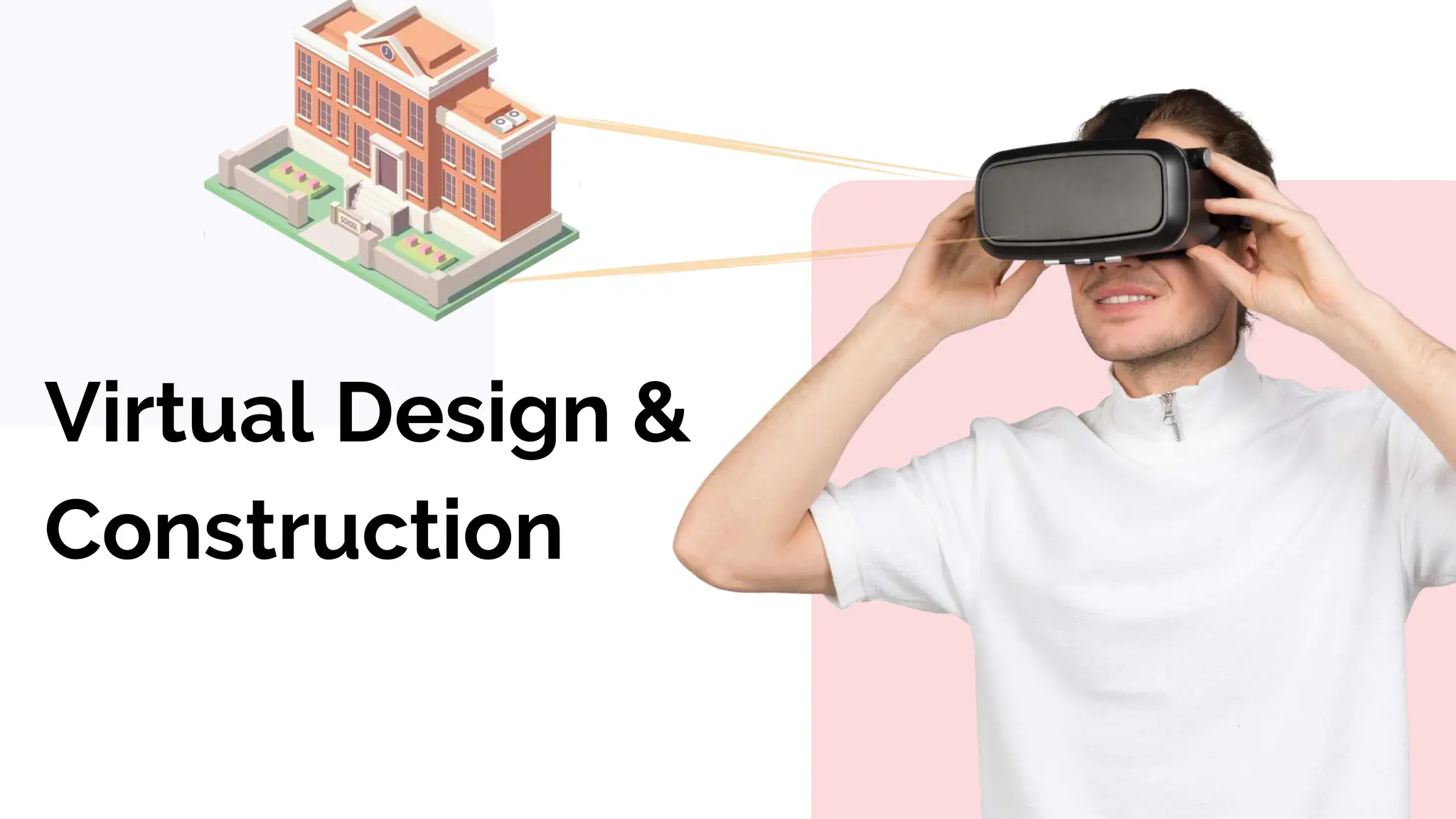
Virtual Design &
Construction
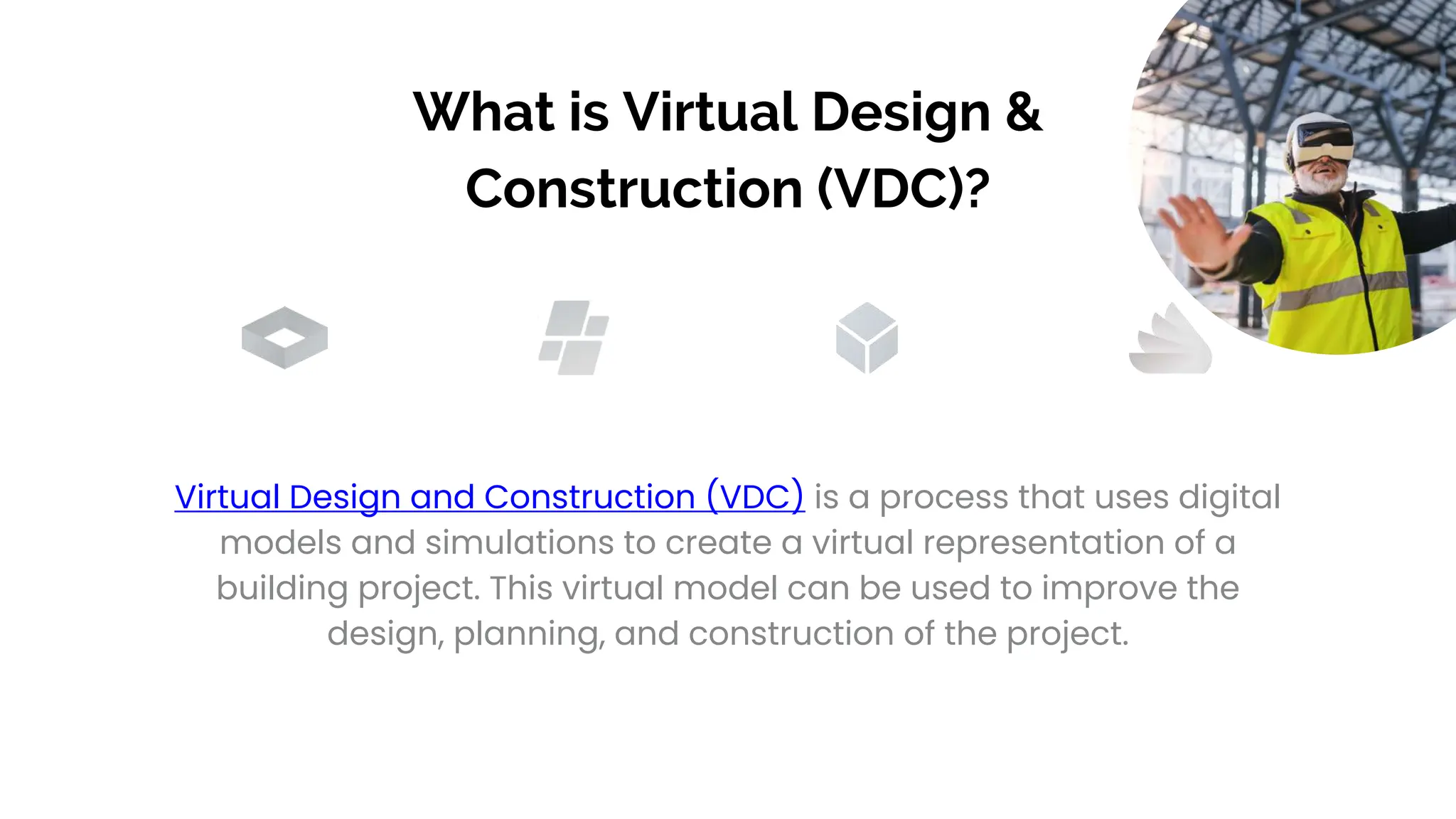
Virtual Design and Construction (VDC) is a process that uses digital
models and simulations to create a virtual representation of a
building project. This virtual model can be used to improve the
design, planning, and construction of the project.
What is Virtual Design &
Construction (VDC)?
Reduced costs and schedule overruns
Benefits of VDC
VDC offers a number of benefits, including:
Improved communication and collaboration between
stakeholders
Reduced errors and omissions
Enhanced constructability and efficiency
Improved quality and safety
How does VDC work?
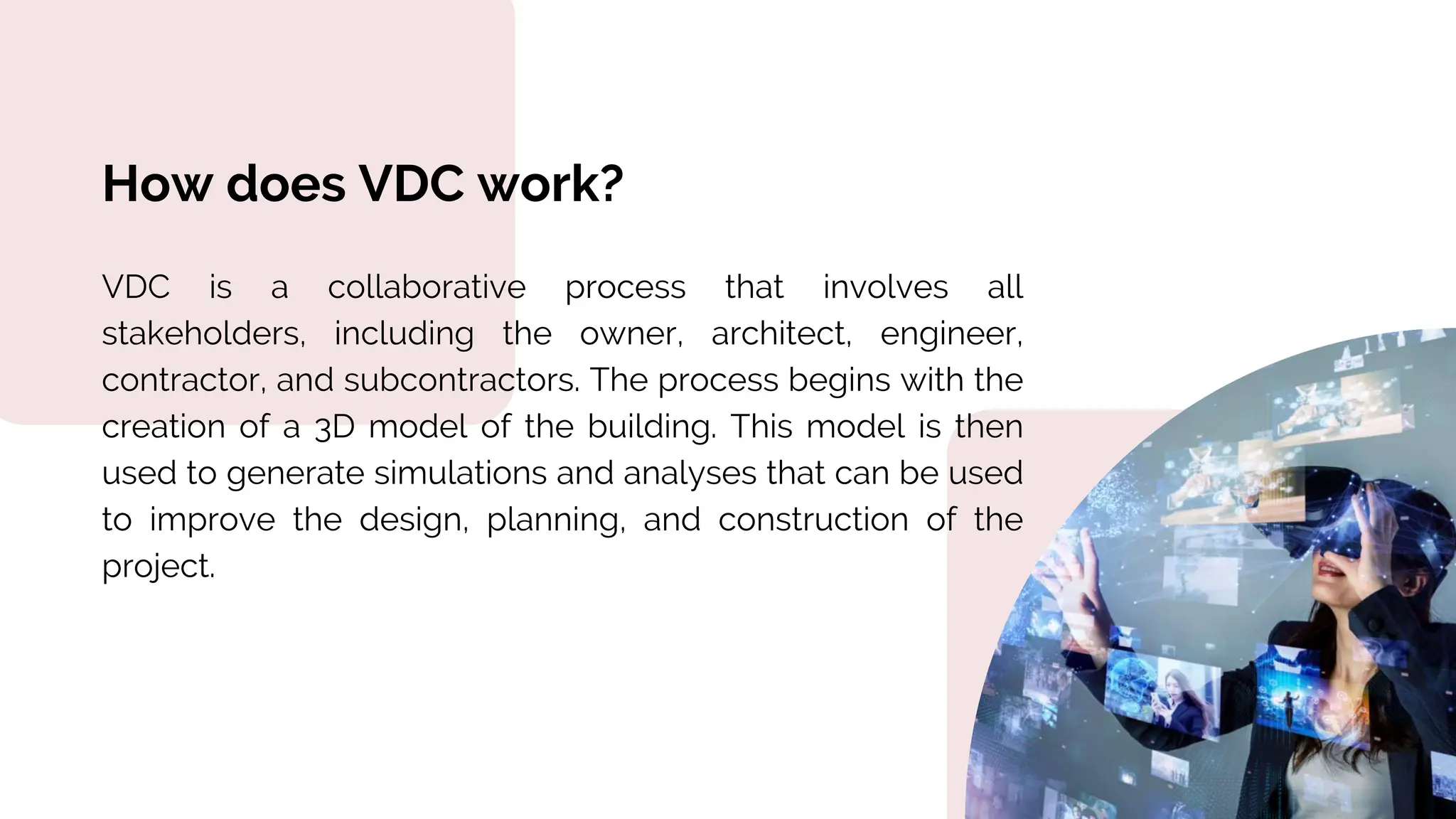
VDC is a collaborative process that involves all
stakeholders, including the owner, architect, engineer,
contractor, and subcontractors. The process begins with the
creation of a 3D model of the building. This model is then
used to generate simulations and analyses that can be used
to improve the design, planning, and construction of the
project.
VDC technologies
A variety of technologies are used in
VDC, including
Building information modeling (BIM)
Virtual reality (VR)
5D cost estimation
Augmented reality (AR)
6D sustainability analysis
4D scheduling
7D facility management
Examples of VDC in use
VDC is being used on a variety of
projects around the world, including
The new San Francisco International Airport
The new World Trade Center Transportation Hub
The new London Bridge Station
The new Sydney Metro project
VDC is a powerful tool that can be used to improve the design,
planning, and construction of building projects. VDC offers a
number of benefits, including improved communication and
collaboration, reduced errors and omissions, enhanced
constructability and efficiency, reduced costs and schedule
overruns, and improved quality and safety.
Conclusion
Thank
You

Virtual Design and Construction (VDC) overview

  • 1.
  • 2.
    Virtual Design andConstruction (VDC) is a process that uses digital models and simulations to create a virtual representation of a building project. This virtual model can be used to improve the design, planning, and construction of the project. What is Virtual Design & Construction (VDC)?
  • 3.
    Reduced costs andschedule overruns Benefits of VDC VDC offers a number of benefits, including: Improved communication and collaboration between stakeholders Reduced errors and omissions Enhanced constructability and efficiency Improved quality and safety
  • 4.
    How does VDCwork? VDC is a collaborative process that involves all stakeholders, including the owner, architect, engineer, contractor, and subcontractors. The process begins with the creation of a 3D model of the building. This model is then used to generate simulations and analyses that can be used to improve the design, planning, and construction of the project.
  • 5.
    VDC technologies A varietyof technologies are used in VDC, including Building information modeling (BIM) Virtual reality (VR) 5D cost estimation Augmented reality (AR) 6D sustainability analysis 4D scheduling 7D facility management
  • 6.
    Examples of VDCin use VDC is being used on a variety of projects around the world, including The new San Francisco International Airport The new World Trade Center Transportation Hub The new London Bridge Station The new Sydney Metro project
  • 7.
    VDC is apowerful tool that can be used to improve the design, planning, and construction of building projects. VDC offers a number of benefits, including improved communication and collaboration, reduced errors and omissions, enhanced constructability and efficiency, reduced costs and schedule overruns, and improved quality and safety. Conclusion
  • 8.