November 2012
Germany
VIDEOGAMES KEY HEADLINES
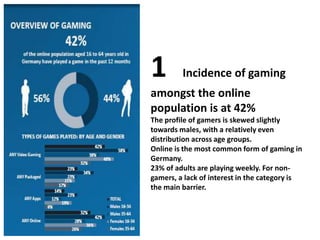
1 Incidence of gaming
amongst the online
population is at 42%
The profile of gamers is skewed slightly
towards males, with a relatively even
distribution across age groups.
Online is the most common form of gaming in
Germany.
23% of adults are playing weekly. For non-
gamers, a lack of interest in the category is
the main barrier.
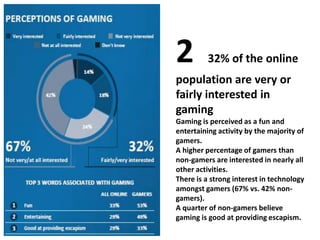
2 32% of the online
population are very or
fairly interested in
gaming
Gaming is perceived as a fun and
entertaining activity by the majority of
gamers.
A higher percentage of gamers than
non-gamers are interested in nearly all
other activities.
There is a strong interest in technology
amongst gamers (67% vs. 42% non-
gamers).
A quarter of non-gamers believe
gaming is good at providing escapism.
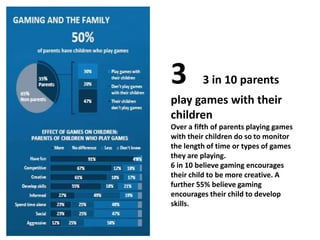
3 3 in 10 parents
play games with their
children
Over a fifth of parents playing games
with their children do so to monitor
the length of time or types of games
they are playing.
6 in 10 believe gaming encourages
their child to be more creative. A
further 55% believe gaming
encourages their child to develop
skills.
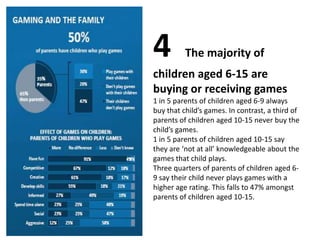
4 The majority of
children aged 6-15 are
buying or receiving games
1 in 5 parents of children aged 6-9 always
buy that child’s games. In contrast, a third of
parents of children aged 10-15 never buy the
child’s games.
1 in 5 parents of children aged 10-15 say
they are ‘not at all’ knowledgeable about the
games that child plays.
Three quarters of parents of children aged 6-
9 say their child never plays games with a
higher age rating. This falls to 47% amongst
parents of children aged 10-15.
VIDEOGAMES KEY HEADLINES

VIDEOGAMES KEY HEADLINES

  • 1.
  • 3.
    1 Incidence ofgaming amongst the online population is at 42% The profile of gamers is skewed slightly towards males, with a relatively even distribution across age groups. Online is the most common form of gaming in Germany. 23% of adults are playing weekly. For non- gamers, a lack of interest in the category is the main barrier.
  • 4.
    2 32% ofthe online population are very or fairly interested in gaming Gaming is perceived as a fun and entertaining activity by the majority of gamers. A higher percentage of gamers than non-gamers are interested in nearly all other activities. There is a strong interest in technology amongst gamers (67% vs. 42% non- gamers). A quarter of non-gamers believe gaming is good at providing escapism.
  • 5.
    3 3 in10 parents play games with their children Over a fifth of parents playing games with their children do so to monitor the length of time or types of games they are playing. 6 in 10 believe gaming encourages their child to be more creative. A further 55% believe gaming encourages their child to develop skills.
  • 6.
    4 The majorityof children aged 6-15 are buying or receiving games 1 in 5 parents of children aged 6-9 always buy that child’s games. In contrast, a third of parents of children aged 10-15 never buy the child’s games. 1 in 5 parents of children aged 10-15 say they are ‘not at all’ knowledgeable about the games that child plays. Three quarters of parents of children aged 6- 9 say their child never plays games with a higher age rating. This falls to 47% amongst parents of children aged 10-15.