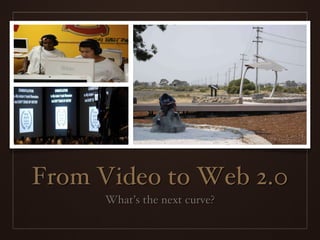
Step Up High School Summit November 5, 2009
What Is Academic Capacity? Vocational vs. College Skills (A Disclaimer) Visual Literacy & Communication Efficiency Intellectualism  Logic & Creative Problem Solving 21st Century Skills
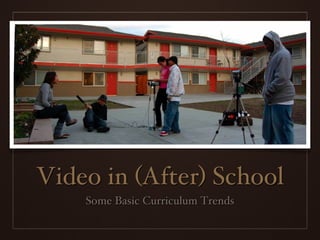
Some Basic Curriculum Trends
School Day Careers in Film, Television, Radio - Mass Media Arts Network Television Model Drama Department Video Engineering, Radio/Television Transmission, A/V Club Not often integrated with other Classes/Curriculum Were Based on Vocational or Arts Standards Traditional Video Projects
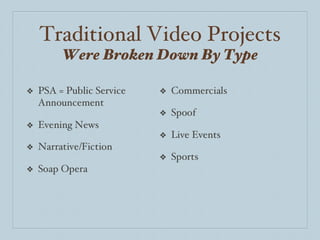
Were Broken Down By Type Traditional Video Projects
Project Learning (or Project-Based Learning) Many of us have already done Project Learning - it’s not new.  Instead of simply taking in information from a book or lecture, students create a project.  Small teams of students. Students are responsible for gathering the pieces of the project.  Teacher is responsible for structure, deadlines, and helps to provide resources. Scaffolding.  Teacher coordinates evaluation (which may be by students or even the community)
School Day or After School Careers in Television, Internet (Film) - Digital Arts Documentary Model, Social Marketing (Health) Less Dramatic/Creative Arts, More Non-Fiction No science or engineering component Not often integrated with other Classes/Curriculum Tend to Be Broken Down by Theme Current Video Projects
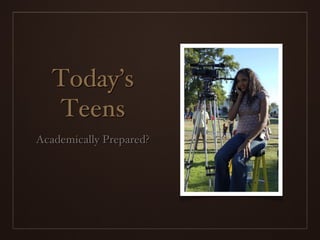
Academically Prepared?
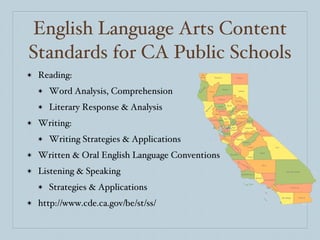
English Language Arts Content Standards for CA Public Schools Reading: Word Analysis, Comprehension Literary Response & Analysis  Writing: Writing Strategies & Applications Written & Oral English Language Conventions Listening & Speaking Strategies & Applications http://www.cde.ca.gov/be/st/ss/
ELA Standards of Note Structural Features of Informational Materials 2.1  Analyze both the features and the rhetorical devices of different types of public documents (e.g., policy statements, speeches, debates, platforms) and the way in which authors use those features and devices. Expository Critique 2.6  Critique the power, validity, and truthfulness of arguments set forth in public documents; their appeal to both friendly and hostile audiences; and the extent to which the arguments anticipate and  address reader concerns and counterclaims (e.g., appeal to reason, to authority, to pathos and emotion).  http://www.cde.ca.gov/be/st/ss/
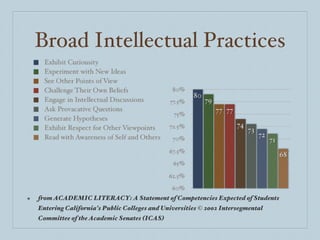
“ Habits of the Mind” ICAS = Academic Senates from UC, CSU, and CC “ Our study informs our conclusions about the complex nature of academic literacy. Competencies in reading, writing, listening, speaking, and in the use of technology...presuppose the intellectual dispositions valued by the community college, CSU, and UC faculty who teach first-year students and participated in our study. They tell us, and our experience confirms, that the following intellectual habits of mind are important for students’ success.” from ACADEMIC LITERACY: A Statement of Competencies Expected of Students Entering California’s Public Colleges and Universities © 2002 Intersegmental Committee of the Academic Senates (ICAS)
Broad Intellectual Practices from ACADEMIC LITERACY: A Statement of Competencies Expected of Students Entering California’s Public Colleges and Universities © 2002 Intersegmental Committee of the Academic Senates (ICAS)
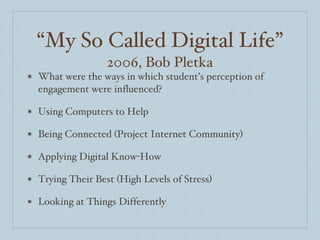
“ My So Called Digital Life” What were the ways in which student’s perception of engagement were influenced? Using Computers to Help Being Connected (Project Internet Community) Applying Digital Know-How Trying Their Best (High Levels of Stress) Looking at Things Differently 2006, Bob Pletka
 
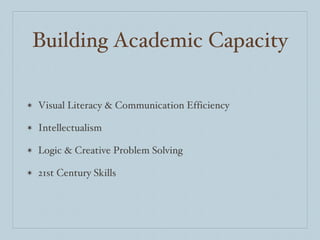
Building Academic Capacity Visual Literacy & Communication Efficiency Intellectualism  Logic & Creative Problem Solving 21st Century Skills
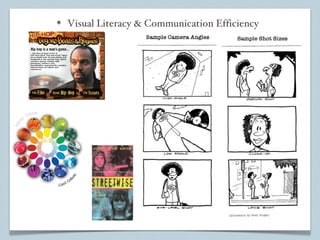
Visual Literacy & Communication Efficiency
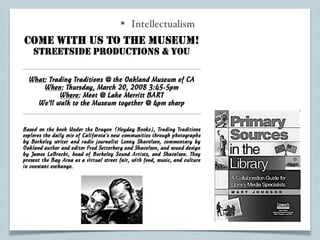
Intellectualism
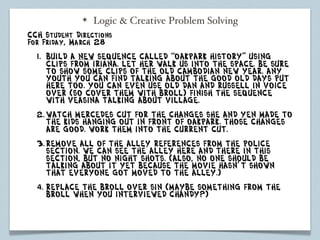
Logic & Creative Problem Solving
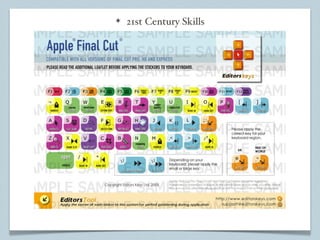
21st Century Skills
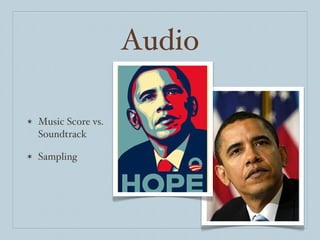
Audio Music Score vs. Soundtrack Sampling
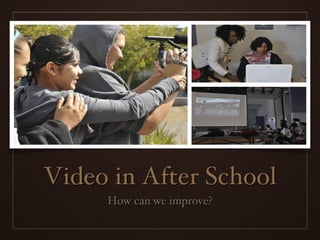
How can we improve?
What’s Missing? Who Teaches? What’s the goal of the project? Timeline? Scope? Learning Objectives? What kind of film? Genre? What filmmaking jobs are represented? Where will the students make the film/what is it about? Distribution Plan - who will see the film and why?
NOT a Limiting Factor Equipment & Budget Number of Staff Number of Students Age of Students Race & Gender Time Allotted
What’s the next curve?


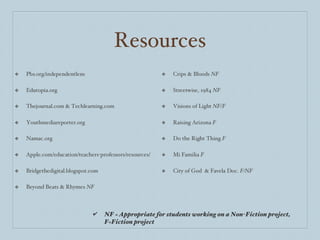
Resources NF = Appropriate for students working on a Non-Fiction project, F=Fiction project
 

Video=Academic Capacity.ppt

  • 1.
    Step Up HighSchool Summit November 5, 2009
  • 2.
    What Is AcademicCapacity? Vocational vs. College Skills (A Disclaimer) Visual Literacy & Communication Efficiency Intellectualism Logic & Creative Problem Solving 21st Century Skills
  • 3.
  • 4.
    School Day Careersin Film, Television, Radio - Mass Media Arts Network Television Model Drama Department Video Engineering, Radio/Television Transmission, A/V Club Not often integrated with other Classes/Curriculum Were Based on Vocational or Arts Standards Traditional Video Projects
  • 5.
    Were Broken DownBy Type Traditional Video Projects
  • 6.
    Project Learning (orProject-Based Learning) Many of us have already done Project Learning - it’s not new. Instead of simply taking in information from a book or lecture, students create a project. Small teams of students. Students are responsible for gathering the pieces of the project. Teacher is responsible for structure, deadlines, and helps to provide resources. Scaffolding. Teacher coordinates evaluation (which may be by students or even the community)
  • 7.
    School Day orAfter School Careers in Television, Internet (Film) - Digital Arts Documentary Model, Social Marketing (Health) Less Dramatic/Creative Arts, More Non-Fiction No science or engineering component Not often integrated with other Classes/Curriculum Tend to Be Broken Down by Theme Current Video Projects
  • 8.
  • 9.
    English Language ArtsContent Standards for CA Public Schools Reading: Word Analysis, Comprehension Literary Response & Analysis Writing: Writing Strategies & Applications Written & Oral English Language Conventions Listening & Speaking Strategies & Applications http://www.cde.ca.gov/be/st/ss/
  • 10.
    ELA Standards ofNote Structural Features of Informational Materials 2.1 Analyze both the features and the rhetorical devices of different types of public documents (e.g., policy statements, speeches, debates, platforms) and the way in which authors use those features and devices. Expository Critique 2.6 Critique the power, validity, and truthfulness of arguments set forth in public documents; their appeal to both friendly and hostile audiences; and the extent to which the arguments anticipate and address reader concerns and counterclaims (e.g., appeal to reason, to authority, to pathos and emotion). http://www.cde.ca.gov/be/st/ss/
  • 11.
    “ Habits ofthe Mind” ICAS = Academic Senates from UC, CSU, and CC “ Our study informs our conclusions about the complex nature of academic literacy. Competencies in reading, writing, listening, speaking, and in the use of technology...presuppose the intellectual dispositions valued by the community college, CSU, and UC faculty who teach first-year students and participated in our study. They tell us, and our experience confirms, that the following intellectual habits of mind are important for students’ success.” from ACADEMIC LITERACY: A Statement of Competencies Expected of Students Entering California’s Public Colleges and Universities © 2002 Intersegmental Committee of the Academic Senates (ICAS)
  • 12.
    Broad Intellectual Practicesfrom ACADEMIC LITERACY: A Statement of Competencies Expected of Students Entering California’s Public Colleges and Universities © 2002 Intersegmental Committee of the Academic Senates (ICAS)
  • 13.
    “ My SoCalled Digital Life” What were the ways in which student’s perception of engagement were influenced? Using Computers to Help Being Connected (Project Internet Community) Applying Digital Know-How Trying Their Best (High Levels of Stress) Looking at Things Differently 2006, Bob Pletka
  • 14.
  • 15.
    Building Academic CapacityVisual Literacy & Communication Efficiency Intellectualism Logic & Creative Problem Solving 21st Century Skills
  • 16.
    Visual Literacy &Communication Efficiency
  • 17.
  • 18.
    Logic & CreativeProblem Solving
  • 19.
  • 20.
    Audio Music Scorevs. Soundtrack Sampling
  • 21.
    How can weimprove?
  • 22.
    What’s Missing? WhoTeaches? What’s the goal of the project? Timeline? Scope? Learning Objectives? What kind of film? Genre? What filmmaking jobs are represented? Where will the students make the film/what is it about? Distribution Plan - who will see the film and why?
  • 23.
    NOT a LimitingFactor Equipment & Budget Number of Staff Number of Students Age of Students Race & Gender Time Allotted
  • 24.
  • 25.
  • 26.
  • 27.
  • 28.
    Resources NF =Appropriate for students working on a Non-Fiction project, F=Fiction project
  • 29.