CASE STUDY
BACKGROUND DETAILS
 Quincy Jones launched Vibe in 1993, in partnership
  with Time Inc. Originally, the publication had been
  called Volume before co-founding editor, Scott
  Poulson-Bryant gave it the name Vibe.
 On June 30, 2009, it was announced that Vibe was
  shutting its doors and ceasing publication
  immediately
 After shutting down, InterMedia
  Partners, LP bought ‘Vibe’ Magazine. They have
  said they "feel privileged to purchase and resurrect
  such a storied brand“.
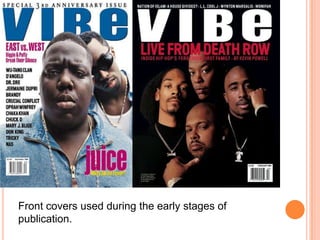
Front covers used during the early stages of
publication.
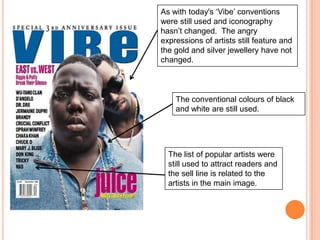
As with today's ‘Vibe’ conventions
were still used and iconography
hasn’t changed. The angry
expressions of artists still feature and
the gold and silver jewellery have not
changed.


    The conventional colours of black
    and white are still used.


  The list of popular artists were
  still used to attract readers and
  the sell line is related to the
  artists in the main image.
MORE BACKGROUND DETAILS
   In addition to the magazine, ’Vibe’ also publishes books on hip-hop culture. To
    celebrate the magazine's tenth anniversary, it published "VX: Ten Years of Vibe
    Photography." Featuring a bare-chested 50 Cent on the cover, the volume includes
    photos of Alicia Keys, RZA from the Wu-Tang Clan, Eve, Chuck D of Public
    Enemy and Run-D.M.C. Works by prominent photographers Albert Watson, Ellen
    von Unwerth, David LaChapelle, and Sante D'Orazio are among the 150
    photographs in the hardcover edition.
   Beginning in 2003, Vibe produced and aired its annual awards show
    on UPN through 2006, and VH1 Soul in 2007.
   ‘Vibe’ magazine launched the "Best Rapper Alive Tournament" on July 21, 2008.
    There were four brackets, and four number 1 seeds: Jay-Z, Lil
    Wayne, Eminem, and Andre 3000. The actual final four included Ludacris, The
    Game, Eminem and Jay-Z. The last two rappers standing were Eminem and Jay-
    Z, with Eminem eventually garnering 69% of the votes for the victory.
   Other editions include ‘VIBE Vixen’ which was a magazine geared towards female
    readers of Vibe Magazine that covered fashion, beauty, dating, entertainment, and
    societal issues for "urban minded females". The magazine was initially released in
    fall of 2004 and sales were considered successful enough for the magazine to be
    issued on a quarterly basis. ‘VIBE Vixen’ folded after its August/September 2007
    issue due to low circulation.
VIBE TODAY
 The   magazine is released Bi-Monthly (every
  two months)
 It is currently based in New York City

 Only available through a subscription which
  costs $16.99 for 2 years (12 issues) or $9.99
  for one year (6 issues).
 ‘Vibe’ has it’s own website, books and app for
  iPhone and iPad called ‘Vibe Music Mixer’
 Hosted its own tournament ‘Best Rapper Alive
  Tournament’ that rapper ‘Eminem’ won.
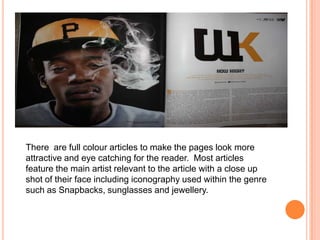
There are full colour articles to make the pages look more
attractive and eye catching for the reader. Most articles
feature the main artist relevant to the article with a close up
shot of their face including iconography used within the genre
such as Snapbacks, sunglasses and jewellery.
‘VIBE’ TARGET AUDIENCE
 18-30  year olds
 50.5% are male readers and 49.5% are
  women readers.
 They may be unemployed but most likely be
  in a job of music production.
 They will use the same terminology that
  crops up again and again in Hip-Hop/Rap in
  their vocabulary and will think that they are
  strong and powerful like the artists they see
  in the magazine.
CONTENT
   Featured segments include the back page list 20 Questions,
    the Boomshots column about Reggae and Caribbean
    music by Rob Kenner, Revolutions music reviews and Vibe
    Confidential, a celebrity gossip column. Next profiles up-and-
    coming artists. The magazine also devotes several pages to
    photo spreads displaying high-end designer clothing as well
    as sportswear by urban labels such as Rocawear and Fubu.
   Vibe makes a consistent effort to feature models of all
    ethnicities in these pages. Former editor Emil Wilbikin is
    frequently credited with styling those pages and keeping
    fashion in the forefront of the magazine's identity.
   Many clothing brands created or linked to hip-hop celebrities,
    such as Sean Combs' Sean John, Nelly's Apple
    Bottoms and G-Unit by 50 Cent find plenty of exposure
    in Vibe's pages.
STYLE
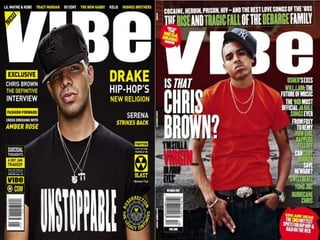
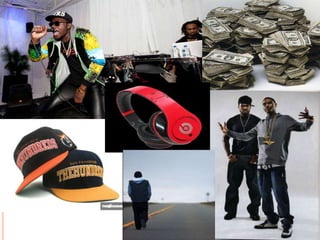
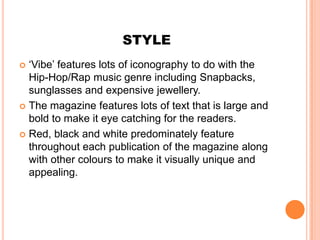
 ‘Vibe’ features lots of iconography to do with the
  Hip-Hop/Rap music genre including Snapbacks,
  sunglasses and expensive jewellery.
 The magazine features lots of text that is large and
  bold to make it eye catching for the readers.
 Red, black and white predominately feature
  throughout each publication of the magazine along
  with other colours to make it visually unique and
  appealing.
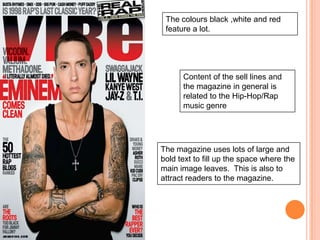
The colours black ,white and red
 feature a lot.


      Content of the sell lines and
      the magazine in general is
      related to the Hip-Hop/Rap
      music genre


The magazine uses lots of large and
bold text to fill up the space where the
main image leaves. This is also to
attract readers to the magazine.
MODE OF ADDRESS
 Uses  terminology that only fans of the Hip-
  Hop/Rap music genre will understand.
 A tone of power and strength is created
  which emulates the power and strength of
  the artists featured in the magazine.
 Has many artists listed on the front cover
  that only real fans of the genre will know
  who they are, creating a feel of exclusivity
  about the magazine.
OWNERSHIP
   InterMedia owns ‘Vibe’ magazine and they own a number of
    other companies such as Uptown Media Group, Control Room
    and Blackbook Media.
   The company was founded in 1988 by Leo Hindery Jr.
   InterMedia has invested in cable television, broadcast television,
    print, programming, and broadband opportunities.
   InterMedia is a private equity investment fund focusing on the
    media industry across all platforms - television, radio, publishing,
    internet and marketing.
    is based on the 48th floor of the Chrysler Building in Midtown
    Manhattan, New York City.

Vibe case study

  • 1.
  • 3.
    BACKGROUND DETAILS  QuincyJones launched Vibe in 1993, in partnership with Time Inc. Originally, the publication had been called Volume before co-founding editor, Scott Poulson-Bryant gave it the name Vibe.  On June 30, 2009, it was announced that Vibe was shutting its doors and ceasing publication immediately  After shutting down, InterMedia Partners, LP bought ‘Vibe’ Magazine. They have said they "feel privileged to purchase and resurrect such a storied brand“.
  • 4.
    Front covers usedduring the early stages of publication.
  • 5.
    As with today's‘Vibe’ conventions were still used and iconography hasn’t changed. The angry expressions of artists still feature and the gold and silver jewellery have not changed. The conventional colours of black and white are still used. The list of popular artists were still used to attract readers and the sell line is related to the artists in the main image.
  • 6.
    MORE BACKGROUND DETAILS  In addition to the magazine, ’Vibe’ also publishes books on hip-hop culture. To celebrate the magazine's tenth anniversary, it published "VX: Ten Years of Vibe Photography." Featuring a bare-chested 50 Cent on the cover, the volume includes photos of Alicia Keys, RZA from the Wu-Tang Clan, Eve, Chuck D of Public Enemy and Run-D.M.C. Works by prominent photographers Albert Watson, Ellen von Unwerth, David LaChapelle, and Sante D'Orazio are among the 150 photographs in the hardcover edition.  Beginning in 2003, Vibe produced and aired its annual awards show on UPN through 2006, and VH1 Soul in 2007.  ‘Vibe’ magazine launched the "Best Rapper Alive Tournament" on July 21, 2008. There were four brackets, and four number 1 seeds: Jay-Z, Lil Wayne, Eminem, and Andre 3000. The actual final four included Ludacris, The Game, Eminem and Jay-Z. The last two rappers standing were Eminem and Jay- Z, with Eminem eventually garnering 69% of the votes for the victory.  Other editions include ‘VIBE Vixen’ which was a magazine geared towards female readers of Vibe Magazine that covered fashion, beauty, dating, entertainment, and societal issues for "urban minded females". The magazine was initially released in fall of 2004 and sales were considered successful enough for the magazine to be issued on a quarterly basis. ‘VIBE Vixen’ folded after its August/September 2007 issue due to low circulation.
  • 7.
    VIBE TODAY  The magazine is released Bi-Monthly (every two months)  It is currently based in New York City  Only available through a subscription which costs $16.99 for 2 years (12 issues) or $9.99 for one year (6 issues).  ‘Vibe’ has it’s own website, books and app for iPhone and iPad called ‘Vibe Music Mixer’  Hosted its own tournament ‘Best Rapper Alive Tournament’ that rapper ‘Eminem’ won.
  • 8.
    There are fullcolour articles to make the pages look more attractive and eye catching for the reader. Most articles feature the main artist relevant to the article with a close up shot of their face including iconography used within the genre such as Snapbacks, sunglasses and jewellery.
  • 9.
    ‘VIBE’ TARGET AUDIENCE 18-30 year olds  50.5% are male readers and 49.5% are women readers.  They may be unemployed but most likely be in a job of music production.  They will use the same terminology that crops up again and again in Hip-Hop/Rap in their vocabulary and will think that they are strong and powerful like the artists they see in the magazine.
  • 11.
    CONTENT  Featured segments include the back page list 20 Questions, the Boomshots column about Reggae and Caribbean music by Rob Kenner, Revolutions music reviews and Vibe Confidential, a celebrity gossip column. Next profiles up-and- coming artists. The magazine also devotes several pages to photo spreads displaying high-end designer clothing as well as sportswear by urban labels such as Rocawear and Fubu.  Vibe makes a consistent effort to feature models of all ethnicities in these pages. Former editor Emil Wilbikin is frequently credited with styling those pages and keeping fashion in the forefront of the magazine's identity.  Many clothing brands created or linked to hip-hop celebrities, such as Sean Combs' Sean John, Nelly's Apple Bottoms and G-Unit by 50 Cent find plenty of exposure in Vibe's pages.
  • 12.
    STYLE  ‘Vibe’ featureslots of iconography to do with the Hip-Hop/Rap music genre including Snapbacks, sunglasses and expensive jewellery.  The magazine features lots of text that is large and bold to make it eye catching for the readers.  Red, black and white predominately feature throughout each publication of the magazine along with other colours to make it visually unique and appealing.
  • 13.
    The colours black,white and red feature a lot. Content of the sell lines and the magazine in general is related to the Hip-Hop/Rap music genre The magazine uses lots of large and bold text to fill up the space where the main image leaves. This is also to attract readers to the magazine.
  • 14.
    MODE OF ADDRESS Uses terminology that only fans of the Hip- Hop/Rap music genre will understand.  A tone of power and strength is created which emulates the power and strength of the artists featured in the magazine.  Has many artists listed on the front cover that only real fans of the genre will know who they are, creating a feel of exclusivity about the magazine.
  • 15.
    OWNERSHIP  InterMedia owns ‘Vibe’ magazine and they own a number of other companies such as Uptown Media Group, Control Room and Blackbook Media.  The company was founded in 1988 by Leo Hindery Jr.  InterMedia has invested in cable television, broadcast television, print, programming, and broadband opportunities.  InterMedia is a private equity investment fund focusing on the media industry across all platforms - television, radio, publishing, internet and marketing.  is based on the 48th floor of the Chrysler Building in Midtown Manhattan, New York City.