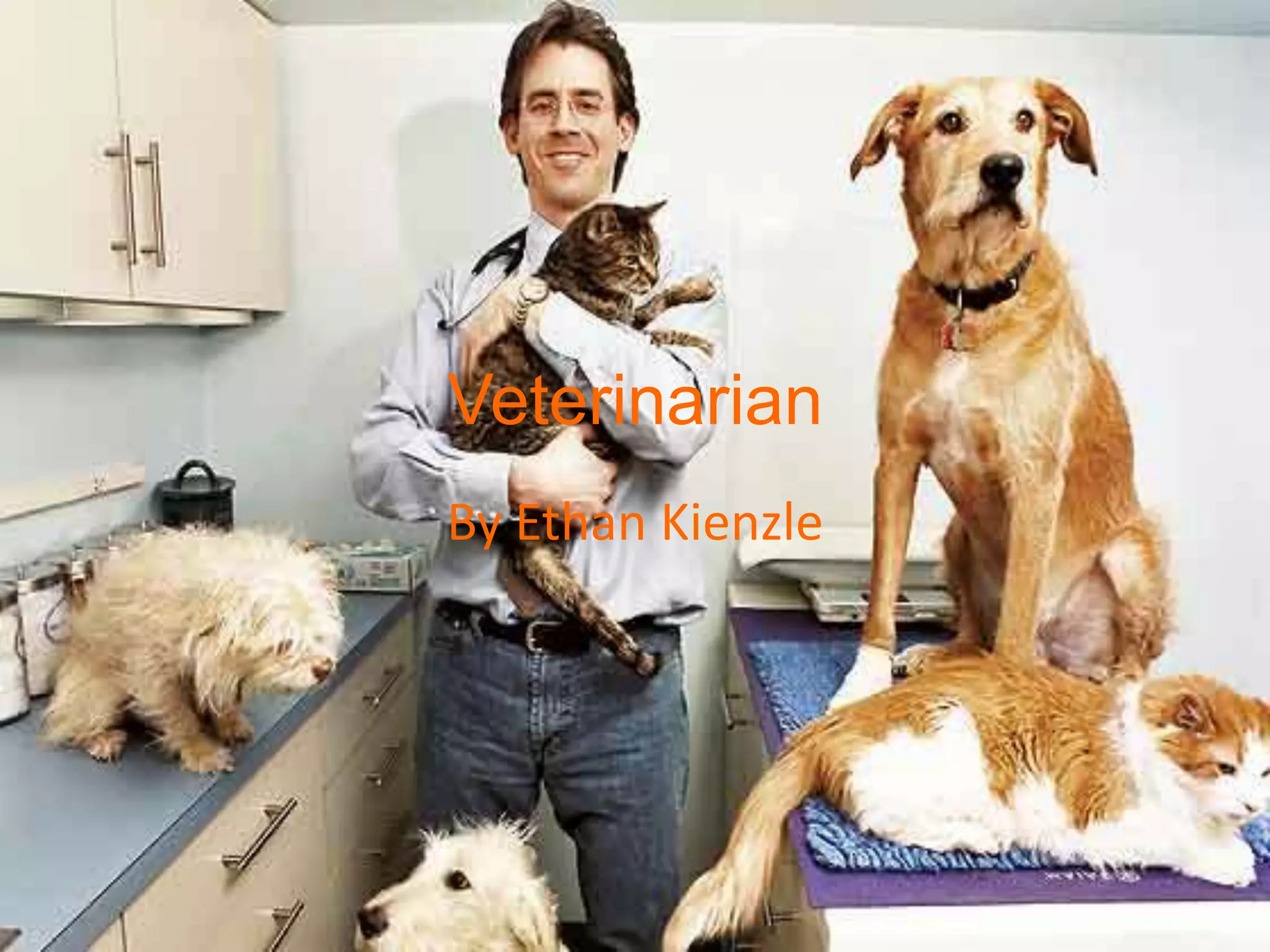
Veterinarian
By Ethan Kienzle
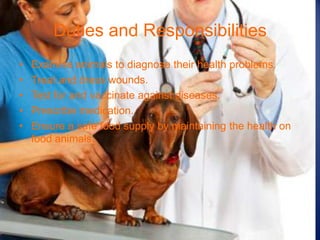
Duties and Responsibilities
•   Examine animals to diagnose their health problems.
•   Treat and dress wounds.
•   Test for and vaccinate against diseases.
•   Prescribe medication.
•   Ensure a safe food supply by maintaining the health on
    food animals.
Work Environment
• Although most veterinarians work in private
  clinics, others travel to farms, work outdoors, or work in
  laboratories.
• Veterinarians risk being bitten, kicked, or scratched.
• Veterinarians often work long hours.
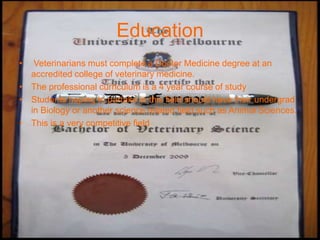
Education
•  Veterinarians must complete a Doctor Medicine degree at an
  accredited college of veterinary medicine.
• The professional curriculum is a 4 year course of study
• Students hoping to partake in this field should have their undergrad
  in Biology or another science related field such as Animal Sciences.
• This is a very competitive field
Schools That Offer Programs
•   Des Moines Area Community College
•   Dordt College
•   Eastern Iowa Community College District
•   Hawkeye Community College
•   Iowa State University
•   Iowa Western Community College
•   Kirkwood Community College
•   Western Iowa Tech Community College
Salary
• The average yearly salary varies slightly when
  comparing it nationally to the average in Iowa.
• National: $82,000         Iowa: $69,100

• Veterinarians who handle large animals exclusively
  generally had higher earnings. Some earned $150,000
  or more per year.
Benefits Veterinarians Receive
•   30 day paid vacations
•   Paid sick leave
•   Health and dental care at no cost
•   Low cost health care for their families
•   Low cost life insurance
•   Paid holidays
Bibliography
•   Educationnews.org
•   Wiki Answers.com
•   Discover
•   Occupational Outlook Handbook
•   Iastate.edu

Veterinarian

  • 1.
  • 2.
    Duties and Responsibilities • Examine animals to diagnose their health problems. • Treat and dress wounds. • Test for and vaccinate against diseases. • Prescribe medication. • Ensure a safe food supply by maintaining the health on food animals.
  • 3.
    Work Environment • Althoughmost veterinarians work in private clinics, others travel to farms, work outdoors, or work in laboratories. • Veterinarians risk being bitten, kicked, or scratched. • Veterinarians often work long hours.
  • 4.
    Education • Veterinariansmust complete a Doctor Medicine degree at an accredited college of veterinary medicine. • The professional curriculum is a 4 year course of study • Students hoping to partake in this field should have their undergrad in Biology or another science related field such as Animal Sciences. • This is a very competitive field
  • 5.
    Schools That OfferPrograms • Des Moines Area Community College • Dordt College • Eastern Iowa Community College District • Hawkeye Community College • Iowa State University • Iowa Western Community College • Kirkwood Community College • Western Iowa Tech Community College
  • 6.
    Salary • The averageyearly salary varies slightly when comparing it nationally to the average in Iowa. • National: $82,000 Iowa: $69,100 • Veterinarians who handle large animals exclusively generally had higher earnings. Some earned $150,000 or more per year.
  • 7.
    Benefits Veterinarians Receive • 30 day paid vacations • Paid sick leave • Health and dental care at no cost • Low cost health care for their families • Low cost life insurance • Paid holidays
  • 8.
    Bibliography • Educationnews.org • Wiki Answers.com • Discover • Occupational Outlook Handbook • Iastate.edu