Veterinarian

   Elena Martinez
West Los Angeles College
Job Description

            Veterinarians care for
            health of animals by
            diagnosing, treating, and
            researching medical
            conditions.
            This includes: pets, livestock,
            and animals in zoos,
            racetracks, and
            laboratories.
Common Vets
 Companion animal- treats pets and generally work
 in private clinics
 -Work with dogs, cats, birds, ferrets, and rabbits
Equine- work with horses
 Food animal- work with farm animals such as pigs,
 cattle, and sheep
 Food safety and inspection- inspect livestock and
 animal products and enforce government food safety
 regulations
Research- Work in laboratories, conducting clinical
 research on human and animal health problems
 Operate medical equipment
 Examine animals to diagnose            such as radiographic or
  their health problems                  ultrasound equipment
 Treat and dress wounds                Advise animal owners
 Perform surgery on animals             about general care, medical
 Test for and vaccinate against         conditions, ad treatments
  diseases                              Prescribe medication
 Collect body tissue, feces, blood,
  urine, and other body fluids for      Euthanize animals
  examination and analysis              Attend lectures,
 Educate the public about diseases      conferences, or continuing
  that can be spread from animals        education courses
  to humans


                         Duties&Tasks 
Work Environment
         Work long hours
         Some work nights or
          weekends and may have to
          respond to emergencies
         About 1 in 4 veterinarians
          worked more than 50 hours
          per week in 2010
         Work conditions may be
          outdoors or indoors (not
          always sanitary)
Work Environment Cont’d
 Can be emotionally stressful
  dealing with sick animals
  and their owners
 Workplace is noisy because
  of the animal that are sick
  or being handled
 Risk of being kicked, bitten,
  or scratched while working
  with animals that are
  frightened or in pain
Expected Earnings
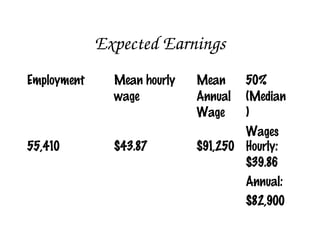
Employment     Mean hourly   Mean     50%
               wage          Annual   (Median
                             Wage     )
                                     Wages
55,410         $43.87        $91,250 Hourly:
                                     $39.86
                                      Annual:
                                      $82,900
Top Paid States
California   Texas   Florida    New York       Los Angeles

              150,000
              100,000
               50,000
                     0
                     Emp       Hou     Ann
                     loym       rly     ual
                      ent      mea     mea
         California 5,250      $46.7   97,19
         Texas       3,590     $45.2   $94,0
         Florida     3,070     $48     $99,9
         New York 2,950        $51.5   $107,
         Los Angeles 830       $44.4   $92,4
 increase 36% from 2010-
                           Outlook
  2020 (faster than avg)
 Advances in medicine allow
  this including; but not
  limited to, cancer
  treatments and kidney
  transplants
 28 accredited veterinary
  programs in the US
 Limited number of
  graduates (~2,500/yr)
 Fewer job opportunities in
  companion animal care
  Employment is expected t
Education Required
 Must complete a Doctor of Veterinary Medicine (D.V.M or
  V.M.D) at an accredited college of veterinary medicine
 28 colleges with accredited programs
 (UC Davis, Purdue, Kansas State, Oregon State)
 Takes 4 years to complete and includes classroom,
  laboratory, and clinical components
 Bachelor’s Degree not required, but many have one
 Biology, Chemistry, Anatomy, Animal Science, Zoology,
  Microbiology, Physiology
 Physics, Calculus, Statistics, Algebra 2, Geometry
 Admission into program is competitive (In 2010 less than half
  were accepted
Training Required
 3 years of classroom, laboratory, and clinical work
 4th year spent doing clinical rotations in a medical center or
  hospital
 1 year of internship program to gain exp for competitive pay
  or to prep for certification course
 License is required (must complete an accredited program
  and pass the Northern American Veterinary Licensing Exam,
  and state exam)
 Certification in 40 different specialties (surgery,
  microbiology, and internal medicine)
 Certification not required (must have certain number of
  years of exp in field, complete additional ed, or complete
  residency program)
Skills Required
 Must be compassionate with animals and their
 owners
 Must have great decision making skills for treating
 injuries and illnesses of animals
 Strong communication skills to be able to explain
 treatment options and give instructions to staff
Management skills
Manual dexterity when treating injuries and
 performing surgery
Problem-solving skills to figure out what is ailng
 animals ( excellent diagnostic skills for those who test
 animals to determine the effects of drug therapies )
Associations&Organizations
 There are over 100 organizations&associations for
 vets
 ASPCA (The American Society for Prevention of
 Cruelty of Animals) their mission is to promote
 humane principles, prevent cruelty, and alleviate fear,
 pain, and suffering in animals http://aspca.org/
 PETA (People for the Ethical Treatment of Animals)
 http://www.peta2.com/
 AAV Annual Conference&Expo
 http://www.conferenceoffice.com/aav/
Works Cited
http://www.bls.gov/k12/nature04.htm
http://www.bls.gov/ooh/healthcare/veterinarians.ht
m#tab-4
http://www.onetonline.org/link/summary/29-
1131.00#WorkActivities
http://www.vspn.org/library/wwwdirectory/Organiz
ations.htm

Vet

  • 1.
    Veterinarian Elena Martinez West Los Angeles College
  • 2.
    Job Description  Veterinarians care for health of animals by diagnosing, treating, and researching medical conditions.  This includes: pets, livestock, and animals in zoos, racetracks, and laboratories.
  • 3.
    Common Vets  Companion animal-treats pets and generally work in private clinics  -Work with dogs, cats, birds, ferrets, and rabbits Equine- work with horses  Food animal- work with farm animals such as pigs, cattle, and sheep  Food safety and inspection- inspect livestock and animal products and enforce government food safety regulations Research- Work in laboratories, conducting clinical research on human and animal health problems
  • 4.
     Operate medicalequipment  Examine animals to diagnose such as radiographic or their health problems ultrasound equipment  Treat and dress wounds  Advise animal owners  Perform surgery on animals about general care, medical  Test for and vaccinate against conditions, ad treatments diseases  Prescribe medication  Collect body tissue, feces, blood, urine, and other body fluids for  Euthanize animals examination and analysis  Attend lectures,  Educate the public about diseases conferences, or continuing that can be spread from animals education courses to humans Duties&Tasks 
  • 5.
    Work Environment  Work long hours  Some work nights or weekends and may have to respond to emergencies  About 1 in 4 veterinarians worked more than 50 hours per week in 2010  Work conditions may be outdoors or indoors (not always sanitary)
  • 6.
    Work Environment Cont’d  Can beemotionally stressful dealing with sick animals and their owners  Workplace is noisy because of the animal that are sick or being handled  Risk of being kicked, bitten, or scratched while working with animals that are frightened or in pain
  • 7.
    Expected Earnings Employment Mean hourly Mean 50% wage Annual (Median Wage ) Wages 55,410 $43.87 $91,250 Hourly: $39.86 Annual: $82,900
  • 8.
    Top Paid States California Texas Florida New York Los Angeles 150,000 100,000 50,000 0 Emp Hou Ann loym rly ual ent mea mea California 5,250 $46.7 97,19 Texas 3,590 $45.2 $94,0 Florida 3,070 $48 $99,9 New York 2,950 $51.5 $107, Los Angeles 830 $44.4 $92,4
  • 9.
     increase 36%from 2010- Outlook 2020 (faster than avg)  Advances in medicine allow this including; but not limited to, cancer treatments and kidney transplants  28 accredited veterinary programs in the US  Limited number of graduates (~2,500/yr)  Fewer job opportunities in companion animal care Employment is expected t
  • 10.
    Education Required  Must completea Doctor of Veterinary Medicine (D.V.M or V.M.D) at an accredited college of veterinary medicine  28 colleges with accredited programs  (UC Davis, Purdue, Kansas State, Oregon State)  Takes 4 years to complete and includes classroom, laboratory, and clinical components  Bachelor’s Degree not required, but many have one  Biology, Chemistry, Anatomy, Animal Science, Zoology, Microbiology, Physiology  Physics, Calculus, Statistics, Algebra 2, Geometry  Admission into program is competitive (In 2010 less than half were accepted
  • 11.
    Training Required  3 yearsof classroom, laboratory, and clinical work  4th year spent doing clinical rotations in a medical center or hospital  1 year of internship program to gain exp for competitive pay or to prep for certification course  License is required (must complete an accredited program and pass the Northern American Veterinary Licensing Exam, and state exam)  Certification in 40 different specialties (surgery, microbiology, and internal medicine)  Certification not required (must have certain number of years of exp in field, complete additional ed, or complete residency program)
  • 12.
    Skills Required  Must becompassionate with animals and their owners  Must have great decision making skills for treating injuries and illnesses of animals  Strong communication skills to be able to explain treatment options and give instructions to staff Management skills Manual dexterity when treating injuries and performing surgery Problem-solving skills to figure out what is ailng animals ( excellent diagnostic skills for those who test animals to determine the effects of drug therapies )
  • 13.
    Associations&Organizations  There areover 100 organizations&associations for vets  ASPCA (The American Society for Prevention of Cruelty of Animals) their mission is to promote humane principles, prevent cruelty, and alleviate fear, pain, and suffering in animals http://aspca.org/  PETA (People for the Ethical Treatment of Animals) http://www.peta2.com/  AAV Annual Conference&Expo http://www.conferenceoffice.com/aav/
  • 14.