By
Dr. Rodney Wee Phd.
Asia Cold Chain Centre
Value-Added Cold Chain
Practices for Fresh Food Safety
2
3
Value in Fresh Produce
• Fresh
• Nutritious
• Clean & Safe
• Minimal chemical Residue
• Longer “Shelf life”
• Availability
• Cost
• Nutrient Management
• Soil Management
• Pest Management
• Residue Management (Safety)
• Harvesting process
• Post Harvest Cooling (Expiry dates)
• Correct Packaging
• Proper Handling & Transport
• Timely Distribution
• Retail Storage
Buyers/ Consumers desires Value – Added Actions
4
5
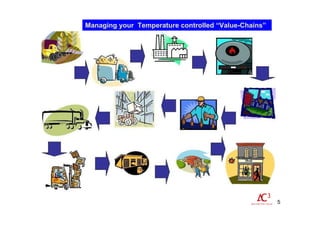
Managing your Temperature controlled “Value-Chains”
6
“Essentials” in the Value-added Supply “pipeline”
 Moving from processing and Storage facility to a Throughput
facility.
 Providing Value-adding services eg. Maintaining shelf life, etc
 Managing throughput for continuity
 Managing information flow (more important than inventory
flow ie. doing things once).
 Reduce lead times and avoid “bottleneck” congestions
 Providing smooth “inter-change” in agri-food business
 Uses a distribution centre approach to the markets
 Managing information for forward planning
7
RiskManagement
“FreshProduce”
Export
ComplianceSupplyChainOverview Chainof Responsibility
Environment
BusinessSkills
SecuringProduceSupply
International Transport (Land, Sea&Air)
Skills&Training
BusinessissuesintheExport Environment
Haccp, ISO22000
CAP, GHP, GDP
FreshProduct ColdChain Transport Security(Post 9/11)
ClimaticConditions
BusinessPlanning
HRManagement (Labour Risks)
Environmental Management Systems(EMS)
TradingPartner Relationships
Contracting
FoodIntegrity&Safety
Marketing&Competition
Intellectual Property(IP)
Accreditation
ResidueManagement
TraceabilitySystems
FoodSafety
Temperature&HumidityMaintenance
Risk Management in Food
and Fresh Produce
8
Critical Areas
Business Strategy
Perishable Food
Identify parties
Product Description
Costs
Special Instructions
Information
Cargo
New Cargo
If transhipment to ...
By product
By importer
From:
By commodity
By exportor
By Product
Grower
Trader
Cosolidator
Post harvest (Yes / No)
Packaging
Cooling method
Insulation
Atmospheric conditions
Time frame
In air
On ground
On tarmac
Basic
Recoverable
Extra services
Tanking
Distribution
Handling
Repack
Importing Country Requirements
Airline
Logistics provider
Volume
Season
Weakness
Dangers
Business Development
Areas of growth
Perishable Food
Business Strategy
9
The Asia – Pacific Environment
Asia
• 17,212 000 Sq Miles
• 47 Countries…..
• > 4 Billion people
Including China – 1.3 Billion …
with India set to overtake China by mid 21st Century
• Australia – 22 Million
• New Zealand – 4 Million
• Pacific Islands – 6 Million
10
Extreme
Infrastructure
Contrasts
From…..
To….
11
Common Fresh Produce Supply Chains
12
Value Added Agri-Food Supply
13
What “plagues” the Food Industry ?
• Reliable Sources of Fresh Produce or raw materials for food products
• Consistency of Supply
• Raw Material “Postharvest” Practices
• Cold Chain “Breaks”
• Long Distances
• Frequent transshipment “hubs”
• Unnecessary handling and staging operations
• “Breaks” in your “Value chain”
• Contamination & Cross-contamination (accidental or introduced)
• Quality maintenance in Transit
• Cost Issues
• How “safe”...are the Supply Chains ?
• Risk Management
• Alternative Supply Chains & Emergency Procedures
Issues
•Respiration
•Temperature
•Ethylene Production
•Water Loss
•Growth and Development
•Mechanical Damage
•Physiological Disorders
•Pathological Breakdown
•Stress
14
Post Harvest Cooling
15
Packing & Packaging
16
Specialised
Transport
17
•Ice Calculator
•On-tarmac time
•Transit-time
•Transshipment
Frequency
•Produce Stress
•Airport Facilities
•Aircraft storage
Logistics & Transport Issues
18
Quality Accreditation
GDP
ISO 22000
19
Train and Educate your teams
Fruit and Vegetables
Seafood
Meat and Dairy
Flowers
Best long-term storage
temperatures may be
slightly different
20
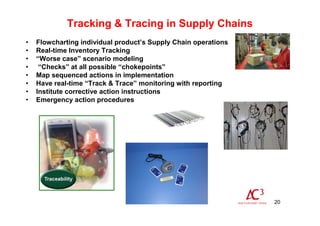
Tracking & Tracing in Supply Chains
• Flowcharting individual product’s Supply Chain operations
• Real-time Inventory Tracking
• “Worse case” scenario modeling
• “Checks” at all possible “chokepoints”
• Map sequenced actions in implementation
• Have real-time “Track & Trace” monitoring with reporting
• Institute corrective action instructions
• Emergency action procedures
21
Summary
• Review Entire Supply Chain Operational Practices
• Environmental Control in Supply Chain operations
• Packaging & Packing (Selection & Practice)
• Staging and Storage (Locations and Accessibility)
• Transportation (Route Planning)
• Staff Training (Supply Chain partners)
• Tracking, Monitoring & Reporting
• Damage Control & Correction
• Managing Risks ?
END
AFRIS. AsianFoodRegulationInformationService.
We have the largest database of Asian food regulations in the world and it’s
FREE to use.
We publish a range of communication services, list a very large number of
food events and online educational webinars and continue to grow our Digital
Library.
We look forward to hearing from you soon!
www.asianfoodreg.com
adrienna@asianfoodreg.com

Value-added Cold Chain

  • 1.
    By Dr. Rodney WeePhd. Asia Cold Chain Centre Value-Added Cold Chain Practices for Fresh Food Safety
  • 2.
  • 3.
    3 Value in FreshProduce • Fresh • Nutritious • Clean & Safe • Minimal chemical Residue • Longer “Shelf life” • Availability • Cost • Nutrient Management • Soil Management • Pest Management • Residue Management (Safety) • Harvesting process • Post Harvest Cooling (Expiry dates) • Correct Packaging • Proper Handling & Transport • Timely Distribution • Retail Storage Buyers/ Consumers desires Value – Added Actions
  • 4.
  • 5.
    5 Managing your Temperaturecontrolled “Value-Chains”
  • 6.
    6 “Essentials” in theValue-added Supply “pipeline”  Moving from processing and Storage facility to a Throughput facility.  Providing Value-adding services eg. Maintaining shelf life, etc  Managing throughput for continuity  Managing information flow (more important than inventory flow ie. doing things once).  Reduce lead times and avoid “bottleneck” congestions  Providing smooth “inter-change” in agri-food business  Uses a distribution centre approach to the markets  Managing information for forward planning
  • 7.
    7 RiskManagement “FreshProduce” Export ComplianceSupplyChainOverview Chainof Responsibility Environment BusinessSkills SecuringProduceSupply InternationalTransport (Land, Sea&Air) Skills&Training BusinessissuesintheExport Environment Haccp, ISO22000 CAP, GHP, GDP FreshProduct ColdChain Transport Security(Post 9/11) ClimaticConditions BusinessPlanning HRManagement (Labour Risks) Environmental Management Systems(EMS) TradingPartner Relationships Contracting FoodIntegrity&Safety Marketing&Competition Intellectual Property(IP) Accreditation ResidueManagement TraceabilitySystems FoodSafety Temperature&HumidityMaintenance Risk Management in Food and Fresh Produce
  • 8.
    8 Critical Areas Business Strategy PerishableFood Identify parties Product Description Costs Special Instructions Information Cargo New Cargo If transhipment to ... By product By importer From: By commodity By exportor By Product Grower Trader Cosolidator Post harvest (Yes / No) Packaging Cooling method Insulation Atmospheric conditions Time frame In air On ground On tarmac Basic Recoverable Extra services Tanking Distribution Handling Repack Importing Country Requirements Airline Logistics provider Volume Season Weakness Dangers Business Development Areas of growth Perishable Food Business Strategy
  • 9.
    9 The Asia –Pacific Environment Asia • 17,212 000 Sq Miles • 47 Countries….. • > 4 Billion people Including China – 1.3 Billion … with India set to overtake China by mid 21st Century • Australia – 22 Million • New Zealand – 4 Million • Pacific Islands – 6 Million
  • 10.
  • 11.
  • 12.
  • 13.
    13 What “plagues” theFood Industry ? • Reliable Sources of Fresh Produce or raw materials for food products • Consistency of Supply • Raw Material “Postharvest” Practices • Cold Chain “Breaks” • Long Distances • Frequent transshipment “hubs” • Unnecessary handling and staging operations • “Breaks” in your “Value chain” • Contamination & Cross-contamination (accidental or introduced) • Quality maintenance in Transit • Cost Issues • How “safe”...are the Supply Chains ? • Risk Management • Alternative Supply Chains & Emergency Procedures Issues •Respiration •Temperature •Ethylene Production •Water Loss •Growth and Development •Mechanical Damage •Physiological Disorders •Pathological Breakdown •Stress
  • 14.
  • 15.
  • 16.
  • 17.
    17 •Ice Calculator •On-tarmac time •Transit-time •Transshipment Frequency •ProduceStress •Airport Facilities •Aircraft storage Logistics & Transport Issues
  • 18.
  • 19.
    19 Train and Educateyour teams Fruit and Vegetables Seafood Meat and Dairy Flowers Best long-term storage temperatures may be slightly different
  • 20.
    20 Tracking & Tracingin Supply Chains • Flowcharting individual product’s Supply Chain operations • Real-time Inventory Tracking • “Worse case” scenario modeling • “Checks” at all possible “chokepoints” • Map sequenced actions in implementation • Have real-time “Track & Trace” monitoring with reporting • Institute corrective action instructions • Emergency action procedures
  • 21.
    21 Summary • Review EntireSupply Chain Operational Practices • Environmental Control in Supply Chain operations • Packaging & Packing (Selection & Practice) • Staging and Storage (Locations and Accessibility) • Transportation (Route Planning) • Staff Training (Supply Chain partners) • Tracking, Monitoring & Reporting • Damage Control & Correction • Managing Risks ? END
  • 22.
    AFRIS. AsianFoodRegulationInformationService. We havethe largest database of Asian food regulations in the world and it’s FREE to use. We publish a range of communication services, list a very large number of food events and online educational webinars and continue to grow our Digital Library. We look forward to hearing from you soon! www.asianfoodreg.com adrienna@asianfoodreg.com