Validating the Nicaragua Dual Purpose Cattle
Value chain Impact Pathway(s)
Michael Kidoido
Managua, Nicaragua :5th-9th August 2013
• The Livestock and Fish CG program is
committed to delivering tangible benefits to
the Nicaragua Dual Purpose Cattle value chain
actors.
• However,
 The critical bottlenecks to developing the value chains
are not clarified,
 How interventions will deliver the benefits as planned
is not clearly described,
 How actors will need to changes is not well know.
• Developing and validating Impact Pathway(s)
improves stakeholders’ understanding of the
program and how it will lead to impact.
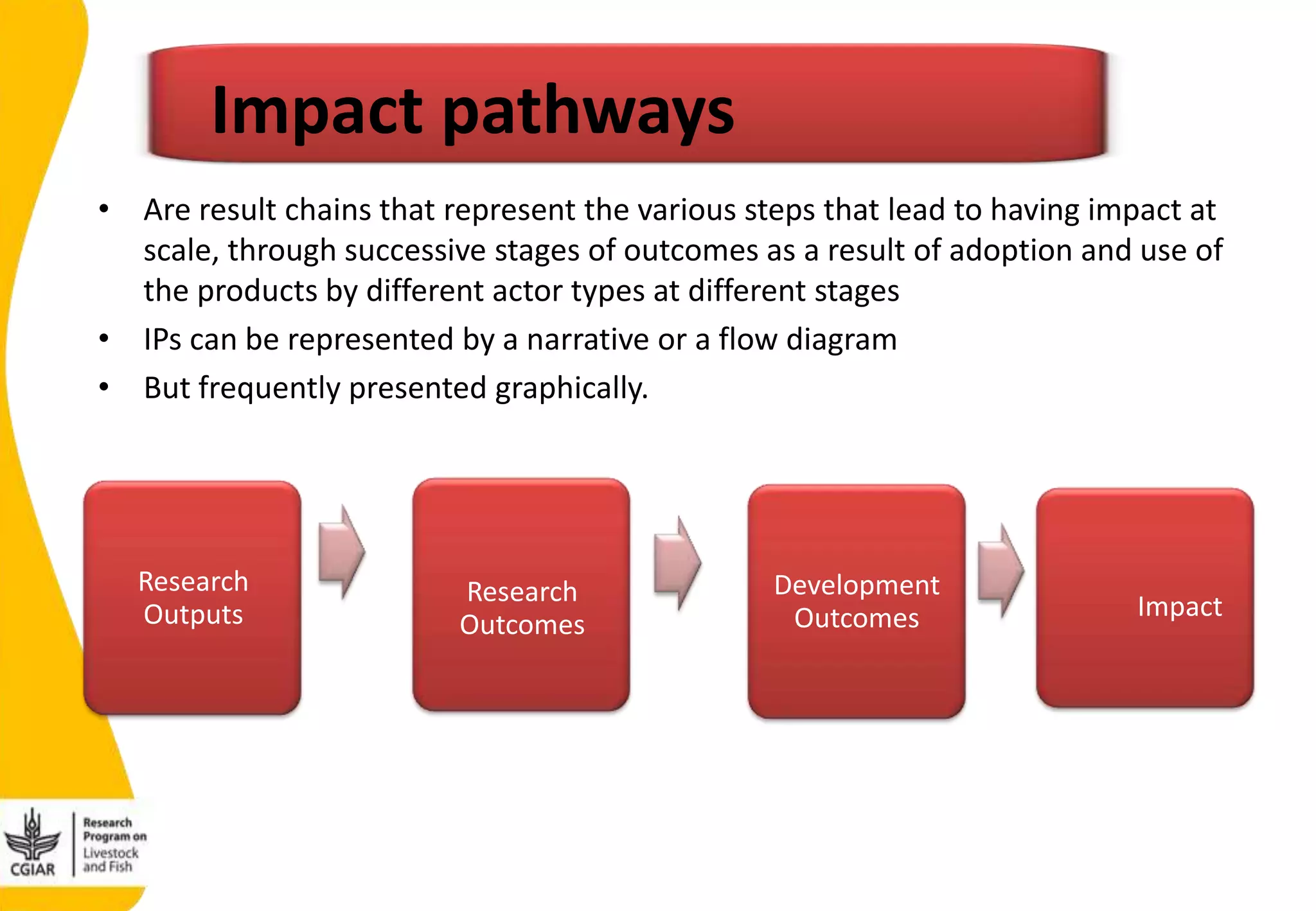
• Are result chains that represent the various steps that lead to having impact at
scale, through successive stages of outcomes as a result of adoption and use of
the products by different actor types at different stages
• IPs can be represented by a narrative or a flow diagram
• But frequently presented graphically.
Development
Outcomes Impact
Research
Outputs
Research
Outcomes
Impact pathways
Why develop Impact Pathways?
• To demonstrate program rationale
• To guide program planning
• To provide a foundation for
program monitoring and
evaluation
• To provide impact hypotheses for
ex-post impact assessment
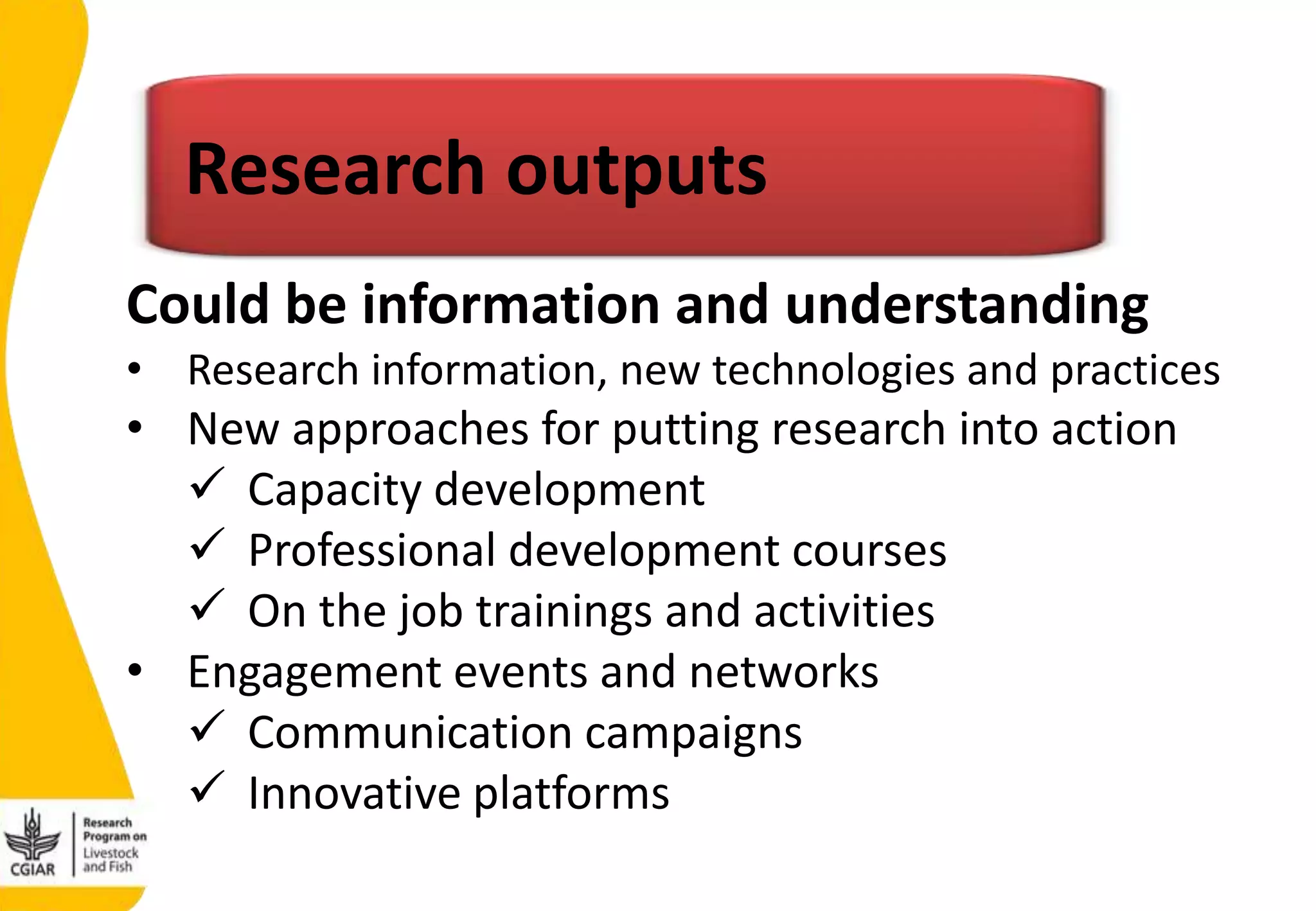
• Research information, new technologies and practices
• New approaches for putting research into action
 Capacity development
 Professional development courses
 On the job trainings and activities
• Engagement events and networks
 Communication campaigns
 Innovative platforms
Research outputs
Could be information and understanding
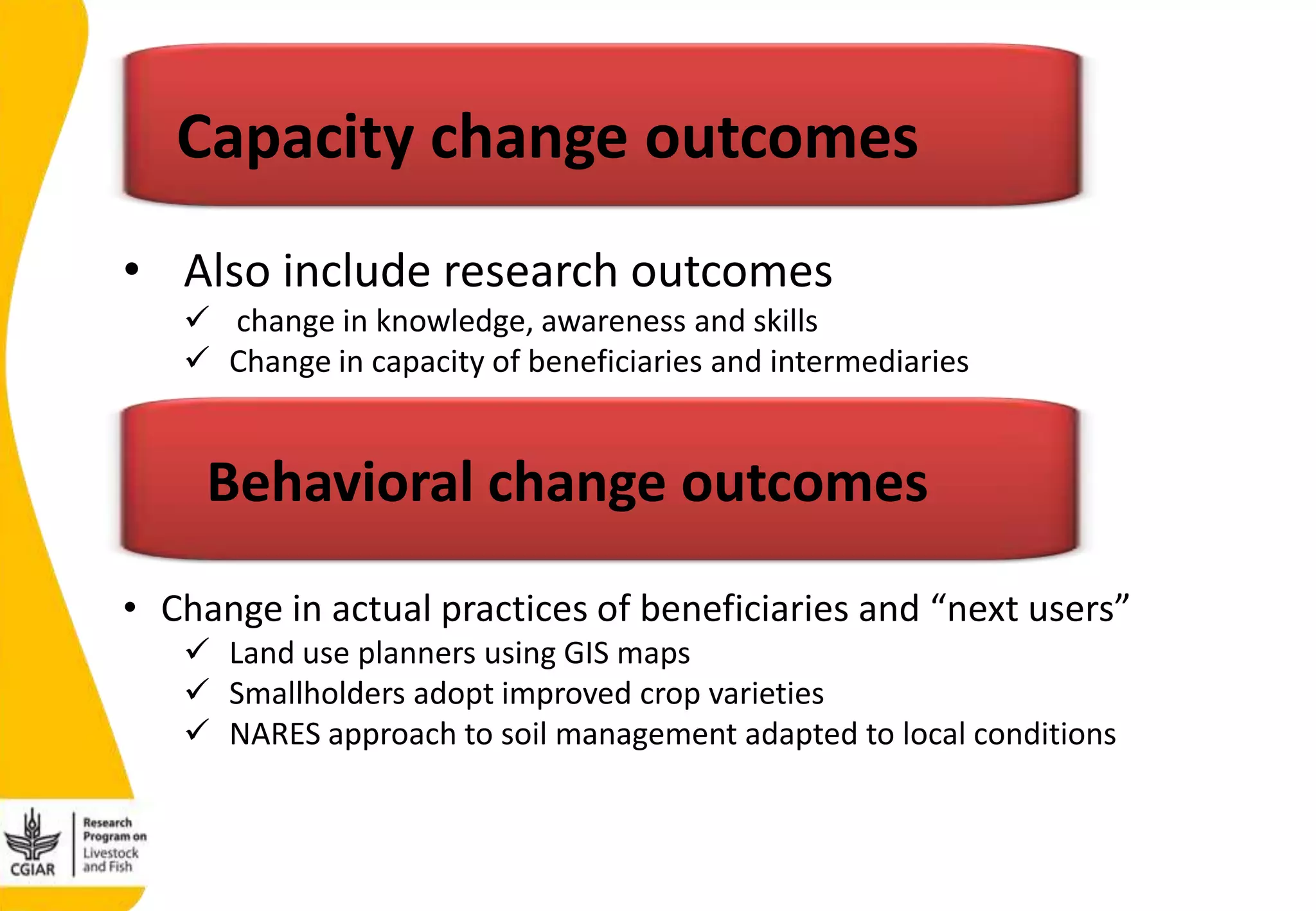
• Also include research outcomes
 change in knowledge, awareness and skills
 Change in capacity of beneficiaries and intermediaries
Capacity change outcomes
Behavioral change outcomes
• Change in actual practices of beneficiaries and “next users”
 Land use planners using GIS maps
 Smallholders adopt improved crop varieties
 NARES approach to soil management adapted to local conditions
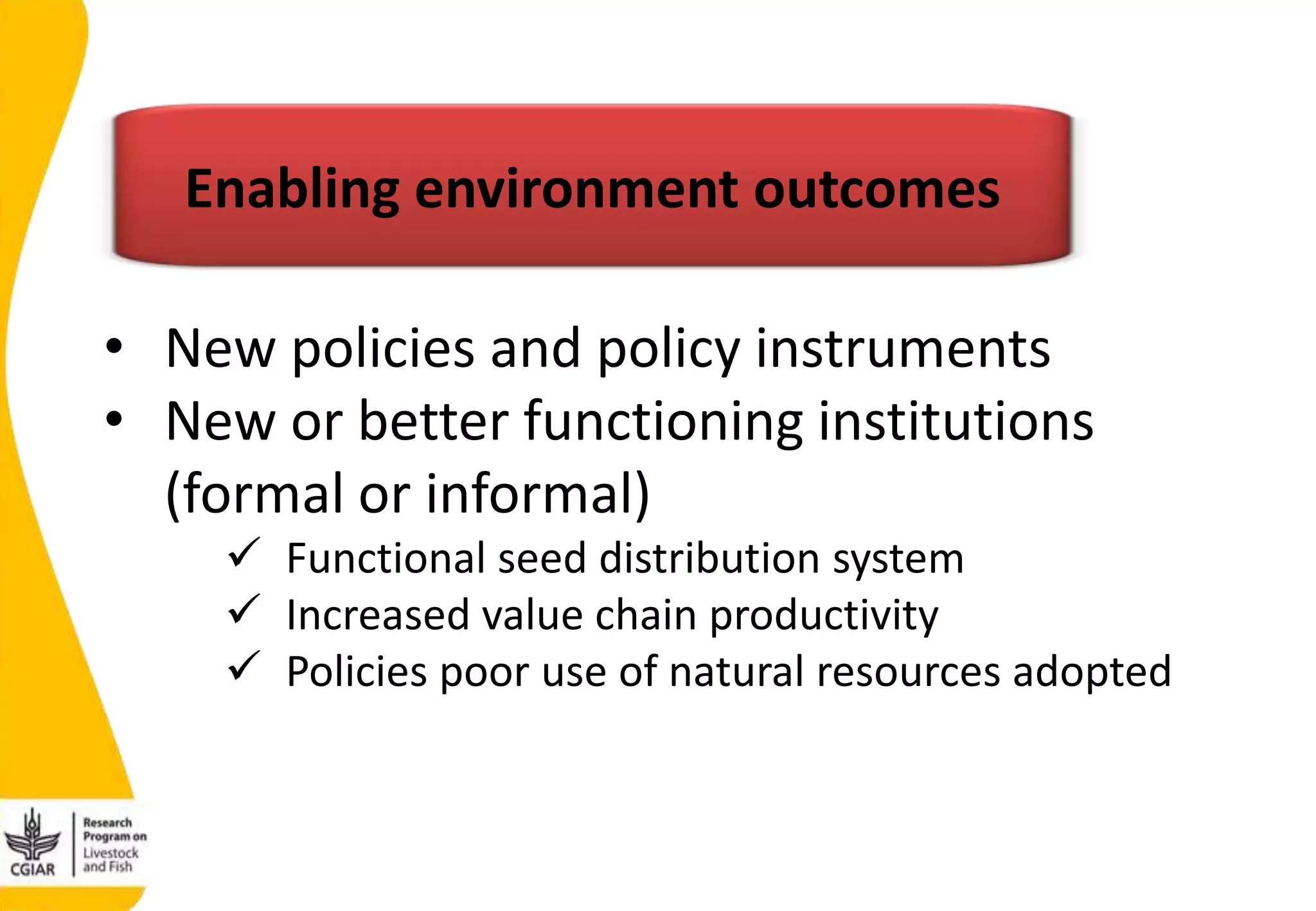
• New policies and policy instruments
• New or better functioning institutions
(formal or informal)
 Functional seed distribution system
 Increased value chain productivity
 Policies poor use of natural resources adopted
Enabling environment outcomes
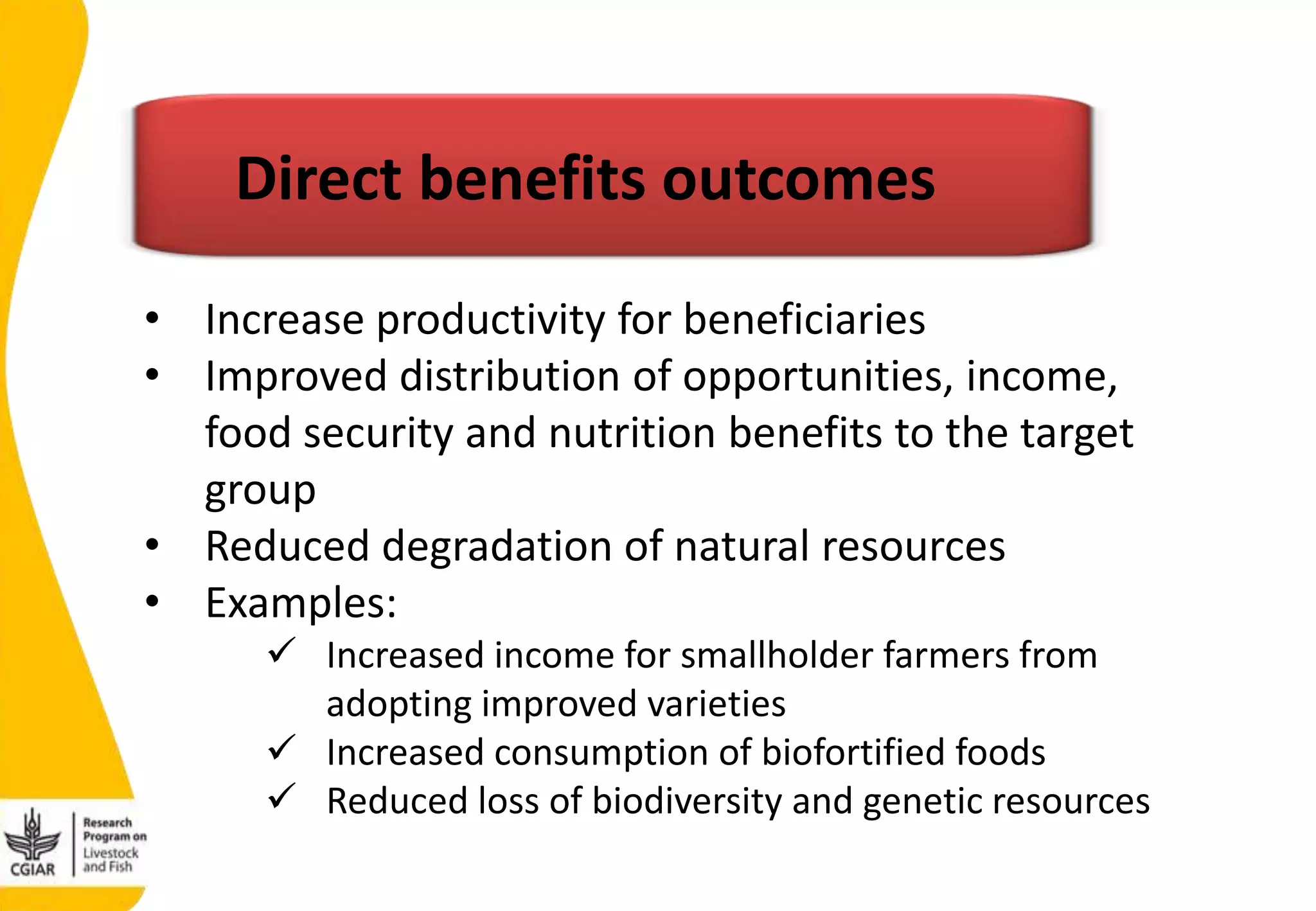
• Increase productivity for beneficiaries
• Improved distribution of opportunities, income,
food security and nutrition benefits to the target
group
• Reduced degradation of natural resources
• Examples:
 Increased income for smallholder farmers from
adopting improved varieties
 Increased consumption of biofortified foods
 Reduced loss of biodiversity and genetic resources
Direct benefits outcomes
• Enhanced livelihoods in target domain across
the program
 Increased food security
 Reduced rural poverty
 Reduced under nutrition
 Enhanced sustainability of natural
resources in target domain across
program
Program impacts
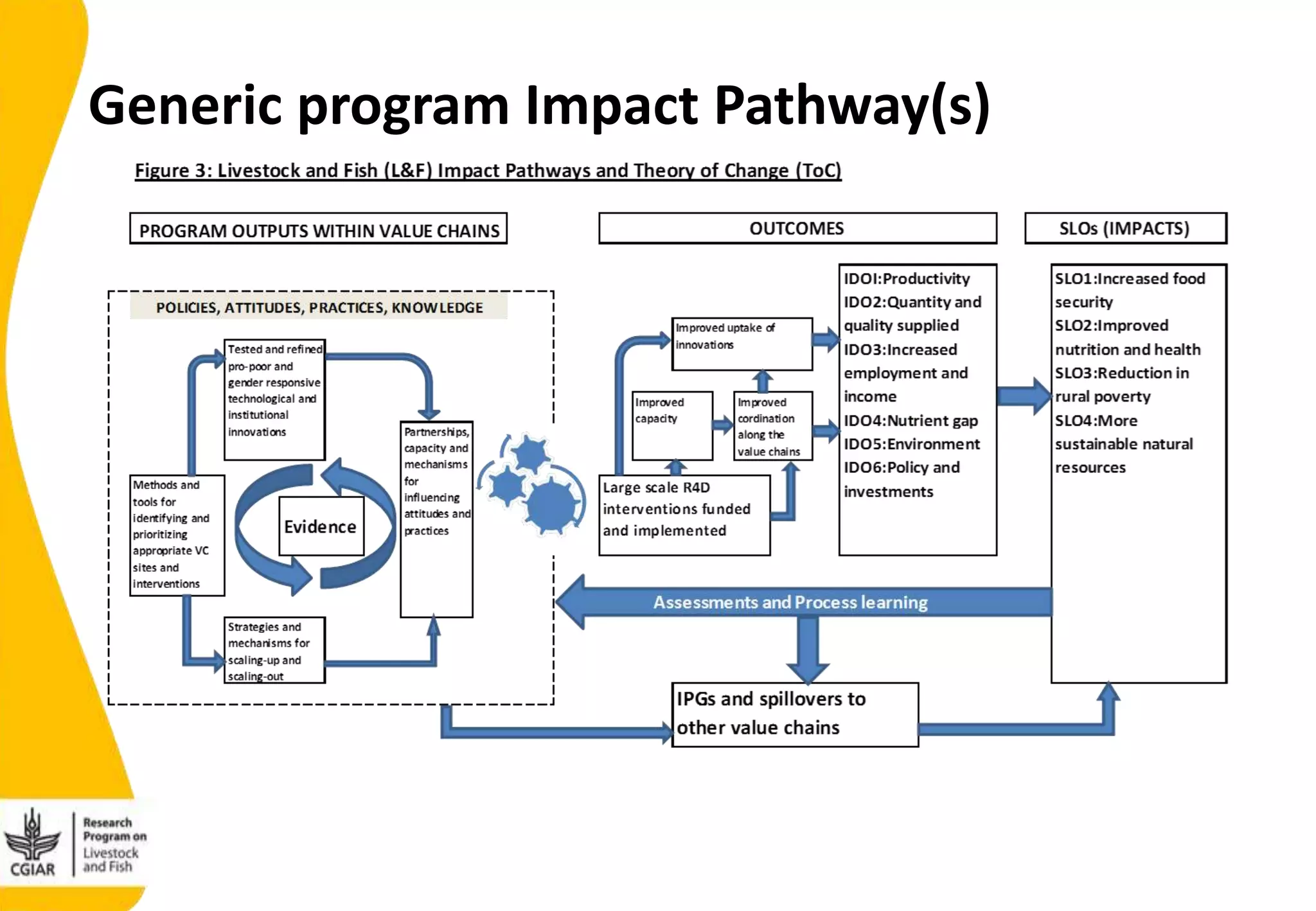
Generic program Impact Pathway(s)
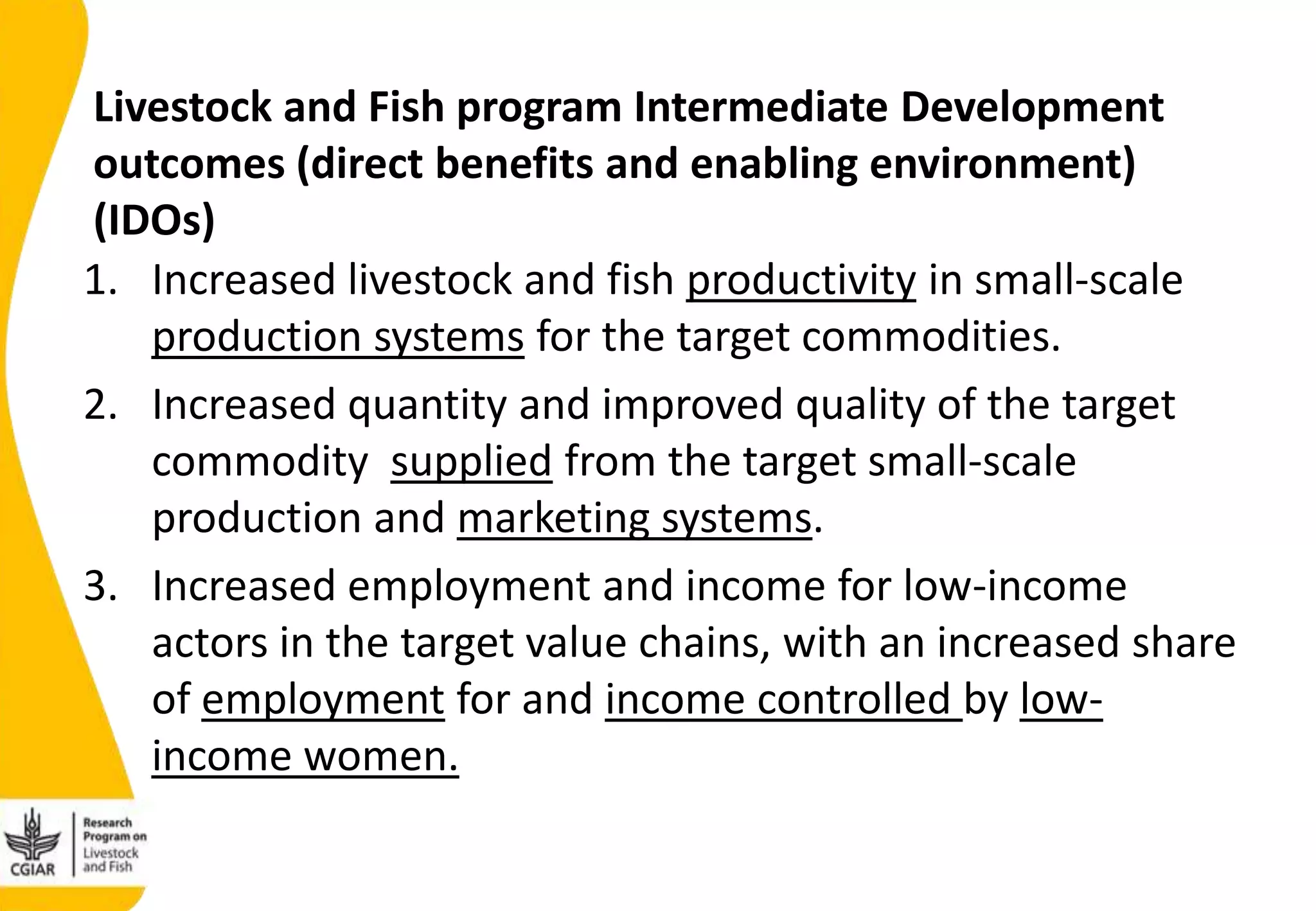
1. Increased livestock and fish productivity in small-scale
production systems for the target commodities.
2. Increased quantity and improved quality of the target
commodity supplied from the target small-scale
production and marketing systems.
3. Increased employment and income for low-income
actors in the target value chains, with an increased share
of employment for and income controlled by low-
income women.
Livestock and Fish program Intermediate Development
outcomes (direct benefits and enabling environment)
(IDOs)
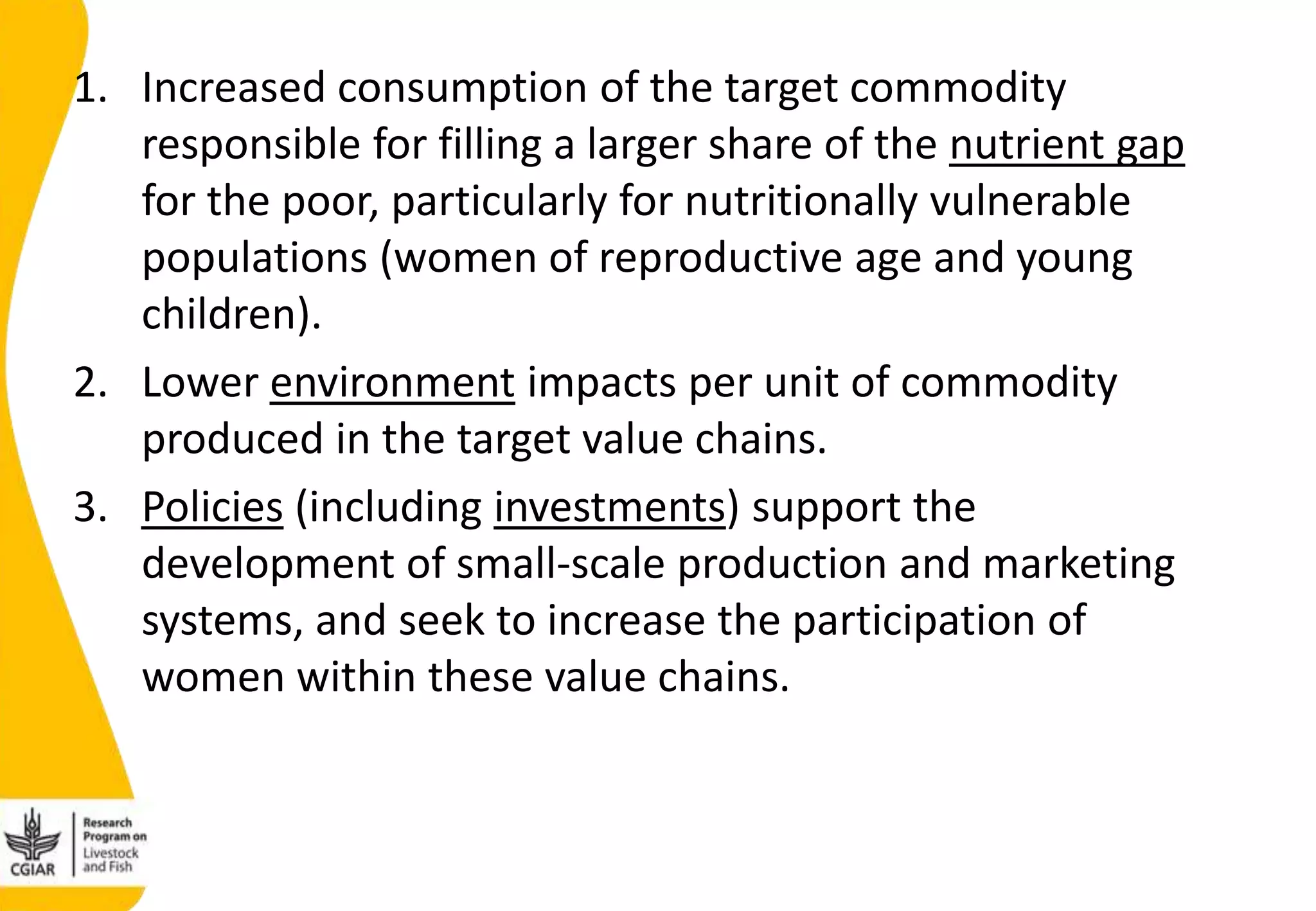
1. Increased consumption of the target commodity
responsible for filling a larger share of the nutrient gap
for the poor, particularly for nutritionally vulnerable
populations (women of reproductive age and young
children).
2. Lower environment impacts per unit of commodity
produced in the target value chains.
3. Policies (including investments) support the
development of small-scale production and marketing
systems, and seek to increase the participation of
women within these value chains.
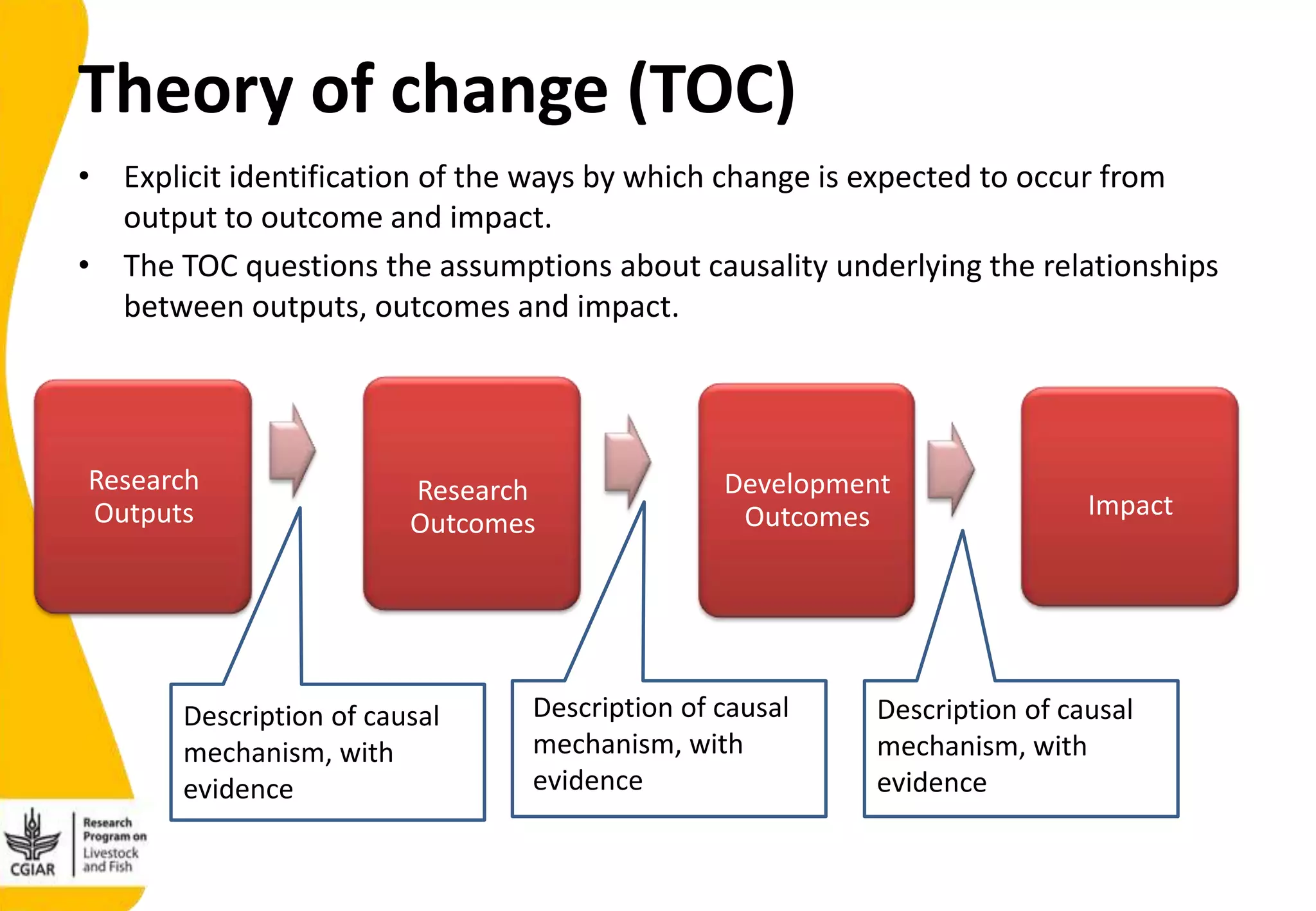
Theory of change (TOC)
• Explicit identification of the ways by which change is expected to occur from
output to outcome and impact.
• The TOC questions the assumptions about causality underlying the relationships
between outputs, outcomes and impact.
Development
Outcomes Impact
Research
Outputs
Research
Outcomes
Description of causal
mechanism, with
evidence
Description of causal
mechanism, with
evidence
Description of causal
mechanism, with
evidence
Set of Assumptions for the value chain IP
• Addressing whole value chain will improve relevance,
uptake and effectiveness of innovations.
• Focus and targeting will increase efficiency and the
probability of achieving proof at scale.
• Implementation of demand-driven innovations in the
right value chains with the right partners will accelerate
the program’s progress towards achieving outcomes and
impact.
• A significant number of pre-commercial smallholders can
become market-oriented and intensify production
sustainably.
• Pro-poor value chains can compete and generate
sufficient incentives to promote investment in
intensification.
• The poor rely on animal-source food produced
locally by smallholders and from less formal
marketing channels.
• The poor will consume more ASF if availability,
access and affordability of products improve from
those systems.
• Increased and equitable consumption of ASF will
improve nutrition and health.
• Focusing on a few value chains might limit geographical
spread of research benefits.
• Social inequalities bar women and other marginalized
groups from taking up innovations, limiting achievement
of outcomes at scale.
• High transaction costs of managing a complex network of
partnerships.
• Program approaches may not attract investment for
research and development.
• Partners may not be willing or have the interest to take up
program interventions
• Income and gender inequalities are exacerbated due to
program implementation.
Set of risks for the value chain IP
Program M&E/IA next steps
• Finalize Nicaragua ToC/IP narratives
• Develop the Nicaragua LaF specific
M&E/IA frameworks based on the
value chains Impact Pathways
• Support ongoing evaluations to keep
validating the Theory of change
Objectives of the workshop
 Communicate and validate the program’s intervention
logic in the development of the fish value chain, clearly
identifying the roles of different actors in the value
chain.
 Question and clarify the program’s potential for
achieving impact on the intended beneficiaries and
map out the key risks and assumptions of the program.
 Begin to lay the building blocks for designing a
framework for subsequent monitoring, evaluating and
learning of the program.
CGIAR is a global partnership that unites organizations engaged in research for a food secure future. The CGIAR Research
Program on Livestock and Fish aims to increase the productivity of small-scale livestock and fish systems in sustainable
ways, making meat, milk and fish more available and affordable across the developing world.
CGIAR Research Program on Livestock and Fish
livestockfish.cgiar.org

Validating the Nicaragua Dual Purpose Cattle Value chain Impact Pathway(s)

  • 1.
    Validating the NicaraguaDual Purpose Cattle Value chain Impact Pathway(s) Michael Kidoido Managua, Nicaragua :5th-9th August 2013
  • 2.
    • The Livestockand Fish CG program is committed to delivering tangible benefits to the Nicaragua Dual Purpose Cattle value chain actors. • However,  The critical bottlenecks to developing the value chains are not clarified,  How interventions will deliver the benefits as planned is not clearly described,  How actors will need to changes is not well know. • Developing and validating Impact Pathway(s) improves stakeholders’ understanding of the program and how it will lead to impact.
  • 3.
    • Are resultchains that represent the various steps that lead to having impact at scale, through successive stages of outcomes as a result of adoption and use of the products by different actor types at different stages • IPs can be represented by a narrative or a flow diagram • But frequently presented graphically. Development Outcomes Impact Research Outputs Research Outcomes Impact pathways
  • 4.
    Why develop ImpactPathways? • To demonstrate program rationale • To guide program planning • To provide a foundation for program monitoring and evaluation • To provide impact hypotheses for ex-post impact assessment
  • 5.
    • Research information,new technologies and practices • New approaches for putting research into action  Capacity development  Professional development courses  On the job trainings and activities • Engagement events and networks  Communication campaigns  Innovative platforms Research outputs Could be information and understanding
  • 6.
    • Also includeresearch outcomes  change in knowledge, awareness and skills  Change in capacity of beneficiaries and intermediaries Capacity change outcomes Behavioral change outcomes • Change in actual practices of beneficiaries and “next users”  Land use planners using GIS maps  Smallholders adopt improved crop varieties  NARES approach to soil management adapted to local conditions
  • 7.
    • New policiesand policy instruments • New or better functioning institutions (formal or informal)  Functional seed distribution system  Increased value chain productivity  Policies poor use of natural resources adopted Enabling environment outcomes
  • 8.
    • Increase productivityfor beneficiaries • Improved distribution of opportunities, income, food security and nutrition benefits to the target group • Reduced degradation of natural resources • Examples:  Increased income for smallholder farmers from adopting improved varieties  Increased consumption of biofortified foods  Reduced loss of biodiversity and genetic resources Direct benefits outcomes
  • 9.
    • Enhanced livelihoodsin target domain across the program  Increased food security  Reduced rural poverty  Reduced under nutrition  Enhanced sustainability of natural resources in target domain across program Program impacts
  • 10.
  • 11.
    1. Increased livestockand fish productivity in small-scale production systems for the target commodities. 2. Increased quantity and improved quality of the target commodity supplied from the target small-scale production and marketing systems. 3. Increased employment and income for low-income actors in the target value chains, with an increased share of employment for and income controlled by low- income women. Livestock and Fish program Intermediate Development outcomes (direct benefits and enabling environment) (IDOs)
  • 12.
    1. Increased consumptionof the target commodity responsible for filling a larger share of the nutrient gap for the poor, particularly for nutritionally vulnerable populations (women of reproductive age and young children). 2. Lower environment impacts per unit of commodity produced in the target value chains. 3. Policies (including investments) support the development of small-scale production and marketing systems, and seek to increase the participation of women within these value chains.
  • 13.
    Theory of change(TOC) • Explicit identification of the ways by which change is expected to occur from output to outcome and impact. • The TOC questions the assumptions about causality underlying the relationships between outputs, outcomes and impact. Development Outcomes Impact Research Outputs Research Outcomes Description of causal mechanism, with evidence Description of causal mechanism, with evidence Description of causal mechanism, with evidence
  • 14.
    Set of Assumptionsfor the value chain IP • Addressing whole value chain will improve relevance, uptake and effectiveness of innovations. • Focus and targeting will increase efficiency and the probability of achieving proof at scale. • Implementation of demand-driven innovations in the right value chains with the right partners will accelerate the program’s progress towards achieving outcomes and impact. • A significant number of pre-commercial smallholders can become market-oriented and intensify production sustainably.
  • 15.
    • Pro-poor valuechains can compete and generate sufficient incentives to promote investment in intensification. • The poor rely on animal-source food produced locally by smallholders and from less formal marketing channels. • The poor will consume more ASF if availability, access and affordability of products improve from those systems. • Increased and equitable consumption of ASF will improve nutrition and health.
  • 16.
    • Focusing ona few value chains might limit geographical spread of research benefits. • Social inequalities bar women and other marginalized groups from taking up innovations, limiting achievement of outcomes at scale. • High transaction costs of managing a complex network of partnerships. • Program approaches may not attract investment for research and development. • Partners may not be willing or have the interest to take up program interventions • Income and gender inequalities are exacerbated due to program implementation. Set of risks for the value chain IP
  • 17.
    Program M&E/IA nextsteps • Finalize Nicaragua ToC/IP narratives • Develop the Nicaragua LaF specific M&E/IA frameworks based on the value chains Impact Pathways • Support ongoing evaluations to keep validating the Theory of change
  • 18.
    Objectives of theworkshop  Communicate and validate the program’s intervention logic in the development of the fish value chain, clearly identifying the roles of different actors in the value chain.  Question and clarify the program’s potential for achieving impact on the intended beneficiaries and map out the key risks and assumptions of the program.  Begin to lay the building blocks for designing a framework for subsequent monitoring, evaluating and learning of the program.
  • 19.
    CGIAR is aglobal partnership that unites organizations engaged in research for a food secure future. The CGIAR Research Program on Livestock and Fish aims to increase the productivity of small-scale livestock and fish systems in sustainable ways, making meat, milk and fish more available and affordable across the developing world. CGIAR Research Program on Livestock and Fish livestockfish.cgiar.org