What Housing Crisis?
Supply, demand, and defining the
housing problem and solution
Seattle For Growth is a 501(c)4 non-profit organization created
in 2013 by builders and developers to advocate for more
housing.
We are for creating more housing of all types, in all
neighborhoods, for all levels of income.We are for jobs.We are
for opportunity. We are for change.We are for innovation. We
are for progress.We are for growth!
What Housing Crisis?
• When did the housing crisis start?
• How do we measure the housing crisis?
• What data is the City, press, and others using
to measure the housing crisis?
• Is this housing crisis worse than the last one?
• When year and quarter did the last housing
crisis begin and end?
• How do we know when the housing crisis is
over?
The Price System
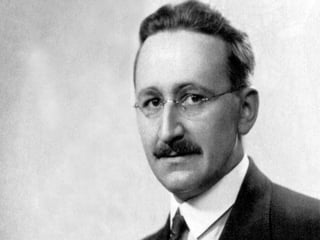
The Price System is “a kind of machinery for registering
change, or a system of telecommunications which enables
individual producers to watch merely the movement of a
few pointers, as an engineer might watch the hands of a
few dials, in order to adjust their activities to changes of
which they may never know more than is reflected in the
price movement.”
The Use of Knowledge in Society
Friedrich Hayek
How Many Units Are Needed?
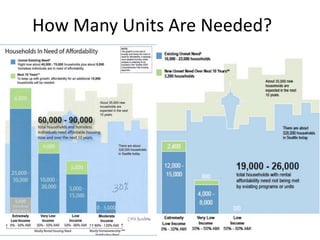
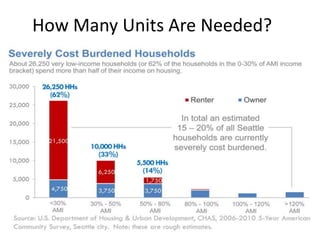
“About 29,000 Seattle households earning less than 50
percent of the area median income are paying more
than 50 percent of their income in rent and utilities.
Recognizing that housing affordability is a key
component in the complex causes of homelessness,
the legislation, released today, will address the
homelessness emergency by creating more affordable
housing.”
Seattle City Councilmember Lorena Gonzalez on
why the City should tax jobs.
How Many Units Are Needed?
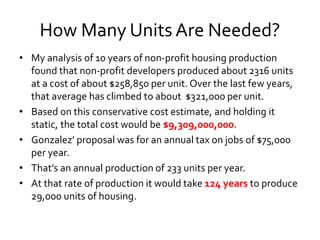
• My analysis of 10 years of non-profit housing production
found that non-profit developers produced about 2316 units
at a cost of about $258,850 per unit. Over the last few years,
that average has climbed to about $321,000 per unit.
• Based on this conservative cost estimate, and holding it
static, the total cost would be $9,309,000,000.
• Gonzalez’ proposal was for an annual tax on jobs of $75,000
per year.
• That’s an annual production of 233 units per year.
• At that rate of production it would take 124 years to produce
29,000 units of housing.
How Many Units Are Needed?
That’s the wrong question for us to be
asking.
Cost Burden and Cash Payments
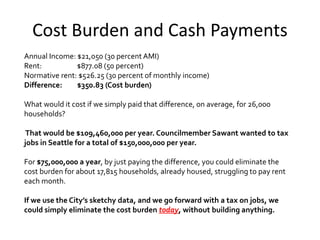
Annual Income: $21,050 (30 percent AMI)
Rent: $877.08 (50 percent)
Normative rent: $526.25 (30 percent of monthly income)
Difference: $350.83 (Cost burden)
What would it cost if we simply paid that difference, on average, for 26,000
households?
That would be $109,460,000 per year. Councilmember Sawant wanted to tax
jobs in Seattle for a total of $150,000,000 per year.
For $75,000,000 a year, by just paying the difference, you could eliminate the
cost burden for about 17,815 households, already housed, struggling to pay rent
each month.
If we use the City’s sketchy data, and we go forward with a tax on jobs, we
could simply eliminate the cost burden today, without building anything.
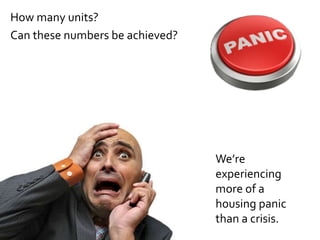
How many units?
Can these numbers be achieved?
We’re
experiencing
more of a
housing panic
than a crisis.
There is No Housing Crisis!
• There is no quantitative measure of a
“housing crisis.”
• Current measures consist of the ratio of
housing cost to income and old census data.
• Unit need projections are based on this
inadequate and old data.
• Building subsidized units won’t solve the
price problem.
We Have a Leadership Crisis.
What’sYour Problem?
• Price is a quantitative measure of the ratio of
supply to demand.
• Regulation acts as a governor for housing supply;
too much means too little housing.
• Affordability is a qualitative relationship between
price and people; the Goldilocks Effect (i.e.
looking for “just right”).
• Poverty is a continual crisis; less money means
everything consumes a greater percentage of
income.
The Answer
• Rising housing prices are an indicator of rising
demand and inadequate supply; it’s called
scarcity.
• If we want lower prices we’d reduce and
eliminate as many rules on housing and shelter
as we safely could (e.g. abolish design review).
• Poverty is an ongoing crisis in our community;
poor people don’t need units 5 years from now,
they need help with rent today.
What Can You Do?
• Oppose all taxes and new fees on the
development of new housing, especially
Mandatory Inclusionary Zoning (MIZ) or
Mandatory Housing Affordability (MHA).
• Oppose rent control.
• Hire better leaders. That means don’t support
people who are “nice” and “smart.” Contribute to
and vote for people who will do the right thing
and open the flood gates for housing of all kinds
in all neighborhoods for people of all levels of
income.

Valdez presentation 3

  • 1.
    What Housing Crisis? Supply,demand, and defining the housing problem and solution
  • 3.
    Seattle For Growthis a 501(c)4 non-profit organization created in 2013 by builders and developers to advocate for more housing. We are for creating more housing of all types, in all neighborhoods, for all levels of income.We are for jobs.We are for opportunity. We are for change.We are for innovation. We are for progress.We are for growth!
  • 4.
    What Housing Crisis? •When did the housing crisis start? • How do we measure the housing crisis? • What data is the City, press, and others using to measure the housing crisis? • Is this housing crisis worse than the last one? • When year and quarter did the last housing crisis begin and end? • How do we know when the housing crisis is over?
  • 6.
    The Price System ThePrice System is “a kind of machinery for registering change, or a system of telecommunications which enables individual producers to watch merely the movement of a few pointers, as an engineer might watch the hands of a few dials, in order to adjust their activities to changes of which they may never know more than is reflected in the price movement.” The Use of Knowledge in Society Friedrich Hayek
  • 7.
    How Many UnitsAre Needed?
  • 8.
    How Many UnitsAre Needed?
  • 9.
    How Many UnitsAre Needed? “About 29,000 Seattle households earning less than 50 percent of the area median income are paying more than 50 percent of their income in rent and utilities. Recognizing that housing affordability is a key component in the complex causes of homelessness, the legislation, released today, will address the homelessness emergency by creating more affordable housing.” Seattle City Councilmember Lorena Gonzalez on why the City should tax jobs.
  • 10.
    How Many UnitsAre Needed? • My analysis of 10 years of non-profit housing production found that non-profit developers produced about 2316 units at a cost of about $258,850 per unit. Over the last few years, that average has climbed to about $321,000 per unit. • Based on this conservative cost estimate, and holding it static, the total cost would be $9,309,000,000. • Gonzalez’ proposal was for an annual tax on jobs of $75,000 per year. • That’s an annual production of 233 units per year. • At that rate of production it would take 124 years to produce 29,000 units of housing.
  • 12.
    How Many UnitsAre Needed? That’s the wrong question for us to be asking.
  • 13.
    Cost Burden andCash Payments Annual Income: $21,050 (30 percent AMI) Rent: $877.08 (50 percent) Normative rent: $526.25 (30 percent of monthly income) Difference: $350.83 (Cost burden) What would it cost if we simply paid that difference, on average, for 26,000 households? That would be $109,460,000 per year. Councilmember Sawant wanted to tax jobs in Seattle for a total of $150,000,000 per year. For $75,000,000 a year, by just paying the difference, you could eliminate the cost burden for about 17,815 households, already housed, struggling to pay rent each month. If we use the City’s sketchy data, and we go forward with a tax on jobs, we could simply eliminate the cost burden today, without building anything.
  • 14.
    How many units? Canthese numbers be achieved? We’re experiencing more of a housing panic than a crisis.
  • 15.
    There is NoHousing Crisis! • There is no quantitative measure of a “housing crisis.” • Current measures consist of the ratio of housing cost to income and old census data. • Unit need projections are based on this inadequate and old data. • Building subsidized units won’t solve the price problem. We Have a Leadership Crisis.
  • 16.
    What’sYour Problem? • Priceis a quantitative measure of the ratio of supply to demand. • Regulation acts as a governor for housing supply; too much means too little housing. • Affordability is a qualitative relationship between price and people; the Goldilocks Effect (i.e. looking for “just right”). • Poverty is a continual crisis; less money means everything consumes a greater percentage of income.
  • 18.
    The Answer • Risinghousing prices are an indicator of rising demand and inadequate supply; it’s called scarcity. • If we want lower prices we’d reduce and eliminate as many rules on housing and shelter as we safely could (e.g. abolish design review). • Poverty is an ongoing crisis in our community; poor people don’t need units 5 years from now, they need help with rent today.
  • 19.
    What Can YouDo? • Oppose all taxes and new fees on the development of new housing, especially Mandatory Inclusionary Zoning (MIZ) or Mandatory Housing Affordability (MHA). • Oppose rent control. • Hire better leaders. That means don’t support people who are “nice” and “smart.” Contribute to and vote for people who will do the right thing and open the flood gates for housing of all kinds in all neighborhoods for people of all levels of income.

Editor's Notes

  • #8 But they don’t understand
  • #9 But they don’t understand
  • #10 But they don’t understand
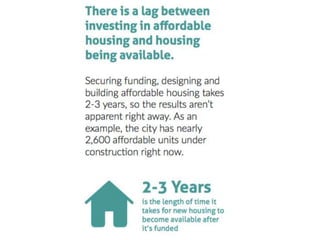
  • #12 Most would agree it’s more like 5 years.
  • #13 But they don’t understand
  • #16 But they don’t understand