Everything You Wanted to Know
About LIHTC But Were Afraid to Ask
Roger Valdez
Office of Equity and Inclusion
April 2024
Has the Low Income
Housing Tax Credit made
housing more affordable?
0
2,000
4,000
6,000
8,000
10,000
12,000
14,000
2003 2004 2005 2006 2007 2008 2009 2010 2011 2012 2013 2014 2015 2016 2017 2018 2019 2020 2021 2022 2023 2024
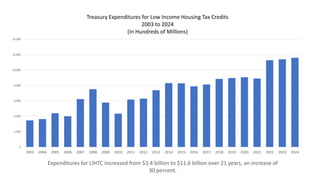
Expenditures for LIHTC increased from $3.4 billion to $11.6 billion over 21 years, an increase of
30 percent.
Treasury Expenditures for Low Income Housing Tax Credits
2003 to 2024
(In Hundreds of Millions)
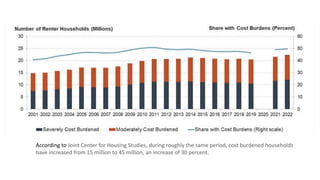
According to Joint Center for Housing Studies, during roughly the same period, cost burdened households
have increased from 15 million to 45 million, an increase of 30 percent.
$0
$1,000,000
$2,000,000
$3,000,000
$4,000,000
$5,000,000
$6,000,000
$7,000,000
2003 2004 2005 2006 2007 2008 2009 2010 2011 2012 2013 2014 2015 2016 2017 2018 2019 2020 2021 2022 2023
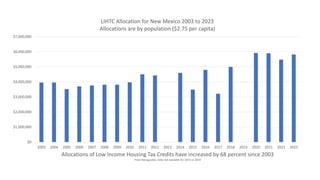
Allocations of Low Income Housing Tax Credits have increased by 68 percent since 2003
From Novogradac, Data not available for 2013 or 2019
LIHTC Allocation for New Mexico 2003 to 2023
Allocations are by population ($2.75 per capita)
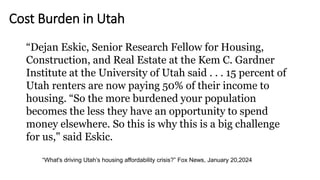
“What's driving Utah’s housing affordability crisis?” Fox News, January 20,2024
“Dejan Eskic, Senior Research Fellow for Housing,
Construction, and Real Estate at the Kem C. Gardner
Institute at the University of Utah said . . . 15 percent of
Utah renters are now paying 50% of their income to
housing. “So the more burdened your population
becomes the less they have an opportunity to spend
money elsewhere. So this is why this is a big challenge
for us," said Eskic.
Cost Burden in Utah
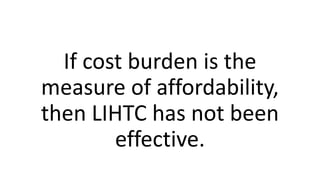
If cost burden is the
measure of affordability,
then LIHTC has not been
effective.
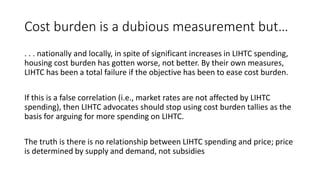
Cost burden is a dubious measurement but…
. . . nationally and locally, in spite of significant increases in LIHTC spending,
housing cost burden has gotten worse, not better. By their own measures,
LIHTC has been a total failure if the objective has been to ease cost burden.
If this is a false correlation (i.e., market rates are not affected by LIHTC
spending), then LIHTC advocates should stop using cost burden tallies as the
basis for arguing for more spending on LIHTC.
The truth is there is no relationship between LIHTC spending and price; price
is determined by supply and demand, not subsidies
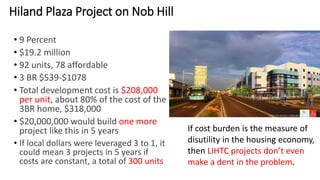
Hiland Plaza Project on Nob Hill
• 9 Percent
• $19.2 million
• 92 units, 78 affordable
• 3 BR $539-$1078
• Total development cost is $208,000
per unit, about 80% of the cost of the
3BR home, $318,000
• $20,000,000 would build one more
project like this in 5 years
• If local dollars were leveraged 3 to 1, it
could mean 3 projects in 5 years if
costs are constant, a total of 300 units
If cost burden is the measure of
disutility in the housing economy,
then LIHTC projects don’t even
make a dent in the problem.
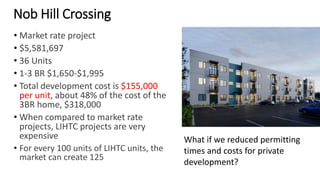
Nob Hill Crossing
• Market rate project
• $5,581,697
• 36 Units
• 1-3 BR $1,650-$1,995
• Total development cost is $155,000
per unit, about 48% of the cost of the
3BR home, $318,000
• When compared to market rate
projects, LIHTC projects are very
expensive
• For every 100 units of LIHTC units, the
market can create 125
What if we reduced permitting
times and costs for private
development?
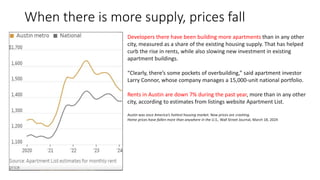
When there is more supply, prices fall
Developers there have been building more apartments than in any other
city, measured as a share of the existing housing supply. That has helped
curb the rise in rents, while also slowing new investment in existing
apartment buildings.
“Clearly, there’s some pockets of overbuilding,” said apartment investor
Larry Connor, whose company manages a 15,000-unit national portfolio.
Rents in Austin are down 7% during the past year, more than in any other
city, according to estimates from listings website Apartment List.
Austin was once America’s hottest housing market. Now prices are crashing.
Home prices have fallen more than anywhere in the U.S., Wall Street Journal, March 18, 2024

Everything you wanted to know about LIHTC

  • 1.
    Everything You Wantedto Know About LIHTC But Were Afraid to Ask Roger Valdez Office of Equity and Inclusion April 2024
  • 2.
    Has the LowIncome Housing Tax Credit made housing more affordable?
  • 3.
    0 2,000 4,000 6,000 8,000 10,000 12,000 14,000 2003 2004 20052006 2007 2008 2009 2010 2011 2012 2013 2014 2015 2016 2017 2018 2019 2020 2021 2022 2023 2024 Expenditures for LIHTC increased from $3.4 billion to $11.6 billion over 21 years, an increase of 30 percent. Treasury Expenditures for Low Income Housing Tax Credits 2003 to 2024 (In Hundreds of Millions)
  • 4.
    According to JointCenter for Housing Studies, during roughly the same period, cost burdened households have increased from 15 million to 45 million, an increase of 30 percent.
  • 5.
    $0 $1,000,000 $2,000,000 $3,000,000 $4,000,000 $5,000,000 $6,000,000 $7,000,000 2003 2004 20052006 2007 2008 2009 2010 2011 2012 2013 2014 2015 2016 2017 2018 2019 2020 2021 2022 2023 Allocations of Low Income Housing Tax Credits have increased by 68 percent since 2003 From Novogradac, Data not available for 2013 or 2019 LIHTC Allocation for New Mexico 2003 to 2023 Allocations are by population ($2.75 per capita)
  • 6.
    “What's driving Utah’shousing affordability crisis?” Fox News, January 20,2024 “Dejan Eskic, Senior Research Fellow for Housing, Construction, and Real Estate at the Kem C. Gardner Institute at the University of Utah said . . . 15 percent of Utah renters are now paying 50% of their income to housing. “So the more burdened your population becomes the less they have an opportunity to spend money elsewhere. So this is why this is a big challenge for us," said Eskic. Cost Burden in Utah
  • 7.
    If cost burdenis the measure of affordability, then LIHTC has not been effective.
  • 8.
    Cost burden isa dubious measurement but… . . . nationally and locally, in spite of significant increases in LIHTC spending, housing cost burden has gotten worse, not better. By their own measures, LIHTC has been a total failure if the objective has been to ease cost burden. If this is a false correlation (i.e., market rates are not affected by LIHTC spending), then LIHTC advocates should stop using cost burden tallies as the basis for arguing for more spending on LIHTC. The truth is there is no relationship between LIHTC spending and price; price is determined by supply and demand, not subsidies
  • 9.
    Hiland Plaza Projecton Nob Hill • 9 Percent • $19.2 million • 92 units, 78 affordable • 3 BR $539-$1078 • Total development cost is $208,000 per unit, about 80% of the cost of the 3BR home, $318,000 • $20,000,000 would build one more project like this in 5 years • If local dollars were leveraged 3 to 1, it could mean 3 projects in 5 years if costs are constant, a total of 300 units If cost burden is the measure of disutility in the housing economy, then LIHTC projects don’t even make a dent in the problem.
  • 10.
    Nob Hill Crossing •Market rate project • $5,581,697 • 36 Units • 1-3 BR $1,650-$1,995 • Total development cost is $155,000 per unit, about 48% of the cost of the 3BR home, $318,000 • When compared to market rate projects, LIHTC projects are very expensive • For every 100 units of LIHTC units, the market can create 125 What if we reduced permitting times and costs for private development?
  • 11.
    When there ismore supply, prices fall Developers there have been building more apartments than in any other city, measured as a share of the existing housing supply. That has helped curb the rise in rents, while also slowing new investment in existing apartment buildings. “Clearly, there’s some pockets of overbuilding,” said apartment investor Larry Connor, whose company manages a 15,000-unit national portfolio. Rents in Austin are down 7% during the past year, more than in any other city, according to estimates from listings website Apartment List. Austin was once America’s hottest housing market. Now prices are crashing. Home prices have fallen more than anywhere in the U.S., Wall Street Journal, March 18, 2024