VAD IN NIGER
NE situation
analysis
The setting
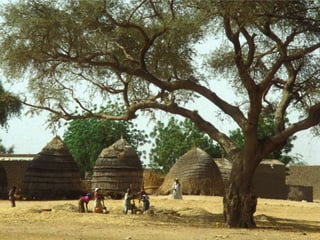
Six rural villages
• Most with gardens
• Two with health posts
• All have a butcher’s shop
• All have a small market selling vegetables
Main occupation
• Agriculture / horticulture (both men & women)
• Men are also “businessmen”
Socio-economic status (not too bad)
• More than half eat meat once a week
• About half the households have a donkey.
The nutrition issue
These groups were known to be at risk of
VAD:
• three quarters of pregnant women
• two thirds of nursing women
• nearly half of children aged 13-16 months
• 62% of children aged 37-72 months
Aims of the
situation analysis
The situation analysis aimed to explore …..
• the knowledge, attitudes and practices of the
population on general diet & vitamin A-rich
foods
• the resources and possibilities (foods
available, possibilities of increasing supply)
• the constraints (cost, acceptability,
seasonality).
….. and to discuss the best ways forward.
1° Step: Literature
review
• The project team read the available
reports and other documents.
• They also consulted national experts and
commissioned food composition studies.
Preliminary findings 1
Foods available to fill the gap
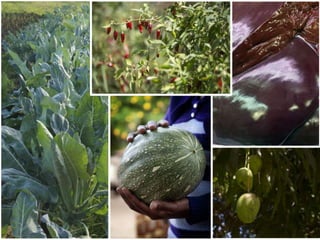
• Fresh green leaves, freshly cooked: available only in the rainy
season. Dried leaves not a good source of VA.
• Red peppers are hot, so the amount consumed cannot
increase much.
• Mangoes are seasonal and expensive.
• Liver is easily absorbed, available all year, also gives folate and
iron. Most villages have good supplies.
• Pumpkin and squash: little information on availability.
NB. To absorb VA from plant foods, some oil or fat is needed.
However there is little fat in villagers’ meals.
Preliminary findings 2
Extending production of DGLVS
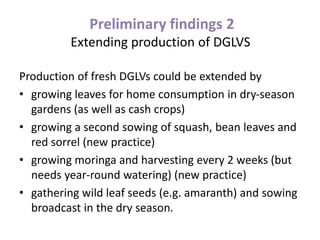
Production of fresh DGLVs could be extended by
• growing leaves for home consumption in dry-season
gardens (as well as cash crops)
• growing a second sowing of squash, bean leaves and
red sorrel (new practice)
• growing moringa and harvesting every 2 weeks (but
needs year-round watering) (new practice)
• gathering wild leaf seeds (e.g. amaranth) and sowing
broadcast in the dry season.
Preliminary recommendations
The project decided:
1. To promote the consumption of:
• liver
• dark green leafy vegetables, with added oil
2. To explore pumpkin production
3. To promote increased production of green
leaves using existing practices (dry-season
gardens & wild seeds)
Next step: Planning
the community
enquiry
Deciding
• what to find out
• who to talk to and how
• what questions to ask
What to find out
The team decided to explore the main players’
knowledge, attitudes, practices, perceptions,
resources, constraints and influences re:
• Diet - general and of specific groups
• VAD
• Liver
• DGLVs
Who to talk to and how
The team aimed to talk to the groups in the
communities most affected and most involved in
the production, supply and consumption of the
targeted foods.
They decided how they would gather the
information (e.g. observation, interview, focus
groups, questionnaires, data records).
What questions to ask
The team produced questions for the groups in
question.
They pre-tested them to make sure that they
were short, single, simple, clear and neutral, and
that they were effective in opening up
discussion and gathering information.
Next step: carrying
out the community
enquiry
The project team
• decided how to sample the target population
• trained interlocutors/focus group facilitators
• organized and carried out the enquiry
• cleaned the data
• agreed on the findings and circulated them.
Findings
This is what they found out
• about diet and VAD
• about liver
• about DGLVs
Findings 1: Diet and VAD
The community enquiry found that:
1. Men and women place a high value on getting full
rather than on eating foods for their nutritional value.
2. Both men and women have little knowledge of
nutrition needs of high-risk groups.
3. No special diet is followed during pregnancy and
lactation except that women eat more beans to
encourage milk production
4. No special diet is followed for children under three:
they are expected to feed themselves and eat adult
food as soon as they are able.
5. Diarrhoea, night blindness and low birth weight are
associated with poor diet, but not with specific food
lacks.
Findings 2: Liver
The community enquiry found that:
• Liver is usually purchased by men as a snack for
women and children. Very small quantities are
bought. It is seen as expensive.
• Liver is seen as a “special” food, associated with
curing illness, night blindness and various rituals.
To “cure” night blindness a small piece is held
between the teeth for a while, then either
swallowed or thrown away.
• Plenty of liver is available in the village.
Findings 3: Green leaves
The community enquiry found that:
• Everyone likes dark green leaves. They are
associated with good health.
• They are eaten often, fresh in the rainy season,
cooked and served cold with oil and spices, and
dried in sauces the rest of the year.
• About half the greens are bought and half are
home-grown or gathered.
• Extending the growing season would mean
displacing cash crops from dry-season gardens.
Next steps
• Formulating objectives
• Planning the intervention
• Deciding on baselines
• Establishing intervention and control groups
• Carrying out the intervention
End of story!

Vad project in niger

  • 1.
    VAD IN NIGER NEsituation analysis
  • 2.
  • 4.
    Six rural villages •Most with gardens • Two with health posts • All have a butcher’s shop • All have a small market selling vegetables Main occupation • Agriculture / horticulture (both men & women) • Men are also “businessmen” Socio-economic status (not too bad) • More than half eat meat once a week • About half the households have a donkey.
  • 5.
  • 6.
    These groups wereknown to be at risk of VAD: • three quarters of pregnant women • two thirds of nursing women • nearly half of children aged 13-16 months • 62% of children aged 37-72 months
  • 7.
  • 8.
    The situation analysisaimed to explore ….. • the knowledge, attitudes and practices of the population on general diet & vitamin A-rich foods • the resources and possibilities (foods available, possibilities of increasing supply) • the constraints (cost, acceptability, seasonality). ….. and to discuss the best ways forward.
  • 9.
  • 10.
    • The projectteam read the available reports and other documents. • They also consulted national experts and commissioned food composition studies.
  • 11.
    Preliminary findings 1 Foodsavailable to fill the gap • Fresh green leaves, freshly cooked: available only in the rainy season. Dried leaves not a good source of VA. • Red peppers are hot, so the amount consumed cannot increase much. • Mangoes are seasonal and expensive. • Liver is easily absorbed, available all year, also gives folate and iron. Most villages have good supplies. • Pumpkin and squash: little information on availability. NB. To absorb VA from plant foods, some oil or fat is needed. However there is little fat in villagers’ meals.
  • 13.
    Preliminary findings 2 Extendingproduction of DGLVS Production of fresh DGLVs could be extended by • growing leaves for home consumption in dry-season gardens (as well as cash crops) • growing a second sowing of squash, bean leaves and red sorrel (new practice) • growing moringa and harvesting every 2 weeks (but needs year-round watering) (new practice) • gathering wild leaf seeds (e.g. amaranth) and sowing broadcast in the dry season.
  • 14.
    Preliminary recommendations The projectdecided: 1. To promote the consumption of: • liver • dark green leafy vegetables, with added oil 2. To explore pumpkin production 3. To promote increased production of green leaves using existing practices (dry-season gardens & wild seeds)
  • 15.
    Next step: Planning thecommunity enquiry
  • 16.
    Deciding • what tofind out • who to talk to and how • what questions to ask
  • 17.
    What to findout The team decided to explore the main players’ knowledge, attitudes, practices, perceptions, resources, constraints and influences re: • Diet - general and of specific groups • VAD • Liver • DGLVs
  • 18.
    Who to talkto and how The team aimed to talk to the groups in the communities most affected and most involved in the production, supply and consumption of the targeted foods. They decided how they would gather the information (e.g. observation, interview, focus groups, questionnaires, data records).
  • 19.
    What questions toask The team produced questions for the groups in question. They pre-tested them to make sure that they were short, single, simple, clear and neutral, and that they were effective in opening up discussion and gathering information.
  • 20.
    Next step: carrying outthe community enquiry
  • 21.
    The project team •decided how to sample the target population • trained interlocutors/focus group facilitators • organized and carried out the enquiry • cleaned the data • agreed on the findings and circulated them.
  • 22.
  • 23.
    This is whatthey found out • about diet and VAD • about liver • about DGLVs
  • 24.
    Findings 1: Dietand VAD The community enquiry found that: 1. Men and women place a high value on getting full rather than on eating foods for their nutritional value. 2. Both men and women have little knowledge of nutrition needs of high-risk groups. 3. No special diet is followed during pregnancy and lactation except that women eat more beans to encourage milk production 4. No special diet is followed for children under three: they are expected to feed themselves and eat adult food as soon as they are able. 5. Diarrhoea, night blindness and low birth weight are associated with poor diet, but not with specific food lacks.
  • 25.
    Findings 2: Liver Thecommunity enquiry found that: • Liver is usually purchased by men as a snack for women and children. Very small quantities are bought. It is seen as expensive. • Liver is seen as a “special” food, associated with curing illness, night blindness and various rituals. To “cure” night blindness a small piece is held between the teeth for a while, then either swallowed or thrown away. • Plenty of liver is available in the village.
  • 26.
    Findings 3: Greenleaves The community enquiry found that: • Everyone likes dark green leaves. They are associated with good health. • They are eaten often, fresh in the rainy season, cooked and served cold with oil and spices, and dried in sauces the rest of the year. • About half the greens are bought and half are home-grown or gathered. • Extending the growing season would mean displacing cash crops from dry-season gardens.
  • 27.
  • 28.
    • Formulating objectives •Planning the intervention • Deciding on baselines • Establishing intervention and control groups • Carrying out the intervention
  • 29.

Editor's Notes

  • #11 Ex[plain food composition studies
  • #15 SMALL PIC OF PUMPKIN (50 francs’ worth per week, to be shared by mother and child) , 2 servings daily with a little oil (this will require an increase in production of green leaves, particularly in the dry season)
  • #22 Ex[plain food composition studies
  • #24 Ex[plain food composition studies