VACCINE DRUG DELIVERY SYSTEM: DEFINITTION, EVOLUTION & TYPES OF VACCINES, UPTAKE OF ANTIGEN, SINGLE SHOT VACCINE, MUCOSAL DELIVERY OF VACCINE, TRANSDERMAL DELIVERY OF VACCINE & RECENT ADVANCES OF VACCINES BY SATHYA.pptx
THIS PRESENTATION CONTAINS BRIEF DESCRIPTION OF VACCINES AND THEIR TYPES WITH THE RECENT ADVANCES IN VACCINES INCLUDING MUCOSAL AND TRANSDERMAL DELIVERY OF VACCINES.
Similar to VACCINE DRUG DELIVERY SYSTEM: DEFINITTION, EVOLUTION & TYPES OF VACCINES, UPTAKE OF ANTIGEN, SINGLE SHOT VACCINE, MUCOSAL DELIVERY OF VACCINE, TRANSDERMAL DELIVERY OF VACCINE & RECENT ADVANCES OF VACCINES BY SATHYA.pptx
VACCINE DRUG DELIVERY SYSTEM: DEFINITTION, EVOLUTION & TYPES OF VACCINES, UPTAKE OF ANTIGEN, SINGLE SHOT VACCINE, MUCOSAL DELIVERY OF VACCINE, TRANSDERMAL DELIVERY OF VACCINE & RECENT ADVANCES OF VACCINES BY SATHYA.pptx
1.
VACCINE DRUG
DELIVERY SYSTEM
PreparedBy:
Satyam V. Shukla
M. Pharm.
Semester I
Department Of Pharmaceutics
Guided By:
Dr. Chetan Borkhatariya
M. Pharm. PhD
(Assistant Professor)
Department Of Pharmaceutics
B. K. Mody Government Pharmacy College, Rajkot
2.
CONTENTS
o INTRODUCTION
o VACCINE
oEVOLUTION & TYPES OF VACCINES
o UPTAKE OF ANTIGEN
o SINGLE SHOT VACCINE
o MUCOSAL DELIVERY OF VACCINE
o TRANSDERMAL DELIVERY OF
VACCINE
o RECENT ADVANCES OF VACCINES
2
3.
INTRODUCTION
IMMUNOLOGY:
It can bereferred as a branch of science which deals with the study of Immunity.
IMMUNE SYSTEM:
Immunity is a capacity of body to resist the Infection. And immune system is a
network of cells, tissues, and organs working in conjunction to defend the body
against the foreign invaders primarily microbes, bacteria, viruses, parasites, fungi, etc.
4.
o INFECTION:
When amicroorganism gets through the body’s natural
defenses and enters the bloodstream, it can cause illness and
this phenomenon is called as infection.
o ANTIGEN:
An antigen is a substance that enters the body and can cause
illness. When antigens are enters in the body, they may
trigger the immune system to respond.
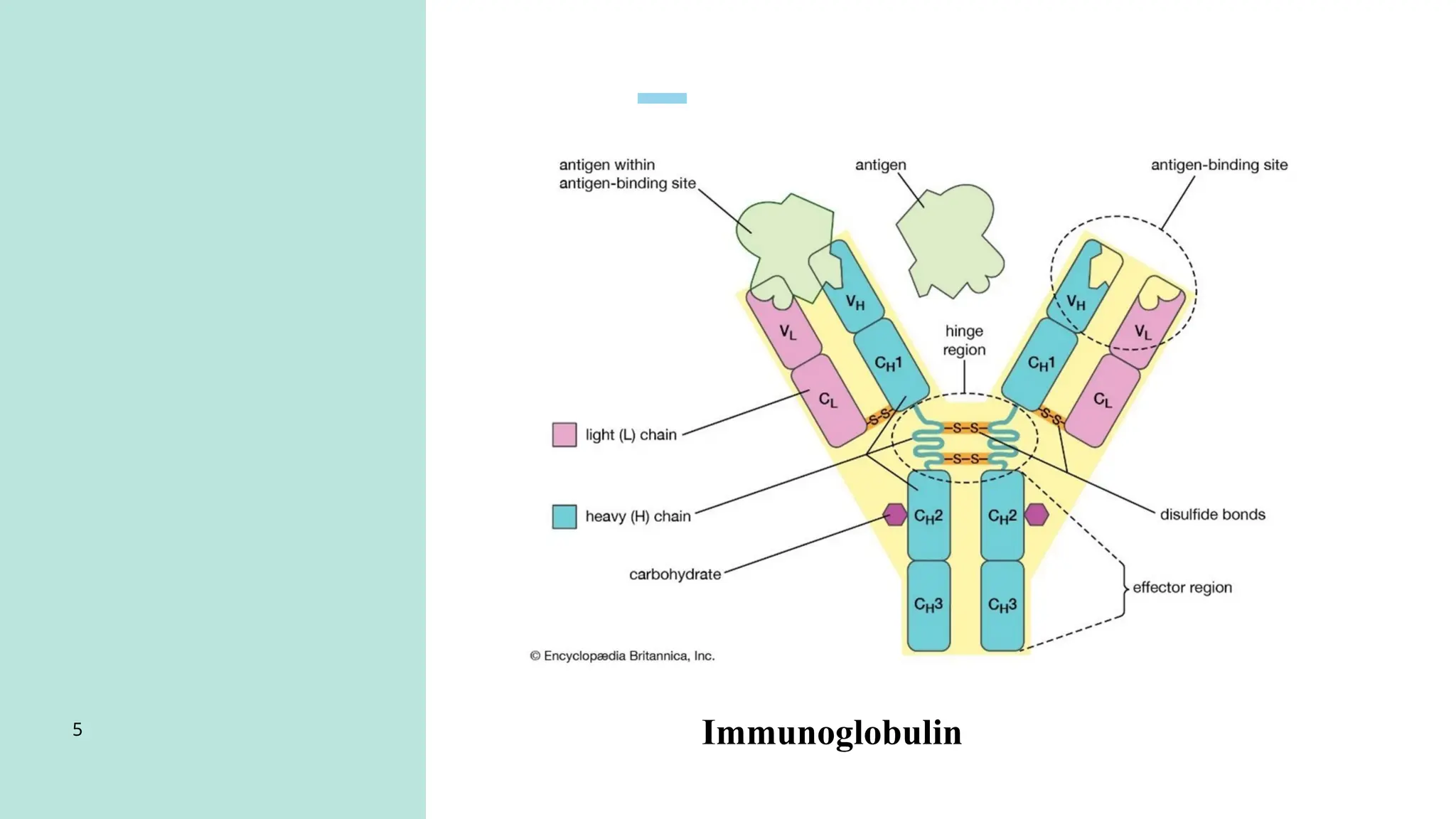
o ANTIBODY:
An antibody, also known as an immunoglobulin, is a large,
y-shaped protein used by the immune system to identify and
neutralize foreign objects such as pathogenic bacteria and
viruses. The antibody recognizes a unique molecule of the
pathogen which is called an antigen.
4
VACCINE:
A vaccine isa biological preparation that
improves immunity to a particular disease.
Vaccines can be prophylactic or therapeutic
.The vaccine exposes humans to very small and
safe amounts of attenuated or killed viruses and
bacteria. When you are exposed to it in later life,
the immune system will learn to recognize and
attack infections
6
EVOLUTION OF VACCINE:
oAmongst various success stories of vaccines, one of
the first vaccine, against smallpox, a disease that had
killed millions of people over the centuries recognized
by British physician Edward Jenner in 1796. In the 19th
and 20th
centuries, scientists following Jenner’s model
developed new vaccines to fight numerous deadly
diseases, including polio, whooping cough, measles,
tetanus, etc.
o Louis Pasteur was a French biologist, microbiologist
and chemist renowned for his discoveries of the
principles of vaccination, microbial fermentation and
pasteurization. He created the first vaccines for rabies
and anthrax.
8
9.
TYPES OF VACCINES:
oThere are several types of vaccines. Each type
is designed to boost our immune system and
prevent serious, life-threatening diseases.
Mainly they are divided into two categories:
1 . Traditional Vaccines
2 . Innovative Vaccines
9
10.
1. TRADITIONAL VACCINES:
Traditionalvaccines use weakened or inactivated
forms of pathogens to stimulate the immune system
without causing the disease. They are:
Live Attenuated Vaccine:
Live attenuated vaccines contain a strain of the
living virus that has been weakened so that it does
not cause serious disease in people with healthy
immune systems
e.g. MRV Vaccine.
1 0
11.
Inactivated vaccine (killed):
Theyare containing pathogens which are killed or
inactivated by usually a thermal or chemical process.
These vaccines trigger a strong immune reaction
similar to the body’s response to an actual infection,
helping build protection against future illness.
e.g. Typhoid Vaccine
Toxoid Vaccine:
Some harmful bacteria make toxins, which are
poisonous proteins that can cause disease in the body.
Some vaccines are made by taking these toxins and
making them harmless through a chemical process.
These harmless toxins are called “toxoids.”
1 1
12.
Acellular or SubunitVaccine:
“Acellular” means lacking whole cells, so acellular
vaccines don’t include complete bacteria or viruses.
These polysaccharides or proteins are recognized
by our immune system as “foreign,” triggering an
immune response against them.
e.g. Pertussis Vaccine
1 2
13.
2. INNOVATIVE VACCINES:
Theyincludes several advanced types using
biotechnology to improve safety. They are:
Conjugate Vaccine:
Earlier polysaccharide vaccines used bacterial
surface sugars but were less effective in young
children. Linking these sugars to a carrier protein
improved immune response, making the vaccines
more effective for infants.
e.g. Pneumococcal Conjugate Vaccine
1 3
14.
Recombinant Vaccine:
In thistype of approach, a small DNA fragment from
the disease-causing bacteria or virus is inserted into a
plasmid, allowing the production of large amounts of
specific proteins that are used as vaccines.
e.g. Human papillomavirus (HPV) vaccine
DNA/RNA Vaccine :
It is a new innovative approach of vaccines where
either DNA or RNA of pathogen is inserted to human
cells which produces proteins encoded by the
inserted pathogenic genes. Hence the body detects
those proteins as foreign and produces strong
immune response against it.
e.g. HIV Vaccine
1 4
15.
STEPS OF EXOGENOUSANTIGEN UPTAKE
UPTAKE : Entry of native pathogens into the cell’s
degradation pathways
DEGRADATION: Partial breakdown of antigens
into peptides
ANTIGEN- MHC COMPLEX : Binding of
peptides to MHC molecules
ANTIGEN PRESENTATION: Transport and
expression of peptide-MHC complexes on the
surfaces of cells for reorganization by T-Cells
16.
STEPS OF ENDOGENOUSANTIGEN UPTAKE
UPTAKE : Antigens/pathogens already present in
the cells rephrase
DEGRADATION: Antigens synthesized in
cytoplasm undergo limited proteolytic degradation
in the cytoplasm
ANTIGEN- MHC COMPLEX : Loading of
peptides on MHC Class 1 molecules
ANTIGEN PRESENTATION: Transport and
Expression of peptide-MHC complexes on the
surfaces of cells for reorganization by T-Cells
17.
SINGLE SHOT VACCINE:
Thesingle-shot vaccine is a combination product of a
prime component antigen with an appropriate adjuvant and
a microsphere component that encapsulates antigen and
provides the booster immunizations by delayed release of
the antigen.
Single-shot vaccines, or single-dose vaccines, are
developed to deliver full immunity with just one dose,
simplifying vaccine administration and increasing
conveniency.
1 7
Click icon to add picture
18.
COMPONENTS OF SINGLESHOT
VACCINE:
ANTIGEN: Weakened or inactivated pathogen, a protein
subunit, or a piece of genetic material that codes for a
specific protein of the pathogen.
Biodegradable polymers: They can be ;
1 Natural polymers: Chitosan, Dextran (dex-HEMA),
Albumin, Collagen, Gelatin, etc.
2. Synthetic polymers: Aliphatic poly esters, PLGA
(Poly(lactic-co-glycolic acid)).
1 8
Click icon to add picture
19.
Adjuvants: They aresubstances which are added in
vaccines to increase the therapeutics efficiency. Such as:
1. Aluminium Salts: Aluminium hydroxide, Phosphate
etc.
2. AS03: It is an oil-in-water adjuvant emulsion composed
of the surfactant polysorbate 80 and two biodegradable oils
(Polysorbate 80 & Squalene, DL-α-tocopherol)
3. MF59: It is a water-in-oil emulsion composed of
squalene, Span 85, and Tween 80 in 10 mM sodium citrate
buffer (6.5).
1 9
Click icon to add picture
20.
FORMULATION OF SINGLESHOT
VACCINE:
An emulsion of dex-HEMA solution in an aqueous
solution of PEG solution is formed by mixing them in
a bioreactor vessel.
The freeze-dried containing suspension is formed,
filled into vials and freed dried to make products
stable.
When the freeze-dried product is rehydrated by an
aqueous solution, the hydrolysis (carbonate ester
groups) of dex-HEMA occurs.
This will increase the mesh size in hydrogel network.
Hence the encapsulated protein will be released when
the mesh size exceeds the hydrodynamic diameter of
2 0
Click icon to add picture
21.
2 1
Click iconto add picture
Formulation and Manufacturing of Single shot Vaccine
22.
COMMON SIDE EFFECTSASSOCIATED WITH
SINGLE SHOT VACCINES:
It can cause Muscle aches mainly at the site of action.
Pain around injection site is also seen.
Fever is the most common side effect of the Vaccine.
ADVANTAGES OF SINGLE SHOT VACCINE:
Single shot vaccines are Economical comparatively.
With one Injection 4 to 6 infections can be prevented
Improved Patient compliance is possible due to no
need of reimmunization.
2 2
Click icon to add picture
23.
DISADVANTAGES OF SINGLESHOT VACCINE:
Vaccines that utilize live organisms can become itself the
cause of illness.
Sometimes the vaccine behaves like super antigen and
over stimulate the immune system.
SOME SINGLE SHOT VACCINES AVAILABLE
CURRENTLY ARE:
Janssen COVID-19 Vaccine
MMR Vaccine
Yellow fever Vaccine
2 3
Click icon to add picture
24.
MUCOSAL DELIVERY OFVACCINE:
Mucosal vaccines are administered directly onto
mucosal surfaces, such as those in the sublingual,
digestive, respiratory, or urogenital tracts, to trigger an
immune response.
This method allows the vaccine to target lymphoid
tissues under the mucous membranes.
These tissues respond by recruiting immune cells and
promoting antibody secretion. Compared to
intramuscular or subcutaneous vaccines, mucosal
vaccines can thus more effectively engage the immune
system at the sites where many pathogens typically
enter the body. This can enhance protection against
infections localized to these areas.
2 4
25.
DESIGNS FOR THEMUCOSAL VACCINES
DELIVERY:
On the basis of particulate carrier types, they can be;
Microneedle
Emulsions
Liposomes
Synthetic polymers
Virus like particles
2 5
26.
MICRONEEDLE:
Microneedles area vaccine delivery system consisting
of micron-sized projections that penetrate the
epidermis, enabling the mucosal administration of
vaccines with minimal discomfort.
This method enhances patient compliance by providing
a painless vaccination experience.
Microneedles have been widely utilized as vaccine
delivery systems.
2 6
Microneedles canbe made from various materials and
designed in different shapes and sizes to reach specific
tissue depths. This flexibility allows for precise vaccine
delivery.
They can be fabricated using various methods, leading
to a diverse range of sizes and shapes. This allows for
flexibility and precision in their design.
2 8
29.
FORMULATION INCORPORATED INMICRONEEDLE:
Protein Antigens: These involve model proteins like
ovalbumin or specific proteins from pathogens. They work
by triggering an immune response in the body.
Virus-like Particles (VLPs): VLPs imitate the structure of
actual viruses but aren't infectious. This makes them both
safe and effective for generating immunity.
DNA Vaccines: These consist of small DNA fragments that
encode specific antigens. When taken up by cells, these
fragments lead to the production of the antigen, which then
stimulates an immune response.
2 9
30.
ADVANTAGES OF MICRONEEDLE:
They are minimally invasive and can cause little or no
pain.
Self administration is possible.
Targeted delivery to the mucosal tissues are possible
which induces robust immune response.
They generally do not require cold chain storage.
Extended immunity is possible when slow release of
antigen from microneedle takes place.
3 0
31.
CHALLENGES FOR DEVELOPMENTOF MUCOSAL
VACCINES:
One major difficulty is that delivering antigens to the
target cells or tissues is less consistent compared to
intramuscular or subcutaneous injections. This is because
the antigens must penetrate the mucosal barrier, which
serves as the body's natural defense mechanism.
The Salivary flow can dilute and completely remove
vaccines before they can be taken up by antigen
presenting cells in the tissue. It also contains a range of
enzymes that may alter the vaccine prior to antigen
presenting cell uptake.
3 1
32.
TRANSDERMAL DELIVERY OF
VACCINES:
Transdermal Delivery of Vaccines is a method where
vaccines are administered through the skin using
specialized devices like patches
This approach allows the vaccine to be absorbed into
the body through the skin, often providing a painless
and convenient alternative to traditional needle
injections.
The Transdermal vaccines may cause similar or even
higher immune responses in comparison to
intramuscular injections.
3 2
33.
TRANSDERMAL DELIVERY OF
VACCINES:
Numeroustransdermal drug delivery techniques used for
vaccine delivery can be:
Sonophoresis (Ultrasound)
Iontophoresis
Microneedles
Electroporation
Thermal ablation or microporation
3 3
34.
RECENT ADVANCES INVACCINES:
Recent advancements in vaccines include formulation of
various vaccines such as:
mRNA Vaccines
DNA Vaccines
Edible vaccines
Vector vaccines
3 4
35.
mRNA VACCINES:
mRNAvaccines have recently attracted significant
attention because they can speed up vaccine
development, improve safety and efficacy, and address
diseases that other approaches have struggled to prevent.
mRNA is non-infectious and non-integrating and is
quickly broken down by normal cellular processes after
injection, reducing the risk of toxicity and long-term side
effects.
mRNA vaccines have the distinct advantage of not
inducing vector-specific immunity, avoiding interference
from pre-existing or newly developed vector immunity in
subsequent vaccinations.
3 5
mRNA VACCINES:
mRNAvaccines can deliver multiple mRNAs to the
same cell, enabling the formation of multi-protein
complexes or protein antigens from various pathogens.
This capability allows the creation of a single vaccine
that can target multiple diseases.
E.g. :
Pfizer-BioNTech COVID-19 Vaccine,
Moderna COVID-19 Vaccine
3 7
38.
DNA VACCINE:
ADNA vaccine is a type of engineered genetic material that
carries instructions for producing a specific protein antigen.
This genetic material is directly injected into to trigger an
immune response.
After being taken in by host cells, it expresses an antigen
protein, thereby inducing non-specific and specific immune
responses, playing an important role in immune protection
effect.
DNA vaccine represent a powerful approach to express
antigens in vivo for the generation of both humoral and
cellular immune response and the generation of needed
vaccines.
3 8
ADVANTAGES OF DNAVACCINE:
The risk of either reversion to a disease-causing form
or secondary infection is reduced as the DNA vaccine
plasmids are non-live, non-replicating and non-
spreading.
They are considered to be safer than many other
vaccines.
They are stable, easily stored and can be manufactured
on large scale.
4 0
41.
REFERENCES:
4 1
1. Abbas,A. K., &Lichtman, A. H. (2022). Basic Immunology: Functions and Disorders of the
Immune System (6th ed.)
2. Janeway, C. A., Travers, P., Walport, M., &Shlomchik, M. J. (2001).
3. Murray, P. R., Rosenthal, K. S., &Pfaller, M. A. (2020). Medical Microbiology (9th ed.).
Elsevier. Infection occurs when microorganisms breach the body’s defense systems and lead to
disease.
4. Goldsby, R. A., Kindt, T. J., Osborne, B. A., &Kuby, J. (2006). Kuby Immunology (6th ed.).
W. H. Freeman.
5. Alberts, B., Johnson, A., Lewis, J., Raff, M., Roberts, K., & Walter, P. (2002). Molecular
Biology of the Cell (4th ed.). Garland Science.
6. Regulations.gov, a U.S. Federal Government Website, November 2024
https://downloads.regulations.gov/CDC-2022-0111-71295/attachment_3.pdf
7. Types of Vaccines on India science and technology, November 2024
https://www.indiascienceandtechnology.gov.in/covid-19-vaccine/types-vaccine
42.
4 2
8. DaiX, Xiong Y, Li N, Jian C. Vaccine Types [Internet]. Vaccines – the History and Future.
IntechOpen; 2019.
9. Behbehani AM. The smallpox Story: Life and death of an old Disease. Microbiological
Reviews. 1983;47(4):455-509
10. Plotkin S. History of vaccination. Proceedings of the National Academy of Sciences of the
United States of America. 2014;111(34):12283-12287
11. Ozawa S, Clark S, Portnoy A, Grewal S, Stack ML, Sinha A, et al. Estimated economic
impact of vaccinations in73 low- and middle-income countries,2001-2020. Bulletin of the
World Health Organization. 2017;95(9):629
12. Hilleman MR, Buynak EB, Weibel RE, Stokes J Jr. Live, attenuated mumps-virus vaccine.
The New England Journal of Medicine.1968;278(5):227-232
13. Takahashi M, Okuno Y, Otsuka T, Osame J, Takamizawa A. Development of a live attenuated
varicella vaccine. Biken Journal. 1975;18(1):25-33
14. 14. Alleman MM, Jorba J, Greene SA, Diop OM, Iber J, Tallis G, et al. Update on
Vaccine-Derived Poliovirus Outbreaks - Worldwide, July 2019-February 2020. MMWR
Morb Mortal Wkly Rep 2020;69(16):489–95
43.
4 3
15. ZeppF. Principles of vaccine design-Lessons from nature. Vaccine 2010;28(Suppl 3):C14–24
16. Pathways of Antigen uptake on ResearchGate, November 2024
https://www.researchgate.net/figure/Pathways-of-Exogenous-Antigen-Uptake-in-DCs-DCs-
internalize-extracellular-antigens-using_fig1_272512222
17. Single shot vaccine, November 2024
https://www.biopharminternational.com/view/advances-single-shot-vaccine-development
18. Facciolà, A., Visalli, G., Laganà, A., & Di Pietro, A. (2022). An Overview of Vaccine
Adjuvants: Current Evidence and Future Perspectives. Vaccines, 10(5),819.
https://doi.org/10.3390/vaccines10050819
19. Kim SH, Lee KY, Jang YS. Mucosal Immune System and M Cell-targeting Strategies for
Oral Mucosal Vaccination. Immune Network. 2012 Oct;12(5):165-175. DOI:
10.4110/in.2012.12.5.165. PMID: 23213309; PMCID: PMC3509160.
20. Mucosal vaccines and technology on Oxford University Press November 2024
https://academic.oup.com/cei/article/196/2/205/6421392
44.
4 4
21. MengwenHuang, Miaomiao Zhang, Hongbin Zhu, Xiaojiao Du, Jun Wang, Mucosal
vaccine delivery: A focus on the breakthrough of specific barriers, Acta Pharmaceutica Sinica B,
Volume 12, Issue 9, 2022, Pages 3456-3474, ISSN 2211-3835,
https://doi.org/10.1016/j.apsb.2022.07.002.
22. Awate S, Babiuk LA, Mutwiri G. Mechanisms of action of adjuvants. Front Immunol
2013;4:114
23. Alving CR, Peachman KK, Rao M, Reed SG. Adjuvants for human vaccines. Curr Opin
Immunol 2012;24:310–315.
24. Li M, Wang Y, Sun Y, Cui H, Zhu SJ, Qiu HJ. Mucosal vaccines: strategies and
challenges. Immunol Lett 2020;217:116–125.
25. Creighton RL, Woodrow KA. Microneedle-Mediated Vaccine Delivery to the Oral
Mucosa. Adv Healthc Mater. 2019 Feb;8(4):e1801180. doi: 10.1002/adhm.201801180. Epub
2018 Dec 10. PMID: 30537400; PMCID: PMC6476557.
26. Menon, I., Bagwe, P., Gomes, K. B., Bajaj, L., Gala, R., Uddin, M. N., D’Souza, M. J., &
Zughaier, S. M. (2021). Microneedles: A New Generation Vaccine Delivery System.
Micromachines, 12(4), 435. https://doi.org/10.3390/mi12040435
45.
4 5
27. LavelleEC, Ward RW. Mucosal vaccines: fortifying the frontiers. Nat Rev Immunol
2022;22:236–250.
28. Transdermal Delivery of Vaccines on ResearchGate publication, November 2024
https://www.researchgate.net/publication/301780335_Transdermal_Delivery_of_Vaccines
29. Aqib AI, Anjum AA, Islam MA, Murtaza A, Rehman AU. Recent Global Trends in
Vaccinology, Advances and Challenges. Vaccines (Basel). 2023 Feb 23;11(3):520. doi:
10.3390/vaccines11030520. PMID: 36992104; PMCID: PMC10053289.
30. Makda S. Gebre, Luis A. Brito, Lisa H. Tostanoski, Darin K. Edwards, Andrea Carfi, Dan
H. Barouch, Novel approaches for vaccine development, Cell, Volume 184, Issue 6, 2021, Pages
1589-1603, ISSN 0092-8674, https://doi.org/10.1016/j.cell.2021.02.030.
31. Understanding Six Types of Vaccine Technologies, November 2024
https://www.pfizer.com/news/articles/understanding_six_types_of_vaccine_technologies
32. DNA Vaccines on Science Direct, November 2024
https://www.sciencedirect.com/topics/immunology-and-microbiology/dna-vaccine
33. Kutzler, M., Weiner, D. DNA vaccines: ready for prime time?. Nat Rev Genet 9, 776–788
(2008). https://doi.org/10.1038/nrg2432




![4 2
8. Dai X, Xiong Y, Li N, Jian C. Vaccine Types [Internet]. Vaccines – the History and Future.
IntechOpen; 2019.
9. Behbehani AM. The smallpox Story: Life and death of an old Disease. Microbiological
Reviews. 1983;47(4):455-509
10. Plotkin S. History of vaccination. Proceedings of the National Academy of Sciences of the
United States of America. 2014;111(34):12283-12287
11. Ozawa S, Clark S, Portnoy A, Grewal S, Stack ML, Sinha A, et al. Estimated economic
impact of vaccinations in73 low- and middle-income countries,2001-2020. Bulletin of the
World Health Organization. 2017;95(9):629
12. Hilleman MR, Buynak EB, Weibel RE, Stokes J Jr. Live, attenuated mumps-virus vaccine.
The New England Journal of Medicine.1968;278(5):227-232
13. Takahashi M, Okuno Y, Otsuka T, Osame J, Takamizawa A. Development of a live attenuated
varicella vaccine. Biken Journal. 1975;18(1):25-33
14. 14. Alleman MM, Jorba J, Greene SA, Diop OM, Iber J, Tallis G, et al. Update on
Vaccine-Derived Poliovirus Outbreaks - Worldwide, July 2019-February 2020. MMWR
Morb Mortal Wkly Rep 2020;69(16):489–95](https://image.slidesharecdn.com/vaccinedrugdeliverysystembysathya-250320163645-6297f026/75/VACCINE-DRUG-DELIVERY-SYSTEM-DEFINITTION-EVOLUTION-TYPES-OF-VACCINES-UPTAKE-OF-ANTIGEN-SINGLE-SHOT-VACCINE-MUCOSAL-DELIVERY-OF-VACCINE-TRANSDERMAL-DELIVERY-OF-VACCINE-RECENT-ADVANCES-OF-VACCINES-BY-SATHYA-pptx-42-2048.jpg)


