1
Using Data Analytics to
Improve Public
Expenditures
Rosemary Huxtable PSM
Secretary – Australian Department of Finance
2
What is Data Analytics?
3
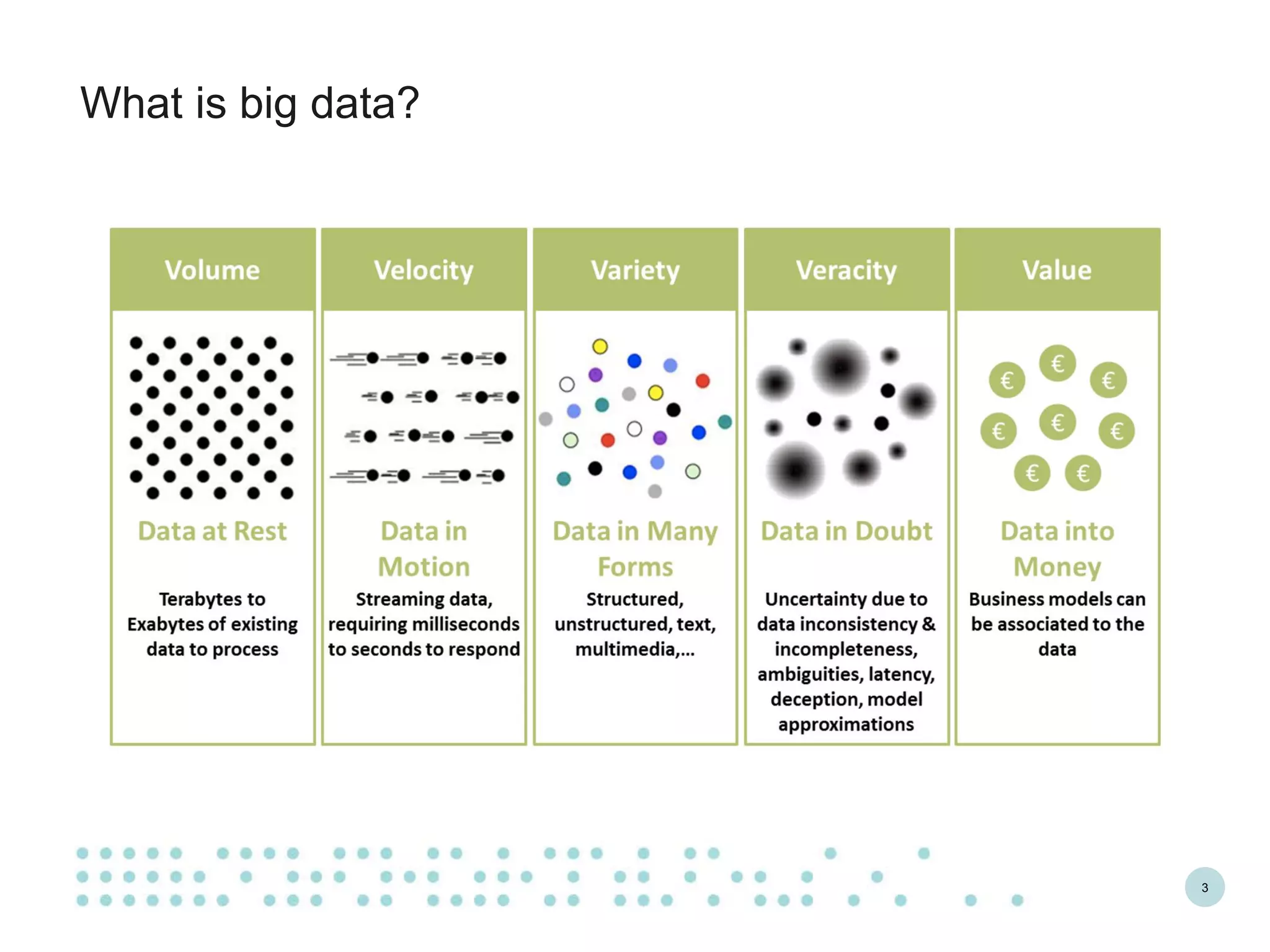
What is big data?
4
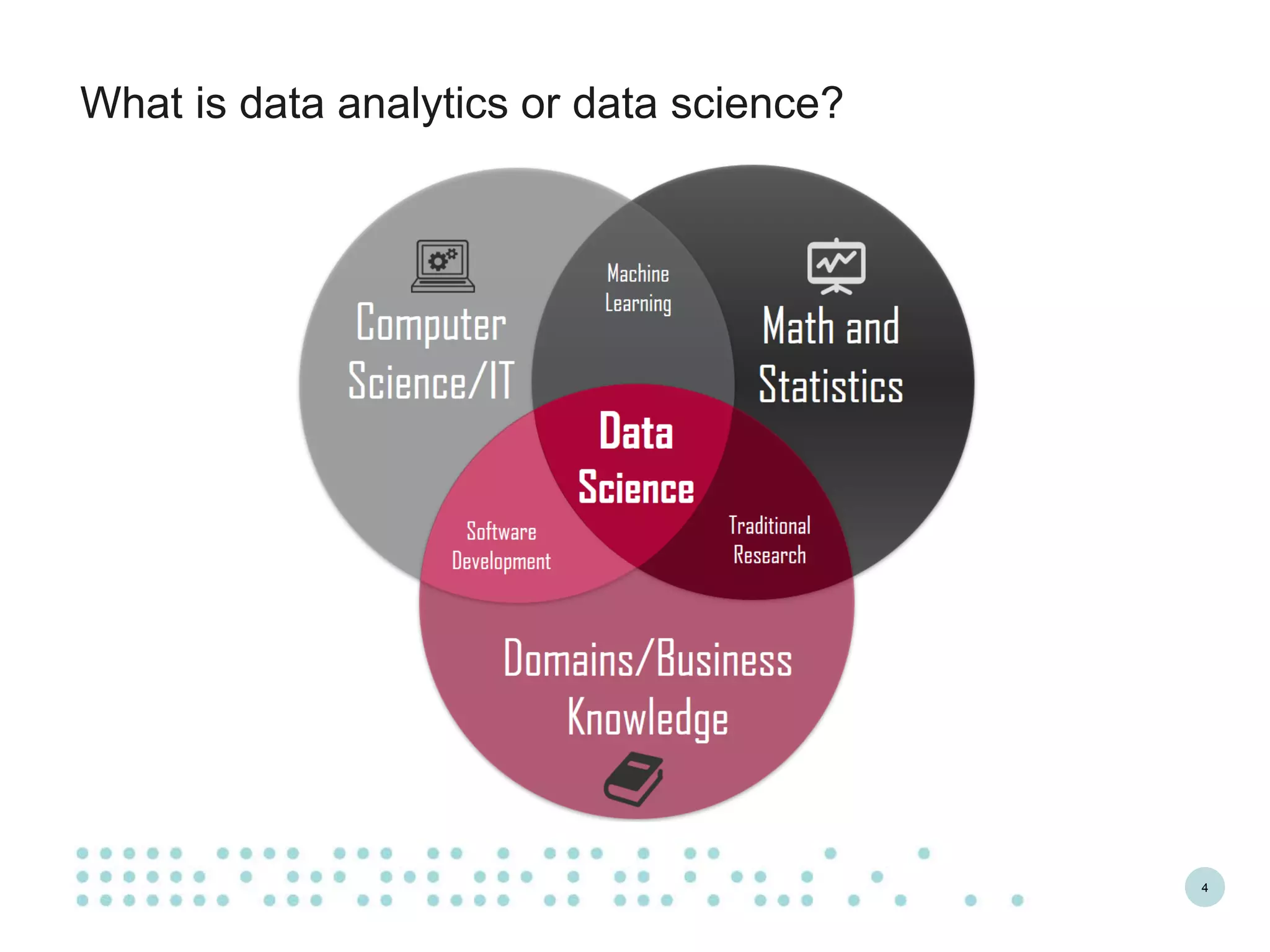
What is data analytics or data science?
5
Global Challenges –
Governments are not
immune
6
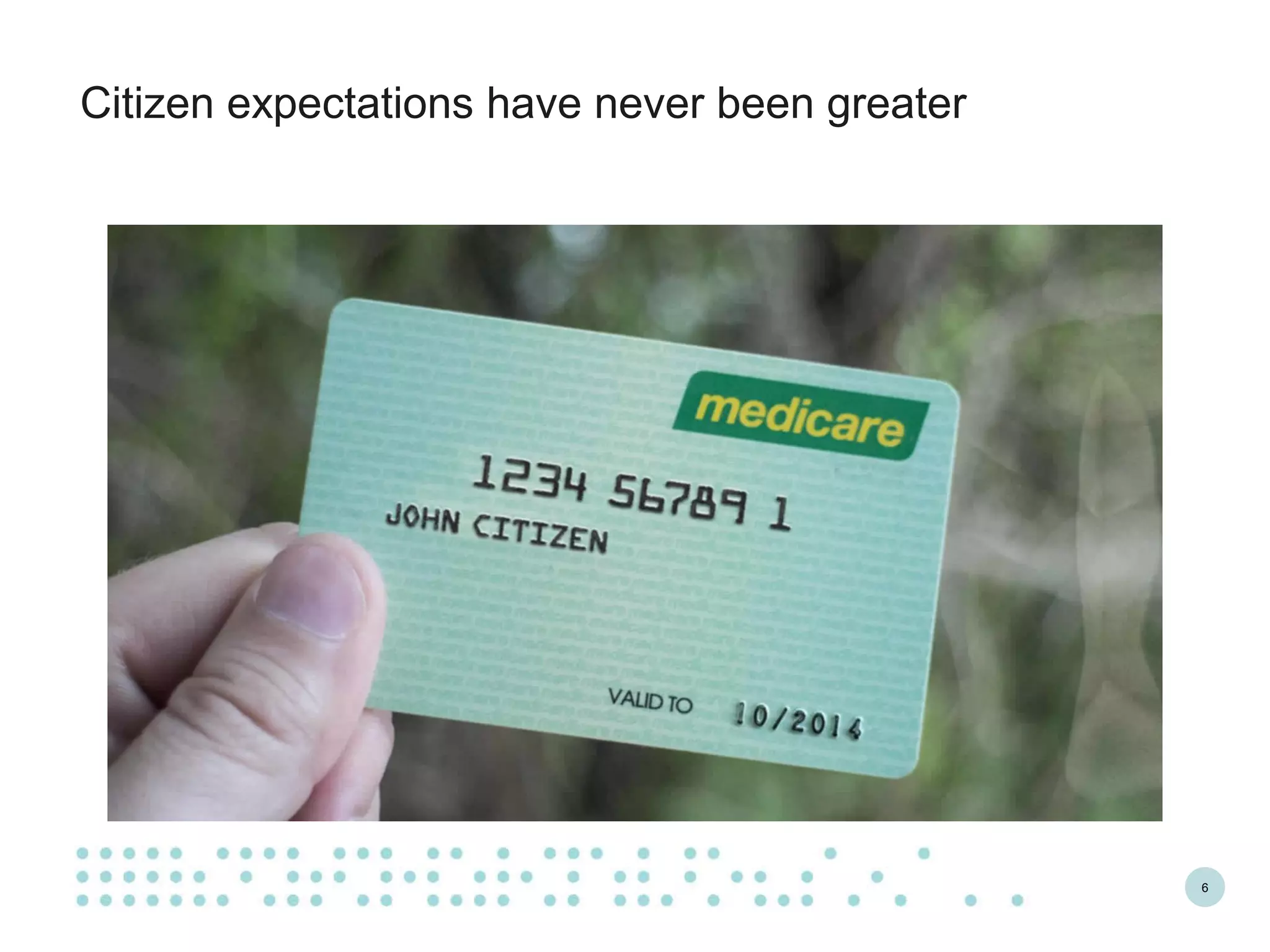
Citizen expectations have never been greater
7
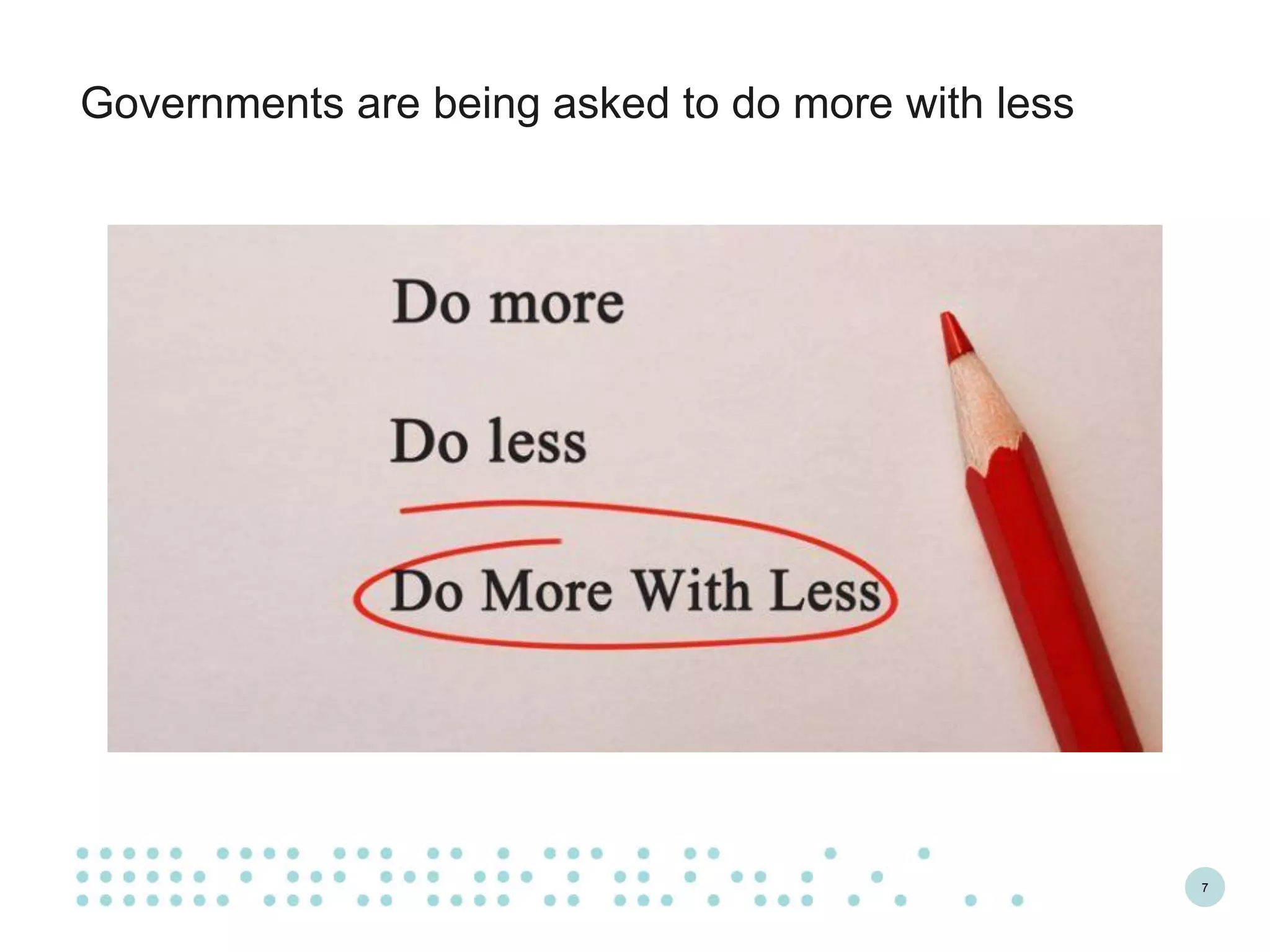
Governments are being asked to do more with less
8
How can data analytics help
governments achieve policy
goals?
9
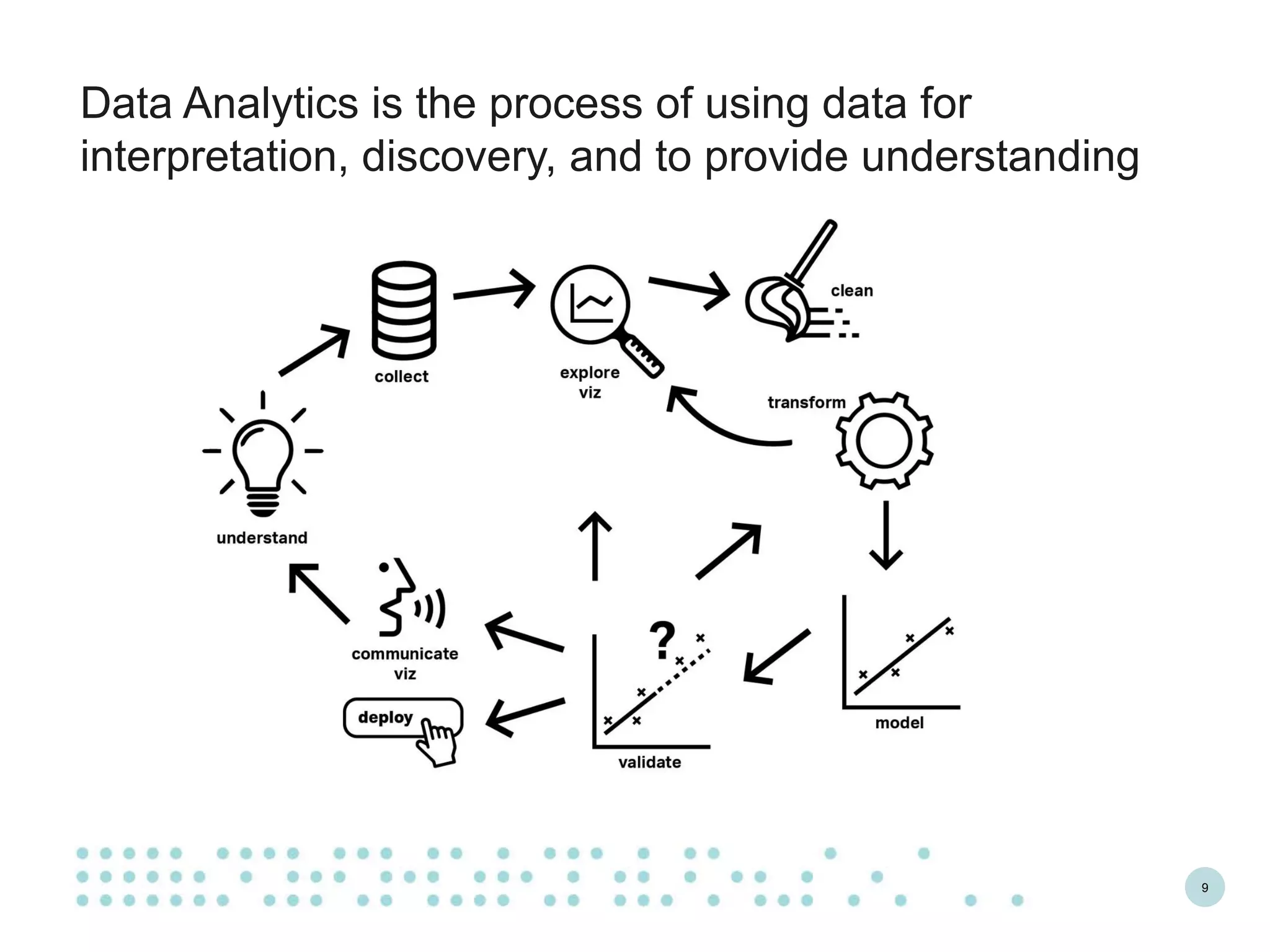
Data Analytics is the process of using data for
interpretation, discovery, and to provide understanding
10
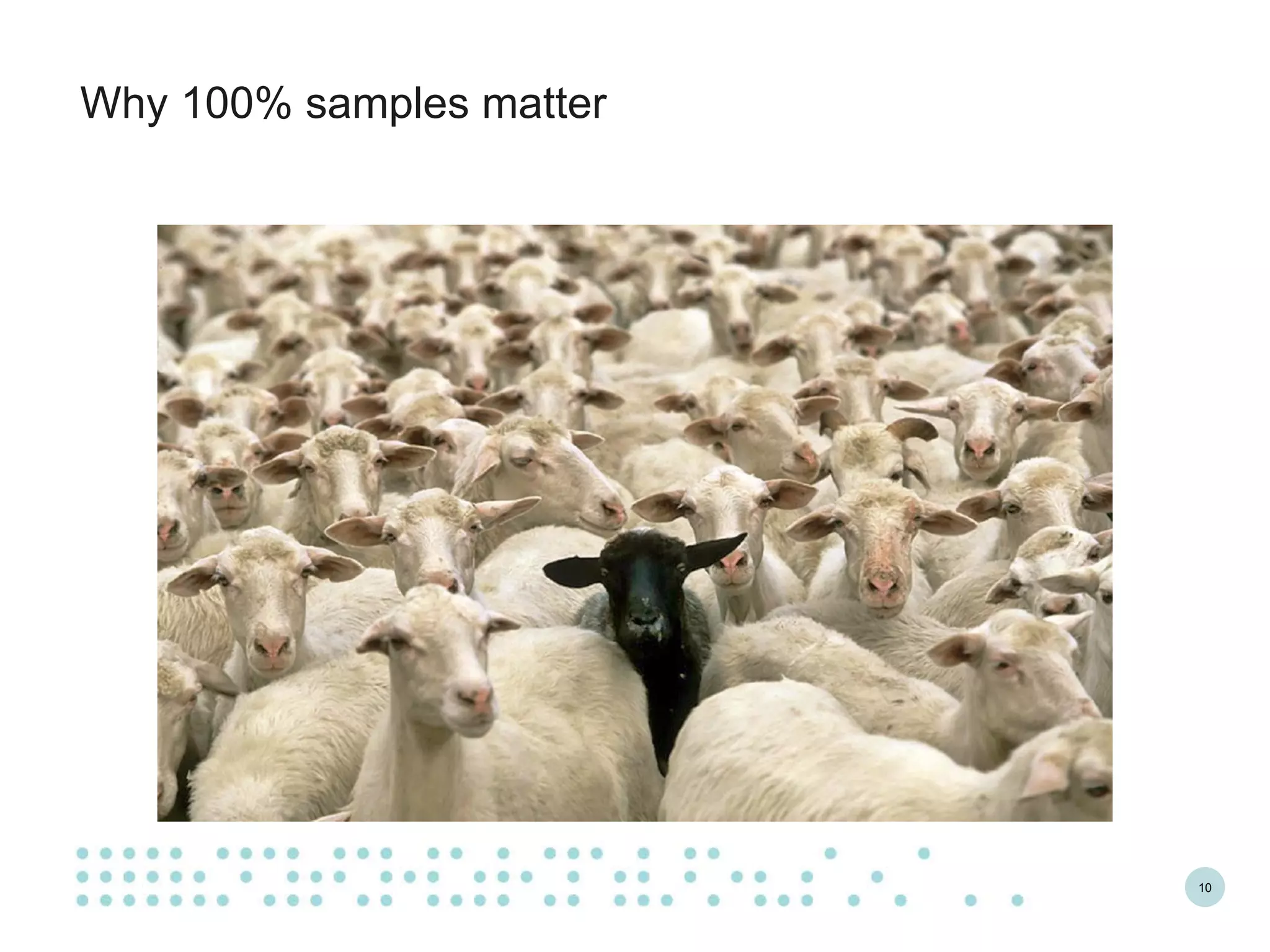
Why 100% samples matter
11
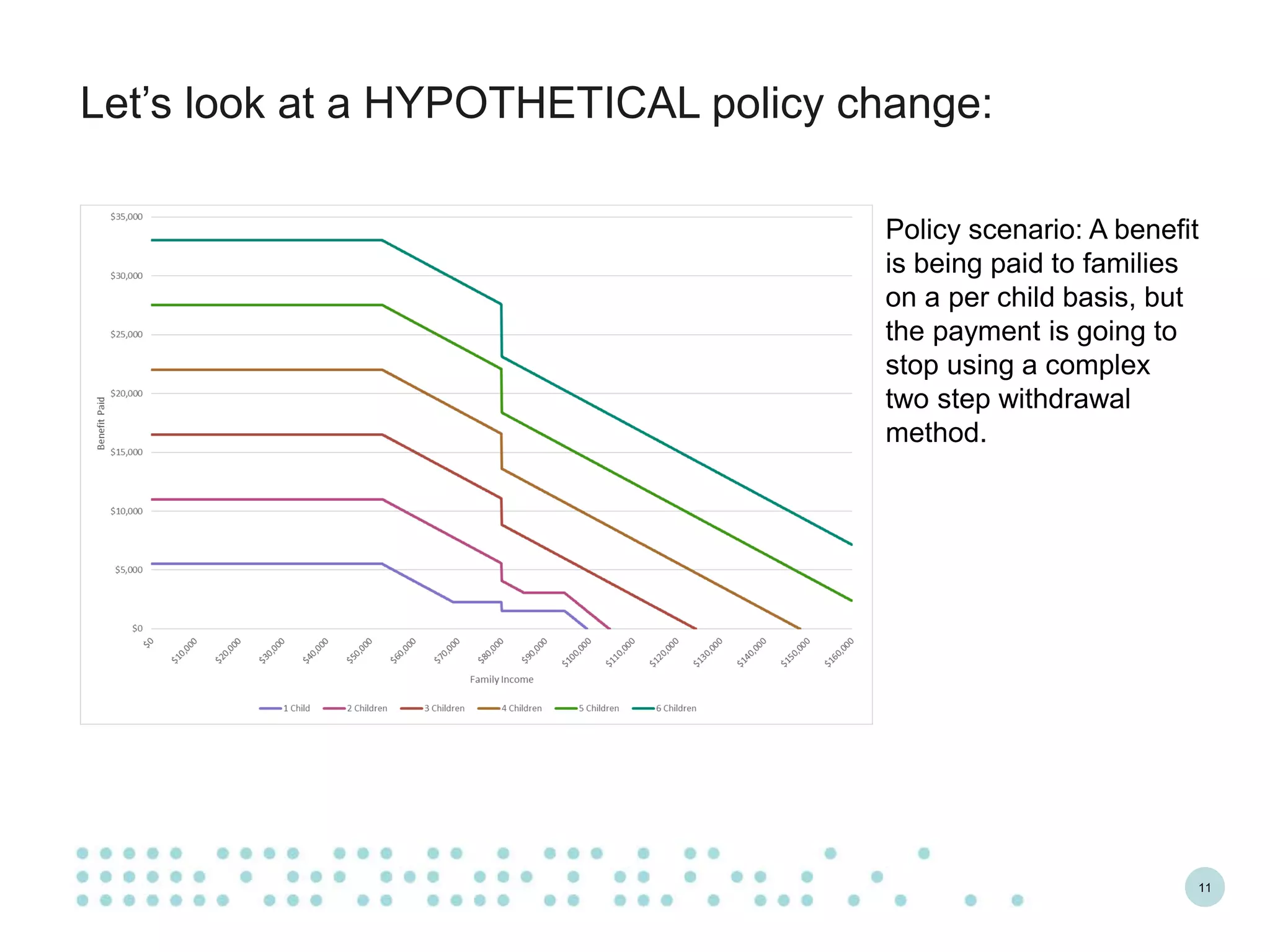
Let’s look at a HYPOTHETICAL policy change:
Policy scenario: A benefit
is being paid to families
on a per child basis, but
the payment is going to
stop using a complex
two step withdrawal
method.
12
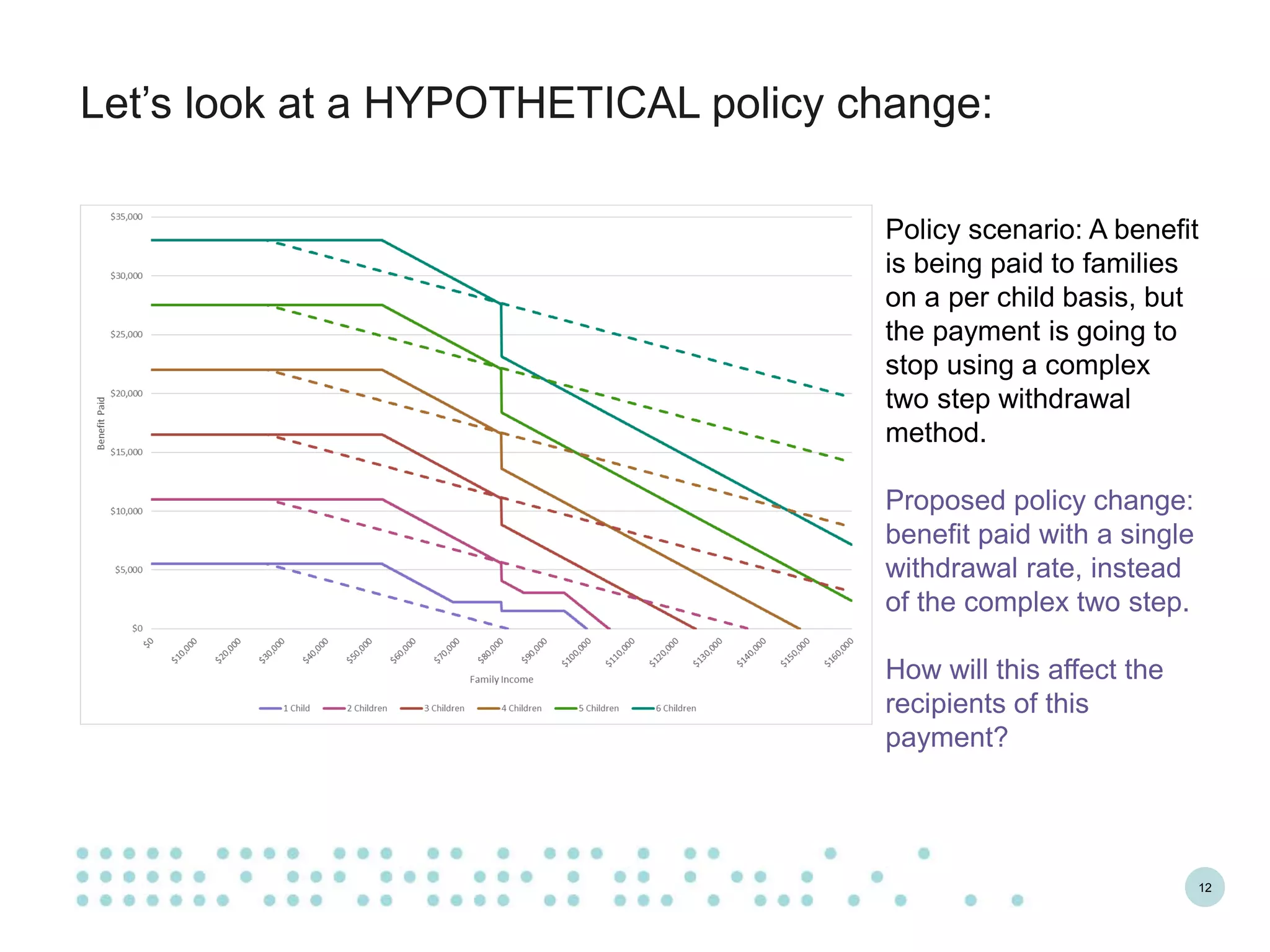
Let’s look at a HYPOTHETICAL policy change:
Policy scenario: A benefit
is being paid to families
on a per child basis, but
the payment is going to
stop using a complex
two step withdrawal
method.
Proposed policy change:
benefit paid with a single
withdrawal rate, instead
of the complex two step.
How will this affect the
recipients of this
payment?
13
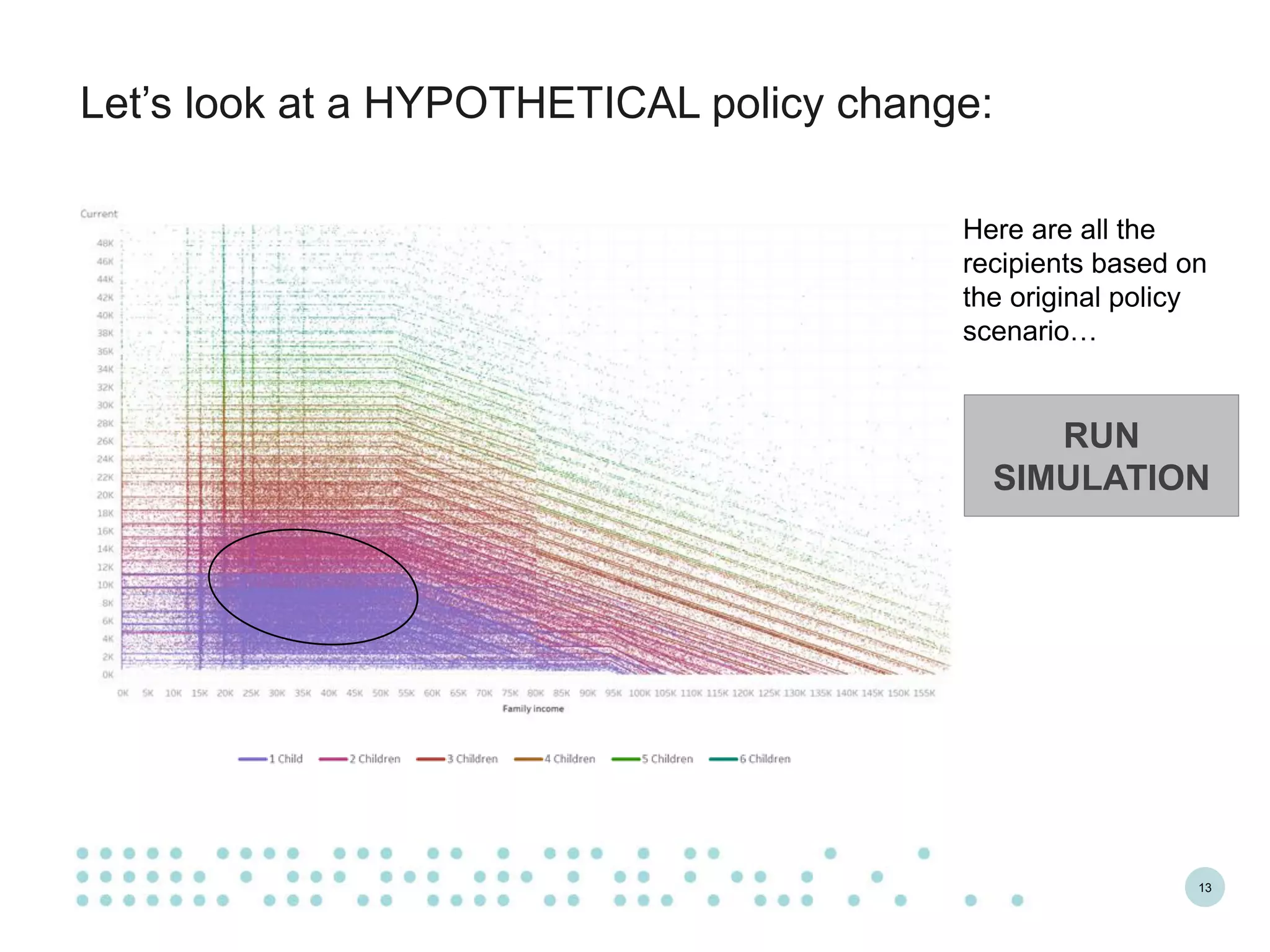
Let’s look at a HYPOTHETICAL policy change:
Here are all the
recipients based on
the original policy
scenario…
RUN
SIMULATION
14
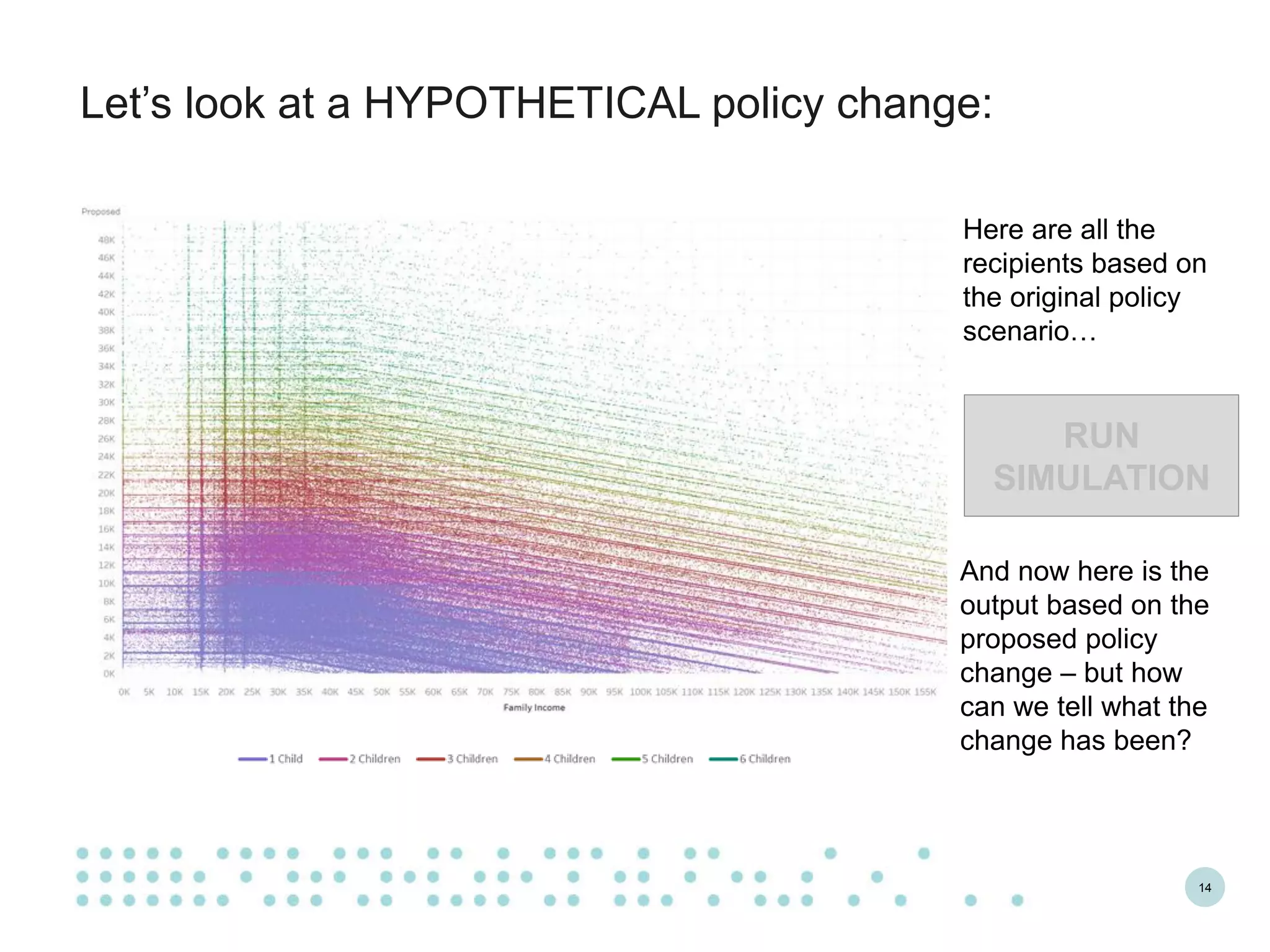
Let’s look at a HYPOTHETICAL policy change:
Here are all the
recipients based on
the original policy
scenario…
And now here is the
output based on the
proposed policy
change – but how
can we tell what the
change has been?
RUN
SIMULATION
15
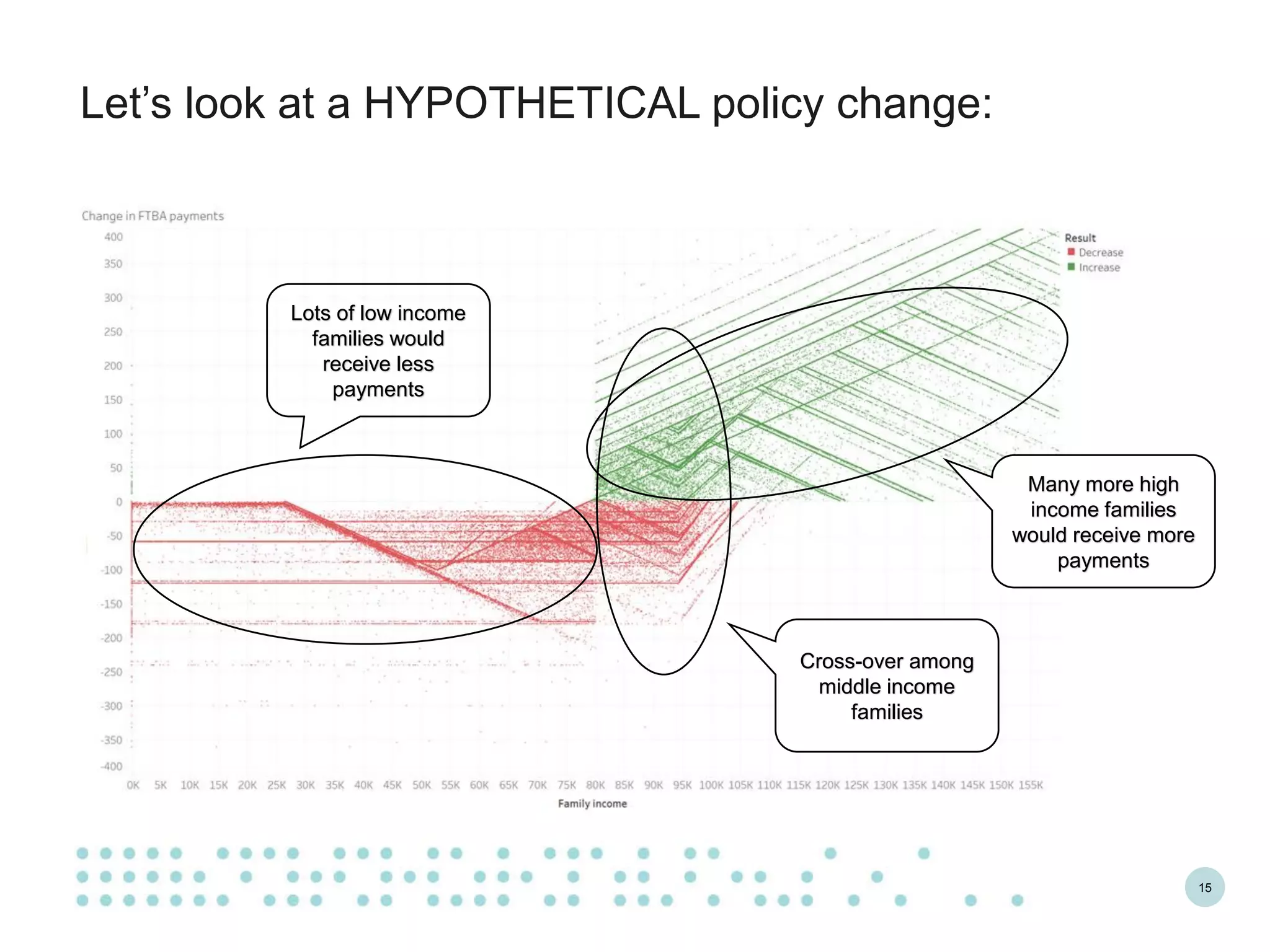
Let’s look at a HYPOTHETICAL policy change:
Lots of low income
families would
receive less
payments
Many more high
income families
would receive more
payments
Cross-over among
middle income
families
16
What are the preconditions
for effective data analytics?
17
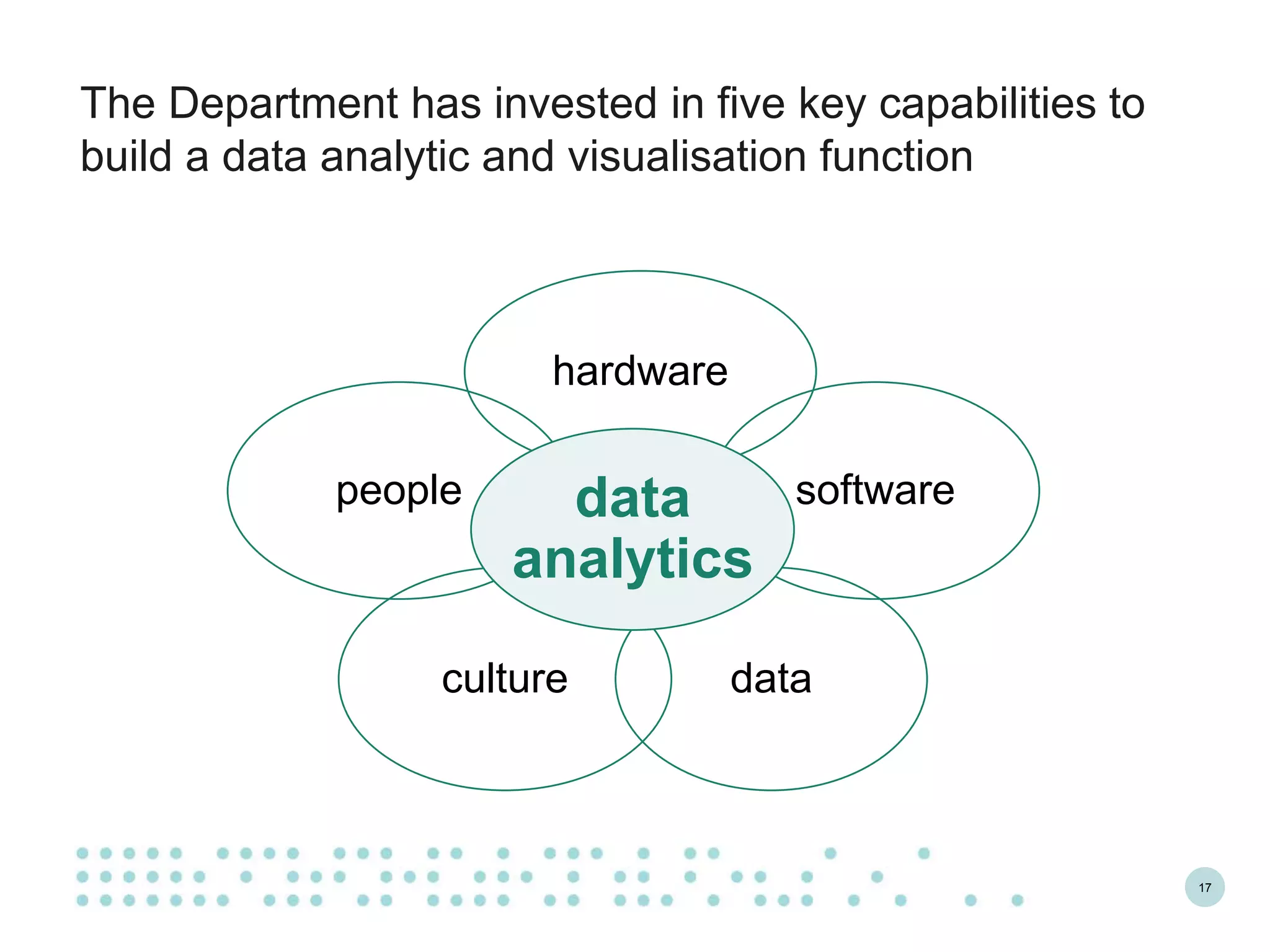
The Department has invested in five key capabilities to
build a data analytic and visualisation function
hardware
software
dataculture
people data
analytics
18
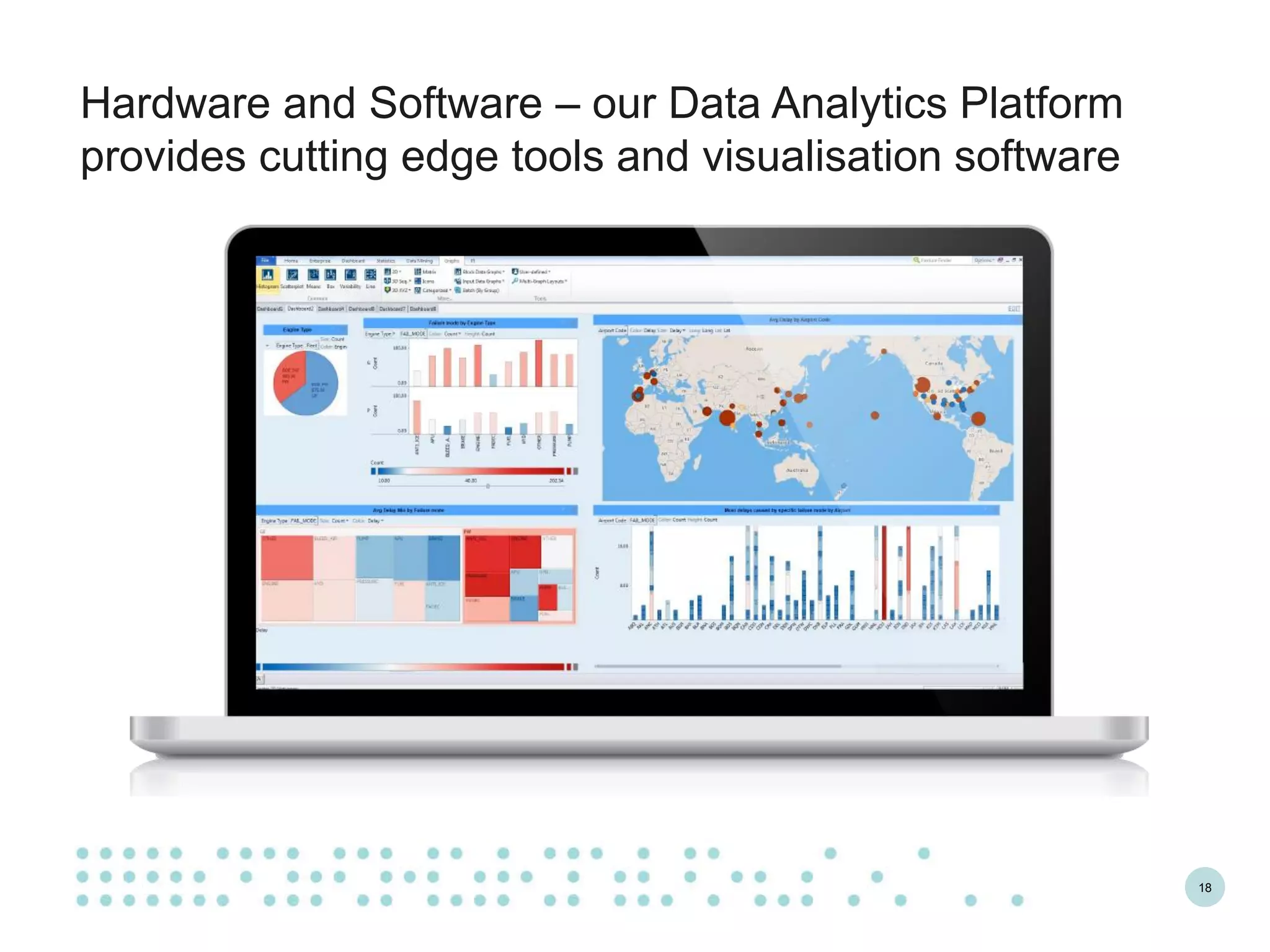
Hardware and Software – our Data Analytics Platform
provides cutting edge tools and visualisation software
19
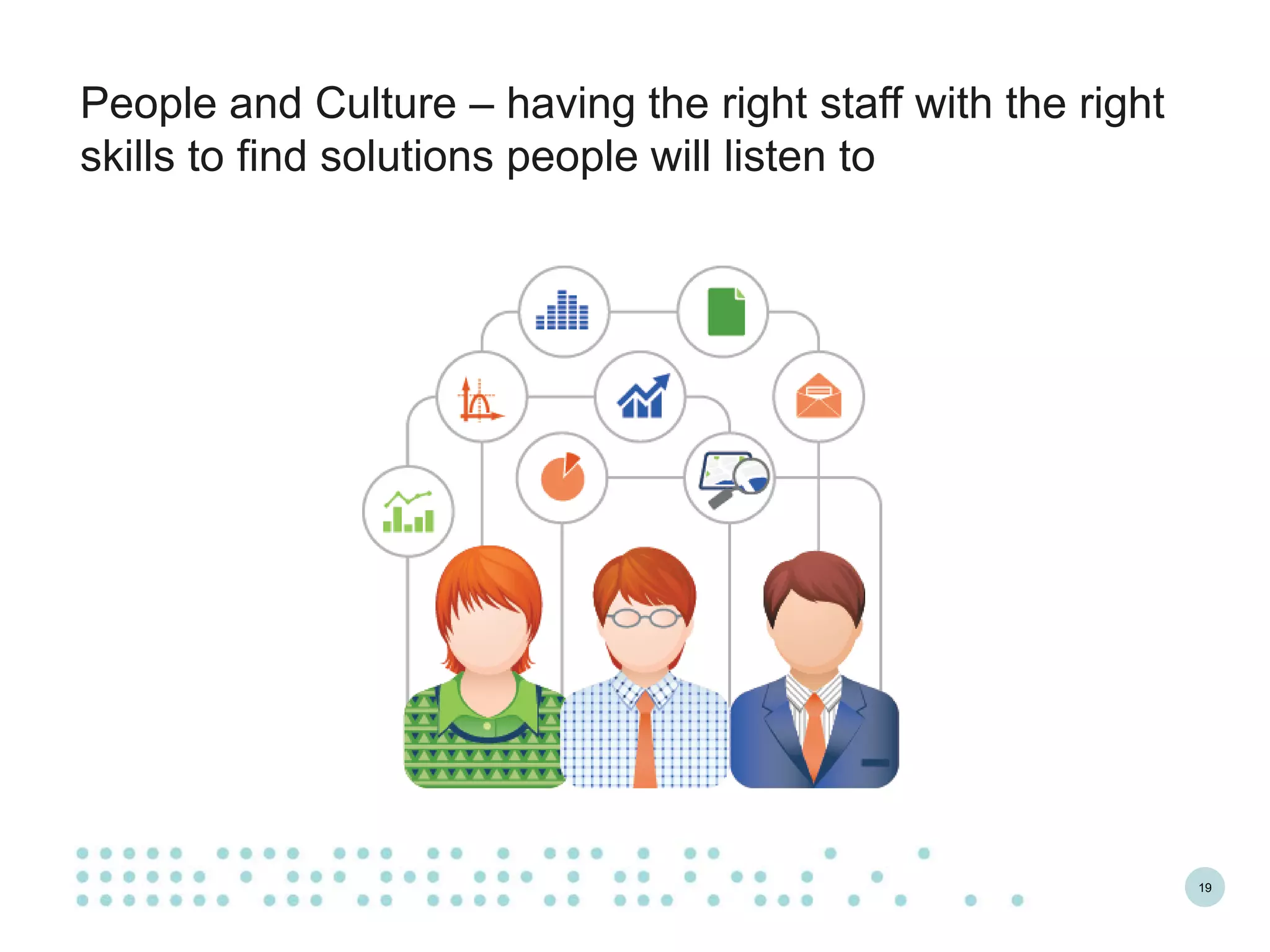
People and Culture – having the right staff with the right
skills to find solutions people will listen to
20
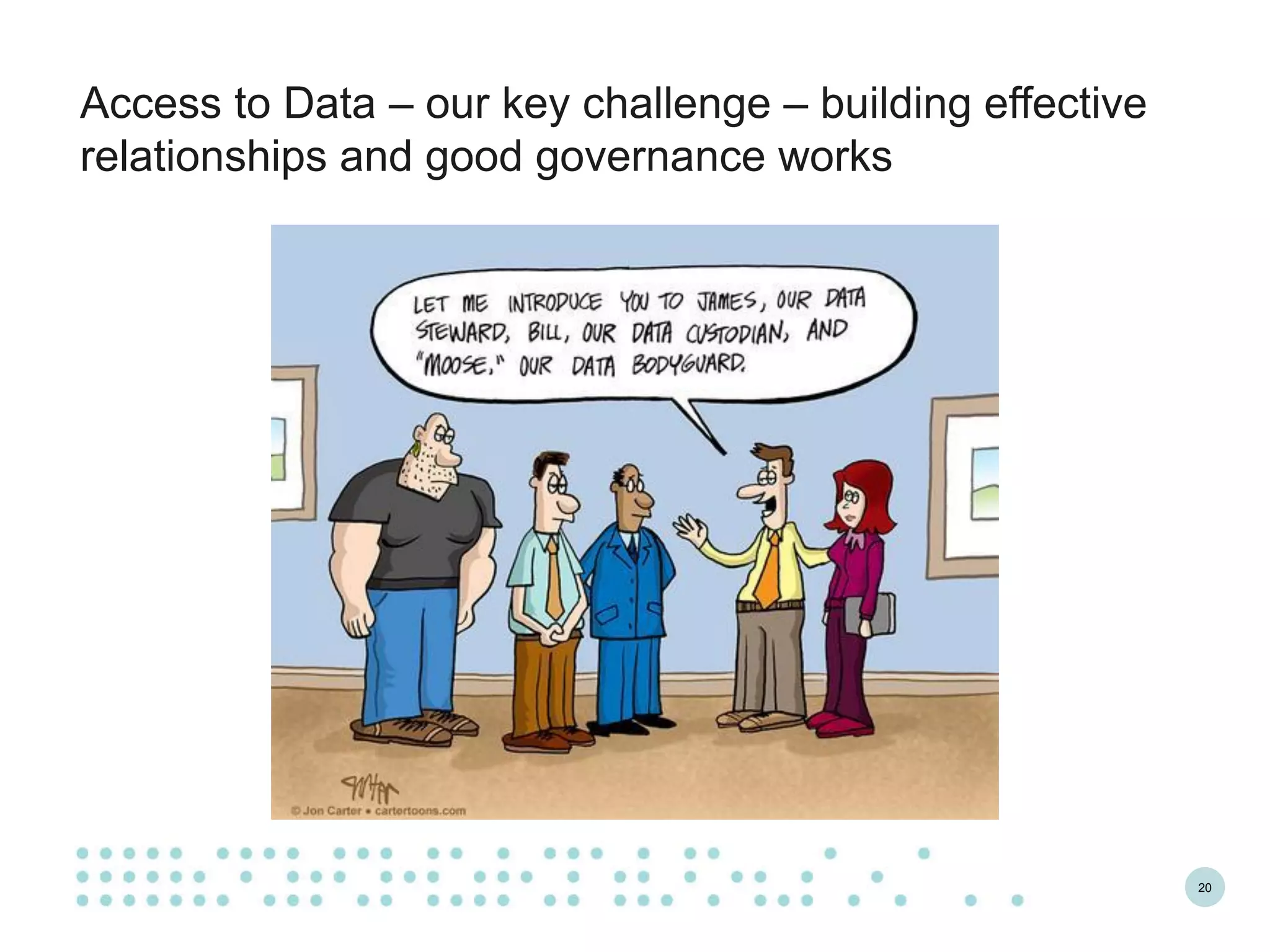
Access to Data – our key challenge – building effective
relationships and good governance works
21
The benefits of sharing data
and analysis within
government
22
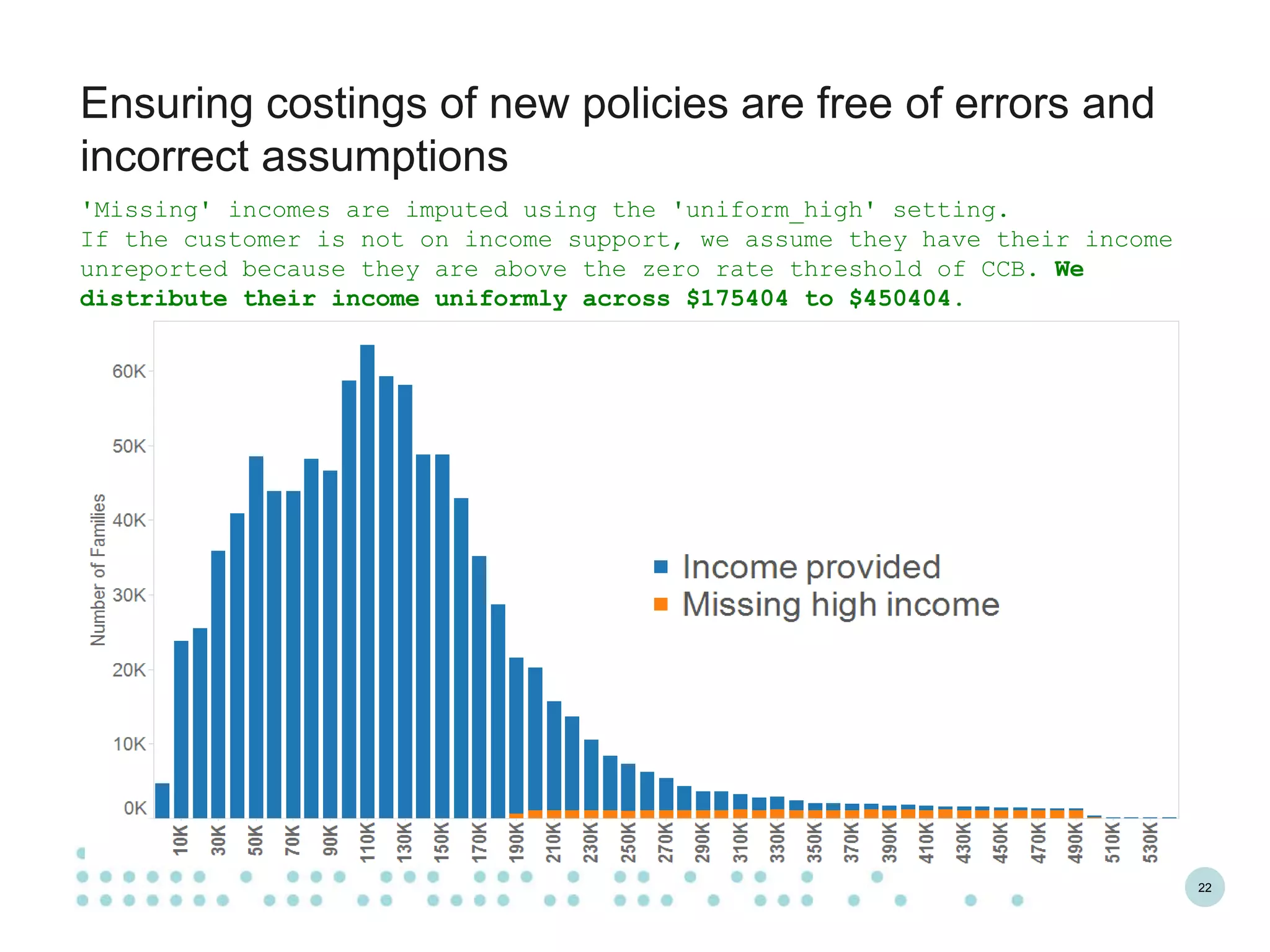
Ensuring costings of new policies are free of errors and
incorrect assumptions
'Missing' incomes are imputed using the 'uniform_high' setting.
If the customer is not on income support, we assume they have their income
unreported because they are above the zero rate threshold of CCB. We
distribute their income uniformly across $175404 to $450404.
23
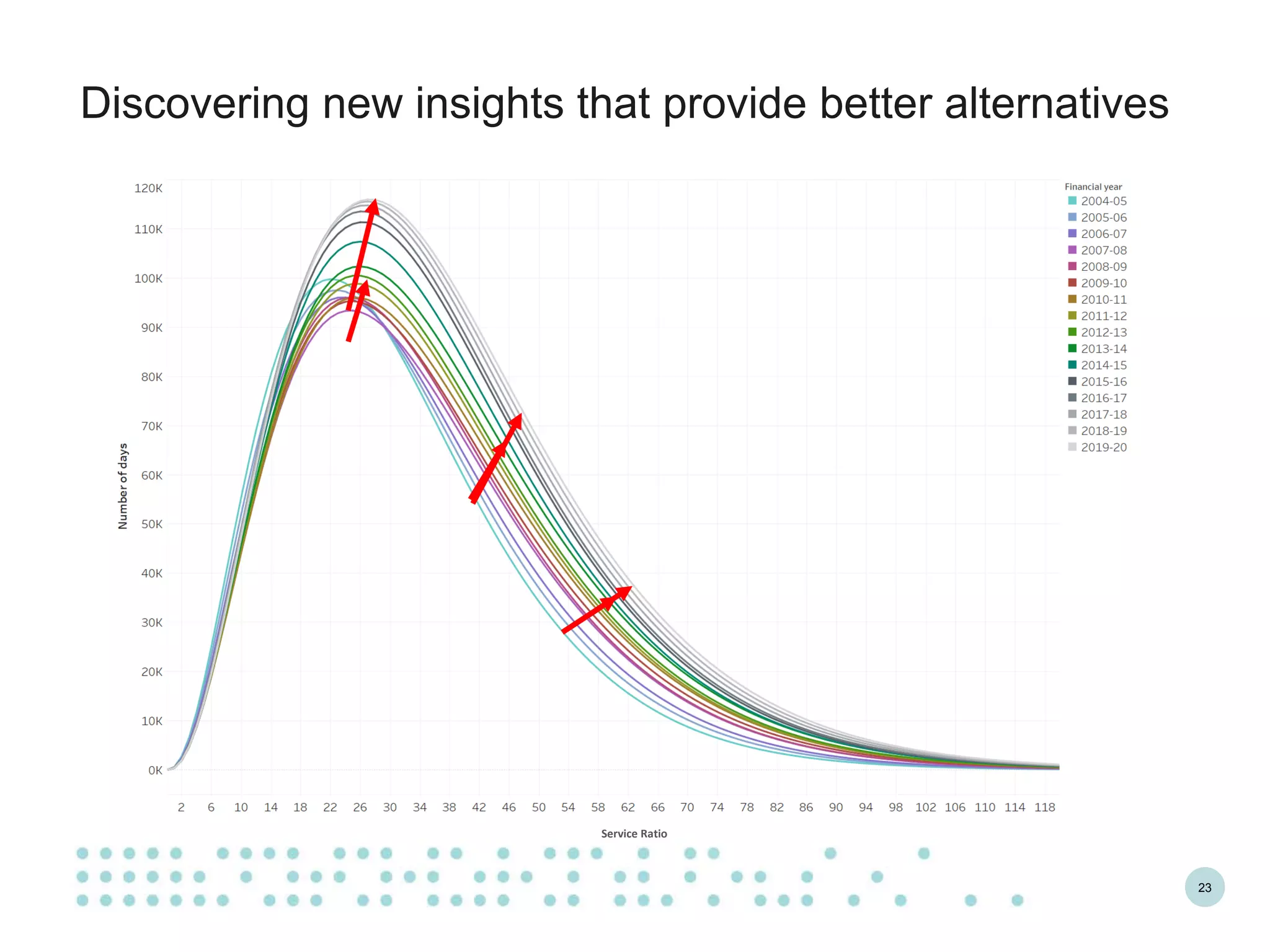
Discovering new insights that provide better alternatives
Service Ratio
24
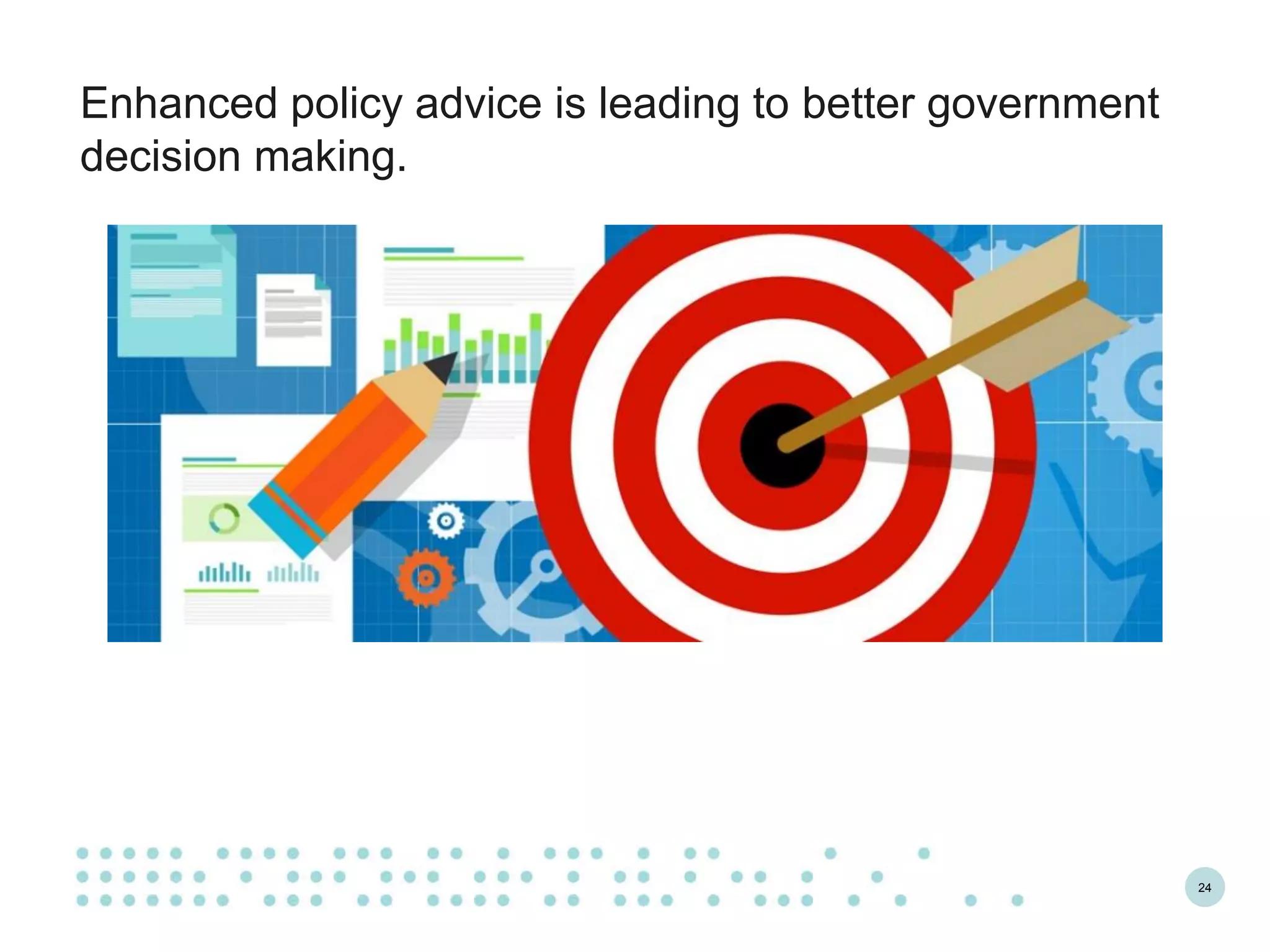
Enhanced policy advice is leading to better government
decision making.
25
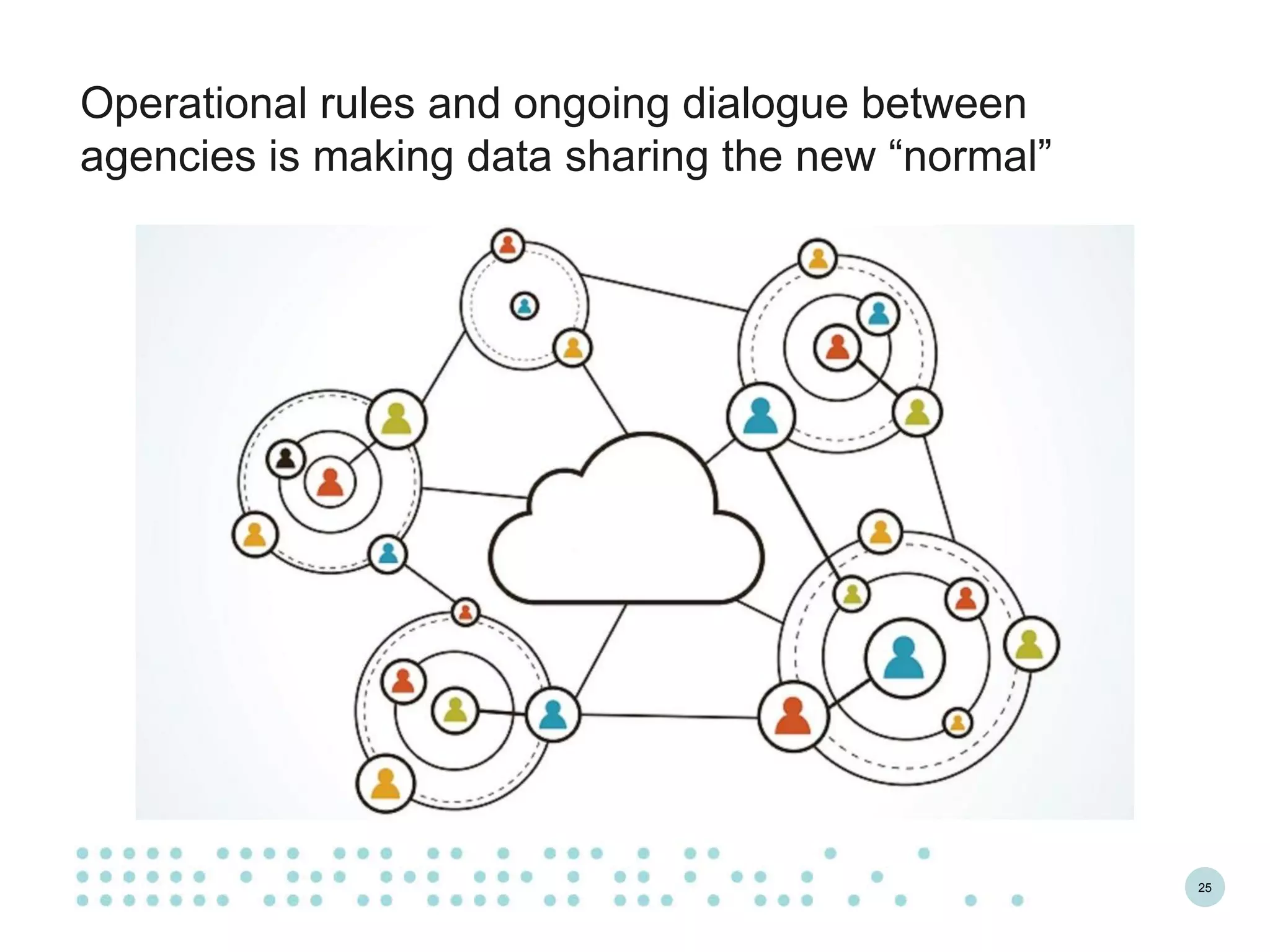
Operational rules and ongoing dialogue between
agencies is making data sharing the new “normal”
26
Where to next?
27
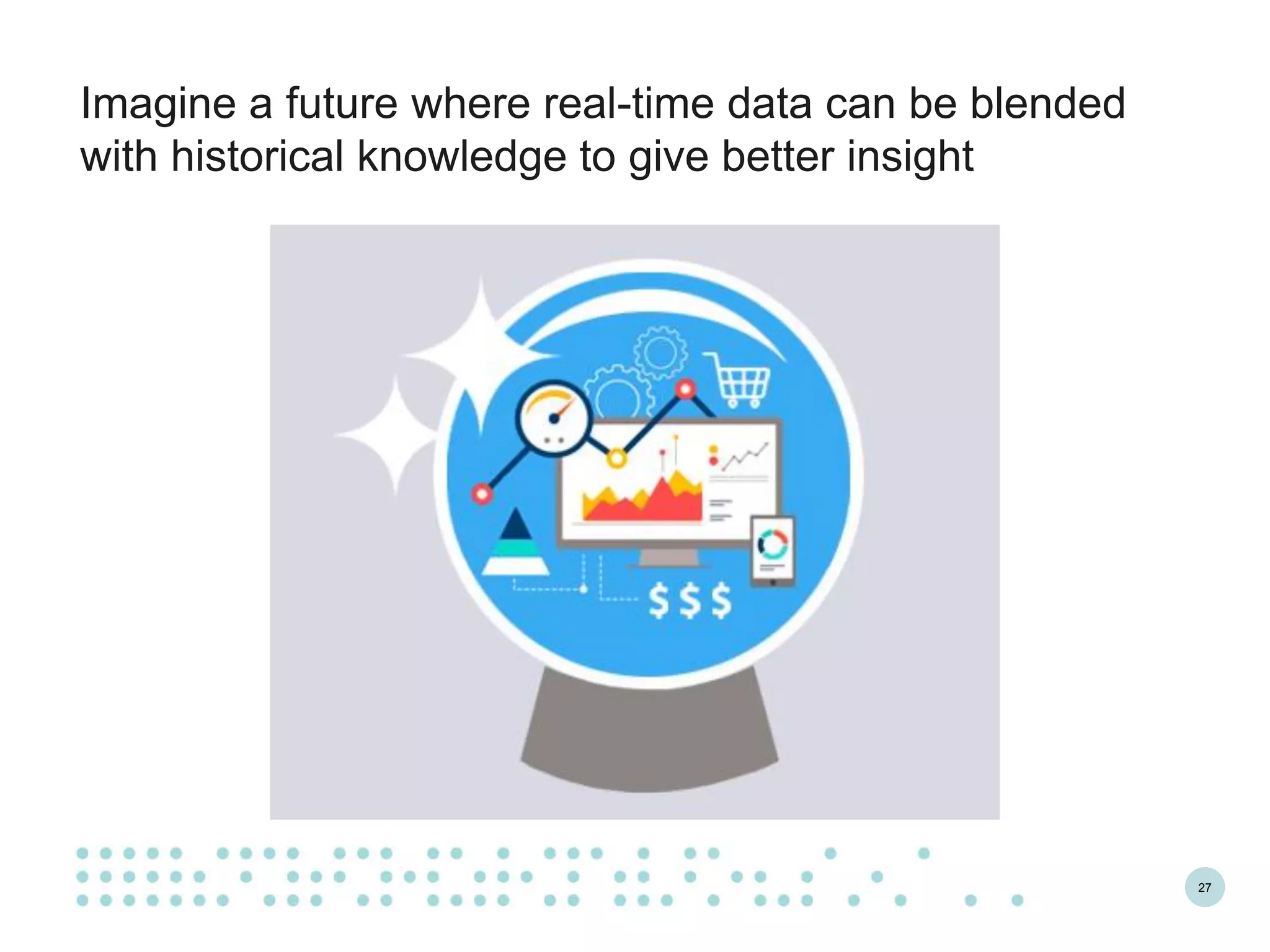
Imagine a future where real-time data can be blended
with historical knowledge to give better insight
28
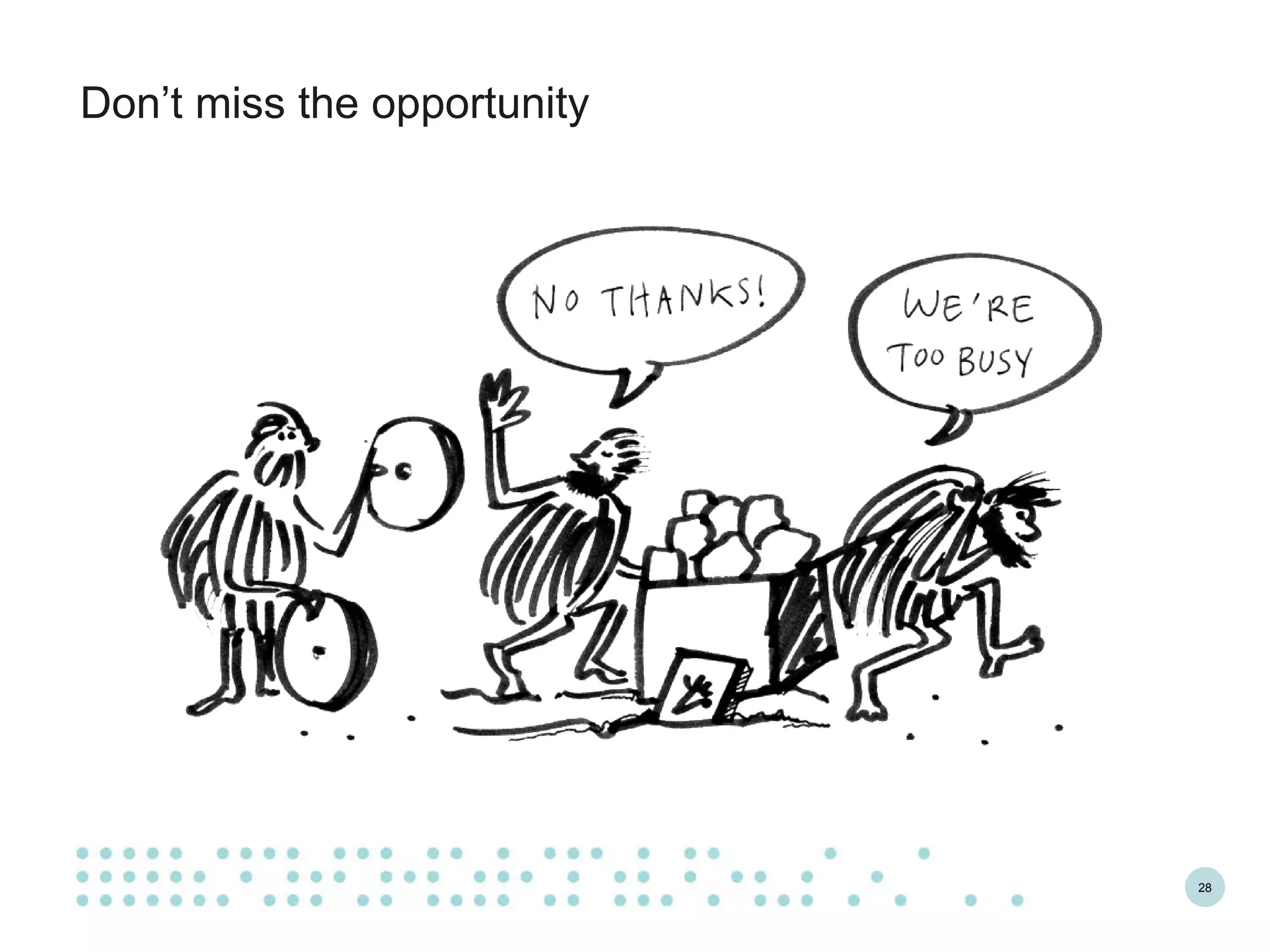
Don’t miss the opportunity

Using data analytics to improve public expenditures - Rosemary HUXTABLE, Australia

  • 1.
    1 Using Data Analyticsto Improve Public Expenditures Rosemary Huxtable PSM Secretary – Australian Department of Finance
  • 2.
    2 What is DataAnalytics?
  • 3.
  • 4.
    4 What is dataanalytics or data science?
  • 5.
  • 6.
    6 Citizen expectations havenever been greater
  • 7.
    7 Governments are beingasked to do more with less
  • 8.
    8 How can dataanalytics help governments achieve policy goals?
  • 9.
    9 Data Analytics isthe process of using data for interpretation, discovery, and to provide understanding
  • 10.
  • 11.
    11 Let’s look ata HYPOTHETICAL policy change: Policy scenario: A benefit is being paid to families on a per child basis, but the payment is going to stop using a complex two step withdrawal method.
  • 12.
    12 Let’s look ata HYPOTHETICAL policy change: Policy scenario: A benefit is being paid to families on a per child basis, but the payment is going to stop using a complex two step withdrawal method. Proposed policy change: benefit paid with a single withdrawal rate, instead of the complex two step. How will this affect the recipients of this payment?
  • 13.
    13 Let’s look ata HYPOTHETICAL policy change: Here are all the recipients based on the original policy scenario… RUN SIMULATION
  • 14.
    14 Let’s look ata HYPOTHETICAL policy change: Here are all the recipients based on the original policy scenario… And now here is the output based on the proposed policy change – but how can we tell what the change has been? RUN SIMULATION
  • 15.
    15 Let’s look ata HYPOTHETICAL policy change: Lots of low income families would receive less payments Many more high income families would receive more payments Cross-over among middle income families
  • 16.
    16 What are thepreconditions for effective data analytics?
  • 17.
    17 The Department hasinvested in five key capabilities to build a data analytic and visualisation function hardware software dataculture people data analytics
  • 18.
    18 Hardware and Software– our Data Analytics Platform provides cutting edge tools and visualisation software
  • 19.
    19 People and Culture– having the right staff with the right skills to find solutions people will listen to
  • 20.
    20 Access to Data– our key challenge – building effective relationships and good governance works
  • 21.
    21 The benefits ofsharing data and analysis within government
  • 22.
    22 Ensuring costings ofnew policies are free of errors and incorrect assumptions 'Missing' incomes are imputed using the 'uniform_high' setting. If the customer is not on income support, we assume they have their income unreported because they are above the zero rate threshold of CCB. We distribute their income uniformly across $175404 to $450404.
  • 23.
    23 Discovering new insightsthat provide better alternatives Service Ratio
  • 24.
    24 Enhanced policy adviceis leading to better government decision making.
  • 25.
    25 Operational rules andongoing dialogue between agencies is making data sharing the new “normal”
  • 26.
  • 27.
    27 Imagine a futurewhere real-time data can be blended with historical knowledge to give better insight
  • 28.