Using Computers In Archaeology Towards Virtual Pasts Gary Lock
Using Computers In Archaeology Towards Virtual Pasts Gary Lock
Using Computers In Archaeology Towards Virtual Pasts Gary Lock
Using Computers In Archaeology Towards Virtual Pasts Gary Lock
Using Computers In Archaeology Towards Virtual Pasts Gary Lock
1.
Using Computers InArchaeology Towards Virtual
Pasts Gary Lock download
https://ebookbell.com/product/using-computers-in-archaeology-
towards-virtual-pasts-gary-lock-28731310
Explore and download more ebooks at ebookbell.com
2.
Here are somerecommended products that we believe you will be
interested in. You can click the link to download.
Using Computers In Archaeology Gary Lock
https://ebookbell.com/product/using-computers-in-archaeology-gary-
lock-57848614
Using Computers In The Translation Of Literary Style Challenges And
Opportunities Youdale
https://ebookbell.com/product/using-computers-in-the-translation-of-
literary-style-challenges-and-opportunities-youdale-10787152
Using Computers In The Law Office 7th Edition Matthew S Cornick
https://ebookbell.com/product/using-computers-in-the-law-office-7th-
edition-matthew-s-cornick-11658060
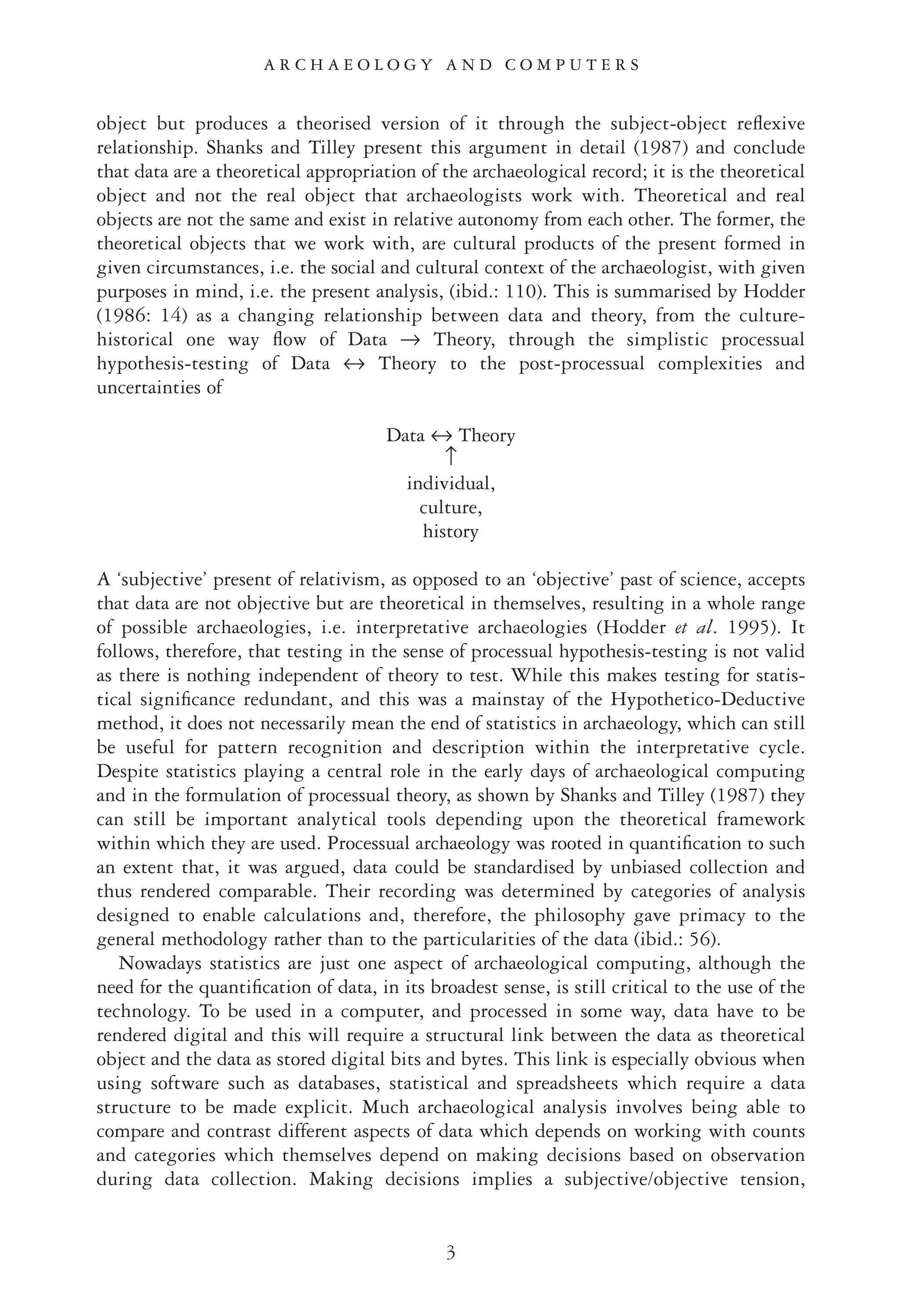
Using Computers In The Medical Office 2016 Audrey Roggenkamp
https://ebookbell.com/product/using-computers-in-the-medical-
office-2016-audrey-roggenkamp-11797602
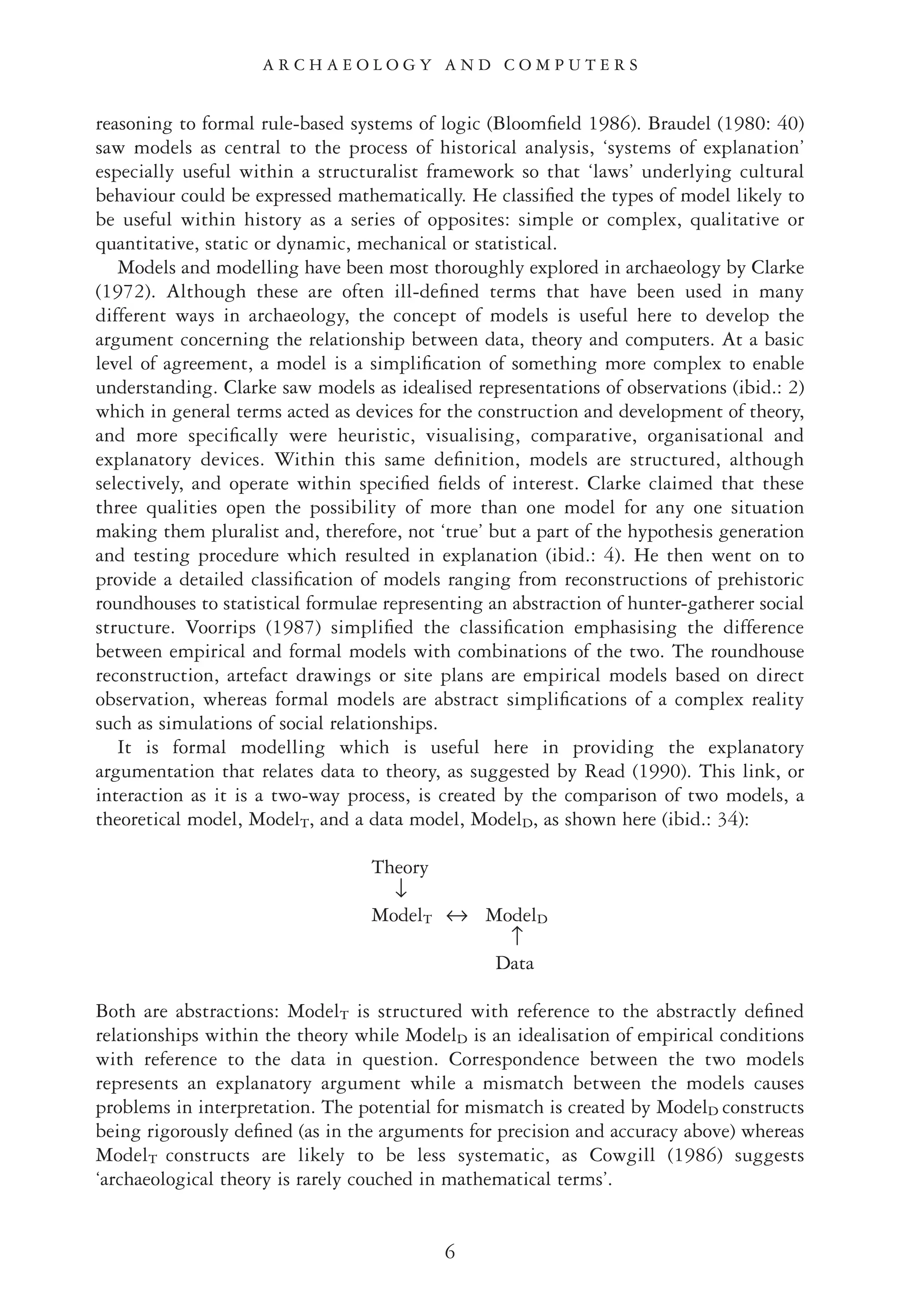
3.
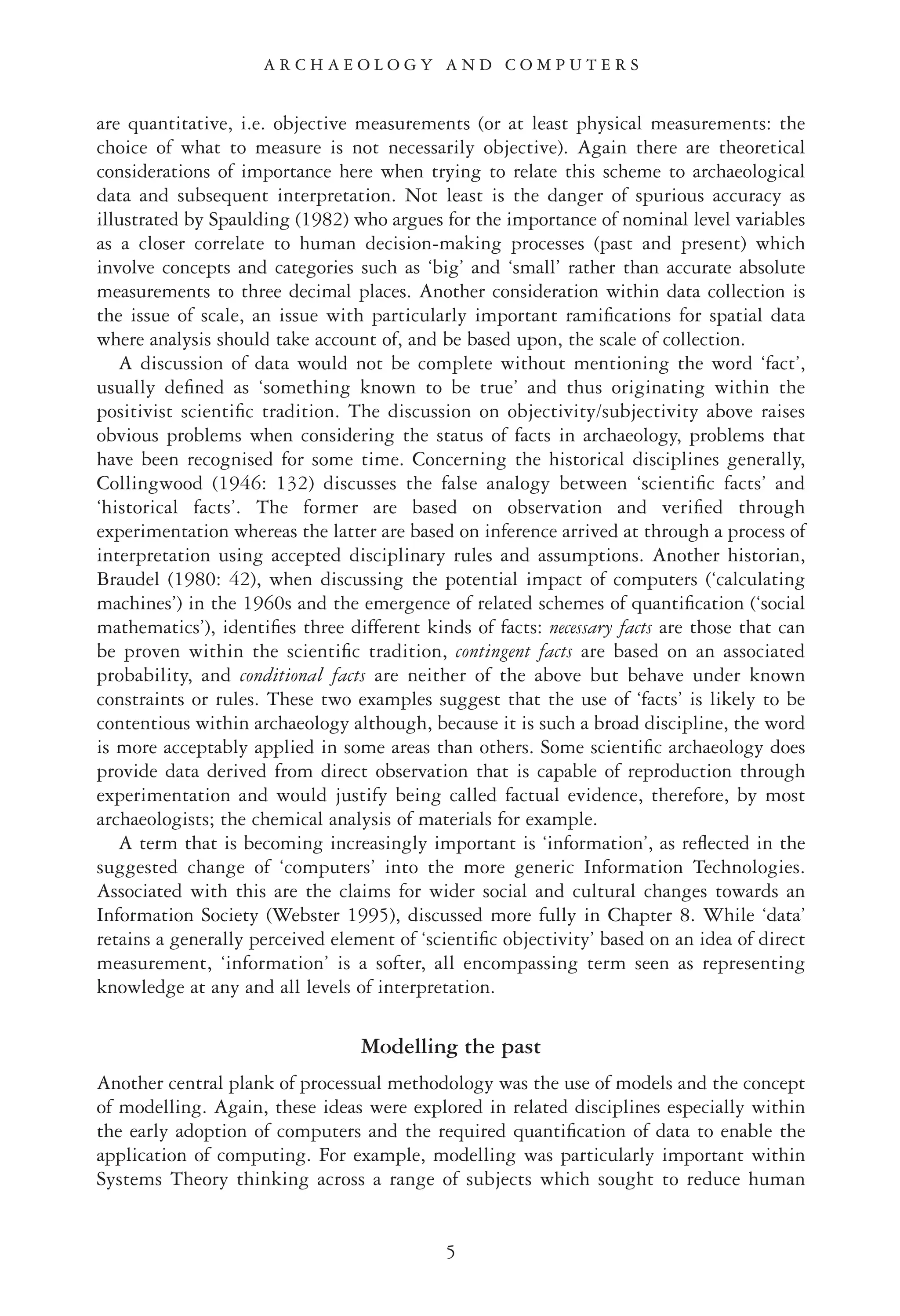
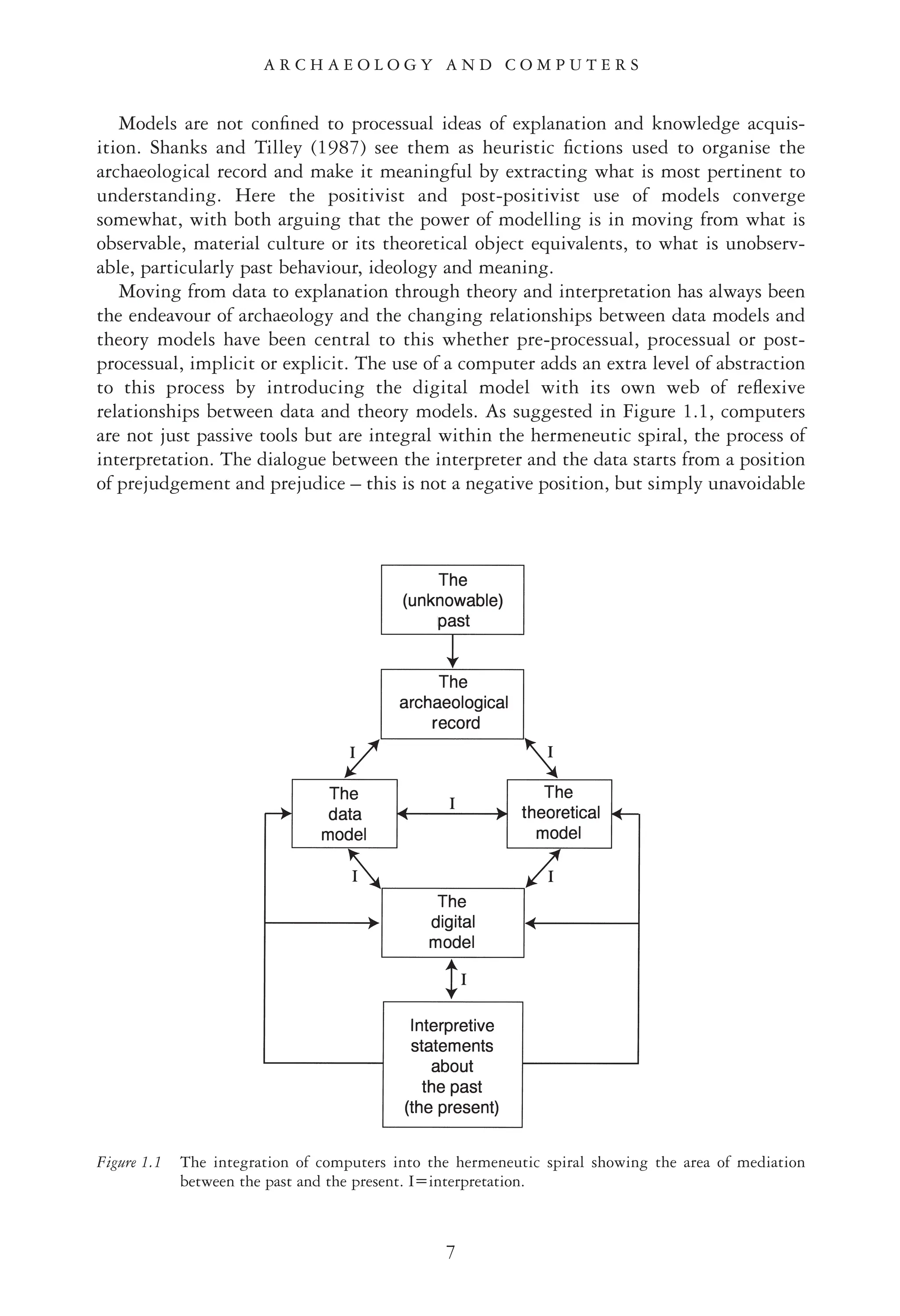
Using Computers InLinguistics A Practical Guide 1st John M Lawler
https://ebookbell.com/product/using-computers-in-linguistics-a-
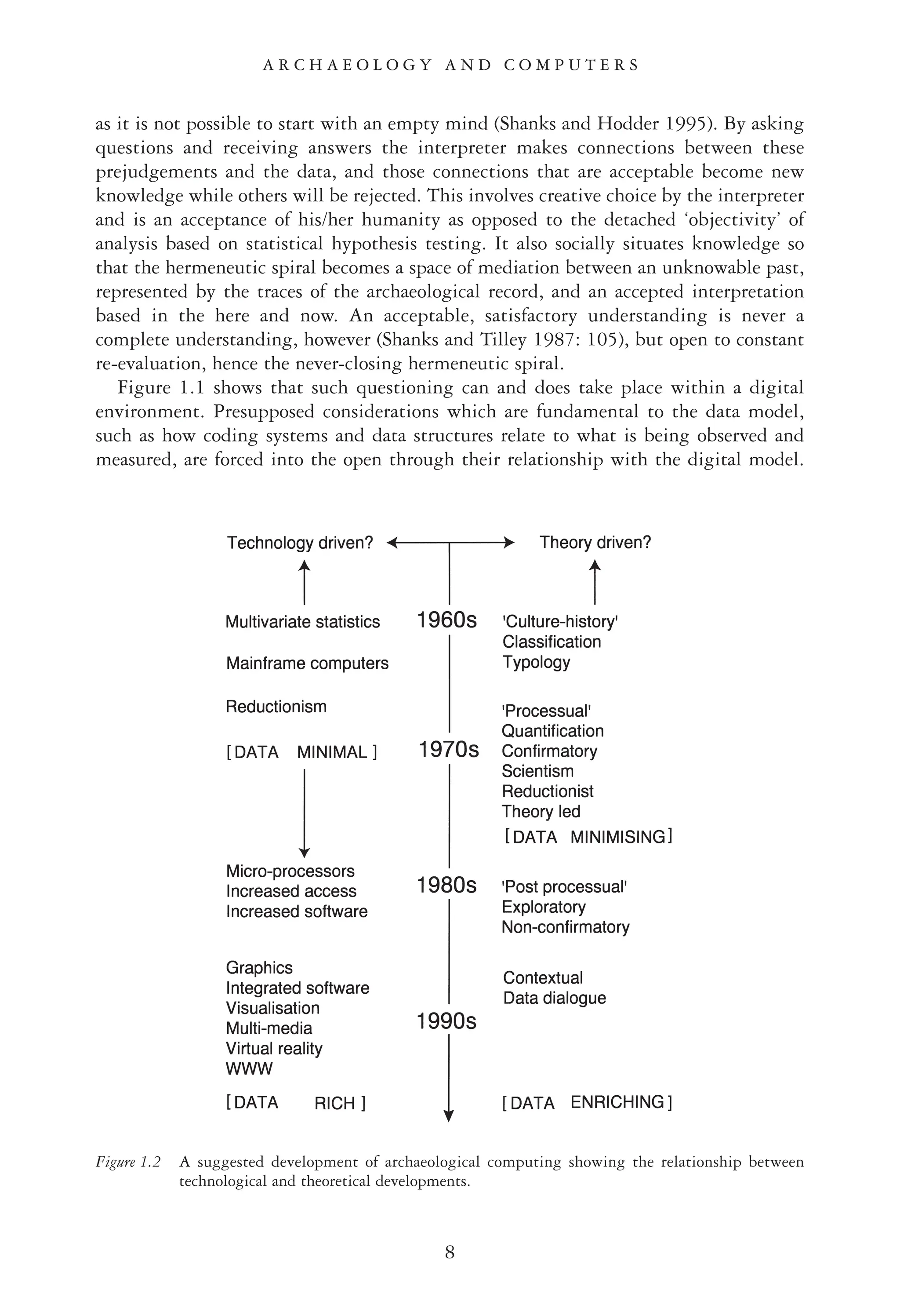
practical-guide-1st-john-m-lawler-1731452
Holy Bits A Guide For Using Computers In Biblical Scholarship Thomas
Naef
https://ebookbell.com/product/holy-bits-a-guide-for-using-computers-
in-biblical-scholarship-thomas-naef-50346402
Computers In Broadcast And Cable Newsrooms Using Technology In
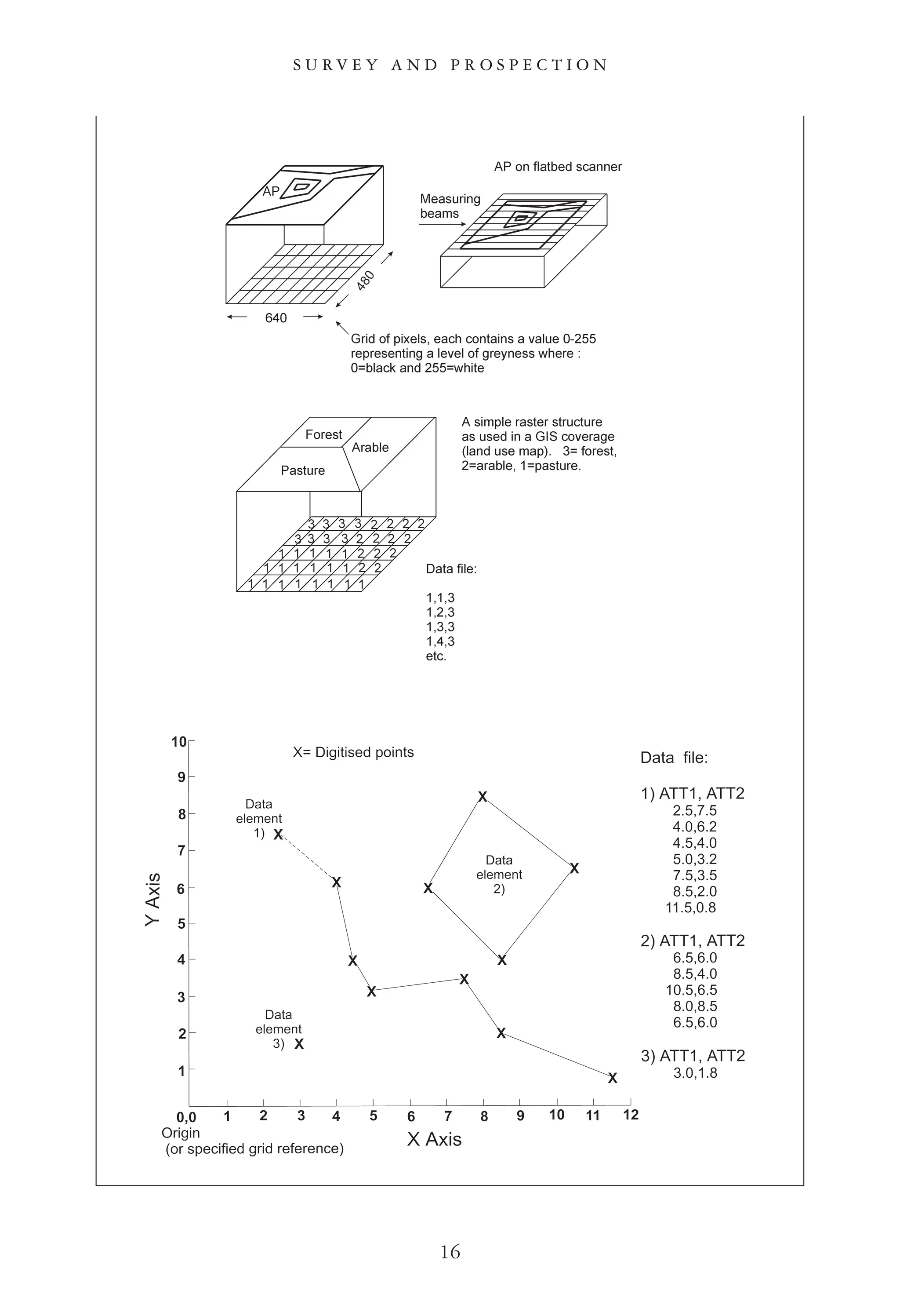
Television News Production Phillip O Keirstead
https://ebookbell.com/product/computers-in-broadcast-and-cable-
newsrooms-using-technology-in-television-news-production-phillip-o-
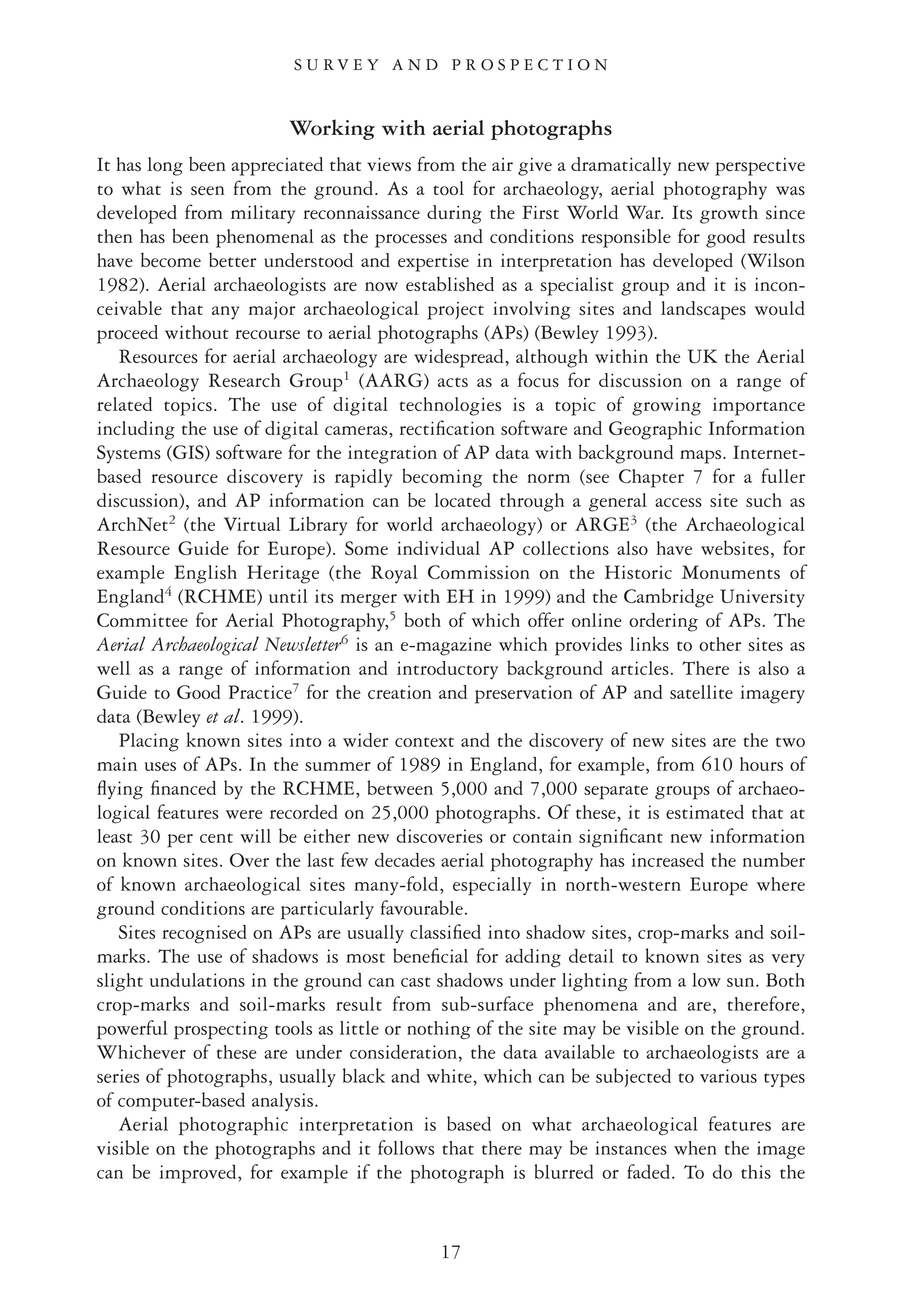
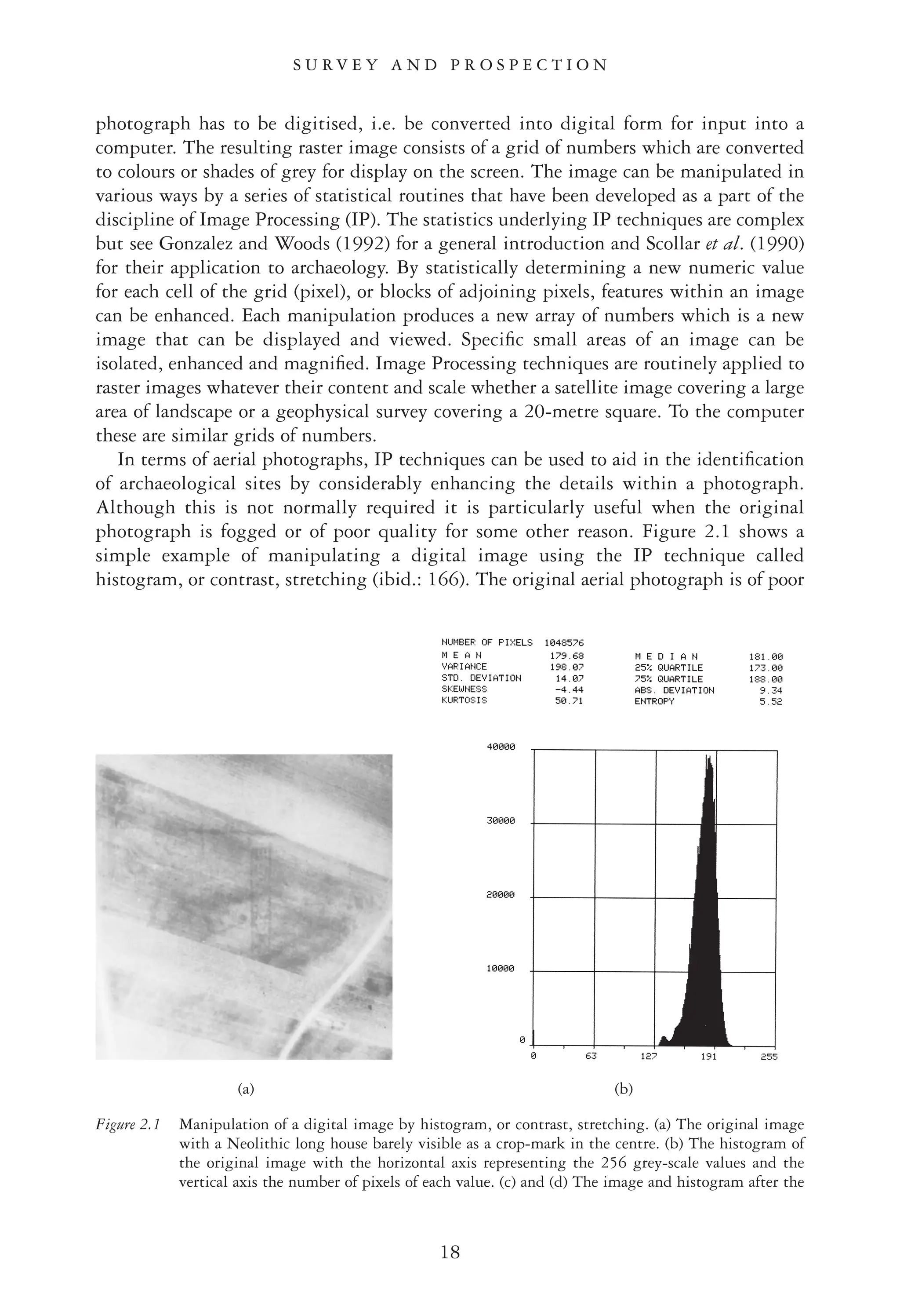
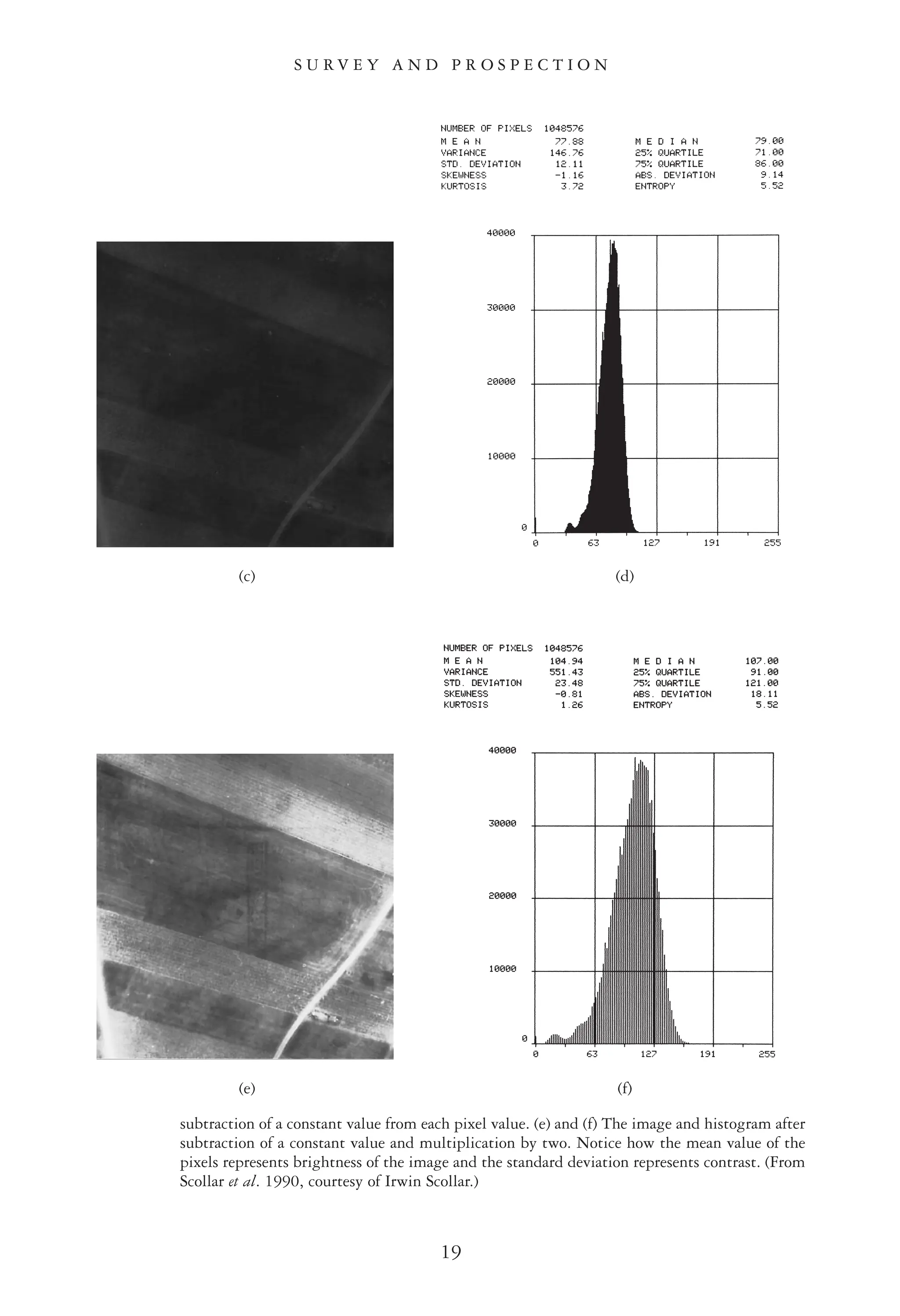
keirstead-1125290
From Calculus To Computers Using The Last 200 Years Of Mathematics
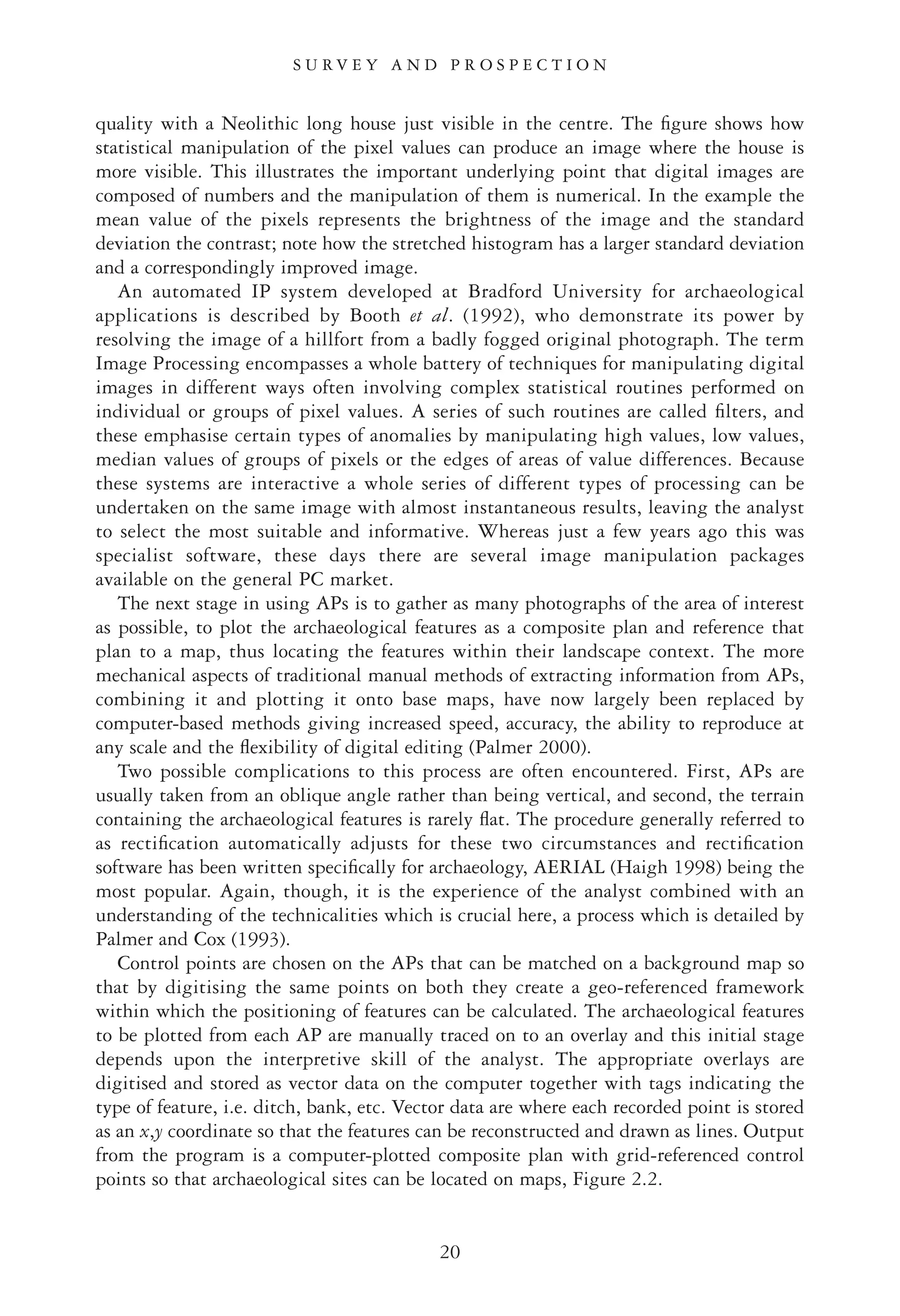
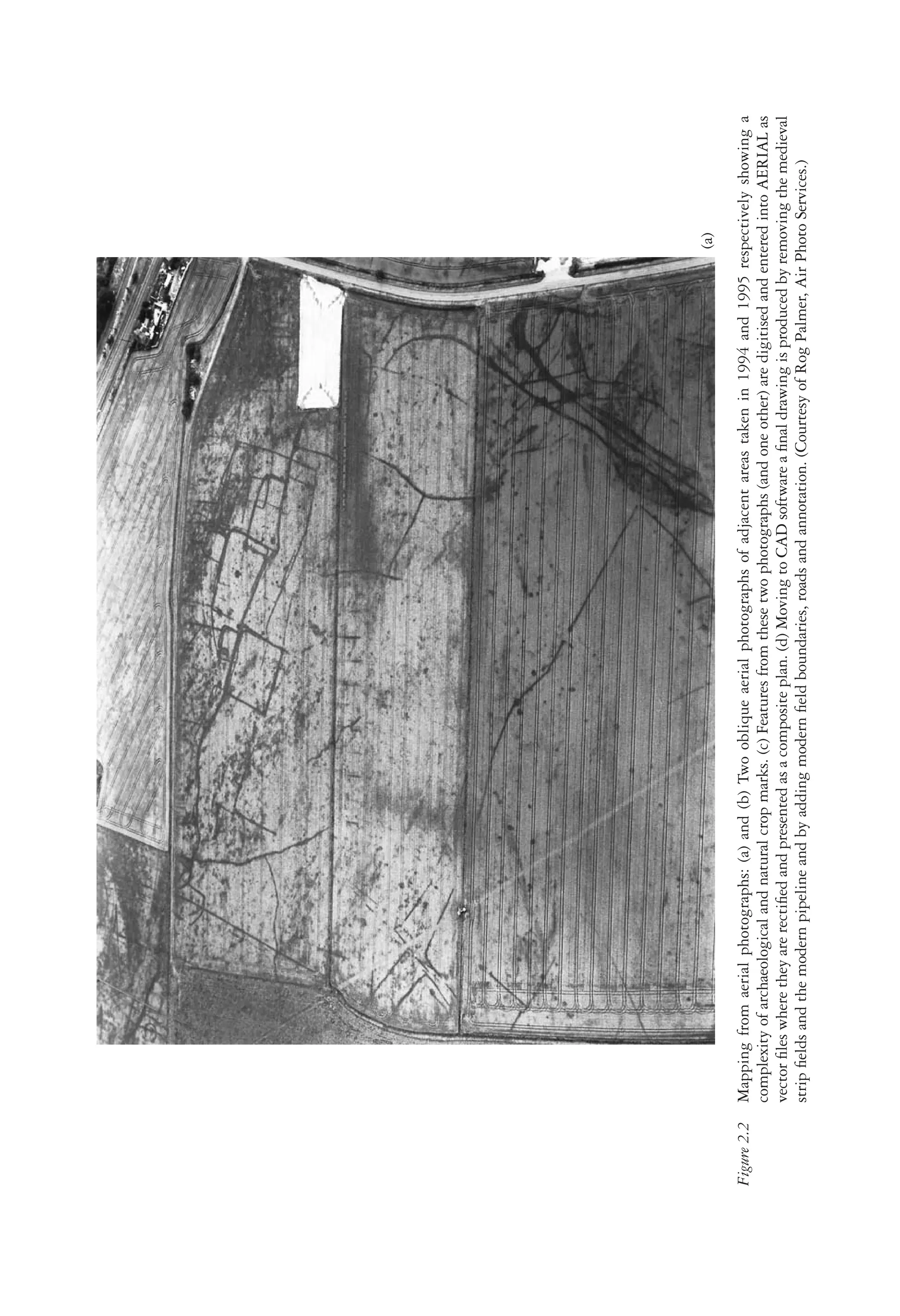
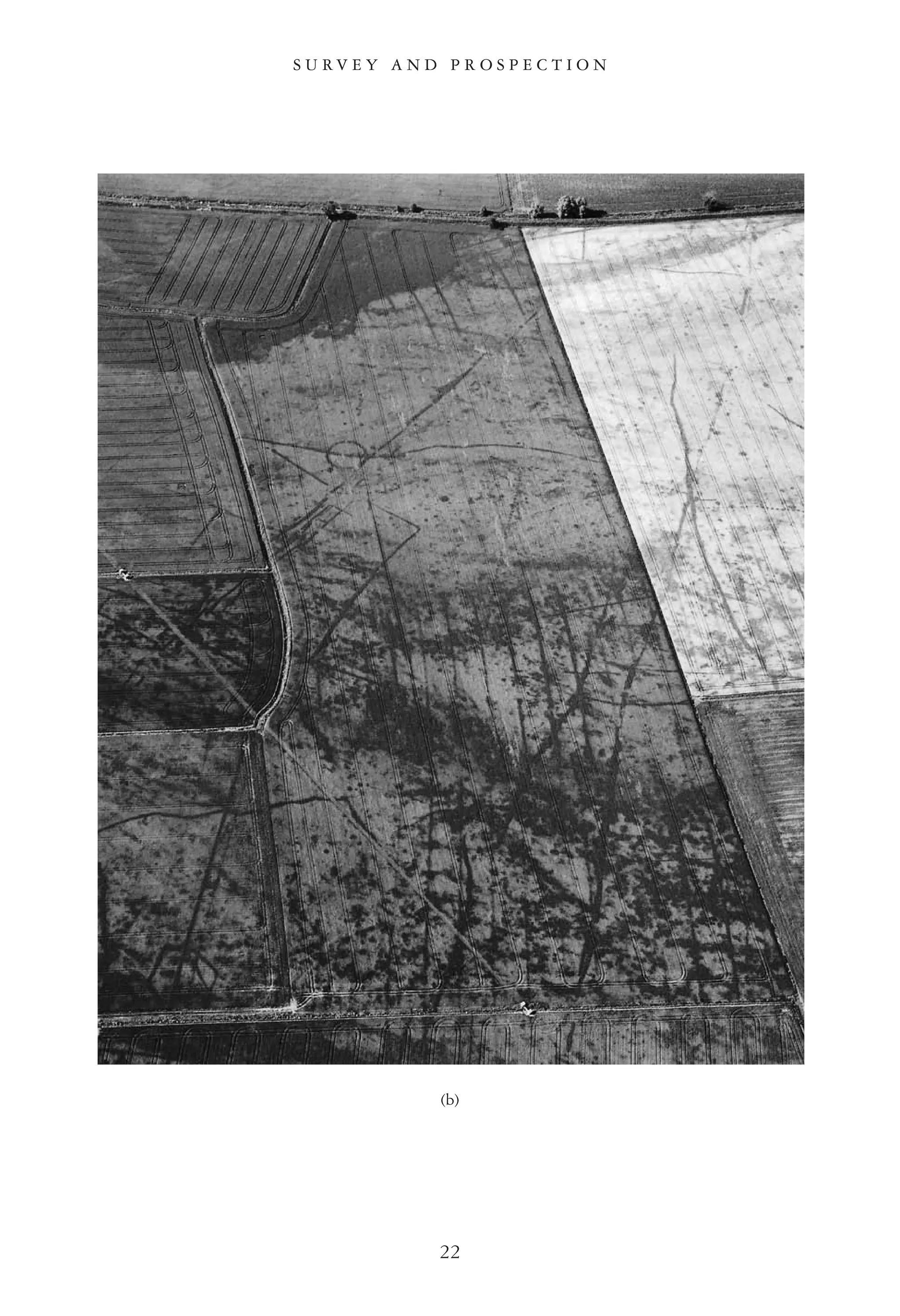
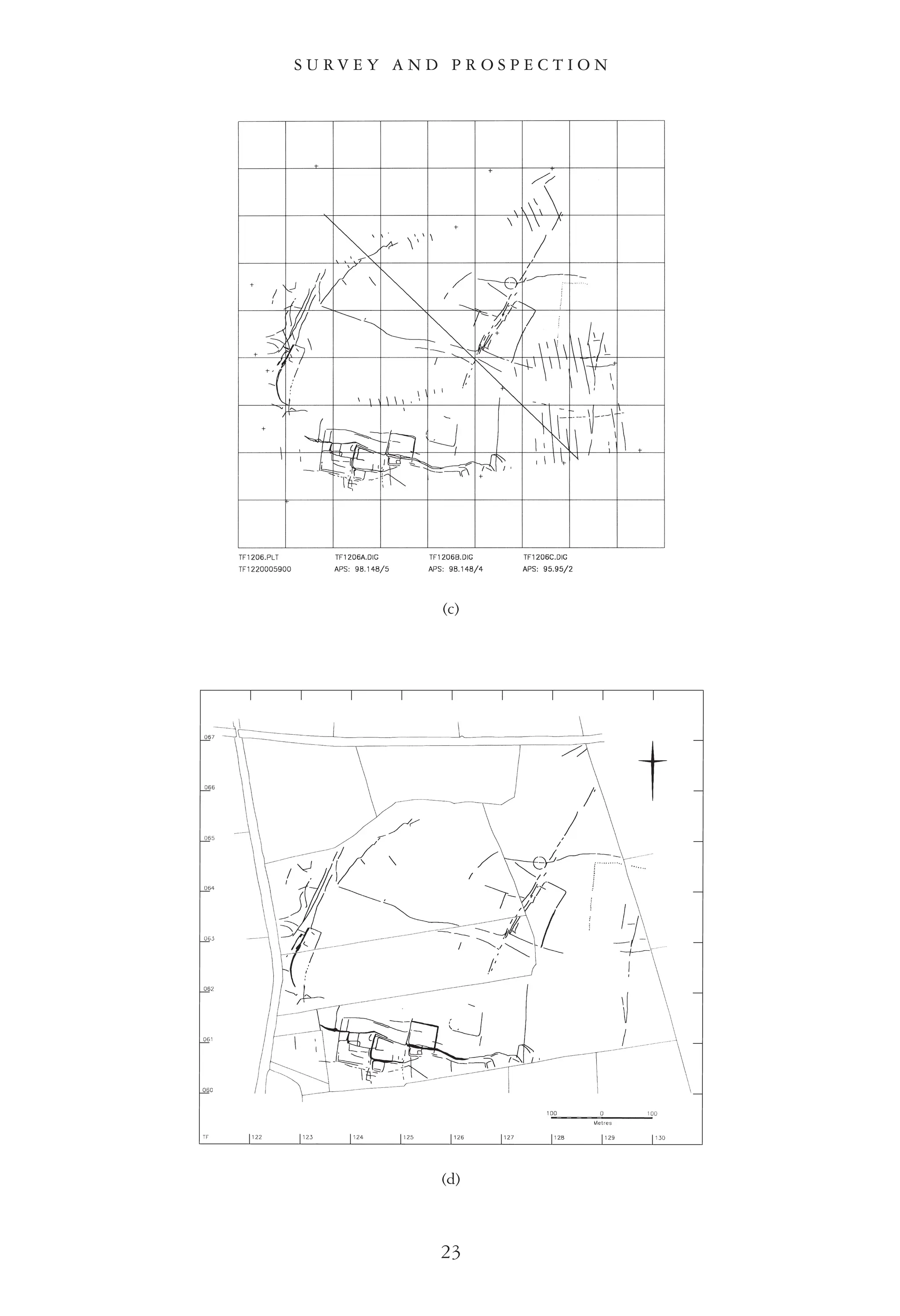
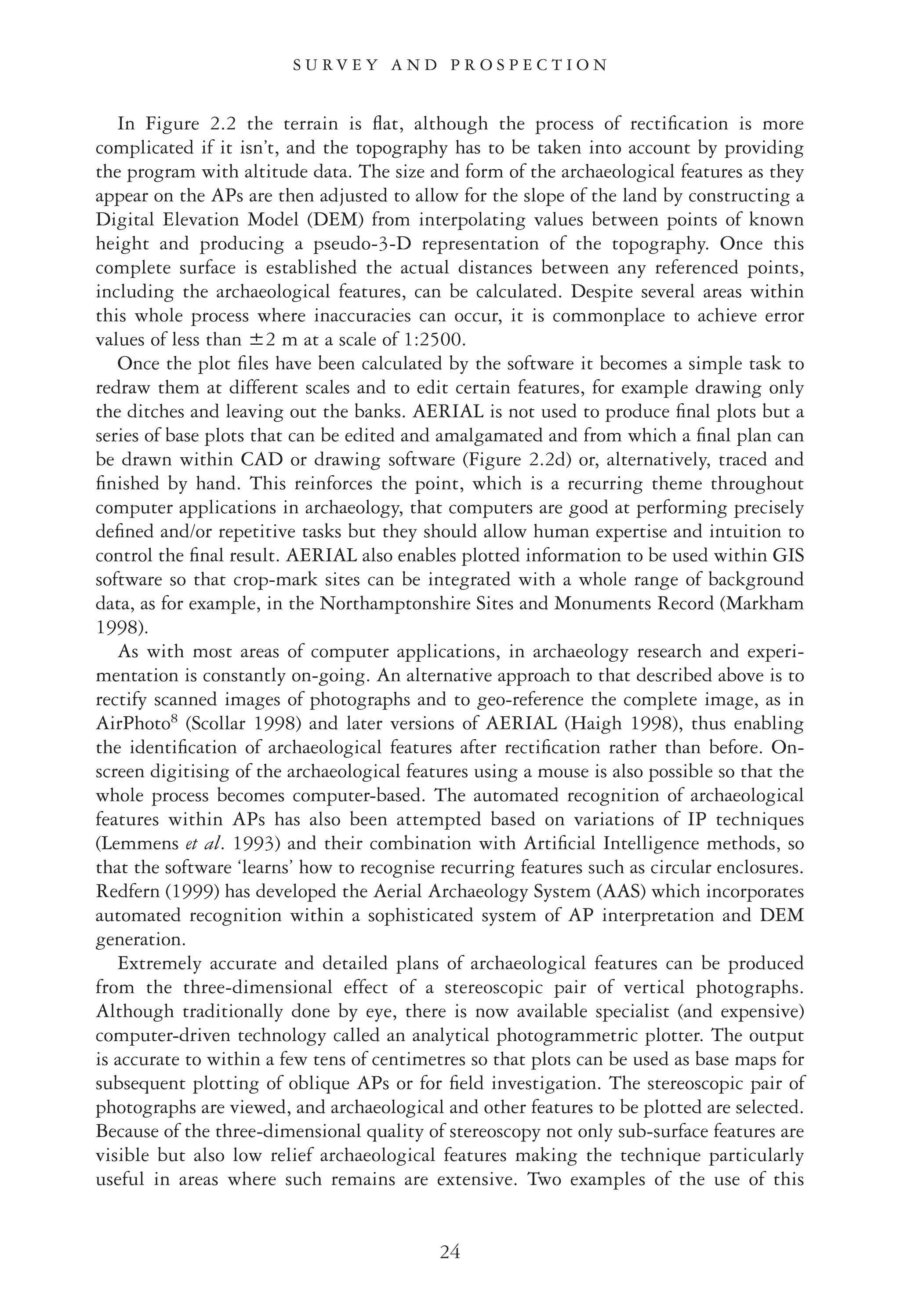
History In The Classroom Amy Shellgellasch
https://ebookbell.com/product/from-calculus-to-computers-using-the-
last-200-years-of-mathematics-history-in-the-classroom-amy-
shellgellasch-4668356
Informatics Education The Bridge Between Using And Understanding
Computers International Conference In Informatics In Secondary Schools
Evolution And Perspectives Issep 2006 Vilnius Lithuania November 711
2006 Proceedings 1st Edition Valentina Dagien
https://ebookbell.com/product/informatics-education-the-bridge-
between-using-and-understanding-computers-international-conference-in-
informatics-in-secondary-schools-evolution-and-perspectives-
issep-2006-vilnius-lithuania-november-711-2006-proceedings-1st-
edition-valentina-dagien-4102950
6.
USING COMPUTERS IN
ARCHAEOLOGY
Ascomputing becomes increasingly essential to the work of the archaeologist,
archeologists require a clear understanding of the impact of information technology
upon their discipline.
This non-technical introductory volume discusses and explains the influence of
computers on all aspects of archaeological research and interpretation, from survey,
excavation and landscape to museums, education and communicating the past. The
author meets the need of the archaeologist to keep abreast of how computers can assist
at all stages of archaeological research and data analysis.
Theoretical information, focusing on Geographical Information Systems, for example,
is presented through description of archaeological processes, and is consistently
practical and free from jargon. The author acknowledges the problem of obsolescence in
computing and presents archaeological technology as an on-going, constantly changing
process rather than as a final, achievable state. The book will thus remain relevant
through future advances in technology and informative about the general principles of,
and the issues arising from, the relationship between computers and archaeology.
Highly illustrated and referenced throughout with case-studies and examples, Using
Computers in Archaeology: Towards Virtual Pasts is a timely survey of this increasingly
important area of archaeology, catering for both the student and the experienced
archaeologist.
Gary Lock is Lecturer in Archaeology at the University of Oxford, editor of Beyond
the Map: Archaeology and Spatial Technologies (2000) and co-editor of On the Theory and
Practice of Archaeological Computing (2000).
IN MEMORY OFDICK SPICER,
A GOOD FRIEND AND A
STIMULATING COLLEAGUE
12.
CONTENTS
List of illustrationsix
Preface xiii
Acknowledgements xv
1 Archaeology and computers 1
Data and theory 1
Modelling the past 5
Towards contextuality 9
Theory into practice – the next six chapters 12
2 Survey and prospection 14
Working with aerial photographs 17
Managing AP collections 26
Using satellite imagery 30
A change of scale – geophysical surveys 33
Topographic surveys – working with points and lines 48
Surface survey 69
Towards data integration 77
3 Excavation and computers 78
Background 78
Excavation recording 85
The written record 86
Harris Matrix generation 98
Integrating spatial data 101
Towards information systems 110
4 Beyond excavation 124
Dating and chronology 124
Artefact studies 129
Specialists 142
Modelling, simulation and archaeology 147
Three-dimensional modelling 152
vii
13.
5 Digital landscapes164
The attraction of GIS within archaeology 164
Predicting the past? 168
Quantifying space 170
Towards digital places 174
The GIS bandwagon 182
6 Preserving and managing evidence of the past 183
CRM and increasing computer usage: an international trend 183
CRM in England: dealing with diversity 198
At the county level 199
At the national level 205
Museums, computers and archaeological collections 211
7 Communicating archaeology 219
Museums into the future 220
Going interactive 222
Interacting world-wide 229
Teaching and learning 231
Research resources 240
Electronic publication 247
8 Virtual futures 253
Information as product? 253
Virtuality, the self and culture 260
The past meets the future in a digital present 263
Notes 269
Bibliography 273
Index 293
C O N T E N T S
viii
14.
ILLUSTRATIONS
Figures
1.1 The integrationof computers into the hermeneutic spiral showing
the area of mediation between the past and the present 7
1.2 A suggested development of archaeological computing showing the
relationship between technological and theoretical developments 8
2.1 Manipulation of a digital image by histogram, or contrast, stretching 18–19
2.2 Mapping from aerial photographs 21–23
2.3 A computer-drawn contour plan of Mam Tor hillfort in the Peak
District, England 25
2.4 Describing crop-marks within the MORPH system 27
2.5 Output from Photonet showing oblique aerial photographic coverage 28–29
2.6 The use of satellite imagery in the Archaeological Mission of Zeugma
Project 31–32
2.7 Grid balancing of geophysical data 34
2.8 Stages in the computer-based analysis and display of resistivity data
from Freens Court, Hereford 35–38
2.9 The results of a Ground Penetrating Radar (GPR) survey at
Leominster Priory 40–42
2.10 Working with vector data at Alfred’s Castle, Oxfordshire 43–47
2.11 Digital mapping and surveying demonstrated by the COMPASS
(now ForeSight) System and the Thailand Archaeometallurgy Project 49–52
2.12 RCHME (now English Heritage) computer-assisted surveying of
Pilsdon Pen hillfort, Dorset 55–58
2.13 Surface modelling of a Bronze Age ring cairn on Stapeley Hill,
Shropshire with possible ridge and furrow 59
2.14 Experiments in the required density of points in a topographic survey
illustrated by the simulated site of Clonehenge 60–61
2.15 Planning the ancient city of Sámárra, Iraq 63–65
2.16 RCHME (now English Heritage) survey of Holne Moor, Dartmoor
using Global Positioning System (GPS) technology 66–68
2.17 Surface survey and the Najerilla Project, Spain 71–75
ix
A R C H A E O L O G Y A N D C O M P U T E R S
15.
3.1 The ArchaeologyDivision Management Information
System (ADMIS) of English Heritage 82–84
3.2 Pro-forma recording sheets as data collection devices for
computerised databases 87–88
3.3 A simplified data model for recording a part of the written
excavation record using a relational database model 91
3.4 From data model to database 92–93
3.5 Data modelling using Entity-Relationship concepts as described in
IDEA (the Integrated Database for Excavation Analysis) 95–97
3.6 Harris Matrix generation by computer 99–100
3.7 Linking the site matrix to database records using Gnet 101–102
3.8 Recording three-dimensional coordinates using the 3Space
Tracker on excavations 108–109
3.9 Using three-dimensional recording and digital photography to
recreate an excavated feature 111
3.10 Excavation recording within an integrated environment, the
Integrated Archaeological Database System (IADB) 112–117
3.11 Post-excavation analysis using commercial GIS software 120–122
4.1 Creating a seriated sequence 128
4.2 Calibrating radiocarbon dates using the OxCal program 130–131
4.3 Archaeological illustration using a computer 132–135
4.4 Output in the form of a dendrogram from computer-based
classification using Cluster Analysis 138
4.5 Classifying artefacts by computerised shape matching using
SMART (a System for Matching ARTefacts) 139
4.6 Early attempts at Artificial Intelligence using the rule-based
logic of Expert Systems 141
4.7 An example of Artificial Intelligence using a Hybrid Neural
Network 143
4.8 An example of using a GUI (Graphical User Interface) for
simplified data entry into a database 145–146
4.9 Computer simulation based on formal modelling 149
4.10 Simple simulation: an exercise in human and computer pattern
perception 151
4.11 Stages in the reconstruction modelling of ancient Greek pottery 156–159
4.12 Stages in the reconstruction modelling of ancient buildings 160–162
5.1 Predictive modelling of site location based on the locational
attributes of known sites and using GIS software 169
5.2 GIS and landscape analysis, the early example of the Hvar island
case-study 171–172
5.3 Visibility around the River Danube, Iron Gates Gorge 177–179
6.1 An example of the relationship between pro-forma recording cards
and computerisation within Cultural Resource Management
systems 185–186
6.2 Linking a database to digital map data 188–190
I L L U S T R A T I O N S
x
16.
6.3 Different approachesto handling spatial data 192
6.4 ARCHIS the National Archaeological Record of the Netherlands 193–196
6.5 The York Archaeological Assessment (YAA) and the York
Environs Project (YEP) 203–204
6.6 The use of GIS at the Royal Commission on the Ancient and
Historical Monuments of Scotland (RCAHMS) 208–210
6.7 Structuring data and using information in the Ashmolean
Museum Collections Information Database (CID) 214–215
7.1 Aspects of interactivity and hypermedia design 224–225
7.2 Structured interactivity within a museum interactive 228
7.3 The use of CAL (Computer Assisted Learning) in undergraduate
teaching 233–234
7.4 Multimedia as a free-standing resource rather than a part of
structured learning 237–239
7.5 Catalogues as an electronic research resource 241–242
7.6 The use of Standard Generalized Markup Language (SGML) 248
Table
3.1 Stages in the seamless processing of data from excavation to
archiving, publication and access 81
Infoboxes
1 Raster and vector data 14–16
2 CAD and GIS 53–54
3 GPS 69
4 Databases 89–90
5 Archaeological statistics 125–126
6 Modelling and Virtual Reality 152–154
7 Reading GIS in archaeology 167
8 The Internet 220
xi
I L L U S T R A T I O N S
PREFACE
Writing a bookabout computing almost inevitably includes the inherent danger of built-in
obsolescence, especially one that takes several years to ‘mature’ as this one has. I first started
thinking about the need for an introductory text on archaeological computing in the early
1990s when faced with teaching the subject to undergraduates. At that time the literature
was difficult to access, with the proceedings of the annual Computer Applications in
Archaeology conference, a text book that was dating rapidly, and one or two journals
providing the bulk of the material. I felt that what was needed was a book that approached
the subject according to archaeological interests rather than computing categories such as
types of software. I still feel that the best way into the subject is through the archaeology,
hence the chapters here are about survey, excavation and other topics that will resonate with
archaeologists, rather than topics such as databases and statistics.
It is my contention that archaeological computing is not something that is ever ‘complete’
but rather is a process. Individuals and organisations never reach a state of being
‘computerised’ but are constantly rethinking and reworking their use of computers and
specific applications. This has enabled me to, indeed it has dictated that I must, take a
historical approach to the different areas of computer usage in archaeology. There is little
point in trying to be entirely current, and if I were to try then by the time this book appears
many of the details would be outdated. Looking back through past papers of the CAA
proceedings it is obvious that ‘research’ applications of just a few years ago are now standard
practice for many archaeologists. To avoid the obsolescence problem I have attempted to
focus on issues and on how the historical development of issues has been influenced by the
use of computers. This has resulted in some rather old references in certain places which may
seem odd but are there to inform the historical process rather than to give an impression of
what is current. Excavation recording and Cultural Resource Management systems, for
example, are just two areas where the restrictions and potential of computers and the needs
and intentions of system developers and users have produced an on-going dialectic over many
years.
I have also tried to introduce some of the tensions that I perceive there to be between the
theory and practice of archaeology and how, if at all, using computers can influence those
debates and has done so. Computers not only change the way we do things, but more
importantly change the way we think about what we do and why we do it. This influences,
and is influenced by, archaeological theory. It is not a coincidence, for example, that recent
attempts at ‘post-processually informed’ excavation recording and interpretation have been
based not just on innovative thinking but also on computer functionality (Hodder 1999;
Beck 2000).
xiii
R E C T O R U N N I N G - H E A D
19.
A couple ofthe book’s devices need some clarification:
Websites
The referencing of websites can be a problem because they can disappear or change radically,
sometimes overnight. I have tried to cite website addresses as an adjunct to traditional
references rather than as replacements for them, and also to use sites that I estimate to be
secure, reputable organisations, for example.
Infoboxes
These supply extra information to the text on specific topics. They are not meant to be read
sequentially with the text and may be useful on their own.
P R E F A C E
xiv
20.
ACKNOWLEDGEMENTS
I owe agreat debt of gratitude to many people who have helped formulate my knowledge of
the use of computers in archaeology over many years. In the beginning was John Wilcock
and the Research Centre for Computer Archaeology at Staffordshire Polytechnic. The early
1980s were exciting times when the potential of computers was being explored in many
areas and, as one of the few groups of archaeologists working in this area, we felt charged
with a mission (which is on-going). Many of the people I worked with at Stafford have
remained friends and several have gone on to become important figures in the world of
archaeological computing. My thanks to all of them, especially Dick Spicer, Mike Fletcher,
Paul Reilly, Jeremy Huggett, Kath Baker, Peter Main, Malcolm Cooper, Julian Richards
and Nick Ryan.
In 1988 I moved to Oxford and have met many people here who have influenced this book
in a variety of ways. Most important are several graduate students at the Institute of
Archaeology who have provided stimulating discussion, innovative developments in using
computers, and theoretical insights. I owe much to their enthusiasm and good humour,
especially Patrick Daly, Vuk Trifkovic, Marcos Llobera, Chris Day, Francesco Menotti, Tom
Evans and Andre Tschan. A special place is reserved for Tyler Bell with whom I have worked
for many years, culminating in the establishment of Oxford ArchDigital Ltd. and, hopefully,
the realisation of some exciting archaeological computing. Special thanks also to Jon Moffett
for early input into the book’s structure, and to Chris Gosden and other colleagues at Oxford
who have influenced this book, whether they realise it or not.
A theme running throughout my twenty-five years in archaeological computing has been
the annual Computer Applications in Archaeology conference which has provided an
endless source of ideas, frustration and enjoyment. I would like to thank all past organisers
of CAA conferences and all those past speakers who have thought beyond the descriptive,
and challenged the accepted. Another special thank you to Trevor Harris for many years of
GIS collaboration and inspiration.
Sources of figures are acknowledged within their captions but I would like to thank here
all of the individuals and organisations who have provided figures for me or given
permission for figures to be used. Thanks also to Francesco Menotti and Floss Wilkins who
drew some of the figures and to Matthew Stiff for reading earlier versions of Chapters 6 and
7 and for trying to keep me abreast of the complex world of standards, although remaining
misunderstandings and errors are mine.
Final and most heartfelt thanks are to Jude who has lived with this project for far too
long: the next one will be quicker, I promise!
Gary Lock
Oxford
June 2002
xv
22.
1
1
ARCHAEOLOGY AND
COMPUTERS
The decadessince the 1960s have seen extensive and varied changes within archaeology
and its relationships with other disciplines. One of the most profound developments
has been the explicit discussion of theory and the acceptance of the central role of theory
within archaeological practice. The theoretical framework of the discipline has been
almost continuously reassessed and reworked, initially with the challenge to the
traditional culture-historical approach by processual archaeology and, in turn, by the
rise of post-processualism. Encompassing these changes, and influencing them in a
myriad of complex ways, have been the wider social and intellectual discussions loosely
based around understandings of modernism and postmodernism. Embedded within this
discourse, and of particular interest to this background chapter, are the information and
communications revolution and the associated rise of digital technologies. Here, rather
than providing a descriptive historical account of the development of archaeological
computing as an insular phenomenon, I think it is of more interest to position these
disciplinary developments within the ebb and flow of the wider concerns and debates.
The main themes to emerge are the potential of computers as active agents for thought
rather than as just passive tools, and the symbiotic relationship between the develop-
ment of digital technologies and archaeological theory, both of which incorporate a
trend towards the concept of increasing contextualism, complexity and data-rich
environments.
Data and theory
The word ‘data’ is now in daily use in many different contexts and almost synonymous
with the use of computers. That archaeologists ‘collect data’ and ‘feed them into a
computer’ are almost taken as givens within everyday conversation to such an extent
that to state that both archaeology and computers depend upon data is a meaningless
truism. We need to probe a little deeper. What do we mean by archaeological data? Is
there a direct relationship between them and data suitable for a computer? What is the
relationship between both of these and the archaeological record, material culture,
archaeological theory, interpretation, methodologies, analysis and meaning? Where do
other concepts often associated with computing, such as ‘technology’, ‘objectivity’ and
‘scientific’, fit into the practice of archaeology and, specifically, what has been claimed as
the sub-discipline of archaeological computing?
23.
In essence thediscussion concerning data has been whether they fit the Latin
meaning of the word and are ‘things given’ or whether they are ‘things made’. This is
not an issue in isolation but one that exists within wider philosophical and theoretical
schemes of how we move from the empirical reality of the archaeological record through
interpretation towards explanations of the ‘past’. It is useful when discussing the
changing views of data to maintain the now commonplace historical development from
culture-historical archaeology, through processualism to post-processualism (Trigger
1989), although at the same time acknowledging that this is by no means an
evolutionary process and that what follows is a considerable simplification of the
complexities of the arguments (Hodder 1986).
In general, archaeology pre-1960s was grounded in the empirical description of
material evidence which included a strong notion of common sense and a belief that a
body of data would ‘speak for itself’. Patterns would emerge from the study of often
large collections of descriptive data so that pottery, tools and houses made sense
through being grouped together as assemblages according to observed traits, which
were then given spatial and chronological definition through the Childean concept of
cultures. Culture-history was written, often by invoking diffusionism to explain the
spatial and temporal connections within the data, a classic example being the spread of
early Neolithic cultures across Europe (Childe 1929). Because of the lack of explicit
theory at the time, except by a distinguished few, data were taken as given by most
archaeologists and the process of observation, recording and interpretation needed
little, if any, justification.
Changes in the form of the ‘new’ archaeology (now processualism) heralded the
Scientific Method and a rejection of the perceived subjectivity of empiricism. Set within
a wider move towards positivism, epitomised by the philosophy of the natural sciences
(Hempel 1965), central to processual archaeology was a belief in objectivity through
the systematic observation, measuring and recording of data using quantitative
methodologies. Objectivity was possible by separating theory from practice so that
objective data existed and could be measured by an observing subject. Whereas the
previous link between data and theory was inductive, i.e. an unbiased collection of ‘all’
data will produce theory, the new paradigm had at its core hypothetico-deductive
reasoning. In this scheme, knowledge is accumulated by the testing of explicit
hypotheses (often by the use of formal statistical tests of significance) against data
collected on the basis of being relevant to the analysis. This was seen as being efficient
and critical to the advancement of archaeology as a scientific discipline. The wider
implication of adopting the Scientific Method, and thus coming into line with the
natural sciences, was the possibility of creating a global archaeology united by standard
analytical methodologies (Clarke 1968) that could be applied on any set of data to
establish cross-cultural generalisations and even ‘laws’.
Growing disillusionment with this detached scientific view that failed to incorporate
‘the social’ (both past and present) gave rise to post-processual archaeologies and the
rejection of the Scientific Method and its proposed foundation of objectivity (Lucas
1995). Instead, the relationship between the archaeologist and the archaeological record
is now seen as an interpretative discourse, sometimes described as the hermeneutic
spiral, between subject and object. This does not recover meaning inherent within the
A R C H A E O L O G Y A N D C O M P U T E R S
2
24.
object but producesa theorised version of it through the subject-object reflexive
relationship. Shanks and Tilley present this argument in detail (1987) and conclude
that data are a theoretical appropriation of the archaeological record; it is the theoretical
object and not the real object that archaeologists work with. Theoretical and real
objects are not the same and exist in relative autonomy from each other. The former, the
theoretical objects that we work with, are cultural products of the present formed in
given circumstances, i.e. the social and cultural context of the archaeologist, with given
purposes in mind, i.e. the present analysis, (ibid.: 110). This is summarised by Hodder
(1986: 14) as a changing relationship between data and theory, from the culture-
historical one way flow of Data → Theory, through the simplistic processual
hypothesis-testing of Data ↔ Theory to the post-processual complexities and
uncertainties of
Data ↔ Theory
↑
individual,
culture,
history
A ‘subjective’ present of relativism, as opposed to an ‘objective’ past of science, accepts
that data are not objective but are theoretical in themselves, resulting in a whole range
of possible archaeologies, i.e. interpretative archaeologies (Hodder et al. 1995). It
follows, therefore, that testing in the sense of processual hypothesis-testing is not valid
as there is nothing independent of theory to test. While this makes testing for statis-
tical significance redundant, and this was a mainstay of the Hypothetico-Deductive
method, it does not necessarily mean the end of statistics in archaeology, which can still
be useful for pattern recognition and description within the interpretative cycle.
Despite statistics playing a central role in the early days of archaeological computing
and in the formulation of processual theory, as shown by Shanks and Tilley (1987) they
can still be important analytical tools depending upon the theoretical framework
within which they are used. Processual archaeology was rooted in quantification to such
an extent that, it was argued, data could be standardised by unbiased collection and
thus rendered comparable. Their recording was determined by categories of analysis
designed to enable calculations and, therefore, the philosophy gave primacy to the
general methodology rather than to the particularities of the data (ibid.: 56).
Nowadays statistics are just one aspect of archaeological computing, although the
need for the quantification of data, in its broadest sense, is still critical to the use of the
technology. To be used in a computer, and processed in some way, data have to be
rendered digital and this will require a structural link between the data as theoretical
object and the data as stored digital bits and bytes. This link is especially obvious when
using software such as databases, statistical and spreadsheets which require a data
structure to be made explicit. Much archaeological analysis involves being able to
compare and contrast different aspects of data which depends on working with counts
and categories which themselves depend on making decisions based on observation
during data collection. Making decisions implies a subjective/objective tension,
3
A R C H A E O L O G Y A N D C O M P U T E R S
25.
although an either/orsituation is often not helpful or realistic within the everyday
practices of archaeology. In his historical account of objectivity and subjectivity in
archaeology, Rowlands (1984) traces the former back through Hempel to the Enlighten-
ment ideals of the eighteenth century based on the aim of explanation. In contrast,
subjectivity, as epitomised by the humanist approach of Collingwood in his classic book
The Idea of History, stems ultimately from German romantic idealism and aims at
understanding. Both, according to Rowlands (ibid.: 113), are based on outmoded
categories of thought which need to be dissolved and integrated within contemporary
archaeology. So while theoretical discussions are a necessary framework for archaeology,
and processual and post-processual positions are useful extremes for focusing an argu-
ment, most practising archaeologists occupy a pragmatic middle ground and use a
range of methods and approaches. Data collection and interpretation are still the bread
and butter for most working archaeologists who aim for both explanation and
understanding.
Traditionally data collection involves first the identification and then the measure-
ment of ‘significant’ attributes (which must have two or more states to be measurable).
While the former of these two stages is embedded within the theory outlined above,
there are well-established methods for the latter. It has been recognised for many years
that computerisation forces an explicit description of data structure through the
identification of measurable attributes and the relationships between them. While it
has been argued here that this is not an objective process, it need not be totally
arbitrary. By recognising that the concepts of ‘precision’ and ‘accuracy’ are different to
objectivity, and that they can both be applied to data collection, Richards and Ryan
(1985: 16) have identified four factors underlying the collection of data to enable
computerisation:
1. The avoidance of duplication in the selection of attributes;
2. The separation of attributes from attribute states;
Both of these are characteristics of classification which require an explicit logic
reflected in the eventual structure of the data (Forsyth 2000).
3. The identification of deliberate human selection, for example, the height of a pot
may be considered to be a reasonable attribute to record but not the number of clay
molecules;
4. The frame of reference of the study so that the presence or absence of a pot may be
suitable for a study of funerary ritual but a study of a pottery assemblage will
require a single pot to have many attributes such as height, width, decoration, etc.
Following these principles during the construction of a database, for example, does not
make the data any more ‘objective’ although it does make them precise and accurate
within the data structure made explicit through the process of computerisation.
Applying similar concepts of precision and accuracy, data used within a quantitative
analysis can be classified into variables using the long-accepted levels of measurement of
nominal, ordinal, interval and ratio (Stevens 1946). In this scheme the first two levels
are qualitative and involve a subjective categorisation of the data while the other two
A R C H A E O L O G Y A N D C O M P U T E R S
4
26.
are quantitative, i.e.objective measurements (or at least physical measurements: the
choice of what to measure is not necessarily objective). Again there are theoretical
considerations of importance here when trying to relate this scheme to archaeological
data and subsequent interpretation. Not least is the danger of spurious accuracy as
illustrated by Spaulding (1982) who argues for the importance of nominal level variables
as a closer correlate to human decision-making processes (past and present) which
involve concepts and categories such as ‘big’ and ‘small’ rather than accurate absolute
measurements to three decimal places. Another consideration within data collection is
the issue of scale, an issue with particularly important ramifications for spatial data
where analysis should take account of, and be based upon, the scale of collection.
A discussion of data would not be complete without mentioning the word ‘fact’,
usually defined as ‘something known to be true’ and thus originating within the
positivist scientific tradition. The discussion on objectivity/subjectivity above raises
obvious problems when considering the status of facts in archaeology, problems that
have been recognised for some time. Concerning the historical disciplines generally,
Collingwood (1946: 132) discusses the false analogy between ‘scientific facts’ and
‘historical facts’. The former are based on observation and verified through
experimentation whereas the latter are based on inference arrived at through a process of
interpretation using accepted disciplinary rules and assumptions. Another historian,
Braudel (1980: 42), when discussing the potential impact of computers (‘calculating
machines’) in the 1960s and the emergence of related schemes of quantification (‘social
mathematics’), identifies three different kinds of facts: necessary facts are those that can
be proven within the scientific tradition, contingent facts are based on an associated
probability, and conditional facts are neither of the above but behave under known
constraints or rules. These two examples suggest that the use of ‘facts’ is likely to be
contentious within archaeology although, because it is such a broad discipline, the word
is more acceptably applied in some areas than others. Some scientific archaeology does
provide data derived from direct observation that is capable of reproduction through
experimentation and would justify being called factual evidence, therefore, by most
archaeologists; the chemical analysis of materials for example.
A term that is becoming increasingly important is ‘information’, as reflected in the
suggested change of ‘computers’ into the more generic Information Technologies.
Associated with this are the claims for wider social and cultural changes towards an
Information Society (Webster 1995), discussed more fully in Chapter 8. While ‘data’
retains a generally perceived element of ‘scientific objectivity’ based on an idea of direct
measurement, ‘information’ is a softer, all encompassing term seen as representing
knowledge at any and all levels of interpretation.
Modelling the past
Another central plank of processual methodology was the use of models and the concept
of modelling. Again, these ideas were explored in related disciplines especially within
the early adoption of computers and the required quantification of data to enable the
application of computing. For example, modelling was particularly important within
Systems Theory thinking across a range of subjects which sought to reduce human
5
A R C H A E O L O G Y A N D C O M P U T E R S
27.
reasoning to formalrule-based systems of logic (Bloomfield 1986). Braudel (1980: 40)
saw models as central to the process of historical analysis, ‘systems of explanation’
especially useful within a structuralist framework so that ‘laws’ underlying cultural
behaviour could be expressed mathematically. He classified the types of model likely to
be useful within history as a series of opposites: simple or complex, qualitative or
quantitative, static or dynamic, mechanical or statistical.
Models and modelling have been most thoroughly explored in archaeology by Clarke
(1972). Although these are often ill-defined terms that have been used in many
different ways in archaeology, the concept of models is useful here to develop the
argument concerning the relationship between data, theory and computers. At a basic
level of agreement, a model is a simplification of something more complex to enable
understanding. Clarke saw models as idealised representations of observations (ibid.: 2)
which in general terms acted as devices for the construction and development of theory,
and more specifically were heuristic, visualising, comparative, organisational and
explanatory devices. Within this same definition, models are structured, although
selectively, and operate within specified fields of interest. Clarke claimed that these
three qualities open the possibility of more than one model for any one situation
making them pluralist and, therefore, not ‘true’ but a part of the hypothesis generation
and testing procedure which resulted in explanation (ibid.: 4). He then went on to
provide a detailed classification of models ranging from reconstructions of prehistoric
roundhouses to statistical formulae representing an abstraction of hunter-gatherer social
structure. Voorrips (1987) simplified the classification emphasising the difference
between empirical and formal models with combinations of the two. The roundhouse
reconstruction, artefact drawings or site plans are empirical models based on direct
observation, whereas formal models are abstract simplifications of a complex reality
such as simulations of social relationships.
It is formal modelling which is useful here in providing the explanatory
argumentation that relates data to theory, as suggested by Read (1990). This link, or
interaction as it is a two-way process, is created by the comparison of two models, a
theoretical model, ModelT, and a data model, ModelD, as shown here (ibid.: 34):
Theory
↓
ModelT ↔ ModelD
↑
Data
Both are abstractions: ModelT is structured with reference to the abstractly defined
relationships within the theory while ModelD is an idealisation of empirical conditions
with reference to the data in question. Correspondence between the two models
represents an explanatory argument while a mismatch between the models causes
problems in interpretation. The potential for mismatch is created by ModelD constructs
being rigorously defined (as in the arguments for precision and accuracy above) whereas
ModelT constructs are likely to be less systematic, as Cowgill (1986) suggests
‘archaeological theory is rarely couched in mathematical terms’.
A R C H A E O L O G Y A N D C O M P U T E R S
6
28.
Models are notconfined to processual ideas of explanation and knowledge acquis-
ition. Shanks and Tilley (1987) see them as heuristic fictions used to organise the
archaeological record and make it meaningful by extracting what is most pertinent to
understanding. Here the positivist and post-positivist use of models converge
somewhat, with both arguing that the power of modelling is in moving from what is
observable, material culture or its theoretical object equivalents, to what is unobserv-
able, particularly past behaviour, ideology and meaning.
Moving from data to explanation through theory and interpretation has always been
the endeavour of archaeology and the changing relationships between data models and
theory models have been central to this whether pre-processual, processual or post-
processual, implicit or explicit. The use of a computer adds an extra level of abstraction
to this process by introducing the digital model with its own web of reflexive
relationships between data and theory models. As suggested in Figure 1.1, computers
are not just passive tools but are integral within the hermeneutic spiral, the process of
interpretation. The dialogue between the interpreter and the data starts from a position
of prejudgement and prejudice – this is not a negative position, but simply unavoidable
7
A R C H A E O L O G Y A N D C O M P U T E R S
Figure 1.1 The integration of computers into the hermeneutic spiral showing the area of mediation
between the past and the present. I=interpretation.
29.
as it isnot possible to start with an empty mind (Shanks and Hodder 1995). By asking
questions and receiving answers the interpreter makes connections between these
prejudgements and the data, and those connections that are acceptable become new
knowledge while others will be rejected. This involves creative choice by the interpreter
and is an acceptance of his/her humanity as opposed to the detached ‘objectivity’ of
analysis based on statistical hypothesis testing. It also socially situates knowledge so
that the hermeneutic spiral becomes a space of mediation between an unknowable past,
represented by the traces of the archaeological record, and an accepted interpretation
based in the here and now. An acceptable, satisfactory understanding is never a
complete understanding, however (Shanks and Tilley 1987: 105), but open to constant
re-evaluation, hence the never-closing hermeneutic spiral.
Figure 1.1 shows that such questioning can and does take place within a digital
environment. Presupposed considerations which are fundamental to the data model,
such as how coding systems and data structures relate to what is being observed and
measured, are forced into the open through their relationship with the digital model.
A R C H A E O L O G Y A N D C O M P U T E R S
8
Figure 1.2 A suggested development of archaeological computing showing the relationship between
technological and theoretical developments.
30.
The position ofthe theoretical model is more difficult to examine although having
accepted that the structuring and collection of data is interpretative, then prejudge-
ment and prejudice which structure the data model are also the starting point for the
theoretical model. Mediation between the data and theoretical models through the
digital model is reliant upon their digital representation and their manipulation to
establish connections. Central to this is the ‘richness’ of the digital model; by this I
mean the richness of the software tools available, the richness of data structures through
attributes and relationships between attributes, and the richness of the reflexive
questioning capabilities through exploratory analysis. Aspects of this notion of richness
can be paralleled with context and contextuality, both important within interpretative
archaeologies. It is useful here to explore richness and context within a framework of
the development of archaeological computing over the last four decades, as represented
in Figure 1.2.
Towards contextuality
The 1960s saw the birth of archaeological computing and its immediate appropriation
into processual ways of thinking. This was a time of tremendous optimism within
Western society encompassing a belief in the positive benefits of science and technology
ranging from nuclear power to kitchen equipment. The ‘high’ modernism of the post-
Second World War was based on ideals of rationality and the myth of machine
efficiency (Harvey 1989) taking the Enlightenment/Modernist Project to its ultimate
conclusion. Social progress included the acquisition of knowledge through logical
positivism by a technocratic elite who moved towards absolute truths by harnessing the
emerging computer-based technologies. Processual archaeology rejoiced in this by
rejecting the dusty old empiricist sitting in a museum basement recording endless pots,
and welcoming in the white-coated scientist surrounded by shiny new computer
cabinets humming towards ‘the answer’.
During the 1960s and for most of the 1970s the only computers available were in
universities or other large institutions due to their cost and special requirements.
These mainframes were housed in purpose-built air-conditioned rooms tended by
teams of operators via whom users communicated with the machine using punched
tape or punched cards often with a 24-hour wait for the output from a submitted job.
With the benefit of personal hindsight, I am surprised that anything was achieved
through such restrictions, although this is far from the case and ‘computer applications
in archaeology’ rapidly developed into a sub-discipline that permeated most aspects of
archaeological work. Early developments are detailed by Richards and Ryan (1985: 3)
who recognised four initial areas of computer applications: statistics; modelling;
information retrieval; and ancillary data processing, although it is the first two that
became inextricably linked to the reductionist scientism of processualist theory.
Despite their severe limitations, the number-crunching abilities of early computers
were soon appreciated by archaeologists and applied to both new and existing areas of
interest. In North America the quantitative flag was raised high early in the develop-
ment of the New approaches (Binford and Binford 1966) based on arguments for
objectivity and the scientific approach claimed for hypothetico-deductivism. In Britain
9
A R C H A E O L O G Y A N D C O M P U T E R S
31.
the adoption ofcomputer-based multivariate statistics grew from different origins
incorporating theoretical interests based mainly on classification and seriation. These
statistical techniques predated computers (Kendall 1969) and were rooted in the
European tradition of culture-historical archaeology focusing on the identification of
culture-groups based on the classification of artefacts via diagnostic traits, and culture
change through typological sequences (typified by many of the papers in Hodson et al.
1971). As suggested in Figure 1.2 the digital model available at this time was data-
minimal because the data requirement of the software was a numerical matrix which
reduced complex archaeology to a table of decontextualised numbers. This process
removed artefacts from their archaeological contexts and reconstituted them as a series
of quantifiable diagnostic traits and relationships between traits. The success of these
early computer applications, which were mainly statistical, was partly due to the
general positivism surrounding this new technology but also because of the fit between
the reductionist paradigm in archaeology at that time and the data-minimal digital
model.
The emphasis of the first textbook on archaeological computing (Doran and Hodson
1975) confirms that statistical applications formed the core of early computer usage
although archaeologists have always been innovative users of IT. By the mid-1970s
many of the main areas of current computer use had been attempted with mainframe
technology. Modelling has already been described as a central interest within processual
methodologies and computer-based simulation was an extension of this as in Doran’s
(1970) classic paper on simulation and Systems Theory, and Gilbert and Hammel’s
simulation of kinship and social structure (1966). Less overtly theoretical applications
were impressively diverse as shown in an early overview by Cowgill (1967), with an
appreciation of the potential of databases for the organisation and management of large
bodies of data (Chenhall 1971), including museum collections (Bowles 1971). The
importance of fieldwork within the discipline was also apparent and typified by
Buckland’s (1973) early experiments in on-site data recording connected to a remote
mainframe computer and the automated sorting of excavated contexts based on Harris
Matrix principles (Bishop and Wilcock 1976). While these early papers now form the
history of computer applications in archaeology and in many senses represent a bygone
age, they are important for laying the foundation upon which the IT revolution of the
1970s was built. It is also relevant to note here that people working with computers in
archaeology at this time in the UK very quickly created their own identity through the
establishment of the annual CAA (Computer Applications in Archaeology) conference.
The 25th Anniversary of CAA took place in 1997 and one of several review papers,
Scollar (1999), charts the application of various types of software to archaeological
problems from the earliest days.
The 1970s saw the beginnings of the so-called digital paradigm, a revolution which
is still in full flow (detailed in Castells 1996) and which, according to its most ardent
champions, the digerati, has already fundamentally changed commercial and social
relationships throughout large areas of the world. They claim that the linked concepts
of virtuality and globalisation enable the generation of an overlay digital culture that
creates new relationships between virtual personas and groupings within virtual places
regardless of real time, real place and real culture (this is explored more fully in Chapter
A R C H A E O L O G Y A N D C O M P U T E R S
10
32.
8). This revolutionis based on the three interlinked technologies of microelectronics,
computers and telecommunications that have flourished over the last two decades (often
called ICT, Information and Communications Technology).
Although computers were invented during the Second World War, it was not until
the invention of the microprocessor in 1971 that they were freed from their mainframe
shackles. The subsequent development of microprocessors has been breathtaking and is
encapsulated within the generally acknowledged Moore’s Law which predicts that
microchips will double in performance every eighteen months but remain at the same
price. The two main characteristics of this phenomenal development are miniaturis-
ation and speed. In 1971 the first microchips contained 2,300 transistors in an area the
size of a drawing pin head whereas the 1996 version contained 35 million in the same
area and had a processing speed 550 times greater than its early ancestor. It took several
years for this technology to be fully utilised, with the microcomputer being invented in
1975. The Apple II was the first commercially available machine closely followed two
years later by IBM with the first of the now ubiquitous Personal Computers enabling
the birth of the Microsoft Empire. The synergistic relationship between the develop-
ment of these two technologies with that of telecommunications has been the driving
force behind the IT revolution. The shift from analogue to digital communications
began with the first production of optical fibre in the early 1970s and digital switching
devices in the mid-1970s, the development of electronic communication networks in
1969 by the US Defense Department that would eventually grow into the Internet, and
with network protocol and gateway technology allowing different types of networks to
be connected from 1974.
Building on the foundations laid by mainframe applications, archaeology was well
placed to take advantage of the IT revolution. By the late 1970s microcomputers were
integrated into most areas of archaeological work and together with the emerging
appreciation of the potential of networking, the mood of the time was positivist and
upbeat, typified in the review articles of Gaines and Gaines (1980) and Scollar (1982).
A survey of computer usage in British archaeology in the mid-1980s (Richards 1986)
itemised the impressive array of hardware and software in use within the major areas of
archaeological activity including fieldwork, research, cultural resource management and
museums. In general terms, other than the use of statistics, formal modelling and
simulation within processual theoretical frameworks, most computing was seen as
being atheoretical; the application of a useful tool to manage and process large amounts
of data and to automate many of the archaeological tasks already being performed.
Assessing the role of computers within post-processual theoretical frameworks which
have been developing since the early 1980s is made difficult for two reasons. First
because this is not an integrated school of thought but a divergent series of theoretical
approaches unified mainly by their critique of processual writings, so a unitary view of
computing is unlikely to emerge. The second difficulty is that very few post-processual
writings mention computing other than as implicit within the critique of processual
scientism and quantification. Of course there are exceptions, Shanks and Tilley’s (1987:
184) use of statistics, for example, which is a deliberate reformulation of established
processual tools, and Hodder’s (1999a) claim for a post-processual excavation method-
ology which is heavily reliant on computer technology. Returning to the suggested
11
A R C H A E O L O G Y A N D C O M P U T E R S
33.
evolution outlined inFigure 1.2, however, there is an aspect of the relationship between
computing and theory which has central to it the notions of context and richness.
Although context is a word with many different meanings, I will use it here as a useful
concept for developing this theme of parallel development.
A notion of context has always been integral to post-processual thinking and has
been formalised by Hodder’s definition as ‘the totality of the relevant environment’
(1986: 139) where ‘relevant’ refers to a significant relationship and ‘significant’ is
necessary for discerning meaning. According to this view, contexts can be determined
through the study of similarities and differences and establishing connections along
‘dimensions of variation’ (attributes or variables or what is measurable). It is only
through contextual relationships that meaning can be constructed and this is likely to
be more successful where data are more richly networked. This approach is dependent
on data; more data produce more dimensions of variation and more possible connections
so that meaning and understanding not only become context-dependent and context-
defined but are data-led rather than theory-led as in processual analysis. Thomas (1996)
has provided a detailed study of this approach and describes the ‘production of context’
as the coming together of certain things, actions and places. Although a level of
generality is needed for interpretation this is evaluated in relation to contextual data so
that the focus is on the specificity of context rather than on the search for generalising
laws (see Barrett 1987 for further discussion and Hodder 1987 for case-studies).
Compared to the reductionist data-minimal Digital Model available throughout the
1970s the rapid evolution since, based on the technologies of the IT revolution, have
resulted in Digital Models of manifest data richness. It is not only the variety of data-
types that can be integrated within the digital environment, such as text, images,
animation and sound but also the concept of non-linear access enabling the linking and
relinking of different pieces of data to create different contextual situations. This
infinite cross-linking within multi-dimensional hyperspace encourages data-driven
exploratory analysis rather than the theory-driven confirmatory deductive methods
enforced by data-poor digital models. Through the late 1980s and 1990s the rapid
development of graphics, visualisation, multi-media and integrated software products
available on your desktop have created an archaeological computing which is as different
to that of the 1970s as the processual and post-processual theory it is embedded within.
Theory into practice – the next six chapters
Within a wider social arena, Turkle (1995) sees this development as a move from a
modernist culture of calculation and order towards a postmodern culture of simulation
and complexity in which computers mediate increasingly blurred boundaries between
reality and virtuality. This ‘postmodern condition’ (Harvey 1989) is one in which
collage, montage and pastiche are claimed to be the media of discourse replacing
traditional methods of communication so that contemporary lives and working prac-
tices are becoming rapidly enmeshed within digital environments – and archaeology is
no exception. In all areas of archaeological work archaeologists are spending more and
more time looking at a screen and working with the digital representations of data, or
are they digital data? This has created new modes of working and avenues of enquiry
A R C H A E O L O G Y A N D C O M P U T E R S
12
34.
which have alreadychanged the discipline and have the potential for much greater
change (see Lock and Brown (2000) for a collection of papers on this theme).
The following six chapters of this book describe some of these changes and new ways
of working in different areas of modern archaeology. Many of the issues raised in this
opening chapter are returned to although the unifying theme is one of increasing
complexity and data-richness: improving the production of context by improving the
data model. But is this enough to make a difference? Are we just doing the same things
as before but more easily and quickly or are the digerati correct in their ultra-positivist
view of the future where the only limit to computing is our own imagination? There is
not a simple answer to this and these wider questions concerning a virtual future are
addressed in Chapter 8. It is becoming increasingly apparent, however, that we now live
in a world where theory and practice are converging to make archaeology a study of
virtual pasts where knowledge is constructed through the interactive evaluation of
electronic bits and bytes.
13
A R C H A E O L O G Y A N D C O M P U T E R S
35.
2
SURVEY AND PROSPECTION
Agreat deal of effort and considerable resources go into locating unknown archaeo-
logical sites and gathering information about known sites without recourse to
excavation. It is now standard archaeological practice to systematically record sites that
are visible on the surface as structural remains, earthworks or even scatters of artefacts.
This information, together with that on sub-surface archaeology identified on aerial
photographs or by geophysical prospecting, can be used to construct regional archaeo-
logical landscapes or a detailed picture of a particular site. The interpretation of such
evidence depends on the accuracy and scale of the recording methods used and on the
analytical procedures that archaeologists have developed, many of which are now
computer-based.
The emphasis of this chapter is on the visualisation of spatial data. To make sense of
aerial photographs, geophysical and topographic surveys, and fieldwalking data requires
the recognition and interpretation of spatial patterns. The methods described here are a
combination of traditional practices that have been adopted for the computer and
entirely new procedures that depend on the processing power within a digital environ-
ment. All of these are now possible on an average desktop PC although the production
of meaningful archaeological results depends on human expertise, experience and
intuition rather than the mechanistic running of programs.
Computer graphics consist of two very different types of data, often called raster and
vector, and it is important to appreciate their different characteristics (see Infobox for
details). Each type has strengths and weaknesses and is good for representing certain
types of archaeological data but not others. Stemming from this are important differ-
ences in the sorts of analyses that can be done with each of the two types. These
differences should become clear in the rest of this chapter.
V E R S O R U N N I N G - H E A D
14
Infobox 1: Raster and vector data
To capture and reproduce spatial and image data, whether a photograph, drawing or map, for use on
a computer it has to be ‘digitised’. This is a generic term which applies to two very different
processes resulting in different data structures: raster and vector. Because archaeology is rich in
images and spatial data it is important to be familiar with these differences and their implications.
36.
15
S U RV E Y A N D P R O S P E C T I O N
Raster data (individual images are often referred to as Bitmaps) are collected through a peripheral
device known as a scanner. A very small beam of light which senses the darkness of the spot to be
measured is passed over the image in a series of lines. Each measurement is converted to digital
form and stored on the computer as a number usually in the range 0 to 255 for monochrome images
(more for colour). This is a grey-scale of 256 values of greyness, although most grey-scale images do
not use anywhere near the full range of values. At its most basic level this process of digitisation
could be illustrated by a simple black and white line drawing being represented by a grid of 1s and
0s where one value equals black and the other white. Experiments have shown that the unaided eye
can distinguish about 60 discrete levels of grey in an image.
The resulting computer file forms a grid of numbers, or an array, which is a quantitative
representation of the original image as shown in the figure on page 16 (top). Each cell within the
grid is a pixel (picture element) and the two-dimensional structure of the original image is retained
by the inherent positioning of pixels within the grid. Put another way, each pixel is represented by
three pieces of information: a unique position defined by two grid co-ordinates plus a value to be
displayed. The value can represent greyness or colour as described above or, as the figure shows,
‘attribute’ data, in this case land-use codes. An important and complex aspect of raster images is
that of resolution which is related to the number and size of pixels. A poor resolution image has the
blocky appearance of pixelisation where individual pixels are discernable. Resolution can depend on
the quality of the monitor, scanner and printer being used and can be measured in different ways,
number of pixels for example or dots per inch so that a typical monitor can display images at
640ǂ480 pixels or 72 dpi. Needless to say, some image files are very large in size, using
considerable storage space and processing time on the computer, and this results in methods of
image compression being frequently used.
Scanning is not the only process for capturing raster images used in archaeology. Both satellite
images and geophysical survey results have the same gridded structure although these are likely to
be at very different scales; the former could have a 10 m or larger pixel size and the latter 1 m or
less. Once an image exists in raster form on a computer it can be enhanced and manipulated in
various ways using a variety of techniques incorporated in Image Processing software (see the
example in Chapter 2).
Vector data, in contrast to raster data which consists of a grid of values covering the whole of
the area of interest, is simply a series of points which can be joined to produce lines and, therefore,
spatial representations of features. Using the vector data structure each point is defined by an x and
y coordinate to locate it. The three basic spatial primitives are: a line, a polygon (closed line) and a
point (shown in the figure on page 16 (bottom) as data elements 1, 2 and 3). The line and polygon
are each represented in the data file by a series of points joined to form lines. Note that each data
element can have attributes (other pieces of information) attached to it. These could be to do with
the lines themselves such as colour and thickness, or archaeological data. Vector data tends to
produce smaller files than raster because values for areas of ‘no data’ (i.e. between the lines) are not
stored, whereas empty raster cells are.
Vector data can be captured by a process known as digitising whereby a puck is moved over a
map or plan fixed to a flat bed that records a series of x, y coordinates at the points where it is
activated. Coordinates are relative to an origin which can be local to the digitiser bed or any
specified values such as a grid reference. Lines are eventually to be drawn between each point so
straight sections need few, whereas very wiggly lines need many points to record their shape
accurately. Modern surveying equipment (Electronic Distance Measurers (EDMs) and Total Stations)
also automatically record survey data as a point file which can then be downloaded for processing
and plotting.
These fundamental differences in the two data structures imply different strengths, weaknesses
and uses. Raster are obviously suited to continuous surfaces and images and vector to detailed line
drawings such as site plans. Many software packages will work with either and enable integration of
the two data types. Archaeologists have made good use of them, especially the software known
generically as CAD and GIS (see Infobox 2 on page 53).
Working with aerialphotographs
It has long been appreciated that views from the air give a dramatically new perspective
to what is seen from the ground. As a tool for archaeology, aerial photography was
developed from military reconnaissance during the First World War. Its growth since
then has been phenomenal as the processes and conditions responsible for good results
have become better understood and expertise in interpretation has developed (Wilson
1982). Aerial archaeologists are now established as a specialist group and it is incon-
ceivable that any major archaeological project involving sites and landscapes would
proceed without recourse to aerial photographs (APs) (Bewley 1993).
Resources for aerial archaeology are widespread, although within the UK the Aerial
Archaeology Research Group1
(AARG) acts as a focus for discussion on a range of
related topics. The use of digital technologies is a topic of growing importance
including the use of digital cameras, rectification software and Geographic Information
Systems (GIS) software for the integration of AP data with background maps. Internet-
based resource discovery is rapidly becoming the norm (see Chapter 7 for a fuller
discussion), and AP information can be located through a general access site such as
ArchNet2
(the Virtual Library for world archaeology) or ARGE3
(the Archaeological
Resource Guide for Europe). Some individual AP collections also have websites, for
example English Heritage (the Royal Commission on the Historic Monuments of
England4
(RCHME) until its merger with EH in 1999) and the Cambridge University
Committee for Aerial Photography,5
both of which offer online ordering of APs. The
Aerial Archaeological Newsletter6
is an e-magazine which provides links to other sites as
well as a range of information and introductory background articles. There is also a
Guide to Good Practice7
for the creation and preservation of AP and satellite imagery
data (Bewley et al. 1999).
Placing known sites into a wider context and the discovery of new sites are the two
main uses of APs. In the summer of 1989 in England, for example, from 610 hours of
flying financed by the RCHME, between 5,000 and 7,000 separate groups of archaeo-
logical features were recorded on 25,000 photographs. Of these, it is estimated that at
least 30 per cent will be either new discoveries or contain significant new information
on known sites. Over the last few decades aerial photography has increased the number
of known archaeological sites many-fold, especially in north-western Europe where
ground conditions are particularly favourable.
Sites recognised on APs are usually classified into shadow sites, crop-marks and soil-
marks. The use of shadows is most beneficial for adding detail to known sites as very
slight undulations in the ground can cast shadows under lighting from a low sun. Both
crop-marks and soil-marks result from sub-surface phenomena and are, therefore,
powerful prospecting tools as little or nothing of the site may be visible on the ground.
Whichever of these are under consideration, the data available to archaeologists are a
series of photographs, usually black and white, which can be subjected to various types
of computer-based analysis.
Aerial photographic interpretation is based on what archaeological features are
visible on the photographs and it follows that there may be instances when the image
can be improved, for example if the photograph is blurred or faded. To do this the
17
S U R V E Y A N D P R O S P E C T I O N
39.
photograph has tobe digitised, i.e. be converted into digital form for input into a
computer. The resulting raster image consists of a grid of numbers which are converted
to colours or shades of grey for display on the screen. The image can be manipulated in
various ways by a series of statistical routines that have been developed as a part of the
discipline of Image Processing (IP). The statistics underlying IP techniques are complex
but see Gonzalez and Woods (1992) for a general introduction and Scollar et al. (1990)
for their application to archaeology. By statistically determining a new numeric value
for each cell of the grid (pixel), or blocks of adjoining pixels, features within an image
can be enhanced. Each manipulation produces a new array of numbers which is a new
image that can be displayed and viewed. Specific small areas of an image can be
isolated, enhanced and magnified. Image Processing techniques are routinely applied to
raster images whatever their content and scale whether a satellite image covering a large
area of landscape or a geophysical survey covering a 20-metre square. To the computer
these are similar grids of numbers.
In terms of aerial photographs, IP techniques can be used to aid in the identification
of archaeological sites by considerably enhancing the details within a photograph.
Although this is not normally required it is particularly useful when the original
photograph is fogged or of poor quality for some other reason. Figure 2.1 shows a
simple example of manipulating a digital image using the IP technique called
histogram, or contrast, stretching (ibid.: 166). The original aerial photograph is of poor
S U R V E Y A N D P R O S P E C T I O N
18
Figure 2.1 Manipulation of a digital image by histogram, or contrast, stretching. (a) The original image
with a Neolithic long house barely visible as a crop-mark in the centre. (b) The histogram of
the original image with the horizontal axis representing the 256 grey-scale values and the
vertical axis the number of pixels of each value. (c) and (d) The image and histogram after the
(a) (b)
40.
19
S U RV E Y A N D P R O S P E C T I O N
subtraction of a constant value from each pixel value. (e) and (f) The image and histogram after
subtraction of a constant value and multiplication by two. Notice how the mean value of the
pixels represents brightness of the image and the standard deviation represents contrast. (From
Scollar et al. 1990, courtesy of Irwin Scollar.)
(c) (d)
(e) (f)
41.
quality with aNeolithic long house just visible in the centre. The figure shows how
statistical manipulation of the pixel values can produce an image where the house is
more visible. This illustrates the important underlying point that digital images are
composed of numbers and the manipulation of them is numerical. In the example the
mean value of the pixels represents the brightness of the image and the standard
deviation the contrast; note how the stretched histogram has a larger standard deviation
and a correspondingly improved image.
An automated IP system developed at Bradford University for archaeological
applications is described by Booth et al. (1992), who demonstrate its power by
resolving the image of a hillfort from a badly fogged original photograph. The term
Image Processing encompasses a whole battery of techniques for manipulating digital
images in different ways often involving complex statistical routines performed on
individual or groups of pixel values. A series of such routines are called filters, and
these emphasise certain types of anomalies by manipulating high values, low values,
median values of groups of pixels or the edges of areas of value differences. Because
these systems are interactive a whole series of different types of processing can be
undertaken on the same image with almost instantaneous results, leaving the analyst
to select the most suitable and informative. Whereas just a few years ago this was
specialist software, these days there are several image manipulation packages
available on the general PC market.
The next stage in using APs is to gather as many photographs of the area of interest
as possible, to plot the archaeological features as a composite plan and reference that
plan to a map, thus locating the features within their landscape context. The more
mechanical aspects of traditional manual methods of extracting information from APs,
combining it and plotting it onto base maps, have now largely been replaced by
computer-based methods giving increased speed, accuracy, the ability to reproduce at
any scale and the flexibility of digital editing (Palmer 2000).
Two possible complications to this process are often encountered. First, APs are
usually taken from an oblique angle rather than being vertical, and second, the terrain
containing the archaeological features is rarely flat. The procedure generally referred to
as rectification automatically adjusts for these two circumstances and rectification
software has been written specifically for archaeology, AERIAL (Haigh 1998) being the
most popular. Again, though, it is the experience of the analyst combined with an
understanding of the technicalities which is crucial here, a process which is detailed by
Palmer and Cox (1993).
Control points are chosen on the APs that can be matched on a background map so
that by digitising the same points on both they create a geo-referenced framework
within which the positioning of features can be calculated. The archaeological features
to be plotted from each AP are manually traced on to an overlay and this initial stage
depends upon the interpretive skill of the analyst. The appropriate overlays are
digitised and stored as vector data on the computer together with tags indicating the
type of feature, i.e. ditch, bank, etc. Vector data are where each recorded point is stored
as an x,y coordinate so that the features can be reconstructed and drawn as lines. Output
from the program is a computer-plotted composite plan with grid-referenced control
points so that archaeological sites can be located on maps, Figure 2.2.
S U R V E Y A N D P R O S P E C T I O N
20
42.
21
S U RV E Y A N D P R O S P E C T I O N
Figure
2.2
Mapping
from
aerial
photographs:
(a)
and
(b)
Two
oblique
aerial
photographs
of
adjacent
areas
taken
in
1994
and
1995
respectively
showing
a
complexity
of
archaeological
and
natural
crop
marks.
(c)
Features
from
these
two
photographs
(and
one
other)
are
digitised
and
entered
into
AERIAL
as
vector
files
where
they
are
rectified
and
presented
as
a
composite
plan.
(d)
Moving
to
CAD
software
a
final
drawing
is
produced
by
removing
the
medieval
strip
fields
and
the
modern
pipeline
and
by
adding
modern
field
boundaries,
roads
and
annotation.
(Courtesy
of
Rog
Palmer,
Air
Photo
Services.)
(a)
In Figure 2.2the terrain is flat, although the process of rectification is more
complicated if it isn’t, and the topography has to be taken into account by providing
the program with altitude data. The size and form of the archaeological features as they
appear on the APs are then adjusted to allow for the slope of the land by constructing a
Digital Elevation Model (DEM) from interpolating values between points of known
height and producing a pseudo-3-D representation of the topography. Once this
complete surface is established the actual distances between any referenced points,
including the archaeological features, can be calculated. Despite several areas within
this whole process where inaccuracies can occur, it is commonplace to achieve error
values of less than DŽ2 m at a scale of 1:2500.
Once the plot files have been calculated by the software it becomes a simple task to
redraw them at different scales and to edit certain features, for example drawing only
the ditches and leaving out the banks. AERIAL is not used to produce final plots but a
series of base plots that can be edited and amalgamated and from which a final plan can
be drawn within CAD or drawing software (Figure 2.2d) or, alternatively, traced and
finished by hand. This reinforces the point, which is a recurring theme throughout
computer applications in archaeology, that computers are good at performing precisely
defined and/or repetitive tasks but they should allow human expertise and intuition to
control the final result. AERIAL also enables plotted information to be used within GIS
software so that crop-mark sites can be integrated with a whole range of background
data, as for example, in the Northamptonshire Sites and Monuments Record (Markham
1998).
As with most areas of computer applications, in archaeology research and experi-
mentation is constantly on-going. An alternative approach to that described above is to
rectify scanned images of photographs and to geo-reference the complete image, as in
AirPhoto8
(Scollar 1998) and later versions of AERIAL (Haigh 1998), thus enabling
the identification of archaeological features after rectification rather than before. On-
screen digitising of the archaeological features using a mouse is also possible so that the
whole process becomes computer-based. The automated recognition of archaeological
features within APs has also been attempted based on variations of IP techniques
(Lemmens et al. 1993) and their combination with Artificial Intelligence methods, so
that the software ‘learns’ how to recognise recurring features such as circular enclosures.
Redfern (1999) has developed the Aerial Archaeology System (AAS) which incorporates
automated recognition within a sophisticated system of AP interpretation and DEM
generation.
Extremely accurate and detailed plans of archaeological features can be produced
from the three-dimensional effect of a stereoscopic pair of vertical photographs.
Although traditionally done by eye, there is now available specialist (and expensive)
computer-driven technology called an analytical photogrammetric plotter. The output
is accurate to within a few tens of centimetres so that plots can be used as base maps for
subsequent plotting of oblique APs or for field investigation. The stereoscopic pair of
photographs are viewed, and archaeological and other features to be plotted are selected.
Because of the three-dimensional quality of stereoscopy not only sub-surface features are
visible but also low relief archaeological features making the technique particularly
useful in areas where such remains are extensive. Two examples of the use of this
S U R V E Y A N D P R O S P E C T I O N
24
46.
technique are thesurvey of Bodmin Moor (Johnson and Rose 1994) where photo-
grammetric transcription and subsequent field survey of nearly 200 sq km of moorland
at scales of 1:2500 and 1:1000 produced spectacular results with the discovery of many
new sites, and the reconstruction of badly damaged mound groups in the upper
Mississippi river valley by integrating historic documents and photogrammetric
mapping (Dobbs 1993).
A variation on this theme is the use of stereoscopic pairs of aerial photographs to
produce accurate contour plans by computerised photogrammetric plotting. A
computer-generated plan of the impressive Iron Age hillfort of Mam Tor in the Peak
District of England is shown in Figure 2.3. This has a contour interval of 0.5 m
although very detailed equivalents with contours at 10 cm intervals have been plotted.
Again, the main use of this is in the field as a base plan for the recording of
archaeological features, this particular plan being used for the detailed monitoring of
erosion caused by tourists.
25
S U R V E Y A N D P R O S P E C T I O N
Figure 2.3 A computer-drawn contour plan of Mam Tor hillfort in the Peak District, England, generated
from a stereoscopic pair of aerial photographs using a photogrammetric plotter. This plot has
a contour interval of 0.5 m although much more detail is possible; an equivalent with a 10 cm
interval has been used to record archaeological features in the field. Original plans are
produced at A3 size and the scale is 1:1,000. (Courtesy of Graeme Guilbert, Trent and Peak
Archaeological Trust.)
47.
Managing AP collections
Manythousands of archaeological sites are known in Britain solely from AP evidence.
These range from isolated simple ring-ditches to complex multi-period landscapes of
several hectares in extent containing numerous enclosures, trackways, field systems and
linear features. The date and archaeological significance of many of these sites is
unknown and will remain so, perhaps always but certainly until further information
from excavation, fieldwalking, geophysical survey or more detailed aerial evidence is
attained. In an attempt to record, describe and classify this huge body of material in a
standardised manner that makes it accessible and useful, the RCHME (now English
Heritage) developed MORPH (Edis et al. 1989; Bewley 1993: 203).
MORPH is a relational database that is used to collect and classify information on
AP sites according to their empirically observed physical and spatial characteristics.
Sites are classified by their morphology and remain free of subjective interpretations
based on possible function and date. Circular and oval enclosures, for example, are
often, but by no means always Iron Age settlements and to assign such a label without
further substantive evidence is misleading. The system depends on crop-marks being
described according to a rigorously defined hierarchy of codes, by answering questions
on the morphology of the crop-marks from a limited choice of coded answers so a
descriptive record is built that allows analytical retrieval. A ‘complex’ of sites is broken
down into individual elements each of which can be one of four ‘types’ (see Figure 2.4)
and any number of which can combine to form a ‘group’ according to morphological
similarities and/or contemporaneity.
An important aspect of MORPH is that additional data and interpretative evidence
can be added at any time as it is acquired. The system was first used on data from sites in
Kent, Hertfordshire and the Thames Valley where there are between 4,000 and 5,000
groups of crop-marks. MORPH is designed to allow flexible interrogation for the
purposes of Cultural Resource Management and more research-oriented queries. Searches
using any combination of attributes from the descriptive hierarchy can be made; circular
sites greater than 20 m in diameter or rectangular sites with rounded corners and an
entrance to the east could be listed. Searches according to geographical location by
National Grid Reference or by unique site reference number are also possible.
English Heritage is responsible for the National Library of Air Photographs which
houses over 4 million APs (with equivalents held by the Royal Commissions for Wales9
and Scotland10
). It is of some importance to know for which areas of the country there
is AP coverage, and to be able to identify individual APs for a defined geographical
area. To this end a database with graphical output known as PHOTONET has been
developed (Harris 1991) which holds descriptive and administrative information for at
least 1.25 million vertical and 0.75 million oblique APs. Searches can be performed
within defined geographical areas according to National Grid References, or by pre-
defined shapes such as county boundaries or National Parks. As well as textual results
such as listings of APs, graphical results can also be produced. Figure 2.5 shows the
oblique AP coverage for an area of the Trent Valley, England represented as a distribu-
tion map using ranked count and as a choropleth map using graded shading. Such
output is important not only for people wanting to use AP evidence for archaeological
S U R V E Y A N D P R O S P E C T I O N
26
48.
27
S U RV E Y A N D P R O S P E C T I O N
Figure 2.4 Describing crop-marks within the MORPH system: to allow textual description within the
database a complex crop-mark (top left) is broken down into its constituent parts according to
morphological features. The hierarchical coding system allows each element to be recorded in
detail, at this level (four permissible ‘types’) A and Bi are Linear Systems, Bii, C and G are
Enclosures, D is a Linear Feature, and Biii, E, F, H, I and J are Maculae. At a lower level each
of these will be described in more detail, while at a higher level they can be combined into
‘groups’. Retrieval is then based on morphological characteristics rather than subjective
descriptions. (After Edis et al. 1989.)
information on aparticular area but also for the monitoring of aerial reconnaissance
itself. Gaps in the AP coverage can be seen, and by retrieving APs from the database by
date of origin it can be established which areas need to be re-flown. The adoption of
GPS (Global Positioning Systems – see Infobox 3, page 69) technology is enabling the
flight paths of planes to be closely recorded together with the precise location of where
each photograph is taken (Palmer 2000), information that will make the discovery of
APs for specific areas more efficient in the future.
The management of AP collections, and access to them, is integrated into wider
Cultural Resource Management concerns either at the regional level (usually county-
based Sites and Monuments Records in the UK) or the national level (National
Monuments Records in many countries). Within this context GIS software is becoming
increasingly important because of its ability to integrate and manage a wide variety of
data types and sources, as demonstrated by the system developed by the Royal
29
S U R V E Y A N D P R O S P E C T I O N
(b)
51.
Commission on theAncient and Historical Monuments of Scotland (RCAHMS). This
area of archaeological computing is the focus of Chapter 6.
Using satellite imagery
This section concentrates on the use of satellites in archaeology although these come
under the general term ‘remote sensing’ which includes a wide variety of technologies,
usually air-borne. A useful introduction based on an archaeological application is to be
found in Powlesland et al. (1997). More general information and guides to resources can
be found at the website of the UK’s Remote Sensing Society Archaeology Special
Interest Group.11
Since the launch of the LANDSAT 4 and 5 satellites in the early 1980s the use of
satellite images in archaeological work has become a realistic possibility. The Thematic
Mapper scanner collects data on seven different bands of the electromagnetic spectrum,
and because different ground features have distinctive reflective properties, analysis of
these data can identify details of the earth’s surface from distant space. Certain bands
have been used to identify cultural features such as roads and buildings, other bands are
sensitive to different rock and soil types and yet others to different types of vegetation.
Satellite images are large raster images and can be manipulated and enhanced by
Image Processing techniques just like any other digital image. Each LANDSAT image
covers an area of 34,000 sq km and has a spatial resolution of 30 m, i.e. each pixel in
the image represents a 30-metre square on the ground. The French SPOT12
satellite
improves on this resolution with 20 m for multispectral (colour) images and 10 m for
single-band (grey-scale) images covering an area of 48,000 sq km.
Because of this rather poor resolution these satellite images have tended not to be
used for the prospection and location of individual sites unless the sites are of a
considerable size. On a LANDSAT image, for example, unless an archaeological feature
fills a considerable proportion of a 30-metre pixel it is not going to influence the
numeric value of that pixel. Where satellite images have proved to be very useful,
however, is in providing environmental and landscape information in areas where maps
are either difficult to acquire or difficult to use such as jungle and desert. An early
example of the latter is the UNESCO Libyan Valleys Survey (Dorsett et al. 1984) where
a LANDSAT image provides essential background information for an archaeological
survey placing known, and identifiable, archaeological features within a wider
landscape setting. Image Processing also allows for the classification of a landscape into
different land types, and land uses, according to the spectral signal, and this
information can be used for locational analysis or for survey design.
Again, because satellite images are spatial data, their integration with other types of
landscape, environmental and archaeological information through GIS software is
becoming increasingly common practice. An example of such an approach is the study
of the spatial and environmental relationships of Iron Age hillforts in the Burgundy
region of France13
(Madry and Crumley 1990). This utilises various remote-sensing
technologies including SPOT images combined with a whole range of environmental
and archaeological variables such as elevation, land use, hydrology, modern and ancient
roads as well as distances of hillforts from roads, rivers and other possible points of
S U R V E Y A N D P R O S P E C T I O N
30
52.
influence. As withmost other GIS projects, a huge amount of time and effort has gone
into building the spatial database to produce a rich model of the past and present
landscapes. Once established, such a model becomes a powerful tool for a whole range
of spatial analyses from predictive modelling to the visual perception of routes through
the landscape based on viewsheds (Madry and Rakos 1996). The analytical capabilities
of GIS within regional research are discussed in Chapter 5.
Dramatic improvements in the resolution of available satellite imagery have been
made recently by Russian and US military images being declassified and placed in the
public domain. These have a resolution of less than 2 m and their potential within
archaeology has been demonstrated by Fowler (1996) who located both crop-mark and
standing archaeological features in the area around Stonehenge, and by Kennedy’s
(1998) work in Turkey. Fowler has also provided a detailed list of available images
complete with web addresses (Fowler 1997).14
Another successful application which has
31
S U R V E Y A N D P R O S P E C T I O N
(a)
Figure 2.6 The use of satellite imagery in the Archaeological Mission of Zeugma Project. The Greek and
Roman city and its environs is threatened by flooding from the building of a dam on the River
Euphrates. (a) An extract from a Landsat image (subsequently colour coded), the scale is
1:20,000. (b) An extract from a high-resolution Russian KVR-1000 satellite image with a
resolution of c.2 m on the ground which has been used as a base map for field survey and the
subsequent plotting of archaeological remains. (Courtesy of Anthony Comfort.)
utilised both RussianKVR-1000 high resolution and SPOT imagery together with IP
techniques and GIS integration is the French government’s Mission to Zeugma
(Comfort 1997).15
The area of this Hellenistic city is threatened by proposed damming
of the Euphrates river and a programme of survey and excavation has started to map the
extensive archaeology. As shown in Figure 2.6, satellite images were successfully used as
base maps upon which archaeological remains, both known and newly discovered by
surface survey, are plotted.
A change of scale – geophysical surveys
The general techniques applicable to raster data described above are equally relevant for
geophysical survey data despite the change of scale from regional analysis to specific
sites of interest. Geophysical surveying involves taking readings on a regular grid to
produce a digital array of numerical values which can then be processed as a raster
image. The results of a geophysical survey represents below-ground characteristics
which only make sense as positive or negative anomalies when compared to average
background readings. The two most popular methods of geophysical surveying are
magnetometer and resistivity surveying with the former measuring the magnetism
within the ground and the latter the resistance to an electric current (Clark 1996). As
far as processing the results with a computer are concerned, however, there is little if
any difference between the two geophysical methods. The slow, laborious manual
recording of data essential just a few years ago is no longer necessary as modern
geophysical equipment has the ability to record and store data digitally through a data-
logger and then transfer them to a computer for enhancement and display. As a result of
computerisation geophysical surveying is no longer a keyhole technique, as whole
geophysical landscapes are produced as a routine precursor to excavation (Gaffney and
Gater 1993). Specialist units, such as the Ancient Monuments Laboratory (AML) at
English Heritage, are able to survey up to 10 ha in a working week. A useful Web
guide to geophysical prospection resources has been established by Bradford
University,16
and the AML maintains an online database of geophysical work carried
out in England with reports.17
The normal procedure for a geophysical survey is to grid the area to be surveyed into
contiguous 20 or 30-metre squares and to perform the data collection one square at a
time. It is possible, and useful, to have a preliminary look at the data for each square
while in the field to make sure that nothing has gone seriously wrong and to get an
initial interpretation. Figure 2.8a shows a Stacked Trace Plot of a 30-metre square as
displayed on a portable computer in the field. When the survey is complete the
individual squares of data are patched together to provide a complete coverage of the
survey area. Despite efforts during the survey to calibrate the grid squares, there are
often mismatches in data values at square edges which can cause problems in proces-
sing. Using a computer it is possible to statistically calculate the optimum state of
balance within the grid and minimise all edge mismatches (Haigh 1992) thus
increasing efficiency in the field by reducing the time spent on calibration. Figure 2.7
shows the results of a magnetometer survey displaying a lack of balance between the
20-metre grid squares which obscures the archaeological features and hinders interpret-
33
S U R V E Y A N D P R O S P E C T I O N
It was nowbroad day, and as I turned to follow Canlan again I
gave up my old friends for dead.
The man's short, broad back and childish legs, and the whole
shape of him, seemed to combine to raise my gorge.
"I would be liker a man," I thought, "if I struck this reptile
dead." And the thought was scarce come into my mind and must, I
think, have been glittering in my eyes, when he flashed around on
me his colourless face, and said he:
"Remember, I trust my life to you. I take it that you 've agreed
to my offer of last night to go half shares on this. God knows you 'll
have to look after me by nightfall, this blessed day—unless there 's
maybe a tot o' drink in that cabin."
At the thought he absolutely screamed:
"A tot o' drink! A tot o' drink!" and away he went with a sign to
me to follow, scrambling up the watercourse before his horse, which
followed with plodding hoofs, head rising and falling doggedly, and
long tail swishing left and right. I brought up the rear. And thus we
climbed the greater part of the forenoon, with occasional rests to
regain our wind, till at last we came out on the bald, shorn, last
crest of the mountain.
Canlan marched the pony side on to the hill to breathe; and he
himself, blowing the breath from him in gusts and sniffing a deal,
pointed to the long, black hill-top stretching above us.
"A mountain o' mud," he said. "That's it right enough. Some
folks thinks that everything that prospectors says they come across
in the mountains is jest their demented imaginatings like; but I seen
mountains o' mud before. There 's a terror of a one in the Crow's
Nest Pass, away up the east Kootenai; and there's one in Colorado
57.
down to theWarm Springs country. You can feel it quiver under you
when you walk on it—all same jelly. See—you see that black crest
there? That's all mud. This here, where we are, is good enough
earth though, all right, with rock into it. It's here that we turn now.
Let me see——"
He took some fresh bearings, looking to the line of hills to the
south-east. I thought I could pick out the notch at the summit, over
there, through which Apache Kid, Donoghue, and I had come; and
then he led off again—along the hill this time, his head jerking
terribly, and his whole body indeed, so that now and again he leapt
up in little hopping steps like one afflicted with St. Vitus' dance.
Up a rib of the mountain, as it might be called, he marched, I
now walking level with him; for I must confess I was excited.
And then I saw at last what I had journeyed so painfully and
paid so cruelly to see,—a little "shack," or cabin, of untrimmed logs
of the colour of the earth in which it stood, there, just a stone's cast
from us, between the rib on which we stood and the next rib that
gave a sweeping contour to the hill and then broke off short, so that
the mountain at that place went down in a sharp slope, climbed
upon lower down by insignificant, scrubby trees. But there—there
was the cabin, sure enough. There was our journey's end.
Canlan turned his ashen face to me, and his yellow eyeballs
glittered.
"It looks as we were first," he said, his voice going up at the
end into a wavering cry and his lips twitching convulsively.
58.
CHAPTER XIX
Canlan HearsVoices
ou should have seen the way in which Canlan
approached that solitary, deserted cabin. One might have thought,
to see him, that he fully expected to find it occupied.
"Hullo, the shack," he cried, leading his horse down from the
rocky rib on which we had paused to view the goal of our journey. I
noticed how the horse disapproved of this descent; standing with
firm legs it clearly objected to Canlan's leading. The reins were over
its head, and Canlan was a little way down the rib hauling on them,
half-turned and cursing it vehemently. It could not have been the
slope that troubled the animal, for that was trifling; but there it
stood, dumbly rebellious, its neck stretched, but budge a foot it
would not.
At last it consented to descend, but very gingerly feeling every
step with doubtful forefeet, and craned neck still straining against
Canlan. Even when he succeeded in coaxing and commanding it to
the descent it seemed very doubtful about going out on the hollow
toward the shack, and reminded me, in the way it walked there, of a
hen as you may see one coming out of a barn when the rain takes
off.
59.
"What in thunder'swrong with you?" cried Canlan. "Come
along, will you? Looks as if there was somebody, sure thing, in the
shack. Hullo, the shack! Hullo, the cabin!" he hailed again.
"——the shack! Hullo, the cabin!" cried out the rib beyond, in an
echo.
So Canlan advanced on the cabin, his rifle loose on his arm,
right up to the door on which he knocked, and from the sound of the
knocking I declare I had an idea that the place was tenanted.
He knocked again.
"Sounds as if there was somebody in here," he said, in a low,
thick whisper, so that I thought he was afraid.
He knocked again, rat-tat-tat, and sniffed twice, and piped up in
his wheezy voice: "Good day, sir; here's two pilgrims come for
shelter."
It was at his third rap, louder, more forcible on the door, which
was a very rough affair, being three tree-stems cleft down the centre
and bound together with cross-pieces, as I surmised, on the inside,
—just at the last dull knock of his knuckles that the door fell bodily
inward, and a great flutter of dust arose inside the dark cabin.
"Anyone there?" he asked, and then stepped boldly in.
"Nobody here," he said, bringing down his rifle with a clatter.
"One has to be careful approaching lonesome cabins far away from a
settlement at all times."
Then suddenly he turned a puzzled face on me.
"Queer that, eh?"
"What?"
"Why, that there door. Propped up from the inside. If there was
any kind of a smell here apart from jest the or'nary smell of a log
60.
shanty, I 'dbe opining that that there number three o' this here push
that worked the mine—— Say!—" he broke off, "where in thunder is
the prospect itself?"
And out he went of the mirk of the cabin, in a perfect twitter of
nerves, and away across to the spur of which I told you.
There I saw him from the door (by which the pack-horse stood
quiet now, the reins trailing) kick his foot several times in the earth.
Then he turned to see if I observed him, and flicking off his hat
waved it round his head and came posting back.
"There 's half a dozen logs flung across the shaft they sunk,"
said he, "and they're covered over with dirt, to hide it like. Let's get
in first and see what's what inside."
There was no flooring to the cabin and at one end was a
charred place on the ground. Canlan looked up at the low roof there
and, stretching up his hands, groped a little and then removed a sort
of hatch in the roof.
"This here," said he, "hes bin made fast from the inside too—
jest like the door. Look in them bunks. Three bunks and nothin' but
blankets. And over the floor the blankets is layin' too, hauled about."
The light from the hatch above was now streaming in.
"Them blankets is all chawed up," he said.
"Heavens!" I gasped. "Were they driven to that?"
"What devils me," he said, not replying to my remark but
looking round the place with a kind of anxiety visible on his
forehead, "is this here fixin' up from the inside. There's blankets,
picks, shovels, all the outfit, and there's the windlass and tackle for
the shaft-head. No," he said, recollecting my remark, "them blankets
61.
was n't chawedup by them. Rats has been in here—and thick. See
all the sign o' them there?"
He pointed to the floor, but it was then that I observed, in a
corner, after the fashion of a three-cornered cupboard, a rough
shelving that had been made there. Every shelf, I saw, was heaped
up with something,—but what? I stepped nearer and scrutinised.
"Look at all the bones here," I said.
Canlan was at my side on the very words.
"That's him!" he said, in a gasp of relief. "That's him. That's
number three. That's him that stuck up the door and the smoke
hole."
I turned on him, the unspoken question in my face, I have no
doubt.
All the fear had departed from his face now as he snatched up a
bone out of one of the shelves.
These bones, I should say, were all placed as neatly and
systematically as you could wish, built up in stacks, and all clear and
clean as though they had been bleached.
"This here was his forearm," said Canlan, his yellow eyeballs
suddenly afire with a fearsome light; and he rapped me over the
knuckles with a human elbow.
"Ain't it terrible?" he said.
"It is terrible," said I.
"Ah!" he cried. "But I don't mean what you mean; I mean ain't
it terrible to think o' that?" and he pointed to the cupboard, "to think
o' comin' to that—bein' picked clean like that—little bits o' you
runnin' about all over them almighty hills inside the rats' bellies and
your bones piled away to turn yellow in a spidery cupboard."
62.
I stepped backfrom his grinning face.
"But how do these bones come there?" I said.
"It's the rats," he replied, "them mountain rats always pile away
the bones o' everything they eat—make a reg'lar cache o' them;
what for I dunno; but they do; that's all."
I stood then looking about the place, thinking of the end of that
"number three," all the horror of his last hours in my mind; and as I
was thus employed, with absent mien, suddenly Canlan laid his hand
on my arm.
"What you lookin' that queer, strained ways for?" he whispered,
putting his face within an inch of mine, so that I stepped back from
the near presence of him. "That was a mighty queer look in your
eyes right now. Say; do you know what you would make? You'd
make an easy mark for me to mesmerise. You 'd make a fine
medium, you would."
I looked at him more shrewdly now, thinking he was assuredly
losing his last hold on reason; but he flung back a step from me.
"O! You think me mad?" he cried, and verily he looked mad
then. "Eh? Not me. You don't think I can mesmerise you? I've
mesmerised heaps—men too, let alone women," and he grinned in a
very disgusting fashion. "Say! If we could only see a jack-rabbit from
the door o' this shack, I 'd let you see what I could do. I 'd give you
an example o' my powers. I can bring a jack-rabbit to me, supposin'
he's lopin' along a hillside and sees me. I jest looks at him and wills
him to stop—and he stops. And then I wills him to come to me—and
he comes. Mind once I was tellin' the boys at the Molly Magee about
bein' able to do it and they put up the bets I could n't—thought I
was jest bluffin' 'em, and I went right out o' the bunkhouse a little
63.
ways and fetcheda chipmunk clean off a rock where he was settin'
lookin' at us,—there were n't no jack-rabbits there,—fetched him
right into my hand. And then a queer, mad feelin' come over me—I
can't just tell you about it—I don't just exactly understand it myself.
I closes my hand on that chipmunk and jest crushed him dead
atween my fingers. And suthin' seemed kind o' relieved here then, in
the front o' my head, right here. The boys never forgot that. They
kind o' lay away off from me after that—did n't like it. Yes, I could
mesmerise you."
He waved his hands suddenly before my eyes.
"Feel any peculiar sensation at that?" he said.
"Yes," said I.
"What like?" he asked.
"I feel that I 'll not let you do it again," said I.
"Scared like? Feel kind o' slippin' away?"
"No," I said quietly: "not scared one little bit. But I object to
your waving your hands within an inch of my face. Any man of grit
would n't allow it."
"Well, well, say no more. We 'd better be investigating this yere
shack. God! If there was only a drink on the premises. I tell you they
're comin' on again, and when they come on I 'm fearsome—I am."
He looked round the place again and then cried out in a voice of
agony:
"Look here! I don't want to lose holt o' myself yet; perhaps a
little bit of grub now might help me. I reckon I might be able to
shove some down my neck as a dooty. You go and make up the fire
outside, do."
64.
He spoke thisin a beseeching whine. To see the way the
creature changed and veered about in his manner was interesting.
"We ain't goin' to sleep in here to-night, anyways, not for Jo, wi'
them mountain rats comin' in on us. It'll take quite a while o' huntin'
to get all their holes filled up. You go and make dinner. I could do a
flapjack and a slice o' bacon, I think, with a bit o' a struggle and
some resolution like."
Anything that might prevent me having a madman on my hands
in that wilderness was not to be ignored, so I went out and ran
down the slope to where the bushes climbed, and gathered fuel, a
great armful, and so came back again and made up a fire.
Water was not so easy to find, but a muddy and boggy part of
the hill led me to a spring, and I set to work on preparing food.
With all this coming and going I must have been busied quite
half an hour before even getting the length of mixing the dough.
Canlan, by that time, had got the windlass out and had lugged it
across to the covered shaft beside the spur of outcropping rock that
ran down parallel with the ridge in the lee of which I had lit the fire.
He went back to the cabin and carried out the coil of rope, and had
just got that length in his employ when I called him over for our
meal; our evening meal it was, for, intent on our labours, we had not
noticed how the sun was departing. All the vasty world of hollows
below us was brimmed with darkness. All the peaks and the
mountain ridges marching one upon the other into the shadowing
east were lit, toward us, with the last light when Canlan sat down to
force himself to eat. But I saw he had difficulty in swallowing. The
jerking of face and hands, I also perceived, was increasing past
65.
ignoring. So too,presently became the fixed stare of his eye upon us
as he sat with his hand frozen on a sudden half-way to his mouth.
"Listen! Don't you hear nuthin'?" he asked, hoarse and low.
"Nothing," said I.
"Ah! It's jest them fancies," said he, and fell silent.
Then again, with a strange, nervous twitch and truly awful eyes,
he said in a whisper, "Say, tell me true? Did n't you hear suthin' right
now?"
"I heard a coyote howl," I said.
"No, no; but somebody whispering?" he said. "Two or three
people all huddling close somewhere and tellin' things about me. By
gum! I won't have it! I dursent have it!" he said in a low scream—
which is the best description of his voice then that I can give you.
I shuddered. He was a terrible companion to have here on this
bleak, windy hillside, with the thin trees below us marching down in
serried ranks to the thicker forest below, and the scarped peaks
showing against the pale moon that hung in the sky awaiting the
sun's going.
I shook my head.
"Sure?" he asked.
"Positive," said I.
He bent toward me and said in a small voice, "Keep your eye on
me now. I ain't goin' to ask you another time, for I think when I
speak they stop a-whispering; but I'll jest twitch up my thumb like
this—see?—fer a signal to you when I hear 'em."
He sat hushed again; and then suddenly his eyes started and he
raised his thumb, turning a face to me that glittered pale like lead.
"Now?" he gasped.
66.
"Nothing," I said:"not a sound."
"Ah, but I spoke there," he said. "I ought n't to have spoken;
that scared 'em; and they quit the whispering when they hear me."
He sat again quiet, his head on the side, listening, and I
watching his hand, thinking it best to humour him and to try to
convince him out of this lunacy.
But my blood ran chill as I sat, and his jaw fell suddenly in
horror for a voice quavering and ghastly cried out from somewhere
near by, "Mike Canlan! Mike Canlan! I see you, Mike Canlan!"
And a horrible burst of laughter that seemed to come from no
earthly throat broke the silence, died away, and a long gust of wind
whispered past us on the hill-crest.
It had been evident to me that though Canlan bade me hearken
for the whispering voices that he himself did not actually believe in
their existence. He had still sufficient sense left to know that the
whispering was in his own fancy, the outcome of drink and of—I
need not say his conscience, but—the knowledge that he had
perpetrated some fearsome deeds in his day, deeds that it were
better not to hear spoken in the sunlight or whispered in the dusk.
But this cry, out of the growing night, real and weird, so far
from restoring equanimity to his mind appeared to unhinge his
mental faculties wholly. His eyeballs started in their sockets; and
there came the cry again:
"Mike Canlan! Mike Canlan! I 'm on your trail, Mike Canlan!"
As for myself, I had no superstitious fears after the first cry,
though I must confess that at the first demented cry my heart stood
still in a brief, savage terror. But I speedily told myself that none but
67.
a mortal voicecried then; though truly the voice was like no mortal
voice I had ever heard.
It was otherwise with Canlan. Fear, abject fear, held him now
and he turned his head all rigid like an automaton and, in a voice
that sounded as though his tongue filled his mouth so that he could
hardly speak, he mumbled: "It's him. It's Death!"
Aye, it was death; but not as Canlan imagined.
There was silence now, on the bleak, black hill, and though I
had mastered the terror that gripped me on hearing the voice, the
silence that followed was a thing more terrible, not to be borne
without action.
Then suddenly the voice broke out afresh quite close and
Canlan turned his head stiffly again and I also looked up whence the
voice came—and there was the face of Larry Donoghue looking
down on us from the rib of rocky hill under whose shelter we sat.
There was a trickle of blood, or a scar—it was doubtful which—from
his temple down his long, spare jaw to the corner of the loose
mouth; the eyes stared down on us like the eyes of a dead man,
blank and wide.
He stretched out his arms and gripped in the declivity of the hill
with his fingers, crooked like talons, and pulled himself forward; but
at that tug he lost his balance, lying on his belly as he was, and
came down the slope, sliding on his face, the kerchief still about his
head as I had seen him when I thought he had breathed his last.
In Canlan's mind there was no question but that this was Larry
Donoghue's wraith. He tried to cry out and could not, gave one
gulping gasp in his throat, and when Donoghue slid down the bank,
68.
as I havedescribed, Canlan leapt to his feet and ran for it—ran
without any intelligence, straight before him.
I have told you that the next rib of rock broke off sheer and
went down in a declivity. Thither Canlan's terror took him; and the
last I saw of him was his legs straddled in the run, out in mid-air, as
though to take another stride; and then down he went. But it was to
Donoghue I turned and strove to raise him. For one fleeting moment
he seemed to know me; our eyes met and then the light of
recognition passed out of his and he sank back. It was a dead man I
held in my arms, and though I had never greatly cared for him, that
last glance of his eye was so full of yearning, so pathetic, so helpless
that I felt a lump in my throat and a thickness at my heart and as I
laid him back again I burst into a flood of tears that shook my whole
frame.
A strange, gusty sound in my ear and the feeling of a hot
vapour on my neck brought me suddenly round in, if not fear,
something akin to it. But I think absolute fear was pretty well a thing
I should never know again after these occurrences.
It was Canlan's horse standing over me snuffing me; and when
I raised my head he gave a quiet whinny and muzzled his white nose
to me. Perhaps in his mute heart the horse knew that these sounds
of mine bespoke suffering, and truly these pack-horses draw very
close to men, in the hills.
But though the horse brought me back in a way to manliness
and calm it was a miserable night that I spent there. I sat up and
with my chin in my hands remained gazing vacantly eastwards until
the morning broke in my eyes. And behind me stood the horse thus
69.
till morning, everand again touching my shoulder with his wet nose,
his warm breath puffing on my cheek.
I was thankful, indeed, more than I can tell you, for that
companionship. And now and then I put up my hand and when I did
so the beast's head would come gently down for me to clap his
nose, and doing so I felt myself not altogether alone and friendless
on that hill of terror and of death.
CHAPTER XX
Compensation
rom where I sat on the frontage of that hill, the black,
treeless mountain behind me, the hurly-burly of the scattered, out-
cropping hills and tree-filled basins below me, as the sun came up in
my face, my gaze was attracted to a bush upon the incline.
This bush stood apart from the others on the hill, like an
advance scout; and as the sunlight streamed over the mountains I
saw the branches of it agitated and a bird flew out, a bird about the
size of a blackbird. I do not know its name, but it gave one of the
strangest cries you ever heard—like this:
"Bob White! Bob White! Bobby White!"
And away it flew with a rising and falling motion and down into
the cup below, from where its cry came up again.
70.
It is difficultfor me to tell you exactly what that bird meant to
me then. My heart that was like a stone seemed cloven asunder on
hearing that bird's liquid cry. That there was something eerie in the
sound of it, so like human speech, did in nowise affect me. To terror,
to the weird, to the unknown I now was heedless. But at that bird's
cry my heart seemed just to break in sunder and I wept again, a
weeping that relieved me much, so that when it was over I felt less
miserable and heartsore. And I prayed a brief prayer as I had never
prayed before, and was wondrously lightened after that; and turning
to the horse, as men will do when alone, I spoke to it, caressing its
nose and pulling its pricked ears. And then it occurred to me that if
Donoghue had survived his wound, Apache Kid might still be alive. It
had been for Apache, indeed, that I had entertained greater hope.
"Shall we go down to the valley and see if my friend still lives?"
I said, speaking to the horse; and just then the beast flung his head
up from me and his eyeballs started.
I looked in the direction of his fear—and there was Apache Kid
and no other, climbing up from the direction of the bush whence the
bird had flown away.
I rushed down the rise upon him with outspread arms, and at
our meeting embraced him in my relief and joy, and dragged him up
to my fire, and had all my story of my doings of the night, the day,
and the night told him, and of Donoghue and of Canlan—a rattling
volley of talk, he listening quietly all the while, and smiling a little
every time I broke in upon my tale with: "You do not blame me,
Apache?"
And then I asked him, all my own selfish heart being outpoured,
how it was that I found him here alive.
71.
"As for youraccusations," he said, "dismiss them from your
mind. In all you have told me I think you acted with great presence
of mind and forethought. As for my escape from death, and Larry's,
it must have been due entirely to the condition of that reptile's
nerves, as you describe him to me."
He had been standing with his back to where Donoghue lay, and
now in the light that took all that black hillside at a bound, I saw a
sight that I shall never forget. For there, where should have been
the dead man's face, was nought but a skull, and perched upon the
breast of the man and licking its chops, showing its front teeth, was
one of the great mountain rats.
Apache Kid followed the gaze of my eyes, looked at me again
with that knitting of the brows, as in anger almost, or contempt.
"Brace up!" he said sharply.
"Brace up!" I cried. "Is it you who tell me to brace up, you who
brought me into this hideous place, you who are to blame for all
this! I was a lad when you asked me to accompany you that day at
Baker City—it feels like years ago. Now, now," and I heard my voice
breaking, "now I am like a man whose life is blighted."
When I began my tirade he looked astonished at first, and then
I thought it was a sneer that came upon his lips, but finally there
was nothing but kindliness visible.
"I was only trying the rough method of pulling you together," he
said, "and it seems it has succeeded. Man, man, you have to thank
me. Come," and taking me by the arm and I unresisting, he led me
to the cabin.
It was curious how then I felt my legs weak under me, and all
the hill was spinning round me in a growing darkness. I felt my head
72.
sinking and heardmy voice moan: "Oh! Apache, I am dying. This
night has killed me!" and I repeated the words in a kind of moan,
thinking myself foolish in a vague way, too, I remember, and
wondering what Apache Kid would think of me. And then the
darkness suddenly closed on me, a darkness in which I felt Apache
Kid's hands groping at my armpits, lifting me up, and then I seemed
to fall away through utter blackness.
When I came again from that darkness, I stretched out my
hands and looked around.
I had been dreaming, I suppose, or delirious and fevered, for I
thought myself at home in the old country, imagined myself waking
in the dark Hours; but only for a moment did that fancy obtain with
me. All too soon I knew that I was lying in the Lost Cabin, but by
the smell of the "fir-feathers" on which I lay, I knew that they were
freshly gathered, and from the bottom of my heart I thanked Apache
Kid for his forethought. For to have wakened in one of these bunks
would, I believe, have made me more fevered than I was already. It
was night, or coming morning again. The hatch was off the roof, and
through that hole a grey smoke mounted from a fire upon the
earthen floor. The door was fastened up again.
At my turning, Apache Kid came to me out of the shadows and
bent over me; but his face frightened me, for with the fever I had
then on me it seemed a monstrous size, filling the whole room. I
had sense enough to know from this that I was ill, and looking into
that face which I knew my fever formed so hideously, I said:
"Oh, Apache Kid! It would be better to die and have done with
it."
73.
"Nonsense, man," hesaid. "Nonsense, man. There are so many
things that you have to live for:" and he held up his left hand, the
fingers seeming swollen to the size of puddings, and began counting
upon them. "You have a lot of duties to perform to mankind before
you can shuffle off. Shall I count some of them for you?" And he put
his right forefinger to the thumb of his left hand and turned to me as
though to begin; but he thought better of it, and then said he:
"I know you have a lot to do before you can shuffle off. But if
you would perform these duties, you must calm yourself as best you
can."
"How long have I lain here?" I asked suddenly.
"Just since morning," said he. "A mere nothing, man. After
another sleep you will be better, and then we——" he paused then.
"We will do what?" I said.
"We will get out of here and away home," he said, and took my
hand just as a woman might have done, and wiped my brow and
kept smoothing my hair till I slept again.
From this I woke to a sound of drumming, as of thousands of
pattering feet.
It was the rain on the roof. Rain trickled from it in many places,
running down in pools upon the floor. The smoke hole was again
covered, the fire out, but the door was open, and through it I had a
glimpse of the hills, streaming with rain and mist.
Apache Kid sat on one of the rough stools by the door, looking
outward, and I called him.
He came quick and eager at my cry.
"Better?" he said. "Aha! That's what the rain does. And here 's
the man that was going to die!" he rallied me. "Here, have a sip of
74.
this. It isn't sweet, but it will help you. I 've been rummaging."
"What is it?" I asked.
"Just a little nip of cognac. They had that left, poor devils. It's a
wonder Canlan——" he continued, and then stopped; doubtless I
squirmed at the name.
I took over the draught, and he sat down on the fir-boughs and
talked as gaily as ever man talked. All the substance of his talk I
have forgotten, only I remember how he heartened me. It was my
determination to fight the fever and sickness, that we had nothing in
the way of medicines to cure, that he was trying to awaken. And I
must say he managed it well.
With surprise I found myself sitting up and smoking a cigarette
while he sat back nursing a knee, laughing on me and saying:
"Smoking a cigarette! A sick man! Sitting up—and inhaling, too
—and blowing through the nose—a sick man—why, the thing's
absurd!"
I looked and listened and smiled in return on him, and some
thought came to me of what manner of man this was who
ministered so kindly to me, and also of how near death's door he
himself had been.
"How are you?" I asked. "Where was it you said you had been
wounded? I fear I was so sick and queer that I have forgotten
everything but seeing you again."
"I?" he said. "Oh, I have just pulled myself together by sheer
will-power. I have a hole in my side, filled up with resin. But that's a
mere nothing. It 'll hold till we get back to civilisation again, or else
be healed by then. Thank goodness for our late friend's shaky
hand." And at these words it struck me, thinking, I suppose, how
75.
narrowly Apache hadmissed death, that Canlan might be alive
despite his fall.
Apache read the thought before I spoke. He nodded his head
reassuringly, and said:
"We are safe from him. He will trouble us no more. I have seen,
to make sure."
"I think I should be ashamed of myself," said I, "for giving in
like this."
"Nonsense," said he. "You were sick enough last night, but you
are all right now. Could you eat a thin, crisp pancake?—I won't say
flapjack. A thin, crisp pancake?"
I thought I could, and found that he had a few ready against
such a return to my normal. As I ate, he meditated. I could see that,
though he spoke gaily enough, there was something on his mind. He
looked at me several times, and then at last: "Do you think you
could stand bad news?" he asked.
I looked up with inquiry.
"It's a fizzle, this!" he snapped; and then he told me that sure
enough the three original owners of the mine had "struck
something." But the ore, according to Apache Kid's opinion of the
samples lying in the cabin, was of such a quality that it would not
repay anyone to work the place.
"O," he said, "if there was a smelter at the foot of the
mountains, I don't say it would n't repay to rig up a bucket-tramway
and plant; it's not so very poor looking stuff; but to make a waggon
road, or even a pack-road, from here, say, to Kettle River Gap or
even to Baker City and use the ordinary road there for the further
transportation—no, it would n't pay. We might hold this claim all our
76.
lives and thecountry might never open up this way while we lived;
and what would we be the better for it all?"
It mattered little to me. My soul was sick of it all.
"Of course, that's the black side," he broke off. "Again, this
valley might be opened up—other prospects put on the market—and
down there in that valley you 'd live to see the smoke of a smelter
smelting the ore of this little place of yours." He paused again. "But I
doubt it," he said.
"So it's a fizzle?" I said half-heartedly.
"Yes," said he. "That is, practically a fizzle. As the country is at
present it does n't seem to me very hopeful. But of course I am one
of those who believe in big profits and quick returns. It is perhaps
scarcely necessary for me to tell you of that characteristic of mine,
however, unless the excitement of your recent experience has
caused you to forget the half-told story I was spinning to you when
friend Canlan interrupted us. Man, how it does rain! And this," said
he, looking up, "is only a preamble. If I 'm not in error, we 're going
to have a fierce night to-night. The storm-king is marshalling his
forces. He does n't often do it here, but when he does he does it
with a vengeance. I think our best plan is to get the holes in this
roof tinkered. I see the gaps round about have been blocked up
recently. Was it you did that?"
I told him that the tinkering was Canlan's doing, to prevent an
inroad of the rats, should we have slept in the place.
"Thanks be unto Canlan," said he. "We 'll start on the roof."
At this task I assisted, standing on the wabbly stool and filling
up the crevices.
77.
It was whenthus employed that in a cranny near the eaves I
saw a piece of what looked like gunnysacking protruding and
catching hold of it it came away in my hand and there was a great
scattering to the floor—of yellow raindrops, you might have thought;
but they fell with a dull sound. I looked upon them lying there.
"What's that?" I cried. But indeed I guessed what these dirty
yellow things were.
Apache Kid scooped up a handful and gave them but one
glance. He was excited, I could see; but it was when he most felt
excitement that this man schooled himself the most.
"Francis," said he, "there is, as many great men have written,
compensation in all things. I think our journey will not be such a
folly after all."
"These are gold nuggets?" said I. "Our fortunes are——" and
then I remembered that I had already received my wages and that
none of this was mine. "Your fortune is made," said I, correcting
myself.
He smiled a queer little smile at my words.
"Well," he said, "if this indicates anything, my fortune is made in
the only way I could ever make a fortune."
"Indicates?" I said. "How do you mean?"
"Pooh!" said he, turning the little, brass-looking peas in his
hand. "These would hardly be called a fortune. Even a bagful of
these such as you have unearthed don't run to very much. There is
more of this sort of stuff in our cabin," said he.
I was a little mystified.
"Search!" he said. "Search! That is enough for the present. If
our labours are rewarded, then I will give you an outline of the
78.
manner and customsof the Genus Prospector—a queer, interesting
race."
We thought little now of filling up the holes in that cabin. It was
more a work of dismantling that we began upon, I probing all
around the eaves, Apache Kid picking away with one of the miners'
picks, beginning systematically at one end of the cabin and working
along.
"Here," I cried, "here is another," for I had come upon just such
another sack and quickly undid the string.
"Why, what is this?" said I. "What are these?"
He took the bag and examined a handful of the contents—the
green and the blue stones.
"This," said he, "is another sign of the customs of these men.
This was Jackson's little lot, I expect; the man the Poorman boys
picked up. Jackson was a long time in the Gila country."
"But what are they?" I said.
"Why, turquoises," replied Apache Kid.
"Turquoises in America?" I said.
"Yes," said he, "and a good American turquoise can easily match
your Persian variety."
He went over and sat down upon his stool.
"I don't like this," said he, disgustedly, and I waited his
meaning. "Fancy!" he cried, and then paused and said: "Fancy? You
don't need to fancy! You see it here before you. When I say fancy,
what I mean is this: Can you put yourself, by any effort of
imagination, into the ego of a man who has a fortune in either of his
boot-soles, a fortune in his belt, a fortune in the lining of his old
overcoat, and yet goes on hunting about in the mountain seeking
79.
more wealth, grovellingabout like a mole? Can you get in touch with
such a man? Can you discover in your soul the possibility of going
and doing likewise? If you can, then you're not the man I took you
for."
"They did n't get these turquoises here, then?" I said.
"Oh, no! I don't suppose that there is such a thing as a
turquoise in this whole territory. Don't you see, we've struck these
fellows' banking accounts? Did you ever hear of a prospector putting
his whole funds in a bank? Never! He 'll trust the bank with enough
for a rainy day. The only thing that he 'll do with his whole funds is
to go in for some big gamble, such as the Frisco Lottery that put
thousands of such old moles on their beam ends. In a gamble he 'll
stake his all, down to his pack-horse. But he does n't like the idea of
putting out his wealth for quiet, circumspect, two-a-half per cent
interest. He 'd rather carry it in his boot-soles than do that any day."
Up he got then, and really I must leave it to you to decide how
much was pose, how much was actual in Apache Kid, when he said:
"I think we had better continue our search, however, not so
much for the further wealth we may find as to satisfy curiosity. It
would be interesting to know just how much wealth these fellows
would n't trust the banks with. Let us continue this interesting and
instructive search."
For my part, I, who heard the ring in his voice as he spoke,
think he was really greatly excited, and to talk thus calmly was just
his way.
CHAPTER XXI
80.
Welcome to ourwebsite – the perfect destination for book lovers and
knowledge seekers. We believe that every book holds a new world,
offering opportunities for learning, discovery, and personal growth.
That’s why we are dedicated to bringing you a diverse collection of
books, ranging from classic literature and specialized publications to
self-development guides and children's books.
More than just a book-buying platform, we strive to be a bridge
connecting you with timeless cultural and intellectual values. With an
elegant, user-friendly interface and a smart search system, you can
quickly find the books that best suit your interests. Additionally,
our special promotions and home delivery services help you save time
and fully enjoy the joy of reading.
Join us on a journey of knowledge exploration, passion nurturing, and
personal growth every day!
ebookbell.com