USE OF TECHNOLOGY IN
LANGUAGE LEARNING
R. A. Tri Ratu Utami
Laelatul Abida
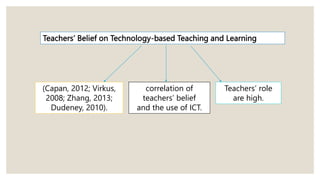
Teachers’ Belief on Technology-based Teaching and Learning
(Capan, 2012; Virkus,
2008; Zhang, 2013;
Dudeney, 2010).
correlation of
teachers’ belief
and the use of ICT.
Teachers’ role
are high.
Integration of ICT in the Malaysian Context
In order to raise the education standards, government developed a
new national education blueprint; the latest one is the Education
Blueprint 2013-2025.
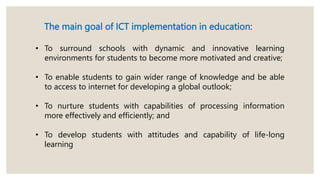
The main goal of ICT implementation in education:
• To surround schools with dynamic and innovative learning
environments for students to become more motivated and creative;
• To enable students to gain wider range of knowledge and be able
to access to internet for developing a global outlook;
• To nurture students with capabilities of processing information
more effectively and efficiently; and
• To develop students with attitudes and capability of life-long
learning
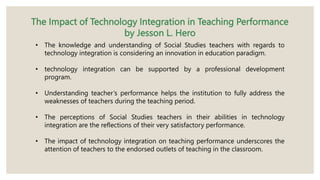
The Impact of Technology Integration in Teaching Performance
by Jesson L. Hero
• The knowledge and understanding of Social Studies teachers with regards to
technology integration is considering an innovation in education paradigm.
• technology integration can be supported by a professional development
program.
• Understanding teacher’s performance helps the institution to fully address the
weaknesses of teachers during the teaching period.
• The perceptions of Social Studies teachers in their abilities in technology
integration are the reflections of their very satisfactory performance.
• The impact of technology integration on teaching performance underscores the
attention of teachers to the endorsed outlets of teaching in the classroom.
Akbar, F. S. (2015). Examining the Intersection between Task-Based Learning and Technology. TESOL & Applied
Linguistics, 15(2), 60–62. https://journals.cdrs.columbia.edu/wp-content/uploads/sites/12/2015/12/9.-Farah-
Akbar.pdf
Ghavifekr, S., & Rosdy, W. A. W. (2015). Teaching and learning with technology: Effectiveness of ICT integration in
schools. International Journal of Research in Education and Science, 1(2), 175–191.
https://doi.org/10.21890/ijres.23596
Hero, J. (2020). International Journal of Sciences : The Impact of Technology Integration in Teaching
Performance. International Journal of Sciences: Basic and Applied Research, 48(1), 101–114.
https://www.researchgate.net/publication/342586669_The_Impact_of_Technology_Integration_in_Teaching
_Performance/link/5efbea9f299bf18816f5f709/download
Richards, J. (2015). Technology in Language Teaching Today. Indonesian Journal of English Laguage Teaching,
10(1Richards, J. (2015). Technology in Language Teaching Today. Indonesian Journal of English Laguage
Teaching, 10(1), 18–32.), 18–32.
References

Use of Technology in Language Learning.pptx

  • 1.
    USE OF TECHNOLOGYIN LANGUAGE LEARNING R. A. Tri Ratu Utami Laelatul Abida
  • 2.
    Teachers’ Belief onTechnology-based Teaching and Learning (Capan, 2012; Virkus, 2008; Zhang, 2013; Dudeney, 2010). correlation of teachers’ belief and the use of ICT. Teachers’ role are high.
  • 3.
    Integration of ICTin the Malaysian Context In order to raise the education standards, government developed a new national education blueprint; the latest one is the Education Blueprint 2013-2025.
  • 4.
    The main goalof ICT implementation in education: • To surround schools with dynamic and innovative learning environments for students to become more motivated and creative; • To enable students to gain wider range of knowledge and be able to access to internet for developing a global outlook; • To nurture students with capabilities of processing information more effectively and efficiently; and • To develop students with attitudes and capability of life-long learning
  • 5.
    The Impact ofTechnology Integration in Teaching Performance by Jesson L. Hero • The knowledge and understanding of Social Studies teachers with regards to technology integration is considering an innovation in education paradigm. • technology integration can be supported by a professional development program. • Understanding teacher’s performance helps the institution to fully address the weaknesses of teachers during the teaching period. • The perceptions of Social Studies teachers in their abilities in technology integration are the reflections of their very satisfactory performance. • The impact of technology integration on teaching performance underscores the attention of teachers to the endorsed outlets of teaching in the classroom.
  • 7.
    Akbar, F. S.(2015). Examining the Intersection between Task-Based Learning and Technology. TESOL & Applied Linguistics, 15(2), 60–62. https://journals.cdrs.columbia.edu/wp-content/uploads/sites/12/2015/12/9.-Farah- Akbar.pdf Ghavifekr, S., & Rosdy, W. A. W. (2015). Teaching and learning with technology: Effectiveness of ICT integration in schools. International Journal of Research in Education and Science, 1(2), 175–191. https://doi.org/10.21890/ijres.23596 Hero, J. (2020). International Journal of Sciences : The Impact of Technology Integration in Teaching Performance. International Journal of Sciences: Basic and Applied Research, 48(1), 101–114. https://www.researchgate.net/publication/342586669_The_Impact_of_Technology_Integration_in_Teaching _Performance/link/5efbea9f299bf18816f5f709/download Richards, J. (2015). Technology in Language Teaching Today. Indonesian Journal of English Laguage Teaching, 10(1Richards, J. (2015). Technology in Language Teaching Today. Indonesian Journal of English Laguage Teaching, 10(1), 18–32.), 18–32. References