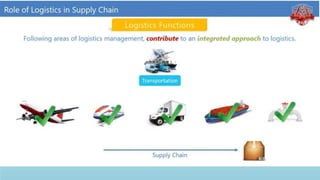
LOGISTICS AND SUPPLY
CHAIN MANAGEMENT
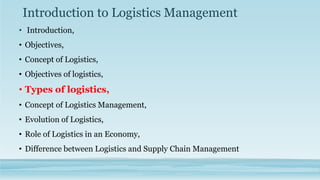
Introduction to Logistics Management
• Introduction,
• Objectives,
• Concept of Logistics,
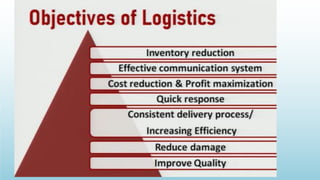
• Objectives of logistics,
• Types of logistics,
• Concept of Logistics Management,
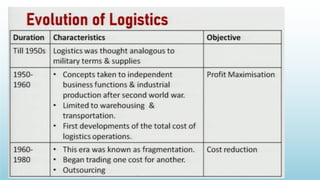
• Evolution of Logistics,
• Role of Logistics in an Economy,
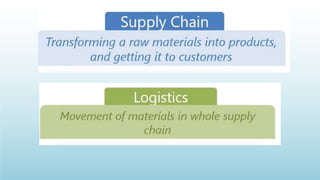
• Difference between Logistics and Supply Chain Management
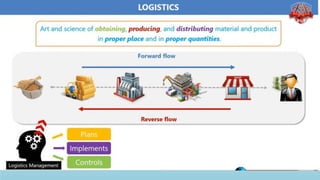
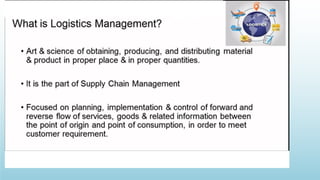
Logistics management is that part of supply chain management
that plans, implements and controls the efficient, effective
forward and reverse flow and storage of goods, services and
related information between the point of origin and the point of
consumption in order to meet customers’ requirements.
Council of Supply Chain Management Professionals (USA), 2021
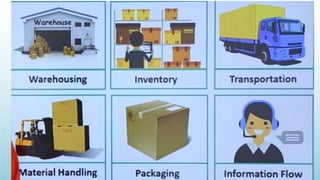
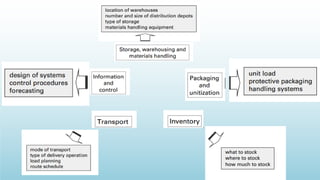
The key components of
distribution and logistics,
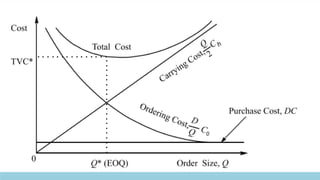
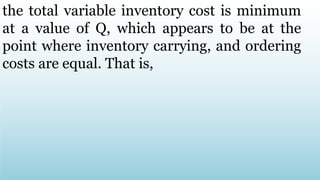
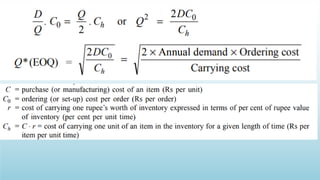
the total variable inventory cost is minimum
at a value of Q, which appears to be at the
point where inventory carrying, and ordering
costs are equal. That is,
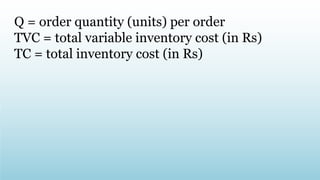
Q = order quantity (units) per order
TVC = total variable inventory cost (in Rs)
TC = total inventory cost (in Rs)
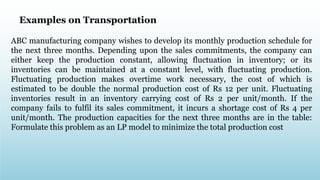
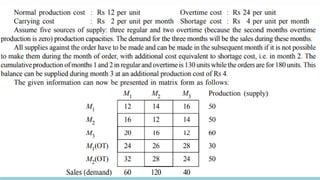
ABC manufacturing company wishes to develop its monthly production schedule for
the next three months. Depending upon the sales commitments, the company can
either keep the production constant, allowing fluctuation in inventory; or its
inventories can be maintained at a constant level, with fluctuating production.
Fluctuating production makes overtime work necessary, the cost of which is
estimated to be double the normal production cost of Rs 12 per unit. Fluctuating
inventories result in an inventory carrying cost of Rs 2 per unit/month. If the
company fails to fulfil its sales commitment, it incurs a shortage cost of Rs 4 per
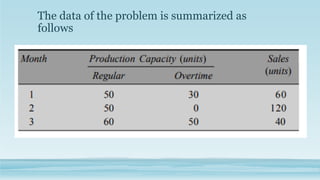
unit/month. The production capacities for the next three months are in the table:
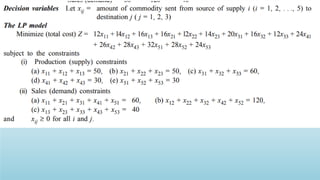
Formulate this problem as an LP model to minimize the total production cost
Examples on Transportation
The data of the problem is summarized as
follows
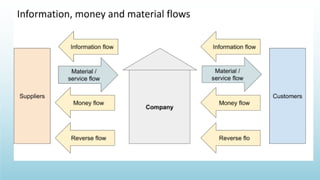
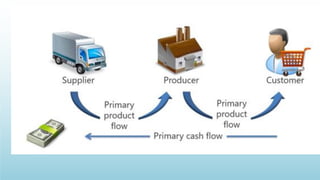
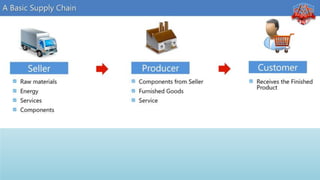
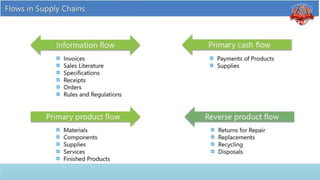
6.Information flow
is the flow of information from supplier to customer and from
customer back to supplier. This flow is bi-directional, that is, it
goes both direction in the supply chain.
Introduction to Logistics Management
• Introduction,
• Objectives,
• Concept of Logistics,
• Objectives of logistics,
• Types of logistics,
• Concept of Logistics Management,
• Evolution of Logistics,
• Role of Logistics in an Economy,
• Difference between Logistics and Supply Chain Management
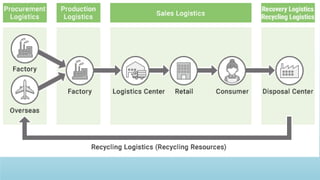
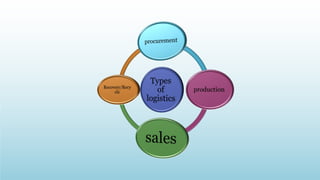
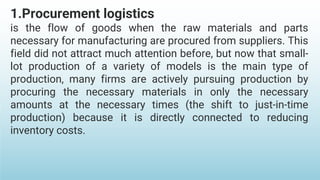
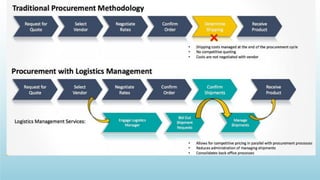
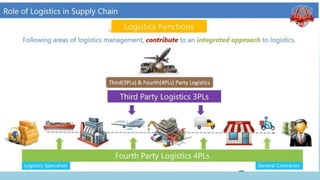
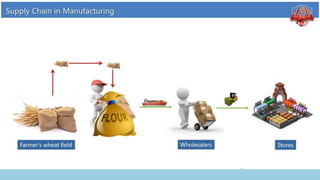
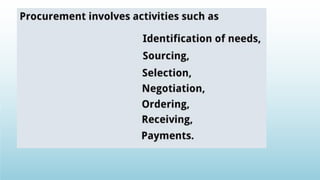
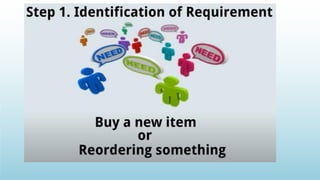
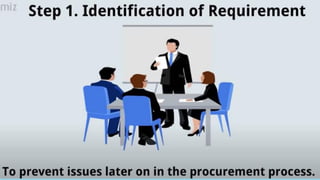
1.Procurement logistics
is the flow of goods when the raw materials and parts
necessary for manufacturing are procured from suppliers. This
field did not attract much attention before, but now that small-
lot production of a variety of models is the main type of
production, many firms are actively pursuing production by
procuring the necessary materials in only the necessary
amounts at the necessary times (the shift to just-in-time
production) because it is directly connected to reducing
inventory costs.
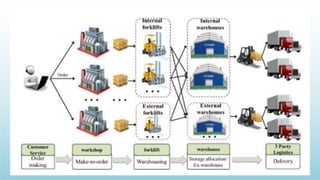
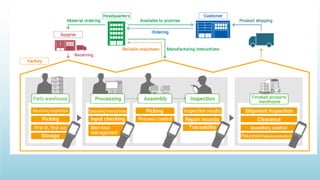
2. Production logistics
Production logistics is the flow of goods that includes the
management of procured parts and materials, distribution
inside a factory, product management, packaging, and
shipping to warehouse. Delivery management, warehouse
dispatch management, and shipping management can be
optimized and the state of delivery vehicles can be managed
by smoothly linking procurement logistics and sales logistics
VIDEO
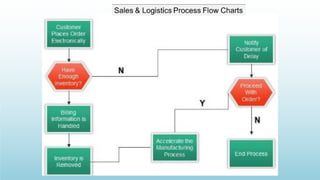
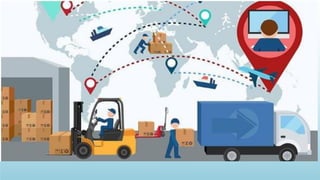
3. Sales logistics
(Delivery from Warehouse to Wholesalers, Retailers, and Consumers)
Sales Logistics typically refers to sales logistics. In the past this was
mainly delivery from delivery centers and logistics warehouses to
distribution points such as wholesalers and retailers. But now direct
delivery also makes up a large amount of this volume due to online
shopping and e-commerce. Whether delivery through delivery centers
and logistics warehouses or direct delivery from production sites,
higher efficiency in transportation and delivery and shrinking inventory
are indispensable for delivering the necessary goods to the necessary
people in the necessary quantities at the necessary time. This also
contributes to improving customer satisfaction
Sales logistics :
is the process of fulfilling an order as it moves
through a company's supply chain. It includes
forecasting demand, ordering inventory from
suppliers, and making sure that products are
delivered to customers on time for retail sale or
distribution. Forecasting demand can be difficult
because predicting purchasing behavior isn't always
accurate
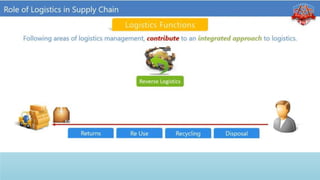
4.Recovery Logistics:
(Recovering and Recycling Products, Containers, and Packaging)
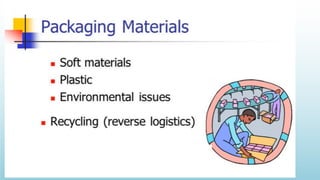
Typical examples of recycling logistics are recovering and recycling
empty cans, plastic bottles, and old paper. Containers, packaging, old
computers, and inkjet cartridges can also be recovered and recycled in
the same manner. The importance of recycling logistics has been
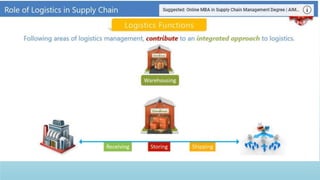
increasing in recent years as measures for the environment and to
effectively utilize materials such as minor metals composits
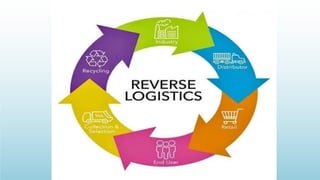
The set of activities carried out after the sale of a
product to recover its value and end the life cycle of
the product. that’s reverse logistics. Sometimes
referred to as the after-sales supply chain, after-sales
logistics or demotion. It usually involves returning a
product to the manufacturer or distributor or
returning it for maintenance, or recycling
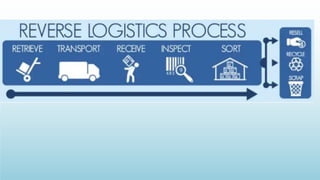
When a product from a manufacturer goes through the supply
chain network, it must reach the distributor or the customer.
Any process or management after the sale of the product
involves reverse logistics. If the product is defective, the
customer will return it. The manufacturing company should
then organize the delivery of the defect product, test it,
disassemble it, repair it, recycle it or dispose of it.
Benefits,
Effective reverse logistics has direct benefits,
including increased customer satisfaction,
lower resource investment, and lower storage
and distribution costs.
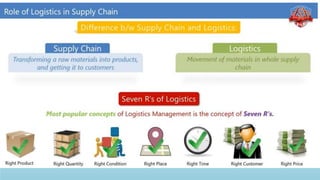
Logistics is defined as the time-related positioning of
resources. It is also described as the ‘five rights’.
Essentially, it is the process of ensuring that goods or a
service is:
in the right place,
at the right time,
in the right quantity,
at the right quality,
at the right price.
Chartered Institute of Logistics and Transport (UK), 2021
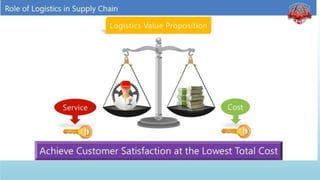
logistics concerns:
the efficient transfer of goods from the
source of supply through the place of
manufacture to the point of consumption
in a cost-effective way while providing an
appropriate service to the customer.
Case study :
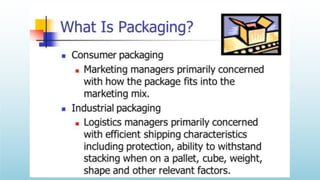
A company produces plastic toys that are packaged in
cardboard boxes. These boxes are packed onto wooden
pallets that are used as the basic unit load in the
warehouse and in the transport vehicles for delivery to
customers. A study indicates that the cardboard box is
an unnecessary cost because it does not provide any
significant additional protection to the quite robust
plastic toys and it does not appear to offer any significant
marketing advantage.
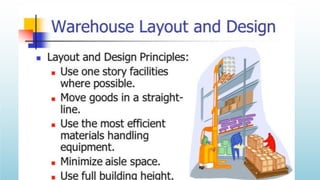
Within logistics components:
this refers to the trade-offs that occur within single
functions (e.g. warehousing). One example would be the
decision to use random storage locations compared to
fixed storage locations in a depot. The first of these
provides better storage utilization but is more difficult for
picking; the second is easier for picking but does not
provide such good storage utilization.

Unit-1a.pdf

  • 1.
  • 2.
    Introduction to LogisticsManagement • Introduction, • Objectives, • Concept of Logistics, • Objectives of logistics, • Types of logistics, • Concept of Logistics Management, • Evolution of Logistics, • Role of Logistics in an Economy, • Difference between Logistics and Supply Chain Management
  • 3.
    Logistics management isthat part of supply chain management that plans, implements and controls the efficient, effective forward and reverse flow and storage of goods, services and related information between the point of origin and the point of consumption in order to meet customers’ requirements. Council of Supply Chain Management Professionals (USA), 2021
  • 5.
    The key componentsof distribution and logistics,
  • 15.
    the total variableinventory cost is minimum at a value of Q, which appears to be at the point where inventory carrying, and ordering costs are equal. That is,
  • 17.
    Q = orderquantity (units) per order TVC = total variable inventory cost (in Rs) TC = total inventory cost (in Rs)
  • 23.
    ABC manufacturing companywishes to develop its monthly production schedule for the next three months. Depending upon the sales commitments, the company can either keep the production constant, allowing fluctuation in inventory; or its inventories can be maintained at a constant level, with fluctuating production. Fluctuating production makes overtime work necessary, the cost of which is estimated to be double the normal production cost of Rs 12 per unit. Fluctuating inventories result in an inventory carrying cost of Rs 2 per unit/month. If the company fails to fulfil its sales commitment, it incurs a shortage cost of Rs 4 per unit/month. The production capacities for the next three months are in the table: Formulate this problem as an LP model to minimize the total production cost Examples on Transportation
  • 24.
    The data ofthe problem is summarized as follows
  • 27.
    6.Information flow is theflow of information from supplier to customer and from customer back to supplier. This flow is bi-directional, that is, it goes both direction in the supply chain.
  • 29.
    Introduction to LogisticsManagement • Introduction, • Objectives, • Concept of Logistics, • Objectives of logistics, • Types of logistics, • Concept of Logistics Management, • Evolution of Logistics, • Role of Logistics in an Economy, • Difference between Logistics and Supply Chain Management
  • 33.
    1.Procurement logistics is theflow of goods when the raw materials and parts necessary for manufacturing are procured from suppliers. This field did not attract much attention before, but now that small- lot production of a variety of models is the main type of production, many firms are actively pursuing production by procuring the necessary materials in only the necessary amounts at the necessary times (the shift to just-in-time production) because it is directly connected to reducing inventory costs.
  • 53.
    2. Production logistics Productionlogistics is the flow of goods that includes the management of procured parts and materials, distribution inside a factory, product management, packaging, and shipping to warehouse. Delivery management, warehouse dispatch management, and shipping management can be optimized and the state of delivery vehicles can be managed by smoothly linking procurement logistics and sales logistics VIDEO
  • 57.
    3. Sales logistics (Deliveryfrom Warehouse to Wholesalers, Retailers, and Consumers) Sales Logistics typically refers to sales logistics. In the past this was mainly delivery from delivery centers and logistics warehouses to distribution points such as wholesalers and retailers. But now direct delivery also makes up a large amount of this volume due to online shopping and e-commerce. Whether delivery through delivery centers and logistics warehouses or direct delivery from production sites, higher efficiency in transportation and delivery and shrinking inventory are indispensable for delivering the necessary goods to the necessary people in the necessary quantities at the necessary time. This also contributes to improving customer satisfaction
  • 58.
    Sales logistics : isthe process of fulfilling an order as it moves through a company's supply chain. It includes forecasting demand, ordering inventory from suppliers, and making sure that products are delivered to customers on time for retail sale or distribution. Forecasting demand can be difficult because predicting purchasing behavior isn't always accurate
  • 61.
    4.Recovery Logistics: (Recovering andRecycling Products, Containers, and Packaging) Typical examples of recycling logistics are recovering and recycling empty cans, plastic bottles, and old paper. Containers, packaging, old computers, and inkjet cartridges can also be recovered and recycled in the same manner. The importance of recycling logistics has been increasing in recent years as measures for the environment and to effectively utilize materials such as minor metals composits
  • 63.
    The set ofactivities carried out after the sale of a product to recover its value and end the life cycle of the product. that’s reverse logistics. Sometimes referred to as the after-sales supply chain, after-sales logistics or demotion. It usually involves returning a product to the manufacturer or distributor or returning it for maintenance, or recycling
  • 65.
    When a productfrom a manufacturer goes through the supply chain network, it must reach the distributor or the customer. Any process or management after the sale of the product involves reverse logistics. If the product is defective, the customer will return it. The manufacturing company should then organize the delivery of the defect product, test it, disassemble it, repair it, recycle it or dispose of it.
  • 66.
    Benefits, Effective reverse logisticshas direct benefits, including increased customer satisfaction, lower resource investment, and lower storage and distribution costs.
  • 69.
    Logistics is definedas the time-related positioning of resources. It is also described as the ‘five rights’. Essentially, it is the process of ensuring that goods or a service is: in the right place, at the right time, in the right quantity, at the right quality, at the right price. Chartered Institute of Logistics and Transport (UK), 2021
  • 70.
    logistics concerns: the efficienttransfer of goods from the source of supply through the place of manufacture to the point of consumption in a cost-effective way while providing an appropriate service to the customer.
  • 99.
    Case study : Acompany produces plastic toys that are packaged in cardboard boxes. These boxes are packed onto wooden pallets that are used as the basic unit load in the warehouse and in the transport vehicles for delivery to customers. A study indicates that the cardboard box is an unnecessary cost because it does not provide any significant additional protection to the quite robust plastic toys and it does not appear to offer any significant marketing advantage.
  • 100.
    Within logistics components: thisrefers to the trade-offs that occur within single functions (e.g. warehousing). One example would be the decision to use random storage locations compared to fixed storage locations in a depot. The first of these provides better storage utilization but is more difficult for picking; the second is easier for picking but does not provide such good storage utilization.