The Spiritual Science
  of Everyday Life

                 www.spiritualscience.co.uk
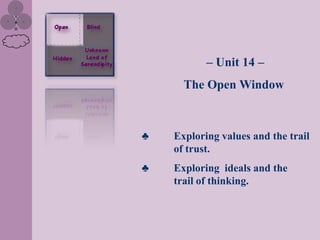
– Unit 14 –
      The Open Window


♣   Exploring values and the trail
    of trust.
♣   Exploring ideals and the
    trail of thinking.
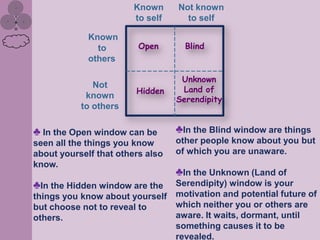
Known     Not known
                        to self     to self

             Known
               to        Open       Blind
             others

                                   Unknown
              Not
                        Hidden     Land of
            known                 Serendipity
           to others

♣ In the Open window can be       ♣In the Blind window are things
seen all the things you know      other people know about you but
about yourself that others also   of which you are unaware.
know.
                                  ♣In the Unknown (Land of
♣In the Hidden window are the  Serendipity) window is your
things you know about yourself motivation and potential future of
but choose not to reveal to    which neither you or others are
others.                        aware. It waits, dormant, until
                               something causes it to be
                               revealed.
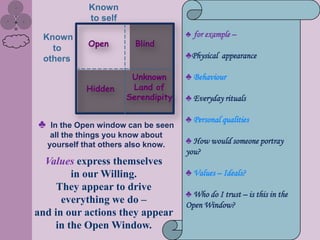
Known
              to self

 Known                                ♣ for example –
              Open        Blind
   to
 others                               ♣Physical appearance

                         Unknown      ♣ Behaviour
             Hidden      Land of
                        Serendipity   ♣ Everyday rituals

                                      ♣ Personal qualities
♣    In the Open window can be seen
     all the things you know about
    yourself that others also know.   ♣ How would someone portray
                                      you?
  Values express themselves
        in our Willing.               ♣ Values – Ideals?
     They appear to drive
                                      ♣ Who do I trust – is this in the
      everything we do –              Open Window?
and in our actions they appear
    in the Open Window.
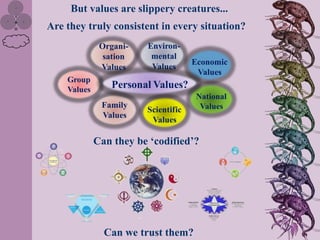
But values are slippery creatures...
Are they truly consistent in every situation?
              Organi-   Environ-
               sation    mental
                                     Economic
              Values     Values
                                      Values
    Group
    Values
                Personal Values?
                                     National
              Family                  Values
                        Scientific
              Values
                         Values

             Can they be „codified‟?


               Can we trust them?
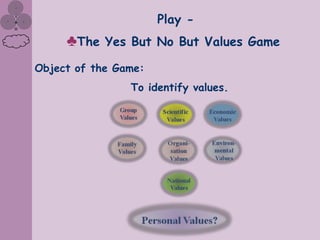
Play -
     ♣The   Yes But No But Values Game

Object of the Game:
                To identify values.
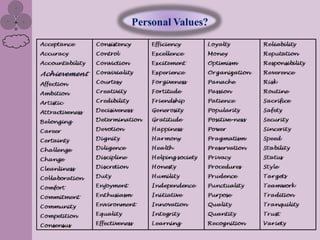
Personal Values?
Our values may be seen through our
   Open Window but their essence
            remains hidden
           in our secret life.

I smile when I‟m angry,
I cheat and I lie.
I do what I have to do
   to get by.
But I know what is wrong
and I know what is right.
And I‟d die for the truth
   in my secret life.
Leonard Cohen (2002)
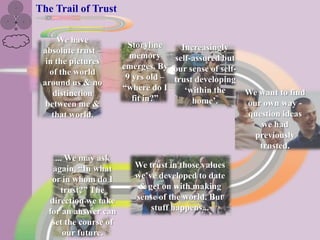
The Trail of Trust

     We have
                         Storyline    Increasingly
 absolute trust –
                         memory     self-assured but
  in the pictures
                       emerges. By our sense of self-
   of the world
                        9 yrs old – trust developing
 around us & no
                       “where do I     „within the
    distinction                                       We want to find
                          fit in?”       home‟.
  between me &                                        our own way -
    that world.                                       question ideas
                                                         we had
                                                        previously
                                                         trusted.
    ... We may ask
   again, “In what        We trust in those values
   or in whom do I        we‟ve developed to date
      trust?” The          & get on with making
  direction we take       sense of the world. But
  for an answer can           stuff happens...
   set the course of
       our future.
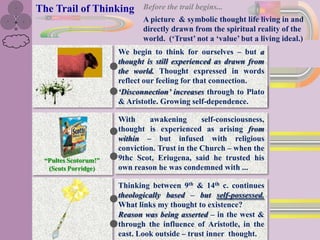
The Trail of Thinking        Before the trail begins...
                             A picture & symbolic thought life living in and
                             directly drawn from the spiritual reality of the
                             world. („Trust‟ not a „value‟ but a living ideal.)
                      We begin to think for ourselves – but a
                      thought is still experienced as drawn from
                      the world. Thought expressed in words
                      reflect our feeling for that connection.
                      „Disconnection‟ increases through to Plato
                      & Aristotle. Growing self-dependence.

                      With     awakening       self-consciousness,
                      thought is experienced as arising from
                      within – but infused with religious
                      conviction. Trust in the Church – when the
 “Pultes Scotorum!”   9thc Scot, Eriugena, said he trusted his
  (Scots Porridge)    own reason he was condemned with ...

                      Thinking between 9th & 14th c. continues
                      theologically based – but self-possessed.
                      What links my thought to existence?
                      Reason was being asserted – in the west &
                      through the influence of Aristotle, in the
                      east. Look outside – trust inner thought.
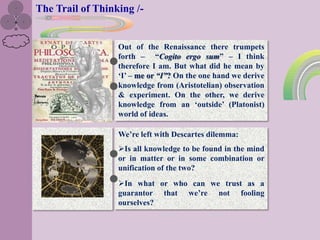
The Trail of Thinking /-


                  Out of the Renaissance there trumpets
                  forth – “Cogito ergo sum” – I think
                  therefore I am. But what did he mean by
                  „I‟ – me or “I”? On the one hand we derive
                  knowledge from (Aristotelian) observation
                  & experiment. On the other, we derive
                  knowledge from an „outside‟ (Platonist)
                  world of ideas.

                  We‟re left with Descartes dilemma:
                  Is all knowledge to be found in the mind
                  or in matter or in some combination or
                  unification of the two?
                  In what or who can we trust as a
                  guarantor that we‟re not fooling
                  ourselves?
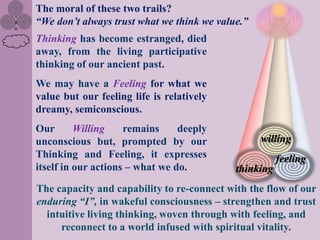
The moral of these two trails?
“We don‟t always trust what we think we value.”
Thinking has become estranged, died
away, from the living participative
thinking of our ancient past.
We may have a Feeling for what we
value but our feeling life is relatively
dreamy, semiconscious.
Our       Willing    remains     deeply
unconscious but, prompted by our                  willing
Thinking and Feeling, it expresses                     feeling
itself in our actions – what we do.         thinking
The capacity and capability to re-connect with the flow of our
enduring “I”, in wakeful consciousness – strengthen and trust
  intuitive living thinking, woven through with feeling, and
     reconnect to a world infused with spiritual vitality.
Once we drank the wine of
                  our ideals.
      Today we’re left with the sediment
        – clothe ideals with “values”.


“Each of us experienced from one another
that we had taken on the same mission in
  life: to strive for the rise of true culture
 enlivened and formed by humane ideals,
 and to stimulate people to become truly
          thoughtful human beings.”
           Albert Schweizer on Rudolf Steiner
Unit14
Unit14
Unit14
Unit14
Unit14
Unit14
Unit14

Unit14

  • 8.
    The Spiritual Science of Everyday Life www.spiritualscience.co.uk
  • 9.
    – Unit 14– The Open Window ♣ Exploring values and the trail of trust. ♣ Exploring ideals and the trail of thinking.
  • 10.
    Known Not known to self to self Known to Open Blind others Unknown Not Hidden Land of known Serendipity to others ♣ In the Open window can be ♣In the Blind window are things seen all the things you know other people know about you but about yourself that others also of which you are unaware. know. ♣In the Unknown (Land of ♣In the Hidden window are the Serendipity) window is your things you know about yourself motivation and potential future of but choose not to reveal to which neither you or others are others. aware. It waits, dormant, until something causes it to be revealed.
  • 11.
    Known to self Known ♣ for example – Open Blind to others ♣Physical appearance Unknown ♣ Behaviour Hidden Land of Serendipity ♣ Everyday rituals ♣ Personal qualities ♣ In the Open window can be seen all the things you know about yourself that others also know. ♣ How would someone portray you? Values express themselves in our Willing. ♣ Values – Ideals? They appear to drive ♣ Who do I trust – is this in the everything we do – Open Window? and in our actions they appear in the Open Window.
  • 12.
    But values areslippery creatures... Are they truly consistent in every situation? Organi- Environ- sation mental Economic Values Values Values Group Values Personal Values? National Family Values Scientific Values Values Can they be „codified‟? Can we trust them?
  • 13.
    Play - ♣The Yes But No But Values Game Object of the Game: To identify values.
  • 14.
  • 15.
    Our values maybe seen through our Open Window but their essence remains hidden in our secret life. I smile when I‟m angry, I cheat and I lie. I do what I have to do to get by. But I know what is wrong and I know what is right. And I‟d die for the truth in my secret life. Leonard Cohen (2002)
  • 16.
    The Trail ofTrust We have Storyline Increasingly absolute trust – memory self-assured but in the pictures emerges. By our sense of self- of the world 9 yrs old – trust developing around us & no “where do I „within the distinction We want to find fit in?” home‟. between me & our own way - that world. question ideas we had previously trusted. ... We may ask again, “In what We trust in those values or in whom do I we‟ve developed to date trust?” The & get on with making direction we take sense of the world. But for an answer can stuff happens... set the course of our future.
  • 17.
    The Trail ofThinking Before the trail begins... A picture & symbolic thought life living in and directly drawn from the spiritual reality of the world. („Trust‟ not a „value‟ but a living ideal.) We begin to think for ourselves – but a thought is still experienced as drawn from the world. Thought expressed in words reflect our feeling for that connection. „Disconnection‟ increases through to Plato & Aristotle. Growing self-dependence. With awakening self-consciousness, thought is experienced as arising from within – but infused with religious conviction. Trust in the Church – when the “Pultes Scotorum!” 9thc Scot, Eriugena, said he trusted his (Scots Porridge) own reason he was condemned with ... Thinking between 9th & 14th c. continues theologically based – but self-possessed. What links my thought to existence? Reason was being asserted – in the west & through the influence of Aristotle, in the east. Look outside – trust inner thought.
  • 18.
    The Trail ofThinking /- Out of the Renaissance there trumpets forth – “Cogito ergo sum” – I think therefore I am. But what did he mean by „I‟ – me or “I”? On the one hand we derive knowledge from (Aristotelian) observation & experiment. On the other, we derive knowledge from an „outside‟ (Platonist) world of ideas. We‟re left with Descartes dilemma: Is all knowledge to be found in the mind or in matter or in some combination or unification of the two? In what or who can we trust as a guarantor that we‟re not fooling ourselves?
  • 19.
    The moral ofthese two trails? “We don‟t always trust what we think we value.” Thinking has become estranged, died away, from the living participative thinking of our ancient past. We may have a Feeling for what we value but our feeling life is relatively dreamy, semiconscious. Our Willing remains deeply unconscious but, prompted by our willing Thinking and Feeling, it expresses feeling itself in our actions – what we do. thinking The capacity and capability to re-connect with the flow of our enduring “I”, in wakeful consciousness – strengthen and trust intuitive living thinking, woven through with feeling, and reconnect to a world infused with spiritual vitality.
  • 20.
    Once we drankthe wine of our ideals. Today we’re left with the sediment – clothe ideals with “values”. “Each of us experienced from one another that we had taken on the same mission in life: to strive for the rise of true culture enlivened and formed by humane ideals, and to stimulate people to become truly thoughtful human beings.” Albert Schweizer on Rudolf Steiner