S E C T I O N 2 . 1 - T Y P E S O F B U S I N E S S
A C T I V I T I E S
S E C T I O N 2 . 2 - N AT I O N A L I S M A N D
P R I VAT I S AT I O N
LEARNING OUTCOMES:
▪Differentiate, using examples between the different types of
business activities in the primary, secondary and tertiary sectors.
▪Distinguish between nationalization and privatisation.
▪State the main methods of measuring the size of businesses (legal
form of ownership, nature of business, nature of product, capital
employed, total assets, number of employees, level of technology,
market share, turnover, profitability, value of output)
▪Explain the purpose of the classification and measurement of
business units
▪Explain the survival of small firms
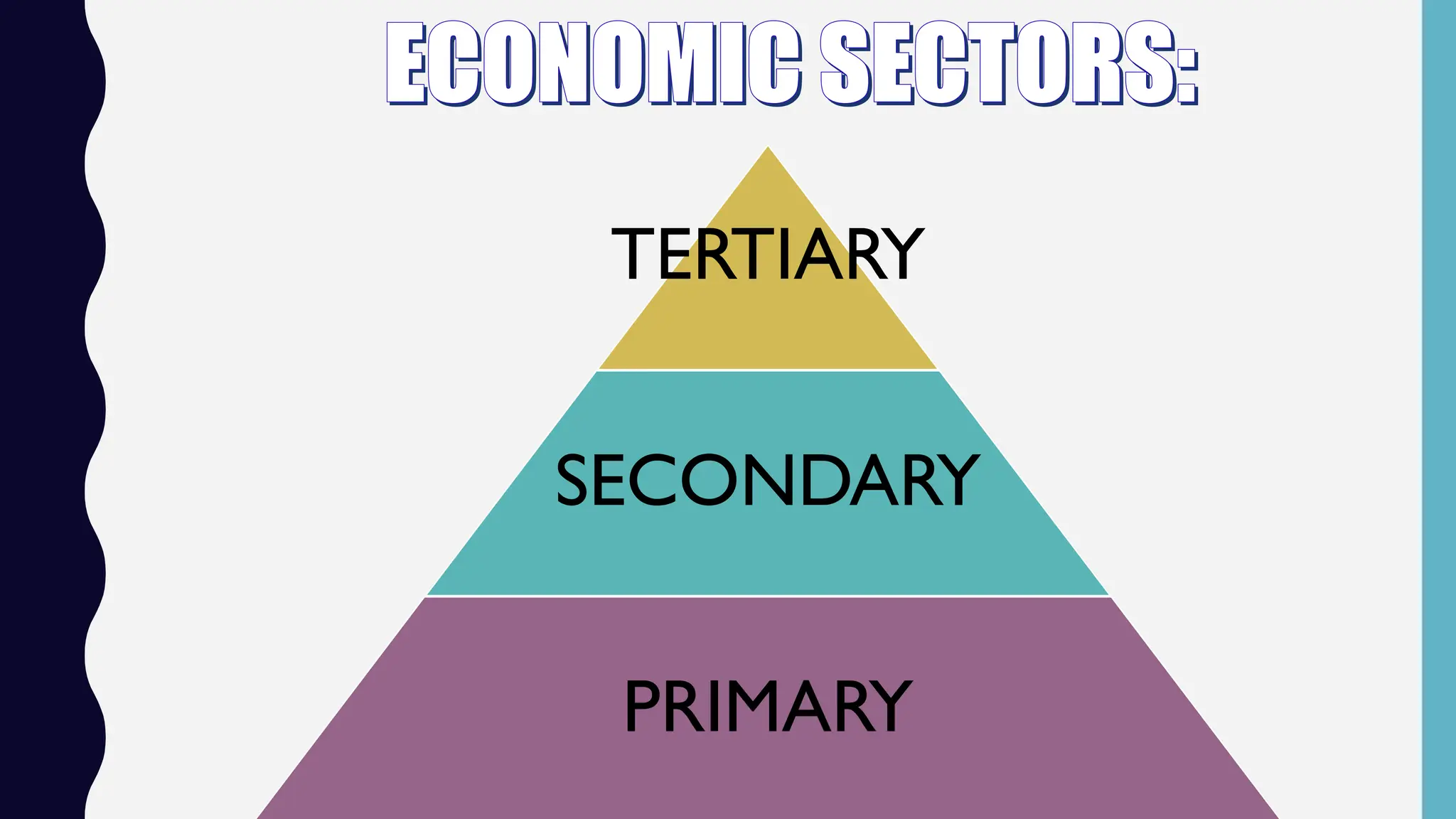
TERTIARY
SECONDARY
PRIMARY
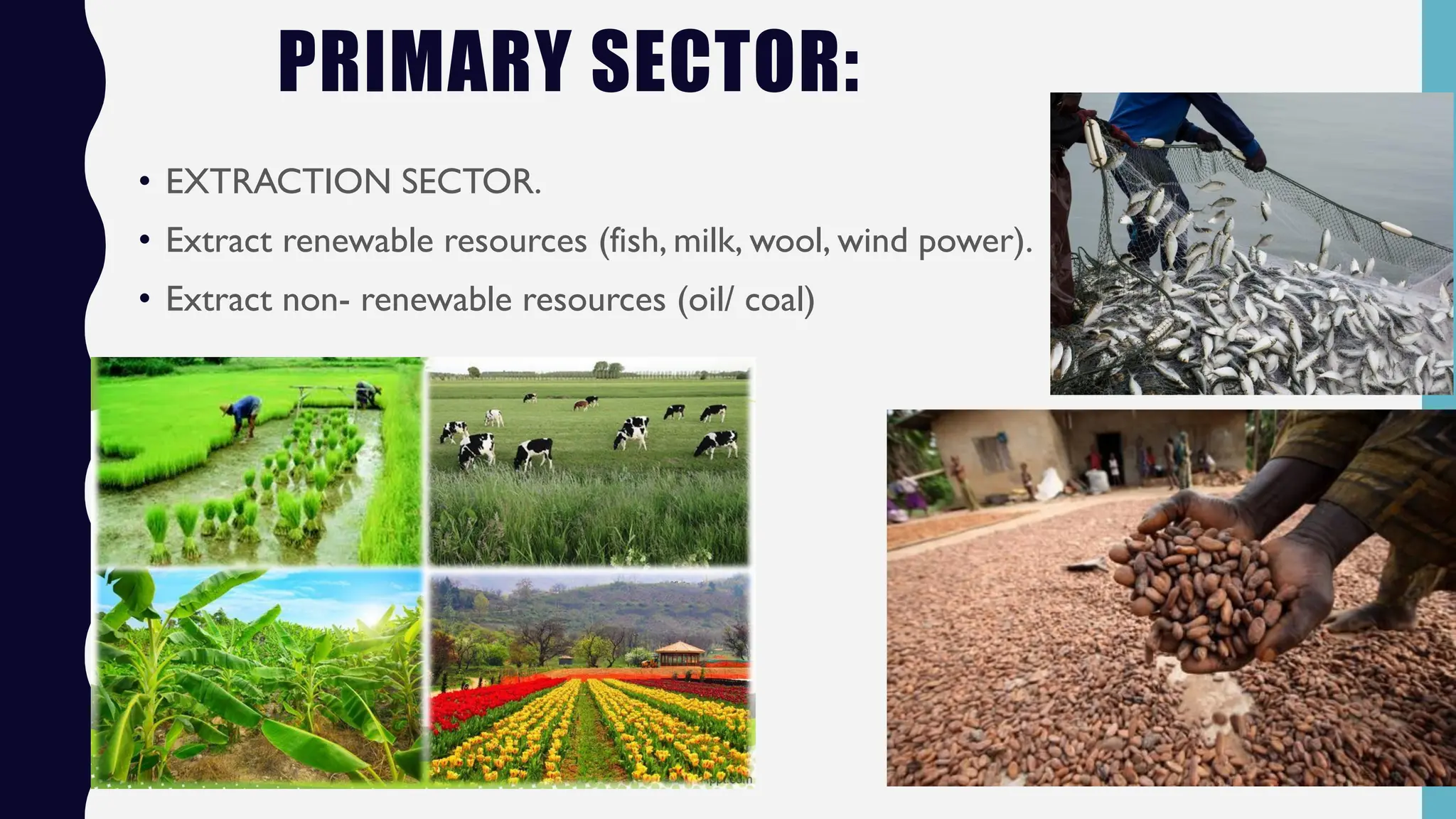
PRIMARY SECTOR:
• EXTRACTION SECTOR.
• Extract renewable resources (fish, milk, wool, wind power).
• Extract non- renewable resources (oil/ coal)
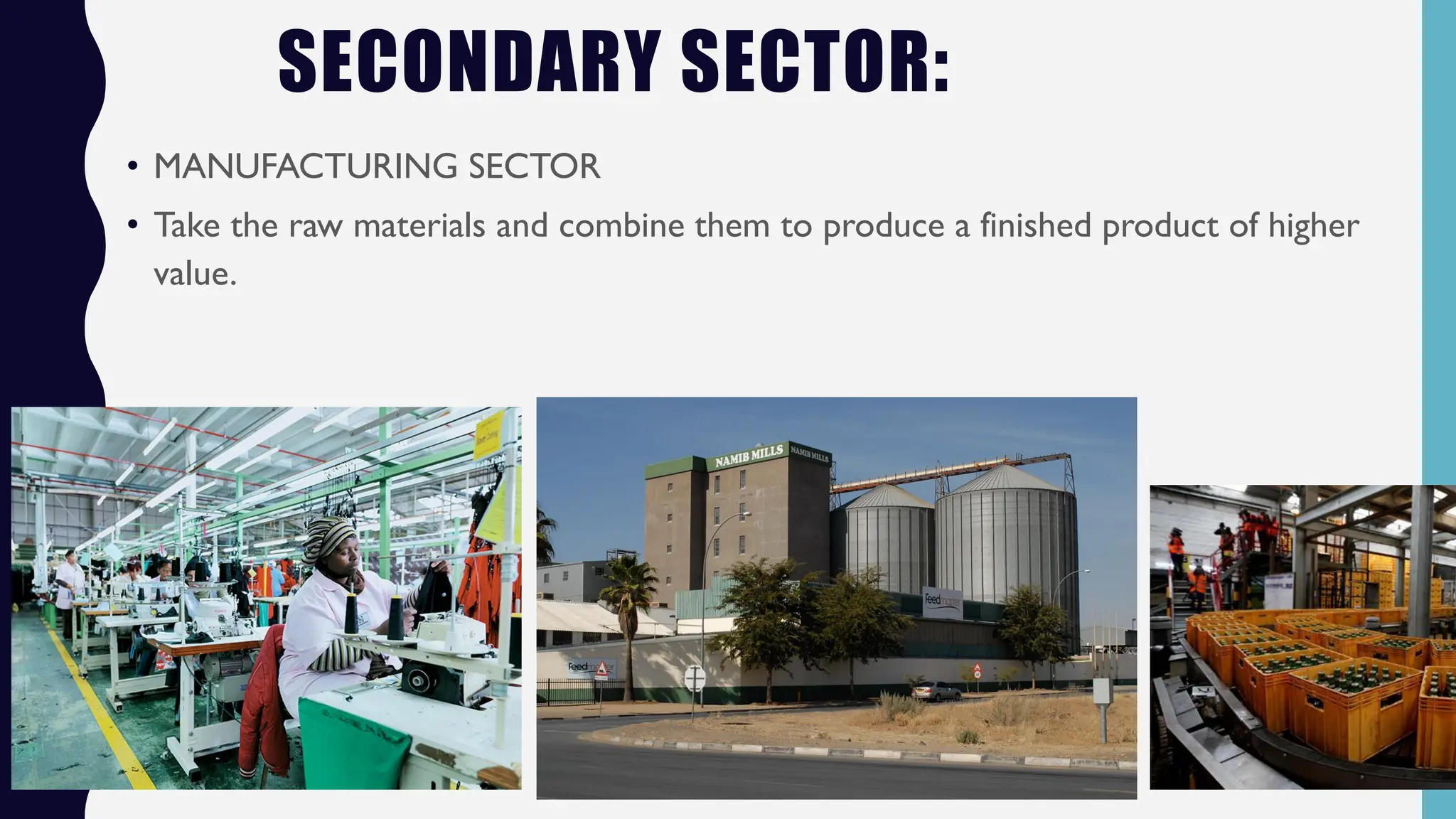
SECONDARY SECTOR:
• MANUFACTURING SECTOR
• Take the raw materials and combine them to produce a finished product of higher
value.
TERTIARY SECTOR:
• SERVICE SECTOR
• Retail of the manufactured goods.
• Provide services (banking and insurance)
IMPORTANCE OF A SECTOR IN A
COUNTRY:
Economical sectors are compared by looking at
– Number of workers employed
– Value of output and sales.
• DEVELOPING COUNTRIES= PRIMARY ACTIVITIES
• DEVELOPED COUNTRIES= MANUFACTURING ACTIVITIES AND
TERTIARY SECTOR
• DE-INDUSTRIALISATION= Decline in secondary sector.
• INDUSTRIALISATION=When a country moving from
primary sector to secondary sector.
ACT 1: PG.
27
NATIONALISATION:
• PRIVATELY OWNED BUSINESSES ARE SOLDTOTHE
GOVERNMENT.
REASONS:
– Services like health and education may not be available to society/ become too expensive
– National security such as defense / transport may be too important to be left in the hands of
the private enterprises.
– Unproductive industries might be nationalized in order to increase the levels of efficiency
and investment= maintain employment and growth.
PRIVATISATION:
• MANY GOVERNMENTS HAVE SOLD OFF BUSINESSESTHEY PREVIOUSLY
OWNEDTO NEW OWNERS INTHE PRIVATE SECTOR.
• In many European countries the electricity and water supply and public transport systems
have been privatized.
• The new owners operate the business with profit as main aim.This encourage them to run
the business efficiently.
• Competition may be encouraged if the business is sold off to several different private
owners.This help to increase efficiency and keep prices low.
• Government is often short of money. New owners may have additional CAPITAL to invest in
improving the service.
• NB business decisions will now be made for reasons of business efficiency and not by
government popularity.
• Sale of business to private owners will raise money for the government
• As the new owners are interested mainly in profits, some services making
losses may be closed.
• Workers jobs could be lost as the new owners attempt to increase efficiency
in order to raise profits.
• The business might be sold off to one owner who would still be able to run it
as a monopoly= higher prices for the consumers.
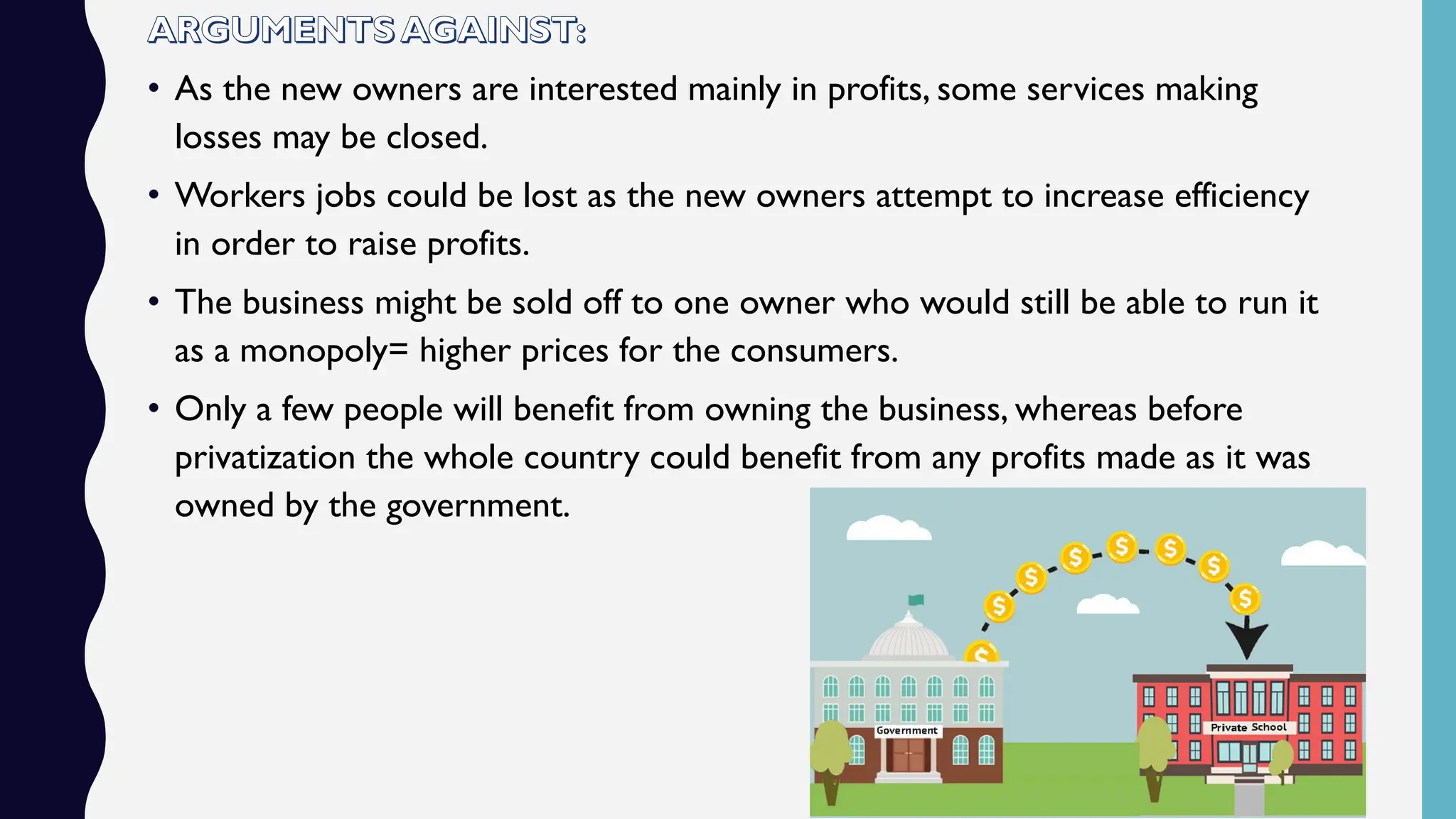
• Only a few people will benefit from owning the business, whereas before
privatization the whole country could benefit from any profits made as it was
owned by the government.
COMPARING THE SIZE OF BUSINESSES:
Who would find it useful to compare the size of businesses?
• Investors- before deciding which business to put their savings into.
• Governments- often there are different tax rates for small and large businesses
• Competitors- to compare their size and importance with other firms.
• Workers- to have some idea of how many people they might be working with
• Banks- to see how important a loan to the business is compared to its overall size.
How to measure the size of the business:
1. By number of employees
2. By value of output and sales (Sales turnover)
3. By capital employed
4. Comparing business size by Market share
5. Comparing size by profit
• Some firms use production methods which employ very few people but which
produce high output levels. (Automated factories)
• These firms are called capital intensive firms (use a great deal of capital
equipment to produce output)
• Therefore a company with high output levels could employ fewer people than
a business which produce less output.
• Common way of comparing businesses in the same industry- show which one
is the most important in the industry
• However a high output of sales does not mean a business is larger than
another one.
• A firm employing few people might produce and sell several very expensive
products and thus the sales might be higher compared to a firm selling cheaper
products but employing more workers.
• This is the total capital invested in the business.
• A company employing many workers may use labour intensive methods of
production- this give low output levels and use little capital equipment.
• A business may not be a market leader, but can still be a large business.
• If the market is small, a major market share won’t make the business big.
• Not always accurate
• But it can be used to measure efficiency.
• Profit depends on more than just the size of a firm.
• It depends on efficiency and the skills of the managers.
• Large businesses can make very low profits if they are badly managed.
THERE IS NO PERFECTWAY OF COMPARINGTHE SIZE OF BUSINESSES. MOST FIRMS USE
MORETHAN ONE METHODTO COMPARETHE RESUTS OBTAINED
WHY DO SOME BUSINESSES REMAIN
SMALL?
• Not all businesses grow. Some stay small- they continue to employ few people
and use relatively little capital.
Reasons:
1. Type of industry the business operates in
2. Market size
3. Owner’s objectives
4. Not enough capital
1) TYPE OF INDUSTRY THE BUSINESS
OPERATES IN:
• Hairdressing, car repairs, window cleaning, convenience stores.
• Firms in these industries provide a personal service/ specialized products.
• If they grow too large, they will find it difficult to offer the close and personal
service demanded by the customer.
• In these industries, it is very easy for new firms to be set up and creates new
competition.
2) THE MARKET SIZE:
• If the market is small (total number of consumers), the business are likely to
remain small.
• E.g. Shops in rural areas/ luxurious cars/ expensive fashion clothing
3) OWNERS OBJECTIVES:
• Some business owners prefer to keep their firm small.
• They could be more interested in keeping control of the business, knowing all
of their staff and customers instead of running a larger firm.
• Owners wish to avoid the stress and worry of running a large firm.
4) AVAILABILITY OF CAPITAL:
• The owner does not have enough capital to
expand/ grow business. Therefore, the
business will remain small.
• Most small firms render a personal/ specialized service.To survive they should always continue
to improve the quality of their services.
• Strive towards professional customer care services. Staff should be trained in customer care.
• Professional and efficient after-sales services can be the key factor towards the survival of
small firms
• The market is limited, a limited market needs a low level of production.
• Personal services and advice are NB!This can be easily supplied by small businesses.
• Small firms can make use of larger firms, thus larger firms produce and sell the products to
smaller firms. Sometimes the production of the goods can be unprofitable for the larger firms.
• Small firms can easily make changes and do innovations.
• Small firms can fulfil the role of a niche market (small and specialized segment of a larger
market)
LEARNING OUTCOMES:
▪Differentiate, using examples between the different types of
business activities in the primary, secondary and tertiary sectors.
▪Distinguish between nationalization and privatisation.
▪State the main methods of measuring the size of businesses (legal
form of ownership, nature of business, nature of product, capital
employed, total assets, number of employees, level of technology,
market share, turnover, profitability, value of output)
▪Explain the purpose of the classification and measurement of
business units
▪Explain the survival of small firms
ACT: 2 PG 32

Unit 2 types of business activities Business IGCSE

  • 1.
    S E CT I O N 2 . 1 - T Y P E S O F B U S I N E S S A C T I V I T I E S S E C T I O N 2 . 2 - N AT I O N A L I S M A N D P R I VAT I S AT I O N
  • 2.
    LEARNING OUTCOMES: ▪Differentiate, usingexamples between the different types of business activities in the primary, secondary and tertiary sectors. ▪Distinguish between nationalization and privatisation. ▪State the main methods of measuring the size of businesses (legal form of ownership, nature of business, nature of product, capital employed, total assets, number of employees, level of technology, market share, turnover, profitability, value of output) ▪Explain the purpose of the classification and measurement of business units ▪Explain the survival of small firms
  • 3.
  • 4.
    PRIMARY SECTOR: • EXTRACTIONSECTOR. • Extract renewable resources (fish, milk, wool, wind power). • Extract non- renewable resources (oil/ coal)
  • 5.
    SECONDARY SECTOR: • MANUFACTURINGSECTOR • Take the raw materials and combine them to produce a finished product of higher value.
  • 6.
    TERTIARY SECTOR: • SERVICESECTOR • Retail of the manufactured goods. • Provide services (banking and insurance)
  • 7.
    IMPORTANCE OF ASECTOR IN A COUNTRY: Economical sectors are compared by looking at – Number of workers employed – Value of output and sales. • DEVELOPING COUNTRIES= PRIMARY ACTIVITIES • DEVELOPED COUNTRIES= MANUFACTURING ACTIVITIES AND TERTIARY SECTOR • DE-INDUSTRIALISATION= Decline in secondary sector. • INDUSTRIALISATION=When a country moving from primary sector to secondary sector. ACT 1: PG. 27
  • 8.
    NATIONALISATION: • PRIVATELY OWNEDBUSINESSES ARE SOLDTOTHE GOVERNMENT. REASONS: – Services like health and education may not be available to society/ become too expensive – National security such as defense / transport may be too important to be left in the hands of the private enterprises. – Unproductive industries might be nationalized in order to increase the levels of efficiency and investment= maintain employment and growth.
  • 9.
    PRIVATISATION: • MANY GOVERNMENTSHAVE SOLD OFF BUSINESSESTHEY PREVIOUSLY OWNEDTO NEW OWNERS INTHE PRIVATE SECTOR. • In many European countries the electricity and water supply and public transport systems have been privatized. • The new owners operate the business with profit as main aim.This encourage them to run the business efficiently. • Competition may be encouraged if the business is sold off to several different private owners.This help to increase efficiency and keep prices low. • Government is often short of money. New owners may have additional CAPITAL to invest in improving the service. • NB business decisions will now be made for reasons of business efficiency and not by government popularity. • Sale of business to private owners will raise money for the government
  • 10.
    • As thenew owners are interested mainly in profits, some services making losses may be closed. • Workers jobs could be lost as the new owners attempt to increase efficiency in order to raise profits. • The business might be sold off to one owner who would still be able to run it as a monopoly= higher prices for the consumers. • Only a few people will benefit from owning the business, whereas before privatization the whole country could benefit from any profits made as it was owned by the government.
  • 11.
    COMPARING THE SIZEOF BUSINESSES: Who would find it useful to compare the size of businesses? • Investors- before deciding which business to put their savings into. • Governments- often there are different tax rates for small and large businesses • Competitors- to compare their size and importance with other firms. • Workers- to have some idea of how many people they might be working with • Banks- to see how important a loan to the business is compared to its overall size. How to measure the size of the business: 1. By number of employees 2. By value of output and sales (Sales turnover) 3. By capital employed 4. Comparing business size by Market share 5. Comparing size by profit
  • 12.
    • Some firmsuse production methods which employ very few people but which produce high output levels. (Automated factories) • These firms are called capital intensive firms (use a great deal of capital equipment to produce output) • Therefore a company with high output levels could employ fewer people than a business which produce less output.
  • 13.
    • Common wayof comparing businesses in the same industry- show which one is the most important in the industry • However a high output of sales does not mean a business is larger than another one. • A firm employing few people might produce and sell several very expensive products and thus the sales might be higher compared to a firm selling cheaper products but employing more workers.
  • 14.
    • This isthe total capital invested in the business. • A company employing many workers may use labour intensive methods of production- this give low output levels and use little capital equipment.
  • 15.
    • A businessmay not be a market leader, but can still be a large business. • If the market is small, a major market share won’t make the business big.
  • 16.
    • Not alwaysaccurate • But it can be used to measure efficiency. • Profit depends on more than just the size of a firm. • It depends on efficiency and the skills of the managers. • Large businesses can make very low profits if they are badly managed. THERE IS NO PERFECTWAY OF COMPARINGTHE SIZE OF BUSINESSES. MOST FIRMS USE MORETHAN ONE METHODTO COMPARETHE RESUTS OBTAINED
  • 17.
    WHY DO SOMEBUSINESSES REMAIN SMALL? • Not all businesses grow. Some stay small- they continue to employ few people and use relatively little capital. Reasons: 1. Type of industry the business operates in 2. Market size 3. Owner’s objectives 4. Not enough capital
  • 18.
    1) TYPE OFINDUSTRY THE BUSINESS OPERATES IN: • Hairdressing, car repairs, window cleaning, convenience stores. • Firms in these industries provide a personal service/ specialized products. • If they grow too large, they will find it difficult to offer the close and personal service demanded by the customer. • In these industries, it is very easy for new firms to be set up and creates new competition.
  • 19.
    2) THE MARKETSIZE: • If the market is small (total number of consumers), the business are likely to remain small. • E.g. Shops in rural areas/ luxurious cars/ expensive fashion clothing
  • 20.
    3) OWNERS OBJECTIVES: •Some business owners prefer to keep their firm small. • They could be more interested in keeping control of the business, knowing all of their staff and customers instead of running a larger firm. • Owners wish to avoid the stress and worry of running a large firm.
  • 21.
    4) AVAILABILITY OFCAPITAL: • The owner does not have enough capital to expand/ grow business. Therefore, the business will remain small.
  • 22.
    • Most smallfirms render a personal/ specialized service.To survive they should always continue to improve the quality of their services. • Strive towards professional customer care services. Staff should be trained in customer care. • Professional and efficient after-sales services can be the key factor towards the survival of small firms • The market is limited, a limited market needs a low level of production. • Personal services and advice are NB!This can be easily supplied by small businesses. • Small firms can make use of larger firms, thus larger firms produce and sell the products to smaller firms. Sometimes the production of the goods can be unprofitable for the larger firms. • Small firms can easily make changes and do innovations. • Small firms can fulfil the role of a niche market (small and specialized segment of a larger market)
  • 23.
    LEARNING OUTCOMES: ▪Differentiate, usingexamples between the different types of business activities in the primary, secondary and tertiary sectors. ▪Distinguish between nationalization and privatisation. ▪State the main methods of measuring the size of businesses (legal form of ownership, nature of business, nature of product, capital employed, total assets, number of employees, level of technology, market share, turnover, profitability, value of output) ▪Explain the purpose of the classification and measurement of business units ▪Explain the survival of small firms
  • 24.