UNIT .1
STRATEGIC MANAGEMENT
 It involves setting objectives
 analyzing the competitive environment
 analyzing the internal organization
 evaluating strategies
 ensuring that management rolls out
the strategies across the organization.
IMPORTANCE OF STRATEGIC MANAGEMENT
 To shape future business
 To make discipline
 To make control
 Its decentralized the management
 Helps to increase productivity
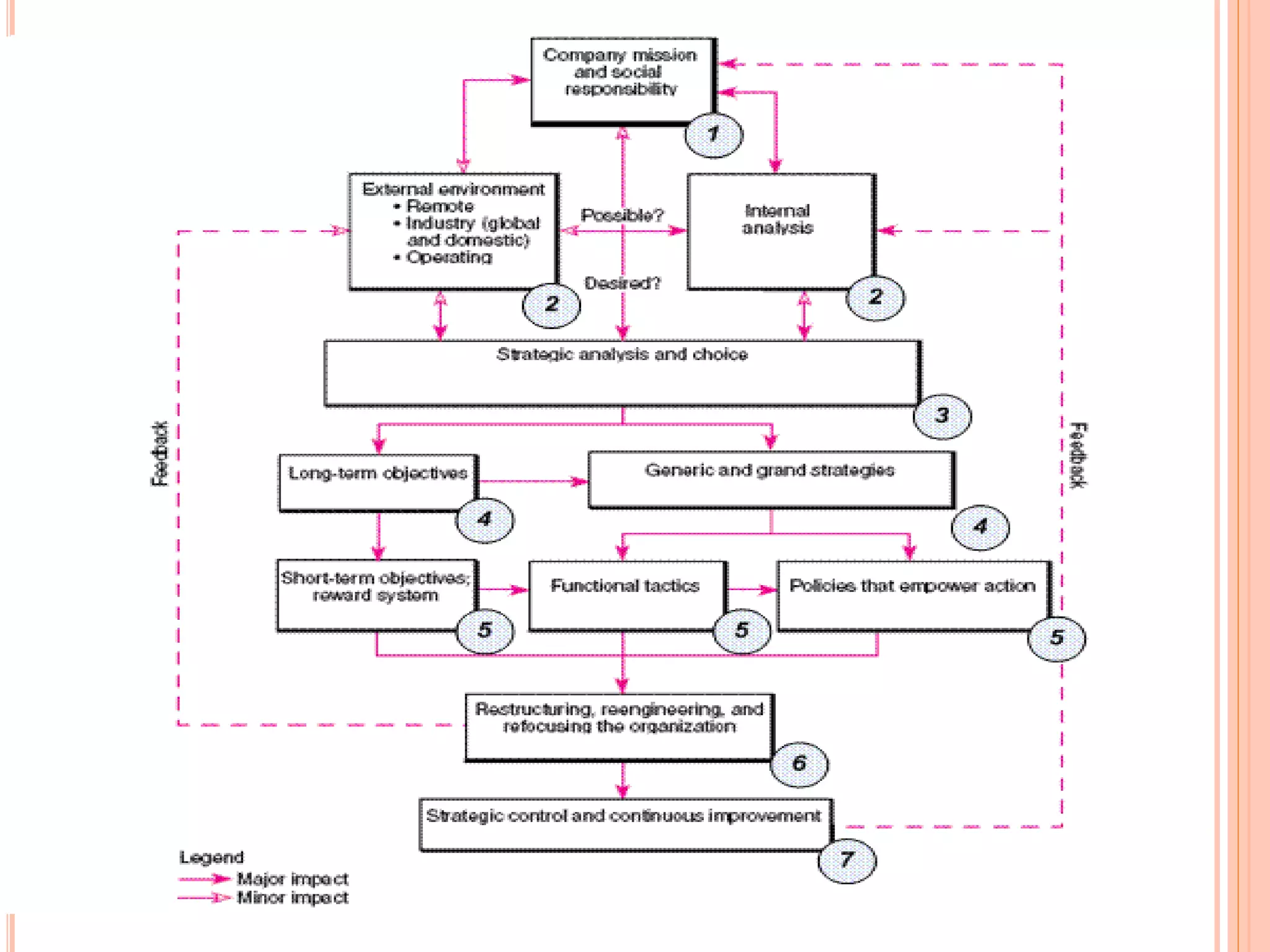
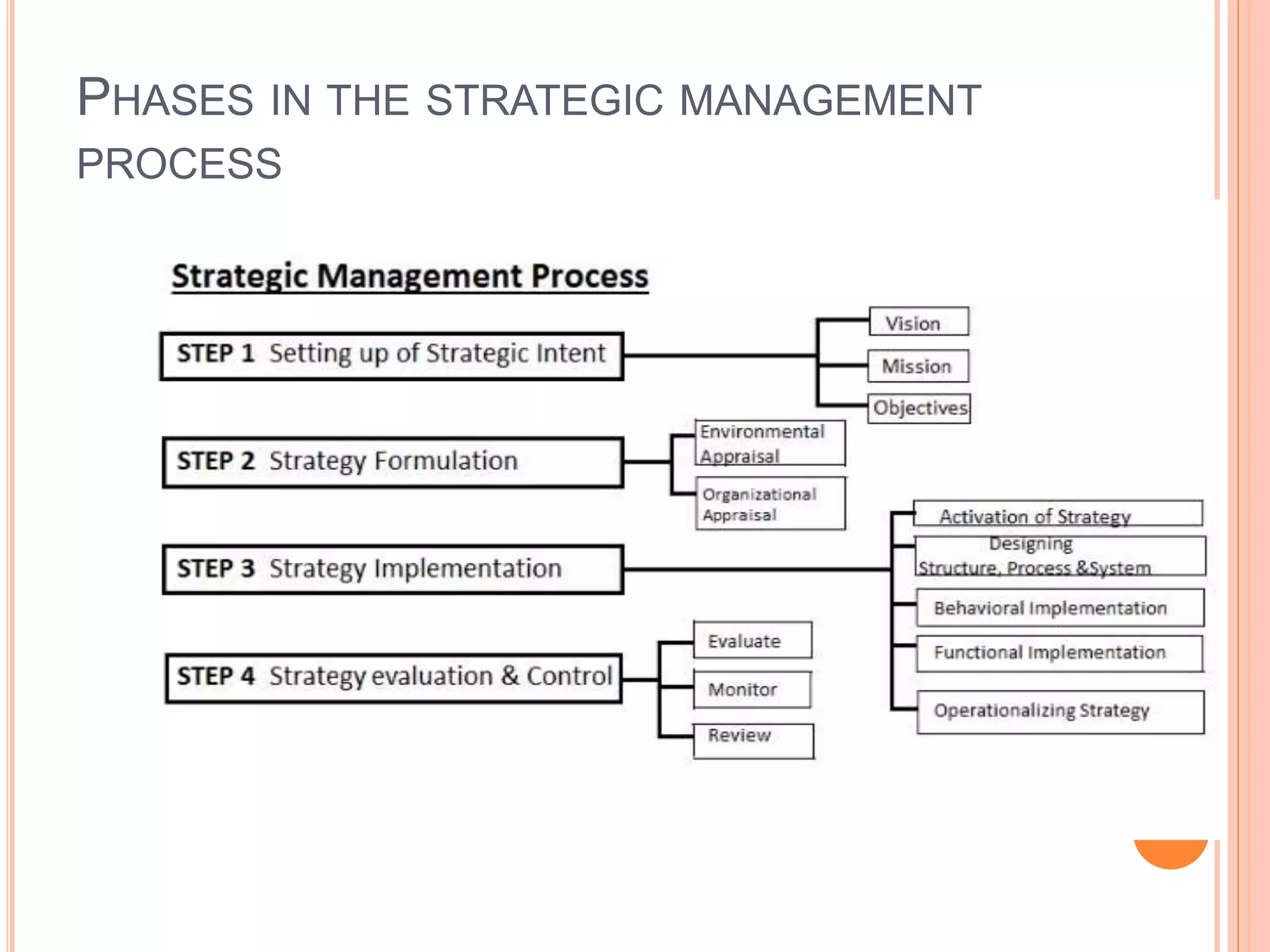
PHASES IN THE STRATEGIC MANAGEMENT
PROCESS
ORGANIZATIONAL STRATEGY
 it is the sum of the actions
 a company intends to take to achieve long-term
goals.
 Together, these actions make up a
company's strategic plan.
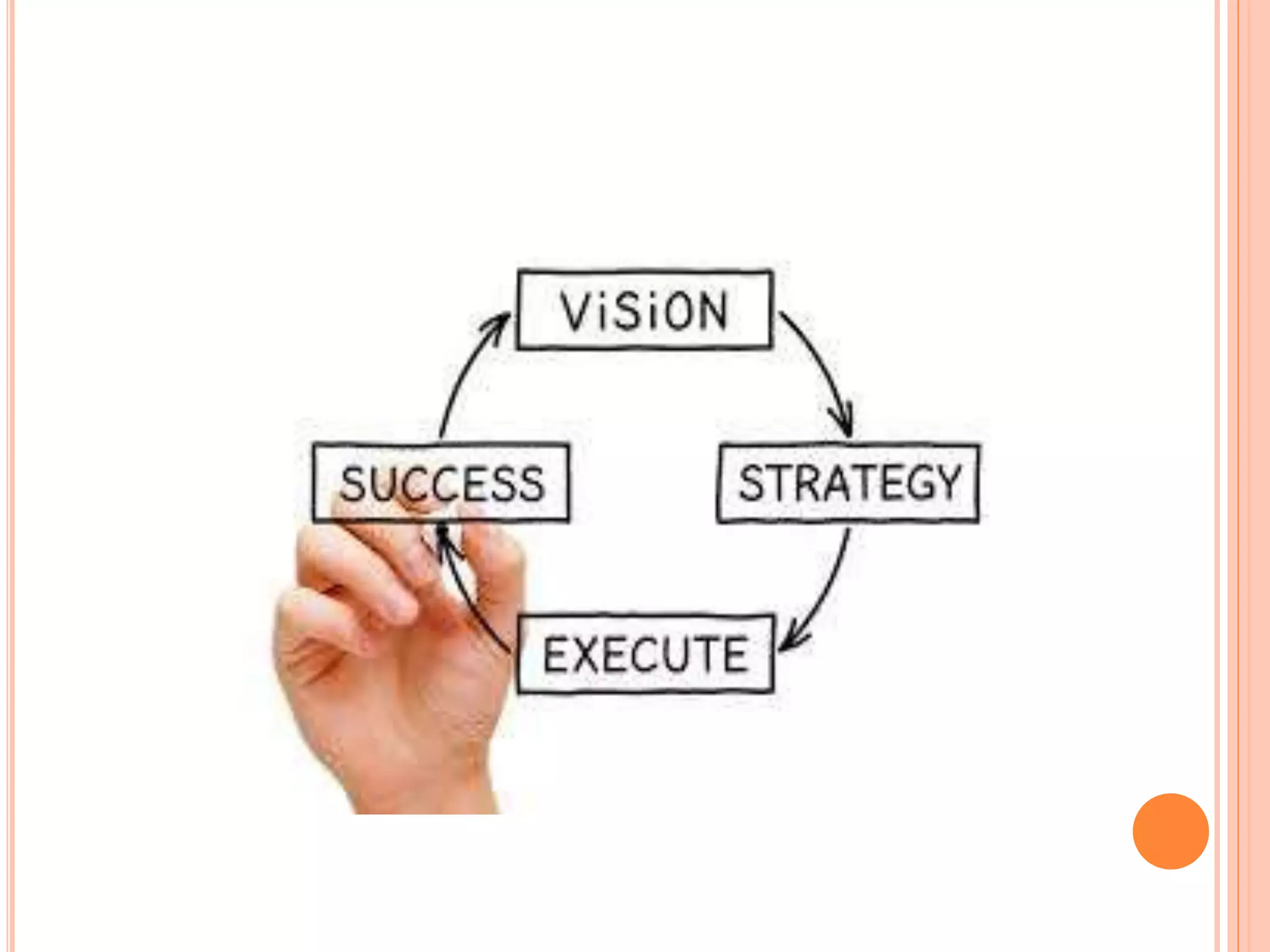
WHAT IS STRATEGY
 Strategy is Dynamic
 Strategy is a Long-Term Plan
 Strategy is a Road-Map
 Working towards Goals to Achieve a Vision
VISION
 Description of something in the future (kotter)
 Category of intentions that are board,all inclusive
and forward thinking ( Miller &Dess)
MISSION
 Purpose or reason for the organisation’s existence
( Hunger n Wheelen )
 Thompson defines mission as the “essential
purpose of the organisation, concerning particularly
why it is in existence , the nature of the business it
is in, and the customers it seeks to serve and
satisfy”
DIFFERENCE BETWEEN VISION AND MISSION
STATEMENTS
vision
statement focuses on
tomorrow
 what an organization
wants to ultimately
become
 The vision statement
gives the company
direction.
 A mission
statement focuses on
today
 what an organization
does to achieve it.
 The mission
statement drives the
company.
Vision Mission
ELEMENTS OF MISSION STATEMENT
 Feasible
 Precise
 Clear
 Motivating
 Distinctive
 Major components of strategy
 Indicate how objectives are accomplished
ASSIGNMENT
 Write about the importance of mission statement ,
why it is important to have mission statement for a
company or corporation?
 Write any 2 vision and mission statement of any
company in world with proper documentation
IMPORTANCE OF MISSION STATEMENT
 provides a road to development and drive for growth.
 provides a clear sense of purpose , direction, and
desired future state and when this image is widely
shared individuals are able o find their own roles both in
the organization and in the society.
 empowers individuals and confers status on employees
because they see themselves as a apart of a worth
while enterprise.
 results in a clear definition of the business of a
company.
 helps in modifying, extending and developing the
existing ongoing business.
 makes everybody imbibe the spirit and inspires
employees.
Unit 1 Organisational strategy

Unit 1 Organisational strategy

  • 1.
  • 4.
    STRATEGIC MANAGEMENT  Itinvolves setting objectives  analyzing the competitive environment  analyzing the internal organization  evaluating strategies  ensuring that management rolls out the strategies across the organization.
  • 5.
    IMPORTANCE OF STRATEGICMANAGEMENT  To shape future business  To make discipline  To make control  Its decentralized the management  Helps to increase productivity
  • 6.
    PHASES IN THESTRATEGIC MANAGEMENT PROCESS
  • 7.
    ORGANIZATIONAL STRATEGY  itis the sum of the actions  a company intends to take to achieve long-term goals.  Together, these actions make up a company's strategic plan.
  • 8.
    WHAT IS STRATEGY Strategy is Dynamic  Strategy is a Long-Term Plan  Strategy is a Road-Map  Working towards Goals to Achieve a Vision
  • 10.
    VISION  Description ofsomething in the future (kotter)  Category of intentions that are board,all inclusive and forward thinking ( Miller &Dess)
  • 11.
    MISSION  Purpose orreason for the organisation’s existence ( Hunger n Wheelen )  Thompson defines mission as the “essential purpose of the organisation, concerning particularly why it is in existence , the nature of the business it is in, and the customers it seeks to serve and satisfy”
  • 12.
    DIFFERENCE BETWEEN VISIONAND MISSION STATEMENTS vision statement focuses on tomorrow  what an organization wants to ultimately become  The vision statement gives the company direction.  A mission statement focuses on today  what an organization does to achieve it.  The mission statement drives the company. Vision Mission
  • 14.
    ELEMENTS OF MISSIONSTATEMENT  Feasible  Precise  Clear  Motivating  Distinctive  Major components of strategy  Indicate how objectives are accomplished
  • 15.
    ASSIGNMENT  Write aboutthe importance of mission statement , why it is important to have mission statement for a company or corporation?  Write any 2 vision and mission statement of any company in world with proper documentation
  • 16.
    IMPORTANCE OF MISSIONSTATEMENT  provides a road to development and drive for growth.  provides a clear sense of purpose , direction, and desired future state and when this image is widely shared individuals are able o find their own roles both in the organization and in the society.  empowers individuals and confers status on employees because they see themselves as a apart of a worth while enterprise.  results in a clear definition of the business of a company.  helps in modifying, extending and developing the existing ongoing business.  makes everybody imbibe the spirit and inspires employees.