Difference Between WPI & CPI
Understanding Inflation
Metrics Simplified
Introduction to Inflation
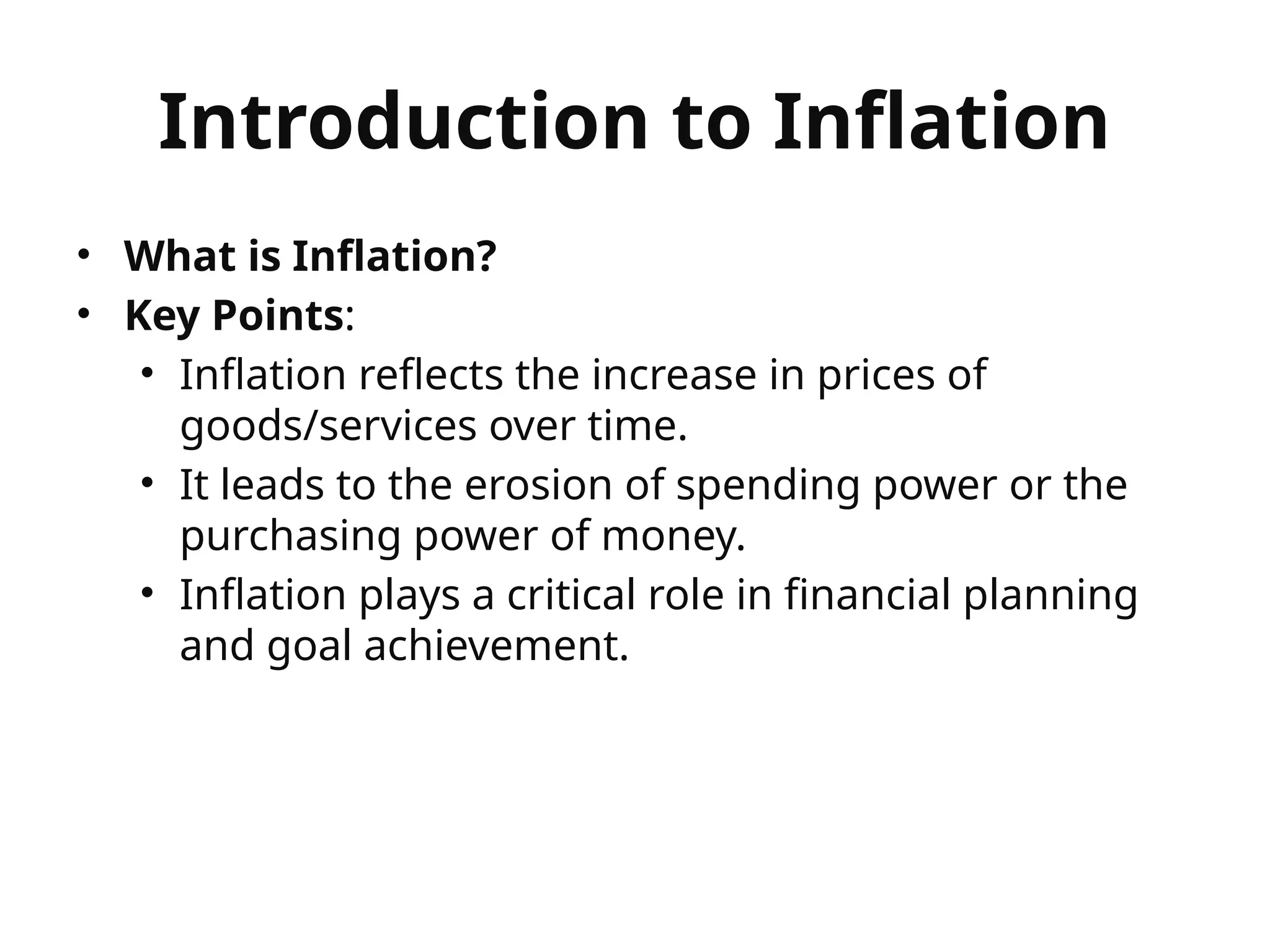
• What is Inflation?
• Key Points:
• Inflation reflects the increase in prices of
goods/services over time.
• It leads to the erosion of spending power or the
purchasing power of money.
• Inflation plays a critical role in financial planning
and goal achievement.
What is WPI?
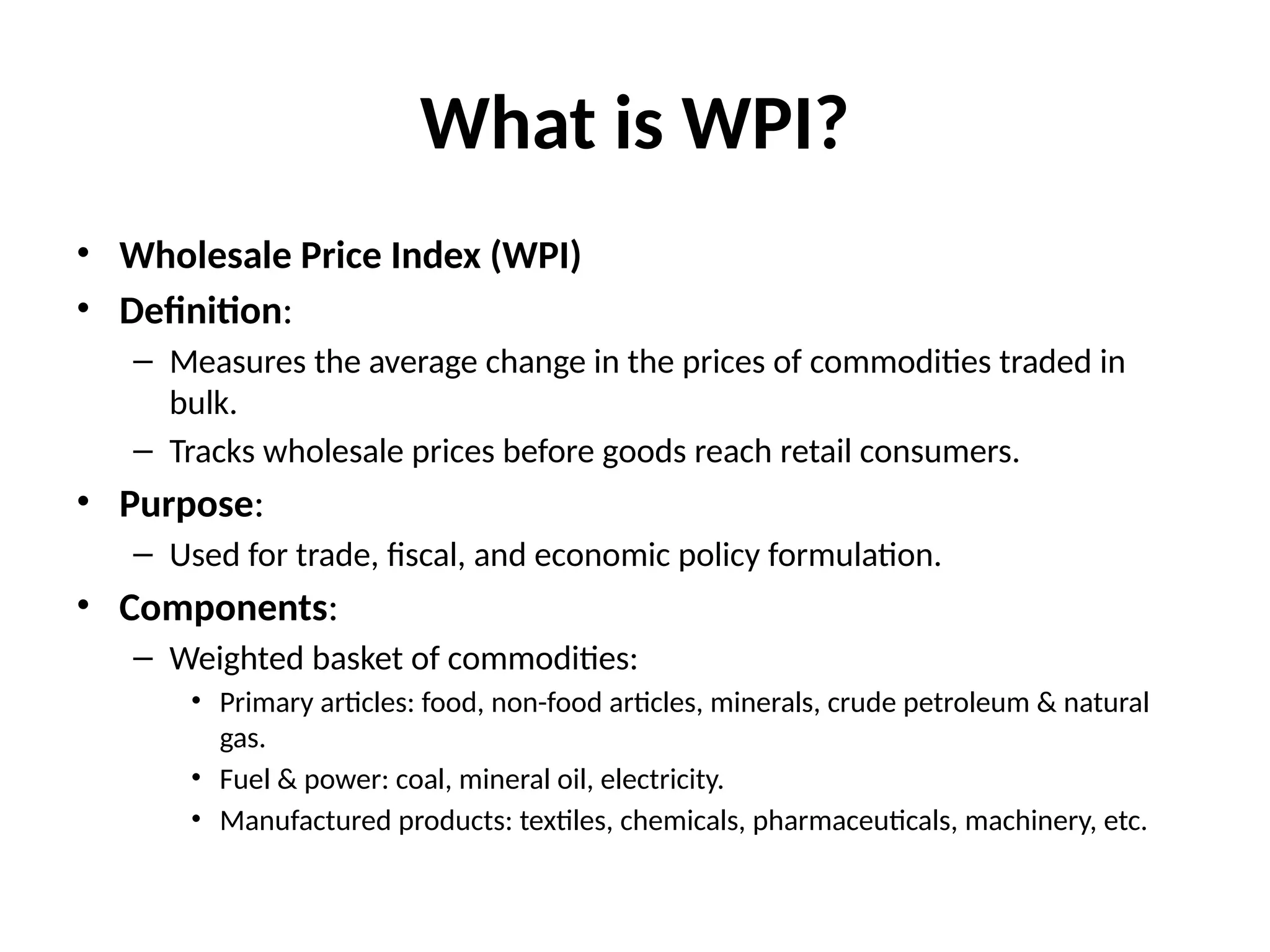
• Wholesale Price Index (WPI)
• Definition:
– Measures the average change in the prices of commodities traded in
bulk.
– Tracks wholesale prices before goods reach retail consumers.
• Purpose:
– Used for trade, fiscal, and economic policy formulation.
• Components:
– Weighted basket of commodities:
• Primary articles: food, non-food articles, minerals, crude petroleum & natural
gas.
• Fuel & power: coal, mineral oil, electricity.
• Manufactured products: textiles, chemicals, pharmaceuticals, machinery, etc.
What is CPI?
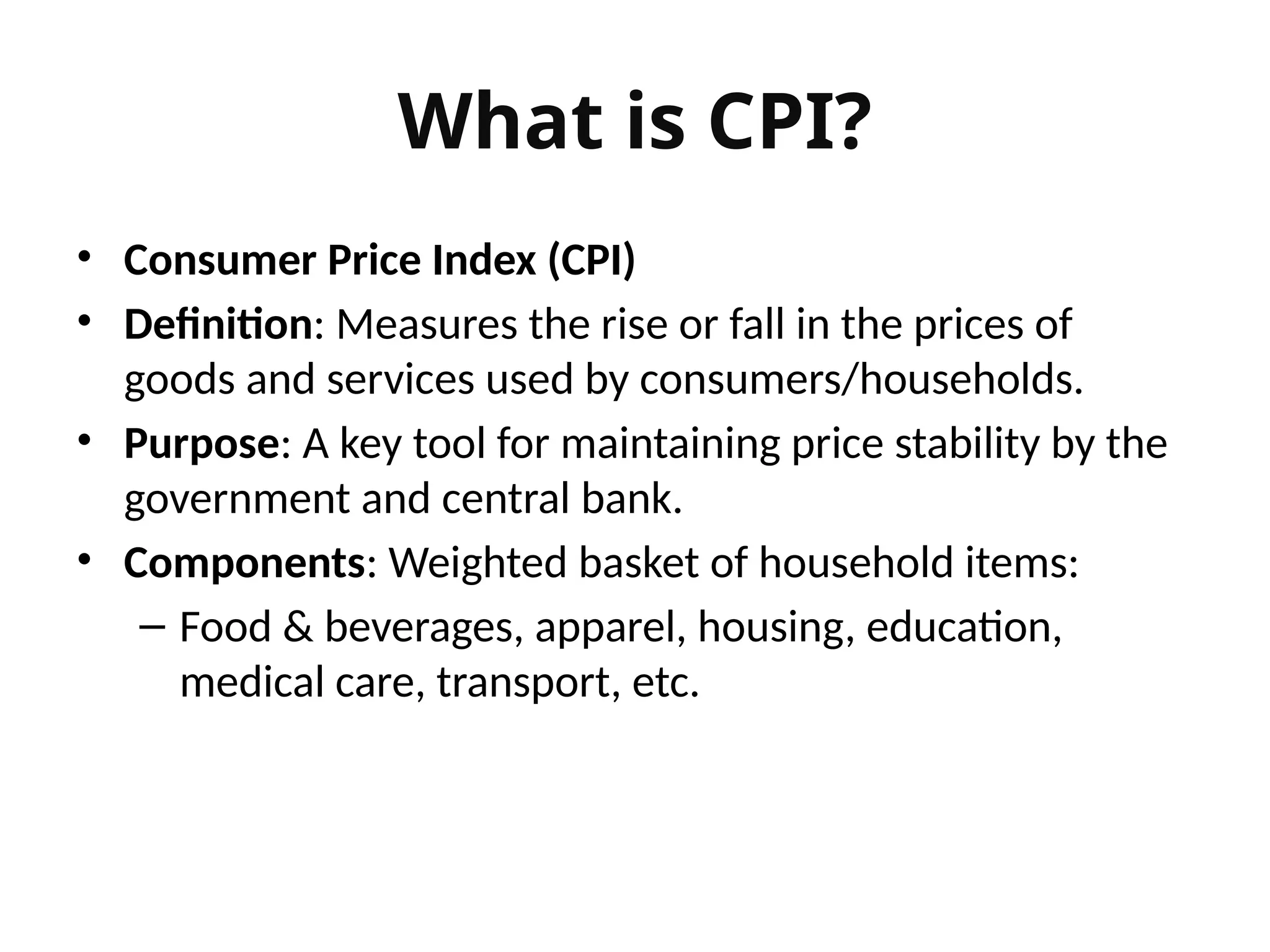
• Consumer Price Index (CPI)
• Definition: Measures the rise or fall in the prices of
goods and services used by consumers/households.
• Purpose: A key tool for maintaining price stability by the
government and central bank.
• Components: Weighted basket of household items:
– Food & beverages, apparel, housing, education,
medical care, transport, etc.
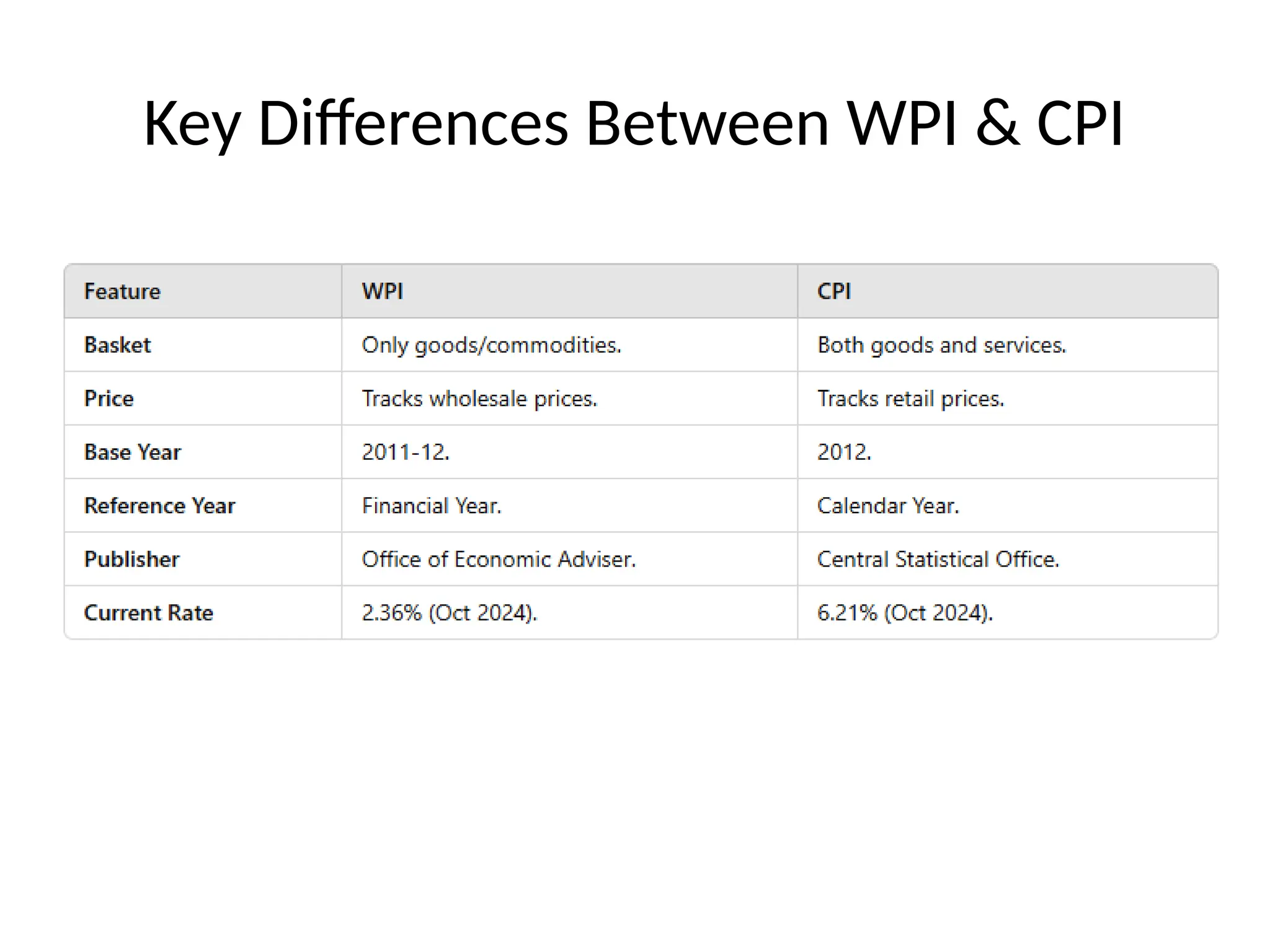
Key Differences Between WPI & CPI
Importance of Understanding WPI and
CPI
• Title: Why Should You Care?
• Key Points:
• WPI helps policymakers craft trade and fiscal
policies.
• CPI affects household budgets and cost of living.
• Both indicators play a role in adjusting salaries,
pensions, and interest rates.
Current Trends (October 2024)
• WPI Rate: 2.36%
• Indicates moderate price increase at the wholesale
level.
• CPI Rate: 6.21%
• Indicates significant price increase at the
consumer level, reflecting inflation felt by
households.
WPI vs CPI: A Summary
• Key Takeaways:
• WPI focuses on wholesale markets; CPI
focuses on retail consumers.
• CPI has a broader scope as it includes services
along with goods.
• Both indices are crucial for understanding
inflation's impact on different economic levels.

Understanding the Difference Between WPI and CPI.pptx

  • 1.
    Difference Between WPI& CPI Understanding Inflation Metrics Simplified
  • 2.
    Introduction to Inflation •What is Inflation? • Key Points: • Inflation reflects the increase in prices of goods/services over time. • It leads to the erosion of spending power or the purchasing power of money. • Inflation plays a critical role in financial planning and goal achievement.
  • 3.
    What is WPI? •Wholesale Price Index (WPI) • Definition: – Measures the average change in the prices of commodities traded in bulk. – Tracks wholesale prices before goods reach retail consumers. • Purpose: – Used for trade, fiscal, and economic policy formulation. • Components: – Weighted basket of commodities: • Primary articles: food, non-food articles, minerals, crude petroleum & natural gas. • Fuel & power: coal, mineral oil, electricity. • Manufactured products: textiles, chemicals, pharmaceuticals, machinery, etc.
  • 4.
    What is CPI? •Consumer Price Index (CPI) • Definition: Measures the rise or fall in the prices of goods and services used by consumers/households. • Purpose: A key tool for maintaining price stability by the government and central bank. • Components: Weighted basket of household items: – Food & beverages, apparel, housing, education, medical care, transport, etc.
  • 5.
  • 6.
    Importance of UnderstandingWPI and CPI • Title: Why Should You Care? • Key Points: • WPI helps policymakers craft trade and fiscal policies. • CPI affects household budgets and cost of living. • Both indicators play a role in adjusting salaries, pensions, and interest rates.
  • 7.
    Current Trends (October2024) • WPI Rate: 2.36% • Indicates moderate price increase at the wholesale level. • CPI Rate: 6.21% • Indicates significant price increase at the consumer level, reflecting inflation felt by households.
  • 8.
    WPI vs CPI:A Summary • Key Takeaways: • WPI focuses on wholesale markets; CPI focuses on retail consumers. • CPI has a broader scope as it includes services along with goods. • Both indices are crucial for understanding inflation's impact on different economic levels.