Understanding the Difference
Between TDS and TCS
Introduction
When it comes to taxation in India, two important concepts frequently discussed are Tax Deducted at
Source (TDS) and Tax Collected at Source (TCS). While both serve the purpose of ensuring timely tax
collection by the government, they operate differently and are applicable in different scenarios. In this
blog, we will break down the key differences between TDS and TCS to provide a clear understanding for
businesses and individuals.
What is TDS?
Tax Deducted at Source (TDS) is a mechanism where a specified percentage of tax is deducted by a person
(deductor) at the time of making a payment to another person (deductee). The deducted amount is then
deposited with the government on behalf of the deductee. TDS ensures that tax is collected in advance and
reduces the chances of tax evasion.
Key Features of TDS:
Applicable on payments such as salaries, interest, rent, commission, professional fees, etc.
The deductor is responsible for deducting and depositing the tax.
TDS rates are prescribed by the Income Tax Act, and they vary based on the nature of the payment.
The deductee can claim the deducted amount as a credit while filing their income tax return (ITR).
What is TCS?
Tax Collected at Source (TCS) is a tax collection mechanism where the seller collects tax at a specified rate from
the buyer at the time of sale. The seller is then responsible for depositing this tax with the government. TCS is
generally applicable in specific transactions, such as the sale of certain goods or the provision of specified
services.
Key Features of TCS:
Applicable on transactions involving goods like alcohol, timber, scrap, minerals, and more.
The seller (or collector) is responsible for collecting and depositing the tax.
TCS rates are also prescribed under the Income Tax Act and vary based on the nature of goods or services.
The buyer can claim the collected amount as a credit while filing their ITR.
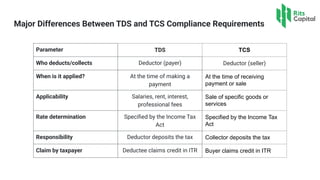
Major Differences Between TDS and TCS Compliance Requirements
Parameter TDS TCS
Who deducts/collects Deductor (payer) Deductor (seller)
When is it applied? At the time of making a
payment
At the time of receiving
payment or sale
Applicability Salaries, rent, interest,
professional fees
Sale of specific goods or
services
Rate determination Specified by the Income Tax
Act
Specified by the Income Tax
Act
Responsibility Deductor deposits the tax Collector deposits the tax
Claim by taxpayer Deductee claims credit in ITR Buyer claims credit in ITR
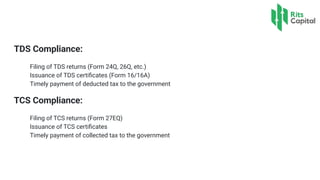
TDS Compliance:
Filing of TDS returns (Form 24Q, 26Q, etc.)
Issuance of TDS certificates (Form 16/16A)
Timely payment of deducted tax to the government
TCS Compliance:
Filing of TCS returns (Form 27EQ)
Issuance of TCS certificates
Timely payment of collected tax to the government
Conclusion
Understanding the difference between TDS and TCS is crucial for ensuring compliance and avoiding
penalties. While TDS applies to payments like salaries and rent, TCS is limited to transactions involving
specific goods and services. Both mechanisms aim to facilitate efficient tax collection and reduce
evasion. At RITS Capital, we provide comprehensive tax support and advisory services to help you manage
your TDS and TCS obligations seamlessly.
For more information and expert guidance, reach out to RITS Capital today!
Thank You
For More Info Visit : www.ritscapital.com

Understanding the Difference Between TDS and TCS.pdf

  • 1.
  • 2.
    Introduction When it comesto taxation in India, two important concepts frequently discussed are Tax Deducted at Source (TDS) and Tax Collected at Source (TCS). While both serve the purpose of ensuring timely tax collection by the government, they operate differently and are applicable in different scenarios. In this blog, we will break down the key differences between TDS and TCS to provide a clear understanding for businesses and individuals.
  • 3.
    What is TDS? TaxDeducted at Source (TDS) is a mechanism where a specified percentage of tax is deducted by a person (deductor) at the time of making a payment to another person (deductee). The deducted amount is then deposited with the government on behalf of the deductee. TDS ensures that tax is collected in advance and reduces the chances of tax evasion. Key Features of TDS: Applicable on payments such as salaries, interest, rent, commission, professional fees, etc. The deductor is responsible for deducting and depositing the tax. TDS rates are prescribed by the Income Tax Act, and they vary based on the nature of the payment. The deductee can claim the deducted amount as a credit while filing their income tax return (ITR).
  • 4.
    What is TCS? TaxCollected at Source (TCS) is a tax collection mechanism where the seller collects tax at a specified rate from the buyer at the time of sale. The seller is then responsible for depositing this tax with the government. TCS is generally applicable in specific transactions, such as the sale of certain goods or the provision of specified services. Key Features of TCS: Applicable on transactions involving goods like alcohol, timber, scrap, minerals, and more. The seller (or collector) is responsible for collecting and depositing the tax. TCS rates are also prescribed under the Income Tax Act and vary based on the nature of goods or services. The buyer can claim the collected amount as a credit while filing their ITR.
  • 5.
    Major Differences BetweenTDS and TCS Compliance Requirements Parameter TDS TCS Who deducts/collects Deductor (payer) Deductor (seller) When is it applied? At the time of making a payment At the time of receiving payment or sale Applicability Salaries, rent, interest, professional fees Sale of specific goods or services Rate determination Specified by the Income Tax Act Specified by the Income Tax Act Responsibility Deductor deposits the tax Collector deposits the tax Claim by taxpayer Deductee claims credit in ITR Buyer claims credit in ITR
  • 6.
    TDS Compliance: Filing ofTDS returns (Form 24Q, 26Q, etc.) Issuance of TDS certificates (Form 16/16A) Timely payment of deducted tax to the government TCS Compliance: Filing of TCS returns (Form 27EQ) Issuance of TCS certificates Timely payment of collected tax to the government
  • 7.
    Conclusion Understanding the differencebetween TDS and TCS is crucial for ensuring compliance and avoiding penalties. While TDS applies to payments like salaries and rent, TCS is limited to transactions involving specific goods and services. Both mechanisms aim to facilitate efficient tax collection and reduce evasion. At RITS Capital, we provide comprehensive tax support and advisory services to help you manage your TDS and TCS obligations seamlessly. For more information and expert guidance, reach out to RITS Capital today!
  • 8.
    Thank You For MoreInfo Visit : www.ritscapital.com