Understanding The Cdm Regulations Owen V Griffiths
Understanding The Cdm Regulations Owen V Griffiths
Understanding The Cdm Regulations Owen V Griffiths
Understanding The Cdm Regulations Owen V Griffiths
Understanding The Cdm Regulations Owen V Griffiths
1.
Understanding The CdmRegulations Owen V
Griffiths download
https://ebookbell.com/product/understanding-the-cdm-regulations-
owen-v-griffiths-4688156
Explore and download more ebooks at ebookbell.com
2.
Here are somerecommended products that we believe you will be
interested in. You can click the link to download.
Understanding The Cdm 2007 Regulations 2nd Ed Owen V Griffiths Alun V
Griffiths
https://ebookbell.com/product/understanding-the-
cdm-2007-regulations-2nd-ed-owen-v-griffiths-alun-v-griffiths-4155580
Understanding The Persistence Of Competitive Authoritarianism In
Algeria Dalia Ghanem
https://ebookbell.com/product/understanding-the-persistence-of-
competitive-authoritarianism-in-algeria-dalia-ghanem-45043614
Understanding The Cold War A Historians Personal Reflections 2nd
Edition Adam Bruno Ulam
https://ebookbell.com/product/understanding-the-cold-war-a-historians-
personal-reflections-2nd-edition-adam-bruno-ulam-46110020
Understanding The Nhs How To Get The Most From Our National Health
Service Stein Andy
https://ebookbell.com/product/understanding-the-nhs-how-to-get-the-
most-from-our-national-health-service-stein-andy-46127140
3.
Understanding The OriginOf Matter Perspectives In Quantum
Chromodynamics David Blaschke
https://ebookbell.com/product/understanding-the-origin-of-matter-
perspectives-in-quantum-chromodynamics-david-blaschke-46157492
Understanding The Cold War Elspeth Oriordan
https://ebookbell.com/product/understanding-the-cold-war-elspeth-
oriordan-46371626
Understanding The Metaverse A Business And Ethical Guide 1st Edition
Nicola Rosa
https://ebookbell.com/product/understanding-the-metaverse-a-business-
and-ethical-guide-1st-edition-nicola-rosa-46495768
Understanding The Astrological Vertex Love And Life When Fate Takes
The Driving Seat Sasha Fenton
https://ebookbell.com/product/understanding-the-astrological-vertex-
love-and-life-when-fate-takes-the-driving-seat-sasha-fenton-46838412
Understanding The Centers In Human Design The Facilitators Guide To
Transforming Pain Into Possibility Robin Winn
https://ebookbell.com/product/understanding-the-centers-in-human-
design-the-facilitators-guide-to-transforming-pain-into-possibility-
robin-winn-46845612
Also available fromTaylor & Francis
Understanding the Building Regulations 3rd ed
S.Polley
Pb: ISBN 0–415–34917–6
OSH in Construction Project Management
H.Lingard et al.
Hb: ISBN 0–419–26210–5
Construction Project Management
P.Fewings
Hb: ISBN 0–415–35905–8
Pb: ISBN 0–415–35906–6
Practical Construction Management 2nd ed
R.Ranns et al.
Pb: ISBN 0–415–36257–1
Risk Management in Projects 2nd ed.
M.Loosemore et al.
Hb: ISBN 0–415–26055–8
Pb: ISBN 0–415–26056–6
Contents
List of figuresvii
List of tables viii
Acknowledgements ix
Introduction 1
1 Overview of the CDM Regulations 5
What are the CDM Regulations? 6
Health and safety legislation in the UK 8
Enforcement of the CDM Regulations 11
CDM duty holders and their responsibilities 12
Application of the CDM Regulations 16
Project hazard management 21
The health and safety plan 26
The health and safety file 29
2 CDM clients and the client’s agent 31
Introduction 32
Who is the client? 33
Client’s CDM duties explained 35
The client’s agent 43
Some frequently asked client questions 44
3 CDM designers 50
Introduction 51
Who are CDM designers? 52
Designers’ duties explained 54
Good practice 75
Lead designer and lead consultant 77
11.
The Approved Codeof Practice (ACoP) 78
Hazard and information management 81
Developing competence as a designer 82
Some frequently asked designer questions 82
4 The planning supervisor 94
Introduction 95
The planning supervisor’s duties explained 97
Summary 113
5 The principal contractor 114
Introduction 115
The principal contractor’s duties explained 117
Managing problems 152
6 The contractor 154
Introduction 155
The contractor’s duties explained 156
Some frequently asked questions 161
7 CDM management toolkit 163
Appendix 1 The Construction (Design and Management)
Regulations 1994 204
Appendix 2 The Construction (Health, Safety and Welfare)
Regulations 1996 222
Appendix 3 Proposed changes to the CDM Regulations 253
Appendix 4 Glossary of terms 257
Appendix 5 References and further reading 262
Index 264
vi Contents
12.
Figures
1.1 CDM legalframework 8
1.2 The application of the CDM Regulations 19
1.3 Project notification 20
1.4 The holistic CDM flow of hazard management information 22
1.5 The health and safety plan 27
2.1 The life cycle of a structure 43
3.1 Design hazard management 57
3.2 Hazard identification pro forma 61
3.3 Strategy and mindsets from the perspective of the activities 62
3.4 Strategy and mindsets from the perspective of the hazards 63
3.5 Activity and hazard relationship 64
3.6 Risk assessment outputs 64
3.7 The control hierarchy 66
3.8 Five steps to risk assessment 70
3.9 A typical risk assessment form 70
3.10 Project risk register 82
13.
Tables
3.1 Using therisk factor 67
3.2 Examples of unusual or difficult-to-manage hazards that
support the provision of information 71
6.1 Examples of legislation and associated health and safety tools 156
14.
Acknowledgements
I would liketo acknowledge the tireless work undertaken by Alun Griffiths
without whose valued research and dedication this project would not have
been possible. His passion for raising the standard of health, safety and
welfare in our industry serves as a continual reminder as to why the principles
of CDM must be embraced. Crown Copyright material is reproduced with the
permission of the Controller of HMSO and the Queen’s Printer for Scotland.
16.
Introduction
This book hasbeen written to provide students, CDM duty holders, health and
safety consultants and construction professionals with practical advice on the
Construction (Design and Management) Regulations 1994 (CDM) and their
intended objectives. It appreciates that organisations and project duty holders
need clear arrangements and tools for application, and the book also aims to
provide guidance on designing appropriate and succinct management systems
to facilitate compliance.
The theme of the book is that if CDM is to work it must be an integrated,
indeed embedded, element of all the planning, design, management and con-
struction functions. It is understood that professionals in the construction
industry have many elements to manage at various stages throughout a project.
CDM provides additional impetus for one more manageable element, namely
the ‘hazard’.
The benefits of an effective CDM strategy at a project level will also be
covered, and the added value of such a policy will be illustrated with case
studies throughout.
The book consists of seven chapters plus appendices. Chapter 1 consists of
an overview of health and safety in the construction industry, legislation and
the fundamental principles of the CDM Regulations themselves. As we develop
this holistic picture of health and safety in the construction industry to date we
shall hopefully prove the case for the necessity for appropriate project hazard
management arrangements, and this will also allow us to move on to more
detail in the subsequent chapters.
Chapter 2 covers the role of the CDM client and client’s CDM agent. One
could argue that without their commitment to risk management and without
the client establishing clearly defined CDM project arrangements the effective
management of health and safety is significantly weakened. We will also
attempt to establish how the regulations cater for the diversity of client types
and the wide disparity of client knowledge and how CDM caters for the
respective procurement routes.
Chapter 3 covers the role of designers. They have the potential to initially
impact on the health and safety of a project by virtue of their duty to inform the
17.
client of theirCDM duties. Also, arguably, their greatest contribution is by their
duty to design with adequate regard to health and safety. Early and ongoing
intervention by a designer in designing to avoid or reduce the impact of
environmental and social issues and hazards associated with certain materials
and construction activities has significant benefits on the health and safety risk
profile of a project. Recent surveys, however, commissioned by the Health and
Safety Executive for example, have indicated that this potential is not being
fully realised and that the design fraternity is failing to make a demonstrable
contribution to the risk management process. The CDM Regulations also
define a designer as more than the traditional architect or engineer, and this
far-reaching definition will be explored.
Chapter 4 looks at the role and issues pertaining to the planning supervisor.
The role was created by the UK lawmakers primarily to ensure design health
and safety coordination and management. This requires skills of design, design
management, construction processes and knowledge of occupational health
and safety legislation. As well as addressing their statutory responsibilities we
will debate their respective effectiveness since the introduction of the regula-
tions and indeed look at the industry that has grown up around the planning
supervisor.
Chapter 5 explores the duties of the principal contractor and the responsibil-
ity they have to manage all aspects of health and safety on site. The principal
contractor is not always the main contractor on a construction project; we shall
explore their statutory responsibilities and by means of case studies look at
examples of good practice that exist to communicate and coordinate health and
safety where it matters most – on site.
Chapter 6 looks at the role of the contractor and their working relationship
with the principal contractor as a part of the site team. Contractors were
facilitating health and safety legislation long before the introduction of CDM,
and it is interesting to see how they have incorporated their CDM duties into
their existing procedures.
Chapter 7 provides a complete CDM management system of all duty holders,
including a useful project checklist. This will make the book more practically
useful and set you on your way in terms of being able to actively apply the
learning outcomes from the text.
As you read through the book the author implores you to develop your own
thoughts on the CDM Regulations and their potential effectiveness to reduce
fatalities, injuries and incidents of ill health. It is only through such individual
opinions and debate that improvements are made in legislation as we wrestle
with our social responsibilities knowing that, in the last 25 years, according
to the Health and Safety Commission, over 2,800 people have died from
injuries they received as a result of construction work and many more have been
seriously injured or made ill.
2 Introduction
18.
I passionately believein the importance of tackling the industry’s health and
safety problems. Pre-planned, well designed projects, where inherently safe
processes have been chosen, which are carried out by companies known to
be competent, with trained work forces, will be safe: they will also be good,
predictable projects. If we are to succeed in creating a modern, world-class
industry, the culture of the industry must change. It must value and respect its
people, learn to work in integrated teams and deliver value for clients’ money.
Sir John Egan, Accelerating Change, 2002
20.
Overview of the
CDMRegulations
What are the CDM Regulations? 6
History of the CDM Regulations 6
Health and safety in the construction industry 7
Health and safety legislation in the UK 8
The Health and Safety at Work etc. Act 1974 (HSWA) 8
Regulations 9
Approved Codes of Practice 10
Guidance notes 11
Enforcement of the CDM Regulations 11
CDM duty holders and their responsibilities 12
The client 12
The designer 13
The planning supervisor 14
The principal contractor 15
The contractor 16
Application of the CDM Regulations 16
Interpretation 16
When the CDM Regulations apply 18
When notification is required 18
Project hazard management 21
Hazard management concepts 21
Risk assessment 24
The health and safety plan 26
Pre-tender health and safety plan 27
Construction phase health and safety plan 28
The health and safety file 29
Chapter 1
21.
What are theCDM Regulations?
History of the CDM Regulations
As a member state of the European Union the UK is subject to legal directives,
which it must interpret and implement. Directives impose a duty on each
member state to:
• make regulations to conform with any directive; and
• enforce those regulations.
The Construction (Design and Management) Regulations 1994 are, therefore,
the UK’s response to EU Directive 92/57/EEC, ‘The Management of Health and
Safety Requirements at Temporary or Mobile Construction Sites’. Although,
arguably, existing health and safety legislation was in place to cover many of the
areas it was hoped CDM would address, such as the Health and Safety at Work
etc. Act 1974 and the Management of Health and Safety at Work Regulations
1992 (now 1999), it was deemed necessary to provide additional impetus for
construction safety. The regulations became effective on 31 March 1995 and
marked a new era in construction health and safety management.
An initial Approved Code of Practice was published which attempted to offer
practical advice and guidance on implementation of the regulations. The Health
and Safety Executive also produced a series of Information Sheets on specific
areas of CDM to assist the new legislation.
However, it is probably true to say that initial CDM responses were wide
of their intended mark. Instead of the new legislation being seen as an attempt
to further integrate health and safety management into the holistic project
management plan, CDM was largely implemented as an overly bureaucratic
‘bolt-on’ that ran in parallel to the rest of the project.
Whether the CDM Regulations being largely misunderstood was down to a
lack of clarity or guidance, a general lack of competence or a lack of desire by
the respective industry bodies to embrace change remains a topic for debate.
Significantly, the Health and Safety Executive considered a review of the
Approved Code of Practice and the industry was asked to contribute to the
process. Consequently, on 1 February 2002 a new Approved Code of Practice
complete with additional guidance became effective. Many believe this was a
major breakthrough in terms of providing information to assist with practical
implementation. The emphasis on the production of relevant and succinct
information also helped to promote the principles of appropriateness.
More recently, with many feeling that the regulations are still too far removed
from their objective of adding value to the health and safety management pro-
cess, a complete review of the regulations was initiated. The industry was
consulted during 2005, with a re-branding of the regulations being proposed,
including additional responsibilities for project clients, a more demonstrable
6 Overview of the CDM Regulations
22.
contribution from thedesign fraternity and a general increase in levels of
competence. These proposals will be further examined in Appendix 3.
It is no easy task to measure the effectiveness of the CDM Regulations since
their introduction in the spring of 1995. If they are ultimately to be measured by
the number of fatalities, injuries and incidents of ill health that have occurred in
and as a result of construction work since their inception then there is a case to
suggest that they have not proved as dynamic as was originally hoped. One could
ask, however, what would have been the result on health and safety statistics
if this additional legislation, namely the CDM Regulations, had not been
introduced at all.
Health and safety in the construction industry
The construction industry is quite simply the largest industry in the UK
and constitutes approximately 9 per cent of the United Kingdom’s gross
domestic product. It has been estimated that over 2 million people work in the
construction industry.
It is also generally regarded as a relatively high-risk industry to work in. For
example, Health and Safety Commission statistics remind us that:
• In the last 25 years over 2,800 people have died from injuries received as a
result of construction work.
• In 2004/05, 33 per cent of all worker fatalities occurred in the construction
industry.
• The number of major injuries to employees in construction was 4,098 in
2002/03.
• There were 1,874 deaths from mesothelioma in 2003 – similar to the
number in the previous two years (there were 1,862 and 1,866 deaths in
2001 and 2002 respectively). Many of these deaths will be a result of past
occupational exposures to asbestos.
There has been a major move by the industry itself to improve the appalling
levels of fatalities, major injuries and incidents of ill health over the last few
years. The first construction summit was held in February 2001 where the indus-
try decided to set targets for reducing the rate of fatal and major injury to
workers by 66 per cent by 2009/10. The summit was seen as an opportunity to
raise the profile of construction health and safety and the bold targets set there
showed an impressive intent. Other important initiatives include Revitalising
Health and Safety, Rethinking Construction (the Egan Report) and Achieving
Excellence in Construction.
The introduction of the CDM Regulations themselves must also be viewed as
a major opportunity for the project team to focus further on the specific health
and safety issues. The quotation below from John Egan is very much in line
with the ideology that CDM is striving to achieve:
Overview of the CDM Regulations 7
23.
I passionately believein the importance of tackling the industry’s health
and safety problems. Pre-planned, well designed projects, where inherently
safe processes have been chosen, which are carried out by companies known
to be competent, with trained work forces, will be safe: they will also be
good, predictable projects. If we are to succeed in creating a modern,
world-class industry, the culture of the industry must change. It must value
and respect its people, learn to work in integrated teams and deliver value
for clients’ money.
Sir John Egan, Accelerating Change, 2002
Health and safety legislation in the UK
In order to appreciate the significance of the CDM Regulations in legal
terms we will now, albeit briefly, look at the legal framework in the United
Kingdom as well as our obligations as a member state of the European
Union.
The Health and Safety at Work etc. Act 1974 (HSWA)
This is the primary source of health and safety legislation in the United
Kingdom. It was introduced to unify existing legislation and raise awareness
of occupational health and safety. It aimed to move the focus on to ‘people at
Figure 1.1 CDM legal framework.
8 Overview of the CDM Regulations
24.
work’ in anattempt to reduce the general apathy that surrounded the subject of
health and safety at the time.
The Act provided bold general duties for employers, the self-employed and
even employees. For example:
It shall be the duty of every employer to ensure, so far as is reasonably
practicable, the health, safety and welfare at work of all his employees.
HSWA section 2(1)
The Act also makes it necessary for employers to conduct their undertakings
in such a way as to ensure, as far as is reasonably practicable, that persons not in
their employment who may be affected thereby are not exposed to risk to their
health and safety. The general public, for example, is a good example of a
cohort whose health and safety an employer must consider.
Significantly, the Act also established both the Health and Safety Commission
and the Health and Safety Executive. The former was established primarily to
make arrangements to ensure the health and safety of people and work and those
affected by that work. This is achieved through the proposal of new legislation
and standards, instigating and conducting research and providing information
and advice.
The latter has a role to advise the Commission but is more commonly
involved in, and legally responsible for, the enforcement of health and safety
legislation.
The Act also has the ability to make specific health and safety regulations,
which serve to strengthen and support the principles of the primary legislation.
Regulations
The Health and Safety Commission will, from time to time, propose additional
legislation to facilitate its work. This is generally achieved through a regulation
that is brought into force under the Act. The Commission’s proposal is made
to, and introduced by, the appropriate government minister.
Regulations are seen as an appropriate means of setting new health and
safety standards in a relatively quick timescale. A proposed regulation will auto-
matically become law 21 days after submission to Parliament if no objections
are made.
However, before the Commission proposes any new legislation it will consult
with all interested parties, such as relevant industry bodies and trade unions, for
example.
Regulations are also used as a tool to implement the requirements of EU
directives, as indeed was the case with the CDM Regulations.
There are numerous other health and safety regulations that are potentially
relevant to the construction industry over and above CDM. Effectively, it
could be argued that CDM sits above many of these other regulations as a
Overview of the CDM Regulations 9
25.
management platform fortheir successful implementation and consequent risk
reduction. It would be of value for a construction professional to have a general
grounding in the most relevant regulations.
Examples of health and safety regulations (that can be relevant to
construction work) include:
• the Management of Health and Safety at Work Regulations 1999;
• the Construction (Health, Safety and Welfare) Regulations 1996;
• the Work at Height Regulations 2005;
• the Control of Substances Hazardous to Health Regulations 2002
(COSHH);
• the Control of Asbestos at Work Regulations 2002;
• the Lifting Operations and Lifting Equipment Regulations 1998 (LOLER);
• the Provision and Use of Work Equipment Regulations 1998 (PUWER);
• the Manual Handling Operations Regulations 1992;
• the Control of Noise at Work Regulations 2005;
• the Control of Vibration at Work Regulations 2005;
• the Health and Safety (First Aid) Regulations 1981;
• the Personal Protective Equipment Regulations 1992;
• the Reporting of Injuries, Diseases and Dangerous Occurrences Regulations
1995 (RIDDOR).
Approved Codes of Practice
If it is felt that further clarity and practical guidance are necessary to facilitate
compliance with a regulation then it may be necessary to introduce an Approved
Code of Practice (ACoP). It is important to understand the legal status of an
ACoP. It is not a legal requirement to follow the information provided by any
ACoP. However, failure to adopt the recommendations of the document in
practice may be taken by a court in any criminal proceedings as evidence of
failure to comply with the regulation to which it relates. Only if the defendant
has demonstrated compliance with an alternative equally effective measure will
this not count against them.
In terms of the CDM Regulations, an ACoP was introduced immediately
to assist with initial compliance. Unfortunately, the publication, Managing
Construction for Health and Safety (L54), was poorly received and did not
really succeed in providing the practical guidance that the respective CDM duty
holders were looking for. Eventually, the original ACoP was replaced and, in
February 2002, a new publication was introduced titled Managing Health and
Safety in Construction (HSG224). This new ACoP was well received by those in
the industry who appreciated the significance of an Approved Code of Practice.
HSG224 has done much to explain how those involved in construction health
and safety can interpret the CDM Regulations.
10 Overview of the CDM Regulations
26.
Guidance notes
One ofthe main reasons for the relative success of the revised Approved Code
of Practice was the fact that the publication also contained a wealth of guid-
ance and good practice for CDM duty holders to consider as they strove for
compliance with the regulations.
The Health and Safety Commission and the Health and Safety Executive issue
guidance notes either alongside an ACoP or independently. They are aimed at
providing further practical advice and suggestions and can be more informative.
Guidance notes carry no legal standing, but examples of case law do exist
where the lack of adoption of guidance notes has been successfully used as
evidence for the prosecution.
Over and above the CDM Regulations, the construction industry has been
provided with a great deal of valuable guidance by the Commission and the
Executive, much of which is available at little or no cost.
Enforcement of the CDM Regulations
The Health and Safety Executive (HSE) has a specific statutory responsibility
of its own for the enforcement of health and safety law, including therefore
the CDM Regulations. It has a number of inspectors whose primary objective
is to encourage compliance with health and safety legislation. To this end the
inspectors are awarded substantial powers to facilitate this aim and achieve
improvements. These powers include:
1 Entering premises, at any reasonable time, if the inspector believes it is
necessary to carry out any statutory provision, taking a police constable
with them if deemed appropriate.
2 Providing advice or warnings.
3 Issuing an improvement notice. This will require any contravention to be
remedied in a time that will be specified. Anyone who receives an improve-
ment notice will be entered on to the notices database on the Health and
Safety Executive website, which is for public consumption.
4 Issuing a prohibition notice. If an inspector believes there is, or is likely
to be, a risk of serious personal injury they may issue a prohibition notice
to cease an activity at any time unless or until the issue is resolved. Anyone
who receives a prohibition notice will also be entered on to the notices
database on the Health and Safety Executive website, which is for public
consumption.
5 Prosecution in the criminal law courts.
6 Investigations of accidents or incidents. This includes being able to direct
that any premises or area be left undisturbed, and taking photographs
and measurements, and samples of any articles or substances including
atmospheric samples.
Overview of the CDM Regulations 11
27.
7 Asking anyperson (the inspector has reasonable cause to believe to be
able to provide information) to answer such questions as the inspector may
consider appropriate.
Any breach of the CDM Regulations is deemed a criminal offence under statute
law and can bring about judicial proceedings through the criminal courts. This
is generally at a magistrates’ court or crown court depending on the nature and
severity of the alleged breach.
CDM duty holders and their responsibilities
The principles of the CDM Regulations are simple in that they define responsi-
bility and respective duties throughout all phases that make up a construction
project. They have been designed to promote a proactive and integrated hazard
management process that is addressed and communicated via defined means of
communication and information flow.
There are five CDM duty holders, namely:
• the client (or client’s CDM agent);
• the designer;
• the planning supervisor;
• the principal contractor;
• the contractor.
The client
Without doubt the client holds the key to a project’s success in terms of health
and safety. They firstly have the opportunity to appoint the project team and,
if all appointees are competent, cultured and resourced to address the issues
likely to be involved, then health and safety management will truly become an
integrated process of project management.
Secondly, the client has a major role to play in terms of providing relevant
information to assist the team when making important design and planning
decisions. Without information on the extent of existing services, ground con-
tamination, asbestos and structural loadings for example, it becomes unfair to
expect designers and contractors effectively to fulfil their respective roles.
There are obviously varying degrees of client knowledge about construction
health and safety legislation and management. Less experienced clients will
depend on the designer to inform them on their duties as far as the CDM
Regulations are concerned. These clients will also require the planning super-
visor to be proactive and helpful. If the client remains uncomfortable or not
entirely competent with their CDM duties they may appoint a client’s agent
who will assume the statutory responsibilities for the regulations.
The more experienced, professional construction clients are looking to
12 Overview of the CDM Regulations
28.
establish good healthand safety management procedures and protocols from
the earliest opportunity. So-called ‘smart clients’ appreciate the valuable contri-
bution they can make by setting high standards through appointments and
through the provision of relevant information at the time it is needed.
There also exists a further opportunity for the client to contribute to the health
and safety management process. They are charged with ensuring that no work
starts on site until a suitably developed construction phase health and safety
plan has been produced. This effectively acts as a procedural gateway to ensure
that appropriate health and safety management arrangements exist on site.
The main responsibilities of the client include the following:
1 Appoint a planning supervisor who is competent and adequately resourced
to address the health and safety issues likely to be involved in the project.
2 Appoint a principal contractor who is competent and adequately resourced
to address the health and safety issues likely to be involved in the project.
3 Ensure, when engaging any designers or contractors, that they are com-
petent and adequately resourced to address the health and safety issues
likely to be involved in the project.
4 Provide the project team, via the planning supervisor, with relevant health
and safety information about the site and its surrounding environment.
5 Ensure that no work begins on site until a suitably developed construction
phase health and safety plan has been prepared.
6 Keep the health and safety file available for inspection.
7 So far as health and safety is concerned, ensure appropriate arrangements
are made to manage the project.
The designer
Anyone designing a structure or contributing towards the design of a structure
has a duty to consider the health and safety implications of their choices in terms
of avoiding risks to anyone carrying out construction work or cleaning work as
well as anyone affected by this work.
Designers have immense power when it comes to avoiding or reducing the
risks that arise day to day in construction and are legally bound to wield that
power. Having said this, designers obviously have other influences to consider
such as cost, aesthetics, building regulations, planning, environmental impact,
party walls, etc.
Inevitably, designers assess the macro health and safety issues of structural
form, loadings and materials, for example, but it has been suggested that they
are not looking sufficiently at a systematic risk avoidance or reduction strategy
for the people expected to construct and maintain their designs.
The term ‘designer’ in the CDM Regulations is far-reaching, and the scope of
the designer goes beyond that of the traditional architect or engineer. The full
extent of who could be perceived as having designer duties will be clarified in
Overview of the CDM Regulations 13
29.
Chapter 3. Sufficeto say, when looking at who has designer duties under the
regulations, that we need to consider the ‘function’ over the ‘title’.
The main responsibilities of the designer include the following:
1 Take responsible steps to inform the client of their duties under the CDM
Regulations.
2 Give adequate regard to the hierarchy of risk control when carrying out
design work.
3 Ensure design includes adequate information about health and safety.
4 Cooperate with the planning supervisor and other designers associated
with the project.
5 Ensure, when arranging for any designer(s) to prepare a design, that they
are competent and adequately resourced for health and safety.
The planning supervisor
The EU directive on which CDM was based called for ‘a co-ordinator of health
and safety matters’. This duty holder was, therefore, created specifically as a
result of the regulations themselves and indeed is often referred to as a ‘creature
of the regulations’. It was clearly intended that the planning supervisor be an
integral part of the design team, focusing primarily on the health and safety
implications of the design. The revised Approved Code of Practice clearly spelt
out the main responsibility when stating that:
Planning supervisors have to be satisfied that designs address the need to
eliminate and control risks. . . .
CDM Approved Code of Practice HSG224
The planning supervisor will also take any significant residual risk information
provided by the designers and along with relevant information provided by the
client prepare the health and safety plan.
Traditionally, the planning supervisor has suffered, unfairly in many cases,
from a particularly bad press. A competent planning supervisor who is ade-
quately resourced and appointed prior to any significant design having being
undertaken can make a most valuable contribution to health and safety.
However, a general lack of understanding of the role of the planning supervisor
has led to ambiguity and consequently scepticism.
The main responsibilities of the planning supervisor include the following:
1 Ensure notification is submitted to the Health and Safety Executive.
2 If required, be in a position to give adequate advice to clients on the
designer’s competence and provision for health and safety.
3 Ensure, so far as reasonably practicable, that designs comply with
regulation 13.
14 Overview of the CDM Regulations
30.
4 Take reasonablesteps to ensure cooperation between designers.
5 Be able to give adequate advice to clients on the contractor’s competence
and provision for health and safety.
6 Be able to give adequate advice to contractors on the designer’s competence
and provision for health and safety.
7 Ensure that a pre-tender health and safety plan is prepared in good time.
8 Be able to advise the client on the suitability of the initial construction
phase health and safety plan.
9 Ensure that a health and safety file is prepared for each structure.
10 Ensure that the health and safety file is delivered to the client.
The principal contractor
With the responsibility to manage health and safety throughout the construction
phase, the principal contractor has numerous responsibilities under the CDM
Regulations.
The principal contractor has emerged as a result of the CDM Regulations
and it is important not to confuse the principal contractor with the main con-
tractor or any other contractor. This duty holder is solely involved with the
effective implementation of their responsibilities under the CDM Regulations.
Much of the work of the principal contractor relates to ensuring that the
standards and rules set in the construction phase health and safety plan are
adhered to on site. Their relationship with the contractors is pivotal to
successful health and safety management during the construction period.
The main responsibilities of the principal contractor are as follows:
1 Ensure a health and safety plan is prepared for construction work, and is
implemented, monitored and kept up to date.
2 Take responsible steps to ensure cooperation between the contractors.
3 Ensure compliance with the rules (if these are made).
4 Take reasonable steps to ensure that only authorised people are allowed on
to the site.
5 Display a copy of the project notification prominently on site.
6 Provide the planning supervisor with information relevant to the health
and safety file.
7 Give reasonable directions to contractors and monitor their work.
8 Make rules in the health and safety plan. If they are made, they should be
in writing.
9 So far as is reasonably practicable, ensure contractors provide training and
information to employees.
10 Ensure workers can discuss and offer advice and that there are arrangements
for coordinating their views.
11 Ensure when arranging for any designer(s) to prepare a design that they are
competent and adequately resourced for health and safety.
Overview of the CDM Regulations 15
31.
12 Ensure whenarranging for any contractor(s) to carry out or manage con-
struction work that they are competent and adequately resourced for
health and safety.
The contractor
Contractors obviously have an important part to play in health and safety
management as they are expected actually to carry out the construction work.
Many are familiar with the principles of risk management as there is other
legislation that requires employers, the self-employed and indeed employees to
assess risks and adopt suitable control measures based on the principles of
prevention.
As far as CDM is concerned they need to cooperate and work closely with
the principal contractor in such a way as to consider and manage the health and
safety implications of their work.
The CDM Regulations require that contractors do the following:
1 Cooperate with the principal contractor.
2 Pass to the principal contractor information which will affect health and
safety, is relevant to the health and safety file or is relevant to RIDDOR.
3 Comply with the directions of the principal contractor and all the rules in
the health and safety plan.
4 Provide relevant information and training to employees.
5 Ensure when arranging for any designer(s) to prepare a design that they are
competent and adequately resourced for health and safety.
The above information is merely a brief overview of the five duty holders
involved in the CDM Regulations and is aimed at providing a flavour of their
respective responsibilities. Each role is explored in detail later in the book.
Application of the CDM Regulations
We will next look at the CDM Regulations in terms of when they are applied
to construction work. It is also necessary to define two key terms whose appli-
cation it is important to be able to assess, namely ‘construction work’ and
‘structure’. We shall also assess when the Health and Safety Executive need
to be informed of an intention to initiate a construction project. The term
‘notification’ is used to describe this requirement.
Interpretation
It is obviously important to appreciate when the CDM Regulations are actually
applicable to a construction project or construction activity. Regulation 3 is
concerned with the application of the regulations and states that:
16 Overview of the CDM Regulations
32.
Subject to thefollowing paragraphs of this regulation, these Regulations
shall apply to and in relation to construction work.
CDM regulation 3(1)
This said, it is clearly evident that a definition of the term ‘construction work’ is
desirable, and this clarity is provided by regulation 2(1) in that:
‘construction work’ means the carrying out of any building, civil engineer-
ing or engineering construction work and includes any of the following –
(a) the construction, alteration, conversion, fitting out, commissioning,
renovation, repair, upkeep, redecoration or other maintenance (includ-
ing cleaning which involves the use of water or an abrasive at high
pressure or the use of substances classified as corrosive or toxic for
the purpose of regulation 7 of the Chemicals (Hazard Information
and Packaging) Regulations 1993), de-commissioning, demolition or
dismantling of a structure,
(b) the preparation for an intended structure, including site clearance,
exploration, investigation (but not site survey) and excavation, and
laying or installing the foundation of the structure,
(c) the assembly of prefabrication elements to form a structure or the
disassembly of prefabricated elements which, immediately before
such disassembly, formed a structure,
(d) the removal of a structure or part of a structure or of any product or
waste resulting from demolition or dismantling of a structure or from
disassembly of prefabricated elements which, immediately before such
disassembly, formed a structure, and
(e) the installation, commissioning, maintenance, repair or removal of
mechanical, electrical, gas, compressed air, hydraulic, telecommunica-
tions, computer or similar services which are normally fixed within or
to a structure,
but does not include the exploration for or extraction of mineral resources
or activities preparatory thereto carried out at a place where such explor-
ation or extraction is carried out.
Extract from CDM regulation 2(1)
Given the above references to the term ‘structure’, again a clear definition is
required. This too is provided by regulation 2(1), which offers that:
‘structure’ means –
(a) any building, steel or reinforced concrete structure (not being a
building), railway line or siding, tramway line, clock, harbour, inland
navigation, tunnel, shaft, bridge, viaduct, waterworks, reservoir, pipe
Overview of the CDM Regulations 17
33.
or pipe-line (whatever,in either case, it contains or is intended to
contain), cable, aqueduct, sewer, sewage works, gasholder, road, air-
field, sea defence works, river works, drainage works, earthworks,
lagoon, dam, wall, caisson, mast, tower, pylon, underground tank,
earth retaining structure, or structure designed to preserve or alter any
natural feature, and any other structure similar to the foregoing, or
(b) any formwork, falsework, scaffold or other structure designed or used
to provide support or means of access during construction work, or
(c) any fixed plant in respect of work which is installation, commission-
ing, de-commissioning or dismantling and where any such work
involves a risk of a person falling more than 2 metres.
Extract from CDM regulation 2(1)
When the CDM Regulations apply
Knowing the extent of the legal definition of ‘construction work’ and similarly
understanding the scope of a ‘structure’ in terms of the law, an attempt can now
be made to establish when the CDM Regulations are applicable and also when
notification is required to be made to the enforcing authority.
So if the work is construction, as defined above, there are several factors that
determine which of the CDM Regulations apply to the project. Significantly,
where the full extent of the CDM Regulations does not apply then the
designer’s duties can apply in their own right.
Figure 1.2 explains when CDM is applicable.
In summary, however, the following criteria are to be considered:
• Is there demolition or dismantling? (See Appendix 4, ‘Glossary of terms’
for a definition.)
• Is the project duration anticipated to be greater than 30 days or involve
more than 500 person days? (See ‘Notifiable’ in Appendix 4, ‘Glossary of
terms’.)
• Will there be five or more people on site at any one time?
If the answer to any of these questions is yes, then the full extent of the CDM
Regulations applies, but the designer’s duties apply on all projects irrespective
of these factors.
When notification is required
The regulations require that the Health and Safety Executive is provided with
some basic project details. It is the responsibility of the planning supervisor to
ensure that this notification is undertaken. On a domestic scheme, where the
CDM Regulations are not fully applied, it is left to the contractor to notify the
enforcing authority.
18 Overview of the CDM Regulations
Notification is basedon the criteria illustrated in Figure 1.3.
Interestingly, many organisations have in-house polices of applying the
CDM Regulations to all projects because they appreciate that designs need
coordination, people should be competent and hazards must be managed
effectively.
To help with compliance and policy implementation, a list of project types
where CDM does, and does not, apply could form part of the client’s CDM
toolkit. This list complements the existing CDM application flow diagram
(Figure 1.2), and together they can act as a valuable aid to demonstrate the
consideration given to application of the regulations.
One important issue that we must consider when asking whether the CDM
Regulations apply to a project is this. The CDM Regulations were introduced to
implement a European directive, and they have been designed as management
regulations for the appropriate management of hazards by defined project
members. However, the Management of Health and Safety at Work Regulations
1999 (MHSW Regs) have all the legal elements to promote risk assessment,
cooperation, competence and training, and provision of information. Therefore,
if CDM is not applicable (with the exception of the designer’s duties), then the
MHSW Regs will be adequate to manage the hazards. Simply, if CDM does not
apply then MHSW will.
Note: Some legal/CDM terminology can be misleading. Terms like ‘shall’,
‘practicable’ and ‘reasonably practicable’ are difficult to apply, even with a
comprehensive and practical understanding. But to work within the regulations
we need to understand what is expected of us and how far we need to go to
execute a duty and comply. See Appendix 4, ‘Glossary of terms’ for guidance on
these terms.
Figure 1.3 Project notification.
20 Overview of the CDM Regulations
36.
Project hazard management
Ifone of the objectives of CDM is hazard management then the primary
function of all duty holders to make their health and safety contribution at the
appropriate stage of the project is fundamental.
Hazard management concepts
The definition of a hazard is ‘something with the potential to cause harm’. The
management of problems (or hazards) should be considered by all professionals
as a part of the management function and not something that just health and
safety people do. Most decisions in construction have an impact on design but
also have financial, business risk, regulatory and health and safety implications.
One could argue that most of the above are related and to make decisions
independently is not prudent.
To simplify, hazards could be thought of as ‘problems’ and the undertaking
to address these as ‘actions’. Problems can be associated with the following
categories on a project:
• Existing environment, which includes:
access to the site, e.g. busy roads, shared access, low bridges, restricted by
size, etc.;
access for materials to the workface, e.g. restricted by the adjacent building,
overhead cables, etc.;
ground conditions, e.g. contamination, wet, slopes, unstable buried
structures, etc.;
existing services, e.g. buried services, overhead services, etc.;
materials, e.g. asbestos, lead paint, existing chemical storage, etc.;
existing structures, e.g. unstable structures, existing temporary works,
loose materials, etc.;
local weather, e.g. flooding, high winds, exposed, etc.;
existing activities, e.g. shops, operational use of the building, nearby
school, etc.
• Design and construction, which include:
manual handling, e.g. laying 140mm concrete blocks, 600 × 600 slabs, 86kg
kerbstones, etc.;
vibration and noise, e.g. using pneumatic machinery;
falls from height;
falling objects, e.g. during lifting operations;
site traffic, e.g. large plant and machinery;
hazardous materials;
uncontrolled collapse, e.g. excavations, structural instability;
confined spaces, e.g. tanks, voids, basements;
Overview of the CDM Regulations 21
37.
restricted access;
lifting operations,e.g. use of cranes;
existing services, e.g. buries services, overhead power lines;
deep excavations.
• Future maintenance, which includes:
access for cleaning, e.g. working off ladders, tower scaffolding;
component replacement, e.g. curtain walling, lights;
access for maintenance, e.g. confined spaces, working at height.
If the primary objective of CDM is hazard management then an under-
standing of how valuable health and safety information is communicated
through a construction project is required. Each CDM duty holder has a
responsibility to provide and communicate information through a system of
statutory protocols. We will now, albeit briefly, assess this holistic hazard
management process. Figure 1.4 illustrates the process, which we shall next
explore.
Client’s hazard management contribution
A project, in terms of a hazard management concept, should start with the
client identifying what information they need to provide to the planning
supervisor and designers to enable them to consider the impact on the design
and development of a tender package or construction brief. Providing the
information to facilitate future consideration by a designer or contractor is a
significant contribution towards managing the hazard.
The information a client should provide is based on ‘reasonable enquiries’,
and examples of what they should provide is detailed in Chapter 2.
On many projects this work of information gathering is undertaken by the
lead consultant, who is generally an architect or engineer. It is advisable to have
a formal arrangement in place between the client and the person carrying out
the work to define who is responsible for what.
Figure 1.4 The holistic CDM flow of hazard management information.
22 Overview of the CDM Regulations
38.
Designer’s hazard managementcontributions
Potentially the designer is in the best position to manage significant hazards
based on their early intervention on the project and by the relationship between
all the aspects that define the design and hazards. Early decisions about the
location of a structure, the materials and processes and the fundamental design
of the structure affect buildability and health and safety throughout the life
cycle of the structure. The management of these problems must be integrated
within the design process and promote the identification of hazards at all stages
of design and initiate a design response that is weighted according to the level
of risk. This is termed the control hierarchy. It promotes a design to avoid or
eliminate significant hazards; where this is not possible the design needs to
reduce the level of risk to where it is not significant; and if this is not possible
suitable control measures are required or the hazard needs to be transferred to
the contractor. The most common process for achieving this is risk assessment,
which is discussed in detail in Chapter 3.
Designer’s duties are unique in that they apply to all projects irrespective of
the size, risk profile, number of persons working on the project or even if the
project is for a domestic client. On a project where the full sets of CDM
Regulations apply, the designer should communicate the outputs of their risk
assessment to the planning supervisor.
Planning supervisor’s hazard management contributions
The first contribution to be made by the planning supervisor is the collation
of relevant information from the client on the site’s environmental/inherent
hazards. This can involve the planning supervisor or a competent person
undertaking a site visit and recommending investigations to the client.
The second and probably most important contribution is the planning super-
visor’s duty to ensure designers design with adequate regard to health and
safety and provide adequate information with their designs.
The significant residual risks from the site and the design are then collated
into the pre-tender health and safety plan. This document alerts the principal
contractor of the issues and allows the principal contractor to plan and
resource for health and safety.
Finally the planning supervisor’s duty to ensure that the health and safety
file is suitably developed and provided to the building/structure manager is
also significant. The health and safety ‘file’ holds valuable health and safety
information for all future projects, maintenance activities and operations
throughout the life of the building or structure.
Overview of the CDM Regulations 23
39.
Principal contractor’s hazardmanagement contributions
The principal contractor’s appointment and position on the project as the
manager of all aspects of health and safety during the construction phase
places them in a pivotal position to contribute to health and safety manage-
ment. The principal contractor should manage all aspects of safety through a
project-specific set of arrangements called the construction phase health and
safety ‘plan’.
The standards and tools for the management of health and safety on site
delivered through the construction phase health and safety plan include risk
assessments, method statements, fire, emergency, site traffic management and
lifting plans, training, including induction, registers for inspections and permits
to work.
The principal contractor and contractor’s hazard management role is at
the sharp end of construction and has direct links with fatalities and ill health,
but as professionals their early contributions as site safety managers and in
organisations with knowledge of constructability are invaluable.
Risk assessment
Risk assessment is a discipline that all construction professionals must either
legally or practically be confident in practising. From the earliest decisions on a
project, the principles of risk assessment should be applied.
It is important to clarify that risk assessment is an integrated mindset that
involves identification of problems and the development of solutions. The
methodology, management of outputs and review should all be defined in
either a health and safety policy or a safety plan before starting the process. The
risk assessment pro forma should be considered as a report on one’s findings
that can be communicated for collaborative working, proof of compliance or
action/implementation of safety or design standards depending on the objective.
Regulation 3 of the Management of Health and Safety at Work Regulations
1999 requires employers to undertake risk assessments of their activities.
However, the CDM Regulations do not specify the need for any risk assessment,
but this is the most common process by which designers demonstrate they are
designing with adequate regard to health and safety.
The fundamental elements of risk assessment involve the process or mechan-
ism, which should be different for different objectives, and the competence of
the person undertaking the process in knowing what outputs or standards to
define.
The management of actions through the risk assessment document can be
expanded to the use of a common risk register that provides a facility that is
managed by controllers and contributed to by a defined user group. The con-
troller could be the planning supervisor for a design risk register or a project
manager for an all-inclusive risk register, and the contributor could be the
24 Overview of the CDM Regulations
40.
design team orthe whole project team. Modern information technology, par-
ticularly the Internet, provides opportunities for project teams to run live risk
registers that not only record the problems and solutions but also project-
manage the actions and provide all the associated information to whoever
requires it.
Hazard checklists
To start a risk assessment process, the hazard checklist can be beneficial.
Examples of where such a checklist could be used on a project include:
• a developer making initial enquiries about a site;
• a client assessing the potential interface/impact of a project on existing
operations, e.g. a highway, school/university, hospital, office, bridge, etc.,
and deciding what information to provide to potential designers and
contractors;
• a designer undertaking a design review to check for significant hazards
that could be designed out or the risk reduced through design and what
information to provide to the contractor;
• a designer undertaking a post-construction activity assessment for large-
component replacement and access for future maintenance including
cleaning;
• a contractor undertaking an initial hazard identification process on a new
project and allocating hazard ownership and actions to the contracting
team.
The problems can be identified using the checklist as an aide-memoire or pro
forma and recorded for action. Some of the hazards that could be considered on
a checklist include:
• asbestos;
• falls from height;
• falling objects;
• fire risk;
• manual handling;
• noise and vibration;
• site traffic;
• highway traffic;
• railways;
• buried services;
• overhead services;
• confined spaces;
• existing activities on site;
• interface with the public;
Overview of the CDM Regulations 25
41.
• hazardous dust;
•large difficult-to-manage components;
• contaminated ground conditions;
• buried structures;
• condition of the existing structure;
• uncontrolled collapse;
• access restrictions (to site and workface);
• nearby/on-site water courses;
• lifting operations.
Design risk assessment pro forma
It could be argued that the design risk assessment pro forma is one of the
most misused documents in the industry. The objective of the pro forma is
to promote a process of design risk assessment, and not construction risk
assessment, and to record and communicate with the planning supervisor and
other designers as necessary.
When deciding what to record and what not to record on a design risk
assessment the designer should consider the following:
• Is the hazard significant?
• Do I need to record a design action and thought process when the evidence
is on the drawing?
• Would I expect a competent contractor to know what is recorded?
• Am I assuming the contractor will use a certain method of work?
• Would the contractor be aware of the asbestos report?
• Are the other designers aware and will they consider the problems with
the site?
The design risk assessment pro forma has the potential to facilitate effective
hazard management during the design phase, which on many projects goes on
throughout the construction process. However, if not used effectively, such pro
formas can facilitate an overly bureaucratic approach which can obscure the
significant health and safety issues.
The health and safety plan
The health and safety plan is the medium used to articulate and communicate
significant health and safety information throughout a project until the end of
the construction phase. Prior to work beginning, during the tender stage for
example, the contractors can view the plan and fully assess the significant health
and safety issues and consequently ensure they can be sufficiently resourced and
managed.
26 Overview of the CDM Regulations
42.
(1) The planningsupervisor appointed for any project shall ensure that a
health and safety plan in respect of the project has been prepared no
later than the time specified in paragraph (2). . . .
(2) The time when the health and safety plan is required by paragraph
(1) to be prepared is such time as will enable the health and safety plan
to be provided to any contractor before arrangements are made for the
contractor to carry out or manage construction work.
Extract from CDM regulation 15
Note that the regulation only requires the planning supervisor to ensure that
a health and safety plan is prepared. There is therefore no statutory duty for the
planning supervisor actually to prepare the document. Generally, however, it is
indeed the planning supervisor who collates and prepares the health and safety
plan pre-construction.
The principal contractor must develop the health and safety plan throughout
the construction phase in that they need to consider and demonstrate how
significant residual risk will be resourced and managed.
The Approved Code of Practice clearly divides the health and safety plan into
two distinct entities, namely the pre-tender plan and the construction phase plan.
It is noteworthy, when emphasising the significance of the health and safety
plan, that all project members make contributions to the document. Clients
provide information on the project’s inherent hazards; designers provide details
of risks associated with their design; planning supervisors may offer addi-
tional information; and the principal contractor evolves and develops the plan
complete with contributions from the contractors.
Pre-tender health and safety plan
The objective of the pre-tender (or pre-start) health and safety plan is to provide
a project-specific and concise compendium of health and safety-related infor-
mation upon which the principal contractor can base the strategy for construc-
tion health and safety management. The document is fundamental to the CDM
process, as it contains information based on the following criteria:
Figure 1.5 The health and safety plan.
Overview of the CDM Regulations 27
43.
• a descriptionof the project, contact details and existing records and plans;
• the client’s considerations and management requirements for the project,
including site rules, existing emergency procedures, activities adjacent to
and on site, and security arrangements during construction;
• environmental restrictions and existing on-site risks, which should include
safety and health risks;
• significant design and construction hazards, including design assumptions
and control measures, significant design risks including hazardous mate-
rials, and arrangements for coordinating ongoing design work and design
changes;
• the format, content and arrangements for development of the health and
safety file.
This plan also has the facility to set minimum health and safety standards,
which, following the letting of the contract or start of work, would be difficult
to impose thereafter on any contractor.
As the information and standards are important to the client’s operation and
investment, the assessment of the contractor response to the plan is equally
important. The plan should take advantage of CDM regulation 10 as a legal
procedural gateway in informing the contractor that the client cannot allow
work to start until a suitably developed construction phase plan has been
developed. It is the client’s duty to assess this, but the planning supervisor must
offer advice if asked.
Construction phase health and safety plan
The construction phase health and safety plan is the master control document
for site safety. Its development for work to start must be based on the first stages
of the construction programme but also should have the infrastructure to
demonstrate that health and safety will be managed throughout the project. To
this end, the development of the plan is critical as a hazard management tool.
Regulation and assessment of the plan are legally completed by the client, often
with advice from the planning supervisor.
A typical construction phase health and safety plan, if it is to be deemed
suitably developed, should contain the following:
• a description of the project, contact details and existing records and plans;
• arrangements for the communication and management of the work,
including liaison between parties on site, consultation with the workforce,
the exchange of design information, risk assessment and method statement
production and approval, site rules and site emergency procedures;
• arrangements for controlling significant site health and safety risks
including temporary services, falls from height, lifting operations, traffic
management, hazardous substances, removal of asbestos, contaminated
land, reducing noise and vibration, manual handling, etc.;
28 Overview of the CDM Regulations
44.
• the healthand safety file layout and format, arrangements for collection of
file information and storage arrangements.
The construction phase plan can be a stand-alone document and on more
complex projects it can be an integrated element of the organisation’s site
safety management system.
The health and safety file
From a risk profile perspective, given that the majority of construction and
maintenance operations will be undertaken post-completion and indeed
throughout the lifetime of the structure, the health and safety file is considered
to be an invaluable source of information. One of the initial concepts of the
health and safety file is that any additional work including demolition on the
building or structure will be supported by the file’s information.
The health and safety file could be useful post-project completion for:
• designers and contractors on future refurbishment projects;
• developing facilities maintenance or management contracts;
• electrical maintenance and upgrades to the system;
• mechanical maintenance and upgrades to the system;
• cleaning contractors planning work;
• the client or planning supervisor in developing a tender;
• an engineer tracing a fault on any system.
The file can be a stand-alone document or reference source but is often an
integrated part of the operational and maintenance manual for the structure or
building.
The biggest problem in developing a file is data management. The first
stage is getting any data at all. The data then needs to be valuable. Irrelevant
information should be avoided. The file must also be kept up to date with any
amendments. Version control is important where multiple copies exist.
The format of the health and safety file should be based on the following
information:
• A brief description of the work carried out.
• Residual risks and information to support their future management, e.g.
asbestos surveys and clearance certificates;
existing buried services layout;
contaminated land report.
• Key structural principles within the design, e.g.
sub-structural design, e.g. piles, foundations, etc.;
structural frame/superstructure elements, e.g. bracing, floor loadings, roof
Overview of the CDM Regulations 29
45.
loadings, energy-stored elementslike pre-tensioned and post-tensioned
beams, etc.
• Hazardous materials used in the construction, e.g.
lead paint on reclaimed windows;
low-level contaminated land during some landscaping;
finishes used in which there is a risk when repairing or cleaning.
• Future movement and dismantling of plant and equipment, e.g.
load weights and lifting arrangements;
decommissioning arrangements;
method statements for removal/installation of difficult-to-manage
operations;
associated services information for removal/installation of difficult-to-
manage operations.
• Equipment provided and arrangements for cleaning, e.g.
access equipment training and safe operation;
maintenance arrangements for equipment.
• Detail on the nature and location of significant building, system or
structure services, e.g.
fire-fighting mains;
electrical supply;
water supply;
gas supply;
telecommunications supply;
sewage connections.
• As built and installed information on the structure and its equipment, e.g.
substructure;
main superstructure;
roofing system;
external finish;
windows and atria;
internal finishes;
mechanical and electrical (M&E) details;
fire doors and compartmentation;
interface with existing structures.
The development of the file is generally completed at the end of the project,
with the client and planning supervisor defining the arrangements for its com-
pletion. However, many clients and contractors alike are seeing advantages in
the ongoing development of the file from the start of the design stage, owing to
the valuable nature of the information throughout the construction phase.
30 Overview of the CDM Regulations
46.
CDM clients andthe
client’s agent
Introduction 32
Who is the client? 33
Interpretation 33
Developers 34
Client’s CDM duties explained 35
Making the appointment of a competent and adequately
resourced team 35
Providing relevant health and safety information to the team 39
Ensuring no work begins on site until a construction phase
health and safety plan has been suitably developed 41
Availability of the health and safety file 42
The client’s agent 43
Some frequently asked client questions 44
Chapter 2
47.
Introduction
It has longbeen argued that the client holds the key to the successful health
and safety management of any construction project. In terms of the CDM
Regulations this cannot be denied. Through the appointment of a competent,
adequately resourced team and by allocating sufficient time for the project to
be properly planned, designed and constructed, the client can truly make the
maximum contribution to the health, safety and welfare on site.
The cultured client will also be aware of what information the team will
require to be able to facilitate a proactively planned scheme. Designers and
contractor need to be made aware of relevant health and safety information so
they can make the right choices based on the level of risk.
There is also a critical procedural gateway whereby the client must ensure
that a suitably developed construction phase health and safety plan has been
compiled by the principal contractor. Only then can the client allow construction
work to begin.
All too often though, the client has little or no understanding of the signifi-
cant opportunity they hold to contribute to the health and safety management
process. Clients can make the mistake of assuming that once they have appointed
the team they can stand back from any health and safety responsibility yet still
drive the project from all other angles.
The uneducated client who has not fully understood their role in a project’s
health and safety management can suffer potentially serious business risk
issues by:
• enforcing unrealistic project timescales;
• appointing incompetent and under-resourced designers, planning super-
visors and contractors;
• not providing relevant health and safety information when it is needed;
• allowing work to proceed without a suitably developed health and safety
plan;
• not making the health and safety file available post-construction.
As many clients are not especially familiar with construction health and safety
legislation, the CDM Regulations require designers to ensure that they are
aware of their duties. The planning supervisor should also be able to advise the
client on the health and safety aspects of appointments and the suitability of
the construction phase health and safety plan and even help with the general
project health and safety management arrangements.
If the client is still uncomfortable with their CDM responsibilities they
may empower a client’s agent to act on their behalf. This competent agent
then assumes the client’s CDM responsibilities. It has been suggested, however,
that if a client simply passes on their legal health and safety duty by appoint-
ing an agent but continues to drive the project in all other ways, such as
32 CDM clients and the client’s agent
48.
timescales and financefor example, the potential for CDM to work could be
compromised or at least diluted. It may well be the case that the removal of the
client’s CDM agent will be an option when the CDM Regulations are next
reviewed.
Who is the client?
Before we take a detailed look at the respective duties of the client it is worth
defining who the client is in the terms of the regulations. Although it may
appear obvious in many cases it is important to establish who, on a particular
project, fulfils the CDM functions of a client.
Interpretation
The interpretation offered by the Regulations themselves states that:
Client means any person for whom a project is carried out, whether it is
carried out by another person or is carried out in-house.
Clients can come from a variety of organisations or individuals, including for
example:
• housing associations;
• local authorities;
• companies;
• developers;
• NHS trusts;
• financial institutions;
• charities;
• government agencies.
Guidance from the CDM Approved Code of Practice (ACoP) suggests that
other factors to consider, when it may not be immediately clear who the client
is, include:
1. Who is at the head of the procurement chain
2. Who arranges for the design work, and
3. Who engages the contractors
ACoP HSG224 para 57
Where ambiguity exists, arrangements for carrying out the client’s respective
CDM duties will need to be established very early on. Lack of clarity exists, for
example, where a large client organisation does not have effective health and
safety policy arrangements or quality assurance procedures.
CDM clients and the client’s agent 33
49.
Question: A schoolis to build a large extension to facilitate a new sports
complex. Who is the client in terms of complying with the CDM duties? Is it
perhaps:
• the head teacher of the school?
• the board of governors?
• the chief executive of the local authority?
• the education department?
• building services?
The answer is that someone competent needs to fulfil the various client duties,
and the arrangements for this undertaking should be clearly defined in the
organisation’s health and safety policy arrangements or perhaps integrated into
project QA procedures.
Note that the CDM Regulations do not apply to a domestic client.
Developers
It is evident that all developers are clients in terms of the CDM Regulations.
However, the regulations also make specific mention of developers remaining
the CDM client once they have sold to or entered into an agreement with a
domestic buyer prior to the completion of a project but where they continue to
arrange for construction work to be carried out. Regulation 5 offers:
(1) This regulation applies where the project is carried out for a domestic
client and the client enters into an arrangement with a person (in this
regulation called ‘the developer’) who carries on a trade, business
or other undertaking (whether for profit or not) in connection with
which –
(a) land or an interest in land is granted or transferred to the client;
and
(b) the developer undertakes that construction work will be carried
out on the land; and
(c) following the construction work, the land will include premises
which, as intended by the client, will be occupied as a residence.
(2) Where this regulation applies, with effect from the time the client
enters into the arrangement referred to in paragraph (1), the require-
ments of regulations 6 and 8 to 12 shall apply to the developer as if he
were the client.
CDM regulation 5
Example: A property developer intends to build 30 new dwellings on a green-
field site. He is fortunate enough to sell 25 of the properties before he begins on
34 CDM clients and the client’s agent
50.
site. As mentionedearlier, the CDM Regulations do not apply to domestic
clients. However, in this instance the developer will remain a CDM client for
the entire project as it is he who is undertaking or instigating the construction
work.
Client’s CDM duties explained
Making the appointment of a competent and adequately
resourced team
This duty provides the client with an opportunity to make an immediate
contribution to health and safety for the entire project from the very outset.
They are the only duty holder who can appoint the planning supervisor and the
principal contractor. In many cases the client is also responsible for the
appointment of the lead designer.
Clearly, if the health and safety management of a project is to be in any way
effective then the appointed team must be both competent and adequately
resourced to address the health and safety issues likely to be involved.
Note that when we discuss competence and resources we are solely interested
in these in terms of the ability to comply with the CDM obligations of the
respective duty holder.
Competence of planning supervisors, designers and contractors
(1) No client shall appoint any person as planning supervisor in respect of
a project unless the client is reasonably satisfied that the person he
intends to appoint has the competence to perform the functions of
planning supervisor under these Regulations in respect of that project.
(2) No person shall arrange for a designer to prepare a design unless he is
reasonably satisfied that the designer has the competence to carry out
that design.
(3) No person shall arrange for a contractor to carry out or manage con-
struction work unless he is reasonably satisfied that the contractor has
the competence to carry out or, as the case may be, manage, that
construction work.
Extract from CDM regulation 8
Provision for health and safety
(1) No client shall appoint any person as planning supervisor in respect
of a project unless the client is reasonably satisfied that the person
he intends to appoint has allocated or, as appropriate, will allocate
resources to enable him to perform the functions of planning supervisor
under these Regulations in respect of that project.
CDM clients and the client’s agent 35
51.
(2) No personshall arrange for a designer to prepare a design unless he is
reasonably satisfied that the designer has allocated or, as appropriate,
will allocate adequate resources to enable the designer to comply with
regulation 13.
(3) No person shall arrange for a contractor to carry out or manage con-
struction work unless he is reasonably satisfied that the contractor has
allocated or, as appropriate, will allocate adequate resources to enable
the contractor to comply with the requirements and prohibitions
imposed on him by or under the relevant statutory provisions.
CDM regulation 9
Traditional methods used by clients to assess the competence and resources
of their proposed project team include the use of pre-qualification question-
naires and interviews. Generally, if an organisation has already established the
competence of a particular principal contractor, for example from a previous
project, then it may be possible to focus just on the adequacy of resources.
There are dangers, however, associated with this philosophy as obviously no
two projects are the same, personnel change and technologies move on.
The client must also have the ability to assess who is competent and who
is adequately resourced. The development of a checklist to facilitate such
assessments is sometimes undertaken.
It is, however, widely accepted that CDM competence is not what it should
be, and improvements in the team’s ability to understand and implement
health and safety management philosophies throughout a project remains a
major industry challenge.
Appointing the planning supervisor
It has long been argued that late appointments of relatively incompetent plan-
ning supervisors have been a contributory factor of inadequate health and
safety planning from concept through to detailed design. Clients have not been
made sufficiently aware of the valuable contribution that a competent planning
supervisor can make. Their early appointment is a key CDM duty.
(1) Subject to paragraph (6)(b), every client shall appoint –
(a) a planning supervisor . . .
in respect of each project.
(3) The planning supervisor shall be appointed as soon as is practicable
after the client has such information about the project and the con-
struction work involved in it as will enable him to comply with the
requirements imposed on him. . . .
Extracts from CDM regulation 6
36 CDM clients and the client’s agent
52.
If the planningsupervisor is to be in a position to advise on the competence
and resources of the designers this naturally implies that they must be
appointed at a very early stage. In fact, this is ideally as soon as the client is in a
position to assess the competence and resources required of a planning
supervisor.
The role of planning supervisor can be undertaken by an individual, an
organisation or another project member or indeed can be an in-house appoint-
ment. What is required is for the client to ensure that the appointee is competent
and adequately resourced to provide the service.
It is also worth noting that there is no such creature as a ‘qualified’ plann-
ing supervisor; therefore careful consideration is necessary to ensure the
requirements of the appointment are satisfied.
The planning supervisor will require sufficient knowledge of the design pro-
cesses involved and the construction activities likely to be adopted and must
also have a sound understanding of occupational health and safety legislation.
If these criteria are clearly apparent then competence should be relatively
straightforward for the client to establish.
The most significant resource for a client to assess from a planning supervisor
is arguably the time they are able to commit to the project. It is important for
the client to know, for continued health and safety management continuity, that
the planning supervisor is adequately resourced.
One anomaly with planning supervisors thus far has been the sometimes
large inconsistency in the fees they request for their services. Whenever a client
is assessing a fee proposal from a planning supervisor who they are considering
appointing it is imperative to know exactly how far the service extends. In
particular, clients with little CDM knowledge may find it difficult to understand
why large variations exist between quotations for planning supervision on a
project. With many of the planning supervisor’s duties the planning supervisor
must simply ‘ensure’ that a task is undertaken. Herein lies the relative inequality
of fee proposals.
The planning supervisor must:
ensure that a health and safety file is prepared in respect of each structure
comprised in the project . . .
Extract from CDM regulation 14(d)
Example: On a large construction project one planning supervisor quoted £500
to carry out the above statutory duty. A second planning supervisor quoted
£5,000 for the same task as part of their fee proposal. You may well ask who
the client is favouring thus far. However, the planning supervisor quoting £500
will ensure only that the health and safety file is prepared in that he will have
the principal contractor actually put the file together. The other will request
appropriate information and physically undertake all the necessary work to
produce the file.
CDM clients and the client’s agent 37
53.
A competent planningsupervisor is undoubtedly a valuable asset to any
construction project, and the client must be educated to appreciate the added
value the planning supervisor can bring to the health and safety management
process.
Appointing designers
The client has no legal duty under the CDM Regulations to appoint a designer
or lead designer. However, in many cases the designer is the first appointee
made by the client. Consequently the regulations below will become effective in
establishing their ability to comply with their duties:
No person shall arrange for a designer to prepare a design unless he is
reasonably satisfied that the designer has the competence to prepare the
design.
CDM regulation 8(2)
No person shall arrange for a designer to prepare a design unless he
is reasonably satisfied that the designer has allocated or, as appropriate,
will allocate adequate resources to enable the designer to comply with
regulation 13.
CDM regulation 9(2)
Designers too, it has been suggested, are rarely challenged by clients in terms
of proving that they are indeed competent to address the health and safety
issues likely to be involved in their designs. More recently there has been a trend
for clients to ask design practices to complete lengthy CDM pre-qualification
questionnaires, but there is no evidence to suggest that this results in safer
designs. A more practical suggestion for the assessment of designer CDM com-
petence has been offered by the Construction Industry Council which requests
simple, practical evidence of competence.
Appointing the principal contractor
Many clients understand the relevance of assessing the health and safety com-
petence of contractors and it must be said that price is not always the overriding
criterion to the successful award of a contract. Professional construction clients
who appreciate the concept of a holistic business risk approach to project
management will carefully consider the contractor’s ability to manage health
and safety on site. When making an appointment the client must consider the
following:
The client shall not appoint as principal contractor any person who is not a
contractor.
CDM regulation 6(2)
38 CDM clients and the client’s agent
54.
The principal contractorshall be appointed as soon as is practicable after
the client has such information about the project and the construction
work involved in it as will enable the client to comply with the regulations
imposed on him by regulations 8(3) and 9(3) when making an arrangement
with a contractor to manage construction work where such an arrangement
consists of the appointment of the principal contractor.
CDM regulation 6(4)
Generally, good practice would demand that the competence of a principal
contractor is assessed prior to an invitation to tender. This is sometimes under-
taken with pre-qualification questionnaires. The establishment of adequate
resources is often then undertaken at the tender stage.
There will only be one principal contractor on a project at any one time,
but it is possible for a change in the appointment, for example if there is a
significant change in the project’s nature or perhaps if the principal contractor is
clearly not able to carry out their CDM duty because of a decrease in competence
or the provision of insufficient resources.
Providing relevant health and safety information to the team
It is the responsibility of the client to provide the team, usually via the planning
supervisor, with relevant information relating to the proposed work. The client
shall ensure the information is made available:
as soon as is reasonably practicable but in any event before the commence-
ment of the work to which the information relates . . .
Extract from CDM regulation 11(1)
This may sound like an obvious statement, but clients have a duty proactively to
provide details on the condition of any proposed site. The term ‘reasonable
enquiries’ is used to define the extent of detail required and this is supported by
the following list of examples in the CDM Approved Code of Practice (ACoP):
(a) the presence, location and condition of hazardous materials, such as
asbestos or waste chemicals;
(b) activities on or near the site, which will continue during construction
work, e.g. retail shops, deliveries and traffic movements, railway lines
or busy roads, public access to a retail store;
(c) requirements relating to the health and safety of the client’s employees
or customers, e.g. permit-to-work systems in a petrochemical plant,
fire precautions in a paper mill, one-way systems on site, means of
escape, ‘no-go’ areas, smoking and parking restrictions;
(d) access and space problems, such as narrow streets, lack of parking,
turning or storage space;
CDM clients and the client’s agent 39
between the combsare unavoidably contracted; but in winter well-
stored magazines are essential, while from their state of comparative
inactivity spacious communications are less necessary. On the return
of spring, however, when the cells are wanted for the reception of
eggs, the bees contract the elongated cells to their former
dimensions, and thus re-establish the just distances between the
combs which the care of their brood requires[775]. But this is not all.
Not only do they elongate the cells of the old combs when there is
an extraordinary harvest of honey, but they actually give to the new
cells which they construct on this emergency a much greater
diameter as well as a greater depth[776].
The queen-bee in ordinary circumstances places each egg in the
centre of the pyramidal bottom of the cell, where it remains fixed by
its natural gluten: but in an experiment of Huber, one whose
fecundation had been retarded, had the first segments of her
abdomen so swelled that she was unable to reach the bottom of the
cells. She therefore attached her eggs (which were those of males)
to their lower side, two lines from the mouth. As the larvæ always
pass that state in the place where they are deposited, those hatched
from the eggs in question remained in the situation assigned them.
But the working-bees, as if aware that in these circumstances the
cells would be too short to contain the larvæ when fully grown,
added to their length, even before the eggs were hatched[777].
Bees close up the cells of the grubs, previously to their
transformation, with a cover or lid of wax: and in hanging its abode
with a silken tapestry before it assumes the pupa state, the grub
requires that the cell should not be too short for its movements.
Bonnet having placed a swarm in a very flat glass hive, the bees
constructed one of the combs parallel to one of the principal sides,
where it was so straight that they could not give to the cells their
ordinary depth. The queen, however, laid eggs in them, and the
workers daily nourished the grubs, and closed the cells at the period
of transformation. A few days afterwards he was surprised to
perceive in the lids, holes more or less large, out of which the grubs
57.
partly projected, thecells having been too short to admit of their
usual movements. He was curious to know how the bees would
proceed. He expected that they would pull all the grubs out of the
cells, as they commonly do when great disorders in the combs take
place. But he did not sufficiently give credit to the resources of their
instinct. They did not displace a single grub—they left them in their
cells: but as they saw that these cells were not deep enough, they
closed them afresh with lids much more convex them ordinary, so as
to give to them a sufficient depth; and from that time no more holes
were made in the lids.
The working bees, in closing up the cells containing larvæ, invariably
give a convex lid to the large cells of drones, and one nearly flat to
the smaller cells of workers: but in an experiment instituted by
Huber to ascertain the influence of the size of the cells on that of the
included larvæ, he transferred the larvæ of workers to the cells of
drones. What was the result? Did the bees still continue blindly to
exercise their ordinary instinct? On the contrary, they now placed a
nearly flat lid upon these large cells, as if well aware of their being
occupied by a different race of inhabitants[778].
On some occasions bees, in consequence of Huber's arrangements
in the interior of their habitations, have begun to build a comb
nearer to the adjoining one than the usual interval; but they soon
appeared to perceive their error, and corrected it by giving to the
comb a gradual curvature, so as to resume the ordinary
distance[779].
In another instance, in which various irregularities had taken place in
the form of the combs, the bees, in prolonging one of them, had,
contrary to their usual custom, begun two separate and distant
continuations, which in approaching instead of joining would have
interfered with each other, had not the bees, apparently foreseeing
the difficulty, gradually bent their edges so as to make them join
with such exactness that they could afterwards continue them
conjointly[780].
58.
In constructing theircombs, bees, as you have been before told, in
my letter on the habitations of insects, form the first range of cells—
that by which the comb is attached to the top of the hive—of a
different shape from the rest. Each cell instead of being hexagonal is
pentagonal, having the fifth broadest side fixed to the top of the
hive, whence the comb is much more securely cemented to that
part, than if the first range of cells had been of the ordinary
construction. For some time after their fabrication, the combs remain
in this state; but at a certain period the bees attack the first range of
cells as if in fury, gnaw away the sides without touching the lozenge-
shaped bottoms; and having mixed the wax with propolis, they form
a cement well known to the ancients under the names of Mitys,
Commosis and Pissoceros, which they substitute in the place of the
removed sides of the cells, forming of it thick and massive walls and
heavy and shapeless pillars, which they introduce between the comb
and the top of the hive so as to agglutinate them firmly together.
Huber, who first in modern times witnessed this remarkable
modification of the architecture of bees, observed, that not only are
they careful not to touch the bottoms of the cells, but that they do
not remove at once the cells on both sides of the comb, which in
that case might fall down; but they work alternately, first on one
side and then on the other, replacing the demolished cells as they
proceed, with mitys, which firmly fixes the comb to its support.
The object of this substitution of mitys for wax seems clear. While
the combs are new and only partially filled with honey, the first
range of cells, originally established as the base and the guide for
the pyramidal bottoms of the subsequent ones, serves as a sufficient
support for them. But when they contain a store of several pounds,
the bees seem to foresee the danger of such a weight proving too
heavy for the thin waxen walls by which the combs are suspended,
and providently hasten to substitute for them thicker walls, and
pillars of a more compact and viscid material.
But their foresight does not stop here. When they have sufficient
wax, they make their combs of such a breadth as to extend to the
59.
sides of thehive, to which they cement them by constructions
approaching more or less to the shape of cells. But when a scarcity
of wax happens before they have been able to give to their combs
the requisite diameter, a large vacant space is left between the
edges of these combs, which are only fixed by their upper part, and
the sides of the hive; and they might be pulled down by the weight
of the honey, did not the bees ensure their stability by introducing
large irregular masses of wax between their edges and the sides of
the hive.—A striking instance of this art of securing their magazines
occurred to Huber. A comb, not having been originally well fastened
to the top of his glass hive, fell down during the winter amongst the
other combs, preserving, however, its parallelism with them. The
bees could not fill up the space between its upper edge and the top
of the hive, because they never construct combs of old wax, and
they had not then an opportunity of procuring new: at a more
favourable season they would not have hesitated to build a new
comb upon the old one; but it being inexpedient at that period to
expend their provision of honey in the elaboration of wax, they
provided for the stability of the fallen comb by another process.
They furnished themselves with wax from the other combs, by
gnawing away the rims of the cells more elongated than the rest,
and then betook themselves in crowds, some upon the edges of the
fallen comb, others between its sides and those of the adjoining
combs; and there securely fixed it, by constructing several ties of
different shapes between it and the glass of the hive; some were
pillars, others buttresses, and others beams artfully disposed and
adapted to the localities of the surfaces joined. Nor did they content
themselves with repairing the accidents which their masonry had
experienced; they provided against those which might happen, and
appeared to profit by the warning given by the fall of one of the
combs to consolidate the others and prevent a second accident of
the same nature. These last had not been displaced, and appeared
solidly attached by their base; whence Huber was not a little
surprised to see the bees strengthen their principal points of
connexion by making them much thicker than before with old wax,
and forming numerous ties and braces to unite them more closely to
60.
each other andto the walls of their habitation.—What was still more
extraordinary, all this happened in the middle of January, at a period
when the bees ordinarily cluster at the top of the hive, and do not
engage in labours of this kind[781].
You will admit, I think, that these proofs of the resources of the
architectural instinct of bees are truly admirable. If, in the case of
the substitution of mitys for the first range of waxen cells, this
procedure invariably took place in every bee-hive at a fixed period—
when, for example, the combs are two-thirds filled with honey—it
would be less surprising: but there is nothing of this invariable
character about it. It does not, as Huber expressly informs us[782],
occur at any marked and regular period, but appears to depend on
several circumstances not always combined. Sometimes the bees
content themselves with bordering the sides of the upper cells with
propolis alone, without altering their form or giving them greater
thickness. And it is not less remarkable that, from the instances last
cited, it appears that they are not confined to one kind of cement for
strengthening and supporting their combs, but avail themselves of
propolis, wax, or a mixture of both, as circumstances direct.
Not to weary you with examples of the modifications of instinct we
are considering, I shall introduce but three more:—the first, of the
mode in which bees extend the dimensions of an old comb; the
second, of that which they adopt in constructing the male cells and
connecting them with the smaller cells of workers; and the last, of
the plan pursued by them when it becomes necessary to bend their
combs.
You must have observed that a comb newly made becomes
gradually thinner at its edges, the cells there, on each side,
progressively decreasing in length: but in time these marginal cells,
as they are wanted for the purposes of the hive, are elongated to
the depth of the rest. Now suppose bees, from an augmentation of
the size of their hive, to have occasion to extend their combs either
in length or breadth, the process which they adopt is this: They
61.
gnaw away thetops of the marginal cells until the combs have
resumed their original lenticular form, and then construct upon their
edges the pyramidal lozenge-shaped bottoms of cells, upon which
the hexagonal sides are subsequently raised, as in their operation of
cell-building. This course of proceeding is invariable: they never
extend a comb in any direction whatever, without having first made
its edges thinner, diminishing its thickness in a portion sufficiently
large to leave no angular projection.—Huber observes, and with
reason, in relating this surprising law which obliges bees partially to
demolish the cells situated upon the edges of the combs, that it
deserves a more close examination than he found himself competent
to give it: for, if we may to a certain point form a conception of the
instinct which leads these animals to employ their art of building
cells, yet how can we conceive of that which in particular
circumstances forces them to act in an opposite direction, and
determines them to demolish what they have so laboriously
constructed[783]?
Drones, or male bees, are more bulky than the workers; and you
have been told, in speaking of the habitations of insects, that the
cells which bees construct for rearing the larvæ of the former, are
larger than those destined for the education of the larvæ of the
latter. The diameter of the cells of drones is always 3-1/3 lines (or
twelfths of an inch); that of those of workers 2-2/5 lines: and these
dimensions are so constant in their ordinary cells, that some authors
have thought they might be adopted as an universal and invariable
scale of measure, which would have the great recommendation of
being every where at hand, and at all events would be preferable to
our barley-corns. Several ranges of male cells, sometimes from thirty
to forty, are usually found in each comb, generally situated about the
middle. Now as these cells are not isolated, but form a part of the
entire comb, corresponding on its two faces—by what art is it that
the bees unite hexagonal cells of a small, with others of a larger
diameter, without leaving any void spaces, and without destroying
the uniformity and regularity of the comb? This problem would
62.
puzzle an ordinaryartist, but is easily solved by the resources of the
instinct of our little workmen.
When they are desirous of constructing the cells of males below
those of workers, they form several ranges of intermediate or
transition cells, of which the diameter augments progressively, until
they have reached that range where the male cells commence; and
in the same manner, when they wish to revert to the modelling of
the cells of workers, they pass by a gradually decreasing gradation
to the ordinary diameter of the cells of this class.—We commonly
meet with three or four ranges of intermediate cells before coming
to those of males; the first ranges of which participate in some
measure in the irregularity of the former.
But it is upon the construction of the bottoms of the intermediate
ranges of cells that this variation of their architecture chiefly hinges.
The bottoms of the regular cells of bees are, as you are aware,
composed of three equal-sized rhomboidal pieces; and the base of a
cell on one side of the comb is composed of portions of the bases of
three cells on the other; but the bottoms of the intermediate cells in
question (though their orifices are perfectly hexagonal) are
composed of four pieces, of which two are hexagonal and two
rhomboidal; and each, instead of corresponding with three cells on
the opposite side, corresponds with four. The size and the shape of
the four pieces composing the bottom, vary; and these intermediate
cells, a little larger than the third part of the three opposite cells,
comprise in their contour a portion of the bottom of the fourth cell.
Just below the last range of cells with regular pyramidal bottoms,
are found cells with bottoms of four pieces, of which three are very
large, and one very small, and this last is a rhomb. The two rhombs
of the transition cells are separated by a considerable interval; but
the two hexagonal pieces are adjacent and perfectly alike. A cell
lower, we perceive that the two rhombs of the bottom are not so
unequal: the contour of the cell has included a greater portion of the
opposite fourth cell. Lastly, we find cells in pretty considerable
number, of which the bottom is composed of four pieces perfectly
63.
regular—namely, two elongatedhexagons and two equal rhombs,
but smaller than those of the pyramidal bottoms. In proportion as
we remove our view from the cells with regular tetrahedral bottoms,
whether in descending or from right to left, we see that the
subsequent cells resume their ordinary form; that is to say, that one
of their rhombs is gradually lessened until it finally disappears
entirely; and the pyramidal form re-exhibits itself, but on a larger
scale than in the cells at the top of the comb. This regularity is
maintained in a great number of ranges, namely, those consisting of
male cells; afterwards the cells diminish in size, and we again
remark the tetrahedral bottoms just described, until the cells have
once more resumed the proper diameter of those of workers.
It is, then, by encroaching in a small degree upon the cells of the
other face of the comb, that bees at length succeed in giving greater
dimensions to their cells; and the graduation of the transition cells
being reciprocal on the two faces of the comb, it follows that on both
sides each hexagonal contour corresponds with four cells.—When
the bees have arrived at any degree of this mode of operating, they
can stop there and continue to employ it in several consecutive
ranges of cells: but it is to the intermediate degree that they appear
to confine themselves for the longest period, and we then find a
great number of cells of which the bottoms of four pieces are
perfectly regular. They might, then, construct the whole comb on
this plan, if their object were not to revert to the pyramidal form
with which they set out.—In building the male cells, the bees begin
their foundation with a block or mass of wax thicker and higher than
that employed for the cells of workers, without which it would be
impracticable for them to preserve the same order and symmetry in
working on a larger scale.
Irregularities (to use the language of Huber, from whom the above
details are abstracted,) have often been observed in the cells of
bees. Reaumur, Bonnet and other naturalists cite them as so many
examples of imperfections. What would have been their
astonishment if they had been aware that part of these anomalies
64.
are calculated; thatthere exists as it were a moveable harmony in
the mechanism by which the cells are composed! If, in consequence
of the imperfection of their organs or of their instruments, bees
occasionally constructed some of their cells unequal, or of parts
badly put together, it would still manifest some talent to be able to
repair these defects, and to compensate one irregularity by another:
but it is far more astonishing that they know how to quit their
ordinary routine when circumstances require that they should build
male cells; that they should be instructed to vary the dimensions and
the shape of each piece so as to return to a regular order; and that,
after having constructed thirty or forty ranges of male cells, they
again leave the regular order on which these were formed, and
arrive by successive diminutions at the point from which they set
out. How should these insects be able to extricate themselves from
such a difficulty—from such a complicated structure? how pass from
the little to the great, from a regular plan to an irregular one, and
again resume the former? These are questions which no known
system can explain[784].
Here again, as observed in a former instance, the wonder would be
less, if every comb contained a certain number of transition and of
male cells, constantly situated in one and the same part of it: but
this is far from being the case. The event which alone, at whatever
period it may happen, seems to determine the bees to construct
male cells, is the oviposition of the queen. So long as she continues
to lay the eggs of workers not a male cell is founded; but as soon as
she is about to lay male eggs, the workers seem aware of it, and
you then see them form their cells irregularly, impart to them by
degrees a greater diameter, and at length prepare suitable ranges of
cradles for all the male race[785].—You must perceive how absurd it
would be to refer this astonishing variation of instinct to any mere
change in the sensations of the bees; and to what far-fetched and
gratuitous suppositions we must be reduced, if we adopt any such
explanation. We can but refer it to an instinct of which we know
nothing; and so referring it, can we help exclaiming with Huber,
65.
"Such is thegrandeur of the views and of the means of ordaining
wisdom, that it is not by a minute exactness that she marches to her
end, but proceeds from irregularity to irregularity, compensating one
by another: the admeasurements are made on high, the apparent
errors appreciated by a divine geometry; and order often results
from partial diversity. This is not the first instance which science has
presented to us of preordained irregularities which astonish our
ignorance, and are the admiration of the most enlightened minds:
So true it is, that the more we investigate the general as well as
particular laws of this vast system, the more perfection does it
present[786]."
It is observed by M. P. Huber, in his appendix to the account of his
father's discoveries relative to the architecture of bees, that in
general the form of the prisms or tubes of the cells is more essential
than that of their bottoms, since the tetrahedral-bottomed transition
cells, and even those cells which being built immediately upon wood
or glass, were entirely without bottoms, still preserved their usual
shape of hexagonal prisms. But a remarkable experiment of the
elder Huber shows that bees can alter even the form of their cells
when circumstances require it, and that in a way which one would
not have expected.
Having placed in front of a comb which the bees were constructing,
a slip of glass, they seemed immediately aware that it would be very
difficult to attach it to so slippery a surface: and instead of
continuing the comb in a straight line, they bent it at a right angle,
so as to extend beyond the slip of glass, and ultimately fixed it to an
adjoining part of the wood-work of the hive which the glass did not
cover. This deviation, if the comb had been a mere simple and
uniform mass of wax, would have evinced no small ingenuity; but
you will bear in mind that a comb consists on each side, or face, of
cells having between them bottoms in common: and if you take a
comb, and having softened the wax by heat, endeavour to bend it in
any part at a right angle, you will then comprehend the difficulties
which our little architects had to encounter. The resources of their
66.
instinct, however, wereadequate to the emergency. They made the
cells on the convex side of the bent part of the comb much larger,
and those on the concave side much smaller than usual; the former
having three or four times the diameter of the latter. But this was
not all. As the bottoms of the small and large cells were as usual
common to both, the cells were not regular prisms, but the small
ones considerably wider at the bottom than at the top, and
conversely in the large ones!—What conception can we form of so
wonderful a flexibility of instinct? How, as Huber asks, can we
comprehend the mode in which such a crowd of labourers, occupied
at the same time on the edge of the comb, could agree to give to it
the same curvature from one extremity to the other; or how they
could arrange together to construct on one face cells so small, while
on the other they imparted to them such enlarged dimensions?—And
how can we feel adequate astonishment that they should have the
art of making cells of such different sizes correspond[787]?
After this long but I flatter myself not wholly uninteresting
enumeration, you will scarcely hesitate to admit that insects, and of
these the bee pre-eminently, are endowed with a much more
exquisite and flexible instinct than the larger animals. But you may
be here led to ask, Can all this be referred to instinct? Is not this
pliability to circumstances—this surprising adaptation of means for
accomplishing an end—rather the result of reason?
You will not doubt my allowing the appositeness of this question,
when I frankly tell you, that so strikingly do many of the preceding
facts seem at first view the effect of reason, that in my original
sketch of the letter you are now reading, I had arranged them as
instances of this faculty. But mature consideration has convinced me
(though I confess the subject has great difficulties) that this view
was fallacious; and that though some circumstances connected with
67.
these facts may,as I shall hereafter show, be referable to reason,
the facts themselves can only be consistently explained by regarding
them as I have here done, as examples of variations of particular
instincts:—and this on two accounts.
In the first place, these variations, however singular, are limited in
their extent: all bees are, and have always been, able to avail
themselves of a certain number, but not to increase that number.
Bees cemented their combs when becoming heavy, to the top of the
hive, with mitys, in the time of Aristotle and Pliny as they do now;
and there is every reason to believe that then, as now, they
occasionally varied their procedures, by securing them with wax or
with propolis only, either added to the upper range of cells, or
disposed in braces and ties to the adjoining combs. But if in thus
proceeding they were guided by reason, why not under certain
circumstances adopt other modes of strengthening their combs?
Why not, when wax and propolis are scarce, employ mud, which
they might see the martin avail herself of so successfully? Or why
should it not come into the head of some hoary denizen of the hive,
that a little of the mortar with which his careful master plasters the
crevices between his habitation and its stand, might answer the end
of mitys? "Si seulement ils élevoient une fois des câbanes quarrées,"
(says Bonnet when, speaking as to what faculty the works of the
beaver are to be referred,) "mais ce sont éternellement des câbanes
rondes ou ovales[788]:"—and so we might say of the phenomena in
question:—Show us but one instance of bees having substituted mud
or mortar for mitys, pissoceros, or propolis, or wooden props for
waxen ties, and there could be no doubt of their being here guided
by reason. But since no such instance is on record; since they are
still confined to the same limits—however surprising the range of
these limits—as they were two thousand years ago; and since the
bees emerged from their pupæ but a few hours before, will set
themselves as adroitly to work and pursue their operations as
scientifically as their brethren, who can boast the experience of a
long life of twelve months duration;—we must still regard these
actions as variations of instinct.
68.
In the secondplace, no degree of reason that we can with any share
of probability attribute to bees, could be competent to the
performance of labours so complicated as those we have been
considering, and which if the result of reason, would involve the
most extensive and varied knowledge in the agents. Suppose a man
to have attained by long practice the art of modelling wax into a
congeries of uniform hexagonal cells, with pyramidal bottoms
composed each of three rhombs, resembling the cells of workers
among bees. Let him now be set to make a congeries of similar but
larger cells (answering to the male cells), and unite these with the
former by other hexagonal cells, so that there should be no
disruption in the continuity or regularity of the whole assemblage,
and no vacant intervals or patching at the junctions either of the
tubes or the bottoms of the cells;—and you would have set him no
very easy task—a task, in short, which it may be doubted if he would
satisfactorily perform in a twelvemonth, though gifted with a clear
head and a competent store of geometrical knowledge, and which, if
destitute of these requisites, it may be safely asserted that he would
never perform at all. How then can we imagine it possible that this
difficult problem, and others of a similar kind, can be so completely
and exactly solved by animals of which some are not two days old,
others not a week, and probably none a year? The conclusion is
irresistible—it is not reason but instinct that is their guide.
The second head under which I proposed contrasting the instincts of
insects with those of the larger animals, was that of their number in
the same individual.—In the latter this is for the most part very
limited, not exceeding (if we omit those common to almost all
animated beings) eight or ten distinct instincts. Thus in the common
duck, one instinct leads it at its birth from the egg to rush to the
water; another to seek its proper food; a third to pair with its mate;
a fourth to form a nest; a fifth to sit upon its eggs till hatched; a
sixth to assist the young ducklings in extricating themselves from the
shell; and a seventh to defend them when in danger until able to
provide for themselves: and it would not be easy, as far as my
knowledge extends, to add many more distinct instinctive actions to
69.
the enumeration, orto adduce many species of the superior classes
of animals, endowed with a greater number.
But how vastly more manifold are the instincts of the majority of
insects! It is not necessary to insist upon those differences which
take place in the same insect in its different states, leading it to
select one kind of food in the larva, and another in the perfect state;
to defend itself in one mode in the former, and in another in the
latter, &c.—because, however remarkable these variations, they may
be referred with great plausibility to those striking changes in the
organic structure of the animal, which occur at the two periods of its
existence. It is to the number of instincts observable in the same
individual of many insects in their perfect state that I now confine
myself; and as the most striking example of the whole I shall select
the hive-bee,—begging you to bear in mind that I do not mean to
include those exhibited by the queen, the drones, or even those of
the workers, termed by Huber cirières (wax makers); but only to
enumerate those presented by that portion of the workers, termed
by Huber nourrices or petites abeilles (nurses), upon whom, as you
have been before told[789], with the exception of making wax, laying
the foundation of the cells, and collecting honey for being stored,
the principal labours of the hive devolve. It will be these individuals
alone that I shall understand by the term bees, under the present
head: and though the other inhabitants of the hive may occasionally
concur in some of their actions and labours, yet it is obvious that so
many as are those in which they distinctly take part, so many
instincts must we regard them as endowed with.
To begin, then, with the formation of the colony:—By one instinct
bees are directed to send out scouts previously to their swarming, in
search of a suitable abode[790]; and by another, to rush out of the
hive after the queen that leads forth the swarm, and follow wherever
she bends her course. Having taken possession of their new abode,
whether of their own selection or prepared for them by the hand of
man, a third instinct teaches them to cleanse it from all
impurities[791]; a fourth to collect propolis, and with it to stop up
70.
every crevice exceptthe entrance; a fifth to ventilate the hive for
preserving the purity of the air; and a sixth to keep a constant guard
at the door[792].
In constructing the houses and streets of their new city, or the cells
and combs, there are probably several distinct instincts exercised;
but not to leave room for objection, I shall regard them as the result
of one only: yet the operations of polishing the interior of the cells,
and soldering their angles and orifices with propolis, which are
sometimes not undertaken for weeks after the cells are built[793];
and the obscure but still more curious one of varnishing them with
the yellow tinge observable in old combs;—seem clearly referable to
at least two distinct instincts. The varnishing process is so little
connected with that of building, that, though it takes place in some
combs in three or four days, it does not in others for several months,
though both are equally employed for the same uses[794]. Huber
ascertained by accurate experiment that this tinge is not owing to
the heat of the hives; to any vapours in the air which they include;
to any emanations from the wax or honey; nor to the deposition of
this last in the cells; but he inclines to think it is occasioned by a
yellow matter which the bees seem to detach from their mandibles,
and to apply to the surface which they are varnishing, by repeated
strokes of these organs and of the fore feet[795].
In their out-of-door operations several distinct instincts are
concerned. By one they are led to extract honey from the nectaries
of flowers; by another to collect pollen after a process involving very
complicated manipulations, and requiring a singular apparatus of
brushes and baskets; and that must surely be considered a third,
which so remarkably and beneficially restricts each gathering to the
same plant[796]. It is clearly a distinct instinct which inspires bees
with such dread of rain, that even if a cloud pass before the sun,
they return to the hive in the greatest haste[797]; and that seems to
me not less so, which teaches them to find their way back to their
home after the most distant and intricate wanderings. When bees
71.
have found thedirection in which their hive lies, Huber says they fly
to it with an extreme rapidity, and as straight as a ball from a
musket[798]: and if their hives were always in open situations, one
might suppose, as Huber seems inclined to think, that it is by their
sight they are conducted to them. But hives are frequently found in
small gardens embowered in wood; and in the midst of villages
surrounded and interspersed with trees and buildings, so as to make
it impossible that they can be seen from a distance. If you had been
with me in 1815, in the famous Pays de Waes in Flanders—where
the country is a perfect flat, and the inhabitants so enamoured
either of the beauty or profit of trees, that their fields, which are
rarely above three acres in extent, are constantly surrounded with a
double row, making the whole district one vast wood—you would
have pitied the poor bees if reduced to depend on their own eye-
sight for retracing the road homeward. In vain during my stay at St.
Nicholas I sallied out at every outlet to try to gain some idea of the
extent and form of the town. Trees—trees—trees—still met me, and
intercepted the view in every direction; and I defy any inhabitant
bee of this rural metropolis, after once quitting its hive, ever to gain
a glimpse of it again until nearly perpendicularly over it. The bees,
therefore, of the Pays de Waes, and consequently all other bees,
must be led to their abodes by instinct, as certainly as it is instinct
that directs the migrations of birds or of fishes, or domestic
quadrupeds to find out their homes from inconceivable
distances[799].—When they have reached the hive, another instinct
leads them to regurgitate into the extended proboscis of their
hungry companions who have been occupied at home, a portion of
the honey collected in the fields; and another directs them to unload
their legs of the masses of pollen, and to store it in the cells for
future use.
72.
Several distinct instincts,again, are called into action in the
important business of feeding the young brood. One teaches them
to swallow pollen, not to satisfy the calls of hunger, but that it may
undergo in their stomach an elaboration fitting it for the food of the
grubs; and another to regurgitate it when duly concocted, and to
administer it to their charge, proportioning the supply to the age and
condition of the recipients. A third informs them when the young
grubs have attained their full growth, and directs them to cover their
cells with a waxen lid, convex in the male cells, but nearly flat in
those of workers; and by a fourth, as soon as the young bees have
burst into day, they are impelled to clean out the deserted
tenements and to make them ready for new occupants.
Numerous as are the instincts I have already enumerated, the list
must yet include those connected with that mysterious principle
which binds the working bees of a hive to their queen:—the singular
imprisonment in which they retain the young queens that are to lead
off a swarm, until their wings be sufficiently expanded to enable
them to fly the moment they are at liberty, gradually paring away
the waxen wall that confines them to their cell to an extreme
thinness, and only suffering it to be broken down at the precise
moment required;—the attention with which, in these circumstances,
they feed the imprisoned queen by frequently putting honey upon
her proboscis, protruded from a small orifice in the lid of her cell;—
the watchfulness with which, when at the period of swarming more
queens than one are required, they place a guard over the cells of
those undisclosed, to preserve them from the jealous fury of their
excluded rivals;—the exquisite calculation with which they invariably
release the oldest queens the first from their confinement;—the
singular love of monarchical dominion, by which, when two queens
in other circumstances are produced, they are led to impel them to
combat until one is destroyed;—the ardent devotion which binds
them to the fate and fortunes of the survivor;—the distraction which
they manifest at her loss, and their resolute determination not to
accept of any stranger until an interval has elapsed sufficiently long
73.
to allow ofno chance of the return of their rightful sovereign;—and
(to omit a further enumeration) the obedience which in the utmost
noise and confusion they show to her well-known hum.
I have now instanced at least thirty distinct instincts with which
every individual of the nurses amongst the working-bees is
endowed: and if to the account be added their care to carry from
the hive the dead bodies of any of the community; their pertinacity
in their battles, in directing their sting at those parts only of the
bodies of their adversaries which are penetrable by it; their annual
autumnal murder of the drones, &c. &c.—it is certain that this
number might be very considerably increased, perhaps doubled.
At the first view you will be inclined to suspect some fallacy in this
enumeration, and that this variety of actions ought to be referred
rather to some general principle, capable of accommodating itself to
different circumstances, than to so many different kinds of instinct.
But to what principle? Not to reason, the faculty to which we assign
this power of varying accommodation. All the actions above adduced
come strictly under the description of instinctive actions, being all
performed by every generation of bees since the creation of the
world, and as perfectly a day or two after their birth as at any
subsequent period. And as the very essence of instinct consists in
the determinate character of the actions to which it gives birth, it is
clear that every distinctly different action must be referred to a
distinct instinct. Few will dispute that the instinct which leads a duck
to resort to the water is a different instinct from that which leads her
to sit upon her eggs; for the hen though endowed with one is not
with the other. In fact, they are as distinct and unconnected as the
senses of sight and smell; and it appears to me that it would be as
contrary to philosophical accuracy of language, in the former case to
call the two instincts modifications of each other, as in the latter so
to designate the two senses; and as we say that a deaf and blind
man has fewer senses than other men, so (strictly) we ought not to
speak of instinct as one faculty (though to avoid circumlocution I
have myself often employed this common mode of expression), or
74.
say that oneinsect has a greater or less share of instinct than
another, but more or fewer instincts.—That it is not always easy to
determine what actions are to be referred to a distinct instinct and
what to a modification of an instinct, I am very ready to admit; but
this is no solid ground for regarding all instincts as modifications of
some one principle. It is often equally difficult to fix the limits
between instinct and reason; but we are not on this account justified
in deeming them the same.
This multitude of instincts in the same individual, becomes more
wonderful when considered in another point of view. Were they
constantly to follow each other in regular sequence, so that each
bee necessarily first began to build cells, then to collect honey, next
pollen, and so on, we might plausibly enough refer them to some
change in the sensations of the animal, caused by alterations in the
structure and gradual development of its organs, in the same way as
on similar principles we explain the sexual instincts of the superior
tribes. But it is certain that no such consecutive series prevails. The
different instincts of the bee are called into action in an order
regulated solely by the needs of the society. If combs be wanted, no
bee collects honey for storing until they are provided[800]: and if,
when constructed, any accident injure or destroy them, every labour
is suspended until the mischief is repaired or new ones
substituted[801]. When the crevices round the hive are effectually
secured with propolis, the instinct directing the collection of this
substance lies dormant: but transfer the bees to a new hive which
shall require a new luting, and it is instantly re-excited. But these
instances are superfluous. Every one knows that at the same
moment of time the citizens of a hive are employed in the most
varied and opposite operations. Some are collecting pollen; others
are in search of honey; some busied at home in the first
construction of the cells; others in giving them their last polish;
others in ventilating the hive; others again in feeding the young
brood and the like.
75.
Now, how arewe to account for this regularity of procedure—this
undeviating accuracy with which the precise instinct wanted is
excited—this total absence of all confusion in the employment by
each inhabitant of the hive, of that particular instinct out of so many
which the good of the community requires? No thinking man ever
witnesses the complexness and yet regularity and efficiency of a
great establishment, such as the Bank of England, or the Post-office,
without marvelling that even human reason can put together with so
little friction and such slight deviations from correctness, machines
whose wheels are composed not of wood and iron, but of fickle
mortals of a thousand different inclinations, powers, and capacities.
But if such establishments be surprising even with reason for their
prime mover, how much more so is a hive of bees whose
proceedings are guided by their instincts alone! We can conceive
that the sensations of hunger experienced on awaking in the
morning should excite into action their instinct of gathering honey.
But all are hungry: yet all do not rush out in search of flowers. What
sensation is it that detains a portion of the hive at home, unmindful
of the gnawings of an empty stomach, busied in domestic
arrangements, until the return of their roving companions? Of those
that fly abroad, what conception can we form of the cause which,
while one set is gathering honey or pollen, leads another company
to load their legs with pellets of propolis? Are we to say that the
instinct of the former is excited by one sensation, that of the latter
by another? But why should one sensation predominate in one set of
bees, while another takes the lead in a second?—or how is it that
these different instincts are called up precisely in the degree which
the actual and changing state of things in the hive requires?—Of
those which remain at home, what is it that determines in one party
the instinct of building cells to prevail; in another that of ventilating
the hive; in a third that of feeding the young brood? For my own
part, I confess that the more I reflect on this subject, and contrast
the diversity of the means with the regularity and uniformity of the
end, the more I am lost in astonishment. The effects of instinct
seem even more wonderful than those of reason, in the same
manner as the consentaneous movements of a mighty and divided
76.
army, which, thoughunder the command of twenty generals and
from the most distant quarters, should meet at the assigned spot at
the very hour fixed upon, would be more surprising than the steam-
moved operations, however complex, of one of Boulton's mints.
For the sake of distinctness and compression, I have confined myself
in considering the number of the instincts of individual insects to a
single species, the bee; but if the history of other societies of these
animals—wasps, ants, &c. detailed in my former letters, be duly
weighed, it will be seen that they furnish examples of the variety in
question fully as striking. These corroborating proofs I shall leave to
your own inference, and proceed to the third head, under which I
proposed to consider the instincts of insects—that of their
extraordinary development.
The development of some of the instincts of the larger animals, such
as those of sex, is well known to depend upon their age and the
peculiar state of the bodily organs; and to this, as before observed,
the succession of different instincts in the same insect, in its larva
and perfect state, is closely analogous. But what I have now in view
is that extraordinary development of instinct, which is dependent not
upon the age or any change in the organization of the animal, but
upon external events—which in individuals of the same species, age,
and structure, in some circumstances slumbers unmoved, but may in
others be excited to the most singular and unlooked-for action. In
illustrating this property of instinct, which, as far as I am aware, is
not known to occur in any of the larger animals, I shall confine
myself as before to the hive-bee; the only insect, indeed, in which its
existence has been satisfactorily ascertained, though it is highly
probable that other species living in societies may exhibit the same
phenomenon.
77.
Several of thefacts occurring in the history of bees might be
referred to this head; but I shall here advert only to the treatment of
the drones by the workers under different circumstances, and to the
operations of the latter consequent upon the irretrievable loss of the
queen—facts which have been before stated to you, but to the
principal features of which my present argument makes it necessary
that I should again direct your attention.
If a hive of bees be this year in possession of a queen duly fertilized,
and consequently sure the next season of a succession of males, all
the drones, as I have before stated[802], towards the approach of
winter are massacred by the workers with the most unrelenting
ferocity. To this seemingly cruel course they are doubtless impelled
by an imperious instinct; and as it is regularly followed in every hive
thus circumstanced, it would seem at the first view to be an impulse
as intimately connected with the organization and very existence of
the workers, and as incapable of change, as that which leads them
to build cells or to store up honey. But this is far from being the
case. However certain the doom of the drones this autumn, if the
hive be furnished with a duly-fertilized queen, their undisturbed
existence over the winter is equally sure if the hive have lost its
sovereign, or her impregnation have been so retarded as to make a
succession of males in the spring doubtful. In such a hive the
workers do not destroy a single drone, though the hottest
persecution rages in all the hives around them.
Now, how are we to explain this difference of conduct? Are we to
suppose that the bees know and reason upon this alteration in the
circumstances of their community—that they infer the possibility of
their entire extinction if the whole male stock were destroyed when
without a queen—and that thus influenced by a wise policy they
restrain the fury they would otherwise have exercised? This would
be at once to make them not only gifted with reason, but endowed
with a power of looking before and after, and a command over the
strongest natural propensities, superior to what could be expected in
a similar case even from a society of men; and is obviously
78.
Welcome to ourwebsite – the perfect destination for book lovers and
knowledge seekers. We believe that every book holds a new world,
offering opportunities for learning, discovery, and personal growth.
That’s why we are dedicated to bringing you a diverse collection of
books, ranging from classic literature and specialized publications to
self-development guides and children's books.
More than just a book-buying platform, we strive to be a bridge
connecting you with timeless cultural and intellectual values. With an
elegant, user-friendly interface and a smart search system, you can
quickly find the books that best suit your interests. Additionally,
our special promotions and home delivery services help you save time
and fully enjoy the joy of reading.
Join us on a journey of knowledge exploration, passion nurturing, and
personal growth every day!
ebookbell.com





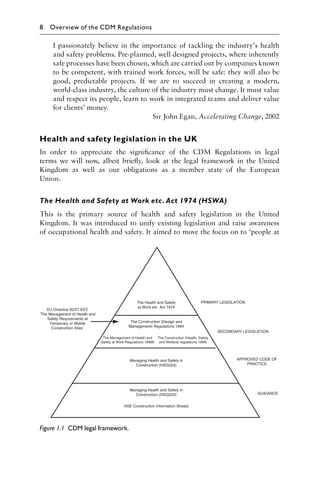
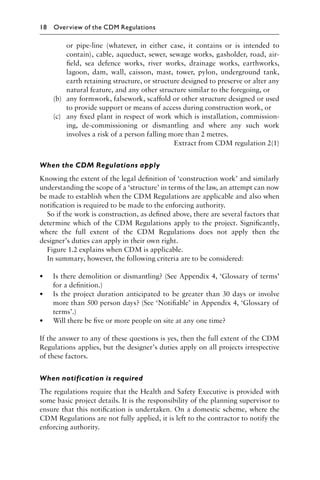
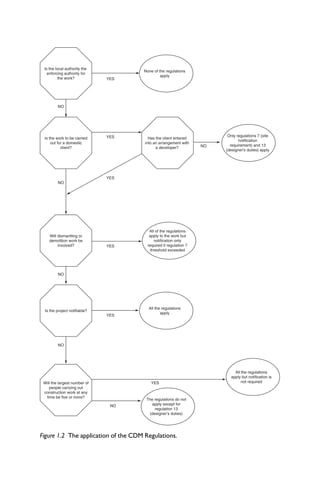
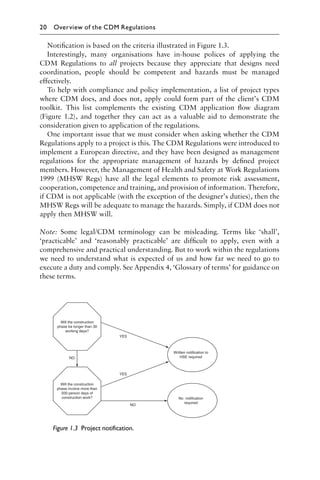
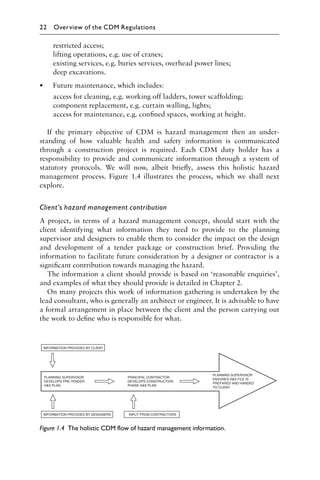
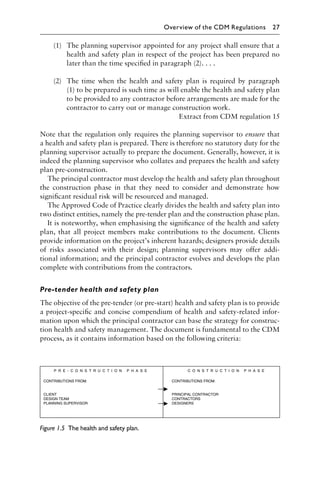

![between the combs are unavoidably contracted; but in winter well-
stored magazines are essential, while from their state of comparative
inactivity spacious communications are less necessary. On the return
of spring, however, when the cells are wanted for the reception of
eggs, the bees contract the elongated cells to their former
dimensions, and thus re-establish the just distances between the
combs which the care of their brood requires[775]. But this is not all.
Not only do they elongate the cells of the old combs when there is
an extraordinary harvest of honey, but they actually give to the new
cells which they construct on this emergency a much greater
diameter as well as a greater depth[776].
The queen-bee in ordinary circumstances places each egg in the
centre of the pyramidal bottom of the cell, where it remains fixed by
its natural gluten: but in an experiment of Huber, one whose
fecundation had been retarded, had the first segments of her
abdomen so swelled that she was unable to reach the bottom of the
cells. She therefore attached her eggs (which were those of males)
to their lower side, two lines from the mouth. As the larvæ always
pass that state in the place where they are deposited, those hatched
from the eggs in question remained in the situation assigned them.
But the working-bees, as if aware that in these circumstances the
cells would be too short to contain the larvæ when fully grown,
added to their length, even before the eggs were hatched[777].
Bees close up the cells of the grubs, previously to their
transformation, with a cover or lid of wax: and in hanging its abode
with a silken tapestry before it assumes the pupa state, the grub
requires that the cell should not be too short for its movements.
Bonnet having placed a swarm in a very flat glass hive, the bees
constructed one of the combs parallel to one of the principal sides,
where it was so straight that they could not give to the cells their
ordinary depth. The queen, however, laid eggs in them, and the
workers daily nourished the grubs, and closed the cells at the period
of transformation. A few days afterwards he was surprised to
perceive in the lids, holes more or less large, out of which the grubs](https://image.slidesharecdn.com/2344078-250525190456-a092dfd0/85/Understanding-The-Cdm-Regulations-Owen-V-Griffiths-56-320.jpg)
![partly projected, the cells having been too short to admit of their
usual movements. He was curious to know how the bees would
proceed. He expected that they would pull all the grubs out of the
cells, as they commonly do when great disorders in the combs take
place. But he did not sufficiently give credit to the resources of their
instinct. They did not displace a single grub—they left them in their
cells: but as they saw that these cells were not deep enough, they
closed them afresh with lids much more convex them ordinary, so as
to give to them a sufficient depth; and from that time no more holes
were made in the lids.
The working bees, in closing up the cells containing larvæ, invariably
give a convex lid to the large cells of drones, and one nearly flat to
the smaller cells of workers: but in an experiment instituted by
Huber to ascertain the influence of the size of the cells on that of the
included larvæ, he transferred the larvæ of workers to the cells of
drones. What was the result? Did the bees still continue blindly to
exercise their ordinary instinct? On the contrary, they now placed a
nearly flat lid upon these large cells, as if well aware of their being
occupied by a different race of inhabitants[778].
On some occasions bees, in consequence of Huber's arrangements
in the interior of their habitations, have begun to build a comb
nearer to the adjoining one than the usual interval; but they soon
appeared to perceive their error, and corrected it by giving to the
comb a gradual curvature, so as to resume the ordinary
distance[779].
In another instance, in which various irregularities had taken place in
the form of the combs, the bees, in prolonging one of them, had,
contrary to their usual custom, begun two separate and distant
continuations, which in approaching instead of joining would have
interfered with each other, had not the bees, apparently foreseeing
the difficulty, gradually bent their edges so as to make them join
with such exactness that they could afterwards continue them
conjointly[780].](https://image.slidesharecdn.com/2344078-250525190456-a092dfd0/85/Understanding-The-Cdm-Regulations-Owen-V-Griffiths-57-320.jpg)
![each other and to the walls of their habitation.—What was still more
extraordinary, all this happened in the middle of January, at a period
when the bees ordinarily cluster at the top of the hive, and do not
engage in labours of this kind[781].
You will admit, I think, that these proofs of the resources of the
architectural instinct of bees are truly admirable. If, in the case of
the substitution of mitys for the first range of waxen cells, this
procedure invariably took place in every bee-hive at a fixed period—
when, for example, the combs are two-thirds filled with honey—it
would be less surprising: but there is nothing of this invariable
character about it. It does not, as Huber expressly informs us[782],
occur at any marked and regular period, but appears to depend on
several circumstances not always combined. Sometimes the bees
content themselves with bordering the sides of the upper cells with
propolis alone, without altering their form or giving them greater
thickness. And it is not less remarkable that, from the instances last
cited, it appears that they are not confined to one kind of cement for
strengthening and supporting their combs, but avail themselves of
propolis, wax, or a mixture of both, as circumstances direct.
Not to weary you with examples of the modifications of instinct we
are considering, I shall introduce but three more:—the first, of the
mode in which bees extend the dimensions of an old comb; the
second, of that which they adopt in constructing the male cells and
connecting them with the smaller cells of workers; and the last, of
the plan pursued by them when it becomes necessary to bend their
combs.
You must have observed that a comb newly made becomes
gradually thinner at its edges, the cells there, on each side,
progressively decreasing in length: but in time these marginal cells,
as they are wanted for the purposes of the hive, are elongated to
the depth of the rest. Now suppose bees, from an augmentation of
the size of their hive, to have occasion to extend their combs either
in length or breadth, the process which they adopt is this: They](https://image.slidesharecdn.com/2344078-250525190456-a092dfd0/85/Understanding-The-Cdm-Regulations-Owen-V-Griffiths-60-320.jpg)
![gnaw away the tops of the marginal cells until the combs have
resumed their original lenticular form, and then construct upon their
edges the pyramidal lozenge-shaped bottoms of cells, upon which
the hexagonal sides are subsequently raised, as in their operation of
cell-building. This course of proceeding is invariable: they never
extend a comb in any direction whatever, without having first made
its edges thinner, diminishing its thickness in a portion sufficiently
large to leave no angular projection.—Huber observes, and with
reason, in relating this surprising law which obliges bees partially to
demolish the cells situated upon the edges of the combs, that it
deserves a more close examination than he found himself competent
to give it: for, if we may to a certain point form a conception of the
instinct which leads these animals to employ their art of building
cells, yet how can we conceive of that which in particular
circumstances forces them to act in an opposite direction, and
determines them to demolish what they have so laboriously
constructed[783]?
Drones, or male bees, are more bulky than the workers; and you
have been told, in speaking of the habitations of insects, that the
cells which bees construct for rearing the larvæ of the former, are
larger than those destined for the education of the larvæ of the
latter. The diameter of the cells of drones is always 3-1/3 lines (or
twelfths of an inch); that of those of workers 2-2/5 lines: and these
dimensions are so constant in their ordinary cells, that some authors
have thought they might be adopted as an universal and invariable
scale of measure, which would have the great recommendation of
being every where at hand, and at all events would be preferable to
our barley-corns. Several ranges of male cells, sometimes from thirty
to forty, are usually found in each comb, generally situated about the
middle. Now as these cells are not isolated, but form a part of the
entire comb, corresponding on its two faces—by what art is it that
the bees unite hexagonal cells of a small, with others of a larger
diameter, without leaving any void spaces, and without destroying
the uniformity and regularity of the comb? This problem would](https://image.slidesharecdn.com/2344078-250525190456-a092dfd0/85/Understanding-The-Cdm-Regulations-Owen-V-Griffiths-61-320.jpg)
![are calculated; that there exists as it were a moveable harmony in
the mechanism by which the cells are composed! If, in consequence
of the imperfection of their organs or of their instruments, bees
occasionally constructed some of their cells unequal, or of parts
badly put together, it would still manifest some talent to be able to
repair these defects, and to compensate one irregularity by another:
but it is far more astonishing that they know how to quit their
ordinary routine when circumstances require that they should build
male cells; that they should be instructed to vary the dimensions and
the shape of each piece so as to return to a regular order; and that,
after having constructed thirty or forty ranges of male cells, they
again leave the regular order on which these were formed, and
arrive by successive diminutions at the point from which they set
out. How should these insects be able to extricate themselves from
such a difficulty—from such a complicated structure? how pass from
the little to the great, from a regular plan to an irregular one, and
again resume the former? These are questions which no known
system can explain[784].
Here again, as observed in a former instance, the wonder would be
less, if every comb contained a certain number of transition and of
male cells, constantly situated in one and the same part of it: but
this is far from being the case. The event which alone, at whatever
period it may happen, seems to determine the bees to construct
male cells, is the oviposition of the queen. So long as she continues
to lay the eggs of workers not a male cell is founded; but as soon as
she is about to lay male eggs, the workers seem aware of it, and
you then see them form their cells irregularly, impart to them by
degrees a greater diameter, and at length prepare suitable ranges of
cradles for all the male race[785].—You must perceive how absurd it
would be to refer this astonishing variation of instinct to any mere
change in the sensations of the bees; and to what far-fetched and
gratuitous suppositions we must be reduced, if we adopt any such
explanation. We can but refer it to an instinct of which we know
nothing; and so referring it, can we help exclaiming with Huber,](https://image.slidesharecdn.com/2344078-250525190456-a092dfd0/85/Understanding-The-Cdm-Regulations-Owen-V-Griffiths-64-320.jpg)
!["Such is the grandeur of the views and of the means of ordaining
wisdom, that it is not by a minute exactness that she marches to her
end, but proceeds from irregularity to irregularity, compensating one
by another: the admeasurements are made on high, the apparent
errors appreciated by a divine geometry; and order often results
from partial diversity. This is not the first instance which science has
presented to us of preordained irregularities which astonish our
ignorance, and are the admiration of the most enlightened minds:
So true it is, that the more we investigate the general as well as
particular laws of this vast system, the more perfection does it
present[786]."
It is observed by M. P. Huber, in his appendix to the account of his
father's discoveries relative to the architecture of bees, that in
general the form of the prisms or tubes of the cells is more essential
than that of their bottoms, since the tetrahedral-bottomed transition
cells, and even those cells which being built immediately upon wood
or glass, were entirely without bottoms, still preserved their usual
shape of hexagonal prisms. But a remarkable experiment of the
elder Huber shows that bees can alter even the form of their cells
when circumstances require it, and that in a way which one would
not have expected.
Having placed in front of a comb which the bees were constructing,
a slip of glass, they seemed immediately aware that it would be very
difficult to attach it to so slippery a surface: and instead of
continuing the comb in a straight line, they bent it at a right angle,
so as to extend beyond the slip of glass, and ultimately fixed it to an
adjoining part of the wood-work of the hive which the glass did not
cover. This deviation, if the comb had been a mere simple and
uniform mass of wax, would have evinced no small ingenuity; but
you will bear in mind that a comb consists on each side, or face, of
cells having between them bottoms in common: and if you take a
comb, and having softened the wax by heat, endeavour to bend it in
any part at a right angle, you will then comprehend the difficulties
which our little architects had to encounter. The resources of their](https://image.slidesharecdn.com/2344078-250525190456-a092dfd0/85/Understanding-The-Cdm-Regulations-Owen-V-Griffiths-65-320.jpg)
![instinct, however, were adequate to the emergency. They made the
cells on the convex side of the bent part of the comb much larger,
and those on the concave side much smaller than usual; the former
having three or four times the diameter of the latter. But this was
not all. As the bottoms of the small and large cells were as usual
common to both, the cells were not regular prisms, but the small
ones considerably wider at the bottom than at the top, and
conversely in the large ones!—What conception can we form of so
wonderful a flexibility of instinct? How, as Huber asks, can we
comprehend the mode in which such a crowd of labourers, occupied
at the same time on the edge of the comb, could agree to give to it
the same curvature from one extremity to the other; or how they
could arrange together to construct on one face cells so small, while
on the other they imparted to them such enlarged dimensions?—And
how can we feel adequate astonishment that they should have the
art of making cells of such different sizes correspond[787]?
After this long but I flatter myself not wholly uninteresting
enumeration, you will scarcely hesitate to admit that insects, and of
these the bee pre-eminently, are endowed with a much more
exquisite and flexible instinct than the larger animals. But you may
be here led to ask, Can all this be referred to instinct? Is not this
pliability to circumstances—this surprising adaptation of means for
accomplishing an end—rather the result of reason?
You will not doubt my allowing the appositeness of this question,
when I frankly tell you, that so strikingly do many of the preceding
facts seem at first view the effect of reason, that in my original
sketch of the letter you are now reading, I had arranged them as
instances of this faculty. But mature consideration has convinced me
(though I confess the subject has great difficulties) that this view
was fallacious; and that though some circumstances connected with](https://image.slidesharecdn.com/2344078-250525190456-a092dfd0/85/Understanding-The-Cdm-Regulations-Owen-V-Griffiths-66-320.jpg)
![these facts may, as I shall hereafter show, be referable to reason,
the facts themselves can only be consistently explained by regarding
them as I have here done, as examples of variations of particular
instincts:—and this on two accounts.
In the first place, these variations, however singular, are limited in
their extent: all bees are, and have always been, able to avail
themselves of a certain number, but not to increase that number.
Bees cemented their combs when becoming heavy, to the top of the
hive, with mitys, in the time of Aristotle and Pliny as they do now;
and there is every reason to believe that then, as now, they
occasionally varied their procedures, by securing them with wax or
with propolis only, either added to the upper range of cells, or
disposed in braces and ties to the adjoining combs. But if in thus
proceeding they were guided by reason, why not under certain
circumstances adopt other modes of strengthening their combs?
Why not, when wax and propolis are scarce, employ mud, which
they might see the martin avail herself of so successfully? Or why
should it not come into the head of some hoary denizen of the hive,
that a little of the mortar with which his careful master plasters the
crevices between his habitation and its stand, might answer the end
of mitys? "Si seulement ils élevoient une fois des câbanes quarrées,"
(says Bonnet when, speaking as to what faculty the works of the
beaver are to be referred,) "mais ce sont éternellement des câbanes
rondes ou ovales[788]:"—and so we might say of the phenomena in
question:—Show us but one instance of bees having substituted mud
or mortar for mitys, pissoceros, or propolis, or wooden props for
waxen ties, and there could be no doubt of their being here guided
by reason. But since no such instance is on record; since they are
still confined to the same limits—however surprising the range of
these limits—as they were two thousand years ago; and since the
bees emerged from their pupæ but a few hours before, will set
themselves as adroitly to work and pursue their operations as
scientifically as their brethren, who can boast the experience of a
long life of twelve months duration;—we must still regard these
actions as variations of instinct.](https://image.slidesharecdn.com/2344078-250525190456-a092dfd0/85/Understanding-The-Cdm-Regulations-Owen-V-Griffiths-67-320.jpg)
![the enumeration, or to adduce many species of the superior classes
of animals, endowed with a greater number.
But how vastly more manifold are the instincts of the majority of
insects! It is not necessary to insist upon those differences which
take place in the same insect in its different states, leading it to
select one kind of food in the larva, and another in the perfect state;
to defend itself in one mode in the former, and in another in the
latter, &c.—because, however remarkable these variations, they may
be referred with great plausibility to those striking changes in the
organic structure of the animal, which occur at the two periods of its
existence. It is to the number of instincts observable in the same
individual of many insects in their perfect state that I now confine
myself; and as the most striking example of the whole I shall select
the hive-bee,—begging you to bear in mind that I do not mean to
include those exhibited by the queen, the drones, or even those of
the workers, termed by Huber cirières (wax makers); but only to
enumerate those presented by that portion of the workers, termed
by Huber nourrices or petites abeilles (nurses), upon whom, as you
have been before told[789], with the exception of making wax, laying
the foundation of the cells, and collecting honey for being stored,
the principal labours of the hive devolve. It will be these individuals
alone that I shall understand by the term bees, under the present
head: and though the other inhabitants of the hive may occasionally
concur in some of their actions and labours, yet it is obvious that so
many as are those in which they distinctly take part, so many
instincts must we regard them as endowed with.
To begin, then, with the formation of the colony:—By one instinct
bees are directed to send out scouts previously to their swarming, in
search of a suitable abode[790]; and by another, to rush out of the
hive after the queen that leads forth the swarm, and follow wherever
she bends her course. Having taken possession of their new abode,
whether of their own selection or prepared for them by the hand of
man, a third instinct teaches them to cleanse it from all
impurities[791]; a fourth to collect propolis, and with it to stop up](https://image.slidesharecdn.com/2344078-250525190456-a092dfd0/85/Understanding-The-Cdm-Regulations-Owen-V-Griffiths-69-320.jpg)
![every crevice except the entrance; a fifth to ventilate the hive for
preserving the purity of the air; and a sixth to keep a constant guard
at the door[792].
In constructing the houses and streets of their new city, or the cells
and combs, there are probably several distinct instincts exercised;
but not to leave room for objection, I shall regard them as the result
of one only: yet the operations of polishing the interior of the cells,
and soldering their angles and orifices with propolis, which are
sometimes not undertaken for weeks after the cells are built[793];
and the obscure but still more curious one of varnishing them with
the yellow tinge observable in old combs;—seem clearly referable to
at least two distinct instincts. The varnishing process is so little
connected with that of building, that, though it takes place in some
combs in three or four days, it does not in others for several months,
though both are equally employed for the same uses[794]. Huber
ascertained by accurate experiment that this tinge is not owing to
the heat of the hives; to any vapours in the air which they include;
to any emanations from the wax or honey; nor to the deposition of
this last in the cells; but he inclines to think it is occasioned by a
yellow matter which the bees seem to detach from their mandibles,
and to apply to the surface which they are varnishing, by repeated
strokes of these organs and of the fore feet[795].
In their out-of-door operations several distinct instincts are
concerned. By one they are led to extract honey from the nectaries
of flowers; by another to collect pollen after a process involving very
complicated manipulations, and requiring a singular apparatus of
brushes and baskets; and that must surely be considered a third,
which so remarkably and beneficially restricts each gathering to the
same plant[796]. It is clearly a distinct instinct which inspires bees
with such dread of rain, that even if a cloud pass before the sun,
they return to the hive in the greatest haste[797]; and that seems to
me not less so, which teaches them to find their way back to their
home after the most distant and intricate wanderings. When bees](https://image.slidesharecdn.com/2344078-250525190456-a092dfd0/85/Understanding-The-Cdm-Regulations-Owen-V-Griffiths-70-320.jpg)
![have found the direction in which their hive lies, Huber says they fly
to it with an extreme rapidity, and as straight as a ball from a
musket[798]: and if their hives were always in open situations, one
might suppose, as Huber seems inclined to think, that it is by their
sight they are conducted to them. But hives are frequently found in
small gardens embowered in wood; and in the midst of villages
surrounded and interspersed with trees and buildings, so as to make
it impossible that they can be seen from a distance. If you had been
with me in 1815, in the famous Pays de Waes in Flanders—where
the country is a perfect flat, and the inhabitants so enamoured
either of the beauty or profit of trees, that their fields, which are
rarely above three acres in extent, are constantly surrounded with a
double row, making the whole district one vast wood—you would
have pitied the poor bees if reduced to depend on their own eye-
sight for retracing the road homeward. In vain during my stay at St.
Nicholas I sallied out at every outlet to try to gain some idea of the
extent and form of the town. Trees—trees—trees—still met me, and
intercepted the view in every direction; and I defy any inhabitant
bee of this rural metropolis, after once quitting its hive, ever to gain
a glimpse of it again until nearly perpendicularly over it. The bees,
therefore, of the Pays de Waes, and consequently all other bees,
must be led to their abodes by instinct, as certainly as it is instinct
that directs the migrations of birds or of fishes, or domestic
quadrupeds to find out their homes from inconceivable
distances[799].—When they have reached the hive, another instinct
leads them to regurgitate into the extended proboscis of their
hungry companions who have been occupied at home, a portion of
the honey collected in the fields; and another directs them to unload
their legs of the masses of pollen, and to store it in the cells for
future use.](https://image.slidesharecdn.com/2344078-250525190456-a092dfd0/85/Understanding-The-Cdm-Regulations-Owen-V-Griffiths-71-320.jpg)
![say that one insect has a greater or less share of instinct than
another, but more or fewer instincts.—That it is not always easy to
determine what actions are to be referred to a distinct instinct and
what to a modification of an instinct, I am very ready to admit; but
this is no solid ground for regarding all instincts as modifications of
some one principle. It is often equally difficult to fix the limits
between instinct and reason; but we are not on this account justified
in deeming them the same.
This multitude of instincts in the same individual, becomes more
wonderful when considered in another point of view. Were they
constantly to follow each other in regular sequence, so that each
bee necessarily first began to build cells, then to collect honey, next
pollen, and so on, we might plausibly enough refer them to some
change in the sensations of the animal, caused by alterations in the
structure and gradual development of its organs, in the same way as
on similar principles we explain the sexual instincts of the superior
tribes. But it is certain that no such consecutive series prevails. The
different instincts of the bee are called into action in an order
regulated solely by the needs of the society. If combs be wanted, no
bee collects honey for storing until they are provided[800]: and if,
when constructed, any accident injure or destroy them, every labour
is suspended until the mischief is repaired or new ones
substituted[801]. When the crevices round the hive are effectually
secured with propolis, the instinct directing the collection of this
substance lies dormant: but transfer the bees to a new hive which
shall require a new luting, and it is instantly re-excited. But these
instances are superfluous. Every one knows that at the same
moment of time the citizens of a hive are employed in the most
varied and opposite operations. Some are collecting pollen; others
are in search of honey; some busied at home in the first
construction of the cells; others in giving them their last polish;
others in ventilating the hive; others again in feeding the young
brood and the like.](https://image.slidesharecdn.com/2344078-250525190456-a092dfd0/85/Understanding-The-Cdm-Regulations-Owen-V-Griffiths-74-320.jpg)
![Several of the facts occurring in the history of bees might be
referred to this head; but I shall here advert only to the treatment of
the drones by the workers under different circumstances, and to the
operations of the latter consequent upon the irretrievable loss of the
queen—facts which have been before stated to you, but to the
principal features of which my present argument makes it necessary
that I should again direct your attention.
If a hive of bees be this year in possession of a queen duly fertilized,
and consequently sure the next season of a succession of males, all
the drones, as I have before stated[802], towards the approach of
winter are massacred by the workers with the most unrelenting
ferocity. To this seemingly cruel course they are doubtless impelled
by an imperious instinct; and as it is regularly followed in every hive
thus circumstanced, it would seem at the first view to be an impulse
as intimately connected with the organization and very existence of
the workers, and as incapable of change, as that which leads them
to build cells or to store up honey. But this is far from being the
case. However certain the doom of the drones this autumn, if the
hive be furnished with a duly-fertilized queen, their undisturbed
existence over the winter is equally sure if the hive have lost its
sovereign, or her impregnation have been so retarded as to make a
succession of males in the spring doubtful. In such a hive the
workers do not destroy a single drone, though the hottest
persecution rages in all the hives around them.
Now, how are we to explain this difference of conduct? Are we to
suppose that the bees know and reason upon this alteration in the
circumstances of their community—that they infer the possibility of
their entire extinction if the whole male stock were destroyed when
without a queen—and that thus influenced by a wise policy they
restrain the fury they would otherwise have exercised? This would
be at once to make them not only gifted with reason, but endowed
with a power of looking before and after, and a command over the
strongest natural propensities, superior to what could be expected in
a similar case even from a society of men; and is obviously](https://image.slidesharecdn.com/2344078-250525190456-a092dfd0/85/Understanding-The-Cdm-Regulations-Owen-V-Griffiths-77-320.jpg)