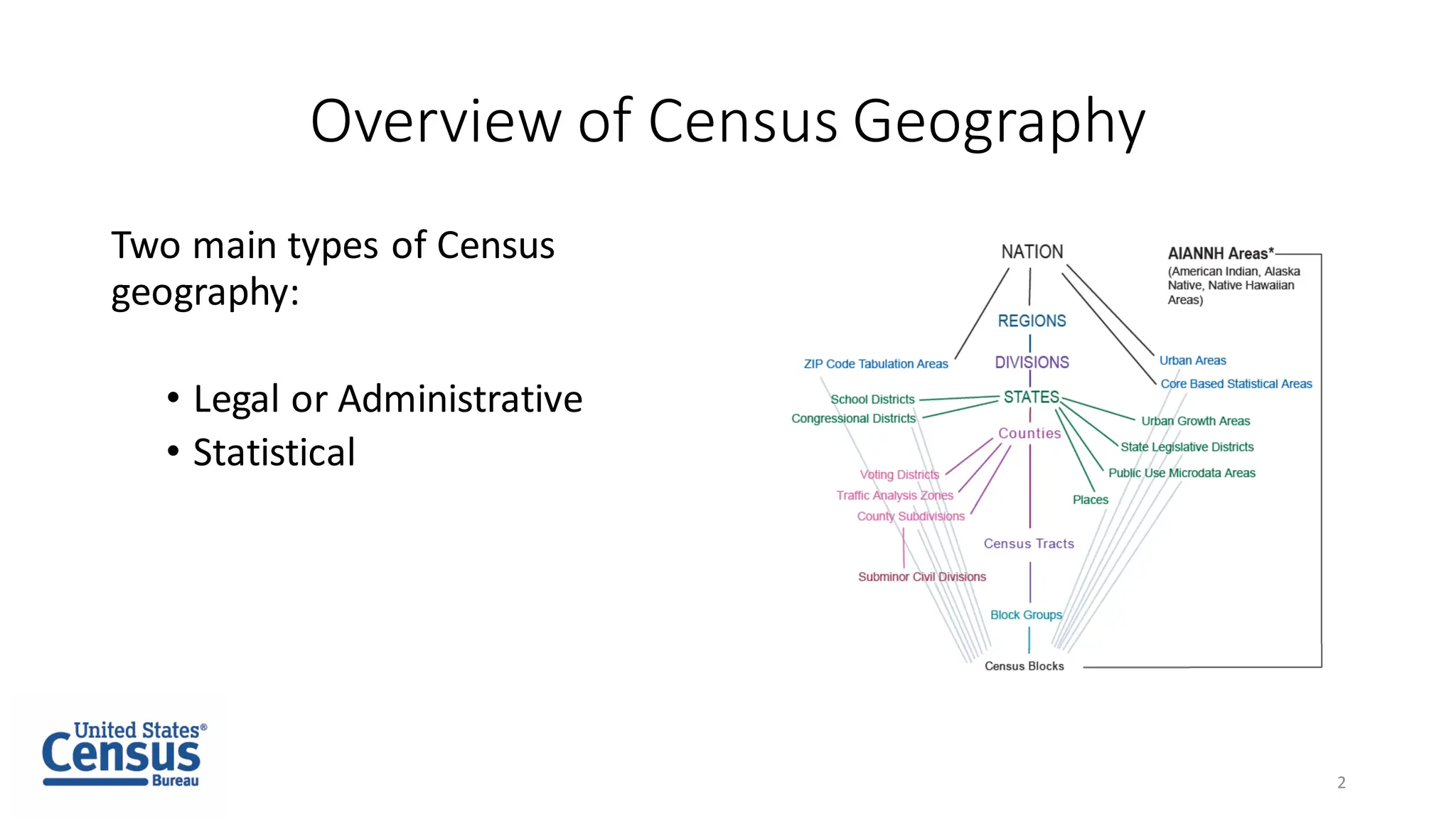
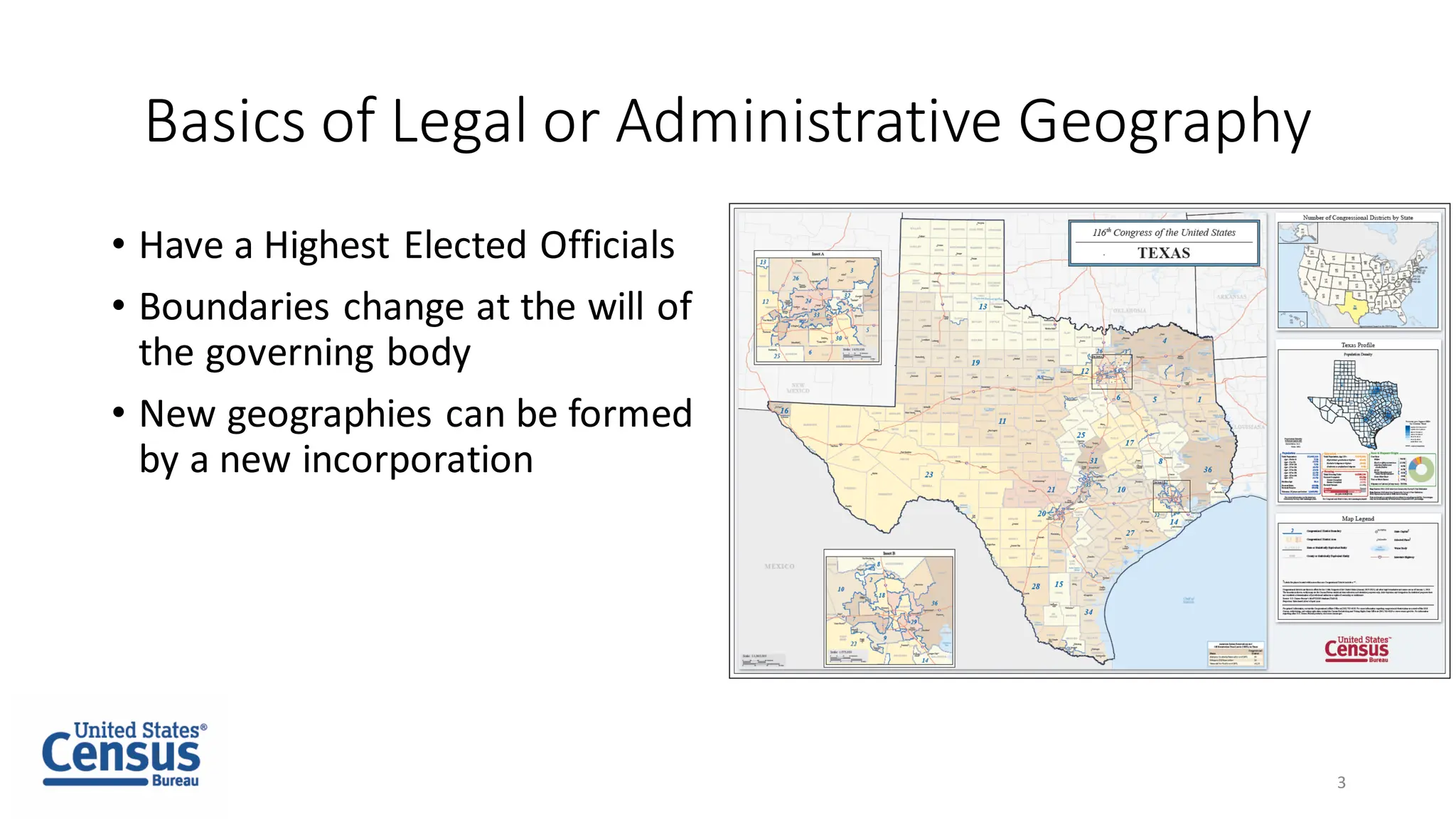
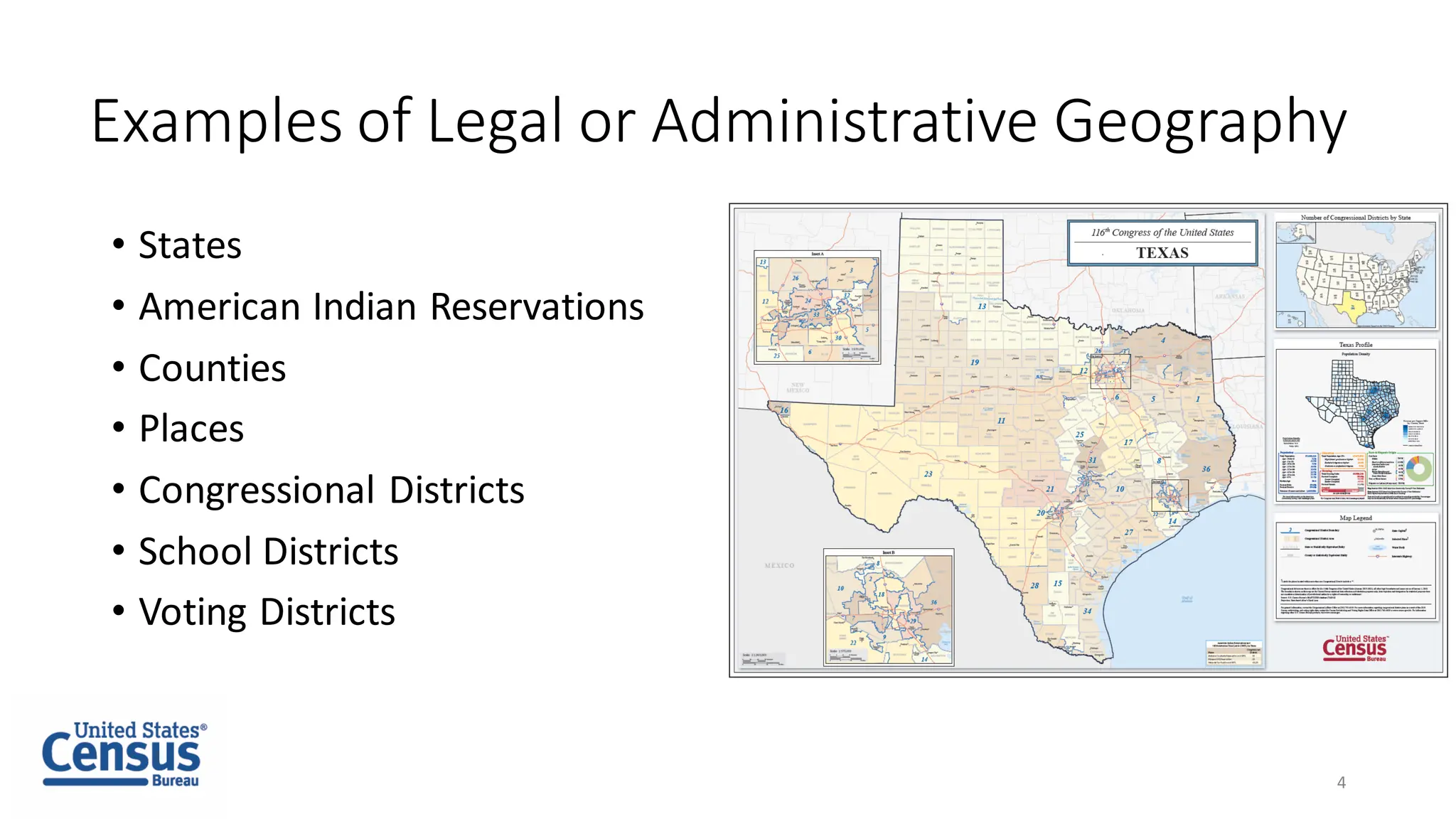
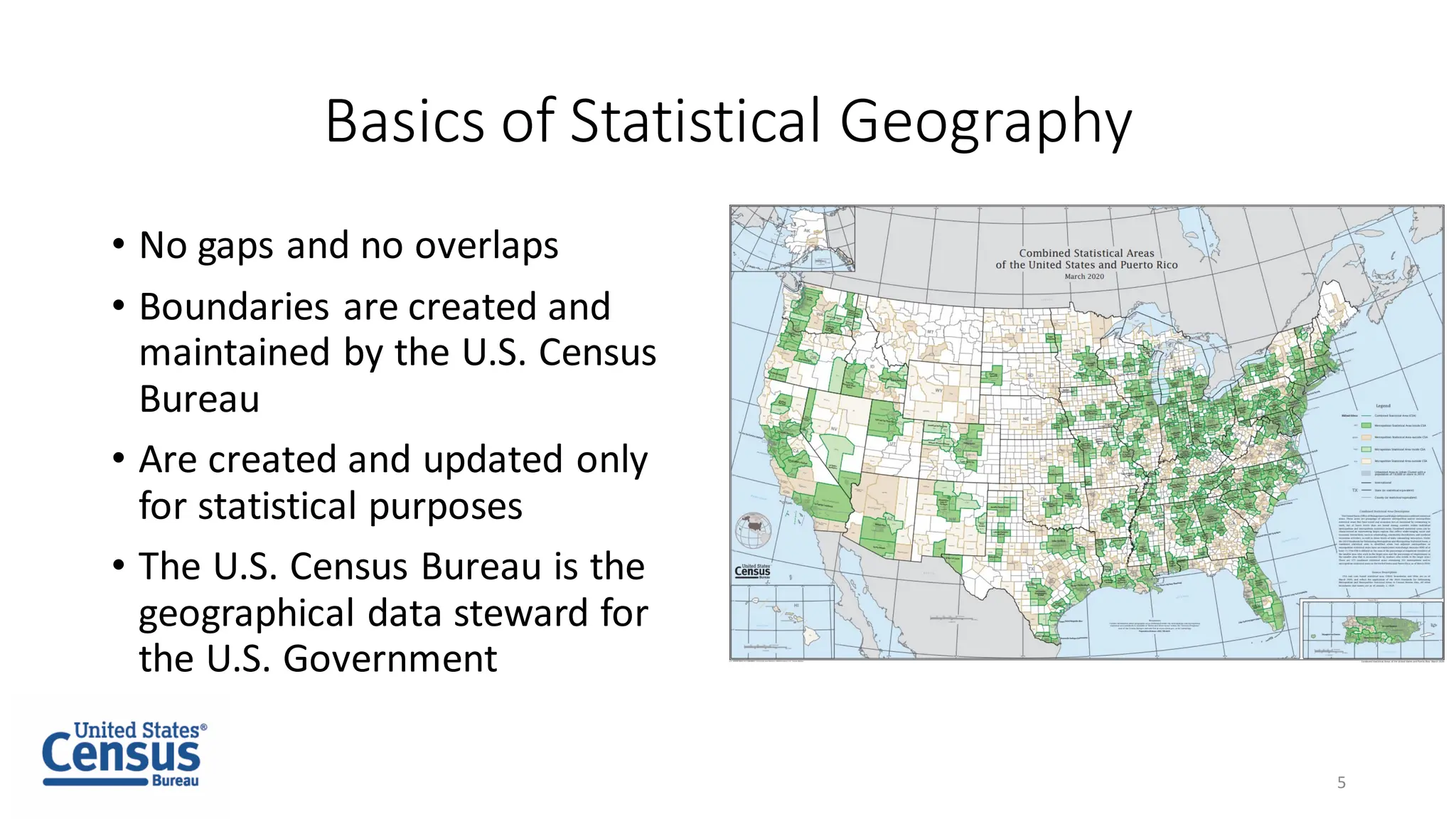
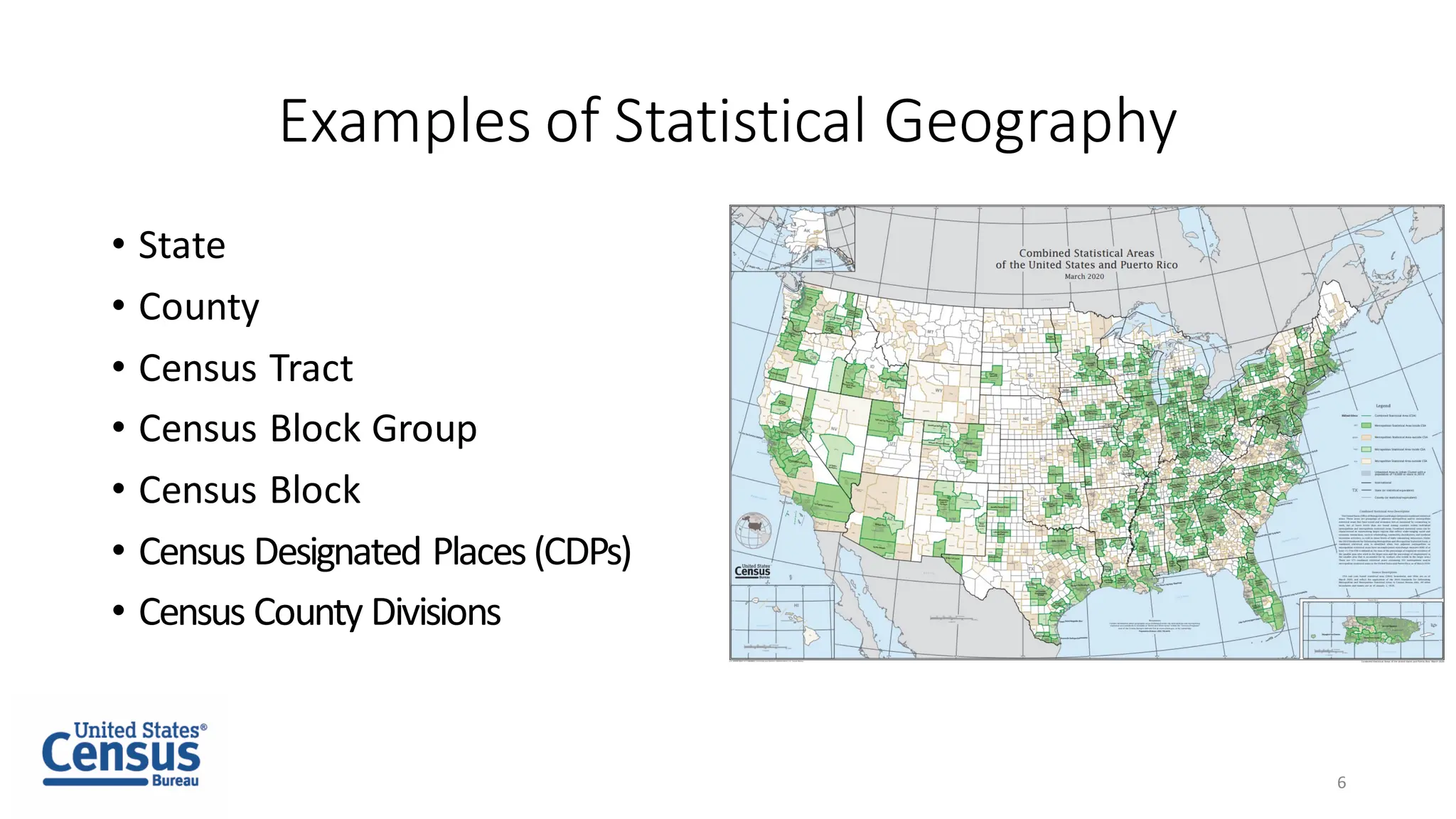
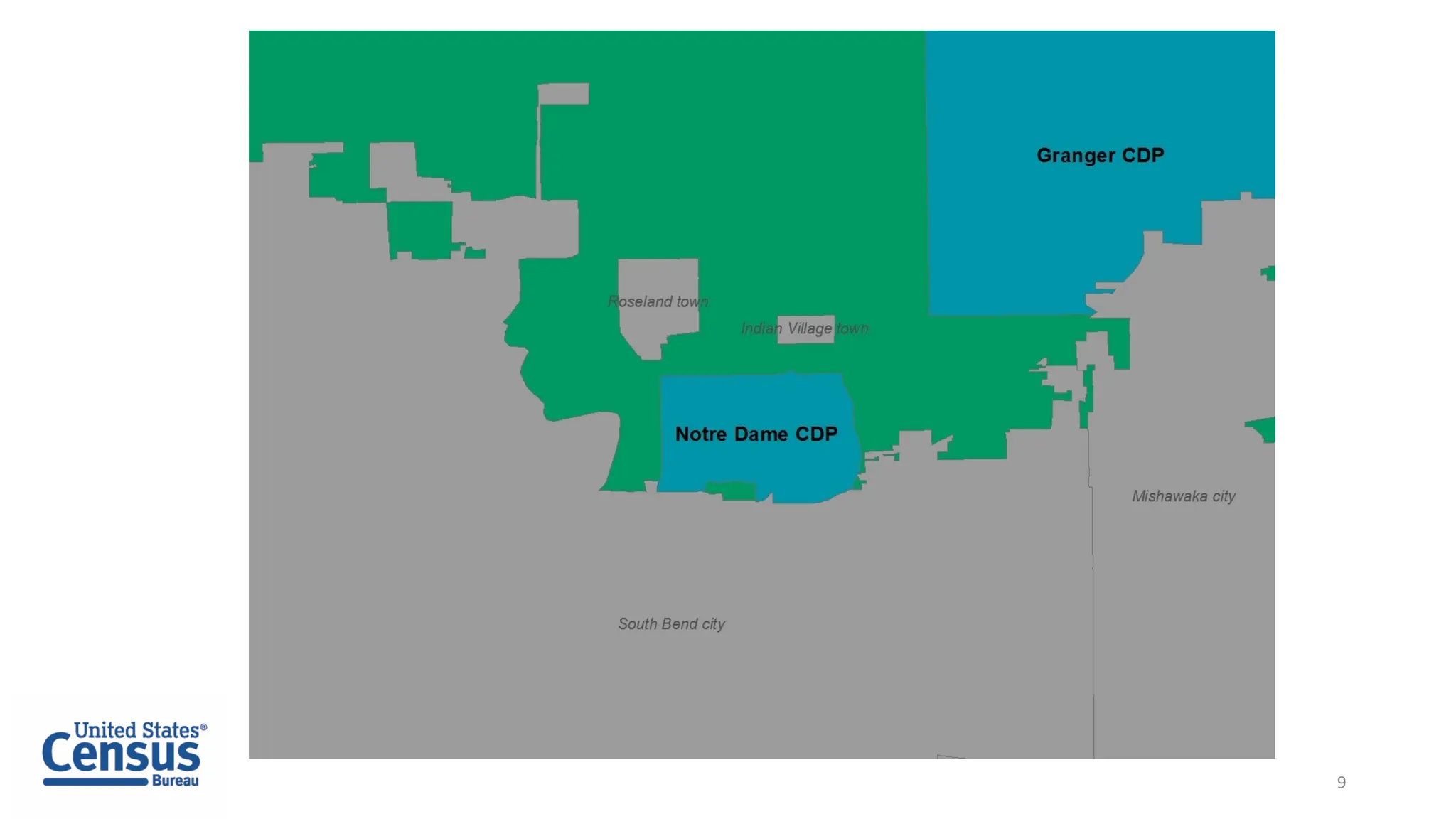
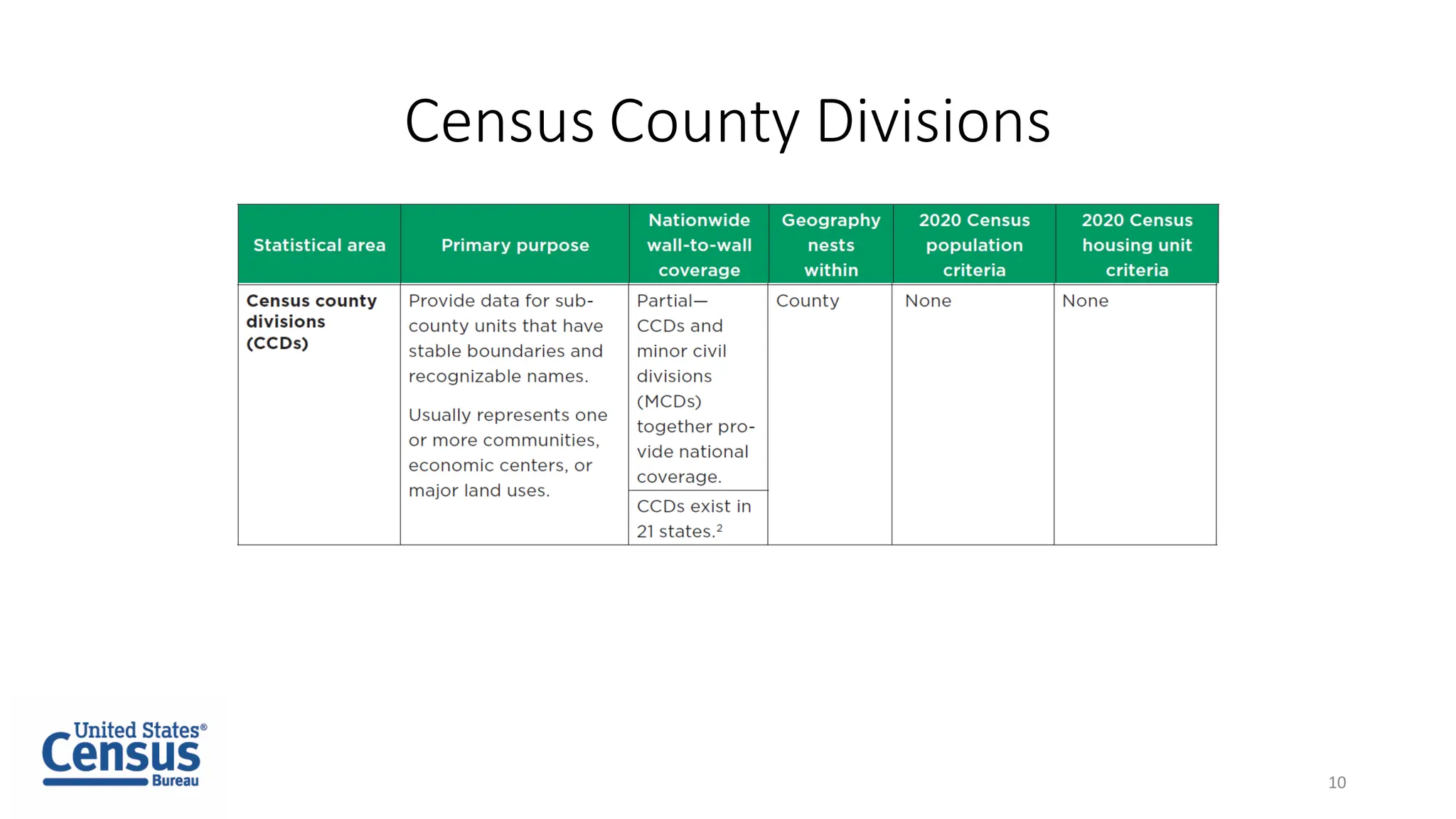
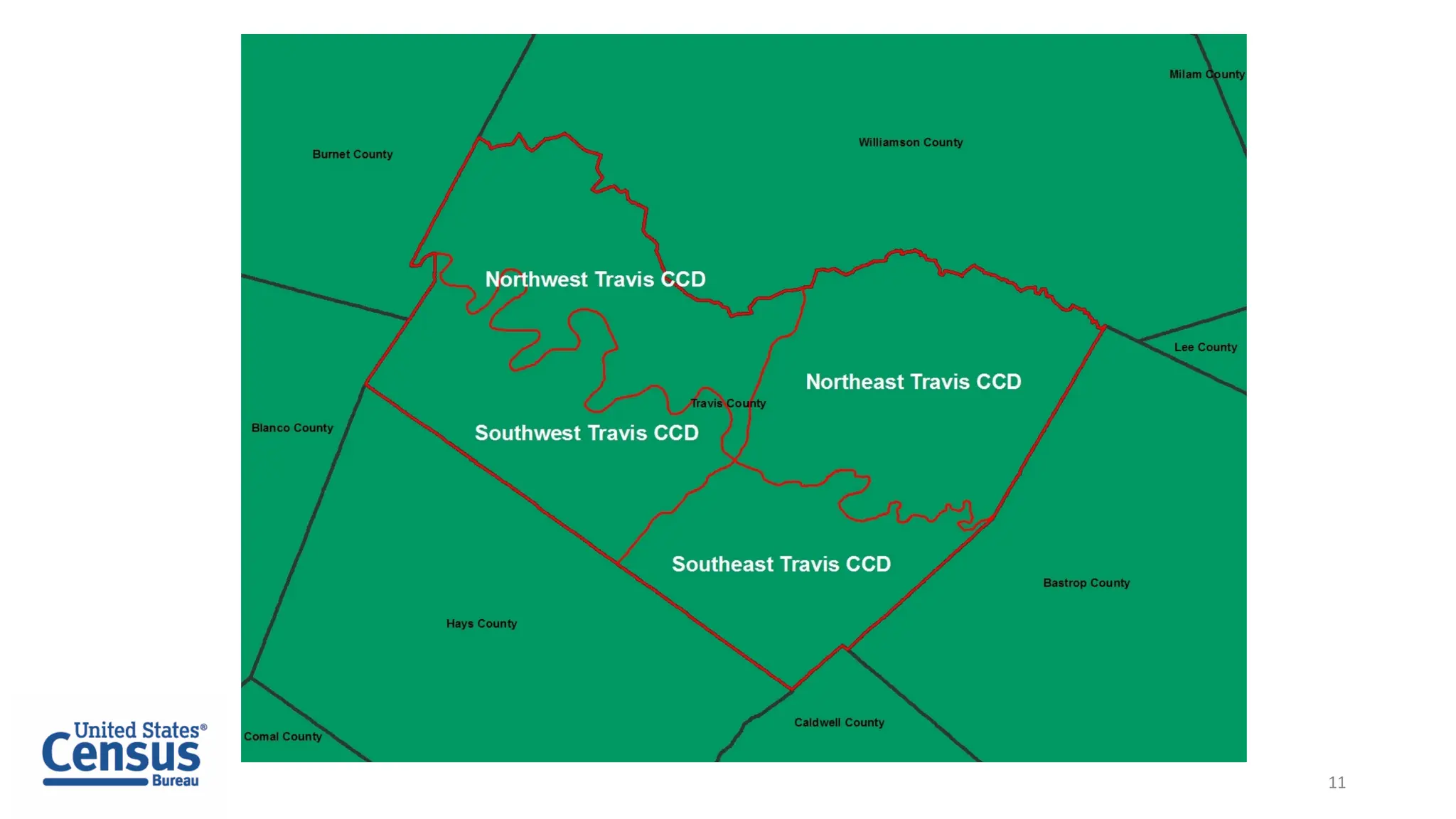
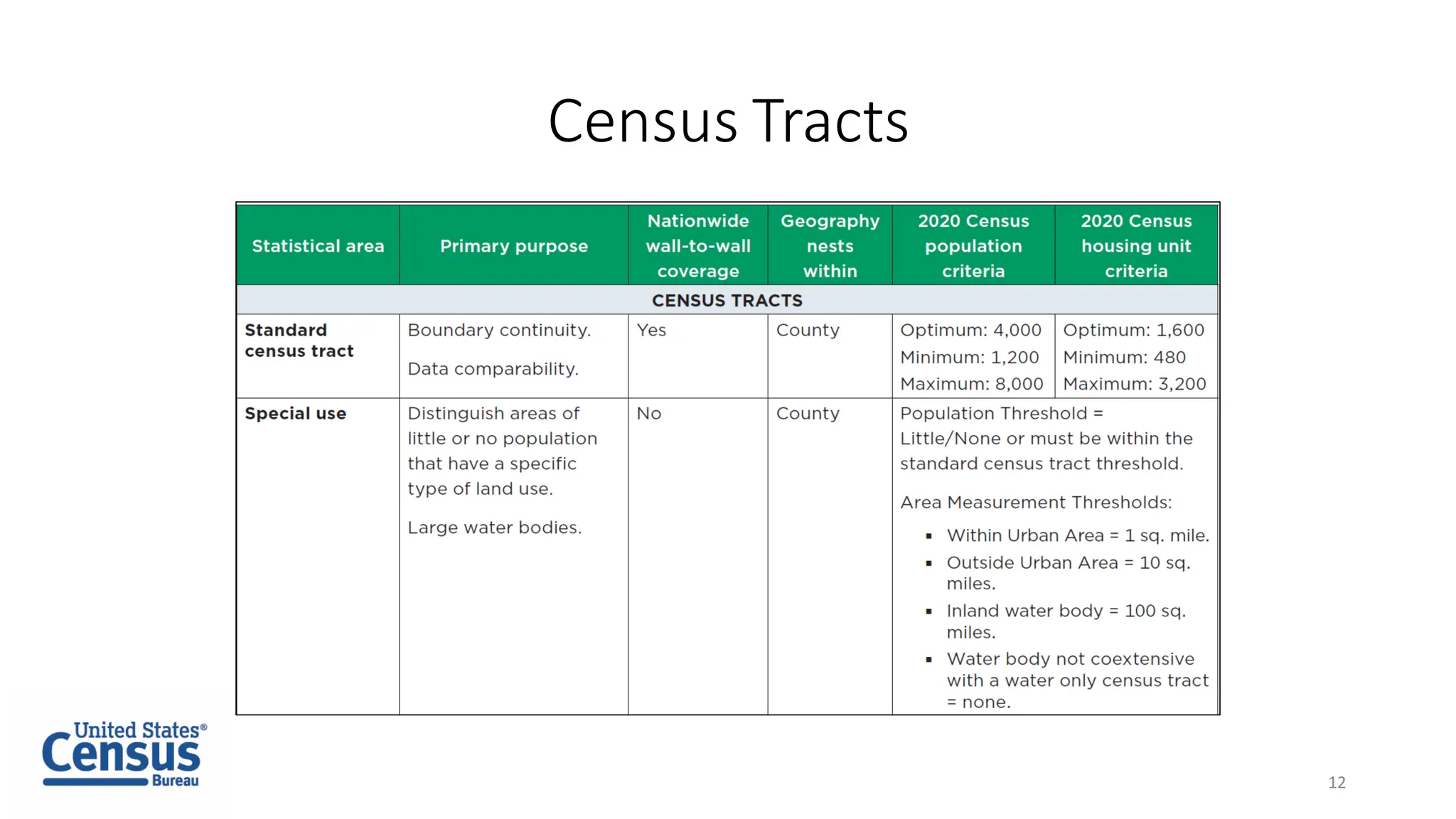
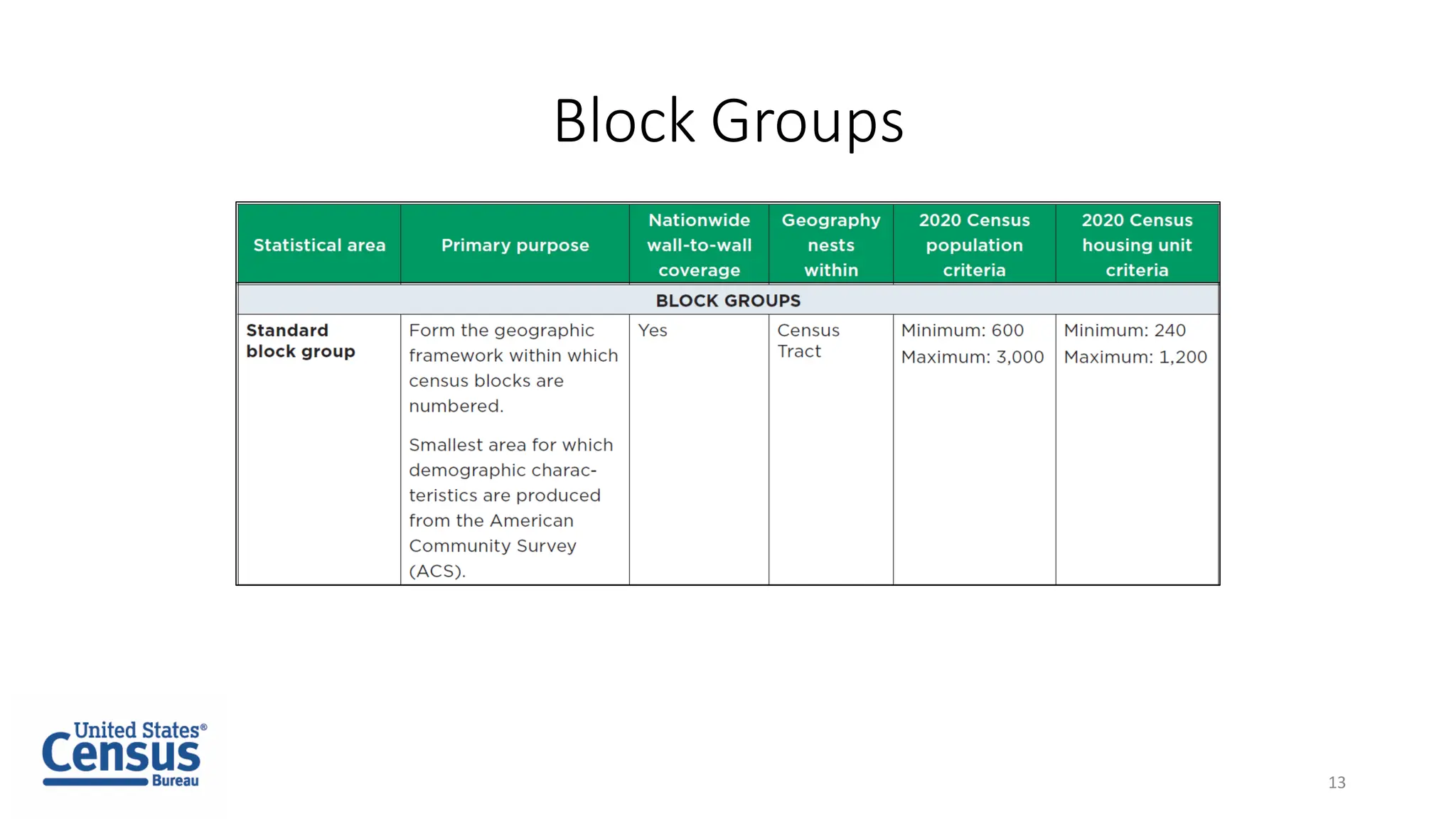
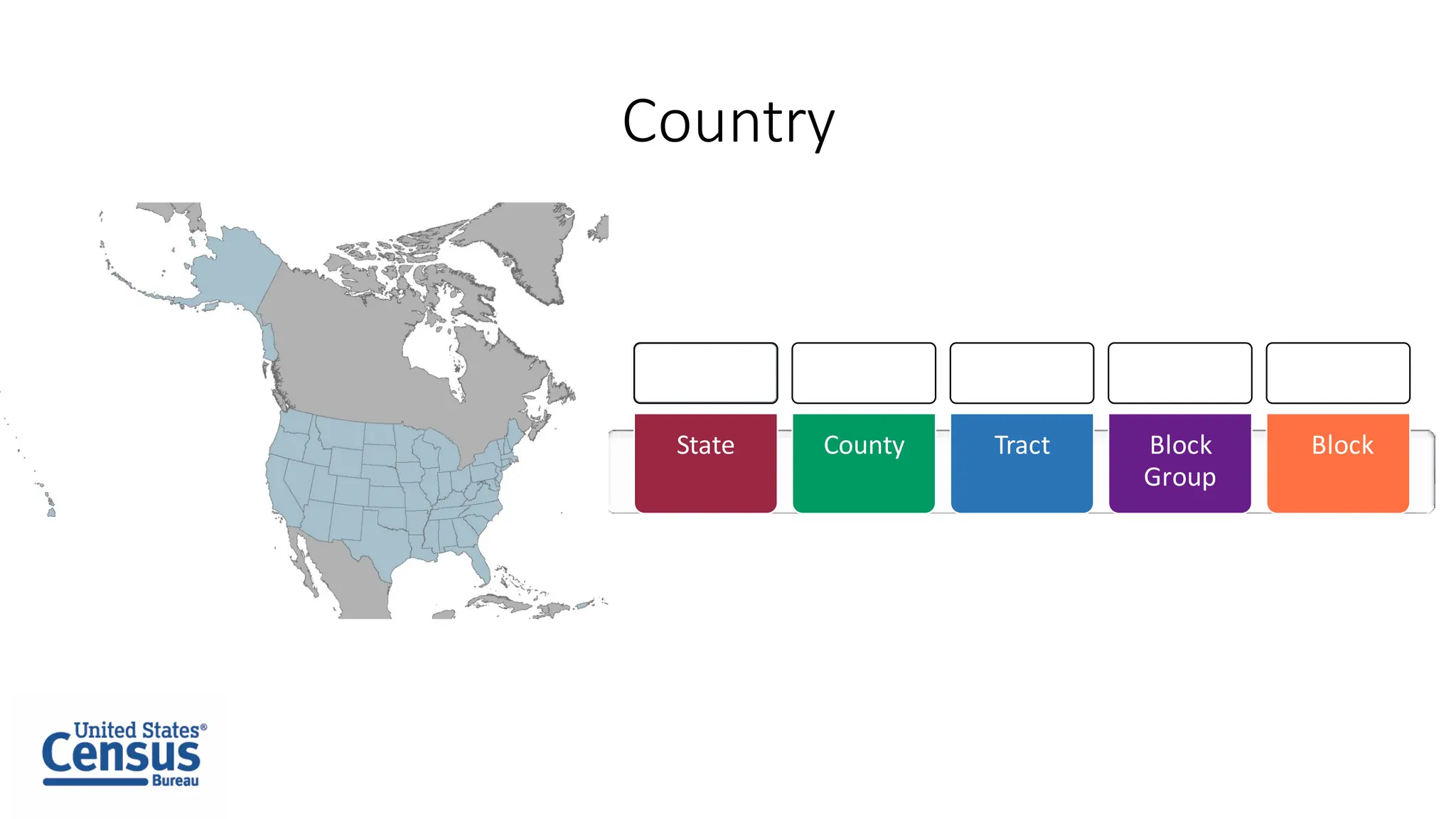
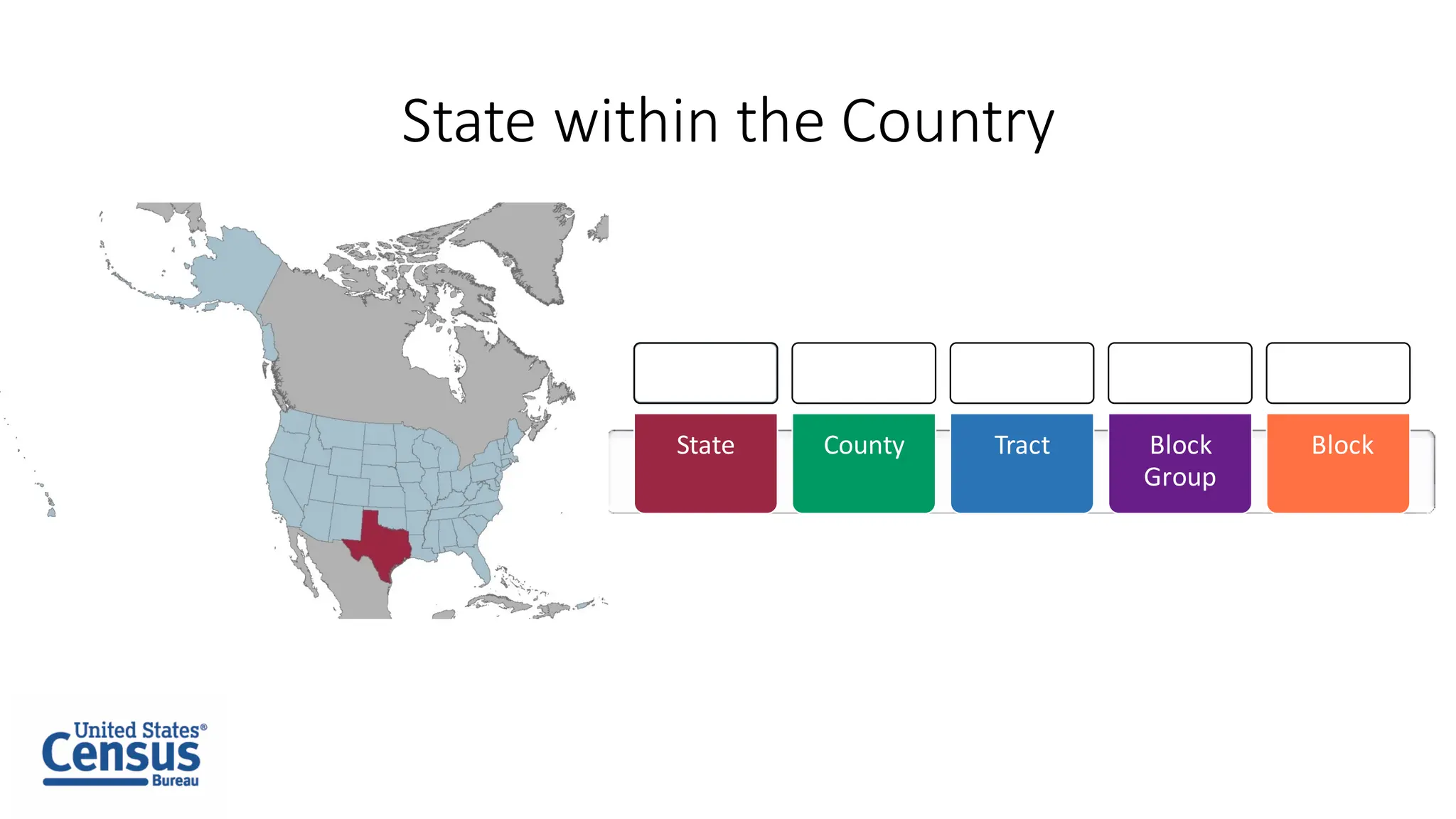
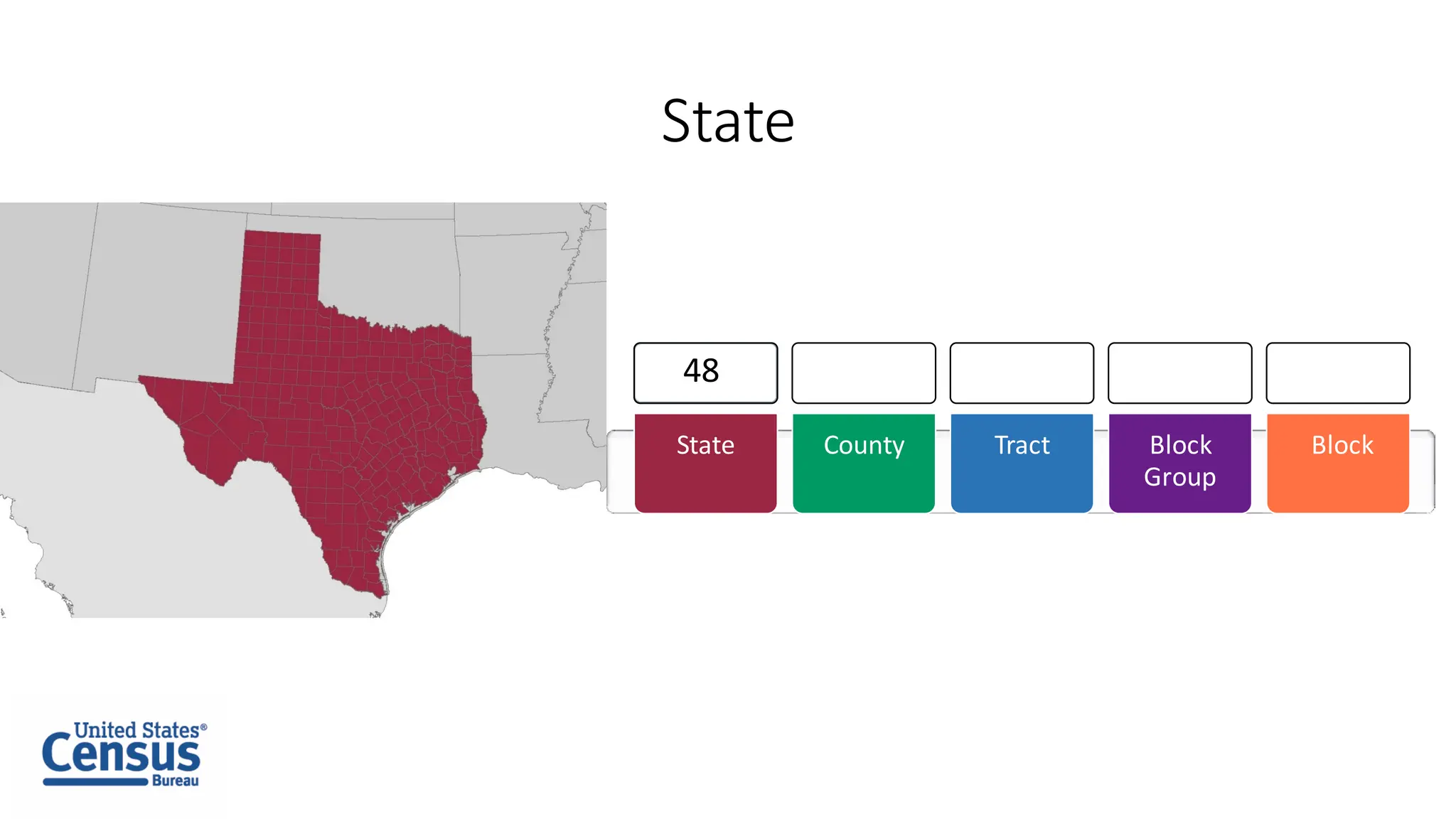
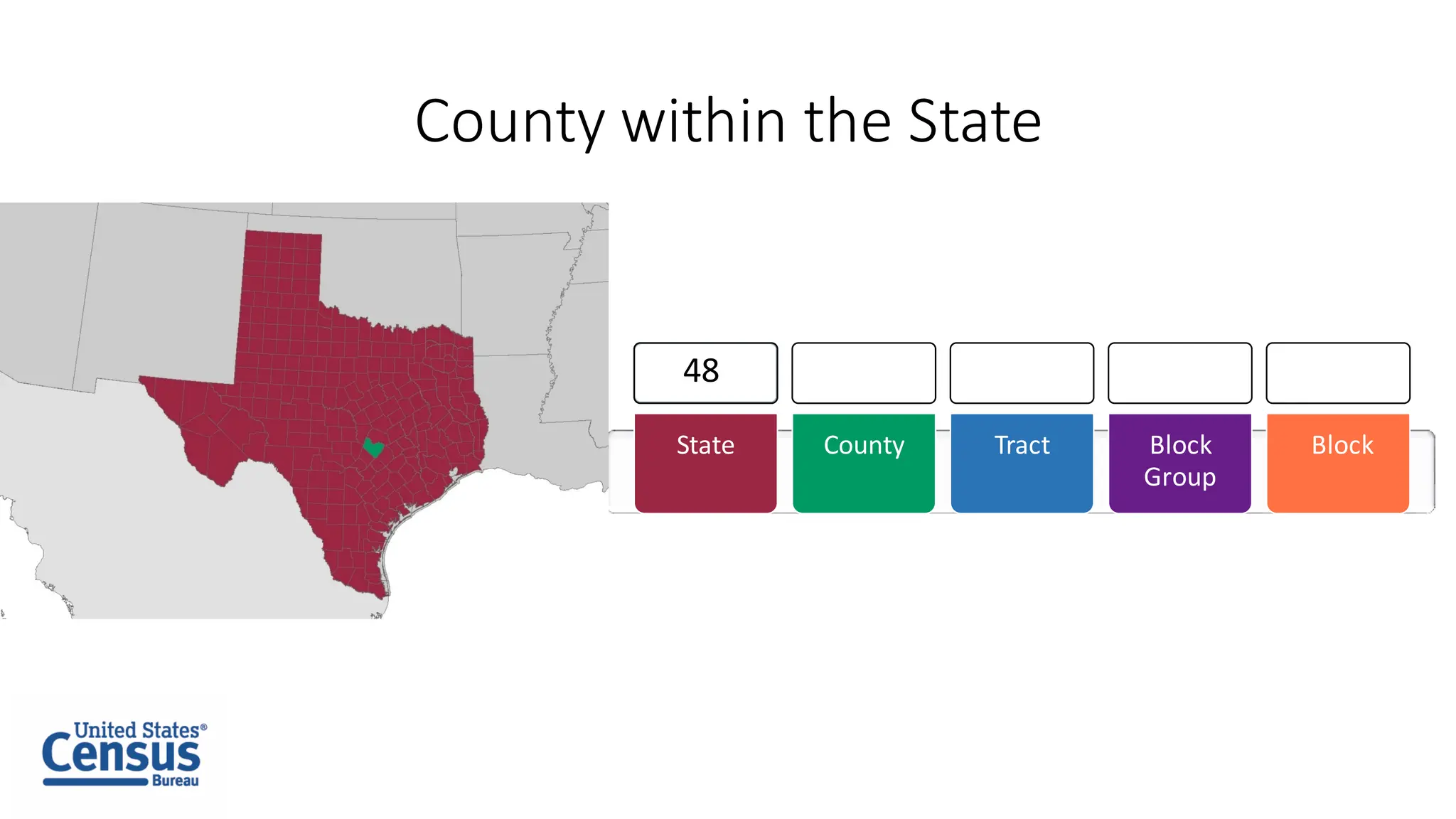
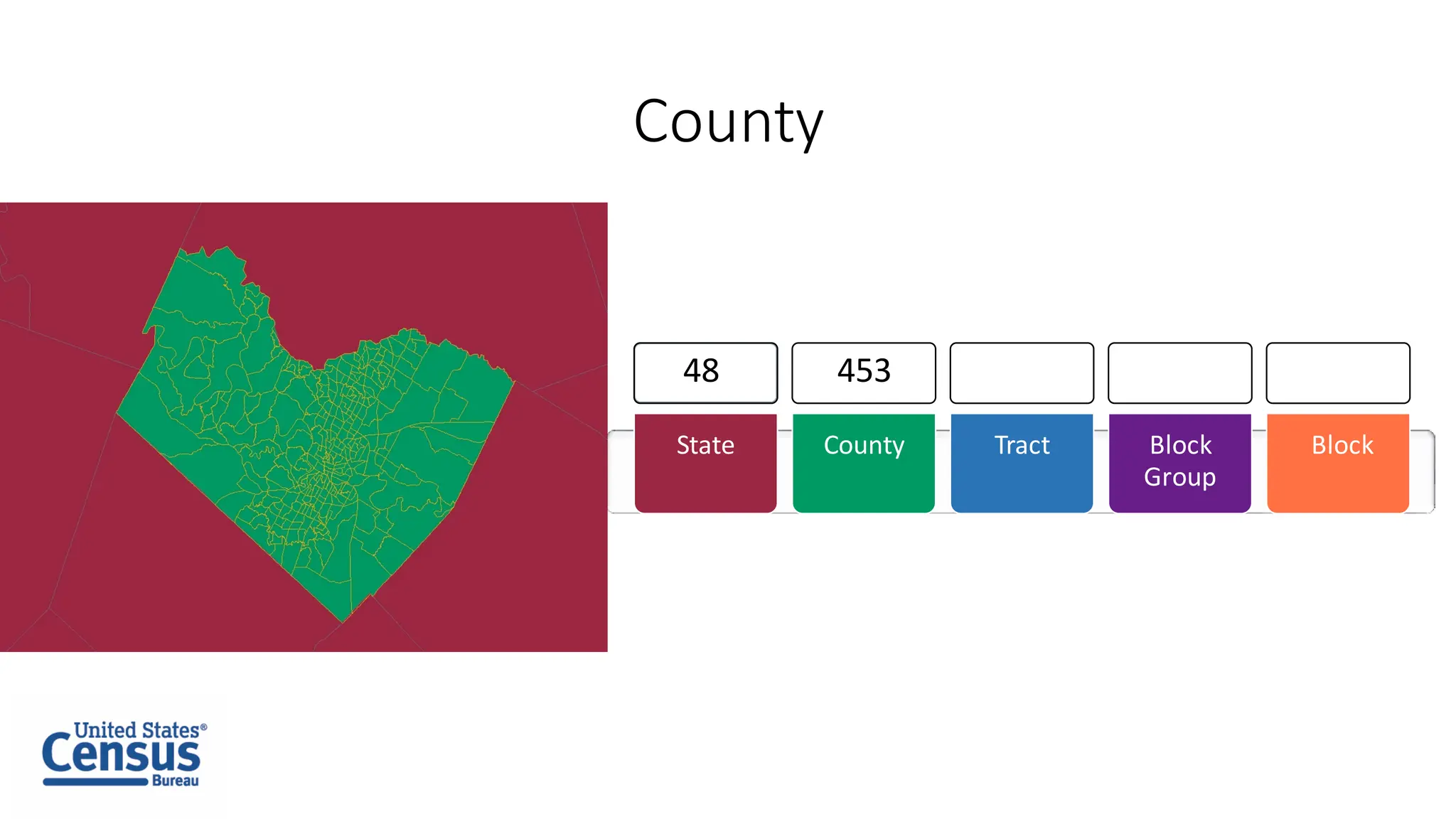
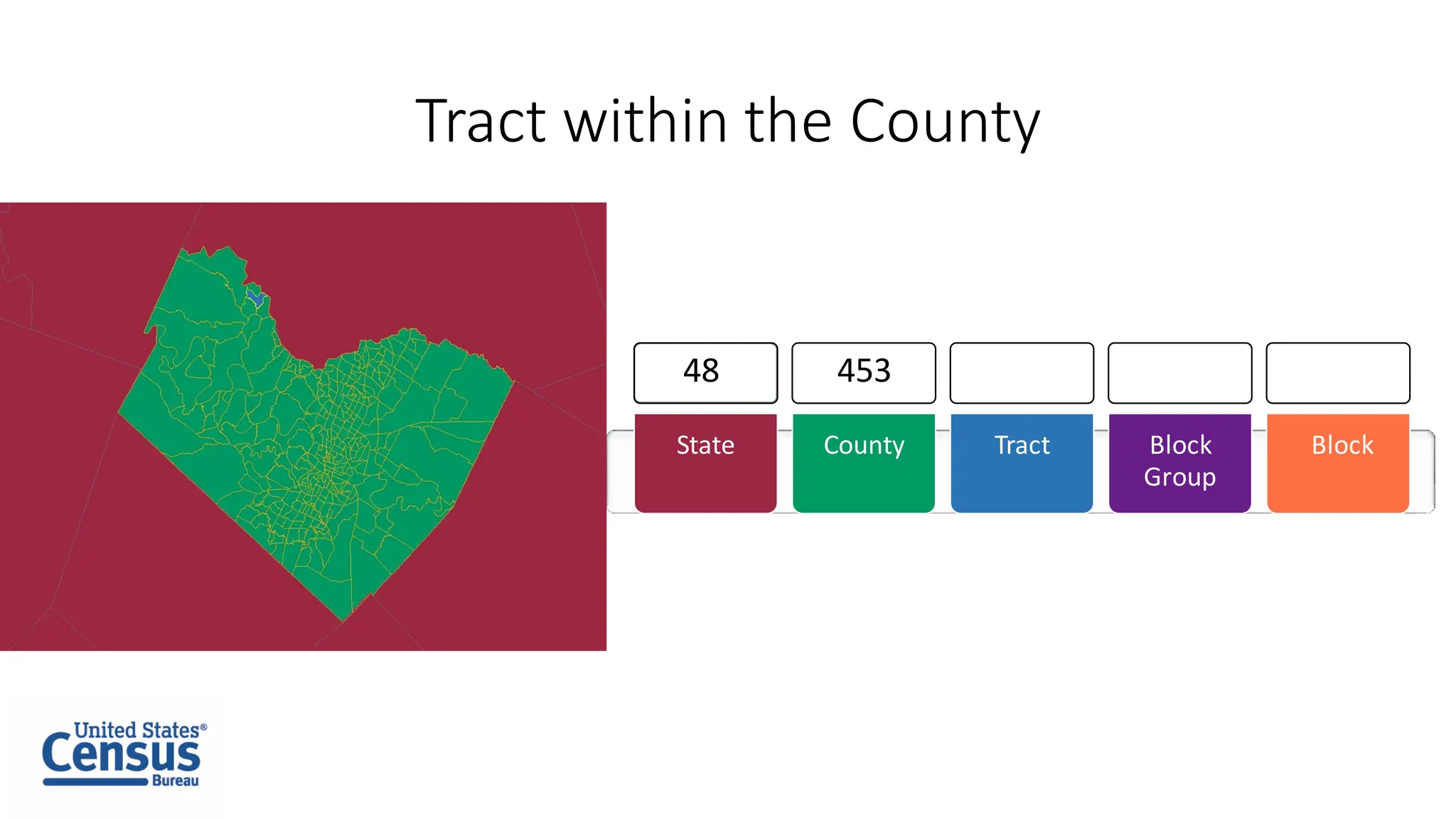
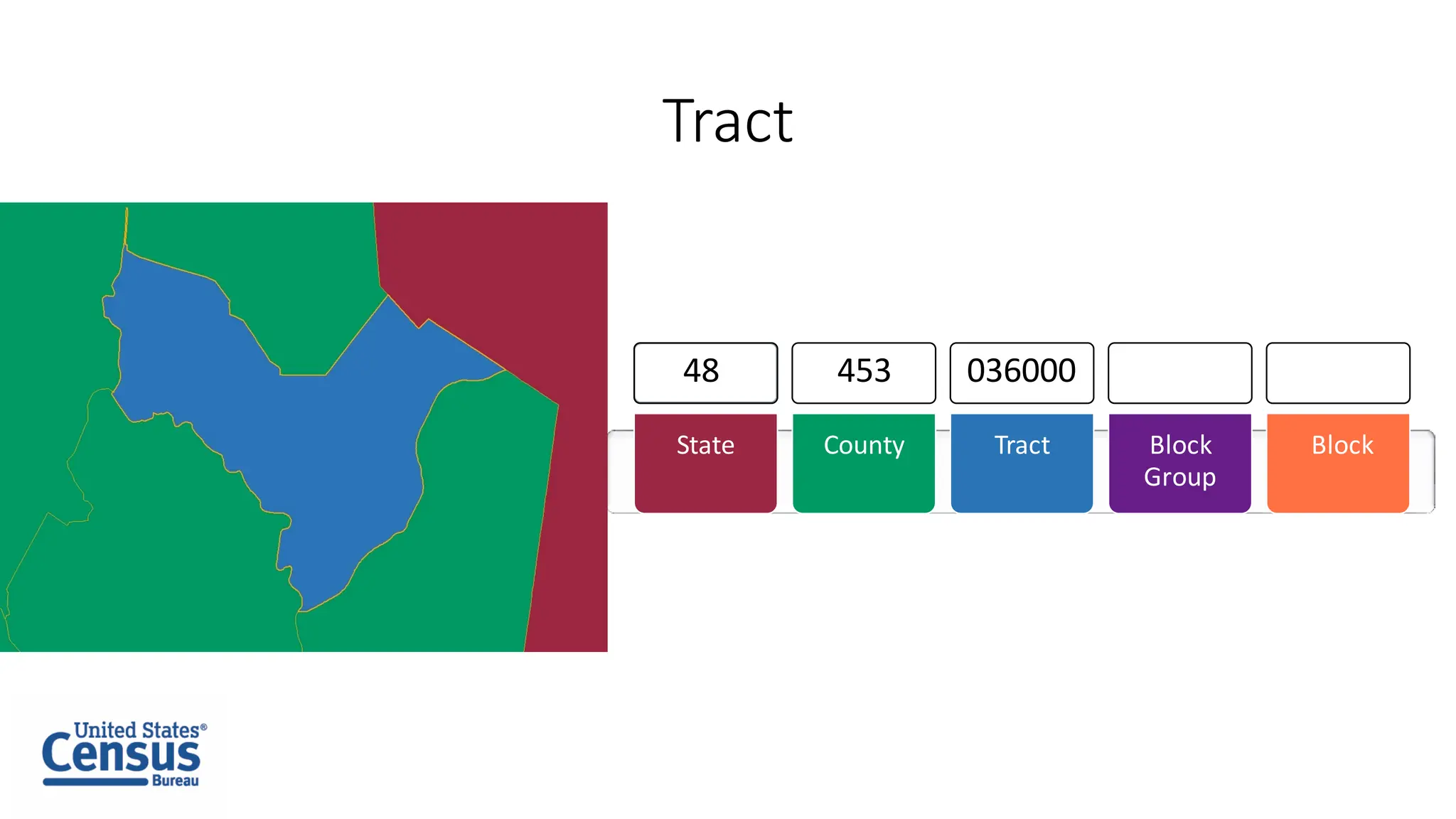
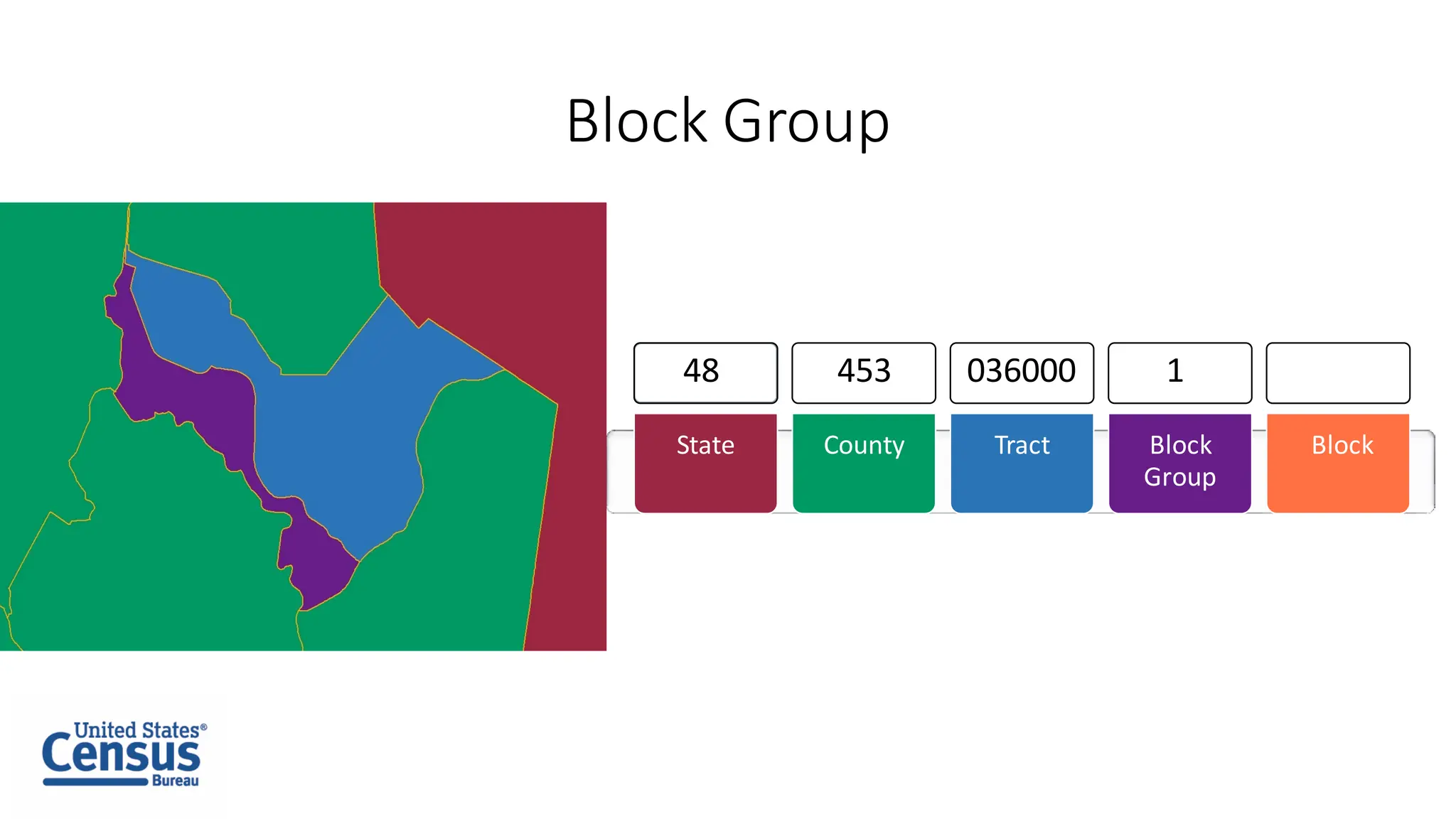
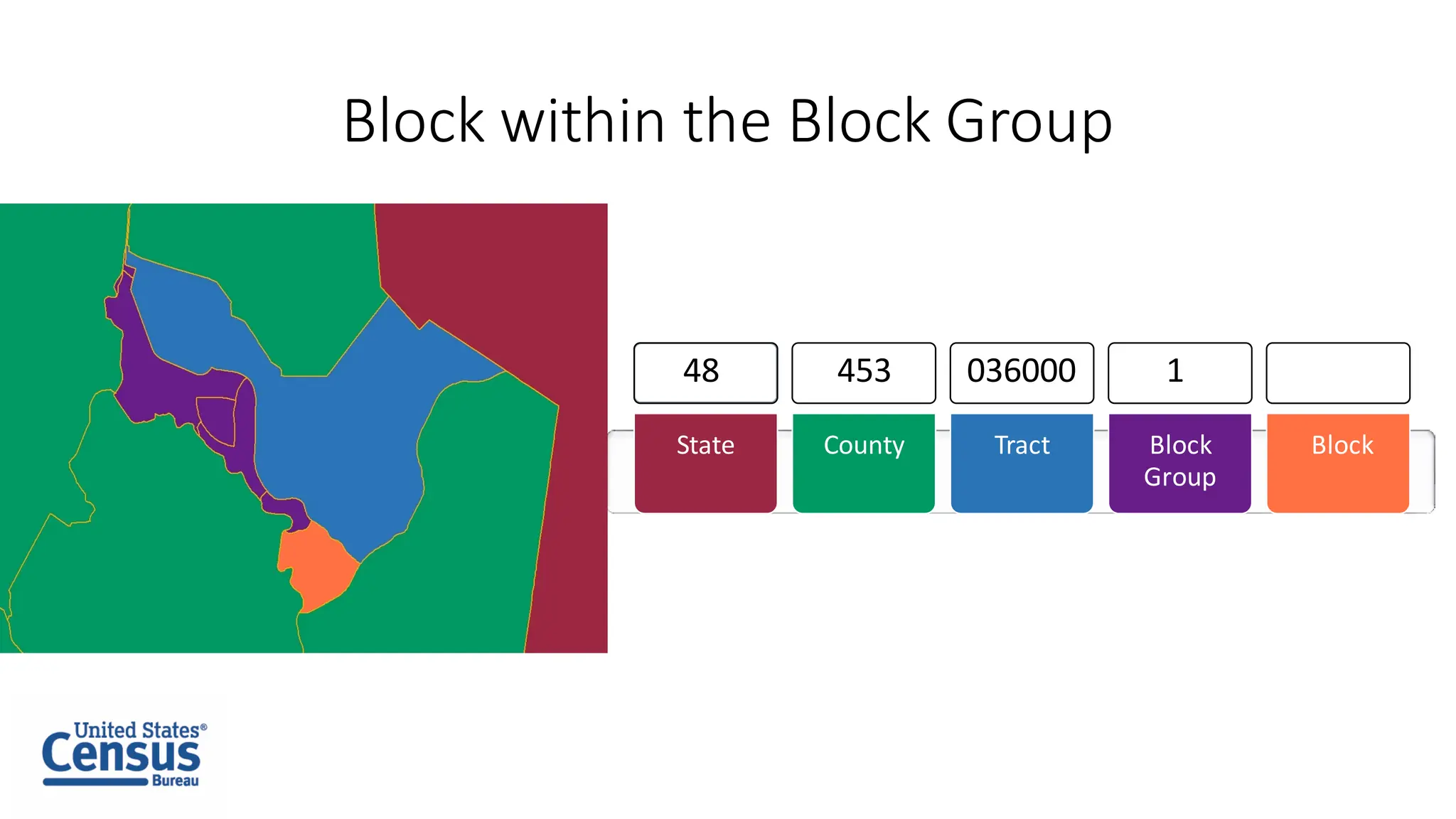
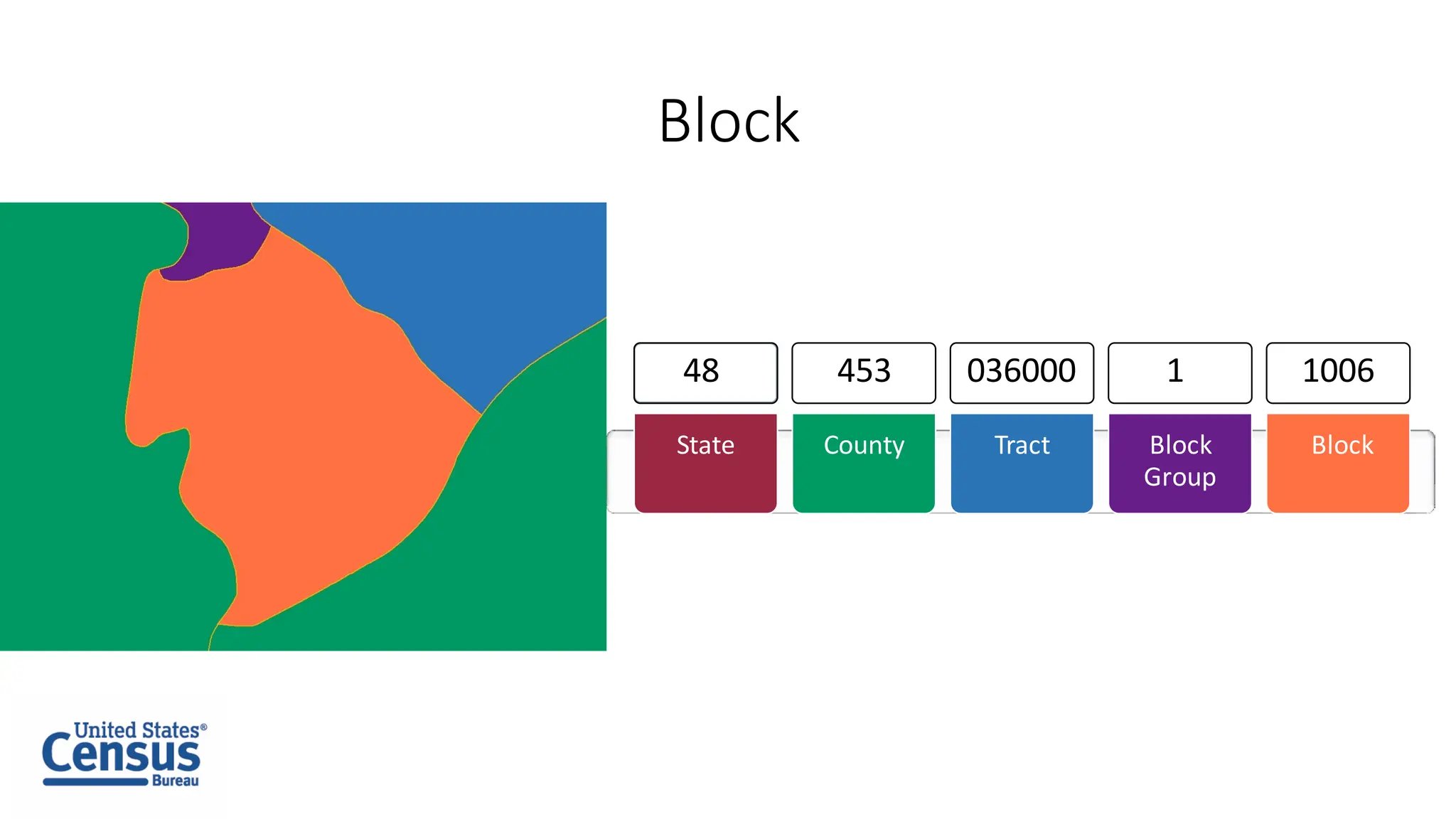
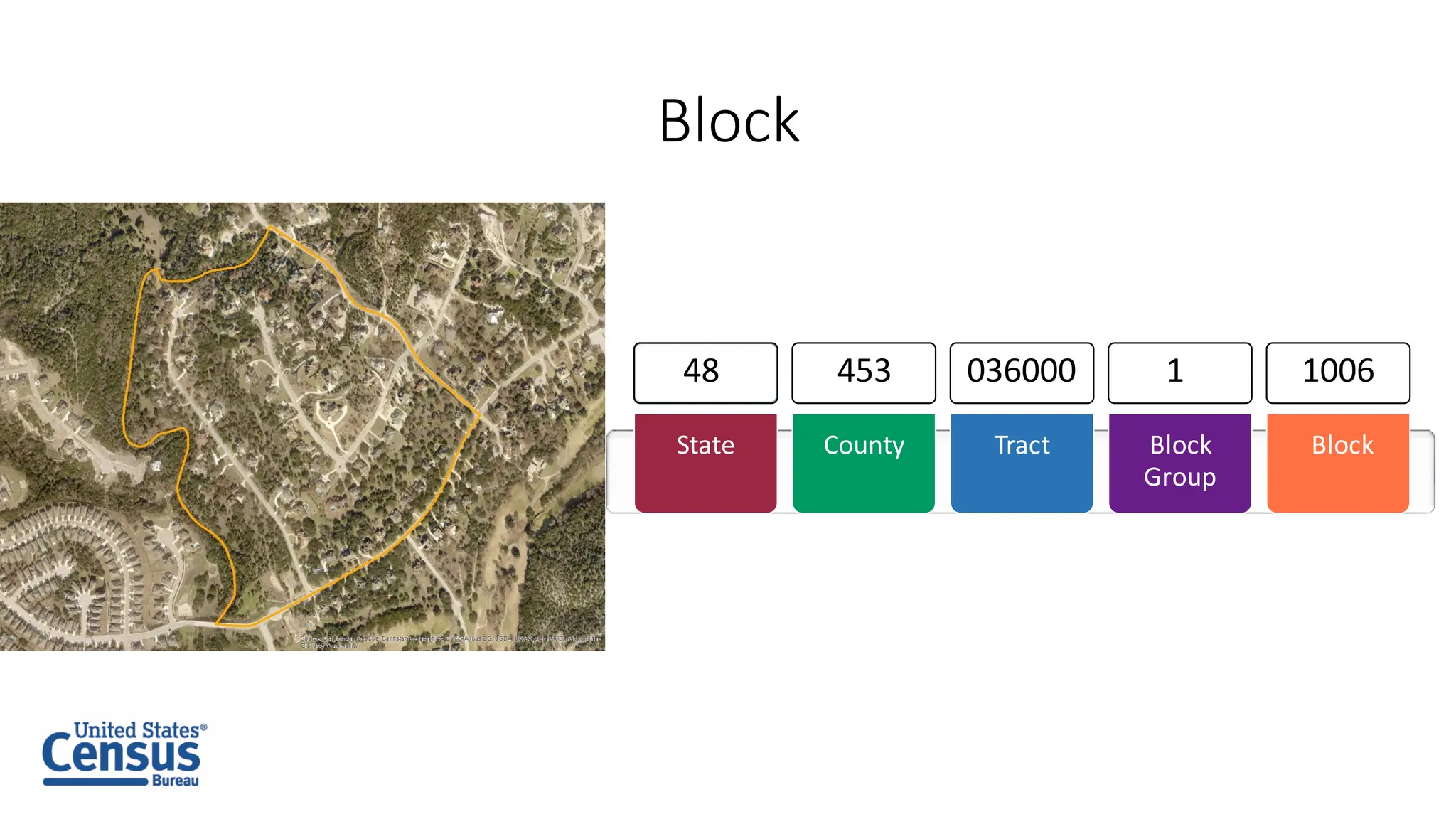
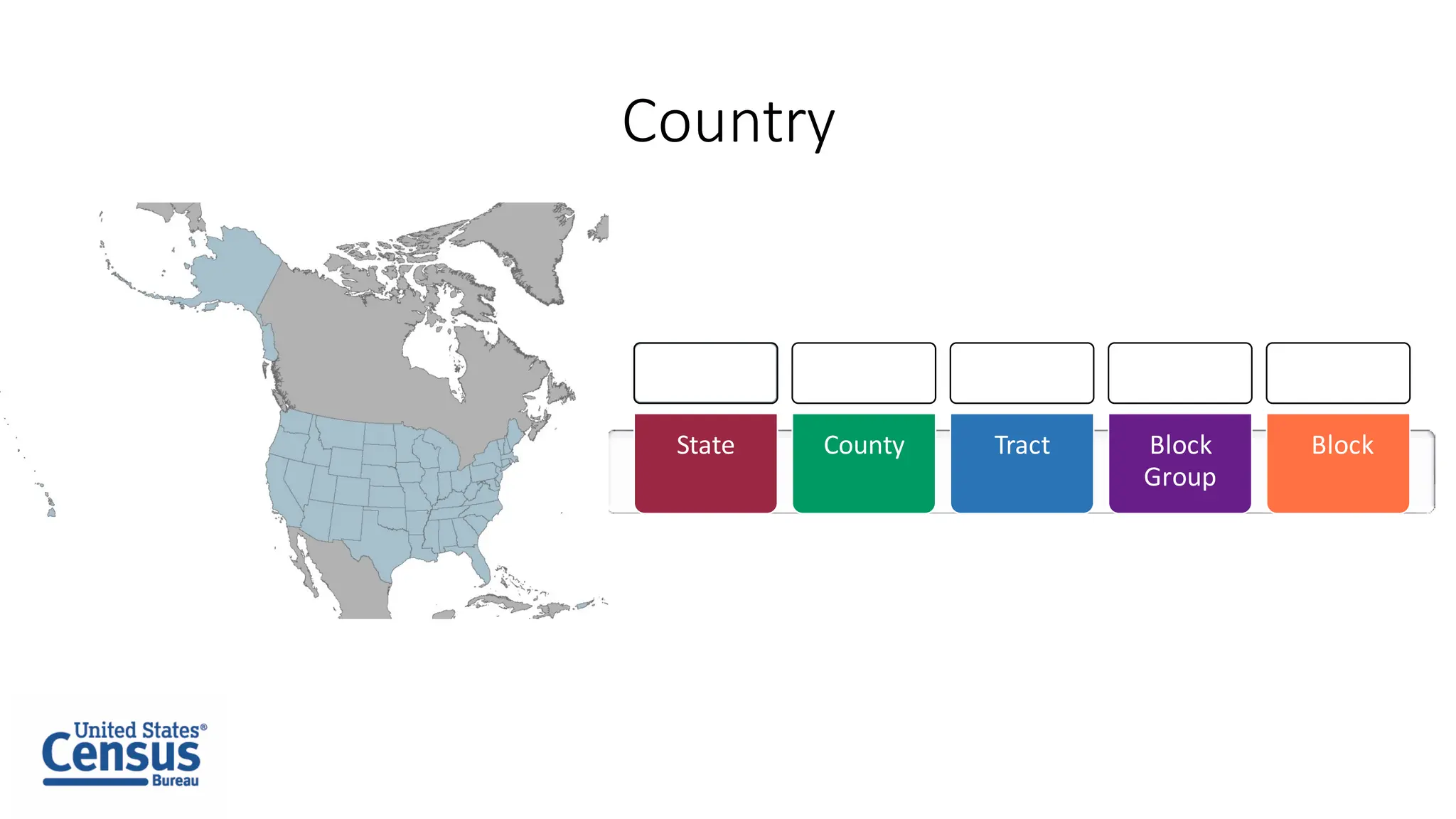
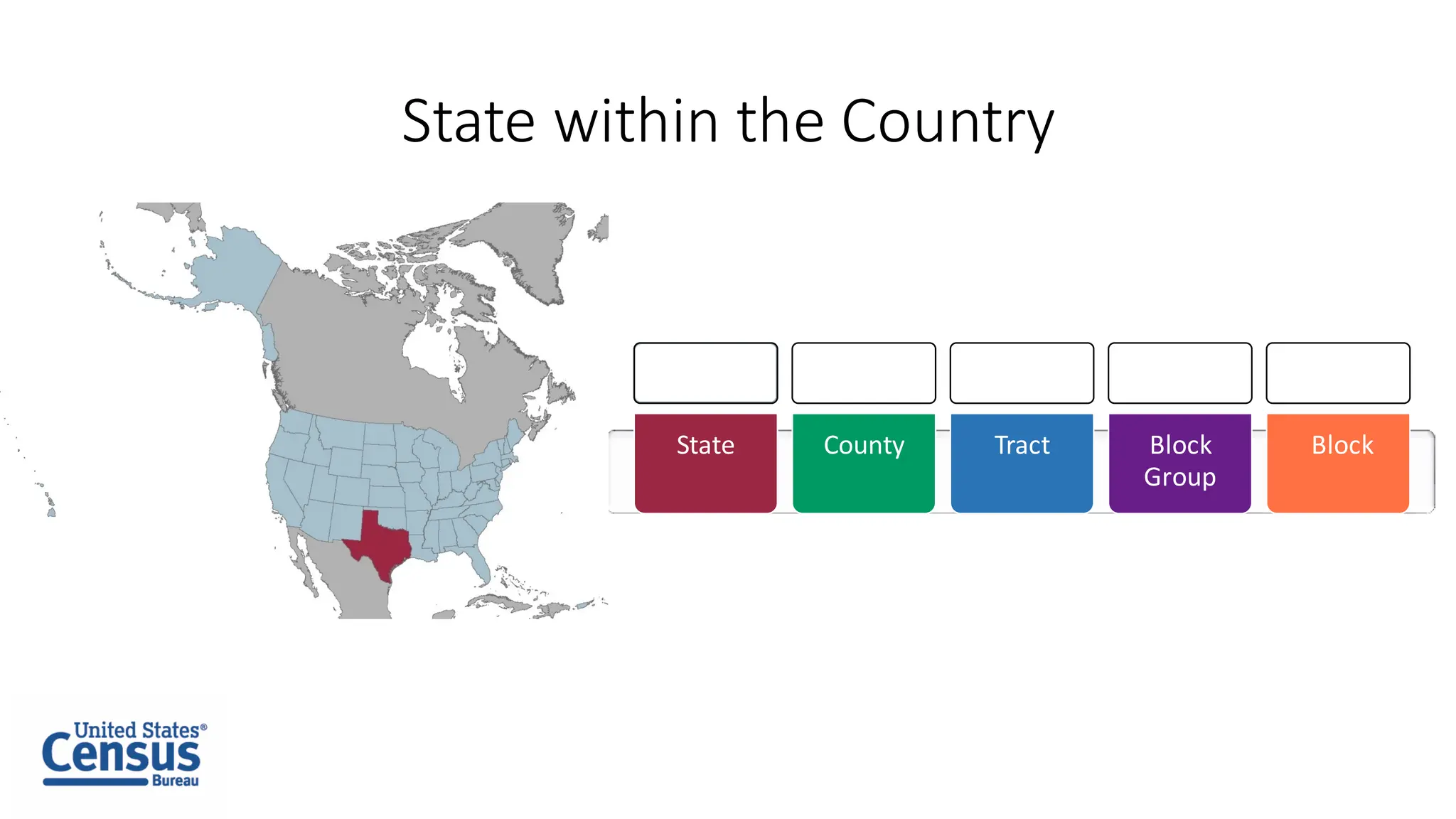
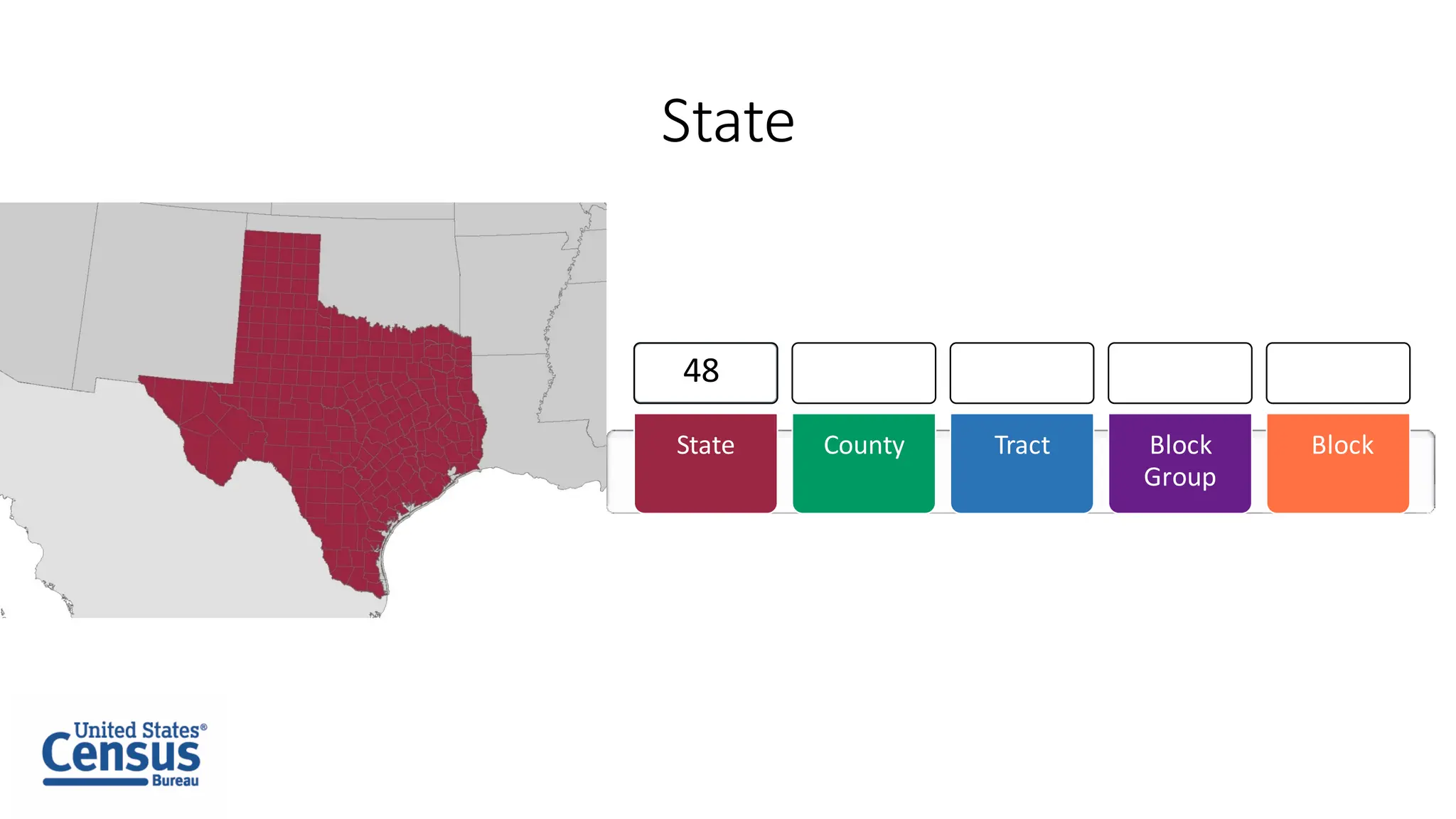
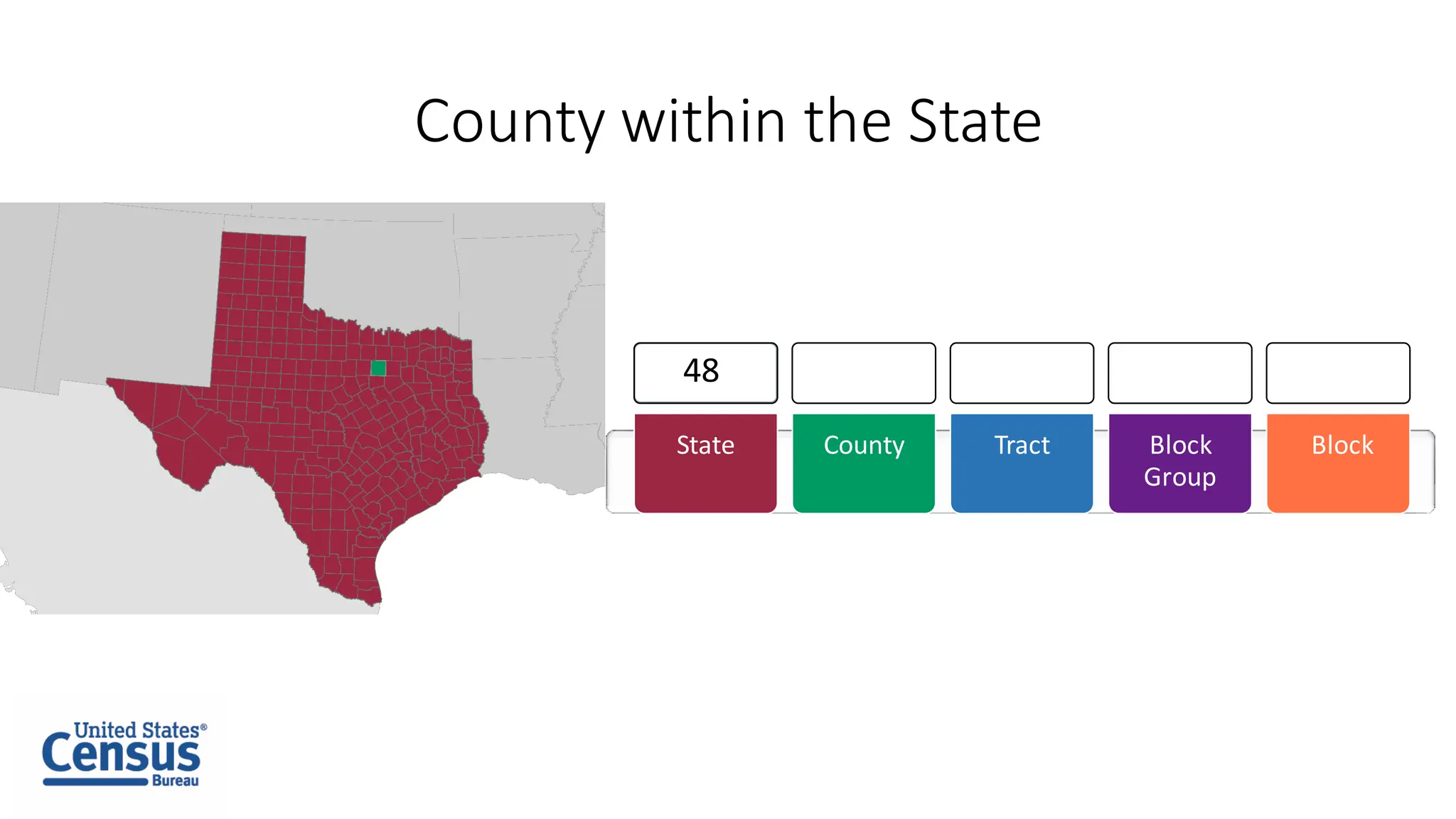
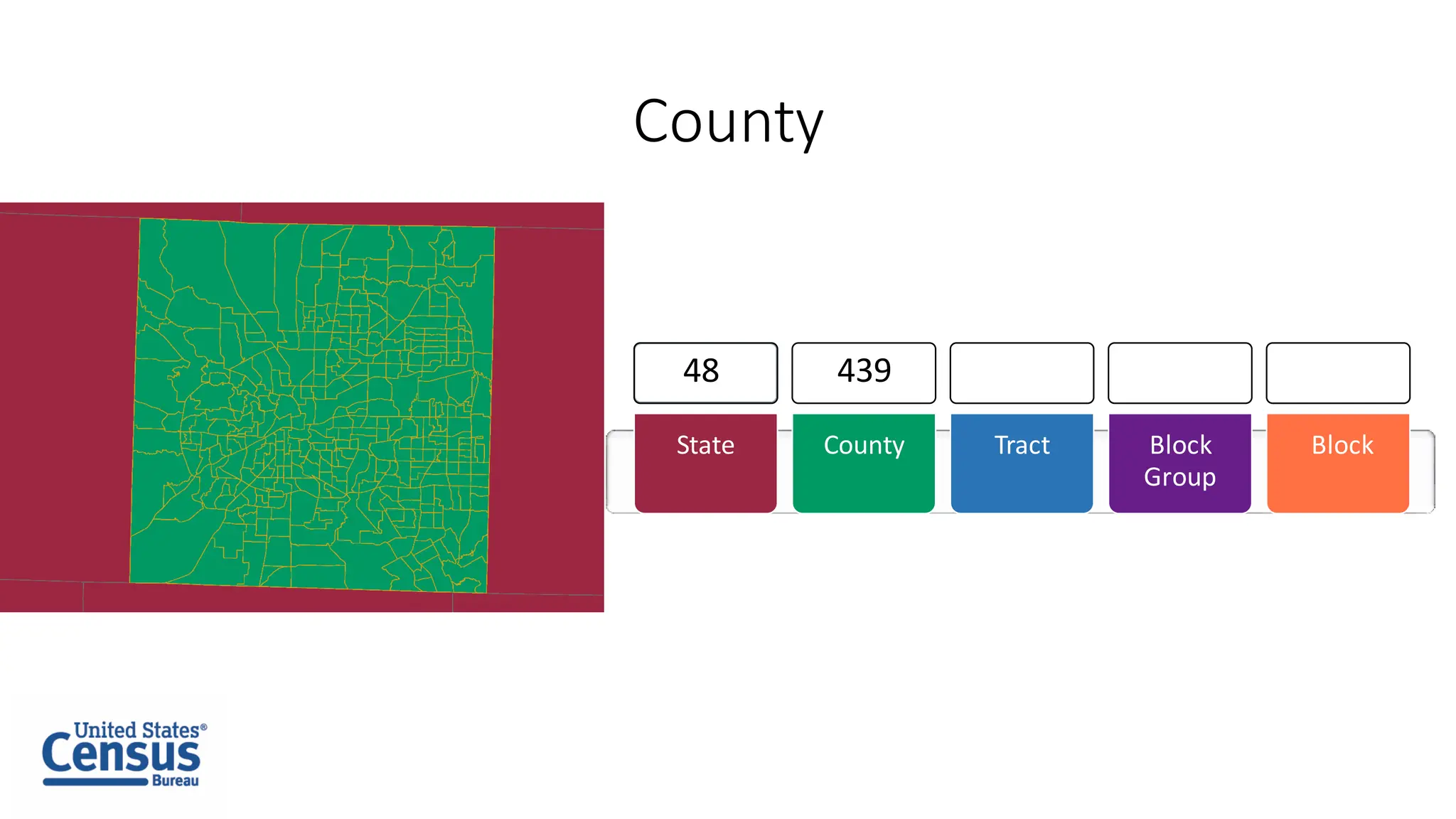
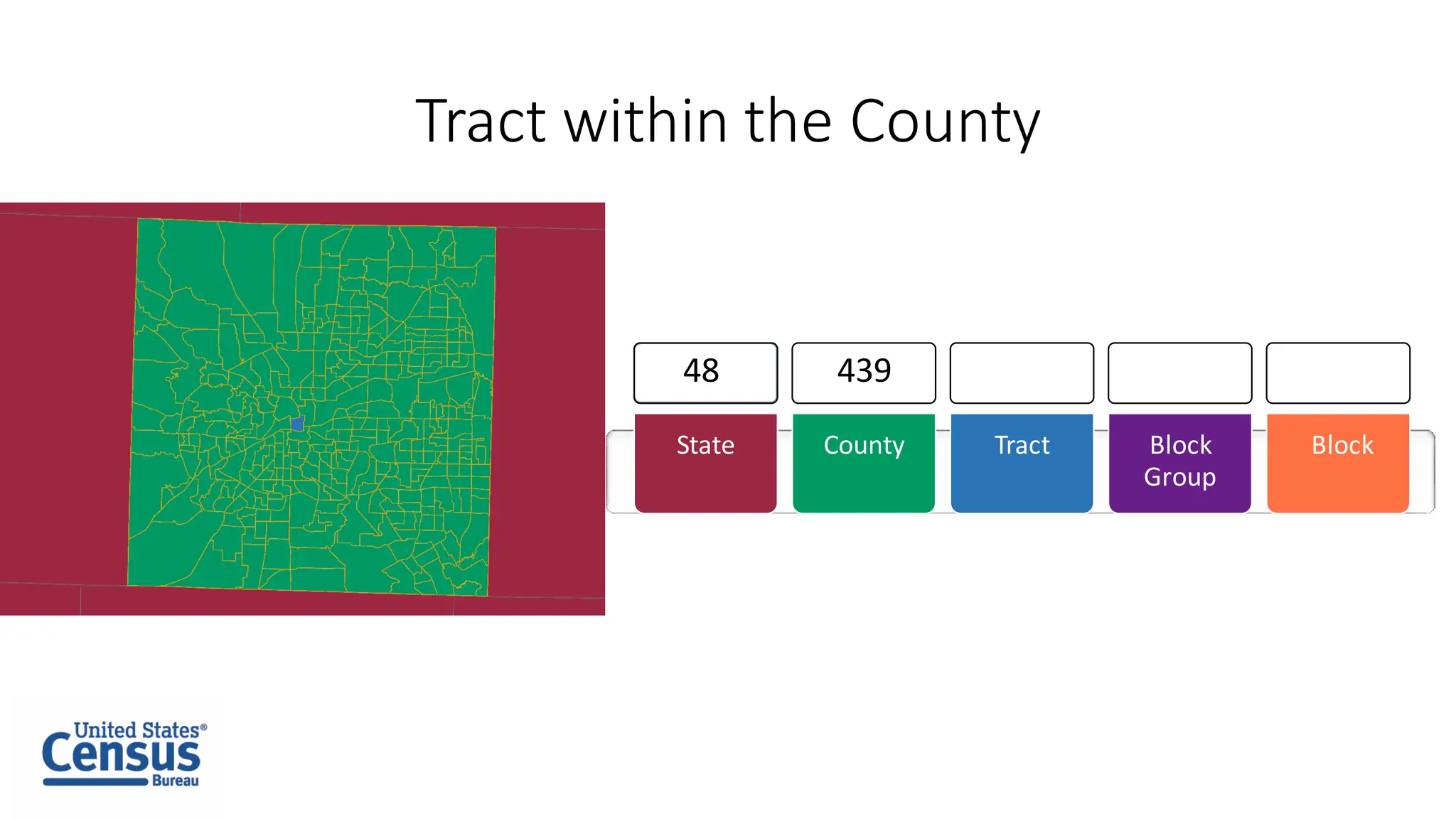
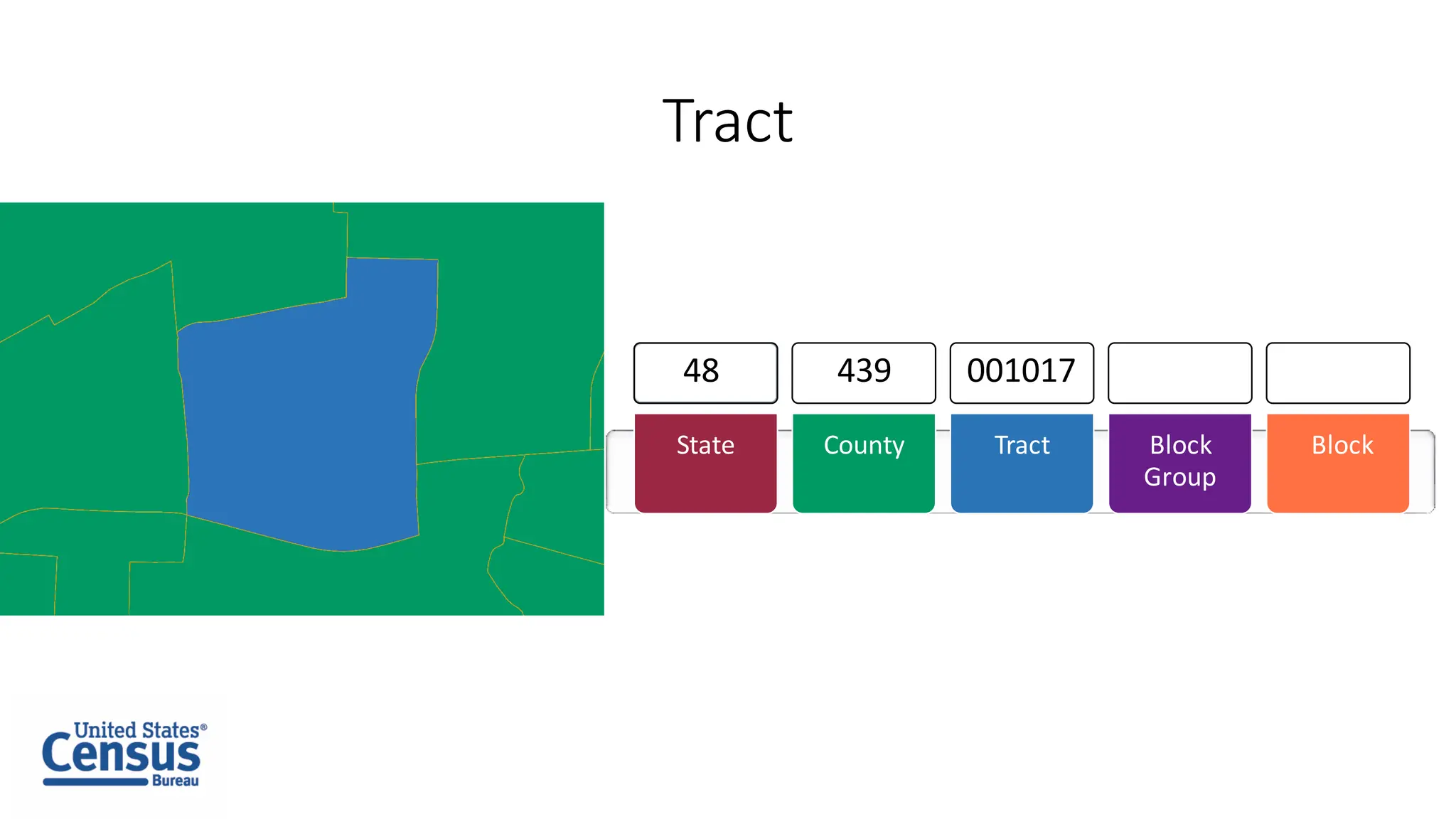
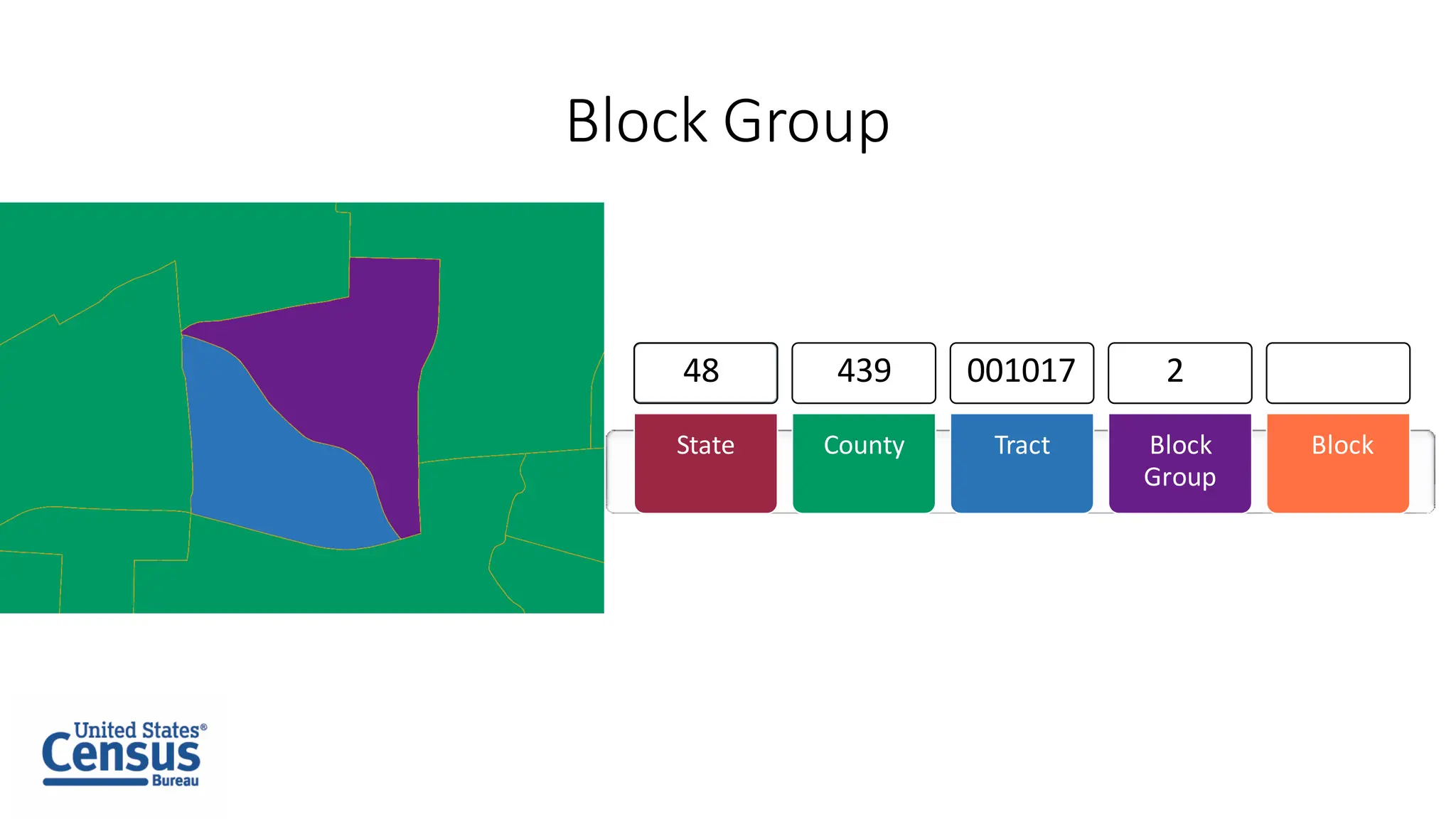
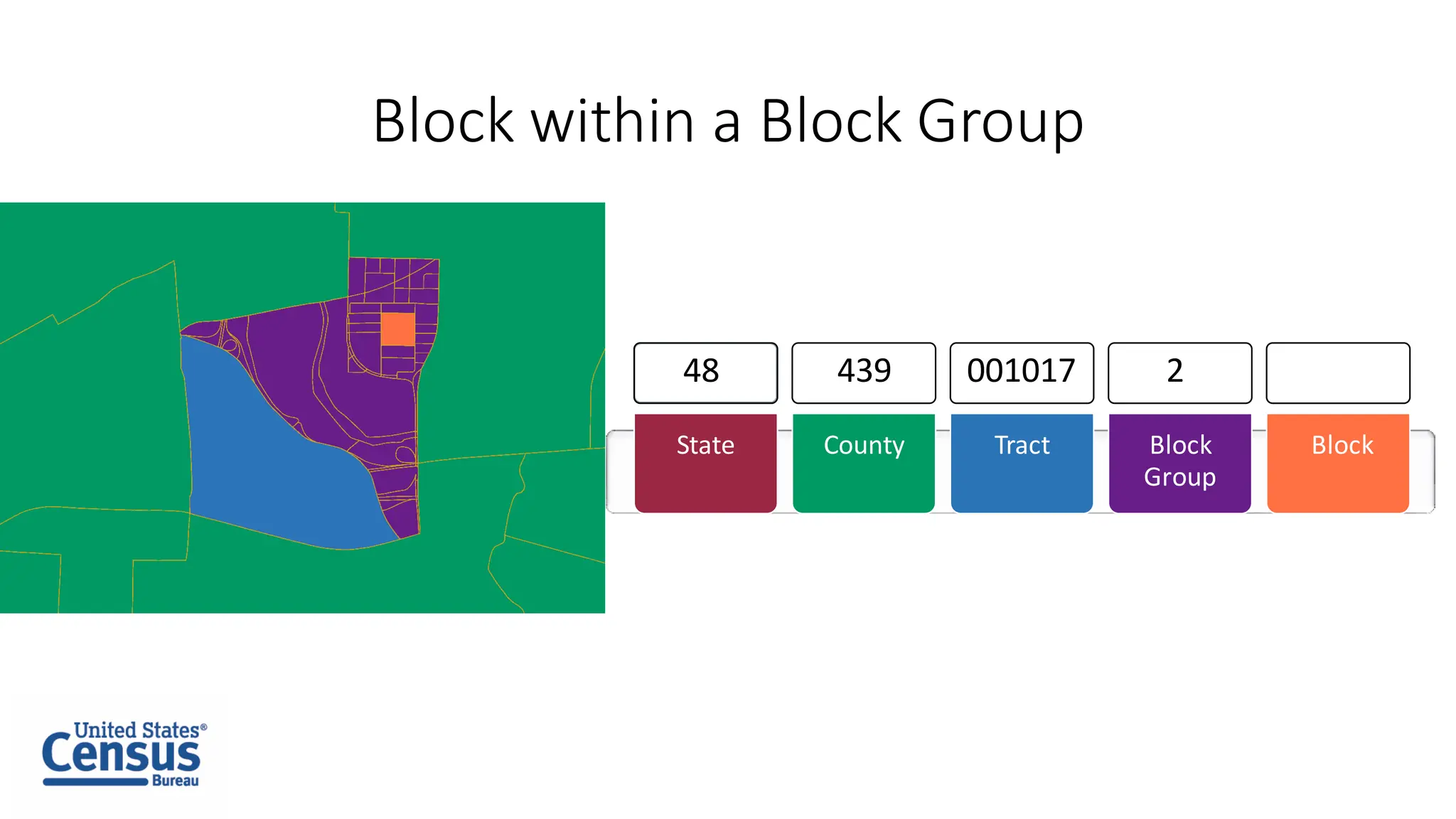
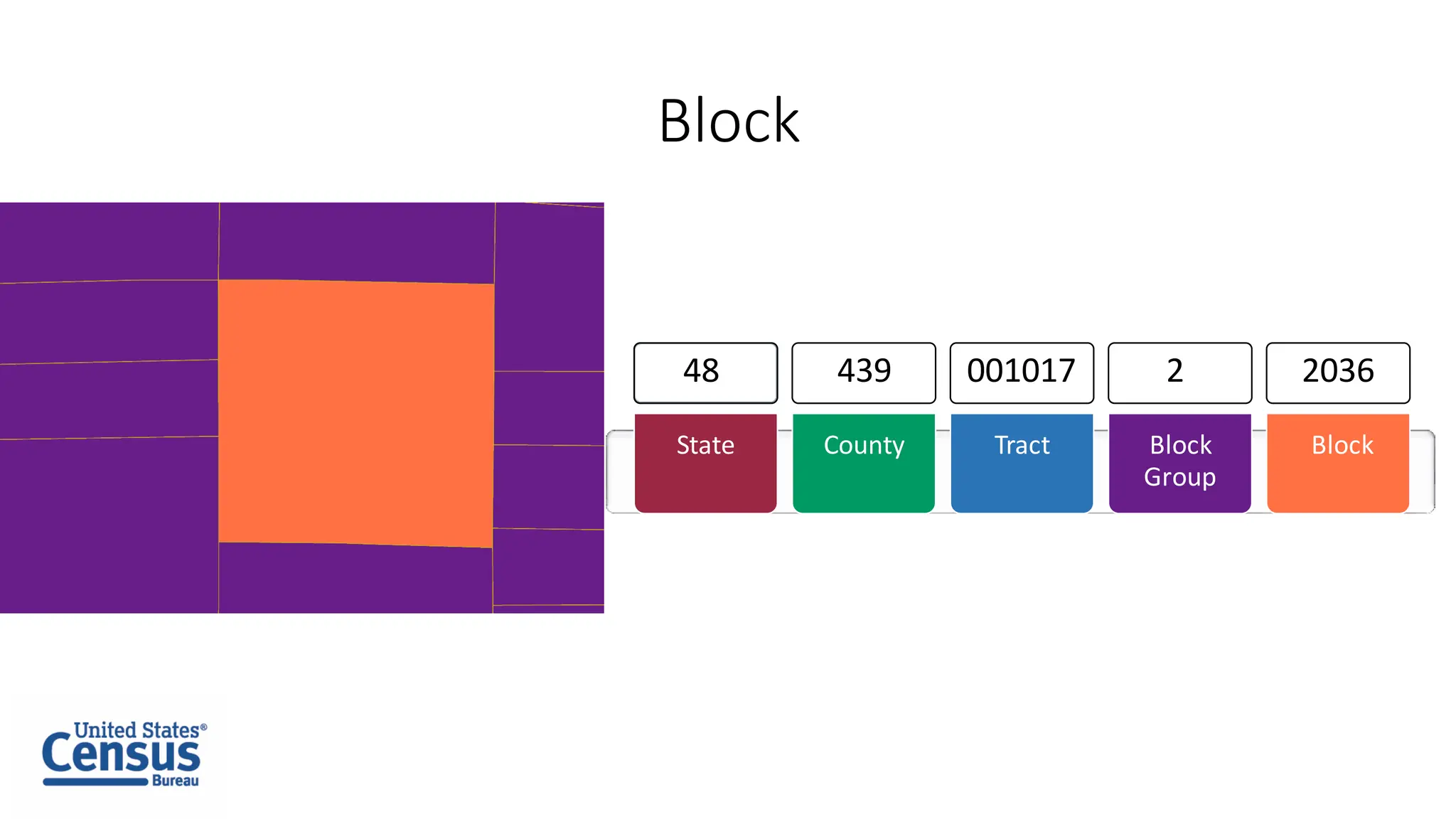
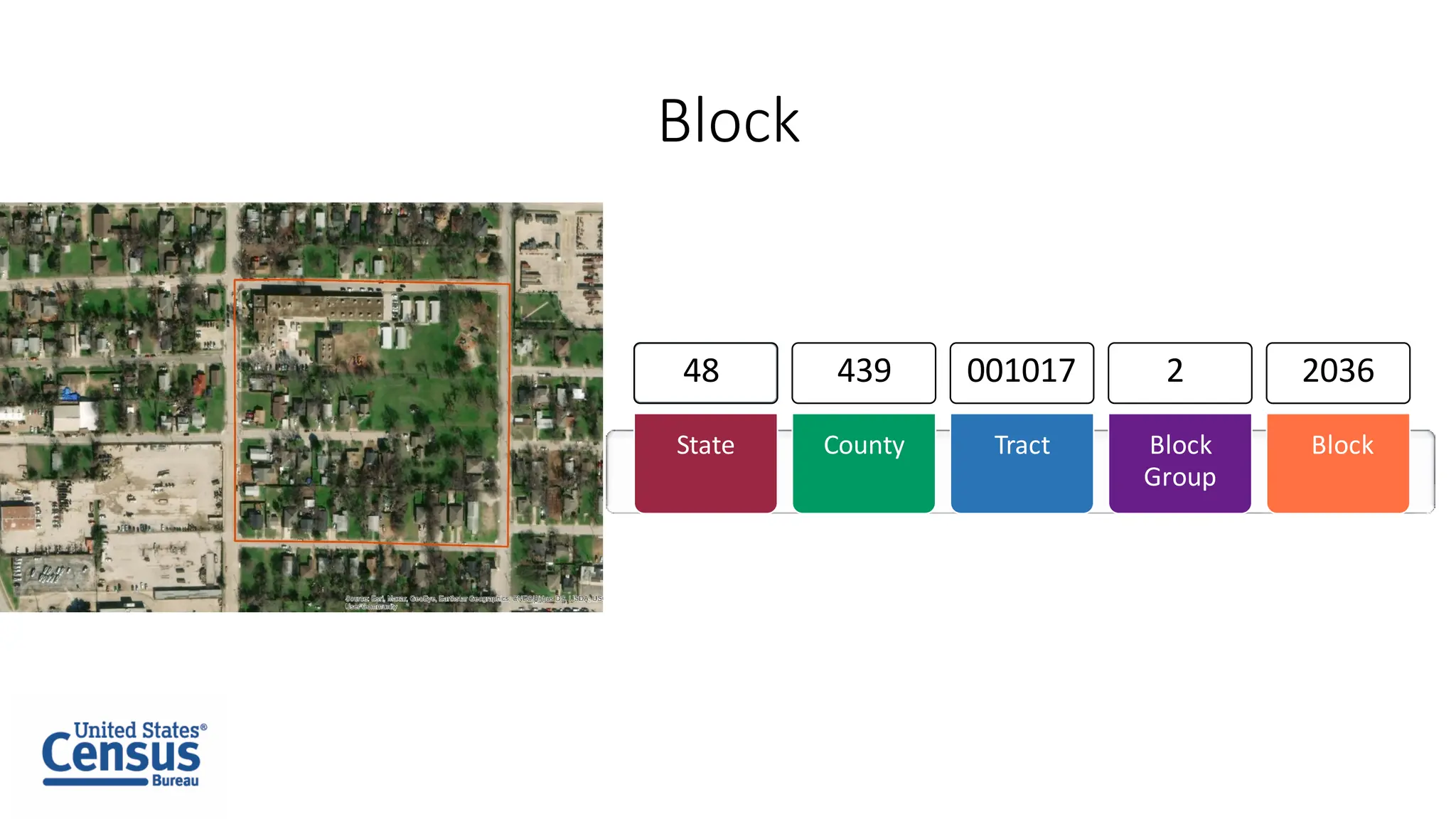
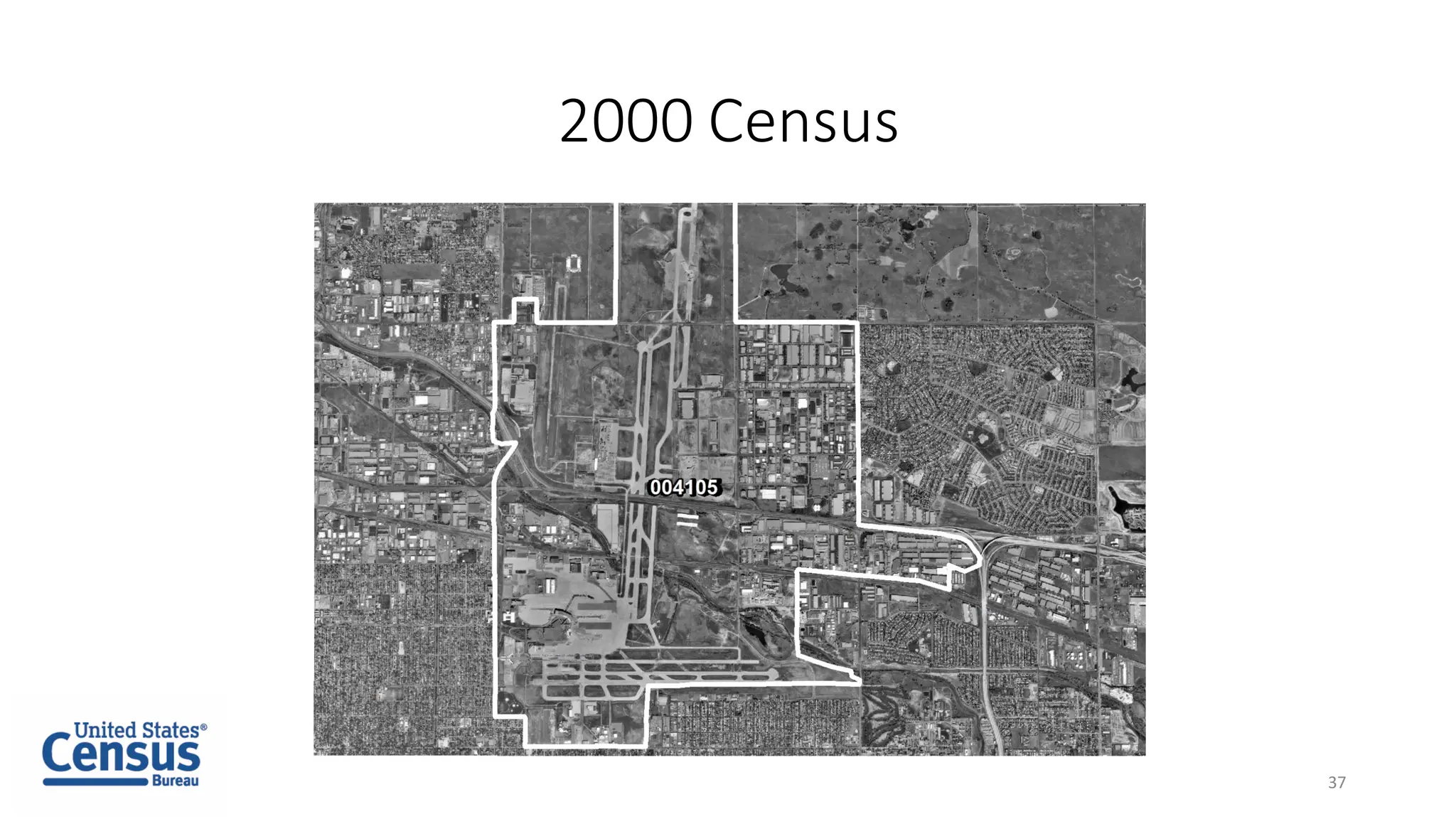
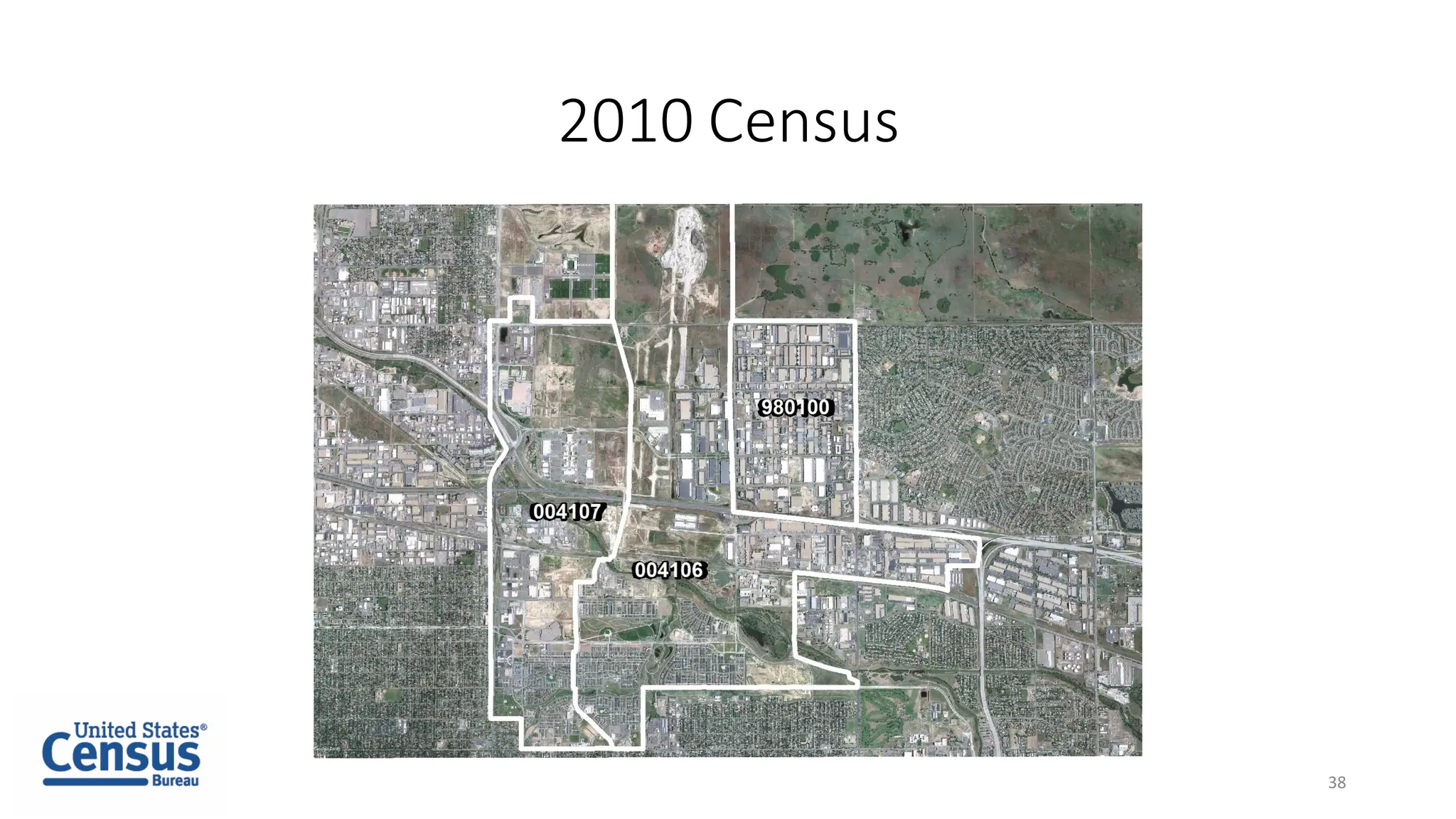
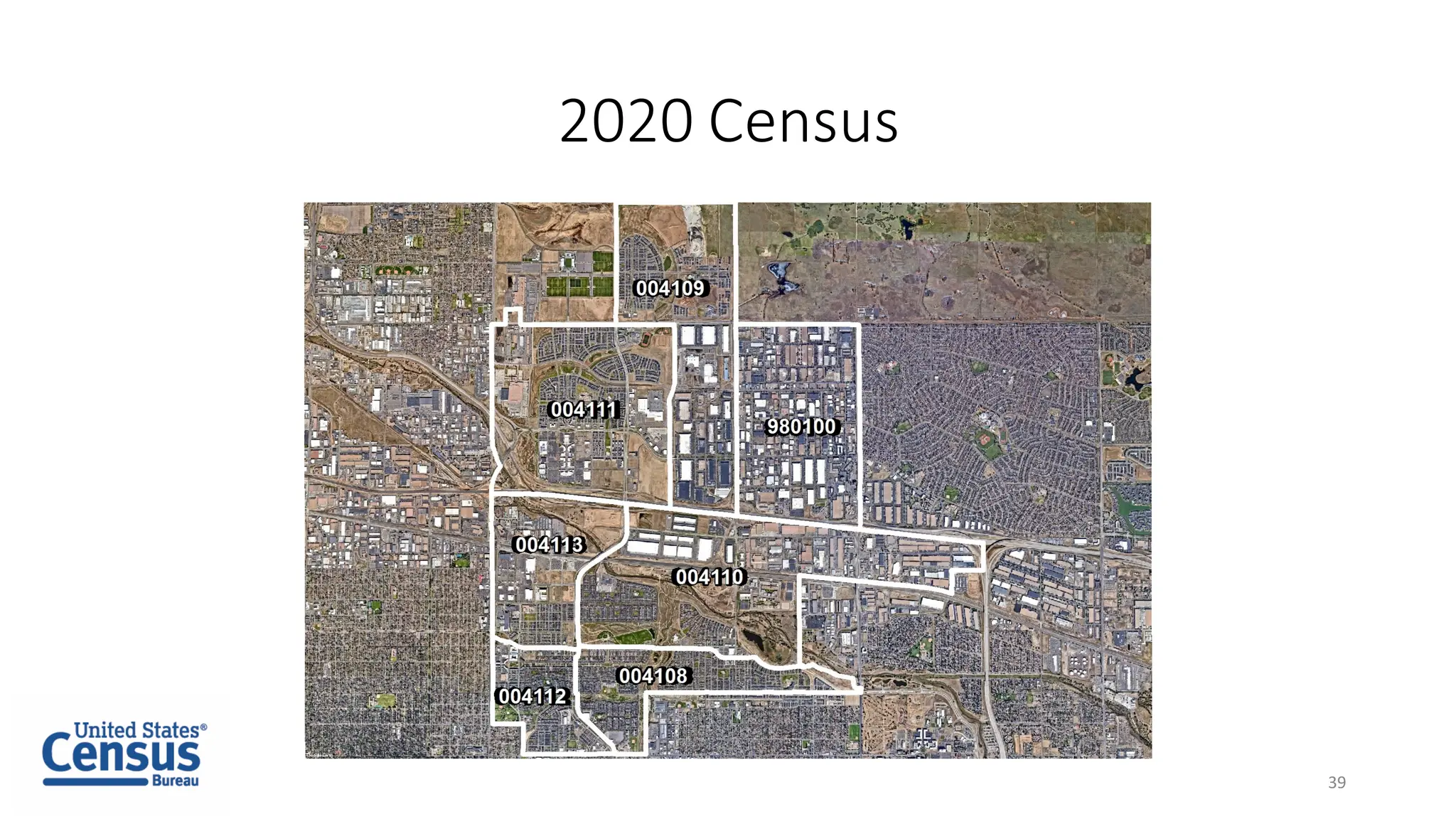
This document discusses statistical geography used by the U.S. Census Bureau. It explains that there are two main types of census geography: legal/administrative geography which can change at the will of governing bodies, and statistical geography which is created and maintained by the Census Bureau to have no gaps or overlaps. It provides examples of statistical geography units like census tracts, block groups, and blocks, and how they are nested within each other from country to state to county down to the smallest block level. It also discusses how census tract and block group boundaries are updated over time to maintain comparability while accounting for population growth.