Understanding Permissive Parenting Style: Is It
Effective?
Parenting comes in various styles, each shaping the behavior, emotions, and overall
development of children in different ways. Among these approaches, the permissive parenting
style stands out for its unique characteristics. Often referred to as indulgent parenting, this style
is marked by high levels of responsiveness to a child’s needs and desires, but with low
demands or expectations for discipline.
In this blog, we will explore the permissive parenting style, its potential benefits, drawbacks, and
how it compares to other parenting styles.
What is Permissive Parenting?
Permissive parenting is one of the four parenting styles identified by psychologist Diana
Baumrind in the 1960s. It is characterized by parents who are nurturing and communicative but
tend to avoid enforcing rules or discipline.
Permissive parents often take on a friendly role rather than one of authority, allowing their
children significant freedom to make decisions and express themselves.
Key features of permissive parenting include:
● High Responsiveness: Parents are warm and accepting, often prioritizing their child’s
happiness and emotional needs over enforcing rules.
● Low Demands: There is a lack of consistent discipline, and parents typically have few
expectations regarding household chores, responsibilities, or behavior.
● Child-Led Decision-Making: Children are often given the autonomy to make their own
decisions, even at a young age, without much parental guidance or intervention.
Characteristics of Permissive Parents
Parents who adopt a permissive style tend to exhibit certain behaviors and attitudes in their
parenting approach, including:
1. Few Rules and Boundaries: Permissive parents set very few rules or expectations for
their children, and those that are set are often not consistently enforced.
2. Emotional Nurturing: These parents are highly nurturing and provide a loving,
supportive environment where children feel free to express their emotions without fear of
reprimand.
3. Avoidance of Conflict: Permissive parents often avoid conflicts with their children,
allowing them to “get away” with behaviors that other parenting styles might address
more directly.
4. Indulgence: In many cases, permissive parents indulge their child’s wants and needs,
even if those desires are not necessarily beneficial in the long term.
5. Acting as a Friend: Instead of acting as an authoritative figure, permissive parents often
take on the role of a friend, making it difficult to enforce discipline when necessary.
Benefits of Permissive Parenting
While permissive parenting is often criticized for its lack of structure, it does have some potential
advantages:
1. Emotional Bonding: The strong emotional connection between parent and child can
foster a close, supportive relationship. Children raised in permissive households often
feel secure in their parents’ love and acceptance, which can positively impact their
self-esteem.
2. Encouragement of Creativity: Children raised by permissive parents often have the
freedom to explore their interests and make independent choices. This can foster
creativity and encourage children to be self-expressive and open-minded.
3. Strong Communication: In permissive households, communication is often open and
frequent. Children feel comfortable sharing their thoughts and feelings with their parents,
which can help them develop good communication skills.
Drawbacks of Permissive Parenting
Despite some of its potential benefits, the permissive parenting style is often criticized for
leading to certain negative outcomes, particularly in terms of discipline and behavior:
1. Lack of Discipline: One of the main criticisms of permissive parenting is the lack of
discipline. Without clear rules and boundaries, children may struggle to understand
acceptable behavior and may develop issues with authority later in life.
2. Poor Academic Performance: Research suggests that children raised in permissive
households may perform poorly academically due to the lack of structure and
expectations. With fewer rules and limited parental involvement in schoolwork, these
children may struggle with motivation and time management.
3. Behavioral Problems: Children raised with permissive parenting may become
demanding, rebellious, or lack respect for authority figures. They may also struggle with
self-discipline, as they were not taught how to manage their impulses or actions.
4. Low Self-Regulation: Since permissive parents often fail to set boundaries, children
may not learn important self-regulation skills. This can lead to issues such as difficulty
managing emotions, poor impulse control, and problems with delayed gratification.
5. Risk of Entitlement: Because children are often indulged and allowed to make their
own choices without limitations, they may develop a sense of entitlement, expecting to
get what they want without working for it or considering others' needs.
Permissive Parenting vs. Other Parenting Styles
To better understand the implications of permissive parenting, it’s important to compare it to
other commonly recognized parenting styles:
1. Authoritative Parenting: This style is considered a balance between permissive and
authoritarian parenting. Authoritative parents set clear expectations and rules but are
also nurturing and supportive. Children raised in authoritative households often perform
better academically, socially, and emotionally.
2. Authoritarian Parenting: The opposite of permissive parenting, authoritarian parents
are highly demanding with little warmth or responsiveness. They enforce strict rules and
expect obedience without question. While this style can lead to disciplined behavior, it
can also result in lower self-esteem and emotional challenges for children.
3. Uninvolved Parenting: Also known as neglectful parenting, this style is characterized
by low responsiveness and low demands. Uninvolved parents are often disengaged from
their children’s lives, providing little emotional support or guidance. This style is linked to
poor developmental outcomes in children.
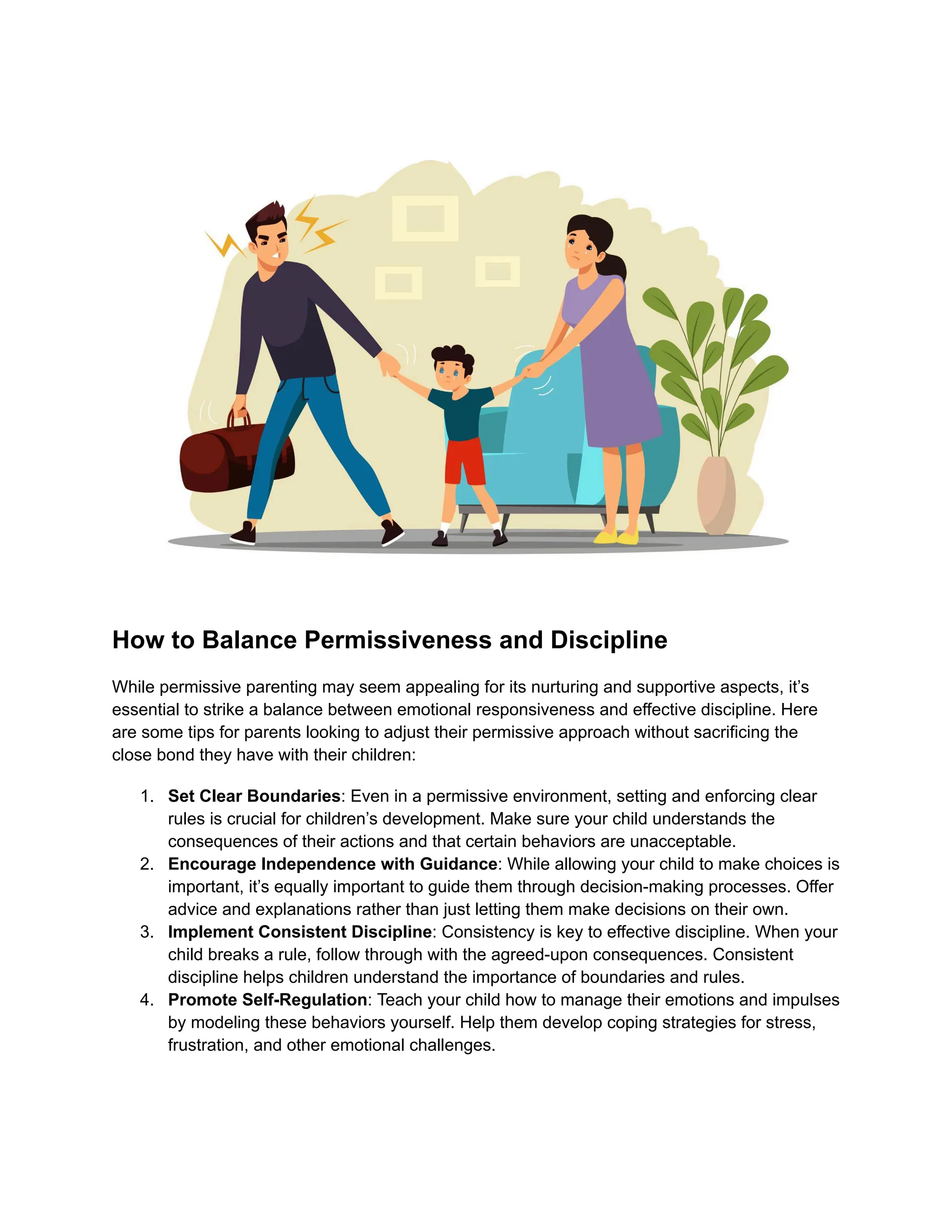
How to Balance Permissiveness and Discipline
While permissive parenting may seem appealing for its nurturing and supportive aspects, it’s
essential to strike a balance between emotional responsiveness and effective discipline. Here
are some tips for parents looking to adjust their permissive approach without sacrificing the
close bond they have with their children:
1. Set Clear Boundaries: Even in a permissive environment, setting and enforcing clear
rules is crucial for children’s development. Make sure your child understands the
consequences of their actions and that certain behaviors are unacceptable.
2. Encourage Independence with Guidance: While allowing your child to make choices is
important, it’s equally important to guide them through decision-making processes. Offer
advice and explanations rather than just letting them make decisions on their own.
3. Implement Consistent Discipline: Consistency is key to effective discipline. When your
child breaks a rule, follow through with the agreed-upon consequences. Consistent
discipline helps children understand the importance of boundaries and rules.
4. Promote Self-Regulation: Teach your child how to manage their emotions and impulses
by modeling these behaviors yourself. Help them develop coping strategies for stress,
frustration, and other emotional challenges.
5. Praise Positive Behavior: Positive reinforcement can be a powerful tool for
encouraging good behavior. Make sure to praise your child when they follow the rules,
make responsible choices, or show kindness to others.
Conclusion
The permissive parenting style offers a warm and loving approach to raising children,
fostering open communication and emotional bonding. However, its lack of discipline and
structure can lead to various challenges, such as behavioral problems and difficulties with
self-regulation.
By understanding the strengths and weaknesses of permissive parenting, parents can find a
balance that promotes both emotional well-being and healthy discipline, helping their children
grow into responsible, well-rounded individuals.

Understanding Permissive Parenting Style_ Is It Effective.pdf

  • 1.
    Understanding Permissive ParentingStyle: Is It Effective? Parenting comes in various styles, each shaping the behavior, emotions, and overall development of children in different ways. Among these approaches, the permissive parenting style stands out for its unique characteristics. Often referred to as indulgent parenting, this style is marked by high levels of responsiveness to a child’s needs and desires, but with low demands or expectations for discipline. In this blog, we will explore the permissive parenting style, its potential benefits, drawbacks, and how it compares to other parenting styles. What is Permissive Parenting? Permissive parenting is one of the four parenting styles identified by psychologist Diana Baumrind in the 1960s. It is characterized by parents who are nurturing and communicative but tend to avoid enforcing rules or discipline.
  • 2.
    Permissive parents oftentake on a friendly role rather than one of authority, allowing their children significant freedom to make decisions and express themselves. Key features of permissive parenting include: ● High Responsiveness: Parents are warm and accepting, often prioritizing their child’s happiness and emotional needs over enforcing rules. ● Low Demands: There is a lack of consistent discipline, and parents typically have few expectations regarding household chores, responsibilities, or behavior. ● Child-Led Decision-Making: Children are often given the autonomy to make their own decisions, even at a young age, without much parental guidance or intervention. Characteristics of Permissive Parents Parents who adopt a permissive style tend to exhibit certain behaviors and attitudes in their parenting approach, including: 1. Few Rules and Boundaries: Permissive parents set very few rules or expectations for their children, and those that are set are often not consistently enforced. 2. Emotional Nurturing: These parents are highly nurturing and provide a loving, supportive environment where children feel free to express their emotions without fear of reprimand. 3. Avoidance of Conflict: Permissive parents often avoid conflicts with their children, allowing them to “get away” with behaviors that other parenting styles might address more directly. 4. Indulgence: In many cases, permissive parents indulge their child’s wants and needs, even if those desires are not necessarily beneficial in the long term. 5. Acting as a Friend: Instead of acting as an authoritative figure, permissive parents often take on the role of a friend, making it difficult to enforce discipline when necessary. Benefits of Permissive Parenting While permissive parenting is often criticized for its lack of structure, it does have some potential advantages: 1. Emotional Bonding: The strong emotional connection between parent and child can foster a close, supportive relationship. Children raised in permissive households often feel secure in their parents’ love and acceptance, which can positively impact their self-esteem. 2. Encouragement of Creativity: Children raised by permissive parents often have the freedom to explore their interests and make independent choices. This can foster creativity and encourage children to be self-expressive and open-minded. 3. Strong Communication: In permissive households, communication is often open and frequent. Children feel comfortable sharing their thoughts and feelings with their parents, which can help them develop good communication skills.
  • 3.
    Drawbacks of PermissiveParenting Despite some of its potential benefits, the permissive parenting style is often criticized for leading to certain negative outcomes, particularly in terms of discipline and behavior: 1. Lack of Discipline: One of the main criticisms of permissive parenting is the lack of discipline. Without clear rules and boundaries, children may struggle to understand acceptable behavior and may develop issues with authority later in life. 2. Poor Academic Performance: Research suggests that children raised in permissive households may perform poorly academically due to the lack of structure and expectations. With fewer rules and limited parental involvement in schoolwork, these children may struggle with motivation and time management. 3. Behavioral Problems: Children raised with permissive parenting may become demanding, rebellious, or lack respect for authority figures. They may also struggle with self-discipline, as they were not taught how to manage their impulses or actions. 4. Low Self-Regulation: Since permissive parents often fail to set boundaries, children may not learn important self-regulation skills. This can lead to issues such as difficulty managing emotions, poor impulse control, and problems with delayed gratification. 5. Risk of Entitlement: Because children are often indulged and allowed to make their own choices without limitations, they may develop a sense of entitlement, expecting to get what they want without working for it or considering others' needs. Permissive Parenting vs. Other Parenting Styles To better understand the implications of permissive parenting, it’s important to compare it to other commonly recognized parenting styles: 1. Authoritative Parenting: This style is considered a balance between permissive and authoritarian parenting. Authoritative parents set clear expectations and rules but are also nurturing and supportive. Children raised in authoritative households often perform better academically, socially, and emotionally. 2. Authoritarian Parenting: The opposite of permissive parenting, authoritarian parents are highly demanding with little warmth or responsiveness. They enforce strict rules and expect obedience without question. While this style can lead to disciplined behavior, it can also result in lower self-esteem and emotional challenges for children. 3. Uninvolved Parenting: Also known as neglectful parenting, this style is characterized by low responsiveness and low demands. Uninvolved parents are often disengaged from their children’s lives, providing little emotional support or guidance. This style is linked to poor developmental outcomes in children.
  • 4.
    How to BalancePermissiveness and Discipline While permissive parenting may seem appealing for its nurturing and supportive aspects, it’s essential to strike a balance between emotional responsiveness and effective discipline. Here are some tips for parents looking to adjust their permissive approach without sacrificing the close bond they have with their children: 1. Set Clear Boundaries: Even in a permissive environment, setting and enforcing clear rules is crucial for children’s development. Make sure your child understands the consequences of their actions and that certain behaviors are unacceptable. 2. Encourage Independence with Guidance: While allowing your child to make choices is important, it’s equally important to guide them through decision-making processes. Offer advice and explanations rather than just letting them make decisions on their own. 3. Implement Consistent Discipline: Consistency is key to effective discipline. When your child breaks a rule, follow through with the agreed-upon consequences. Consistent discipline helps children understand the importance of boundaries and rules. 4. Promote Self-Regulation: Teach your child how to manage their emotions and impulses by modeling these behaviors yourself. Help them develop coping strategies for stress, frustration, and other emotional challenges.
  • 5.
    5. Praise PositiveBehavior: Positive reinforcement can be a powerful tool for encouraging good behavior. Make sure to praise your child when they follow the rules, make responsible choices, or show kindness to others. Conclusion The permissive parenting style offers a warm and loving approach to raising children, fostering open communication and emotional bonding. However, its lack of discipline and structure can lead to various challenges, such as behavioral problems and difficulties with self-regulation. By understanding the strengths and weaknesses of permissive parenting, parents can find a balance that promotes both emotional well-being and healthy discipline, helping their children grow into responsible, well-rounded individuals.