iabac.org
Machine Learning
Applications
Introduction to Machine Learning
Machine learning is a subset of artificial intelligence
where algorithms learn from data to identify patterns,
make predictions, and improve over time without
explicit programming. It encompasses supervised,
unsupervised, and reinforcement learning, driving
advancements across various industries.
iabac.org
Disease Prediction & Diagnosis: ML algorithms (e.g., deep
learning) used to predict diseases like cancer, diabetes, etc.
Medical Imaging: AI assists in interpreting MRI, CT scans,
and X-rays.
Personalized Medicine: ML helps in tailoring treatments
based on genetic data.
Drug Discovery: AI accelerates drug discovery by predicting
molecular behavior.
Machine Learning In Healthcare
iabac.org
Machine Learning In Finance
Fraud Detection: Anomaly detection algorithms
identify suspicious transactions.
Algorithmic Trading: Machine learning models
help in making investment decisions based on
market patterns.
Credit Scoring: ML is used to predict a person’s
creditworthiness by analyzing past financial
behaviors.
Risk Management: ML assists in identifying and
mitigating financial risks.
iabac.org
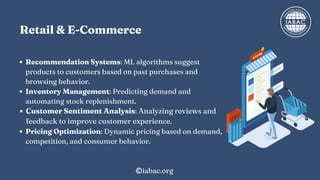
Recommendation Systems: ML algorithms suggest
products to customers based on past purchases and
browsing behavior.
Inventory Management: Predicting demand and
automating stock replenishment.
Customer Sentiment Analysis: Analyzing reviews and
feedback to improve customer experience.
Pricing Optimization: Dynamic pricing based on demand,
competition, and consumer behavior.
Retail & E-Commerce
iabac.org
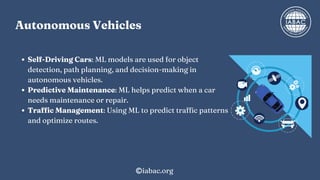
Self-Driving Cars: ML models are used for object
detection, path planning, and decision-making in
autonomous vehicles.
Predictive Maintenance: ML helps predict when a car
needs maintenance or repair.
Traffic Management: Using ML to predict traffic patterns
and optimize routes.
Autonomous Vehicles
iabac.org
Natural Language Processing (NLP)
Chatbots & Virtual Assistants: ML powers intelligent chatbots (e.g.,
Siri, Alexa) that understand and respond to user queries.
Language Translation: Tools like Google Translate use ML models for
translating text across languages.
Sentiment Analysis: Analyzing customer feedback to determine
sentiments (positive/negative).
Text Summarization & Question Answering: Automatically
summarizing long texts or answering questions based on provided
content.
iabac.org
Cybersecurity
Threat Detection: Machine learning models are trained
to detect cyber threats, such as malware or phishing
attempts.
Behavioral Analytics: Identifying unusual activities in
network traffic or user behavior to predict potential
attacks.
Automated Incident Response: ML helps in
automating the response to security incidents and
mitigating risks quickly.
Spam Filtering: Using ML to classify and block spam
emails based on patterns.
iabac.org
Machine learning is revolutionizing industries by enhancing automation,
efficiency, and decision-making. Future trends include a focus on AI ethics,
edge computing for device-based models, increased automation across
sectors, and leveraging ML for sustainability to combat climate change and
optimize resources.
iabac.org
Visit www.iabac.org
THANKYOU

Understanding Machine Learning Applications | IABAC

  • 1.
  • 2.
    Introduction to MachineLearning Machine learning is a subset of artificial intelligence where algorithms learn from data to identify patterns, make predictions, and improve over time without explicit programming. It encompasses supervised, unsupervised, and reinforcement learning, driving advancements across various industries. iabac.org
  • 3.
    Disease Prediction &Diagnosis: ML algorithms (e.g., deep learning) used to predict diseases like cancer, diabetes, etc. Medical Imaging: AI assists in interpreting MRI, CT scans, and X-rays. Personalized Medicine: ML helps in tailoring treatments based on genetic data. Drug Discovery: AI accelerates drug discovery by predicting molecular behavior. Machine Learning In Healthcare iabac.org
  • 4.
    Machine Learning InFinance Fraud Detection: Anomaly detection algorithms identify suspicious transactions. Algorithmic Trading: Machine learning models help in making investment decisions based on market patterns. Credit Scoring: ML is used to predict a person’s creditworthiness by analyzing past financial behaviors. Risk Management: ML assists in identifying and mitigating financial risks. iabac.org
  • 5.
    Recommendation Systems: MLalgorithms suggest products to customers based on past purchases and browsing behavior. Inventory Management: Predicting demand and automating stock replenishment. Customer Sentiment Analysis: Analyzing reviews and feedback to improve customer experience. Pricing Optimization: Dynamic pricing based on demand, competition, and consumer behavior. Retail & E-Commerce iabac.org
  • 6.
    Self-Driving Cars: MLmodels are used for object detection, path planning, and decision-making in autonomous vehicles. Predictive Maintenance: ML helps predict when a car needs maintenance or repair. Traffic Management: Using ML to predict traffic patterns and optimize routes. Autonomous Vehicles iabac.org
  • 7.
    Natural Language Processing(NLP) Chatbots & Virtual Assistants: ML powers intelligent chatbots (e.g., Siri, Alexa) that understand and respond to user queries. Language Translation: Tools like Google Translate use ML models for translating text across languages. Sentiment Analysis: Analyzing customer feedback to determine sentiments (positive/negative). Text Summarization & Question Answering: Automatically summarizing long texts or answering questions based on provided content. iabac.org
  • 8.
    Cybersecurity Threat Detection: Machinelearning models are trained to detect cyber threats, such as malware or phishing attempts. Behavioral Analytics: Identifying unusual activities in network traffic or user behavior to predict potential attacks. Automated Incident Response: ML helps in automating the response to security incidents and mitigating risks quickly. Spam Filtering: Using ML to classify and block spam emails based on patterns. iabac.org
  • 9.
    Machine learning isrevolutionizing industries by enhancing automation, efficiency, and decision-making. Future trends include a focus on AI ethics, edge computing for device-based models, increased automation across sectors, and leveraging ML for sustainability to combat climate change and optimize resources. iabac.org
  • 10.