Prerequisites for
Learning Artificial
Intelligence
iabac.org
Understanding the Foundations of AI
AI foundations involve algorithms, data, and machine learning
techniques to enable machines to perform tasks like recognition,
prediction, and decision-making. Core concepts include neural
networks, supervised/unsupervised learning, natural language
processing, and reinforcement learning, driving intelligent
automation and problem-solving.
iabac.org
Importance of Basic
Programming
Knowledge
Foundational Skill for AI
Essential for understanding algorithms
Enhances problem-solving abilities
Facilitates data manipulation skills
Promotes effective collaboration
Supports continuous learning
adaptability
Enables practical application of AI
technologies
iabac.org
Linear Algebra and
Calculus
Mathematical Foundations for AI
Mastery of linear algebra and calculus is
crucial for understanding AI algorithms,
enabling effective data representation,
optimization of models, and analysis of
dynamic systems, thereby forming the
backbone of advanced machine learning
techniques.
iabac.org
The Role of
Probability and
Statistics in AI
Critical Framework for AI
Probability and statistics provide essential
methodologies for modeling uncertainty,
enabling AI systems to make informed
decisions, validate models, and enhance
predictive accuracy across diverse
applications.
iabac.org
Essential Skills for AI Mastery
Mastering AI requires proficiency in programming
(Python, R), mathematics (linear algebra, calculus,
probability), machine learning frameworks
(TensorFlow, PyTorch), data manipulation, statistics,
and problem-solving. Strong knowledge of algorithms,
neural networks, and model optimization is crucial for
AI expertise.
iabac.org
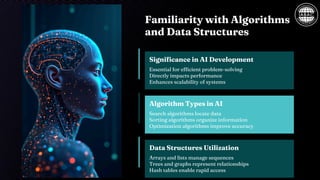
Familiarity with Algorithms
and Data Structures
Significance in AI Development
Algorithm Types in AI
Data Structures Utilization
Essential for efficient problem-solving
Directly impacts performance
Enhances scalability of systems
Search algorithms locate data
Sorting algorithms organize information
Optimization algorithms improve accuracy
Arrays and lists manage sequences
Trees and graphs represent relationships
Hash tables enable rapid access
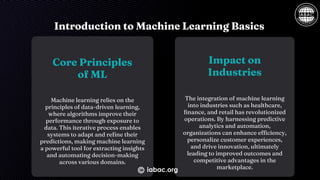
Introduction to Machine Learning Basics
Core Principles
of ML
Impact on
Industries
Machine learning relies on the
principles of data-driven learning,
where algorithms improve their
performance through exposure to
data. This iterative process enables
systems to adapt and refine their
predictions, making machine learning
a powerful tool for extracting insights
and automating decision-making
across various domains.
The integration of machine learning
into industries such as healthcare,
finance, and retail has revolutionized
operations. By harnessing predictive
analytics and automation,
organizations can enhance efficiency,
personalize customer experiences,
and drive innovation, ultimately
leading to improved outcomes and
competitive advantages in the
marketplace.
iabac.org
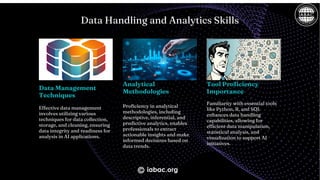
Data Handling and Analytics Skills
Data Management
Techniques
Analytical
Methodologies
Tool Proficiency
Importance
Effective data management
involves utilizing various
techniques for data collection,
storage, and cleaning, ensuring
data integrity and readiness for
analysis in AI applications.
Proficiency in analytical
methodologies, including
descriptive, inferential, and
predictive analytics, enables
professionals to extract
actionable insights and make
informed decisions based on
data trends.
Familiarity with essential tools
like Python, R, and SQL
enhances data handling
capabilities, allowing for
efficient data manipulation,
statistical analysis, and
visualization to support AI
initiatives.
iabac.org
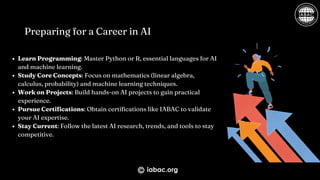
Learn Programming: Master Python or R, essential languages for AI
and machine learning.
Study Core Concepts: Focus on mathematics (linear algebra,
calculus, probability) and machine learning techniques.
Work on Projects: Build hands-on AI projects to gain practical
experience.
Pursue Certifications: Obtain certifications like IABAC to validate
your AI expertise.
Stay Current: Follow the latest AI research, trends, and tools to stay
competitive.
Preparing for a Career in AI
iabac.org
Thank You
Visit www.iabac.org

Prerequisites for Learning Artificial Intelligence | IABAC

  • 1.
  • 2.
    Understanding the Foundationsof AI AI foundations involve algorithms, data, and machine learning techniques to enable machines to perform tasks like recognition, prediction, and decision-making. Core concepts include neural networks, supervised/unsupervised learning, natural language processing, and reinforcement learning, driving intelligent automation and problem-solving. iabac.org
  • 3.
    Importance of Basic Programming Knowledge FoundationalSkill for AI Essential for understanding algorithms Enhances problem-solving abilities Facilitates data manipulation skills Promotes effective collaboration Supports continuous learning adaptability Enables practical application of AI technologies iabac.org
  • 4.
    Linear Algebra and Calculus MathematicalFoundations for AI Mastery of linear algebra and calculus is crucial for understanding AI algorithms, enabling effective data representation, optimization of models, and analysis of dynamic systems, thereby forming the backbone of advanced machine learning techniques. iabac.org
  • 5.
    The Role of Probabilityand Statistics in AI Critical Framework for AI Probability and statistics provide essential methodologies for modeling uncertainty, enabling AI systems to make informed decisions, validate models, and enhance predictive accuracy across diverse applications. iabac.org
  • 6.
    Essential Skills forAI Mastery Mastering AI requires proficiency in programming (Python, R), mathematics (linear algebra, calculus, probability), machine learning frameworks (TensorFlow, PyTorch), data manipulation, statistics, and problem-solving. Strong knowledge of algorithms, neural networks, and model optimization is crucial for AI expertise. iabac.org
  • 7.
    Familiarity with Algorithms andData Structures Significance in AI Development Algorithm Types in AI Data Structures Utilization Essential for efficient problem-solving Directly impacts performance Enhances scalability of systems Search algorithms locate data Sorting algorithms organize information Optimization algorithms improve accuracy Arrays and lists manage sequences Trees and graphs represent relationships Hash tables enable rapid access
  • 8.
    Introduction to MachineLearning Basics Core Principles of ML Impact on Industries Machine learning relies on the principles of data-driven learning, where algorithms improve their performance through exposure to data. This iterative process enables systems to adapt and refine their predictions, making machine learning a powerful tool for extracting insights and automating decision-making across various domains. The integration of machine learning into industries such as healthcare, finance, and retail has revolutionized operations. By harnessing predictive analytics and automation, organizations can enhance efficiency, personalize customer experiences, and drive innovation, ultimately leading to improved outcomes and competitive advantages in the marketplace. iabac.org
  • 9.
    Data Handling andAnalytics Skills Data Management Techniques Analytical Methodologies Tool Proficiency Importance Effective data management involves utilizing various techniques for data collection, storage, and cleaning, ensuring data integrity and readiness for analysis in AI applications. Proficiency in analytical methodologies, including descriptive, inferential, and predictive analytics, enables professionals to extract actionable insights and make informed decisions based on data trends. Familiarity with essential tools like Python, R, and SQL enhances data handling capabilities, allowing for efficient data manipulation, statistical analysis, and visualization to support AI initiatives. iabac.org
  • 10.
    Learn Programming: MasterPython or R, essential languages for AI and machine learning. Study Core Concepts: Focus on mathematics (linear algebra, calculus, probability) and machine learning techniques. Work on Projects: Build hands-on AI projects to gain practical experience. Pursue Certifications: Obtain certifications like IABAC to validate your AI expertise. Stay Current: Follow the latest AI research, trends, and tools to stay competitive. Preparing for a Career in AI iabac.org
  • 11.