Machine Learning
Benefits Across
Industries
QUICK INDUSTRY-WISE
OVERVIEW
INTRODUCTION
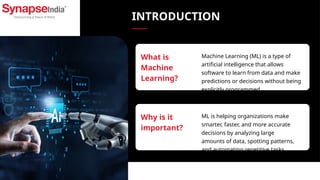
Machine Learning (ML) is a type of
artificial intelligence that allows
software to learn from data and make
predictions or decisions without being
explicitly programmed.
What is
Machine
Learning?
ML is helping organizations make
smarter, faster, and more accurate
decisions by analyzing large
amounts of data, spotting patterns,
and automating repetitive tasks.
Why is it
important?
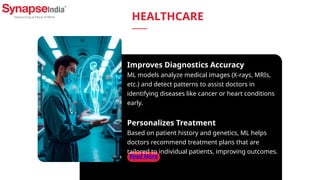
Improves Diagnostics Accuracy
ML models analyze medical images (X-rays, MRIs,
etc.) and detect patterns to assist doctors in
identifying diseases like cancer or heart conditions
early.
Personalizes Treatment
Based on patient history and genetics, ML helps
doctors recommend treatment plans that are
tailored to individual patients, improving outcomes.
Read More
HEALTHCARE
Detects Fraud in Real-time
ML identifies unusual spending patterns, helping
banks and payment platforms stop fraudulent
transactions before they cause damage.
Automates Credit Scoring and
Investment Predictions
By analyzing credit histories and market trends, ML
provides more accurate credit risk assessments
and guides investment strategies.
Read More
FINANCE
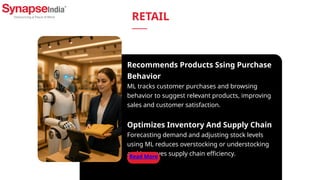
Recommends Products Ssing Purchase
Behavior
ML tracks customer purchases and browsing
behavior to suggest relevant products, improving
sales and customer satisfaction.
Optimizes Inventory And Supply Chain
Forecasting demand and adjusting stock levels
using ML reduces overstocking or understocking
and improves supply chain efficiency.
Read More
RETAIL
Read More
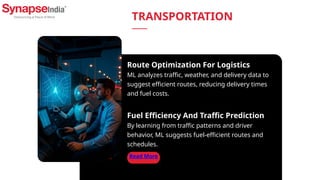
Route Optimization For Logistics
ML analyzes traffic, weather, and delivery data to
suggest efficient routes, reducing delivery times
and fuel costs.
Fuel Efficiency And Traffic Prediction
By learning from traffic patterns and driver
behavior, ML suggests fuel-efficient routes and
schedules.
TRANSPORTATION
Read More
Property Price Prediction Models
ML considers location, amenities, market trends,
and other factors to estimate property values.
Matching Buyers With Suitable Listings
By understanding user preferences, ML suggests
homes that fit buyer needs more precisely.
REAL ESTATE
Read More
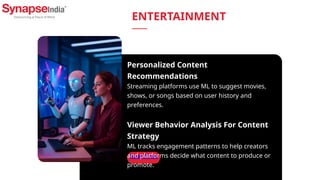
Personalized Content
Recommendations
Streaming platforms use ML to suggest movies,
shows, or songs based on user history and
preferences.
Viewer Behavior Analysis For Content
Strategy
ML tracks engagement patterns to help creators
and platforms decide what content to produce or
promote.
ENTERTAINMENT
Learn More
Machine learning is improving operations across industries by
enabling smarter, data-driven decisions. In healthcare, it aids early
diagnosis and personalized treatments. Finance uses it for fraud
detection, credit scoring, and investment analysis. Retail benefits
from product recommendations and inventory optimization, while
transportation improves route planning and maintenance
forecasting. Real estate uses ML for price prediction and
personalized property matches, and entertainment platforms rely
on it for content suggestions and audience insights.
CONCLUSION
Thank
You
+1 855-796-2773
info@synapseindia.com
www.synapseindia.com
1178 Broadway, 3rd Floor
#1346, New York, 10001,
USA

Machine Learning Benefits Across Industries

  • 1.
  • 2.
    INTRODUCTION Machine Learning (ML)is a type of artificial intelligence that allows software to learn from data and make predictions or decisions without being explicitly programmed. What is Machine Learning? ML is helping organizations make smarter, faster, and more accurate decisions by analyzing large amounts of data, spotting patterns, and automating repetitive tasks. Why is it important?
  • 3.
    Improves Diagnostics Accuracy MLmodels analyze medical images (X-rays, MRIs, etc.) and detect patterns to assist doctors in identifying diseases like cancer or heart conditions early. Personalizes Treatment Based on patient history and genetics, ML helps doctors recommend treatment plans that are tailored to individual patients, improving outcomes. Read More HEALTHCARE
  • 4.
    Detects Fraud inReal-time ML identifies unusual spending patterns, helping banks and payment platforms stop fraudulent transactions before they cause damage. Automates Credit Scoring and Investment Predictions By analyzing credit histories and market trends, ML provides more accurate credit risk assessments and guides investment strategies. Read More FINANCE
  • 5.
    Recommends Products SsingPurchase Behavior ML tracks customer purchases and browsing behavior to suggest relevant products, improving sales and customer satisfaction. Optimizes Inventory And Supply Chain Forecasting demand and adjusting stock levels using ML reduces overstocking or understocking and improves supply chain efficiency. Read More RETAIL
  • 6.
    Read More Route OptimizationFor Logistics ML analyzes traffic, weather, and delivery data to suggest efficient routes, reducing delivery times and fuel costs. Fuel Efficiency And Traffic Prediction By learning from traffic patterns and driver behavior, ML suggests fuel-efficient routes and schedules. TRANSPORTATION
  • 7.
    Read More Property PricePrediction Models ML considers location, amenities, market trends, and other factors to estimate property values. Matching Buyers With Suitable Listings By understanding user preferences, ML suggests homes that fit buyer needs more precisely. REAL ESTATE
  • 8.
    Read More Personalized Content Recommendations Streamingplatforms use ML to suggest movies, shows, or songs based on user history and preferences. Viewer Behavior Analysis For Content Strategy ML tracks engagement patterns to help creators and platforms decide what content to produce or promote. ENTERTAINMENT
  • 9.
    Learn More Machine learningis improving operations across industries by enabling smarter, data-driven decisions. In healthcare, it aids early diagnosis and personalized treatments. Finance uses it for fraud detection, credit scoring, and investment analysis. Retail benefits from product recommendations and inventory optimization, while transportation improves route planning and maintenance forecasting. Real estate uses ML for price prediction and personalized property matches, and entertainment platforms rely on it for content suggestions and audience insights. CONCLUSION
  • 10.