Understanding Inverter
Design
Embark on a journey through the world of inverter technology. We'll
explore design principles, applications, and innovations shaping the
future of power conversion.
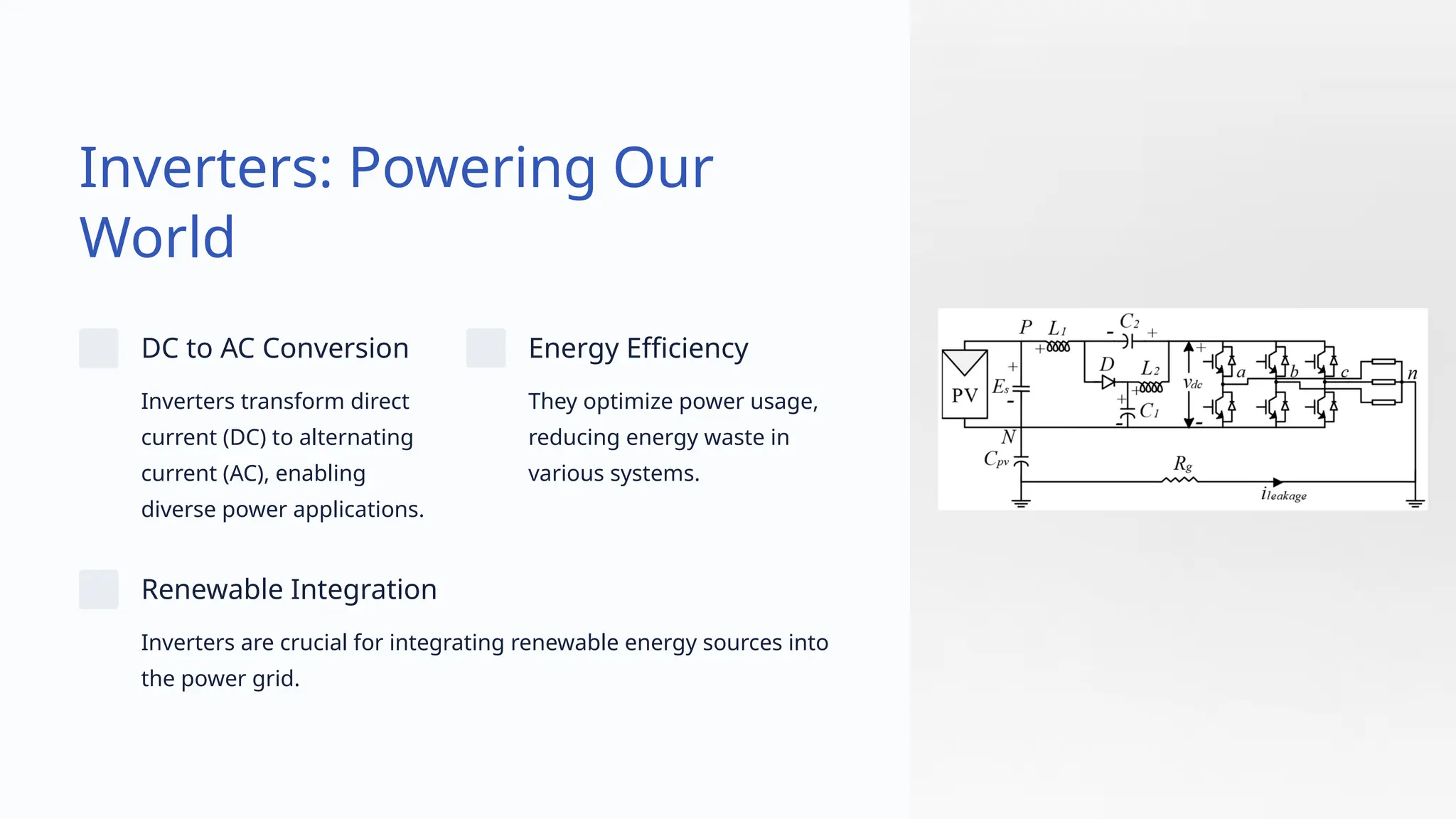
Inverters: Powering Our
World
DC to AC Conversion
Inverters transform direct
current (DC) to alternating
current (AC), enabling
diverse power applications.
Energy Efficiency
They optimize power usage,
reducing energy waste in
various systems.
Renewable Integration
Inverters are crucial for integrating renewable energy sources into
the power grid.
Inverter Types and Components
Types
• Square Wave
• Modified Sine Wave
• Pure Sine Wave
Key Components
• Power Transistors
• Capacitors
• Transformers
• Control Circuits
Wide-Ranging Applications
Solar Power
Convert DC from solar panels to AC for
home use.
Industrial
Power control in manufacturing and
process industries.
Automotive
Electric vehicle power systems and
charging stations.
Residential
Backup power systems and smart home
energy management.
Design Challenges
1
Efficiency
Minimizing power losses during conversion.
2
Heat Management
Effective cooling for high-power applications.
3
Size and Weight
Compact designs for portable and embedded systems.
4
EMI Reduction
Minimizing electromagnetic interference.
5
Cost Optimization
Balancing performance with affordability.
Innovative Solutions
Advanced Semiconductors
Using SiC and GaN for higher efficiency and switching speeds.
Digital Control
Implementing microcontrollers for precise and adaptive control.
Modular Design
Scalable and flexible inverter systems for various applications.
Thermal Management
Innovative cooling techniques like phase-change materials and liquid cooling.
Emerging Trends
AI Integration
Machine learning algorithms optimize inverter performance
in real-time.
IoT Connectivity
Smart inverters communicate with grid systems for efficient
power management.
Bidirectional Inverters
Enable power flow in both directions, supporting grid stability.
Nano-Inverters
Miniaturized inverters for individual solar panels and IoT
devices.
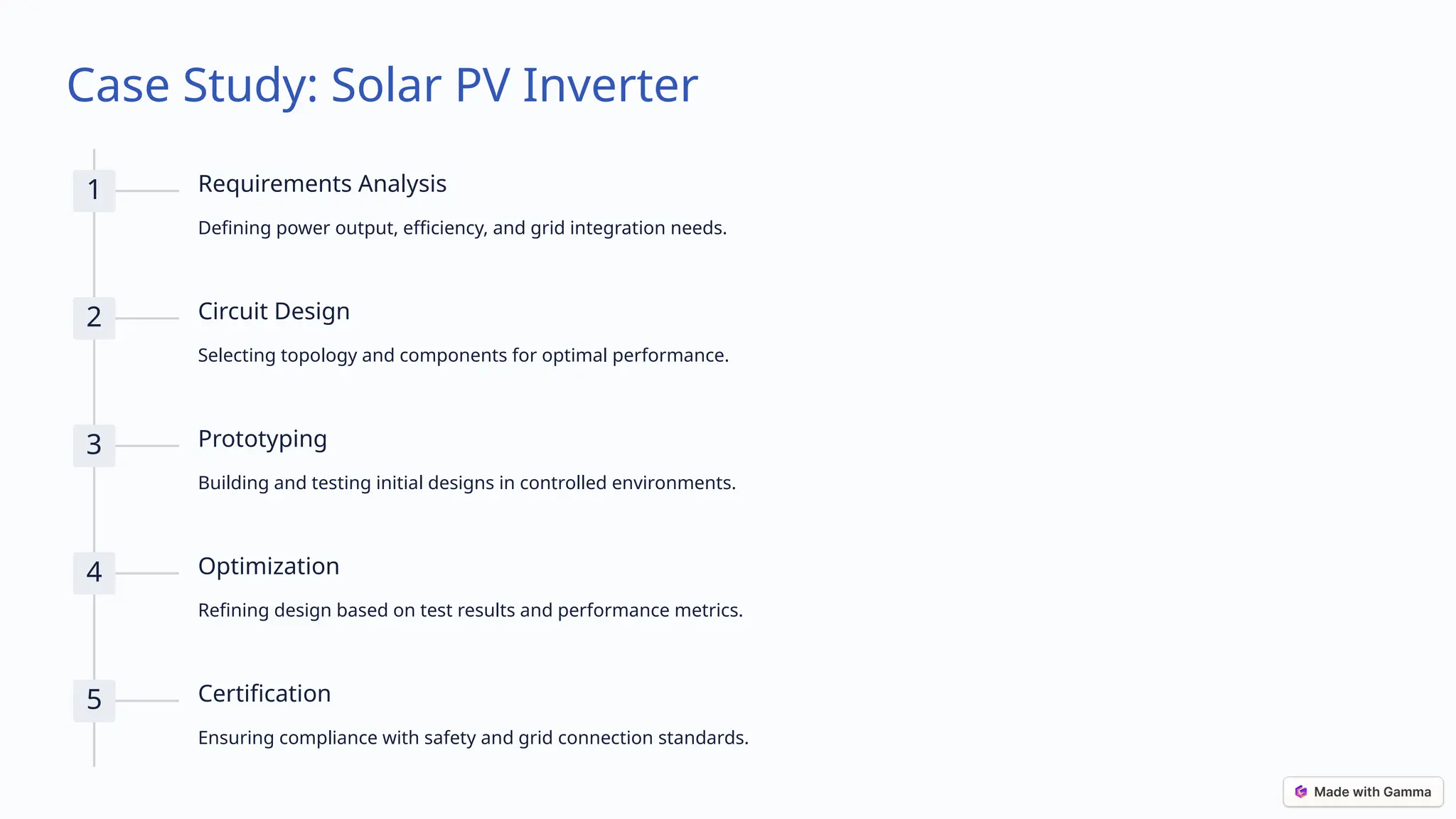
Case Study: Solar PV Inverter
1 Requirements Analysis
Defining power output, efficiency, and grid integration needs.
2 Circuit Design
Selecting topology and components for optimal performance.
3 Prototyping
Building and testing initial designs in controlled environments.
4 Optimization
Refining design based on test results and performance metrics.
5 Certification
Ensuring compliance with safety and grid connection standards.
Maximizing Efficiency and
Reliability
99.5%
Peak Efficiency
Advanced designs push efficiency
boundaries, minimizing losses.
25+
Years Lifespan
Robust components and intelligent
management extend operational life.
<1%
THD
Low Total Harmonic Distortion ensures
clean power output.
24/7
Monitoring
Continuous diagnostics and predictive
maintenance improve reliability.
Key Takeaways
1 Diverse Applications
Inverters are crucial in
renewable energy,
industrial, and consumer
electronics.
2 Ongoing Innovation
Advanced materials and
smart technologies are
shaping future inverter
designs.
3 Efficiency is Key
Maximizing efficiency and
reliability remains a primary
focus in design.
4 Holistic Approach
Successful inverter design
balances performance,
cost, and application-
specific requirements.

Understanding - Inverter - Design .pptx

  • 1.
    Understanding Inverter Design Embark ona journey through the world of inverter technology. We'll explore design principles, applications, and innovations shaping the future of power conversion.
  • 2.
    Inverters: Powering Our World DCto AC Conversion Inverters transform direct current (DC) to alternating current (AC), enabling diverse power applications. Energy Efficiency They optimize power usage, reducing energy waste in various systems. Renewable Integration Inverters are crucial for integrating renewable energy sources into the power grid.
  • 3.
    Inverter Types andComponents Types • Square Wave • Modified Sine Wave • Pure Sine Wave Key Components • Power Transistors • Capacitors • Transformers • Control Circuits
  • 4.
    Wide-Ranging Applications Solar Power ConvertDC from solar panels to AC for home use. Industrial Power control in manufacturing and process industries. Automotive Electric vehicle power systems and charging stations. Residential Backup power systems and smart home energy management.
  • 5.
    Design Challenges 1 Efficiency Minimizing powerlosses during conversion. 2 Heat Management Effective cooling for high-power applications. 3 Size and Weight Compact designs for portable and embedded systems. 4 EMI Reduction Minimizing electromagnetic interference. 5 Cost Optimization Balancing performance with affordability.
  • 6.
    Innovative Solutions Advanced Semiconductors UsingSiC and GaN for higher efficiency and switching speeds. Digital Control Implementing microcontrollers for precise and adaptive control. Modular Design Scalable and flexible inverter systems for various applications. Thermal Management Innovative cooling techniques like phase-change materials and liquid cooling.
  • 7.
    Emerging Trends AI Integration Machinelearning algorithms optimize inverter performance in real-time. IoT Connectivity Smart inverters communicate with grid systems for efficient power management. Bidirectional Inverters Enable power flow in both directions, supporting grid stability. Nano-Inverters Miniaturized inverters for individual solar panels and IoT devices.
  • 8.
    Case Study: SolarPV Inverter 1 Requirements Analysis Defining power output, efficiency, and grid integration needs. 2 Circuit Design Selecting topology and components for optimal performance. 3 Prototyping Building and testing initial designs in controlled environments. 4 Optimization Refining design based on test results and performance metrics. 5 Certification Ensuring compliance with safety and grid connection standards.
  • 9.
    Maximizing Efficiency and Reliability 99.5% PeakEfficiency Advanced designs push efficiency boundaries, minimizing losses. 25+ Years Lifespan Robust components and intelligent management extend operational life. <1% THD Low Total Harmonic Distortion ensures clean power output. 24/7 Monitoring Continuous diagnostics and predictive maintenance improve reliability.
  • 10.
    Key Takeaways 1 DiverseApplications Inverters are crucial in renewable energy, industrial, and consumer electronics. 2 Ongoing Innovation Advanced materials and smart technologies are shaping future inverter designs. 3 Efficiency is Key Maximizing efficiency and reliability remains a primary focus in design. 4 Holistic Approach Successful inverter design balances performance, cost, and application- specific requirements.