2018 World Data
Forum
Dubai, United Arab Emirates
October 2018
Mahmoud Mohieldin
Senior Vice President
World Bank Group
Twitter: @wbg2030
worldbank.org/sdgs
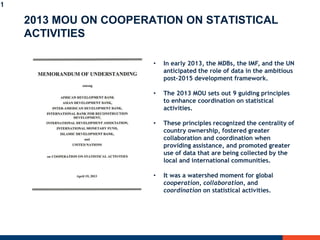
2013 MOU ON COOPERATION ON STATISTICAL
ACTIVITIES
1
• In early 2013, the MDBs, the IMF, and the UN
anticipated the role of data in the ambitious
post-2015 development framework.
• The 2013 MOU sets out 9 guiding principles
to enhance coordination on statistical
activities.
• These principles recognized the centrality of
country ownership, fostered greater
collaboration and coordination when
providing assistance, and promoted greater
use of data that are being collected by the
local and international communities.
• It was a watershed moment for global
cooperation, collaboration, and
coordination on statistical activities.
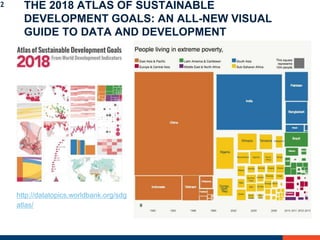
THE 2018 ATLAS OF SUSTAINABLE
DEVELOPMENT GOALS: AN ALL-NEW VISUAL
GUIDE TO DATA AND DEVELOPMENT
http://datatopics.worldbank.org/sdg
atlas/
2
POVERTY & SHARED PROSPERITY 2018: PIECING
TOGETHER THE POVERTY PUZZLE (LAUNCHED
OCTOBER 2018)
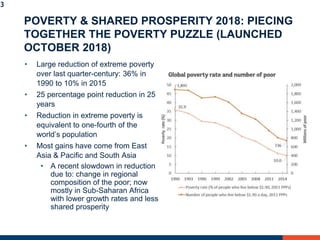
• Large reduction of extreme poverty
over last quarter-century: 36% in
1990 to 10% in 2015
• 25 percentage point reduction in 25
years
• Reduction in extreme poverty is
equivalent to one-fourth of the
world’s population
• Most gains have come from East
Asia & Pacific and South Asia
• A recent slowdown in reduction
due to: change in regional
composition of the poor; now
mostly in Sub-Saharan Africa
with lower growth rates and less
shared prosperity
3
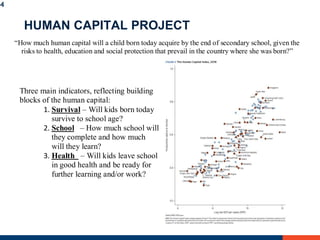
HUMAN CAPITAL PROJECT
4
1.
2.
3.
5
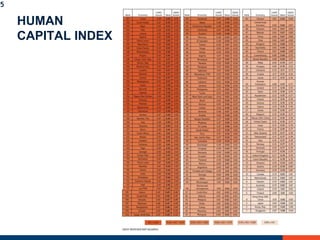
HUMAN
CAPITAL INDEX
THANK YOU

UN World Data Forum

  • 1.
    2018 World Data Forum Dubai,United Arab Emirates October 2018 Mahmoud Mohieldin Senior Vice President World Bank Group Twitter: @wbg2030 worldbank.org/sdgs
  • 2.
    2013 MOU ONCOOPERATION ON STATISTICAL ACTIVITIES 1 • In early 2013, the MDBs, the IMF, and the UN anticipated the role of data in the ambitious post-2015 development framework. • The 2013 MOU sets out 9 guiding principles to enhance coordination on statistical activities. • These principles recognized the centrality of country ownership, fostered greater collaboration and coordination when providing assistance, and promoted greater use of data that are being collected by the local and international communities. • It was a watershed moment for global cooperation, collaboration, and coordination on statistical activities.
  • 3.
    THE 2018 ATLASOF SUSTAINABLE DEVELOPMENT GOALS: AN ALL-NEW VISUAL GUIDE TO DATA AND DEVELOPMENT http://datatopics.worldbank.org/sdg atlas/ 2
  • 4.
    POVERTY & SHAREDPROSPERITY 2018: PIECING TOGETHER THE POVERTY PUZZLE (LAUNCHED OCTOBER 2018) • Large reduction of extreme poverty over last quarter-century: 36% in 1990 to 10% in 2015 • 25 percentage point reduction in 25 years • Reduction in extreme poverty is equivalent to one-fourth of the world’s population • Most gains have come from East Asia & Pacific and South Asia • A recent slowdown in reduction due to: change in regional composition of the poor; now mostly in Sub-Saharan Africa with lower growth rates and less shared prosperity 3
  • 5.
  • 6.
  • 7.

Editor's Notes

  • #3 Add 4-5 bps,
  • #5 In 2015, 736 million people are living in extreme poverty. The world continues to make steady progress in reducing extreme poverty. Overall, the percentage of the global population living in extreme poverty has dropped from 36 percent in 1990 to 10 percent in 2015. Despite a growing population, there are now more than 1 billion fewer people living in extreme poverty than there were in 1990. But the rate is stubbornly higher in low-income countries and countries affected by conflict and fragility. While the progress is remarkable, there is evidence that the pace of poverty reduction is starting to decelerate, reflecting several factors including declining growth as a result of falling commodity prices and other economic challenges.
  • #6 HCP is a global effort to accelerate more and better investments in people for greater equity and economic growth. The cost of inaction on human capital development is going up HCP is expected to help create the political space for national leaders to prioritize transformational human capital investments. The Human Capital Project launched the Human Capital Index