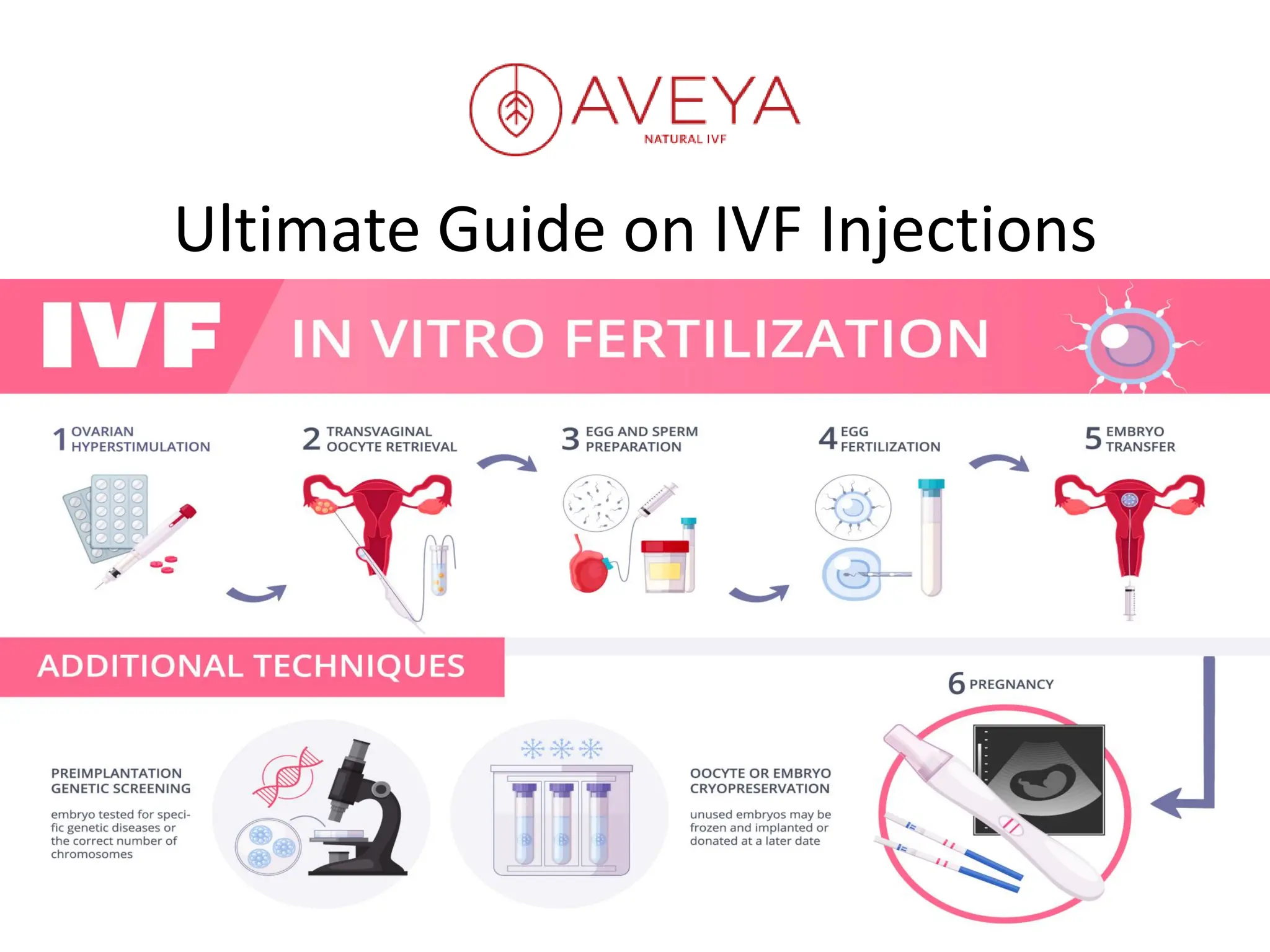
Ultimate Guide on IVF Injections
What Are IVF Injections?
• IVF injections are hormone medications administered via subcutaneous
(under the skin) or intramuscular (into the muscle) routes. Their main goal is
to regulate and optimize the reproductive cycle, ensuring the development
of multiple mature eggs and preparing the body for successful fertilization
and implantation.
• Unlike a natural menstrual cycle, which typically produces one egg, IVF
aims to stimulate the ovaries to produce multiple eggs to increase the
chances of fertilization and embryo development.
1. Ovarian Stimulation Injections
• These injections contain follicle-stimulating hormone (FSH), sometimes
combined with luteinizing hormone (LH), to stimulate the growth and maturation
of multiple ovarian follicles.
• Common medications: Gonal-F, Follistim, Menopur, Puregon
• Frequency: Usually once or twice daily
• Duration: About 8 to 14 days, depending on individual response
• Administration: Subcutaneous injections, commonly in the abdomen or thigh
• The goal is to produce multiple eggs to improve the chances of successful
fertilization.
2. GnRH Agonists and Antagonists
• These hormones prevent premature ovulation by suppressing or blocking
the body’s natural hormone surge.
• GnRH Agonists: Drugs like Lupron temporarily suppress natural hormone
production to control timing.
• GnRH Antagonists: Drugs like Cetrotide or Ganirelix block the LH surge
during stimulation.
• Frequency: Daily injections during the stimulation phase, timing depends on
protocol
• Purpose: To prevent early ovulation and allow follicles to mature fully before
retrieval
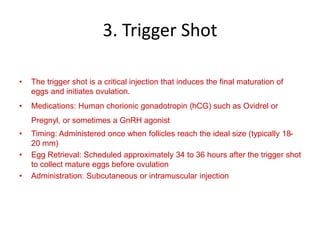
3. Trigger Shot
• The trigger shot is a critical injection that induces the final maturation of
eggs and initiates ovulation.
• Medications: Human chorionic gonadotropin (hCG) such as Ovidrel or
Pregnyl, or sometimes a GnRH agonist
• Timing: Administered once when follicles reach the ideal size (typically 18-
20 mm)
• Egg Retrieval: Scheduled approximately 34 to 36 hours after the trigger shot
to collect mature eggs before ovulation
• Administration: Subcutaneous or intramuscular injection
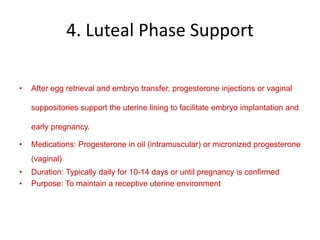
4. Luteal Phase Support
• After egg retrieval and embryo transfer, progesterone injections or vaginal
suppositories support the uterine lining to facilitate embryo implantation and
early pregnancy.
• Medications: Progesterone in oil (intramuscular) or micronized progesterone
(vaginal)
• Duration: Typically daily for 10-14 days or until pregnancy is confirmed
• Purpose: To maintain a receptive uterine environment
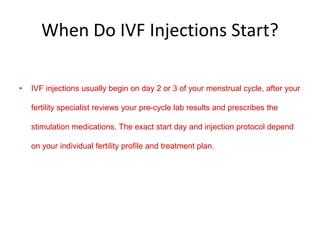
When Do IVF Injections Start?
• IVF injections usually begin on day 2 or 3 of your menstrual cycle, after your
fertility specialist reviews your pre-cycle lab results and prescribes the
stimulation medications. The exact start day and injection protocol depend
on your individual fertility profile and treatment plan.
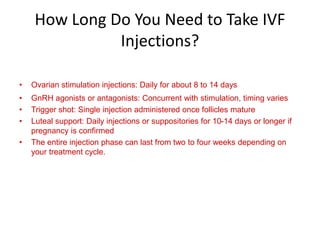
How Long Do You Need to Take IVF
Injections?
• Ovarian stimulation injections: Daily for about 8 to 14 days
• GnRH agonists or antagonists: Concurrent with stimulation, timing varies
• Trigger shot: Single injection administered once follicles mature
• Luteal support: Daily injections or suppositories for 10-14 days or longer if
pregnancy is confirmed
• The entire injection phase can last from two to four weeks depending on
your treatment cycle.
Daily Injection Routine and Self-
Administration
• Most IVF injections are subcutaneous and can be self-administered at home. Your fertility clinic
will provide detailed instructions and training on how to prepare and inject the medication safely.
• Common injection sites:
• Abdomen (avoiding the navel area)
• Outer thigh
• Tips for self-injection:
• Wash your hands thoroughly
• Use a new needle and syringe for each injection
• Rotate injection sites daily to reduce soreness
• Pinch the skin gently and insert the needle at a 45-90 degree angle
• Inject medication slowly and steadily
• Dispose of needles safely in a sharps container
• Some medications, like progesterone in oil, require intramuscular injections, which may be more
painful and sometimes require assistance.
Monitoring During IVF Injections
• Regular monitoring is essential to track your response to the injections and
adjust dosages if needed. Monitoring typically involves:
• Transvaginal ultrasounds to measure follicle growth
• Blood tests to check hormone levels (estradiol, LH, progesterone)
• Physical assessment to detect side effects or complications such as ovarian
hyperstimulation syndrome (OHSS)
• Monitoring visits usually occur every 2-3 days during the stimulation phase.
The Trigger Shot: Timing and
Importance
• The trigger shot is the most important injection in your IVF cycle. It causes the
eggs to mature fully and prepares them for retrieval. Timing is critical—egg
retrieval is scheduled 35 to 36 hours after the trigger shot to collect eggs before
natural ovulation occurs.
• Your fertility clinic will instruct you on the exact time to administer this injection.
Missing or mistiming the trigger shot can affect egg maturity and retrieval
success.
Side Effects of IVF Injections
• Common side effects during ovarian stimulation include:
• Bloating
• Mild abdominal cramping
• Tenderness or redness at injection sites
• Mood swings and fatigue
• Mild nausea
• Severe pain, persistent nausea, or symptoms of ovarian hyperstimulation
syndrome (OHSS)—such as rapid weight gain, severe abdominal pain, or
shortness of breath—require immediate medical attention.
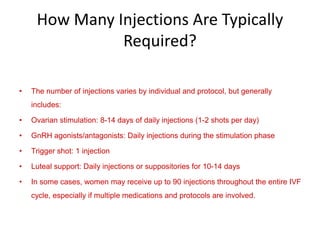
How Many Injections Are Typically
Required?
• The number of injections varies by individual and protocol, but generally
includes:
• Ovarian stimulation: 8-14 days of daily injections (1-2 shots per day)
• GnRH agonists/antagonists: Daily injections during the stimulation phase
• Trigger shot: 1 injection
• Luteal support: Daily injections or suppositories for 10-14 days
• In some cases, women may receive up to 90 injections throughout the entire IVF
cycle, especially if multiple medications and protocols are involved.
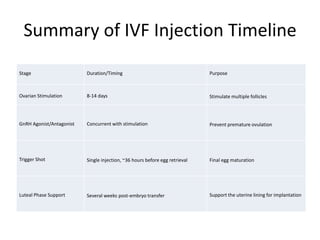
Summary of IVF Injection Timeline
Stage Duration/Timing Purpose
Ovarian Stimulation 8-14 days Stimulate multiple follicles
GnRH Agonist/Antagonist Concurrent with stimulation Prevent premature ovulation
Trigger Shot Single injection, ~36 hours before egg retrieval Final egg maturation
Luteal Phase Support Several weeks post-embryo transfer Support the uterine lining for implantation
Final Thoughts
• IVF injections are essential to the success of the IVF process, designed to
maximize egg production, control ovulation timing, and support early
pregnancy. While the number and complexity of injections can seem
daunting, understanding their purpose and schedule can help reduce
anxiety and improve compliance.
• Our fertility care team at Aveya IVF centre will provide personalized
instructions, monitoring, and support to guide you through each step. With
proper preparation and care, IVF injections can be managed safely and
effectively, bringing you closer to your goal of parenthood.

Ultimate Guide to IVF Injections Process & Tips By Aveya IVF.pdf

  • 1.
    Ultimate Guide onIVF Injections
  • 2.
    What Are IVFInjections? • IVF injections are hormone medications administered via subcutaneous (under the skin) or intramuscular (into the muscle) routes. Their main goal is to regulate and optimize the reproductive cycle, ensuring the development of multiple mature eggs and preparing the body for successful fertilization and implantation. • Unlike a natural menstrual cycle, which typically produces one egg, IVF aims to stimulate the ovaries to produce multiple eggs to increase the chances of fertilization and embryo development.
  • 3.
    1. Ovarian StimulationInjections • These injections contain follicle-stimulating hormone (FSH), sometimes combined with luteinizing hormone (LH), to stimulate the growth and maturation of multiple ovarian follicles. • Common medications: Gonal-F, Follistim, Menopur, Puregon • Frequency: Usually once or twice daily • Duration: About 8 to 14 days, depending on individual response • Administration: Subcutaneous injections, commonly in the abdomen or thigh • The goal is to produce multiple eggs to improve the chances of successful fertilization.
  • 4.
    2. GnRH Agonistsand Antagonists • These hormones prevent premature ovulation by suppressing or blocking the body’s natural hormone surge. • GnRH Agonists: Drugs like Lupron temporarily suppress natural hormone production to control timing. • GnRH Antagonists: Drugs like Cetrotide or Ganirelix block the LH surge during stimulation. • Frequency: Daily injections during the stimulation phase, timing depends on protocol • Purpose: To prevent early ovulation and allow follicles to mature fully before retrieval
  • 5.
    3. Trigger Shot •The trigger shot is a critical injection that induces the final maturation of eggs and initiates ovulation. • Medications: Human chorionic gonadotropin (hCG) such as Ovidrel or Pregnyl, or sometimes a GnRH agonist • Timing: Administered once when follicles reach the ideal size (typically 18- 20 mm) • Egg Retrieval: Scheduled approximately 34 to 36 hours after the trigger shot to collect mature eggs before ovulation • Administration: Subcutaneous or intramuscular injection
  • 6.
    4. Luteal PhaseSupport • After egg retrieval and embryo transfer, progesterone injections or vaginal suppositories support the uterine lining to facilitate embryo implantation and early pregnancy. • Medications: Progesterone in oil (intramuscular) or micronized progesterone (vaginal) • Duration: Typically daily for 10-14 days or until pregnancy is confirmed • Purpose: To maintain a receptive uterine environment
  • 7.
    When Do IVFInjections Start? • IVF injections usually begin on day 2 or 3 of your menstrual cycle, after your fertility specialist reviews your pre-cycle lab results and prescribes the stimulation medications. The exact start day and injection protocol depend on your individual fertility profile and treatment plan.
  • 8.
    How Long DoYou Need to Take IVF Injections? • Ovarian stimulation injections: Daily for about 8 to 14 days • GnRH agonists or antagonists: Concurrent with stimulation, timing varies • Trigger shot: Single injection administered once follicles mature • Luteal support: Daily injections or suppositories for 10-14 days or longer if pregnancy is confirmed • The entire injection phase can last from two to four weeks depending on your treatment cycle.
  • 9.
    Daily Injection Routineand Self- Administration • Most IVF injections are subcutaneous and can be self-administered at home. Your fertility clinic will provide detailed instructions and training on how to prepare and inject the medication safely. • Common injection sites: • Abdomen (avoiding the navel area) • Outer thigh • Tips for self-injection: • Wash your hands thoroughly • Use a new needle and syringe for each injection • Rotate injection sites daily to reduce soreness • Pinch the skin gently and insert the needle at a 45-90 degree angle • Inject medication slowly and steadily • Dispose of needles safely in a sharps container • Some medications, like progesterone in oil, require intramuscular injections, which may be more painful and sometimes require assistance.
  • 10.
    Monitoring During IVFInjections • Regular monitoring is essential to track your response to the injections and adjust dosages if needed. Monitoring typically involves: • Transvaginal ultrasounds to measure follicle growth • Blood tests to check hormone levels (estradiol, LH, progesterone) • Physical assessment to detect side effects or complications such as ovarian hyperstimulation syndrome (OHSS) • Monitoring visits usually occur every 2-3 days during the stimulation phase.
  • 11.
    The Trigger Shot:Timing and Importance • The trigger shot is the most important injection in your IVF cycle. It causes the eggs to mature fully and prepares them for retrieval. Timing is critical—egg retrieval is scheduled 35 to 36 hours after the trigger shot to collect eggs before natural ovulation occurs. • Your fertility clinic will instruct you on the exact time to administer this injection. Missing or mistiming the trigger shot can affect egg maturity and retrieval success.
  • 12.
    Side Effects ofIVF Injections • Common side effects during ovarian stimulation include: • Bloating • Mild abdominal cramping • Tenderness or redness at injection sites • Mood swings and fatigue • Mild nausea • Severe pain, persistent nausea, or symptoms of ovarian hyperstimulation syndrome (OHSS)—such as rapid weight gain, severe abdominal pain, or shortness of breath—require immediate medical attention.
  • 13.
    How Many InjectionsAre Typically Required? • The number of injections varies by individual and protocol, but generally includes: • Ovarian stimulation: 8-14 days of daily injections (1-2 shots per day) • GnRH agonists/antagonists: Daily injections during the stimulation phase • Trigger shot: 1 injection • Luteal support: Daily injections or suppositories for 10-14 days • In some cases, women may receive up to 90 injections throughout the entire IVF cycle, especially if multiple medications and protocols are involved.
  • 14.
    Summary of IVFInjection Timeline Stage Duration/Timing Purpose Ovarian Stimulation 8-14 days Stimulate multiple follicles GnRH Agonist/Antagonist Concurrent with stimulation Prevent premature ovulation Trigger Shot Single injection, ~36 hours before egg retrieval Final egg maturation Luteal Phase Support Several weeks post-embryo transfer Support the uterine lining for implantation
  • 15.
    Final Thoughts • IVFinjections are essential to the success of the IVF process, designed to maximize egg production, control ovulation timing, and support early pregnancy. While the number and complexity of injections can seem daunting, understanding their purpose and schedule can help reduce anxiety and improve compliance. • Our fertility care team at Aveya IVF centre will provide personalized instructions, monitoring, and support to guide you through each step. With proper preparation and care, IVF injections can be managed safely and effectively, bringing you closer to your goal of parenthood.