U.G.Studies
Novel
Far from the Madding Crowd
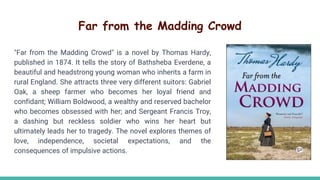
"Far from the Madding Crowd" is a novel by Thomas Hardy,
published in 1874. It tells the story of Bathsheba Everdene, a
beautiful and headstrong young woman who inherits a farm in
rural England. She attracts three very different suitors: Gabriel
Oak, a sheep farmer who becomes her loyal friend and
confidant; William Boldwood, a wealthy and reserved bachelor
who becomes obsessed with her; and Sergeant Francis Troy,
a dashing but reckless soldier who wins her heart but
ultimately leads her to tragedy. The novel explores themes of
love, independence, societal expectations, and the
consequences of impulsive actions.
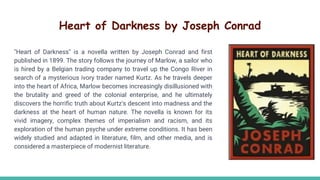
Heart of Darkness by Joseph Conrad
"Heart of Darkness" is a novella written by Joseph Conrad and first
published in 1899. The story follows the journey of Marlow, a sailor who
is hired by a Belgian trading company to travel up the Congo River in
search of a mysterious ivory trader named Kurtz. As he travels deeper
into the heart of Africa, Marlow becomes increasingly disillusioned with
the brutality and greed of the colonial enterprise, and he ultimately
discovers the horrific truth about Kurtz's descent into madness and the
darkness at the heart of human nature. The novella is known for its
vivid imagery, complex themes of imperialism and racism, and its
exploration of the human psyche under extreme conditions. It has been
widely studied and adapted in literature, film, and other media, and is
considered a masterpiece of modernist literature.
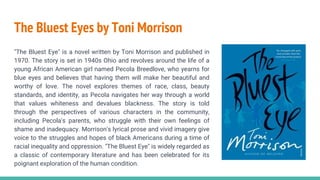
The Bluest Eyes by Toni Morrison
"The Bluest Eye" is a novel written by Toni Morrison and published in
1970. The story is set in 1940s Ohio and revolves around the life of a
young African American girl named Pecola Breedlove, who yearns for
blue eyes and believes that having them will make her beautiful and
worthy of love. The novel explores themes of race, class, beauty
standards, and identity, as Pecola navigates her way through a world
that values whiteness and devalues blackness. The story is told
through the perspectives of various characters in the community,
including Pecola's parents, who struggle with their own feelings of
shame and inadequacy. Morrison's lyrical prose and vivid imagery give
voice to the struggles and hopes of black Americans during a time of
racial inequality and oppression. "The Bluest Eye" is widely regarded as
a classic of contemporary literature and has been celebrated for its
poignant exploration of the human condition.
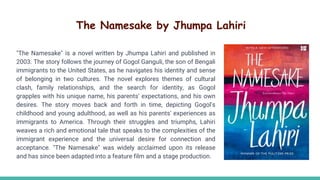
The Namesake by Jhumpa Lahiri
"The Namesake" is a novel written by Jhumpa Lahiri and published in
2003. The story follows the journey of Gogol Ganguli, the son of Bengali
immigrants to the United States, as he navigates his identity and sense
of belonging in two cultures. The novel explores themes of cultural
clash, family relationships, and the search for identity, as Gogol
grapples with his unique name, his parents' expectations, and his own
desires. The story moves back and forth in time, depicting Gogol's
childhood and young adulthood, as well as his parents' experiences as
immigrants to America. Through their struggles and triumphs, Lahiri
weaves a rich and emotional tale that speaks to the complexities of the
immigrant experience and the universal desire for connection and
acceptance. "The Namesake" was widely acclaimed upon its release
and has since been adapted into a feature film and a stage production.

U.G.Studies Novel.pptx

  • 1.
  • 2.
    Far from theMadding Crowd "Far from the Madding Crowd" is a novel by Thomas Hardy, published in 1874. It tells the story of Bathsheba Everdene, a beautiful and headstrong young woman who inherits a farm in rural England. She attracts three very different suitors: Gabriel Oak, a sheep farmer who becomes her loyal friend and confidant; William Boldwood, a wealthy and reserved bachelor who becomes obsessed with her; and Sergeant Francis Troy, a dashing but reckless soldier who wins her heart but ultimately leads her to tragedy. The novel explores themes of love, independence, societal expectations, and the consequences of impulsive actions.
  • 3.
    Heart of Darknessby Joseph Conrad "Heart of Darkness" is a novella written by Joseph Conrad and first published in 1899. The story follows the journey of Marlow, a sailor who is hired by a Belgian trading company to travel up the Congo River in search of a mysterious ivory trader named Kurtz. As he travels deeper into the heart of Africa, Marlow becomes increasingly disillusioned with the brutality and greed of the colonial enterprise, and he ultimately discovers the horrific truth about Kurtz's descent into madness and the darkness at the heart of human nature. The novella is known for its vivid imagery, complex themes of imperialism and racism, and its exploration of the human psyche under extreme conditions. It has been widely studied and adapted in literature, film, and other media, and is considered a masterpiece of modernist literature.
  • 4.
    The Bluest Eyesby Toni Morrison "The Bluest Eye" is a novel written by Toni Morrison and published in 1970. The story is set in 1940s Ohio and revolves around the life of a young African American girl named Pecola Breedlove, who yearns for blue eyes and believes that having them will make her beautiful and worthy of love. The novel explores themes of race, class, beauty standards, and identity, as Pecola navigates her way through a world that values whiteness and devalues blackness. The story is told through the perspectives of various characters in the community, including Pecola's parents, who struggle with their own feelings of shame and inadequacy. Morrison's lyrical prose and vivid imagery give voice to the struggles and hopes of black Americans during a time of racial inequality and oppression. "The Bluest Eye" is widely regarded as a classic of contemporary literature and has been celebrated for its poignant exploration of the human condition.
  • 5.
    The Namesake byJhumpa Lahiri "The Namesake" is a novel written by Jhumpa Lahiri and published in 2003. The story follows the journey of Gogol Ganguli, the son of Bengali immigrants to the United States, as he navigates his identity and sense of belonging in two cultures. The novel explores themes of cultural clash, family relationships, and the search for identity, as Gogol grapples with his unique name, his parents' expectations, and his own desires. The story moves back and forth in time, depicting Gogol's childhood and young adulthood, as well as his parents' experiences as immigrants to America. Through their struggles and triumphs, Lahiri weaves a rich and emotional tale that speaks to the complexities of the immigrant experience and the universal desire for connection and acceptance. "The Namesake" was widely acclaimed upon its release and has since been adapted into a feature film and a stage production.