
Genomics in Society: Genomics, Cellular Networks, Preventive Medicine, and Society Guest Lecture to UCSD Medical and Pharmaceutical Students Foundations of Human Biology--Lecture #41 UCSD October 6, 2010 Dr. Larry Smarr Director, California Institute for Telecommunications and Information Technology Harry E. Gruber Professor,  Dept. of Computer Science and Engineering Jacobs School of Engineering, UCSD Follow me on Twitter: lsmarr
Required Reading Quantified Self www.xconomy.com/san-diego/2010/05/12/how-internet-pioneer-larry-smarr-lost-20-pounds-by-becoming-a-quantified-self/?single_page=true Future of Personalized Preventive Medicine www.newsweek.com/2009/06/26/a-doctor-s-vision-of-the-future-of-medicine.html Personalized Genomic Sequencing www.technologyreview.com/biomedicine/25218/ www.mercurynews.com/business/ci_15580695 http://blogs.forbes.com/sciencebiz/2010/06/03/your-genome-is-coming
Genetics and Society Learning Objectives Explain the relationships between genetics, disease and society List and explain the major issues concerning genetic testing for predisposition to disease Explain how measurements of an individual¹s chemical states relate to genetic testing and how both contribute to preventive medicine Explain how population health systems emerge from individuals’ data
Genetics and Society Learning Objectives Explain the interactions between the genome, cellular networks, systems biology, and emergence of disease states Explain the difference between Single Nucleotide Polymorphism mapping and complete genomic maps and how each is used in medicine Present both sides of the debate over keeping a patient¹s genetic information private versus sharing data openly Vocabulary: SNP, genome, cellular networks, wireless, sensors, system biology,  genetic testing, genome sequencers, quantified self
Genetics, Disease, and Society Measuring the State of Your Body Genomics, Proteomics, and Cellular Networks Predictive, Personalized, Preventive, & Participatory Medicine The Rise of Individual and Societal Genomic Testing-Promise and Concerns
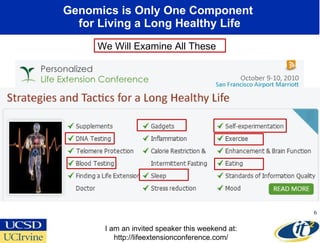
Genomics is Only One Component  for Living a Long Healthy Life I am an invited speaker this weekend at: http://lifeextensionconference.com/ We Will Examine All These
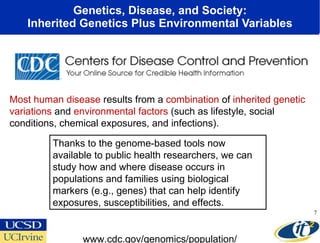
Genetics, Disease, and Society: Inherited Genetics Plus Environmental Variables Most human disease  results from a  combination  of  inherited genetic variations  and  environmental factors  (such as lifestyle, social conditions, chemical exposures, and infections).  Thanks to the genome-based tools now available to public health researchers, we can study how and where disease occurs in populations and families using biological markers (e.g., genes) that can help identify exposures, susceptibilities, and effects. www.cdc.gov/genomics/population/
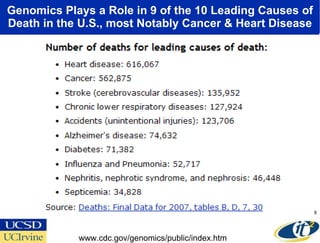
Genomics Plays a Role in 9 of the 10 Leading Causes of Death in the U.S., most Notably Cancer & Heart Disease www.cdc.gov/genomics/public/index.htm
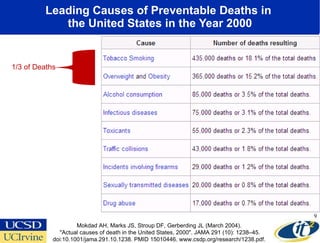
Leading Causes of Preventable Deaths in  the United States in the Year 2000 Mokdad AH, Marks JS, Stroup DF, Gerberding JL (March 2004).  "Actual causes of death in the United States, 2000". JAMA 291 (10): 1238–45. doi:10.1001/jama.291.10.1238. PMID 15010446. www.csdp.org/research/1238.pdf.  1/3 of Deaths
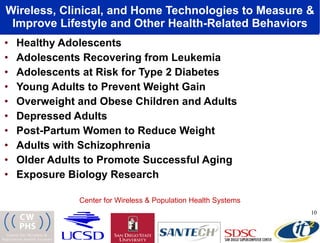
Wireless, Clinical, and Home Technologies to Measure & Improve Lifestyle and Other Health-Related Behaviors Healthy Adolescents Adolescents Recovering from Leukemia Adolescents at Risk for Type 2 Diabetes Young Adults to Prevent Weight Gain Overweight and Obese Children and Adults Depressed Adults  Post-Partum Women to Reduce Weight Adults with Schizophrenia Older Adults to Promote Successful Aging Exposure Biology Research  Center for Wireless & Population Health Systems
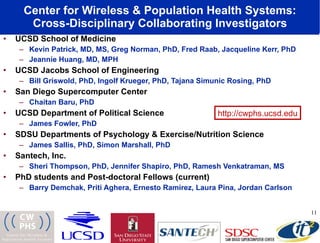
Center for Wireless & Population Health Systems: Cross-Disciplinary Collaborating Investigators UCSD School of Medicine Kevin Patrick, MD, MS, Greg Norman, PhD, Fred Raab, Jacqueline Kerr, PhD Jeannie Huang, MD, MPH UCSD Jacobs School of Engineering Bill Griswold, PhD, Ingolf Krueger, PhD, Tajana Simunic Rosing, PhD San Diego Supercomputer Center Chaitan Baru, PhD UCSD Department of Political Science James Fowler, PhD SDSU Departments of Psychology & Exercise/Nutrition Science James Sallis, PhD, Simon Marshall, PhD Santech, Inc. Sheri Thompson, PhD, Jennifer Shapiro, PhD, Ramesh Venkatraman, MS PhD students and Post-doctoral Fellows (current) Barry Demchak, Priti Aghera, Ernesto Ramirez, Laura Pina, Jordan Carlson http://cwphs.ucsd.edu
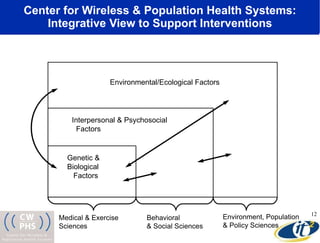
Center for Wireless & Population Health Systems: Integrative View to Support Interventions Genetic &  Biological Factors Interpersonal & Psychosocial Factors Environmental/Ecological Factors Medical & Exercise Sciences Behavioral & Social Sciences Environment, Population  & Policy Sciences
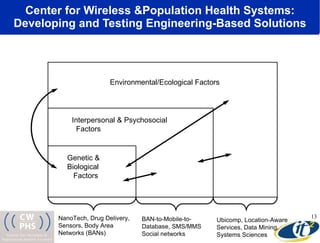
Center for Wireless &Population Health Systems: Developing and Testing Engineering-Based Solutions Interpersonal & Psychosocial Factors NanoTech, Drug Delivery,  Sensors, Body Area  Networks (BANs) BAN-to-Mobile-to-Database, SMS/MMS Social networks Ubicomp, Location-Aware Services, Data Mining,  Systems Sciences  Genetic &  Biological Factors Environmental/Ecological Factors
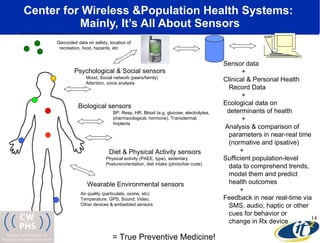
Center for Wireless &Population Health Systems:  Mainly, It’s All About Sensors Psychological & Social sensors Biological sensors Diet & Physical Activity sensors Air quality (particulate, ozone, etc) Temperature, GPS, Sound, Video, Other devices & embedded sensors BP, Resp, HR, Blood (e.g. glucose, electrolytes, pharmacological, hormone), Transdermal, Implants Mood, Social network (peers/family) Attention, voice analysis Physical activity (PAEE, type), sedentary Posture/orientation, diet intake (photo/bar code) Wearable Environmental sensors Sensor data + Clinical & Personal Health Record Data +  Ecological data on  determinants of health + Analysis & comparison of  parameters in near-real time  (normative and ipsative)  + Sufficient population-level data to comprehend trends,  model them and predict health outcomes + Feedback in near real-time via SMS, audio, haptic or other cues for behavior or  change in Rx device = True Preventive Medicine! Sensors embedded in the environment Geocoded data on safety, location of recreation, food, hazards, etc
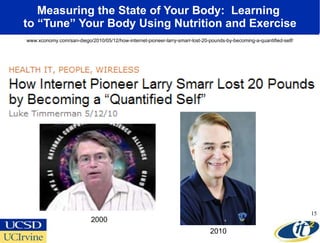
Measuring the State of Your Body:  Learning  to “Tune” Your Body Using Nutrition and Exercise www.xconomy.com/san-diego/2010/05/12/how-internet-pioneer-larry-smarr-lost-20-pounds-by-becoming-a-quantified-self/ 2000 2010
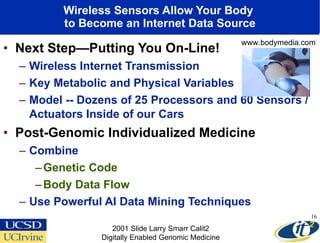
Wireless Sensors Allow Your Body  to Become an Internet Data Source Next Step—Putting You On-Line! Wireless Internet Transmission Key Metabolic and Physical Variables Model -- Dozens of 25 Processors and 60 Sensors / Actuators Inside of our Cars Post-Genomic Individualized Medicine Combine  Genetic Code  Body Data Flow  Use Powerful AI Data Mining Techniques www.bodymedia.com 2001 Slide Larry Smarr Calit2 Digitally Enabled Genomic Medicine
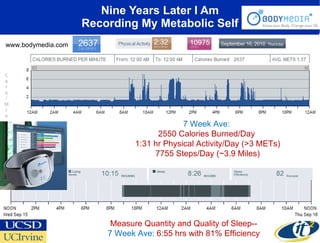
Nine Years Later I Am Recording My Metabolic Self 7 Week Ave:  2550 Calories Burned/Day  1:31 hr Physical Activity/Day (>3 METs) 7755 Steps/Day (~3.9 Miles) Measure Quantity and Quality of Sleep-- 7 Week Ave:  6:55 hrs with 81% Efficiency www.bodymedia.com
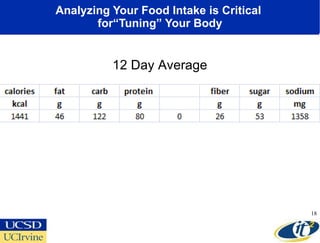
Analyzing Your Food Intake is Critical  for“Tuning” Your Body 12 Day Average
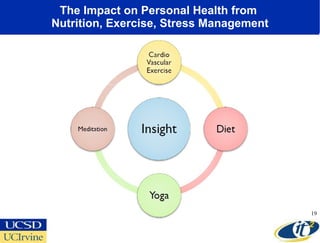
The Impact on Personal Health from  Nutrition, Exercise, Stress Management
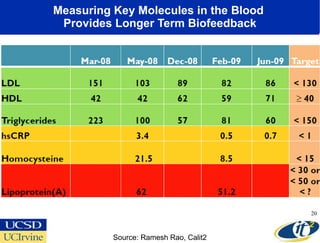
Measuring Key Molecules in the Blood  Provides Longer Term Biofeedback Source: Ramesh Rao, Calit2
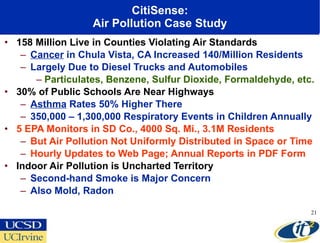
CitiSense: Air Pollution Case Study 158 Million Live in Counties Violating Air Standards Cancer  in Chula Vista, CA Increased 140/Million Residents Largely Due to Diesel Trucks and Automobiles Particulates, Benzene, Sulfur Dioxide, Formaldehyde, etc.  30% of Public Schools Are Near Highways Asthma  Rates 50% Higher There 350,000 – 1,300,000 Respiratory Events in Children Annually 5 EPA Monitors in SD Co., 4000 Sq. Mi., 3.1M Residents But Air Pollution Not Uniformly Distributed in Space or Time Hourly Updates to Web Page; Annual Reports in PDF Form Indoor Air Pollution is Uncharted Territory Second-hand Smoke is Major Concern  Also Mold, Radon
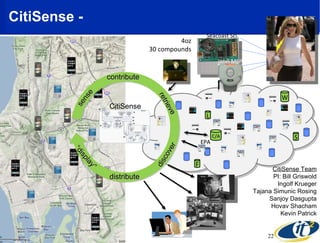
CitiSense - Seacoast Sci. 4oz 30 compounds CitiSense Team PI: Bill Griswold Ingolf Krueger Tajana Simunic Rosing Sanjoy Dasgupta Hovav Shacham Kevin Patrick C/A L S W F CitiSense contribute distribute sense “ display” discover retrieve EPA Intel MSP
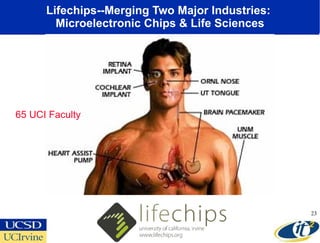
Lifechips--Merging Two Major Industries:  Microelectronic Chips & Life Sciences LifeChips:  the merging of two major industries, the microelectronic chip industry with the life science industry LifeChips medical devices 65 UCI Faculty
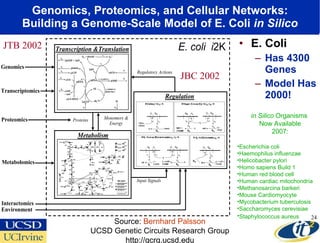
Genomics, Proteomics, and Cellular Networks: Building a Genome-Scale Model of E. Coli  in Silico E. Coli Has 4300 Genes Model Has 2000! Source:  Bernhard Palsson UCSD Genetic Circuits Research Group http://gcrg.ucsd.edu JTB 2002 JBC 2002 in Silico  Organisms  Now Available 2007: Escherichia coli  Haemophilus influenzae  Helicobacter pylori  Homo sapiens Build 1 Human red blood cell  Human cardiac mitochondria  Methanosarcina barkeri  Mouse Cardiomyocyte  Mycobacterium tuberculosis  Saccharomyces cerevisiae  Staphylococcus aureus
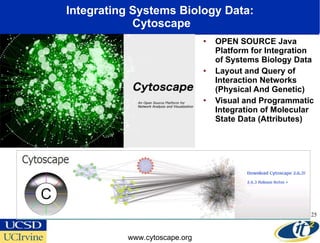
Integrating Systems Biology Data:  Cytoscape OPEN SOURCE Java Platform for Integration of Systems Biology Data Layout and Query of Interaction Networks (Physical And Genetic) Visual and Programmatic Integration of Molecular State Data (Attributes) www.cytoscape.org
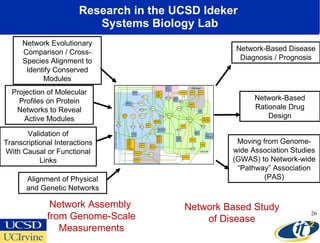
Research in the UCSD Ideker  Systems Biology Lab Validation of Transcriptional Interactions With Causal or Functional Links Network Based Study of Disease Network Assembly  from Genome-Scale Measurements Network Evolutionary Comparison / Cross-Species Alignment to Identify Conserved Modules Projection of Molecular Profiles on Protein Networks to Reveal Active Modules Alignment of Physical and Genetic Networks Network-Based Rationale Drug Design Network-Based Disease Diagnosis / Prognosis Moving from Genome-wide Association Studies (GWAS) to Network-wide “Pathway” Association (PAS)
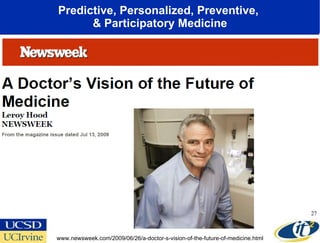
Predictive, Personalized, Preventive,  & Participatory Medicine www.newsweek.com/2009/06/26/a-doctor-s-vision-of-the-future-of-medicine.html
Source: Lee Hood, ISB
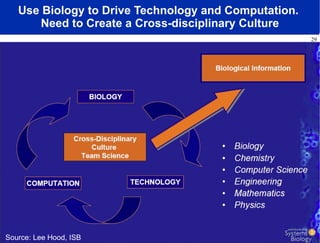
Use Biology to Drive Technology and Computation.  Need to Create a Cross-disciplinary Culture Source: Lee Hood, ISB
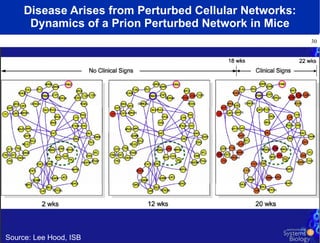
Disease Arises from Perturbed Cellular Networks: Dynamics of a Prion Perturbed Network in Mice Source: Lee Hood, ISB
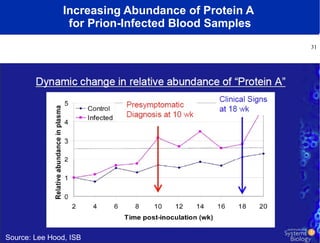
Increasing Abundance of Protein A  for Prion-Infected Blood Samples Source: Lee Hood, ISB
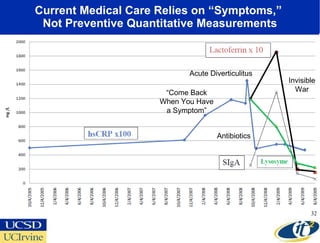
Current Medical Care Relies on “Symptoms,”  Not Preventive Quantitative Measurements “ Come Back When You Have a Symptom” Acute Diverticulitus Invisible War Antibiotics
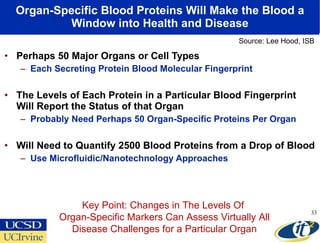
Organ-Specific Blood Proteins Will Make the Blood a Window into Health and Disease Perhaps 50 Major Organs or Cell Types Each Secreting Protein Blood Molecular Fingerprint The Levels of Each Protein in a Particular Blood Fingerprint  Will Report the Status of that Organ  Probably Need Perhaps 50 Organ-Specific Proteins Per Organ Will Need to Quantify 2500 Blood Proteins from a Drop of Blood Use Microfluidic/Nanotechnology Approaches Key Point: Changes in The Levels Of  Organ-Specific Markers Can Assess Virtually All Disease Challenges for a Particular Organ Source: Lee Hood, ISB
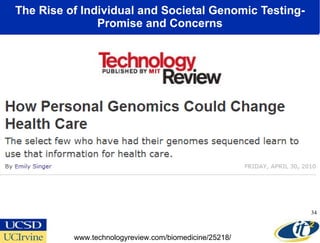
The Rise of Individual and Societal Genomic Testing-Promise and Concerns www.technologyreview.com/biomedicine/25218/
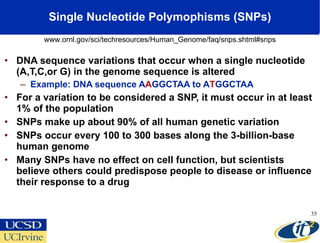
Single Nucleotide Polymophisms (SNPs) DNA sequence variations that occur when a single nucleotide (A,T,C,or G) in the genome sequence is altered Example: DNA sequence A A GGCTAA to A T GGCTAA For a variation to be considered a SNP, it must occur in at least 1% of the population SNPs make up about 90% of all human genetic variation  SNPs occur every 100 to 300 bases along the 3-billion-base human genome  Many SNPs have no effect on cell function, but scientists believe others could predispose people to disease or influence their response to a drug www.ornl.gov/sci/techresources/Human_Genome/faq/snps.shtml#snps
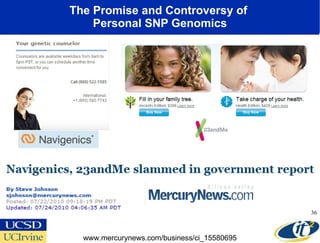
The Promise and Controversy of  Personal SNP Genomics www.mercurynews.com/business/ci_15580695
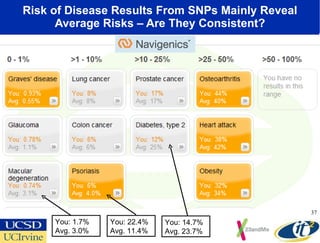
Risk of Disease Results From SNPs Mainly Reveal Average Risks – Are They Consistent? You: 1.7% Avg. 3.0% You: 14.7% Avg. 23.7% You: 22.4% Avg. 11.4%
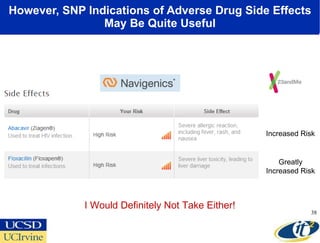
However, SNP Indications of Adverse Drug Side Effects May Be Quite Useful Increased Risk Greatly Increased Risk I Would Definitely Not Take Either!
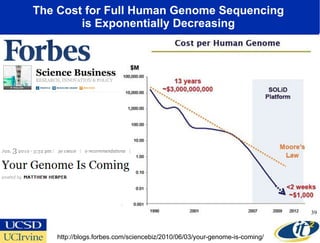
The Cost for Full Human Genome Sequencing  is Exponentially Decreasing  http://blogs.forbes.com/sciencebiz/2010/06/03/your-genome-is-coming/
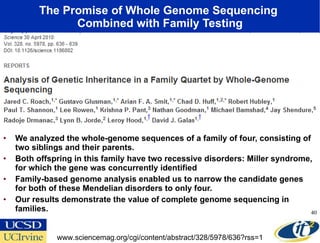
The Promise of Whole Genome Sequencing  Combined with Family Testing We analyzed the whole-genome sequences of a family of four, consisting of two siblings and their parents.  Both offspring in this family have two recessive disorders: Miller syndrome, for which the gene was concurrently identified Family-based genome analysis enabled us to narrow the candidate genes for both of these Mendelian disorders to only four.  Our results demonstrate the value of complete genome sequencing in families.  www.sciencemag.org/cgi/content/abstract/328/5978/636?rss=1
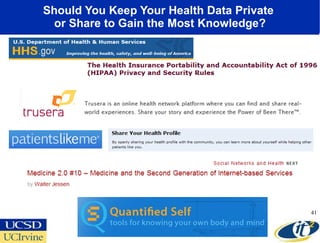
Should You Keep Your Health Data Private  or Share to Gain the Most Knowledge?

Genomics in Society: Genomics, Cellular Networks, Preventive Medicine, and Society

  • 1.
    Genomics in Society:Genomics, Cellular Networks, Preventive Medicine, and Society Guest Lecture to UCSD Medical and Pharmaceutical Students Foundations of Human Biology--Lecture #41 UCSD October 6, 2010 Dr. Larry Smarr Director, California Institute for Telecommunications and Information Technology Harry E. Gruber Professor, Dept. of Computer Science and Engineering Jacobs School of Engineering, UCSD Follow me on Twitter: lsmarr
  • 2.
    Required Reading QuantifiedSelf www.xconomy.com/san-diego/2010/05/12/how-internet-pioneer-larry-smarr-lost-20-pounds-by-becoming-a-quantified-self/?single_page=true Future of Personalized Preventive Medicine www.newsweek.com/2009/06/26/a-doctor-s-vision-of-the-future-of-medicine.html Personalized Genomic Sequencing www.technologyreview.com/biomedicine/25218/ www.mercurynews.com/business/ci_15580695 http://blogs.forbes.com/sciencebiz/2010/06/03/your-genome-is-coming
  • 3.
    Genetics and SocietyLearning Objectives Explain the relationships between genetics, disease and society List and explain the major issues concerning genetic testing for predisposition to disease Explain how measurements of an individual¹s chemical states relate to genetic testing and how both contribute to preventive medicine Explain how population health systems emerge from individuals’ data
  • 4.
    Genetics and SocietyLearning Objectives Explain the interactions between the genome, cellular networks, systems biology, and emergence of disease states Explain the difference between Single Nucleotide Polymorphism mapping and complete genomic maps and how each is used in medicine Present both sides of the debate over keeping a patient¹s genetic information private versus sharing data openly Vocabulary: SNP, genome, cellular networks, wireless, sensors, system biology, genetic testing, genome sequencers, quantified self
  • 5.
    Genetics, Disease, andSociety Measuring the State of Your Body Genomics, Proteomics, and Cellular Networks Predictive, Personalized, Preventive, & Participatory Medicine The Rise of Individual and Societal Genomic Testing-Promise and Concerns
  • 6.
    Genomics is OnlyOne Component for Living a Long Healthy Life I am an invited speaker this weekend at: http://lifeextensionconference.com/ We Will Examine All These
  • 7.
    Genetics, Disease, andSociety: Inherited Genetics Plus Environmental Variables Most human disease results from a combination of inherited genetic variations and environmental factors (such as lifestyle, social conditions, chemical exposures, and infections). Thanks to the genome-based tools now available to public health researchers, we can study how and where disease occurs in populations and families using biological markers (e.g., genes) that can help identify exposures, susceptibilities, and effects. www.cdc.gov/genomics/population/
  • 8.
    Genomics Plays aRole in 9 of the 10 Leading Causes of Death in the U.S., most Notably Cancer & Heart Disease www.cdc.gov/genomics/public/index.htm
  • 9.
    Leading Causes ofPreventable Deaths in the United States in the Year 2000 Mokdad AH, Marks JS, Stroup DF, Gerberding JL (March 2004). "Actual causes of death in the United States, 2000". JAMA 291 (10): 1238–45. doi:10.1001/jama.291.10.1238. PMID 15010446. www.csdp.org/research/1238.pdf. 1/3 of Deaths
  • 10.
    Wireless, Clinical, andHome Technologies to Measure & Improve Lifestyle and Other Health-Related Behaviors Healthy Adolescents Adolescents Recovering from Leukemia Adolescents at Risk for Type 2 Diabetes Young Adults to Prevent Weight Gain Overweight and Obese Children and Adults Depressed Adults Post-Partum Women to Reduce Weight Adults with Schizophrenia Older Adults to Promote Successful Aging Exposure Biology Research Center for Wireless & Population Health Systems
  • 11.
    Center for Wireless& Population Health Systems: Cross-Disciplinary Collaborating Investigators UCSD School of Medicine Kevin Patrick, MD, MS, Greg Norman, PhD, Fred Raab, Jacqueline Kerr, PhD Jeannie Huang, MD, MPH UCSD Jacobs School of Engineering Bill Griswold, PhD, Ingolf Krueger, PhD, Tajana Simunic Rosing, PhD San Diego Supercomputer Center Chaitan Baru, PhD UCSD Department of Political Science James Fowler, PhD SDSU Departments of Psychology & Exercise/Nutrition Science James Sallis, PhD, Simon Marshall, PhD Santech, Inc. Sheri Thompson, PhD, Jennifer Shapiro, PhD, Ramesh Venkatraman, MS PhD students and Post-doctoral Fellows (current) Barry Demchak, Priti Aghera, Ernesto Ramirez, Laura Pina, Jordan Carlson http://cwphs.ucsd.edu
  • 12.
    Center for Wireless& Population Health Systems: Integrative View to Support Interventions Genetic & Biological Factors Interpersonal & Psychosocial Factors Environmental/Ecological Factors Medical & Exercise Sciences Behavioral & Social Sciences Environment, Population & Policy Sciences
  • 13.
    Center for Wireless&Population Health Systems: Developing and Testing Engineering-Based Solutions Interpersonal & Psychosocial Factors NanoTech, Drug Delivery, Sensors, Body Area Networks (BANs) BAN-to-Mobile-to-Database, SMS/MMS Social networks Ubicomp, Location-Aware Services, Data Mining, Systems Sciences Genetic & Biological Factors Environmental/Ecological Factors
  • 14.
    Center for Wireless&Population Health Systems: Mainly, It’s All About Sensors Psychological & Social sensors Biological sensors Diet & Physical Activity sensors Air quality (particulate, ozone, etc) Temperature, GPS, Sound, Video, Other devices & embedded sensors BP, Resp, HR, Blood (e.g. glucose, electrolytes, pharmacological, hormone), Transdermal, Implants Mood, Social network (peers/family) Attention, voice analysis Physical activity (PAEE, type), sedentary Posture/orientation, diet intake (photo/bar code) Wearable Environmental sensors Sensor data + Clinical & Personal Health Record Data + Ecological data on determinants of health + Analysis & comparison of parameters in near-real time (normative and ipsative) + Sufficient population-level data to comprehend trends, model them and predict health outcomes + Feedback in near real-time via SMS, audio, haptic or other cues for behavior or change in Rx device = True Preventive Medicine! Sensors embedded in the environment Geocoded data on safety, location of recreation, food, hazards, etc
  • 15.
    Measuring the Stateof Your Body: Learning to “Tune” Your Body Using Nutrition and Exercise www.xconomy.com/san-diego/2010/05/12/how-internet-pioneer-larry-smarr-lost-20-pounds-by-becoming-a-quantified-self/ 2000 2010
  • 16.
    Wireless Sensors AllowYour Body to Become an Internet Data Source Next Step—Putting You On-Line! Wireless Internet Transmission Key Metabolic and Physical Variables Model -- Dozens of 25 Processors and 60 Sensors / Actuators Inside of our Cars Post-Genomic Individualized Medicine Combine Genetic Code Body Data Flow Use Powerful AI Data Mining Techniques www.bodymedia.com 2001 Slide Larry Smarr Calit2 Digitally Enabled Genomic Medicine
  • 17.
    Nine Years LaterI Am Recording My Metabolic Self 7 Week Ave: 2550 Calories Burned/Day 1:31 hr Physical Activity/Day (>3 METs) 7755 Steps/Day (~3.9 Miles) Measure Quantity and Quality of Sleep-- 7 Week Ave: 6:55 hrs with 81% Efficiency www.bodymedia.com
  • 18.
    Analyzing Your FoodIntake is Critical for“Tuning” Your Body 12 Day Average
  • 19.
    The Impact onPersonal Health from Nutrition, Exercise, Stress Management
  • 20.
    Measuring Key Moleculesin the Blood Provides Longer Term Biofeedback Source: Ramesh Rao, Calit2
  • 21.
    CitiSense: Air PollutionCase Study 158 Million Live in Counties Violating Air Standards Cancer in Chula Vista, CA Increased 140/Million Residents Largely Due to Diesel Trucks and Automobiles Particulates, Benzene, Sulfur Dioxide, Formaldehyde, etc. 30% of Public Schools Are Near Highways Asthma Rates 50% Higher There 350,000 – 1,300,000 Respiratory Events in Children Annually 5 EPA Monitors in SD Co., 4000 Sq. Mi., 3.1M Residents But Air Pollution Not Uniformly Distributed in Space or Time Hourly Updates to Web Page; Annual Reports in PDF Form Indoor Air Pollution is Uncharted Territory Second-hand Smoke is Major Concern Also Mold, Radon
  • 22.
    CitiSense - SeacoastSci. 4oz 30 compounds CitiSense Team PI: Bill Griswold Ingolf Krueger Tajana Simunic Rosing Sanjoy Dasgupta Hovav Shacham Kevin Patrick C/A L S W F CitiSense contribute distribute sense “ display” discover retrieve EPA Intel MSP
  • 23.
    Lifechips--Merging Two MajorIndustries: Microelectronic Chips & Life Sciences LifeChips: the merging of two major industries, the microelectronic chip industry with the life science industry LifeChips medical devices 65 UCI Faculty
  • 24.
    Genomics, Proteomics, andCellular Networks: Building a Genome-Scale Model of E. Coli in Silico E. Coli Has 4300 Genes Model Has 2000! Source: Bernhard Palsson UCSD Genetic Circuits Research Group http://gcrg.ucsd.edu JTB 2002 JBC 2002 in Silico Organisms Now Available 2007: Escherichia coli Haemophilus influenzae Helicobacter pylori Homo sapiens Build 1 Human red blood cell Human cardiac mitochondria Methanosarcina barkeri Mouse Cardiomyocyte Mycobacterium tuberculosis Saccharomyces cerevisiae Staphylococcus aureus
  • 25.
    Integrating Systems BiologyData: Cytoscape OPEN SOURCE Java Platform for Integration of Systems Biology Data Layout and Query of Interaction Networks (Physical And Genetic) Visual and Programmatic Integration of Molecular State Data (Attributes) www.cytoscape.org
  • 26.
    Research in theUCSD Ideker Systems Biology Lab Validation of Transcriptional Interactions With Causal or Functional Links Network Based Study of Disease Network Assembly from Genome-Scale Measurements Network Evolutionary Comparison / Cross-Species Alignment to Identify Conserved Modules Projection of Molecular Profiles on Protein Networks to Reveal Active Modules Alignment of Physical and Genetic Networks Network-Based Rationale Drug Design Network-Based Disease Diagnosis / Prognosis Moving from Genome-wide Association Studies (GWAS) to Network-wide “Pathway” Association (PAS)
  • 27.
    Predictive, Personalized, Preventive, & Participatory Medicine www.newsweek.com/2009/06/26/a-doctor-s-vision-of-the-future-of-medicine.html
  • 28.
  • 29.
    Use Biology toDrive Technology and Computation. Need to Create a Cross-disciplinary Culture Source: Lee Hood, ISB
  • 30.
    Disease Arises fromPerturbed Cellular Networks: Dynamics of a Prion Perturbed Network in Mice Source: Lee Hood, ISB
  • 31.
    Increasing Abundance ofProtein A for Prion-Infected Blood Samples Source: Lee Hood, ISB
  • 32.
    Current Medical CareRelies on “Symptoms,” Not Preventive Quantitative Measurements “ Come Back When You Have a Symptom” Acute Diverticulitus Invisible War Antibiotics
  • 33.
    Organ-Specific Blood ProteinsWill Make the Blood a Window into Health and Disease Perhaps 50 Major Organs or Cell Types Each Secreting Protein Blood Molecular Fingerprint The Levels of Each Protein in a Particular Blood Fingerprint Will Report the Status of that Organ Probably Need Perhaps 50 Organ-Specific Proteins Per Organ Will Need to Quantify 2500 Blood Proteins from a Drop of Blood Use Microfluidic/Nanotechnology Approaches Key Point: Changes in The Levels Of Organ-Specific Markers Can Assess Virtually All Disease Challenges for a Particular Organ Source: Lee Hood, ISB
  • 34.
    The Rise ofIndividual and Societal Genomic Testing-Promise and Concerns www.technologyreview.com/biomedicine/25218/
  • 35.
    Single Nucleotide Polymophisms(SNPs) DNA sequence variations that occur when a single nucleotide (A,T,C,or G) in the genome sequence is altered Example: DNA sequence A A GGCTAA to A T GGCTAA For a variation to be considered a SNP, it must occur in at least 1% of the population SNPs make up about 90% of all human genetic variation SNPs occur every 100 to 300 bases along the 3-billion-base human genome Many SNPs have no effect on cell function, but scientists believe others could predispose people to disease or influence their response to a drug www.ornl.gov/sci/techresources/Human_Genome/faq/snps.shtml#snps
  • 36.
    The Promise andControversy of Personal SNP Genomics www.mercurynews.com/business/ci_15580695
  • 37.
    Risk of DiseaseResults From SNPs Mainly Reveal Average Risks – Are They Consistent? You: 1.7% Avg. 3.0% You: 14.7% Avg. 23.7% You: 22.4% Avg. 11.4%
  • 38.
    However, SNP Indicationsof Adverse Drug Side Effects May Be Quite Useful Increased Risk Greatly Increased Risk I Would Definitely Not Take Either!
  • 39.
    The Cost forFull Human Genome Sequencing is Exponentially Decreasing http://blogs.forbes.com/sciencebiz/2010/06/03/your-genome-is-coming/
  • 40.
    The Promise ofWhole Genome Sequencing Combined with Family Testing We analyzed the whole-genome sequences of a family of four, consisting of two siblings and their parents. Both offspring in this family have two recessive disorders: Miller syndrome, for which the gene was concurrently identified Family-based genome analysis enabled us to narrow the candidate genes for both of these Mendelian disorders to only four. Our results demonstrate the value of complete genome sequencing in families. www.sciencemag.org/cgi/content/abstract/328/5978/636?rss=1
  • 41.
    Should You KeepYour Health Data Private or Share to Gain the Most Knowledge?