Types of
Workflow
2
1. Introduction to workflows
2. Sequence
3. Flowchart
4. State Machine
5. Q&A Session
6. Quiz
Agenda
3
Sequence Flowchart State Machine
Types of workflow
Workflows are small blocks of automation that can be used and reused in many
scenarios.
There are three types workflows that we commonly use in UiPath:
4
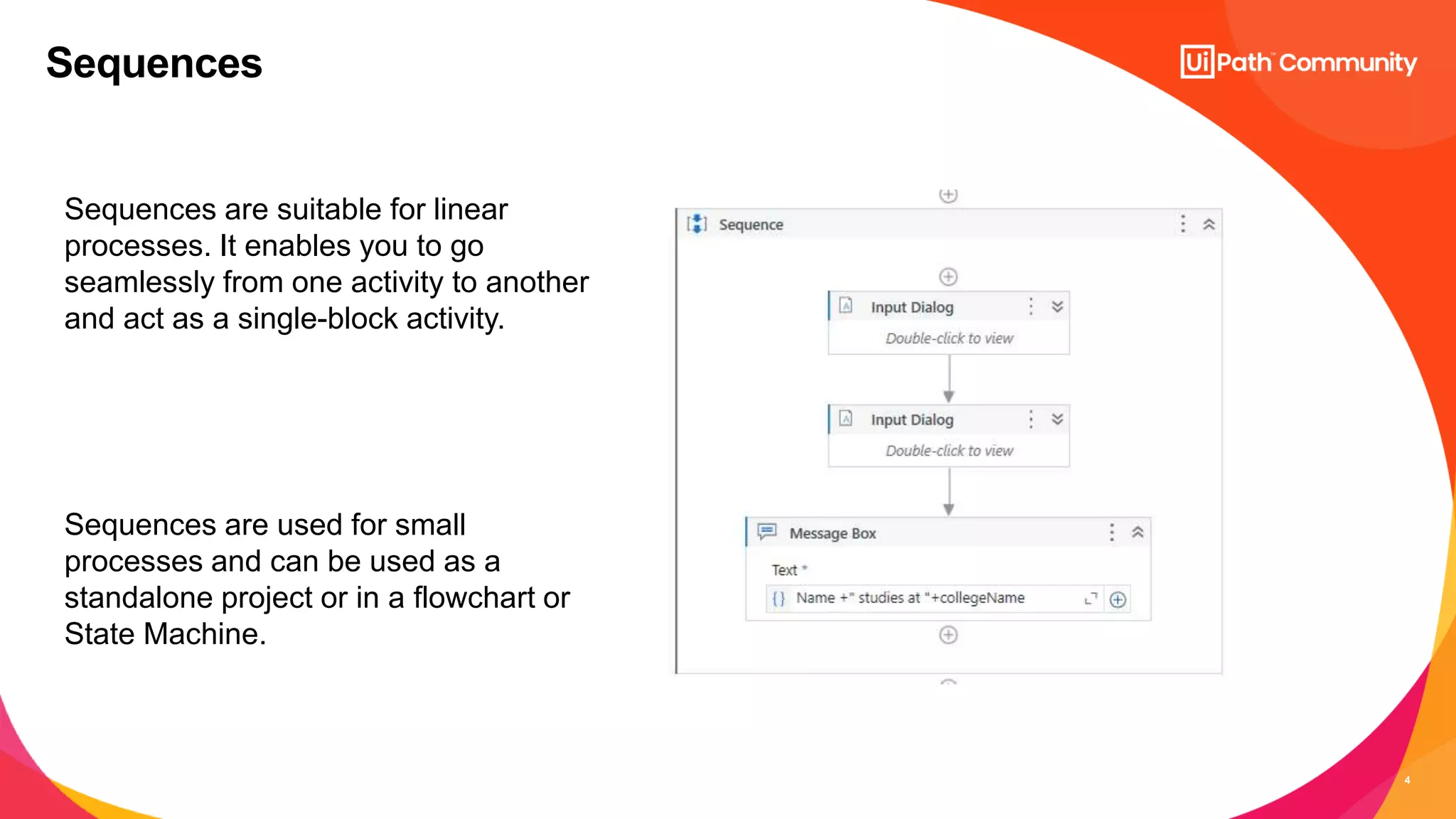
Sequences are suitable for linear
processes. It enables you to go
seamlessly from one activity to another
and act as a single-block activity.
Sequences are used for small
processes and can be used as a
standalone project or in a flowchart or
State Machine.
Sequences
5
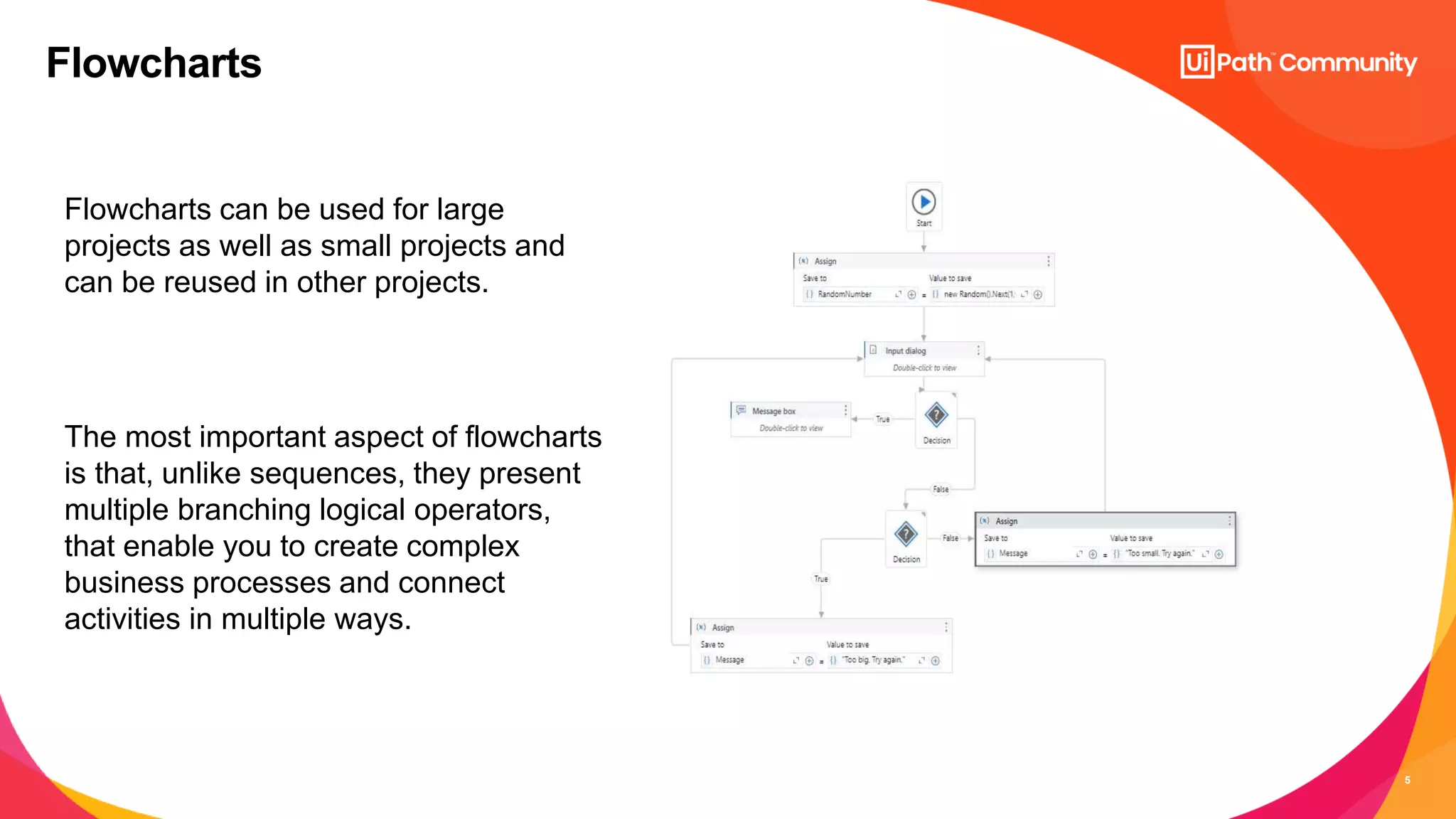
Flowcharts can be used for large
projects as well as small projects and
can be reused in other projects.
The most important aspect of flowcharts
is that, unlike sequences, they present
multiple branching logical operators,
that enable you to create complex
business processes and connect
activities in multiple ways.
Flowcharts
6
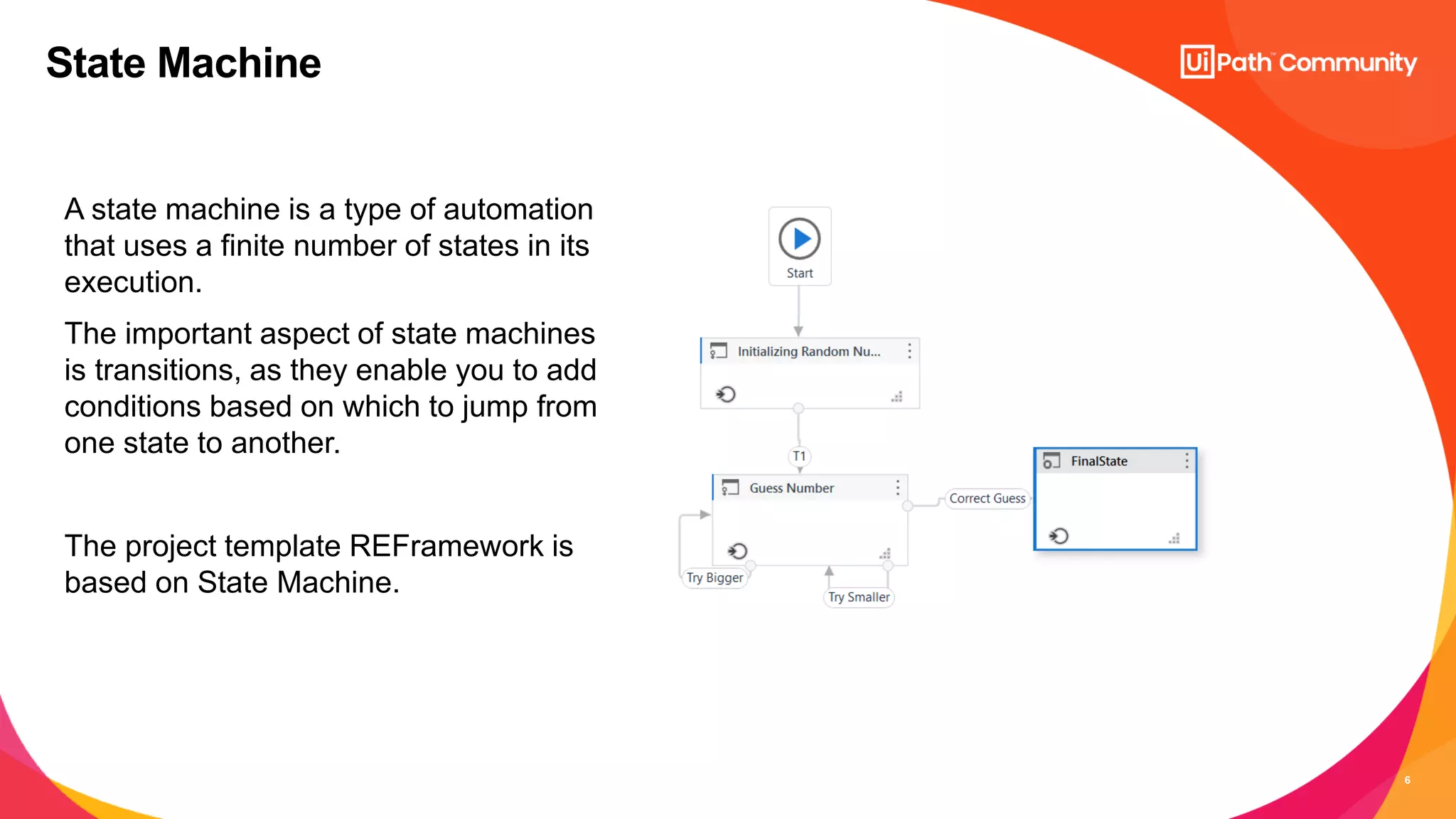
A state machine is a type of automation
that uses a finite number of states in its
execution.
The important aspect of state machines
is transitions, as they enable you to add
conditions based on which to jump from
one state to another.
The project template REFramework is
based on State Machine.
State Machine
7
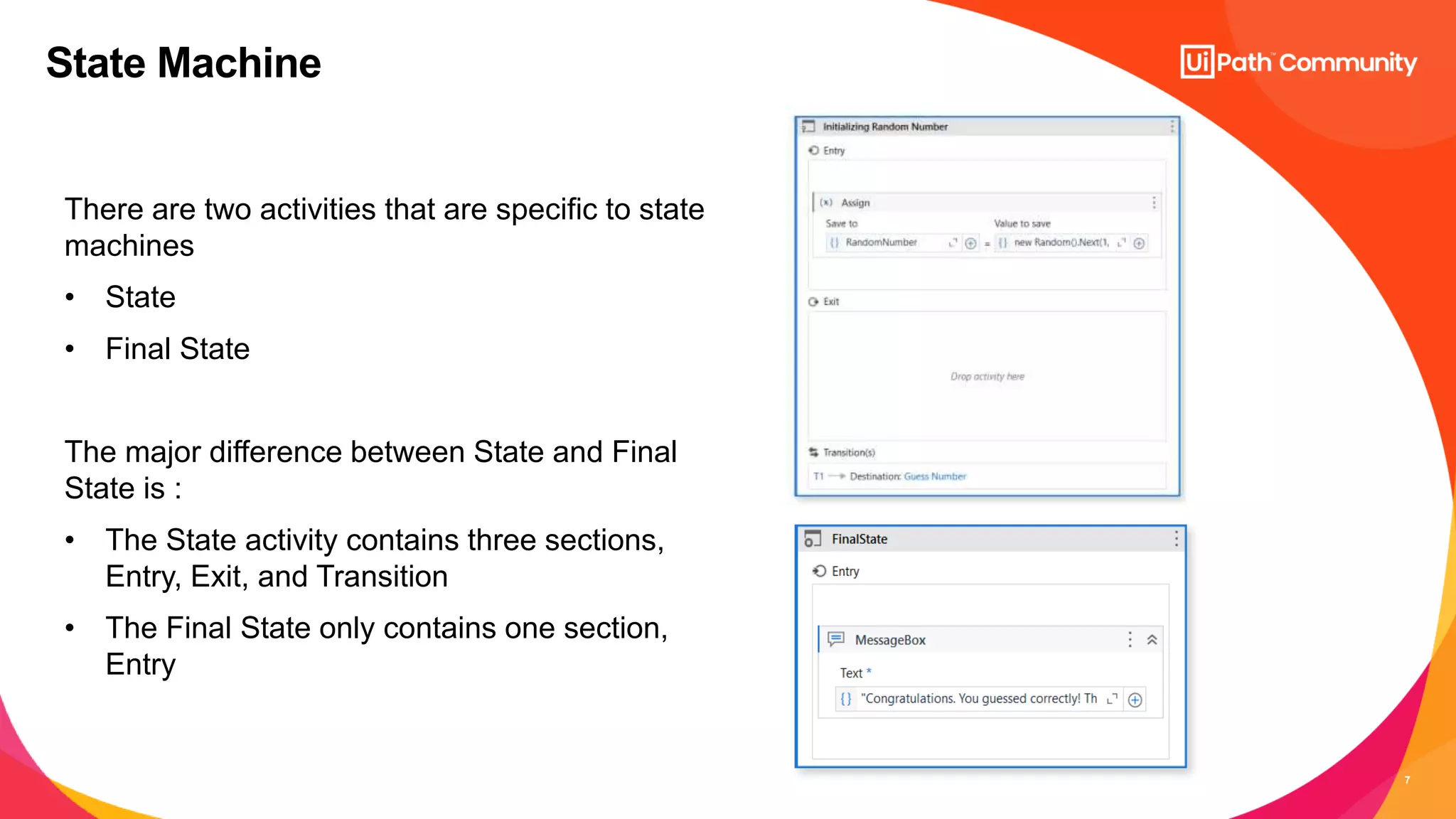
There are two activities that are specific to state
machines
• State
• Final State
The major difference between State and Final
State is :
• The State activity contains three sections,
Entry, Exit, and Transition
• The Final State only contains one section,
Entry
State Machine
8
Quiz ?
9
Q&A Session ?
10
“Automation is not about replacing humans; it's about amplifying
our abilities and enabling us to reach new heights.”
“The only way to do great work is to love what you do.”
Steve Jobs
Happy Learning

Types of Workflow.pptx

  • 1.
  • 2.
    2 1. Introduction toworkflows 2. Sequence 3. Flowchart 4. State Machine 5. Q&A Session 6. Quiz Agenda
  • 3.
    3 Sequence Flowchart StateMachine Types of workflow Workflows are small blocks of automation that can be used and reused in many scenarios. There are three types workflows that we commonly use in UiPath:
  • 4.
    4 Sequences are suitablefor linear processes. It enables you to go seamlessly from one activity to another and act as a single-block activity. Sequences are used for small processes and can be used as a standalone project or in a flowchart or State Machine. Sequences
  • 5.
    5 Flowcharts can beused for large projects as well as small projects and can be reused in other projects. The most important aspect of flowcharts is that, unlike sequences, they present multiple branching logical operators, that enable you to create complex business processes and connect activities in multiple ways. Flowcharts
  • 6.
    6 A state machineis a type of automation that uses a finite number of states in its execution. The important aspect of state machines is transitions, as they enable you to add conditions based on which to jump from one state to another. The project template REFramework is based on State Machine. State Machine
  • 7.
    7 There are twoactivities that are specific to state machines • State • Final State The major difference between State and Final State is : • The State activity contains three sections, Entry, Exit, and Transition • The Final State only contains one section, Entry State Machine
  • 8.
  • 9.
  • 10.
    10 “Automation is notabout replacing humans; it's about amplifying our abilities and enabling us to reach new heights.” “The only way to do great work is to love what you do.” Steve Jobs Happy Learning