TypesofSocial
EngineeringAttacks
Social engineering exploits human psychology and trust to gain access to
sensitive information or systems. It often involves manipulation, deception,
and exploiting human weaknesses.
byRAJRUPGHOSH(RA2311018010046)
WhatisSocialEngineering?
Psychological
Manipulation
Social engineering targets
human psychology and
emotions, leveraging trust, fear,
or curiosity to gain access to
information or systems.
ExploitingHuman
Weakness
Attackers often target common
human behaviors like the desire
for shortcuts, the need to help
others, or a lack of security
awareness.
GainingAccesstoResources
The ultimate goal of social engineering is often to gain access to
confidential data, system credentials, or sensitive information.
PhishingAttacks
1 DeceptiveEmails
Phishing attacks involve
sending emails or messages
that appear legitimate but are
actually designed to trick
recipients into revealing
sensitive information.
2 StolenCredentials
These emails often contain
links to fake websites or
attachments that are
designed to steal login
credentials, credit card
details, or other valuable
information.
3 CommonTargets
Phishing attacks can target individuals, businesses, or organizations,
aiming to exploit trust and gain access to sensitive data.
PretextingAttacks
1
CreatingaStory
Pretexting involves creating a convincing story or scenario to
gain access to information or resources.
2
GainingTrust
The attacker often uses a fabricated identity or role to gain
the victim's trust and convince them to divulge sensitive
information.
3
ObtainingInformation
The attacker may ask for account details, passwords, or other
sensitive information by leveraging the created pretext.
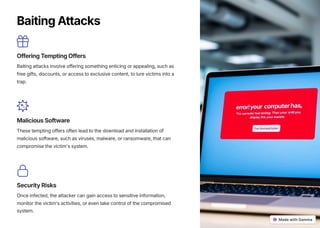
BaitingAttacks
OfferingTemptingOffers
Baiting attacks involve offering something enticing or appealing, such as
free gifts, discounts, or access to exclusive content, to lure victims into a
trap.
MaliciousSoftware
These tempting offers often lead to the download and installation of
malicious software, such as viruses, malware, or ransomware, that can
compromise the victim's system.
SecurityRisks
Once infected, the attacker can gain access to sensitive information,
monitor the victim's activities, or even take control of the compromised
system.
QuidProQuoAttacks
OfferingaFavor
Quid pro quo attacks involve offering
something in exchange for a favor or
service, creating a sense of obligation
or pressure.
ExploitingTrust
The attacker may offer a bribe, insider
information, or other valuable resources
to gain the victim's trust and influence
their actions.
GainingAccesstoResources
Once the victim feels indebted, the
attacker may request access to
sensitive information, system
credentials, or other valuable resources
in return.
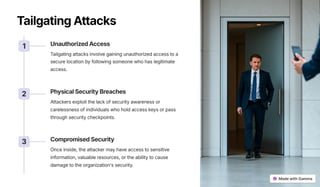
TailgatingAttacks
1 UnauthorizedAccess
Tailgating attacks involve gaining unauthorized access to a
secure location by following someone who has legitimate
access.
2 PhysicalSecurityBreaches
Attackers exploit the lack of security awareness or
carelessness of individuals who hold access keys or pass
through security checkpoints.
3 CompromisedSecurity
Once inside, the attacker may have access to sensitive
information, valuable resources, or the ability to cause
damage to the organization's security.
DefendingAgainstSocialEngineering
Security Awareness Training Regularly educate employees about common social
engineering tactics and how to identify and respond to
suspicious activities.
Strong Passwords and Two-Factor Authentication Implement robust password policies and enable two-factor
authentication to increase security and make it harder for
attackers to gain unauthorized access.
Verification Procedures Establish clear verification procedures for any requests for
sensitive information or access to systems, verifying the
identity of the requester and the legitimacy of the request.
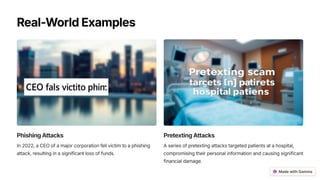
Real-WorldExamples
PhishingAttacks
In 2022, a CEO of a major corporation fell victim to a phishing
attack, resulting in a significant loss of funds.
PretextingAttacks
A series of pretexting attacks targeted patients at a hospital,
compromising their personal information and causing significant
financial damage.
ConclusionandKeyTakeaways
1 HumanElement
Social engineering exploits human
vulnerabilities and can be very
effective if not addressed properly.
2 ProactiveMeasures
Organizations and individuals must
implement strong security
measures and practice awareness
to mitigate risks.
3 ConstantVigilance
Social engineering is an ongoing
threat, and continuous education
and security practices are
essential for staying protected.

Types-of-Social-Engineering-Attacks.pdf in

  • 1.
    TypesofSocial EngineeringAttacks Social engineering exploitshuman psychology and trust to gain access to sensitive information or systems. It often involves manipulation, deception, and exploiting human weaknesses. byRAJRUPGHOSH(RA2311018010046)
  • 2.
    WhatisSocialEngineering? Psychological Manipulation Social engineering targets humanpsychology and emotions, leveraging trust, fear, or curiosity to gain access to information or systems. ExploitingHuman Weakness Attackers often target common human behaviors like the desire for shortcuts, the need to help others, or a lack of security awareness. GainingAccesstoResources The ultimate goal of social engineering is often to gain access to confidential data, system credentials, or sensitive information.
  • 3.
    PhishingAttacks 1 DeceptiveEmails Phishing attacksinvolve sending emails or messages that appear legitimate but are actually designed to trick recipients into revealing sensitive information. 2 StolenCredentials These emails often contain links to fake websites or attachments that are designed to steal login credentials, credit card details, or other valuable information. 3 CommonTargets Phishing attacks can target individuals, businesses, or organizations, aiming to exploit trust and gain access to sensitive data.
  • 4.
    PretextingAttacks 1 CreatingaStory Pretexting involves creatinga convincing story or scenario to gain access to information or resources. 2 GainingTrust The attacker often uses a fabricated identity or role to gain the victim's trust and convince them to divulge sensitive information. 3 ObtainingInformation The attacker may ask for account details, passwords, or other sensitive information by leveraging the created pretext.
  • 5.
    BaitingAttacks OfferingTemptingOffers Baiting attacks involveoffering something enticing or appealing, such as free gifts, discounts, or access to exclusive content, to lure victims into a trap. MaliciousSoftware These tempting offers often lead to the download and installation of malicious software, such as viruses, malware, or ransomware, that can compromise the victim's system. SecurityRisks Once infected, the attacker can gain access to sensitive information, monitor the victim's activities, or even take control of the compromised system.
  • 6.
    QuidProQuoAttacks OfferingaFavor Quid pro quoattacks involve offering something in exchange for a favor or service, creating a sense of obligation or pressure. ExploitingTrust The attacker may offer a bribe, insider information, or other valuable resources to gain the victim's trust and influence their actions. GainingAccesstoResources Once the victim feels indebted, the attacker may request access to sensitive information, system credentials, or other valuable resources in return.
  • 7.
    TailgatingAttacks 1 UnauthorizedAccess Tailgating attacksinvolve gaining unauthorized access to a secure location by following someone who has legitimate access. 2 PhysicalSecurityBreaches Attackers exploit the lack of security awareness or carelessness of individuals who hold access keys or pass through security checkpoints. 3 CompromisedSecurity Once inside, the attacker may have access to sensitive information, valuable resources, or the ability to cause damage to the organization's security.
  • 8.
    DefendingAgainstSocialEngineering Security Awareness TrainingRegularly educate employees about common social engineering tactics and how to identify and respond to suspicious activities. Strong Passwords and Two-Factor Authentication Implement robust password policies and enable two-factor authentication to increase security and make it harder for attackers to gain unauthorized access. Verification Procedures Establish clear verification procedures for any requests for sensitive information or access to systems, verifying the identity of the requester and the legitimacy of the request.
  • 9.
    Real-WorldExamples PhishingAttacks In 2022, aCEO of a major corporation fell victim to a phishing attack, resulting in a significant loss of funds. PretextingAttacks A series of pretexting attacks targeted patients at a hospital, compromising their personal information and causing significant financial damage.
  • 10.
    ConclusionandKeyTakeaways 1 HumanElement Social engineeringexploits human vulnerabilities and can be very effective if not addressed properly. 2 ProactiveMeasures Organizations and individuals must implement strong security measures and practice awareness to mitigate risks. 3 ConstantVigilance Social engineering is an ongoing threat, and continuous education and security practices are essential for staying protected.