What are Sensory Processing Disorders (SPD)?
● Neurodevelopmental conditions
● Cause disruptions in the normal processing of sensory stimuli
● Difficulty in understanding sensory information
SPD is typically characterized by a heightened sensitivity (hypersensitivity), or
reduced sensitivity (hyposensitivity), or difficulty filtering out irrelevant sensory input.
Causes of SPD
● Family history
● Premature birth
● Low birth weight
● Maternal drug use especially during pregnancy
● Sensory overstimulation or deprivation
● Developmental delays
● Developmental disorders
● Neurological conditions
● Exposure to toxins
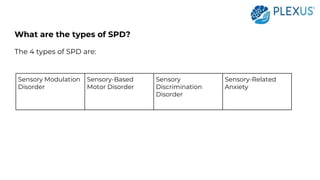
Sensory Modulation
Disorder
Sensory-Based
Motor Disorder
Sensory
Discrimination
Disorder
Sensory-Related
Anxiety
What are the types of SPD?
The 4 types of SPD are:
Sensory Modulation Disorder
● Challenges in regulating and appropriately responding to sensory input
● Brain is unable to properly regulate the degree and type of sensory
responses to different stimuli
Types of sensory modulation disorders
● Sensory Over Responsivity (SOR)
○ Heightened sensitivity to sensory stimuli
○ Strong, typically negative, reaction to seemingly ordinary sensory input
○ Common triggers: loud noises, strong smells, bright lights, specific textures
○ Management strategies: desensitization techniques and sensory diets
● Sensory Under Responsivity (SUR)
○ Reduced sensitivity to sensory stimuli
○ Failure to notice or respond to sensory input, especially potentially harmful input
○ Management strategies: environmental modifications to increase sensory awareness, and
sensory integration therapy
● Sensory Seeking (SS)
○ Causes the need to actively seek out sensory input and engaging in repetitive or unusual
behavior
○ Restlessness, inability to stay focused
○ Management strategies: structured sensory activities and sensory integration therapy
Sensory-Based Motor Disorder
● Characterized by difficulties with coordination, balance, and motor planning
● Challenging to ride a bike, catch a ball, or even tie their shoelaces
Occupational therapy and sensory integration therapy are prescribed for this type of SPD.
Sensory Discrimination Disorder (SDD)
● Difficulty differentiating between various sensory stimuli - temperatures,
textures, or sounds
Sensory exposure therapy and sensory discrimination training are prescribed for this
type of SPD.
Sensory Related Anxiety
● Causes intense fear or panic in response to even everyday sensory stimuli
Exposure therapy and cognitive behavioral therapy are often recommended to
manage this condition.
Early Diagnosis and Management
Early diagnosis of SPD in children can significantly improve their quality of life.
Children can reap the benefits of a multidisciplinary approach along with necessary
interventions
To formulate a suitable SPD management plan, occupational therapists, psychologists,
neurologists, and developmental pediatricians at Plexus use:
● Standardized sensory assessments
● Clinical observations
● Parent (and teacher) questionnaires
Sensory Integration Therapy at Plexus
Sensory integration therapy focuses on sensory processing issues, through structured,
sensory-rich activities.
Benefits of sensory integration therapy include:
● Self-regulation
● Improved performance of everyday activities
● Improved independence
● Better motor control
● Initiation of environmental exploration
● Improved response to sensory stimuli
Plexus’ Sensory Park offers a range of activities along with age-appropriate materials and
resources that help the child/adult adjust and adapt to overwhelming sensory stimuli.
Occupational Therapy and Behavioural Interventions at Plexus
Our occupational therapists can help:
● Improve motor skills
● Enhance everyday functioning
● Regulate sensory processing
Cognitive-behavioral therapy (CBT) and behavior therapy help manage sensory-related
anxiety, and also form various coping strategies to support the child/adult’s specific
requirements.
Dear Parents and Caregivers,
In order to manage your little one’s SPDs, it is important to also focus on building resilience
and harnessing their strengths.
SPD affects various aspects of your child's daily life, from sensory sensitivities to difficulties in
social interactions. If your little one has an SPD, here’s how you can help them navigate this
sensory-rich world:
● Seek timely intervention
● Opt for individualised treatment plans
● Opt for occupational therapy
● Celebrate even the smallest success
● Be patient
● Take care of yourself
● Connect with other parents and caregivers who have children with SPD
● Maintain consistent communication with your little one’s therapists, teachers, and other
important members in their environment
Reach out to Team Plexus to know more about Sensory Integration Therapy and
Occupational Therapy for Sensory Processing Disorders.
Call +91 78159 64668 (Hyderabad) | +91 82299 99888 (Bangalore)
WhatsApp +91 89048 42087

Types of Sensory Processsing Disorders | Plexus

  • 2.
    What are SensoryProcessing Disorders (SPD)? ● Neurodevelopmental conditions ● Cause disruptions in the normal processing of sensory stimuli ● Difficulty in understanding sensory information SPD is typically characterized by a heightened sensitivity (hypersensitivity), or reduced sensitivity (hyposensitivity), or difficulty filtering out irrelevant sensory input.
  • 3.
    Causes of SPD ●Family history ● Premature birth ● Low birth weight ● Maternal drug use especially during pregnancy ● Sensory overstimulation or deprivation ● Developmental delays ● Developmental disorders ● Neurological conditions ● Exposure to toxins
  • 4.
  • 5.
    Sensory Modulation Disorder ●Challenges in regulating and appropriately responding to sensory input ● Brain is unable to properly regulate the degree and type of sensory responses to different stimuli
  • 6.
    Types of sensorymodulation disorders ● Sensory Over Responsivity (SOR) ○ Heightened sensitivity to sensory stimuli ○ Strong, typically negative, reaction to seemingly ordinary sensory input ○ Common triggers: loud noises, strong smells, bright lights, specific textures ○ Management strategies: desensitization techniques and sensory diets ● Sensory Under Responsivity (SUR) ○ Reduced sensitivity to sensory stimuli ○ Failure to notice or respond to sensory input, especially potentially harmful input ○ Management strategies: environmental modifications to increase sensory awareness, and sensory integration therapy ● Sensory Seeking (SS) ○ Causes the need to actively seek out sensory input and engaging in repetitive or unusual behavior ○ Restlessness, inability to stay focused ○ Management strategies: structured sensory activities and sensory integration therapy
  • 7.
    Sensory-Based Motor Disorder ●Characterized by difficulties with coordination, balance, and motor planning ● Challenging to ride a bike, catch a ball, or even tie their shoelaces Occupational therapy and sensory integration therapy are prescribed for this type of SPD.
  • 8.
    Sensory Discrimination Disorder(SDD) ● Difficulty differentiating between various sensory stimuli - temperatures, textures, or sounds Sensory exposure therapy and sensory discrimination training are prescribed for this type of SPD.
  • 9.
    Sensory Related Anxiety ●Causes intense fear or panic in response to even everyday sensory stimuli Exposure therapy and cognitive behavioral therapy are often recommended to manage this condition.
  • 10.
    Early Diagnosis andManagement Early diagnosis of SPD in children can significantly improve their quality of life. Children can reap the benefits of a multidisciplinary approach along with necessary interventions To formulate a suitable SPD management plan, occupational therapists, psychologists, neurologists, and developmental pediatricians at Plexus use: ● Standardized sensory assessments ● Clinical observations ● Parent (and teacher) questionnaires
  • 11.
    Sensory Integration Therapyat Plexus Sensory integration therapy focuses on sensory processing issues, through structured, sensory-rich activities. Benefits of sensory integration therapy include: ● Self-regulation ● Improved performance of everyday activities ● Improved independence ● Better motor control ● Initiation of environmental exploration ● Improved response to sensory stimuli Plexus’ Sensory Park offers a range of activities along with age-appropriate materials and resources that help the child/adult adjust and adapt to overwhelming sensory stimuli.
  • 12.
    Occupational Therapy andBehavioural Interventions at Plexus Our occupational therapists can help: ● Improve motor skills ● Enhance everyday functioning ● Regulate sensory processing Cognitive-behavioral therapy (CBT) and behavior therapy help manage sensory-related anxiety, and also form various coping strategies to support the child/adult’s specific requirements.
  • 13.
    Dear Parents andCaregivers, In order to manage your little one’s SPDs, it is important to also focus on building resilience and harnessing their strengths. SPD affects various aspects of your child's daily life, from sensory sensitivities to difficulties in social interactions. If your little one has an SPD, here’s how you can help them navigate this sensory-rich world: ● Seek timely intervention ● Opt for individualised treatment plans ● Opt for occupational therapy ● Celebrate even the smallest success ● Be patient ● Take care of yourself ● Connect with other parents and caregivers who have children with SPD ● Maintain consistent communication with your little one’s therapists, teachers, and other important members in their environment
  • 14.
    Reach out toTeam Plexus to know more about Sensory Integration Therapy and Occupational Therapy for Sensory Processing Disorders. Call +91 78159 64668 (Hyderabad) | +91 82299 99888 (Bangalore) WhatsApp +91 89048 42087