Different Types of
Intermodal Transportation
What is Intermodal in Logistics?
The word ‘Intermodal’ means using two or more
modes of conveyance for moving freight. Intermodal
transportation offers a combination of transport
solutions: air (plane), land (truck or train), waterways
(barge and boat), and sea (cargo). The brokers
involved in intermodal logistics are committed to
transporting the goods from point A to point B.
THERE ARE TWO
TYPES OF
INTERMODAL
TRANSPORTATION
COFC – COFC stands for container on a flatcar.
This is an inexpensive and efficient method for
intermodal shipping.
TOFC – Trailer-On-Flatcar or TOFC is a type of
intermodal transportation method where the
over-the-road or OTR trailer is placed on the
well-car directly.
Both the COFC and TOFC have proved helpful
in intermodal transportation as they help cut
down on manual labor.
Why Do You Need Intermodal Trucking Services?
Intermodal services are about finding the right
supply chain to maximize value for customers.
• Accommodate your freight by various means of transportation.
• Easily transport your load to its destination.
• Quickly meet shipping deadlines.
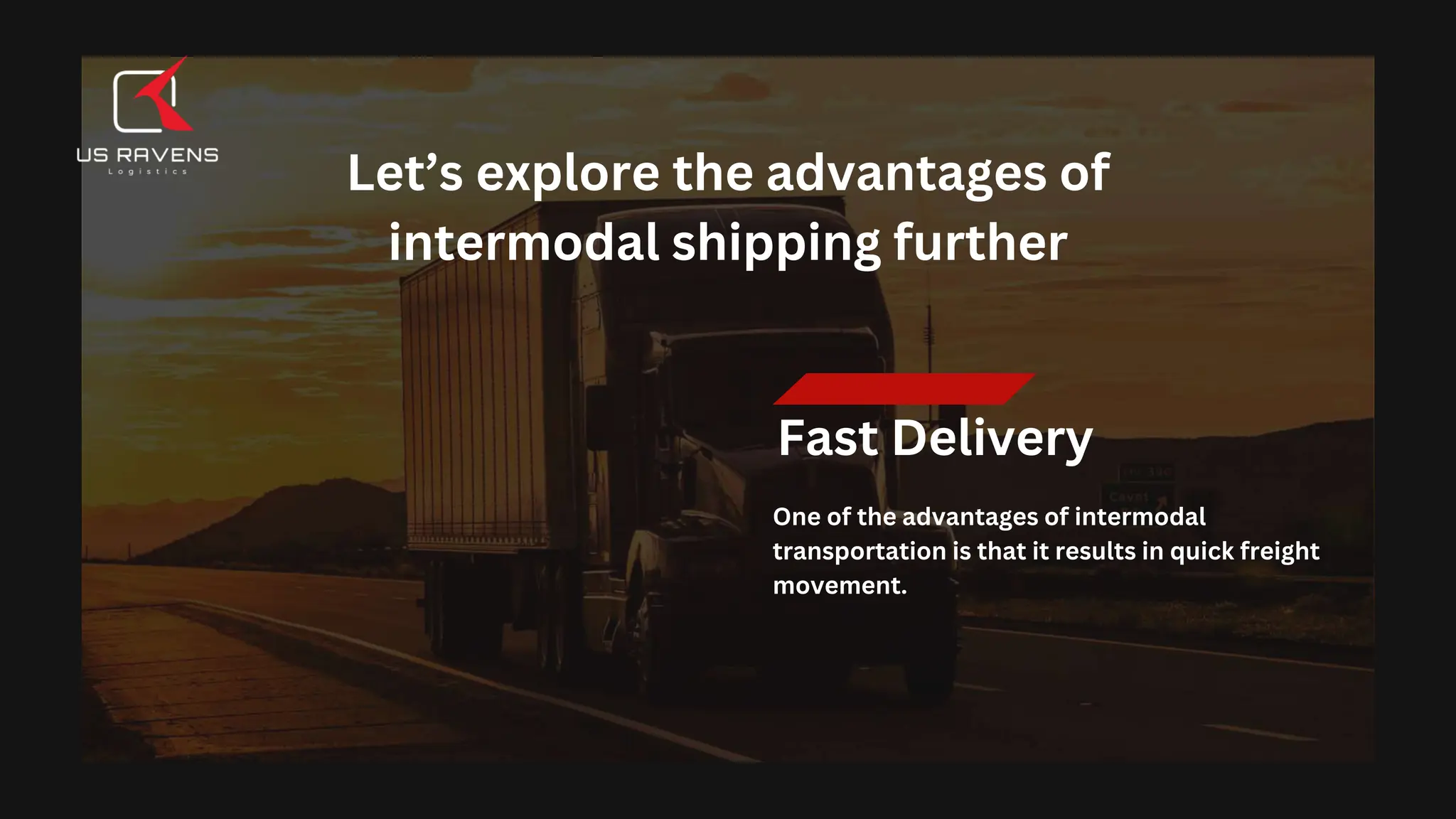
Let’s explore the advantages of
intermodal shipping further
One of the advantages of intermodal
transportation is that it results in quick freight
movement.
Fast Delivery
You can minimize transportation costs by
transporting freight via intermodal shipping
Lower Costs
Intermodal shipping includes containers that do
not require individual handling and easily fit into
every space.
Easy
Handling
Good
Capacity
You can use intermodal trucks when and
wherever needed.
Logistics companies provide one of the fastest
services that guarantee secure and reliable cargo
dispatch.
Quality and Safe Service
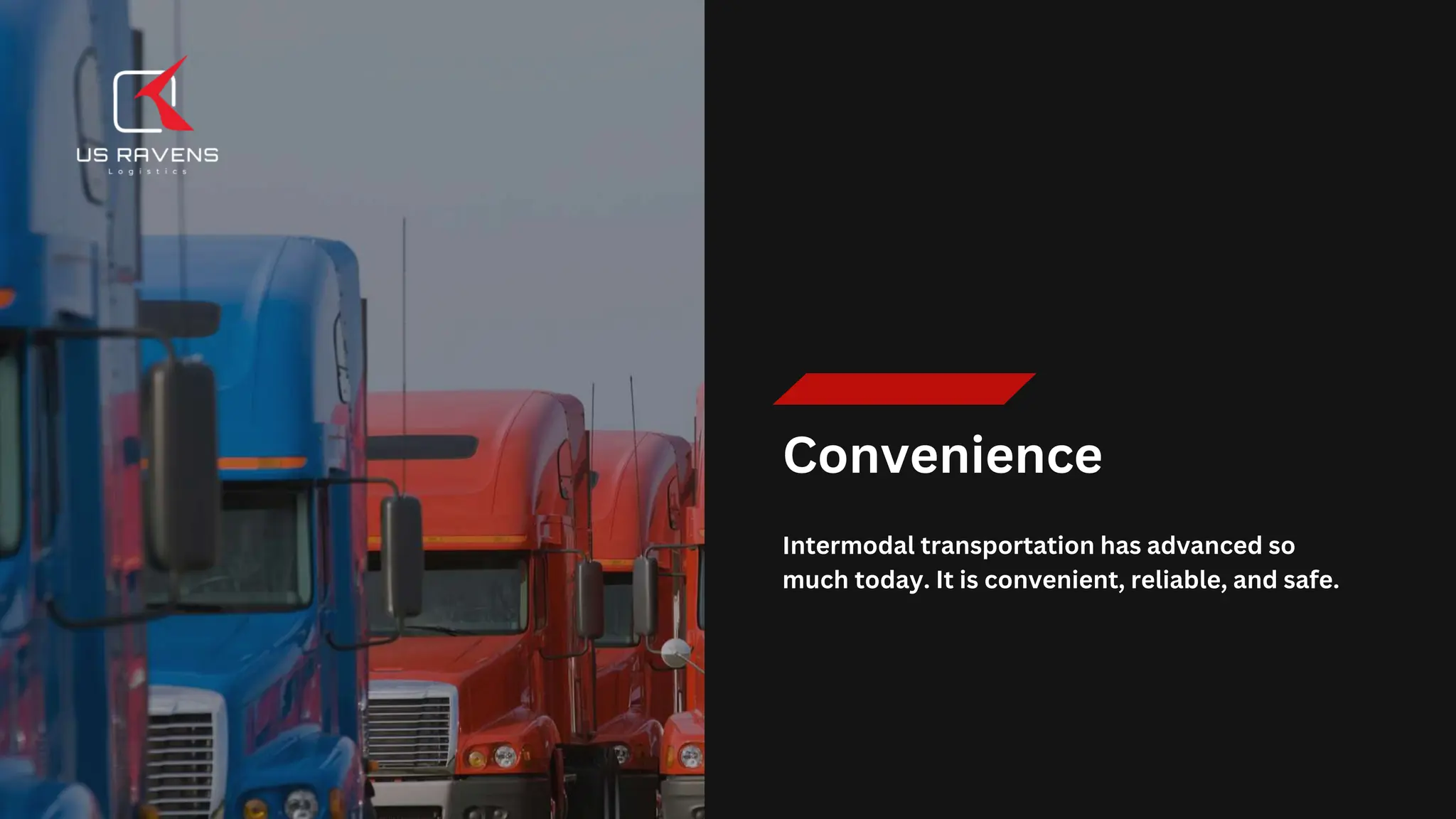
Convenience
Intermodal transportation has advanced so
much today. It is convenient, reliable, and safe.
There is flexibility in freight movement
under intermodal transport.
Flexible transportation
Read More
www.usravens.com
https://usravens.com/intermodal-transportation/sravens.com

Types of Intermodal Transportation

  • 1.
    Different Types of IntermodalTransportation What is Intermodal in Logistics?
  • 2.
    The word ‘Intermodal’means using two or more modes of conveyance for moving freight. Intermodal transportation offers a combination of transport solutions: air (plane), land (truck or train), waterways (barge and boat), and sea (cargo). The brokers involved in intermodal logistics are committed to transporting the goods from point A to point B.
  • 3.
    THERE ARE TWO TYPESOF INTERMODAL TRANSPORTATION COFC – COFC stands for container on a flatcar. This is an inexpensive and efficient method for intermodal shipping. TOFC – Trailer-On-Flatcar or TOFC is a type of intermodal transportation method where the over-the-road or OTR trailer is placed on the well-car directly. Both the COFC and TOFC have proved helpful in intermodal transportation as they help cut down on manual labor.
  • 4.
    Why Do YouNeed Intermodal Trucking Services? Intermodal services are about finding the right supply chain to maximize value for customers. • Accommodate your freight by various means of transportation. • Easily transport your load to its destination. • Quickly meet shipping deadlines.
  • 5.
    Let’s explore theadvantages of intermodal shipping further One of the advantages of intermodal transportation is that it results in quick freight movement. Fast Delivery
  • 6.
    You can minimizetransportation costs by transporting freight via intermodal shipping Lower Costs
  • 7.
    Intermodal shipping includescontainers that do not require individual handling and easily fit into every space. Easy Handling
  • 8.
    Good Capacity You can useintermodal trucks when and wherever needed.
  • 9.
    Logistics companies provideone of the fastest services that guarantee secure and reliable cargo dispatch. Quality and Safe Service
  • 10.
    Convenience Intermodal transportation hasadvanced so much today. It is convenient, reliable, and safe.
  • 11.
    There is flexibilityin freight movement under intermodal transport. Flexible transportation
  • 12.