Jade Gill

JOB ROLES IN THE MEDIA
INDUSTRY.
All aspects of media are interesting, although as in any
other job different types of jobs appeal to different
people. For example one person might aspire to be a
director where as some one else might aspire to be a
screenwriter, which are both very different roles. I am
now going to talk you through the different job roles
available in the TV and Film industry.
Different sectors of the
    media industry.

        Management
         Creative
         Editorial
         Technical
         Research
Management Roles.


             Producer
                &
            Accountant
                &
        Transport Managers


               BACK
Creative Roles.


           Director
               &
        Hair & Make-up
               &
           Costume

             BACK
Editorial.


                Editor
                  &
             Script editor


                  BACK
Technical.


         Sound Technician
                &
             Lighting
Research.

        Location Manager
                &
        Media Researcher
Director.
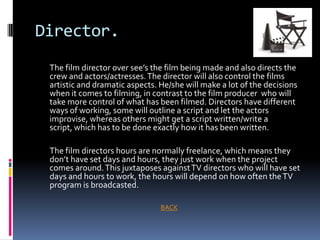
 The film director over see’s the film being made and also directs the
 crew and actors/actresses. The director will also control the films
 artistic and dramatic aspects. He/she will make a lot of the decisions
 when it comes to filming, in contrast to the film producer who will
 take more control of what has been filmed. Directors have different
 ways of working, some will outline a script and let the actors
 improvise, whereas others might get a script written/write a
 script, which has to be done exactly how it has been written.

 The film directors hours are normally freelance, which means they
 don’t have set days and hours, they just work when the project
 comes around. This juxtaposes against TV directors who will have set
 days and hours to work, the hours will depend on how often the TV
 program is broadcasted.

                                BACK
Producer.
 The producers are the main players when it comes to the
 television, film and video industries. As well as the director, the
 film producer also over see’s the project while it is getting filmed.
 The producer usually comes up with the initial idea for a
 project, then he/she will oversee the project being made.

 Producers will work closely with the director, if the producer isn’t
 the director there self. Often the producer will gradually learn
 directing skills to be able to take care of all the project
 operations.

 Producers will also take care of the budget for each project and
 make sure it doesn’t get exceeded.

                               BACK
Editor.
 An editor will do all of the editing of the film/television/radio piece.
 Editors can now do so much more because of the new technology that
 allows them to do near enough anything.

 The editor will make the movie come alive and add special effects and
 transitions, which makes the film more appealing to its audience.

 There are now all kinds of things that editors can do, so many that the
 possibilities are endless. They can now create 3D films, and films where
 famous buildings look like they have collapsed. This means that films are
 now more realistic and believable, it makes the audience feel like they
 are actually in the film. New technology also allows editors to recreate
 actual events in the form of a film, such as the 9/11.

                                 BACK
Accountant.

 The accountant is a very important role to any
 industry, as they ensure that the company stays on
 top and doesn’t get in a bad situation. An accountant
 will manage all the financial record. In the film
 industry the account needs to be very skilled and
 experience as their role is can be critical, as they deal
 with substantial amounts of money. Accountants
 also need to be alert as budgets are always changing
 throughout development.


                          BACK
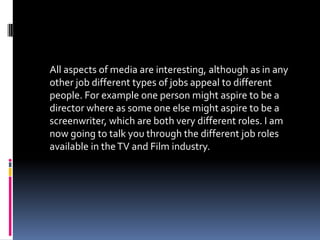
Hair and Make-up.

The hair and make-up team decide what the
  actor/presenter/singer will look like. In some
  situations the hair and make-up team will get
  told roughly what they need to make the person
  look like, although sometimes they can do what
  they think will look good.


                      BACK
Transport Managers.
 The transport managers manage all of the large vehicles that are
 used on a film production. These include mobile make-up and
 costume units, artist caravans, mobile production offices, and
 mobile toilet units, as well as the big vehicles that are for moving
 props, sets and equipment. This job role requires good transport
 and film industry experience, along with planning and
 management skills.

 Transport managers need to be very familiar of the area in which
 the filming is taking place, or be able to remember it very quickly.
 They also need to have excellent time keeping in order to make
 sure the props, sets, makeup etc get to the shoot on time.
 Transport managers have a very big responsibility, and an
 important role in the film industry.

                               BACK
Costume.

 The costume department choose what the
 actor/presenter/singer will wear. Just like the
 make-up team, sometimes the costume
 department will decide there selves and
 sometimes they will get told roughly what
 the person has to look like. The costume and
 make-up department are very similar.


                      BACK
Script Editor.
   Some script editors work for production companies full
   time, but usually they work on a freelance basis. Their
   wages and level of involvement are negotiable, therefore
   some script editors will have more involvement than others
   depending on there employer, and what their employer
   wants from them.

   Script editors will look at the script from every ones point of
   view, and if there is a problem, they will have to give a
   detailed explanation in why they think so. The best script
   editors will show the screenwriters a different view of their
   own story.

BACK
Location Manager.

 A location managers job is to find the location in
 which the film is going to be set, for them to do this
 they must be able to understand and see the
 directors vision of the location. Sometimes it can
 take months of researching and scouting to find the
 perfect location for a film. When the locations have
 been found, then negotiations start about
 costs, access, noise, parking and permission.

 Location managers and all of the location
 department must have excellent organizational skills
 and also good communication skills.
Sound Technician.
 A sound technicians job is to identify the requirements of
 sound for a given task or situation and to do the
 appropriate actions to produce this sound. There are many
 different types of sound technicians which are required in a
 range of industries including, broadcasting, live
 performances, advertising music production and film.

 A sound technicians specific activities vary due to the
 section in which they are employed. Sound technicians
 roles can be split into two categories, one of them being
 production which is the recording of sound on set or on
 location, and the other being post-production which is
 everything they do to the pre-recorded audio track to make
 it realistic. For example, the balancing, mixing, editing and
 enhancing.
Lighting.

The lighting department are very important in
  most film crews. The whole feel and atmosphere
  of a scene comes from how the lighting is, for
  example if your filming something in the
  morning you would need to get the lighting just
  right so that the sun rise looks realistic.

  There are different members of the lighting crew
  who are responsible, as well as others such as the
  camera crew or designer, for the look and feel of
  the images captured on screen.
Media Researcher.

 A media researchers job is to find information and
 ideas for television, radio, movies and internet
 products. Media researchers also develop ideas for
 new programs and find appropriate audiences and
 media for the programs.

 Other types of media researchers will research
 existing programs in order to see which types of
 programs attract the biggest audience. They also
 research what people want to watch on the
 television. On a normal day these media researchers
 will have meetings with advertisers to find out what
 types of audiences they want to attract.

Tv and film roles presentation

  • 1.
    Jade Gill JOB ROLESIN THE MEDIA INDUSTRY.
  • 2.
    All aspects ofmedia are interesting, although as in any other job different types of jobs appeal to different people. For example one person might aspire to be a director where as some one else might aspire to be a screenwriter, which are both very different roles. I am now going to talk you through the different job roles available in the TV and Film industry.
  • 3.
    Different sectors ofthe media industry. Management Creative Editorial Technical Research
  • 4.
    Management Roles. Producer & Accountant & Transport Managers BACK
  • 5.
    Creative Roles. Director & Hair & Make-up & Costume BACK
  • 6.
    Editorial. Editor & Script editor BACK
  • 7.
    Technical. Sound Technician & Lighting
  • 8.
    Research. Location Manager & Media Researcher
  • 9.
    Director. The filmdirector over see’s the film being made and also directs the crew and actors/actresses. The director will also control the films artistic and dramatic aspects. He/she will make a lot of the decisions when it comes to filming, in contrast to the film producer who will take more control of what has been filmed. Directors have different ways of working, some will outline a script and let the actors improvise, whereas others might get a script written/write a script, which has to be done exactly how it has been written. The film directors hours are normally freelance, which means they don’t have set days and hours, they just work when the project comes around. This juxtaposes against TV directors who will have set days and hours to work, the hours will depend on how often the TV program is broadcasted. BACK
  • 10.
    Producer. The producersare the main players when it comes to the television, film and video industries. As well as the director, the film producer also over see’s the project while it is getting filmed. The producer usually comes up with the initial idea for a project, then he/she will oversee the project being made. Producers will work closely with the director, if the producer isn’t the director there self. Often the producer will gradually learn directing skills to be able to take care of all the project operations. Producers will also take care of the budget for each project and make sure it doesn’t get exceeded. BACK
  • 11.
    Editor. An editorwill do all of the editing of the film/television/radio piece. Editors can now do so much more because of the new technology that allows them to do near enough anything. The editor will make the movie come alive and add special effects and transitions, which makes the film more appealing to its audience. There are now all kinds of things that editors can do, so many that the possibilities are endless. They can now create 3D films, and films where famous buildings look like they have collapsed. This means that films are now more realistic and believable, it makes the audience feel like they are actually in the film. New technology also allows editors to recreate actual events in the form of a film, such as the 9/11. BACK
  • 12.
    Accountant. The accountantis a very important role to any industry, as they ensure that the company stays on top and doesn’t get in a bad situation. An accountant will manage all the financial record. In the film industry the account needs to be very skilled and experience as their role is can be critical, as they deal with substantial amounts of money. Accountants also need to be alert as budgets are always changing throughout development. BACK
  • 13.
    Hair and Make-up. Thehair and make-up team decide what the actor/presenter/singer will look like. In some situations the hair and make-up team will get told roughly what they need to make the person look like, although sometimes they can do what they think will look good. BACK
  • 14.
    Transport Managers. Thetransport managers manage all of the large vehicles that are used on a film production. These include mobile make-up and costume units, artist caravans, mobile production offices, and mobile toilet units, as well as the big vehicles that are for moving props, sets and equipment. This job role requires good transport and film industry experience, along with planning and management skills. Transport managers need to be very familiar of the area in which the filming is taking place, or be able to remember it very quickly. They also need to have excellent time keeping in order to make sure the props, sets, makeup etc get to the shoot on time. Transport managers have a very big responsibility, and an important role in the film industry. BACK
  • 15.
    Costume. The costumedepartment choose what the actor/presenter/singer will wear. Just like the make-up team, sometimes the costume department will decide there selves and sometimes they will get told roughly what the person has to look like. The costume and make-up department are very similar. BACK
  • 16.
    Script Editor. Some script editors work for production companies full time, but usually they work on a freelance basis. Their wages and level of involvement are negotiable, therefore some script editors will have more involvement than others depending on there employer, and what their employer wants from them. Script editors will look at the script from every ones point of view, and if there is a problem, they will have to give a detailed explanation in why they think so. The best script editors will show the screenwriters a different view of their own story. BACK
  • 17.
    Location Manager. Alocation managers job is to find the location in which the film is going to be set, for them to do this they must be able to understand and see the directors vision of the location. Sometimes it can take months of researching and scouting to find the perfect location for a film. When the locations have been found, then negotiations start about costs, access, noise, parking and permission. Location managers and all of the location department must have excellent organizational skills and also good communication skills.
  • 18.
    Sound Technician. Asound technicians job is to identify the requirements of sound for a given task or situation and to do the appropriate actions to produce this sound. There are many different types of sound technicians which are required in a range of industries including, broadcasting, live performances, advertising music production and film. A sound technicians specific activities vary due to the section in which they are employed. Sound technicians roles can be split into two categories, one of them being production which is the recording of sound on set or on location, and the other being post-production which is everything they do to the pre-recorded audio track to make it realistic. For example, the balancing, mixing, editing and enhancing.
  • 19.
    Lighting. The lighting departmentare very important in most film crews. The whole feel and atmosphere of a scene comes from how the lighting is, for example if your filming something in the morning you would need to get the lighting just right so that the sun rise looks realistic. There are different members of the lighting crew who are responsible, as well as others such as the camera crew or designer, for the look and feel of the images captured on screen.
  • 20.
    Media Researcher. Amedia researchers job is to find information and ideas for television, radio, movies and internet products. Media researchers also develop ideas for new programs and find appropriate audiences and media for the programs. Other types of media researchers will research existing programs in order to see which types of programs attract the biggest audience. They also research what people want to watch on the television. On a normal day these media researchers will have meetings with advertisers to find out what types of audiences they want to attract.